Category: Global

  • Protests in Nepal leave 19 dead, Government in Crisis

    Protests in Nepal leave 19 dead, Government in Crisis

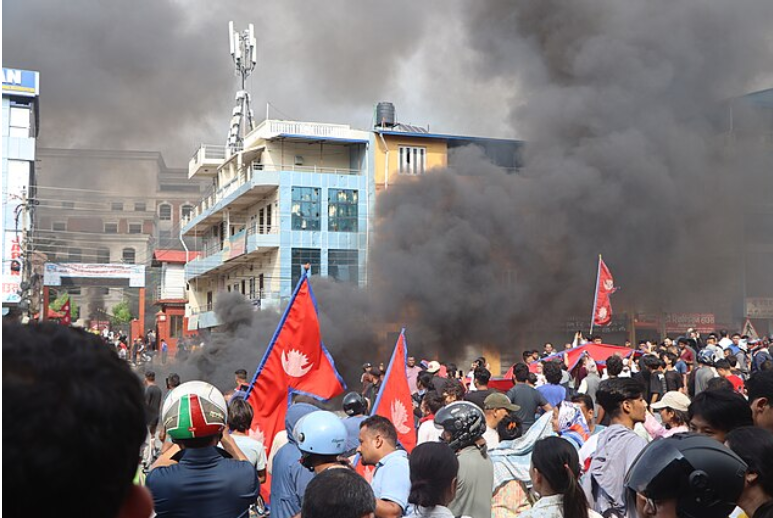
    Nepal has been thrown into turmoil as mass protests are taking place all over the country, leaving at least 19 people dead and the political system in chaos. What began as anger against corruption and political saturation has exploded into one of the most serious crises the nation has faced in decades.

    Public frustration has been building since the early 1990s, when Nepal transitioned into democracy, ending monarchical rule. Citizens accuse the three big parties, the Nepal Congress, CPN-UML, and the CPN Maoist party, of mismanagement and corruption in the democracy. Young Nepalis have been frustrated for years at the lack of jobs; millions have gone to work in neighbouring countries like India, Malaysia and South Korea. Anger reached a breaking point after the government attempted to ban social media, sparking outrage among young people.

    The Government of Nepal, on September 4, issued a directive banning Facebook, Instagram, Reddit, X and 36 other social media apps, citing their failure to meet the deadline to comply with registration requirements to operate in Nepal. The  Nepalese government used this as a reason to ban the apps, which were used by citizens to expose the Children of Politicians, who used the apps to flaunt their lavish lifestyles. Dubbed as “Nepo Babies”, citizens targeted them for using corrupt money to live the life they are living. Protesters rallied behind creative symbols, including the popular anime One Piece pirate flag, which became a surprising emblem of resistance.

    The growing intensity of the protests has forced Prime Minister KP Oli to resign. Protestors entered the parliament after hearing the news of Oli’s resignation, waving their hands and shouting slogans as smoke rose from the building. They painted graffiti on the walls saying “We won”. Following the protests, Kathmandu airport was shut down and is set to resume soon.

    Former Prime Sher Bahadur Deuba, who has held office five times, and Foreign Minister Arzu Rana Deuba were directly targeted by demonstrators. Security forces responded with live fire and smoke bombs, resulting in 19 deaths. However, the army, perceived to be sympathetic to the monarchy and to the public in general, reportedly allowed protesters to attack political offices without much intervention. The CPN-Maoist leadership blamed Sher Bahadur Deuba for fueling the unrest.

    The crises have left the political system in disarray. The Rashtriya Swatantra Party (RSP), formed in the last general election out of public frustration, and the Rashtriya Prajatantra Party (RPP), staged mass resignations in parliament. Discussions about an interim government are in order, with two names coming forward: RSP leader Rabi Lamicchane, previously jailed in a cooperative scam, now freed from jail by protestors, and Kathmandu Mayor Balen Shah. Nepal now faces an uncertain future as it seeks stability amid political crises.

  • Conservative leader Charlie Kirk dies at 31

    Conservative leader Charlie Kirk dies at 31

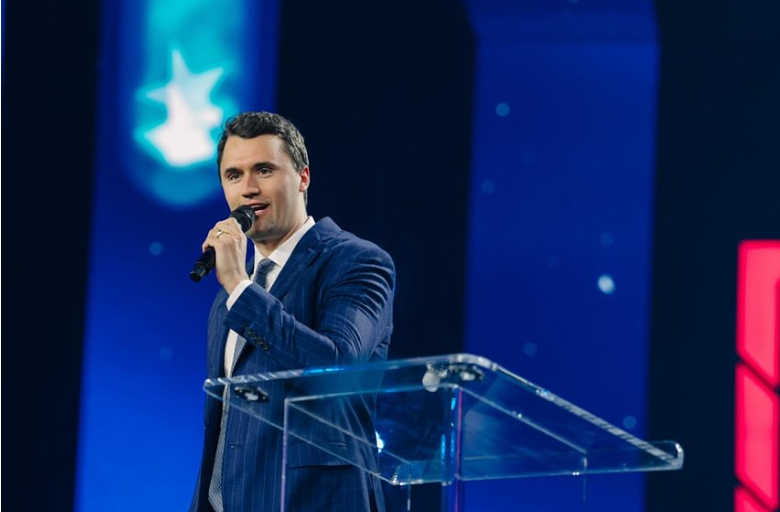
    Charlie Kirk, a fiercely outspoken conservative activist and co-founder of Turning Point USA, died on 10 September 2025, at the age of 31. He was fatally shot during a speaking event at Utah Valley University, while addressing students as a part of his “American Comeback Tour.”

    Kirk was shot by a 22-year-old, Tyler Robinson. The FBI immediately released images of the suspect and CCTV footage of Robinson on the roof of a nearby building and started a manhunt. Authorities have also pointed out that there were anti-fascist messages on bullet casings in a rifle found near the scene, showcasing potential evidence of a political motive behind the assassination. Robinson was arrested on 12 September in St. George, Utah.

    Kirk’s death shocked the political world and drew swift reactions around the globe. Supporters remembered him as a strong advocate for conservative values and a mentor to students who felt isolated in predominantly liberal institutions. Millions of supporters flooded social media with tributes, while a few critics noted the irony of his death by gunfire, given his strong pro-gun rights stance. US President Donald Trump called him “a great, and even legendary, American” and announced Kirk would be posthumously awarded the Presidential Medal of Freedom.

    Born as Charles James Kirk in 1993 in Illinois, Kirk had a keen interest in politics as a teenager. In 2012, at 18, he co-founded Turning Point USA, an organisation promoting and spreading conservative values on college campuses and bringing young people together behind conservative causes. Over the years, the organisation expanded into dozens of campus chapters and became a central structure for youth outreach in the conservative movement. Kirk also promoted Trump during his 2024 campaign. His appearances on college campuses drew large student crowds, where he talked about free market, abortion, geopolitics, and faith-based values, often debating liberal college students on their stance on various matters.

    Kirk hosted The Charlie Kirk Show, a daily talk show and podcast that reached millions worldwide. He was a strong advocate for Israel, often highlighting the country as a key American ally and a symbol of democracy in the Middle East. He often defended the Second Amendment and voiced concerns about illegal immigration, while being outspoken in his opposition to abortion and considering himself a pro-life supporter. These positions made him a central figure in the broader debates about America’s political and cultural identity. Kirk consistently framed his arguments around the values of faith, family, and freedom on campus, on his podcast, or at national conferences.

    Outside the spotlight, Kirk was married to Erika Frantzve, a podcaster and entrepreneur. The couple welcomed a daughter in 2022 and a son in 2024. Two days after Charlie’s assassination, his wife vowed to continue his movement, including further campus tours, “It will be greater than ever”, Erika said in her first public remark, a video posted on Instagram. Kirk’s funeral will occur on Sunday, 21 September 2025, at State Farm Stadium in Glendale, Arizona.

  • The Legacy of Giorgio Armani

    The Legacy of Giorgio Armani

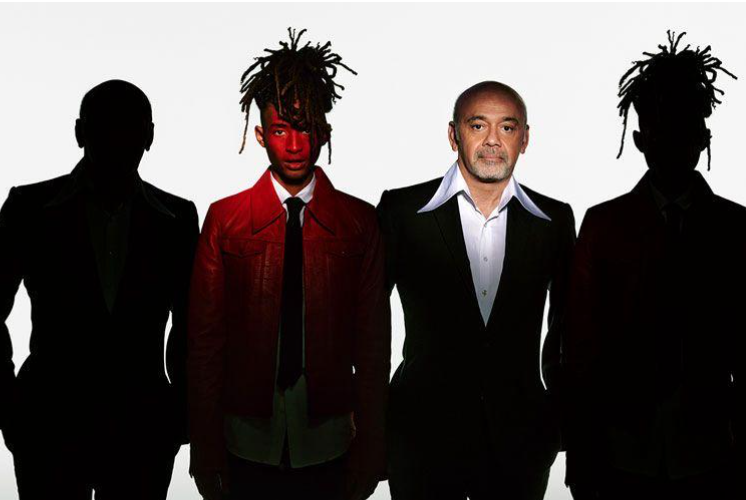
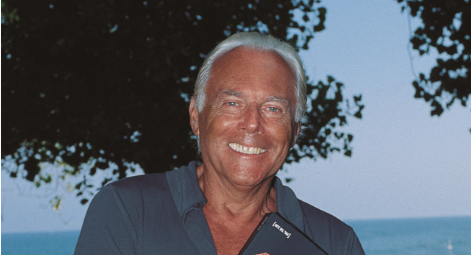
    Giorgio Armani, the visionary Italian designer, has passed away at 91. Over the course of five decades, Armani built a legacy in both Italian and global fashion to create a unique and everlasting style from the red carpet to the big screen.

    Born in Piacenza, Giorgio Armani’s initial career plan was not fashion. He enrolled in medical college at the University of Milan after being inspired by A.J. Cronin’s The Citadel. However, after almost 3 years, he dropped out and enlisted in the army, where he served for two years in the Military Hospital of Verona. After his time in the military, he worked as a window dresser at La Rinascente, a high-end department store in Milan, curating his taste for fashion. After gaining skills in marketing and sales, he realised he could start freelancing and designing, catapulting his fashion career to new heights.

    In 1966, Armani met Sergio Galeotti, an Italian architect and a business partner of his in the coming years. Together, they ounded Giorgio Armani S.p.A. in 1975. Legend has it that Armani’s Volkswagen Beetle sale contributed to the initial capital. They would go on to work together for another 20 years, until Galeotti’s death in 1985. The brand initially started off as a menswear brand- its debut collection was presented in Milan in 1975, featuring ready-to-wear pieces for the Spring and Summer 1976, along with some womenswear pieces. This collection featured a twist to the everyday formal look, showing blazers and pants in a more light and loose-fitted manner.

    The Armani brand quickly expanded to include accessories, fragrances, and home decor, eventually turning into a high-end global lifestyle empire, spanning Giorgio Armani Privé, Emporio Armani, Armani Exchange, and Armani/Casa. Always aware of the changing lifestyles of his clients, Armani entered the hospitality industry with Armani Hotels in Dubai and Milan in 2010 and 2011, respectively. He also built a strong presence in sports by sponsoring various sporting teams like the Italian national football team and a partnership with Scuderia Ferrari F1, both in 2020 and 2021. His restaurants, cafés, and bars around the world further showcased his idea of fashion as a complete experience, built of elegance and design.

    Beyond this, Armani’s artistry reached Hollywood, where he revolutionised costume design with sleek, power-driven wardrobes for films such as American Gigolo and The Untouchables. For The Untouchables, Armani has mentioned that the styling for it was different from what he usually likes to style, as the movie is set in 1930s Chicago. The 3-piece suits and fedoras sell the vintage vibe well, very reminiscent but not fully accurate to the 1920s and 30s style the film was trying to portray. Armani also dressed countless stars off-screen, Cate Blanchett being one of them. In 2007, she stunned in a silver Armani Privé gown for the 79th Oscars, and in 2014, she wore a black lace Armani Privé dress with sheer detailing for the Golden Globes, both being some of the best looks of the night. At the 2023 Venice Film Festival, Cate Blanchett wore a sculptural black-and-white Armani Privé gown, embodying Armani’s vision to merge simplicity with sophistication. The look had fluid elegance: a sleek, strapless black bodice cascading into a dramatic train.

    An iconic moment in his fashion career was his photoshoot with Grace Jones, a Jamaican model and singer, for her studio album Nightclubbing. Photographed by Jean-Paul Goude and styled by Armani, Grace Jones looks chiselled, with her hair and cigarette aligning perfectly with her body and background.

    Armani also became the first designer to ban underweight models after the death of Ana Carolina Reston, following her death from anorexia nervosa. Armani was also the first fashion brand to close its Milan Fashion Week runway in 2020 as a public health concern after seeing the rising COVID-19 cases. The show was instead held in a theatre at the brand’s headquarters in Milan with no audience. In March 2020, the brand converted all its Italian production plants to produce single-use overalls for the protection of its workers.

    The legacy of Giorgio Armani leaves a mark on both Italian and global fashion. By softening the lines of traditional menswear, he reinvented the suit, replacing rigid structures with relaxed tailoring that defined the era of effortless sophistication. Armani not only changed how the world dressed but also created a new language of modern Italian design. He also brought similar innovation to casual wear, elevating jeans into staples of high style while staying committed to timeless elegance over fleeting trends. He was a true statement in his time.

  • Rising Alliances: India Strengthens Bonds with China and Russia Amid Trade Tensions

    Rising Alliances: India Strengthens Bonds with China and Russia Amid Trade Tensions

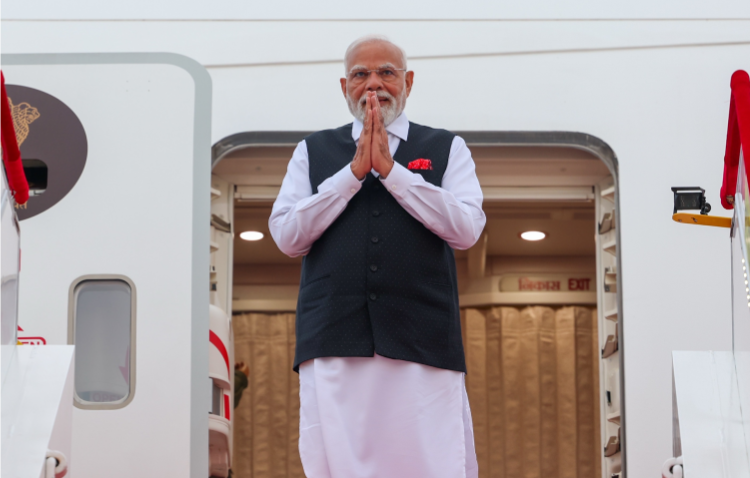
    Prime Minister Narendra Modi met with President Xi Jinping on 31 August 2025, on the sidelines of the Summit of the leaders of the Shanghai Cooperation Organisation (SCO) in Tianjin. This event marked PM Modi’s first visit to China after 7 years and was a crucial diplomatic moment for India and China following years of tension.

    At the SCO summit, the two leaders expressed commitment to a fair, reasonable, and mutually acceptable resolution of boundary-related concerns that have plagued India-China relations for almost half a decade. According to a statement by the commerce ministry released on Sunday, India emphasised on the fact that “export-related measures should not be weaponised or misused to create artificial scarcity, distort markets, or disrupt supply chains, and emphasised that their calibrated and transparent use is essential to maintain trust in international commerce”.

    At the meeting, India also called for action towards ensuring greater market access and enhancing trade facilitation between the two countries. These concerns are relevant because as of late, India’s automobile and electronic industries have faced major disruptions due to China’s steep export restrictions on rare earth magnets and fertilisers. According to PTI, India’s trade deficit with China has widened to nearly $100 billion in 2024-25.

    However, India and China recorded a positive bilateral outcome in August, when visiting Chinese Foreign Minister Wang Yi assured External Affairs Minister S Jaishankar that his country will resume the supply of fertilisers as well as rare earth minerals. However, China is yet to act upon this promise and Beijing has not yet given an official statement or made public commitments on restarting exports.

    The Galwan Valley clash in June 2020, which had resulted in the deaths of over 20 Indian soldiers and an unspecified number on the Chinese side, had triggered a severe diplomatic fallout between the two countries. As a result of this dispute, India banned numerous Chinese apps, restricted Chinese investments, and suspended direct flights and visas. But, in August 2025, nearly 5 years after the fallout, an agreement was reached between the Special Representatives of both countries.

    “The Kailash Mansarovar Yatra has been resumed. Direct flights between the two countries are also being resumed,” ANI quoted PM Modi on 31st August, 2025. The resumption of the Kailash Mansarovar Yatra is particularly notable, as it is a significant pilgrimage for Hindus, Buddhists, and Jains. The Yatra’s revival is expected to encourage cultural and religious exchanges between the two nations.

    On the second day of the SCO summit, PM Modi shook hands and posed for pictures with Xi Jinping and Russian President Vladimir Putin. This gesture was seen as a powerful diplomatic message of strategic alignment, particularly in response to the US President’s actions and tariffs.

    The most surprising image of camaraderie was the car journey that PM Modi and Russian President Putin had together on the second day of the summit, for their bilateral meeting. Putin, who is notorious for his unusual security protocols, is rarely seen spontaneously carpooling with unannounced guests. The two leaders celebrated India-Russia relations during their 50-minute-long bilateral meeting, with Modi saying that the two nations stuck together even under the most trying circumstances.

    The overt act of bonhomie among all 3 countries during the SCO Summit has incited a response from US President Donald Trump on Truth Social, who posted, “Looks like we’ve lost India and Russia to deepest, darkest, China. May they have a long and prosperous future together!” Trump wrote in a social media post accompanying a photo of the three leaders together at Xi’s summit in China.

    The trilateral showcase of solidarity has raised concerns about an emerging bloc. One of the worst hits by the US tariffs has been taken by New Delhi, facing an additional 25 per cent on India’s imports of crude oil coming from Moscow. The combined duties have pushed US tariffs on Indian products to 50 per cent. China, India and Russia are all original members of BRICS, an organisation which Trump claimed to be “anti-American.” Even Brazil (another BRICS nation) has been targeted by Trump, facing steep and restrictive tariffs.

    Despite his strong words on Truth Social, Trump later sought to downplay tensions with India and called their ties ‘special,’ he said, “I’ll always be friends with (Narendra) Modi, he’s a great prime minister. He’s great. I’ll always be friends, but I just don’t like what he’s doing at this particular moment,” Trump told reporters in the Oval Office, according to PTI. Trump also expressed resentment and disappointment with New Delhi over its energy purchases from Moscow. “I’ve been very disappointed that India would be buying so much oil from Russia, and I’ve let them know with the 50 per cent tariff.”

    The Tianjin SCO summit demonstrated a major shift in worldwide political dynamics. Major trade commitments are expected to play a crucial role in bolstering the economies of both India and China.

    Prime Minister Modi has strategically established diplomatic connections with Xi Jinping and Vladimir Putin through a method that not only prioritises regional security and economic advantages but also relies on mutual discontent with US foreign policy leadership. The Galwan Valley conflict between India and China created tension, but their current joint initiatives demonstrate their purposeful work to restore mutual trust. The gradual aftermath of Modi’s subtle yet undermining response will determine how international diplomacy and geopolitics evolve during the upcoming years because they will establish new regional alliances and reshape worldwide diplomatic relations.

  • Walter Lippmann: The Voice Who Taught America to Think About Itself

    Walter Lippmann: The Voice Who Taught America to Think About Itself

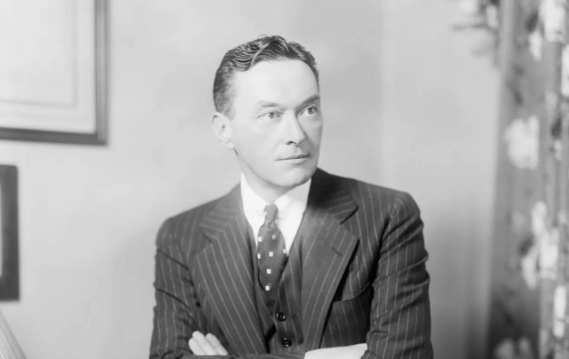
    Among the pantheon of American journalism, few figures hold as much weight as Walter Lippmann. For over half a century, he was the country’s leading interpreter of politics, war, and democracy: an intellectual go-between bridging the raw chaos of events and the public trying to make sense of them. He was not only a columnist, he was a thinker who grappled with questions that are still pressing today: How do we know what we know? What is the role of the press in presenting our vision of reality? And can democracy persist if its citizens are captives of illusion?

    Lippmann’s career spanned from the Progressive Era to the television era. Along the way, he invented modern political commentary, coined terms that have become the foundations of media theory, and commanded the attention of presidents as much as the readers of his daily column. To grasp Walter Lippmann is to learn the strained marriage of democracy and information in the 20th century, a marriage that remains under tension today.

    A New Yorker in the Making

    Born in 1889 to an affluent German-Jewish family in New York, Lippmann grew up musically gifted, well-travelled, and bookish. His passion for ideas led him to Harvard, where he studied philosophy under William James and George Santayana.

    Harvard was the turning point. Learning about pragmatism, which revolves around ideology being proved and tested in practice, took his perception of politics to great heights: his views on it were not dogmatic but instead an ever-evolving process. He graduated in 1910 as a man with starry eyes and a burning ambition to introduce firebrand ideas to a world that was standing at the door of revolution.

    The early 20th century brimmed with reform movements: investigative journalists exposed corruption boldly as progressives clamoured for reform, and politicians only added to it by grappling with America’s emerging global stronghold. Lippmann slid into this ferment easily. By 1913, Walter Lippmann, who was 24 at the time, co-founded The New Republic, a journal carrying opinions that quickly emerged as the voice of progressive intellectuals. His first central forum was employed to press the case for domestic reform and reflective engagement overseas.

    The Interpreter

    Lippmann’s voice drew a parallel between fiery crusaders like Upton Sinclair and caustic critics like H.L. Mencken as he treaded towards a calmer, analytical voice that remained relentlessly focused on clarity. His presence in journalism was less of a partisan and more of an interpreter, helping readers make sense of events too complex to grasp on their own.

    That instinct was expressed in his syndicated newspaper column, Today and Tomorrow, which debuted in 1931. It appeared for more than three decades in hundreds of newspapers all over the nation, reaching millions. Every important person within the nation gave close attention to Lippmann’s verdicts.

    His authority of trust came from his scholarship and his independence. Lippmann never had trouble changing his mind when the facts required it. His parallel opinions, whether it was about his support of Woodrow Wilson’s entry into the First World War, all while scrutinising the League of Nations, expressing his due respect to FDR, but criticising the anatomy of the New Deal, or even encouraging the Cold War containment at the same time, cautioning America against excess militarisation. His allegiance was not always to the party line but to his idea of truth.

    Public Opinion and the Shadows on the Wall

    Lippmann’s best and most lasting work did not come from his daily columns but from his books. In Public Opinion (1922), he provided a groundbreaking analysis of how people come to know the world. Underlying it was a simple yet radical notion: most of what we understand comes not through direct experience but through mediated images, news accounts, and stereotypes. He referred to this manufactured reality as the “pseudo-environment.” It is through this lens, not unmediated reality, that people form their judgments. The implication was unsettling. If citizens see the world only in terms of such shadows, democratic choice is tenuous. As Lippmann wrote, “the pictures inside people’s heads do not correspond with the world outside.”

    This was more than a philosophical comment but a political alert. Democracy, he maintained, could not rely on citizens’ understanding the complexities of contemporary policy. His answer was drastic: turn over interpretation to experts, specialists, and institutions. Elitism was the accusation of his critics, but Lippmann justified the position as realism. “The common interests,” he said, “very largely elude public opinion entirely, and can be managed only by a specialised class.”

    Struggling with Democracy

    This conflict between the ideals of democracy and the murky realities was a constant presence in Lippmann’s life. He trusted in self-government but suspected that common people were not always capable of making sound judgments. He prized the press but observed how it could deceive, and although he loved freedom, he was critical of propaganda’s corrosive influence- particularly after observing its growth under fascism.

    In World War II, Lippmann stood among the loudest voices saying that Americans had to resist Hitler, lest they themselves become postwar authoritarians. In the Cold War, he supported containment but warned that hysteria at home threatened democracy more than communism abroad. He opposed McCarthy with fact-based critiques, not fear.

    His opposition never ceased accusing him of being aloof or too detached from the fervours of democratic living. But his apologists recognised in him something unusual: a commentator who would speak what was hard, even unpopular, if he thought it was supported by reason.

    The Journalist as Philosopher

    In the mid-century period, the height of Lippmann’s persona was his transcendence into public philosophy. He earned two Pulitzer Prizes for commentary, was honoured with degrees from universities across the globe, and was accepted as the dean of American political commentary in general. But he lived with restraint, afraid of being lionised.

    Later in his life, he became increasingly suspicious of the ascendancy of television. He was concerned that the medium, which rested on image and spectacle, would further exacerbate the distortions he had predicted in Public Opinion. In later years, he feared television’s reliance on image would turn politics into theatre, a prophetic concern in today’s age of 24-hour news and social media.

    When Lippmann passed away in 1974, obituaries greeted him as a giant of journalism, a figure who had not only defined how Americans saw their world but also how they saw the act of seeing it at all.

    Lippmann’s Legacy in the Digital Age

    It is essential to revisit Walter Lippmann’s work today to observe the questions he posed that have been responsible for only sharpening the digital era we live in now. If his newspapers could construct pseudo-environments, what of today’s algorithmic feeds, where millions reside within self-supporting bubbles of disinformation?

    His “pictures in our heads” resonate in every argument over fake news, echo chambers, and disinformation campaigns. At such a time when we as a society struggle to cope with climate change, pandemics, and technological disruption problems, Lippmann’s contention comes right into relevance as he remarks that just as democracy is dependent on freedom, similarly, a news platform’s competence is equally dependent on producing sound bites that revolve around such issues of global importance.

    Naturally, his appeal for expert governance is still contentious. The populist protest of our era indicates that citizens often reject the notion of being governed by elites. Even so, his detractors acknowledge that he compelled democracy to face its blind spots. Naming the illusions we live by, he provided us with the means to resist them.

    The Final Word

    Walter Lippmann was a man of contradictions: a democrat wary of mass opinion, a journalist sceptical of the press, an optimist who often warned of failure. Yet within these tensions lay his genius. He educated the public not what to think, but how to think about thinking. His voice has since stilled, but his questions remain. In a world filled with shadows and images, we might need him today more than ever.

  • ChatGPT Amid Controversies: Technical Failures and Safety Concerns

    ChatGPT Amid Controversies: Technical Failures and Safety Concerns

    Within a week after OpenAI unveiled its latest ChatGPT model, GPT-5, with grand promises, the company found itself in damage control mode. On 7 August 2025, in less than 24 hours after the launch, people found out that the new “PhD-level expert” did not live up to its expectations, with social media platforms such as X flooded with mixed reactions, from excitement to scepticism. Despite the concerns, the users increased to 700 million in anticipation of the release of the new model.

    Technical Improvements and Shortcomings

    GPT-5 brings several improvements to the table. It excels in enterprise, and has noticeable improvement in reasoning, accuracy and liability. The new update has also installed better language support, with enhanced multilingual performance for a global market. Coding is of much higher quality, and generating front-end user interfaces with little prompting, the model also exhibits advances in personality and steerability.

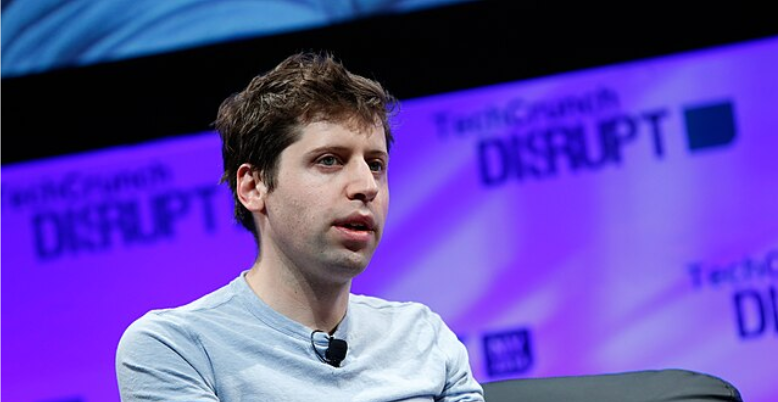
    However, this does not mean it is without its concerns. The most immediate criticism that followed the release was OpenAI CEO Sam Altman’s claims of a PhD-level intelligence system and how this failed. The new system cannot label maps without spelling errors, raising questions about the gap between OpenAI’s promotional rhetoric and actual performance. Users reported a “colder tone, reduced creativity, slower responses, and workflow disruptions” compared to previous versions. Many longtime subscribers felt the new model lacked the warmth and creative capabilities they had grown accustomed to, describing the experience as a downgrade rather than an improvement.

    Safety Concerns

    OpenAI made notable strides in safety with GPT-5. A new safety training program dubbed “safe completions” was launched by the corporation. It educates the model to provide the most helpful response while adhering to safety protocols. Instead of focusing on a refusal boundary based on user input, safe-completion focuses safety training on the output safety of a model. These improvements came at a crucial time

    A day before GPT-5’s release, the Centre for Countering Digital Hate’s (CCDH) new research showed that 53% of ChatGPT responses to teen queries contained harmful content, including detailed instructions on concealing eating disorders and composing suicide letters. Teens would spend more than three hours on ChatGPT and would vividly give instructions on how to get drunk and high.

    Another issue is that a lot of people are turning to AI chatbots for friendship and engaging in para-social relationships with them, creating unhealthy emotional attachments. Altman has publicly addressed this issue, saying that he and his team are trying to reduce the emotional overreliance on AI as it could become potentially dangerous.

    Industry Implications

    While GPT-5 did show clear technical improvements over earlier models, the significant gap between high expectations and actual user experience has affected OpenAI’s credibility. It has also raised concerns about responsible AI marketing. The company’s choice to bring back older models indicates that they understand user preferences and the need for better transitions. However, it may take time to fully regain user trust.

    Looking Ahead 

    As companies compete to showcase their AI advancements, the pressure to hype their abilities while failing to deliver practical results leads to a disengaging cycle, ultimately eroding public trust. For OpenAI, the path forward will require not just technical improvements but a fundamental reassessment of how the company communicates about its products. As the AI landscape continues to evolve rapidly, the GPT-5 launch serves as a cautionary reminder about the risks and safety concerns of AI and putting marketing promises ahead of user needs.

  • Who owns the street? Rising rebellion against tourism in the streets of Europe

    Who owns the street? Rising rebellion against tourism in the streets of Europe

    Across Europe this summer, locals have taken to the streets with a clear message: mass tourism is pushing them out of their cities. Residents are retaliating against rising rents, overrun public spaces, and a lifestyle that’s being sold for profit.

    Anti-tourism protests have occurred all summer across various European countries, including Spain, the Netherlands, and Italy. Thousands of protesters have taken to the city’s streets over the past few months to protest against mass tourism in Spain, especially in San Sebastián, which has the nation’s highest housing costs. There, protesters chanted slogans, one being, “Sustainable tourism is a mythological animal.”

    In June, Genoa residents staged a symbolic “noisy stroll” protest, dragging suitcases through the city centre to highlight the disruptive impact of mass tourism.

    Most recently, thousands of people protested on the Spanish island of Mallorca, with organisers arguing that the current tourism model exploits workers while benefiting only a small elite. Similar demonstrations have also taken place on other popular Spanish resort islands, such as Minorca and Ibiza. These islands, with a population of just over one million, hosted more than 15 million international tourists in 2024.

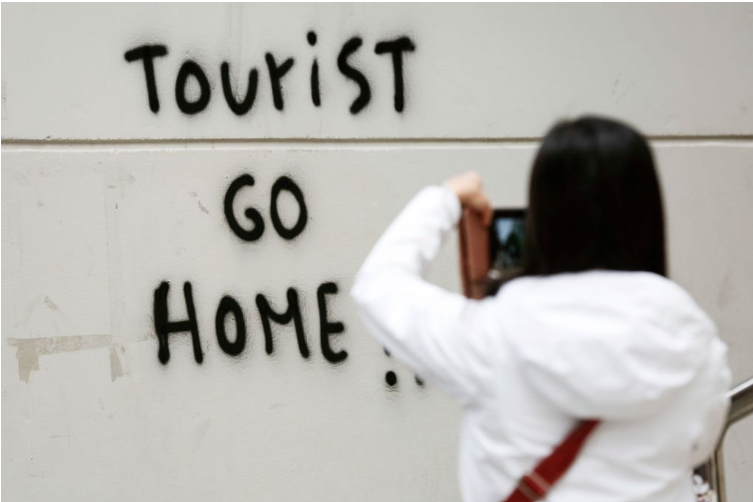
    On June 15, locals in Barcelona started spraying tourists with water and chanting, “tourists go back home.” Others also carried signs with slogans such as “Barcelona is not for sale” and “Tourism is stealing from us.”

    The ongoing demonstrations intend to shed light on the blatant “touristification” of European cities. The term refers to the emphasis and priority given to tourism rather than sustaining local life, amenities, and infrastructure. The protests aim to pressure governments to address the strain tourism has on rents and housing, and the collateral environmental damage caused. Many call for policy and urban planning that puts residents’ needs and livelihoods ahead of tourist demand. In cities like Venice, where fewer than 50,000 people live year-round, over 30 million tourists visit annually. As a result, much of the hospitality industry caters to the visitors rather than residents.

    A protester holds a sign reading “Tourism is killing Barcelona” during an anti-tourism demonstration in the city. / Photo: X / @UinHurricane

    Mass tourism has disrupted daily life across Europe, and one of the most pressing issues locals face is housing. Residential units have been scarce and are slowly being converted to tourist accommodations. This scarcity has also led to a significant hike in rent and housing prices. Reports conducted by Harvard International Review have indicated that there are now more tourist beds than residents in Venice. During protests in San Sebastián, a resort city on Spain’s northern coast, some residents stated that their leading cause of concern isn’t the act of tourism itself, but rather the “speculators and exploiters who use tourism as a facade to ultimately profit from the housing and overall lives of the residents.” Locals have also started advocating for more sustainable practices to protect natural resources, local infrastructure, and heritage sites. In 2023, a tourist was accused of damaging a statue in the city’s 16th-century Fountain of Neptune, located in the Piazza della Signoria. The same year, in another part of Italy, a group of tourists was accused of toppling a valuable statue at a villa.

    During the 2024 Olympics in Paris, a city with only 11.3 million residents, approximately 9.5 million individuals purchased tickets to attend the Games. In protest against the pollution of the Seine, which was expected to worsen with Olympic preparations, locals threatened to stage a mass defecation in the river, rallying under the hashtag #JeChieDansLaSeineLe23Juin (“I sh*t in the Seine on June 23”). The campaign, widely reported by outlets including CBS News and Forbes, was dubbed the “Paris Poop Protest” by Modern Diplomacy, which described how activists used a dedicated website and hashtag to coordinate their demonstration against both river pollution and government spending.

    Governments have gradually started responding to these persisting protests; cities like Barcelona have begun cracking down on illegal rentals and changing specific bus routes to protect elderly residents. Places like Santorini in Greece and Bruges in Belgium have started imposing taxes on their tourism and hospitality industries. Venetian officials recently declared the temporary entrance fee, implemented to control tourist crowds, a success. The new €5 (about $5.4) tourist charge, which began on April 25 and concluded on July 14, brought in more than €2.4 million (about $2.6 million).

    The summer of protest across Europe has made one thing clear: locals are no longer willing to stay silent as their cities transform into playgrounds for outsiders. While tourism remains a crucial economic engine, the cost of unchecked visitor influx, rising rents, environmental strain, and local life erosion has become too heavy to bear. As more residents push back, governments must reckon with a future in which tourism must be reimagined. Whether these measures can truly shift global travel culture remains to be seen.

  • From Allies to Adversaries? U.S. Slaps Highest Tariffs on India over Russia Energy Links

    From Allies to Adversaries? U.S. Slaps Highest Tariffs on India over Russia Energy Links

    On 6 August 2025, President Donald J. Trump signed an executive order that imposes an additional tariff of 25% on imports from India, effectively pushing the headline U.S. tariff on many Indian goods to 50% where the earlier reciprocal rate also applies.

    The implementation is not uniform, with the US administration signalling targeted applications. Some products appear to be exempted (for example, some smartphone and pharmaceutical shipments), but for labour-intensive categories where Indian exporters are concentrated- apparel, gems & jewellery, carpets and some food items- the tariff rate can become a threat very quickly, as buyers can likely shift suppliers.

    The order says the additional duty is being imposed because the U.S. government finds India is “directly or indirectly importing Russian Federation oil” and that the step is needed to address “an unusual and extraordinary threat” to U.S. national security. Unless India concedes in the next three weeks, the move will potentially hit its single largest export market, worth $87.3 billion annually.

    Indian Energy Security Meets America First

    Before the Ukraine war, Russian oil was barely 2% of India’s imports. However, by 2024, it had increased to 36%. In the first half of 2025, imports hit 1.75 million barrels daily. The rationale for India has been straightforward- cheap oil for a country of 1.4 billion is an economic necessity, not a geopolitical endorsement.

    Trump sees it differently. “India has always bought a vast majority of their military equipment from Russia, and is Russia’s largest buyer of energy,” he wrote on social media. “They can take their dead economies down together.” It’s the second tariff hike, which has been framed as retaliation for India’s ‘funding’ of Moscow’s war machine.

    New Delhi has pushed back hard, accusing Washington of hypocrisy. The Ministry of External Affairs has pointed out that the EU’s trade with Russia last year- 67.5 billion euros in goods and 17.2 billion euros in services, far exceeded India’s. And the U.S. continues to tolerate large Russian energy purchases by China and Turkey without resorting to similar penalties. “Our imports are based on market factors and energy security needs,” the ministry said, calling the tariffs “unfair, unjustified, and unreasonable.”

    Prime Minister Narendra Modi’s recent phone call with Russian President Vladimir Putin about an upcoming visit did nothing to dismiss Trump’s idea of India as a Moscow enabler.

    Trump’s Real Obsession- The Trade Deficit

    For all the moral high ground Trump’s taking on Russia, many economists believe the real reason is the U.S.’s goods trade deficit with India. In 2024, as per a Reuters report, the gap widened to $45.8 billion, up 5.1% year-on-year. India’s exports to the U.S., led by pharmaceuticals, textiles, gems, and machinery, hit $87.3 billion, while U.S. exports to India lagged at $41.5 billion. May 2025 alone saw $8.83 billion worth of Indian goods heading to America.

    Trump has long viewed this imbalance as proof of Indian protectionism. His “reciprocal trade” doctrine demands zero-deficit commerce- a fantasy in the real world, but one he has applied indiscriminately, from Canada (35% tariffs) to Mexico (25%) and even close allies like the UK and Australia. The Russia issue, analysts argue, is a convenient pretext for a tariff tactic that forces India to buy more American oil, defence hardware, and agricultural goods.

    If the tariffs stick, U.S. consumers will inevitably pay more for everything from T-shirts to generic medicines. However, for Trump, the possibility of a narrowed deficit balances the domestic inflation risk.

    Economy and Market- Two Peas in a Pod  

    Citigroup warns of a 0.6% to 0.8% GDP hit for India if the tariffs endure; Morgan Stanley agrees on the upper bound. A more optimistic PHDCCI report estimates the damage to be just 0.19% of GDP, affecting less than 2% of exports. Either way, the pain will be sector-specific. Labour-intensive industries like textiles, gems, and pharmaceuticals will feel the brunt first. Supply chains may shift to Bangladesh or Vietnam, recreating what had happened when U.S.-China tariffs shifted manufacturing flows. The Reserve Bank of India has already intervened to limit rupee weakness.

    However, if Trump expected the Indian markets to report a major fall, the response has been underwhelming. The BSE Sensex closed at 79,857.79 on 8 August, down just 0.95%, with the Nifty 50 matching the fall. The losses marked a sixth straight week in the red- the longest such streak in five years, but why is panicking unnecessary?

    Foreign institutional investors pulled ₹15,950 crore from Indian equities in early August, but domestic institutional investors more than offset this with ₹29,070 crore in buys, supported by record systematic investment plan inflows. Mid- and small-cap stocks slipped more than 1% each, but the consensus among market strategists is that as long as domestic liquidity holds, i.e.,  the Indian consumers keep buying, India can sustain the tariffs at least in the short term.

    India’s Retaliation-  Damage Control, Negotiation, and Diversification

    India’s options are limited, with negotiation remaining a priority. WTO legal routes are available but slow. India could initiate consultations or panels, challenging U.S. national-security claims under GATT norms, similar to Brazil’s approach, though such resolutions take time and do less to prevent immediate impacts.

    Domestic measures include GST relief, credit support, and insurance for exporters, accelerating diversification via new FTAs with the Middle East, Africa, and the EU. Competitiveness improvements in key sectors are planned, but these address medium-term needs rather than short-term losses like order cancellations. Retaliation is seen as counterproductive, as it would increase Indian costs, expand the deficit from the U.S. perspective, and risk escalation.

    Competitors like Bangladesh, Vietnam, and Turkey may gain from U.S. orders. Indian firms with markets in Europe, the Middle East, and Africa stand a better chance, but this may not fully offset job losses in regions like Punjab or in textiles.

    What Does The Future Look Like for U.S.-India Relations

    Relations between the U.S. and India, initially prospering by shared interests against China, are under pressure. Trump’s recent engagement with Pakistan through deals on cryptocurrency, mining, and oil, alongside his claim of negotiating a May ceasefire (denied by India), has raised eyebrows in India.

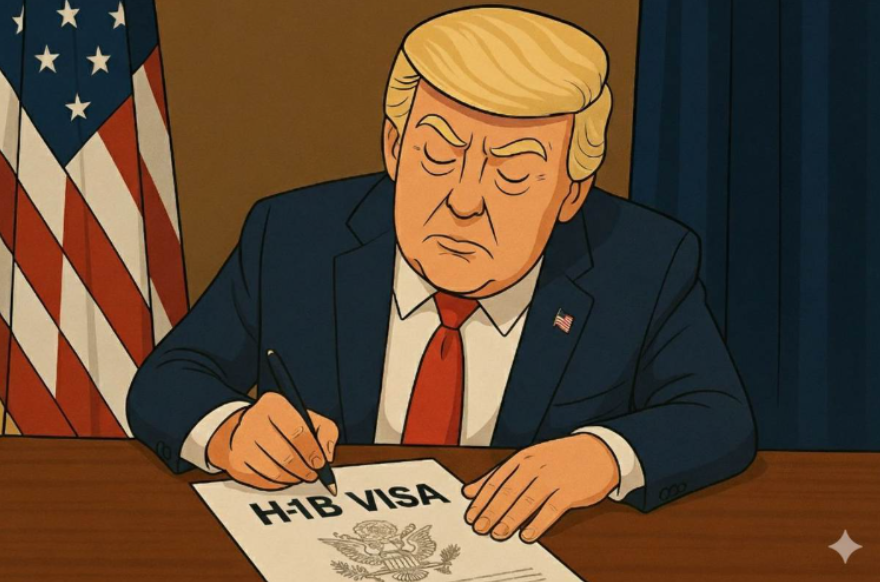
    For the first time in two decades, U.S. relations have become a domestic political issue in India. In the U.S., with Trump’s influence, issues like immigration, deportations, H-1B visas (72% held by Indians), offshoring, and technology sharing could turn India into a partisan topic.

    Mistrust over third-party relations- such as India’s ties to Russia and U.S. dealings with China and Pakistan was previously managed. Tariffs on Russian oil, however, change this narrative. Trump’s comments, including calling India a ‘dead economy,’ have just added fuel to the tariff fire.

    A negotiated settlement in the near future could restore confidence, secure U.S. export gains, and keep strategic ties intact. Failure could see supply chains rerouted, investments delayed, and both economies paying the price for this unwarranted trade war. As former Foreign Secretary Shyam Saran puts it, India must “endure short-term pain to safeguard long-term sovereignty.” However, political scientist Pratap Bhanu Mehta is blunter, warning that Modi risks’ humiliation’ if he cannot manage a dignified off-ramp.

  • Russia’s Kamchatka Hit by 8.8 Magnitude Earthquake; Pacific Nations on Tsunami Alert

    Russia’s Kamchatka Hit by 8.8 Magnitude Earthquake; Pacific Nations on Tsunami Alert

    The United States Geological Survey (USGS) stated that the quake was at 23:24 UTC (05:54 IST, 30 July), some 119 km southeast of Petropavlovsk-Kamchatsky, an urban municipality in Kamchatka Krai. The earthquake was of relatively shallow depth of 19 kilometres, which maximises its capability to cause surface effects.

    The quake struck near Petropavlovsk-Kamchatsky, close to a volatile underwater fault line where tectonic plates constantly battle for dominance — the Kuril-Kamchatka Trench, infamous for past megaquakes.

    The ground trembled. Sirens cried out. Millions rushed to the top. A strong 8.8-magnitude earthquake off the Kamchatka Peninsula in Russia late 29 July sent shockwaves across the Pacific Rim and prompted widespread tsunami warnings from Chile to Japan. The quake, which was one of the most powerful in more than ten years, triggered a worldwide series of evacuations, emergency responses, and a tense wait for impact.

    Epicentre and Geological Details 

    The United States Geological Survey (USGS) stated that the quake was at 23:24 UTC (05:54 IST, 30 July), some 119 km southeast of Petropavlovsk-Kamchatsky, an urban municipality in Kamchatka Krai. The earthquake was of relatively shallow depth of 19 kilometres, which maximises its capability to cause surface effects.

    The quake struck near Petropavlovsk-Kamchatsky, close to a volatile underwater fault line where tectonic plates constantly battle for dominance — the Kuril-Kamchatka Trench, infamous for past megaquakes.

    Tsunami Warnings and Evacuations

    In less than ten minutes, the Pacific Tsunami Warning Centre (PTWC) came online and sent out warnings for countries in the Pacific, including French Polynesia, Japan, Chile, Hawaii, California, Alaska, Ecuador, Peru, and Colombia. Among the coordinated responses were that  Japan evacuated almost 2 million people from coastal prefectures; one person died due to the evacuation efforts. In the coastal areas of Chile, the evacuation involved more than a million people due to “red alerts”.   Hawaii declared an emergency, closed ports, rerouted traffic, activated statewide sirens, and opened public shelters.

    Western U.S. states, ranging from California to British Columbia, issued tsunami advisories; Crescent City in Northern California issued a warning about potential wave amplification due to underwater topology, despite the fact that actual wave heights were recorded at just over 1 foot (~0.3 m).

    By 31 July, the majority of regions had reduced or revoked warnings; Chile remained on alert, New Zealand kept coastal areas off-limits, and other countries adopted cautious advisory stances.

    The United Nations Office for Disaster Risk Reduction (UNDRR) attributed the quick, synchronised response of the governments and the emergency services to “effective early warning systems and evacuation protocols.”

    Initial Impact and Damage Reports 

    Even though the earthquake was very powerful, no fatalities have yet been reported as of August 3. Russian officials in the Far East reported minor injuries, minor damage to buildings and power supply disruption in certain areas. Kamchatka Krai and portions of Sakhalin Oblast are yet to be physically inspected.

    Russian rescue forces were sent during the night, and the local authorities declared a state of heightened alert. However, the isolation of the epicentral region most likely limited casualties.

    Nuclear and Military Facility Concerns

    What rattled beneath the surface may have shaken more than just the earth. Some of Russia’s most classified military facilities, including naval bases thought to contain nuclear submarines, were dangerously close to the epicentre. As international intelligence services step up satellite surveillance in search of any indication of structural damage or compromised security, the Russian Defence Ministry’s silence has only stoked rumours. The earthquake has caused anxiety well beyond seismic circles in an area already shrouded in military secrecy.

    Global Seismic Significance

    The July 29 earthquake ranks as the world’s second most powerful earthquake after Japan’s 2011 Tōhoku earthquake, which had a magnitude of 9.1 and caused a devastating tsunami. It is currently the sixth most powerful earthquake to be registered by seismographs since the year 1900.
    Seismologists believe this movement is possibly part of a broader Pacific Ring of Fire tectonic process that will continue to have aftershocks for weeks.

    International seismic safety protocols are receiving more attention as a result of this incident. Budget cuts are a concern; experts stress maintaining and increasing funding for organisations like PTWC, which are essential to early warning effectiveness. There is growing support for regular simulation drills, public education campaigns, and better coordination among national meteorological, defence, and disaster management agencies, especially in areas vulnerable to megathrust earthquakes. Talks have started about extending reliable early-warning systems into under-monitored regions, particularly the Atlantic Ocean basin and Indian Ocean zones, beyond current networks.

    Although the Kamchatka earthquake did not cause significant damage relative to its strength, specialists highlight that it serves to highlight the ongoing seismic danger for countries along the Pacific. Authorities are reminding people who are in risk areas to be aware of safety protocols, especially since aftershocks and secondary risks can still materialise

  • Is ‘F1 – The Movie’ Hollywood’s Victorious Return to the World of Racing Movies?

    Is ‘F1 – The Movie’ Hollywood’s Victorious Return to the World of Racing Movies?

    ‘F1: The Movie’ follows Sonny Hayes (Brad Pitt), an ex-F1 driver who retired from the sport after a career-ending injury and now races in any series he can, in any car he can, chasing the need for speed. Hayes is brought back to Formula One at the request of Apex GP team owner, Ruben Cervantes (Javier Bardem), who used to be his teammate during his first stint in F1. Hayes is set to drive along with Apex GP’s rookie driver, Joshua Pearce (Damson Idris).

    From the get-go, it’s made very evident that Hayes is a one-man team and he only listens to one man: himself, and that he is not above putting himself or others in harm’s way if it gets him that win. We see this perception challenged over the course of the film as Hayes bonds with the Apex GP team, but despite his best efforts, the team struggles to stay afloat.

    The Good…
    The film does an incredible job of immersing you in the world of racing. During a scene in the third act of the film, Hayes describes the perfect moment of being in the car, one where he feels like he’s flying. You see this feeling play out during the last race of the season, and you truly understand exactly what he was talking about.

    Claudio Miranda, the Director of Photography for this film, took the work he and Joseph Kosinski did during Top Gun: Maverick and built on it further. Miranda and Kosinski have worked together multiple times, and Miranda describes their relationship as one where they love to overcome new challenges. With Top Gun: Maverick, that was fitting six cameras into the cockpit of a fighter jet, and with F1, their enemy was weight. To tackle this problem, they fit a Sony FX3 sensor (a very accessible camera) into a camera body, and Panavision built custom remote heads that could be rigged onto the cars, which give us the iconic whip pans during the racing sequences of this film.

    … the Bad…
    Fans of the sport did receive more than enough warnings from the internet and early reviews to leave the technical brain behind and just enjoy the film for what it is: entertainment. Unfortunately, there were quite a few moments when the suspension of disbelief was thrown entirely out the window. Whether it be as tiny as the F1 race calendar being jumbled around or as large as the Apex GP team dealing with car damage fairly often, as a team on the verge of bankruptcy and liquidation, these errors start to pile on. These details are supposed to act like easter eggs and hype up any fans of the sport watching, and it’s actually a great way to up the stakes if you think about it from a narrative point of view.

    Besides the little technical errors, it might not be the best representation of the current era of racing (the early 2010s to now). From a meta perspective, this film is neither fictional nor documentary in nature, with a fictional team made up of characters inserted into the real, current world of F1. Put in the context of racing films as a whole, Cars is an entirely fictional movie with fictional characters. Movies like Rush or Ford v Ferrari, other classics in the list of racing films, while exaggerating historical events for drama, are still built with a foundational truth to them. This film falls smack in the middle of those two. There’s no easy solution to this, of course. They couldn’t have created an entirely new grid filled with fictional characters and teams, and creating a narrative around a current driver would defeat the purpose of this film entirely.

    … and the Ugly.
    Unfortunately, getting racing wrong isn’t the worst thing this movie does, because its portrayal of women characters is lacking, to say the least. There are 4 female characters in the film – one in a minor role, two in side roles, and one in the main role.

    Kate McKenna is the technical director of Apex GP, but has her power almost constantly undermined by Hayes, who asks her to change the entire aerodynamics model of the car. The other two female characters of note are Jodie, a mechanic who’s a part of the pit crew, and Bernadette, Joshua’s mother. Bernadette still feels like a fleshed-out character, one whose point is to illustrate the sacrifices that the families of the drivers have to make. Jodie, however, suffers a fate similar to Kate’s. When we first meet her, she’s seen as a mumbling mess in front of a hot-headed Pearce, and not long after, we see how her mistake costs the team a valuable pitstop.

    Taking both Kate and Jodie’s characters together, it feels like this movie goes out of its way to undermine the role of women in the sport, a hot topic in the last couple of years as the sport has gained more popularity. But in 2025, it feels particularly hurtful because of all that women have accomplished in motorsports in the last year alone. From Laura Mueller becoming the first female race engineer for Esteban Ocon of the Moneygram Haas F1 team to F1 Academy gaining massive popularity in its first two seasons, women have come a long way to prove that they belong in motorsports.

    Simone Ashley was also announced to be in the film in July 2024, but by the time the film actually premiered less than a year later, her role was cut down significantly. She was set to play Joshua Pearce’s love interest, but the storyline was entirely cut out. When asked about this, Kosinski stated that this is what often happens in movies and that they “shoot a lot more than they can actually use,” while still praising Ashley. This is, however, a larger trend in the industry that people of colour, especially women of colour, have their roles in production severely cut down by the time the final product makes it to our screens.

    At the end of the day, F1 is a film built for blockbuster entertainment, and it does that very well. It comes at a lot of costs, especially to the history of the sport and how far it’s come. This isn’t even close to Pitt’s best performance in a sports film (see: Moneyball), and for a fair bit, it comes across as a distant legacy sequel to Tony Scott’s Days of Thunder (which came out on the same day in 1990 as the world premiere of this film). Should you still go and watch this film in theatres? Absolutely! And if you so wish, become a fan of the sport itself and immerse yourself in the very rich, often very funny, often quite scandalous world of Formula One.