Category: Global

  • Elon Musk Launches America Party: Fiscal Conservatism, Electric Cars, Revenge

    Elon Musk Launches America Party: Fiscal Conservatism, Electric Cars, Revenge

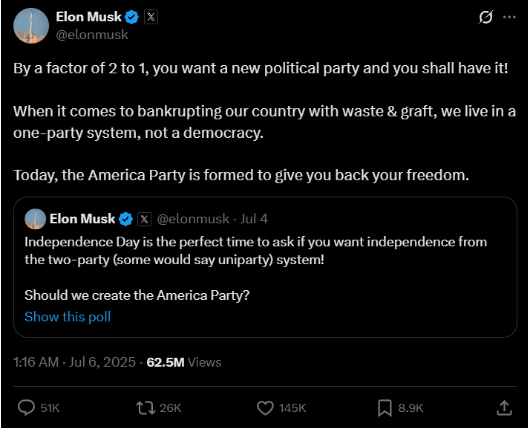
    Billionaire Elon Musk, on Saturday, announced the launch of a new ‘centrist’ political party, the ‘America Party,’ which looks like both a political gamble and an escalation to his very public feud with US President Donald Trump. In a series of posts on his platform X, Musk has positioned the new party as a direct challenge to America’s historic two-party system.

    “By a factor of 2 to 1, you want a new political party, and you shall have it!” Musk posted, citing a poll he ran on X. He added, “When it comes to bankrupting our country with waste and graft, we live in a one-party system, not a democracy. Today, the America Party is formed to give you back your freedom.”

    However, there is no evidence as of now of Musk formally registering the party with the Federal Election Commission (FEC). Musk, who was born in South Africa and is ineligible to run for president, has not named a leader for the party yet.

    The announcement comes against the backdrop of a dramatic public split with Trump, whom Musk had previously supported with over $275 million in campaign donations. Musk has even served in Trump’s administration as the head of the so-called Department of Government Efficiency (Doge), where he oversaw aggressive cuts to federal programs.

    Their falling out began after Musk publicly criticised Trump’s massive tax and spending bill, which the latter refers to as ‘one big beautiful bill’, which was signed into law last week and is expected to add over $3 trillion to the national deficit. Musk, a prominent leader in the EV industry, has very publicly made his opinions known on the bill, which omitted subsidies for electric vehicles, a key interest for Tesla.

    Trump has since then publicly dismissed Musk’s new party as ‘ridiculous’, calling Musk a “TRAIN WRECK” that has gone “off the rails.” Trump has also threatened to revisit federal contracts with Musk’s companies, including SpaceX and Starlink, both of which rely heavily on government deals. He further hinted at potential moves to strip Musk of subsidies or even reconsider his immigration status, despite Musk having been a US citizen since 2002.

    Unbothered by the president’s remarks, Musk suggested that the America Party could start by focusing on a handful of highly contested House and Senate races in the 2026 midterms. He argued that winning just a few seats could give the party leverage in a closely divided Congress.

    Meanwhile, a Reuters report has pointed to a slide of nearly 8% in Tesla’s shares on Monday, following Musk’s announcement. The company is now tasked with selling more than one million vehicles in the second half of the year to avoid a year-on-year decline in sales. If the stock slide continues, Tesla will lose over $80 billion in market value. Can Tesla afford this political venture, given how Trump’s initial threats to cut off subsidies to Musk’s businesses led to a $150 billion wipeout in Tesla’s market cap in a single trading session?

    Despite Musk’s confidence, US political history has shown little success for third parties. So far, the America Party looks more like a personal vendetta than a serious political movement. There are no declared candidates and no clear policies beyond Musk’s usual focus on cutting government spending. No known lawmakers have shown any interest in defecting to his fledgling party.

    In reality, there’s little evidence of a strong voter bloc eager to rally behind Musk. His millions of followers on X and strong financial resources don’t necessarily translate into political power. Without a coalition of committed candidates and grassroots supporters, the America Party risks becoming just another news headline, fizzling out entirely once Musk’s attention shifts elsewhere.

  • Diogo Jota, Portugal and Liverpool Footballer, dies in road accident

    Diogo Jota, Portugal and Liverpool Footballer, dies in road accident

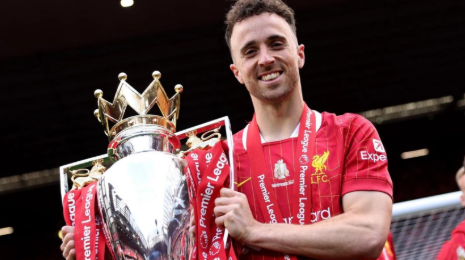
    Diogo Jota, Portuguese footballer for Liverpool FC, died in a road accident on 3rd July, 2025, at the age of 28. His younger brother Andre Silva, travelling with him, was also killed in the accident.

    Just 11 days after his wedding, Jota was returning to England for pre-season. Having recently undergone lung surgery, he was advised to avoid air travel, so he planned to go from Spain to England via ferry. On their way to the port, while trying to overtake another car they suffered a tyre blowout, veering off the road before fatally catching fire. The crash occurred at around 00:30 CEST.

    Tributes poured in worldwide after the deaths were officially confirmed. Many of Jota’s Liverpool and Portugal teammates expressed shock over the news, reminiscing about their shared memories and recent success for club and country. Arne Slot, Liverpool head coach, remarked, “For us as a club, the sense of shock is absolute. Diogo was not just our player. He was a loved one to all of us.” Liverpool announced that they would pay his family the remaining amount of his contract, which ran until 2027. In their reunion performance on 4th July, British band Oasis paid tribute to Jota, with his picture appearing on screen when they performed ‘Live Forever’.

    Born on 4th December 1996 in Porto, Portugal, Jota started his professional football journey with Paços de Ferreira in 2013, becoming the youngest player to score for the club in the Primeira Liga. After playing for various teams like FC Porto and Wolverhampton Wanderers, he was signed by Liverpool FC in 2020. At Liverpool, he helped the team win the cup double in 2022, clinching both the FA Cup and the EFL Cup, as well as winning the league in the 2024-25 season. He was also part of the squad that reached the UEFA Champions League Final in 2022, losing out to Real Madrid 1-0. For Portugal, Jota made his international debut in 2019, contributing to them winning the UEFA Nations League twice, in 2019 and 2025. The 2025 win over Spain was his final match as a football player. He also made appearances for Portugal at the 2021 and 2024 European Championships. Overall, he earned 49 caps for Portugal.

    He is survived by his wife Rute Cardoso, their three children and the millions of fans whose hearts he touched.

  • A Costly Consensus: NATO’s 5% Defence Pledge and the Trump Effect

    A Costly Consensus: NATO’s 5% Defence Pledge and the Trump Effect

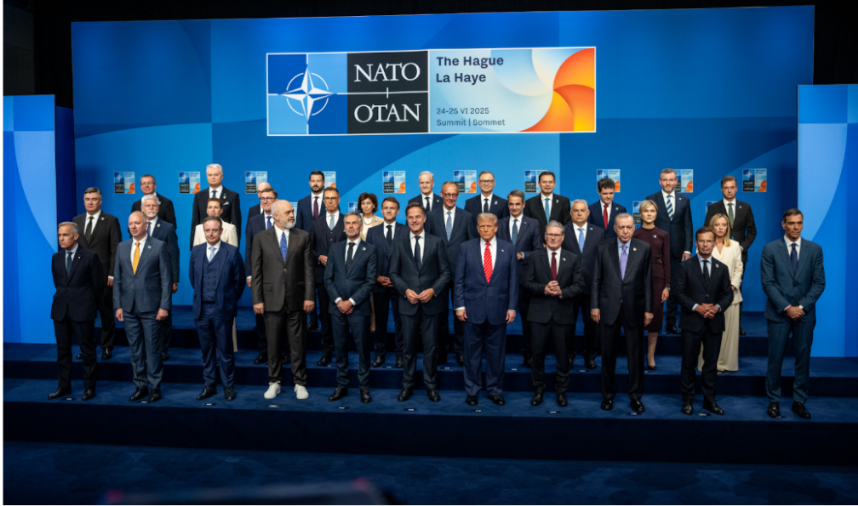
    In the 2025 North Atlantic Treaty Organisation (NATO) Summit held from 24 June to 26 June, a strong commitment was made by all the NATO countries. The member states have finally agreed to ramp up their defence spending goal to 5% of their gross domestic product (GDP) by 2035, a major jump from the previous target of 2% set in 2014.

    The US president has raised questions about NATO’s collective defence strategies for several months now, narrowly referring to Article 5 of NATO’s Alliance in his defense, which states, “An armed attack against one or more of the allies shall be considered an attack against them all. Trump has avoided explicitly endorsing the clause, claiming there are “multiple definitions of Article 5,” a move seen by many as an effort to avoid confrontation with Russia.

    In response, NATO has worked towards a compromise, agreeing to increase defence spending to keep the U.S. engaged in the alliance. The 32 countries have decided to dedicate 3.5% of their GDP to crucial military needs and 1.5% to other elements such as cybersecurity, infrastructure, etc.

    NATO has publicly stated that the alliance must work towards deterring Russia’s military force. “NATO needs a “quantum leap” in defence to deter threats to the alliance”, Rutte mentioned in a speech given in London, earlier this month. Thus, he urged member states to invest more funds towards defence.

    Trump went on Truth Social to share a message sent to him by NATO Secretary-General, Mark Rutte. In the message, Rutte acknowledged that Trump has driven NATO towards a very important global decision. He also added that Trump has “achieved something NO American president in decades could get done.”

    A New York Times report highlights that Trump has previously bashed NATO for not allocating adequate funds for defence, particularly in the face of threats like Russia. During his first term, Trump had threatened that the USA would exit the NATO alliance. Experts believe that Trump may be undermining NATO from within and that this dramatic agreement was primarily made to ensure that the USA remains an enthusiastic participant in NATO.

    Image Source: WhiteHouse/ @x.com 

    However, not all 32 countries were satisfied with this decision. Spain’s Prime Minister, Pedro Sanchez, had sent a letter to Mr. Rutte saying that Spain “cannot commit to a specific spending target in terms of GDP.” Sanchez insisted that Madrid would need only 2.1% percent of GDP to acquire and maintain all the personnel, equipment, and infrastructures requested by the alliance to confront these threats with their capabilities.

    As a result, every member state will not be forced to reach the 5% threshold; however, there are some standard military requirements that every country is required to meet. Trump vowed that he would make Spain pay for this “terrible” decision. “I like Spain … It’s a great place and they’re great people. But Spain is the only country out of all the countries that refuses to pay. And, you know, so they want a little bit of a free ride, but they’ll have to pay it back to us on trade because I’m not going to let that happen,” Trump said.

    This commitment was shaped as much by the strategic urgency felt by all 32 countries within the NATO alliance. As they rush to present a united front, a divide is forming within the coalition itself. As key participants like Spain are raising their voices against major players like the US.

  • Big Heels to Fill: Looking Back 37 Years as Anna Wintour Steps Down as Editor-in-Chief of American Vogue

    Big Heels to Fill: Looking Back 37 Years as Anna Wintour Steps Down as Editor-in-Chief of American Vogue

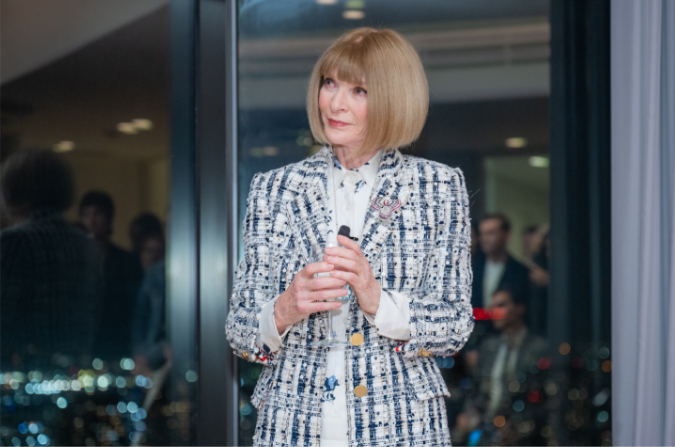
    Nearly 40 years and many a cultural revolution later, Dame Anna Wintour steps down as the Editor-in-Chief of American Vogue. Throughout her tenure, Wintour has been regarded as the most powerful woman in world fashion, with her signature bob and sunglasses becoming an iconic symbol of her influence in the fashion industry.

    While her reign at American Vogue began in 1988, Wintour had a long journey in the industry before becoming the Editor-in-Chief. Journalism runs in her family, as her father, Charles Wintour, was twice the Editor-in-Chief of the London-based Evening Standard. Anna’s career began in fashion journalism after she dropped out of college. By 1975, she was working as a junior fashion editor at Harper’s Bazaar in New York.

    In 1983, a conversation with Alex Liberman, the then editor of Condé Nast, got Wintour an open position at Vogue. After a bidding war that resulted in a doubled salary, she accepted the role, becoming Vogue’s first-ever Creative Director.

    As the creative director, Wintour reimagined the vision of American Vogue, breaking away from the traditionalist influence that Grace Mirabella, the Editor-in-Chief at the time, had brought to the magazine. She pushed the boundaries by bringing out more dramatic layouts and bold photography, which later earned her the position of Editor-in-Chief in 1988.

    However, before stepping into her role as the Editor-in-Chief at American Vogue, Wintour served as the Editor-in-Chief of British Vogue from 1985-1987, where she quickly earned the nickname ‘Nuclear Wintour’ for her bold and drastic editorial decisions. After her time at British Vogue, she moved back to New York to take over House & Garden – a Condé Nast shelter magazine which she famously renamed HG, filling its pages with high fashion and lifestyle features.

    Right from her first issue as Editor-in-Chief of American Vogue, the November 1988 issue, Anna Wintour made sweeping changes to the cover, which revolutionised the magazine. This cover featured 19-year-old Israeli model Michaela Bercu styling a $10,000 bejewelled Christian Lacroix top paired with a $50 pair of faded blue jeans in a candid outdoor setting. This cover, which featured Vogue’s first cover model styling jeans, was so radical to the magazine’s traditional style that the printer mistook it as the wrong image when he saw it for the first time.

    Wintour’s fresh remodel of the magazine birthed a new trend in the industry- the ‘high-low’ look, which, as the name suggests, comprises one high-end luxury item paired with a more understated, low-budget piece. From there on, her work has been pivotal in shaping the fashion magazine into a pop-culture powerhouse.

    Throughout her tenure, Wintour is known for having promoted the emergence of the supermodel era, giving names like Linda Evangelista, Cindy Crawford, and Naomi Campbell international recognition while also bringing emerging designers like Marc Jacobs and Alexander McQueen to the forefront. By featuring celebrities like Madonna, Oprah Winfrey, Michelle Obama, and soon stars like Kim Kardashian and actress Zendaya on the cover, Wintour also began the trend of celebrities becoming cover stars, which spiked magazine sales and reimagined Vogue’s identity.

    Her influence is not limited to the magazine and its widely known covers. As the lead chairperson, Wintour transformed the Met Gala from a museum fundraiser to one of the most anticipated nights in fashion, curating guest lists and themes with precision. Wintour has also received numerous accolades for her contributions to fashion and philanthropy, including the Order of the British Empire and the Presidential Medal of Freedom.

    While Dame Anna Wintour steps down as the Editor-in-Chief, she is not completely exiting the fashion scene. She will continue her roles as Global Editorial Director for Vogue and Chief Content Officer for Condé Nast.

    Still, her last days as Editor-in-Chief are not without controversy. Her decision to feature Lauren Sánchez Bezos, media personality and wife of Amazon founder Jeff Bezos, on what now appears to be her final Vogue cover has caused quite the stir online. The cover showed their high-profile wedding in Venice, with Lauren Sánchez Bezos wearing a custom Dolce & Gabbana wedding dress. Social media users are criticising Vogue for flaunting billionaires and are accusing the magazine of publishing paid covers, especially in the current political climate where there are growing conversations about wealth disparity and elitism.

    Now, the big question lies – who could fill the legendary heels left by Wintour? Online speculations are aplenty about possible candidates for the new job, but there is no official word on who will take over as Wintour’s successor. Whoever takes on the role of Editor-in-Chief of American Vogue will work under Wintour as she continues as Global Editorial Director for Vogue.

    Wintour has not been a mere leading force at Vogue – she has transformed it. As the industry absorbs this shift, one thing is clear: Anna Wintour is hardly leaving fashion. She’s simply changing its shape—again.

  • The World’s Largest Data Breach: 16 Billion Passwords Leaked

    The World’s Largest Data Breach: 16 Billion Passwords Leaked

    On June 18, 2025, the digital world was rocked by an unprecedented breach: over 16 billion login credentials were leaked online, drawn from at least 30 separate datasets. Cybersecurity researchers have confirmed this as the largest credential dump ever recorded.

    While rumours flew that major players like Apple, Facebook, and Google were hacked, Cybernews, the news outlet that looks into cybersecurity research, testing and data, quickly clarified there is no indication that this is true. As Cybernews expert Bob Diachenko noted, this “opens the doors to pretty much any online service imaginable,” not because the infrastructure was compromised, but because stolen credentials were tied to major platforms.

    Infostealer malware infiltrates devices—typically through phishing, malicious downloads, or pirated apps—and quietly harvests sensitive data, including stored passwords, session cookies, and tokens. This leak includes a large number of social media login credentials, VPNs, and other user accounts.

    This latest leak included everything from social media logins to VPN credentials and other sensitive account information. It doesn’t just affect a handful of people—millions around the world, especially in Asia, Africa, and Latin America, are at risk due to rapid digital growth alongside weaker cybersecurity infrastructure.

    However, there exist other perspectives. Hudson Rock, an Israeli cybersecurity company, said that its data showed approximately 50 credentials stolen for every computer. So, for it to add up to 16 billion, around 320 million devices would be needed. This number is highly unrealistic. The company also mentioned that the leak is not very dangerous, as a majority of the data leaked could be AI-generated or recycled.

    To counter the risks, experts across the security community advise taking immediate steps:

    1. Change passwords for any account you have reused elsewhere.
    2. Enable two-factor or multi-factor authentication or adopt passkeys.
    3. Use a trusted password manager to generate unique, strong passwords per account.
    4. Make sure to consistently monitor your accounts for unusual logins and enable security notifications.

    The credential leak serves as a stark reminder of the growing threat posed by infostealers and the importance of cybersecurity and digital hygiene. The sheer magnitude of the exposure necessitated prompt action from both users and institutions, even though the compromised credentials were not the result of a single breach. Now more than ever, it’s crucial to use strong passwords and watch out for signs of suspicious activity, like unfamiliar login attempts or account changes you didn’t make.

  • The People’s Pope: Leo XIV’s Path from Peru to the Papacy

    The People’s Pope: Leo XIV’s Path from Peru to the Papacy

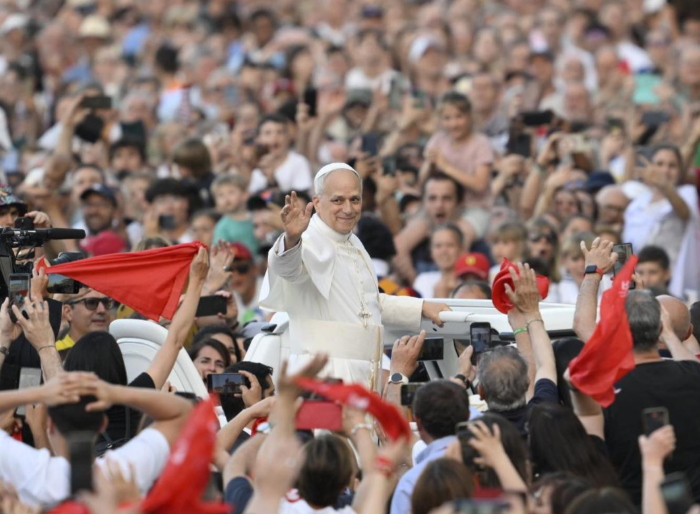
    At 6:07 P.M. Vatican time on 8 May 2025, the new Pope was officially announced. White smoke rose from the Sistine Chapel, followed by the ringing bells at St. Peter’s Basilica, signalling the announcement. Clad in a white cassock and red cape, the newly elected pope stepped onto the balcony, where thousands had gathered, waiting eagerly for the declaration of a new era in the papacy.

    Just 17 days after Pope Francis’ death, Robert Francis Prevost was introduced as Pope Leo XIV — the 267th pontiff, and the first U.S.-born man to hold the title. Born in Chicago in 1955 to parents of Spanish and Franco-Italian origin. “I was born in the United States… But my grandparents were all immigrants, French, Spanish… I was raised in a very Catholic family, both of my parents were very engaged in the parish,” he said to BBC News. Former Archbishop of Boston, Seán Patrick O’Malley wrote on his blog that the new pontiff “has chosen a name widely associated with the social justice legacy of Pope Leo XIII, who was pontiff at a time of epic upheaval in the world, the time of the industrial revolution, the beginning of Marxism, and widespread immigration”.

    Pope Leo XIV grew up in the suburbs of  Dolton, Ill., just outside Chicago, where he spent his early years as an altar boy before he was ordained in 1982. In 1985, Pope Leo moved to Peru, where he spent a decade as a local parish pastor and as a teacher at a seminary in Trujillo in northwestern Peru, helping the Peruvian people recover from the devastating aftermath of El Niño.

    In 2015, Pope Leo obtained Peruvian citizenship. He referred to the country as “mi segunda patria,” which translates to “my second homeland.”

    Pope Leo XIV blessing a baby/ Source: Instagram/ @pontifex

    “Peru is rejoicing at the election of Pope Leo XIV,” said Archbishop Gualtieri, in an interview with The Vatican News, in the same interview, he also recounted Cardinal Prevost’s compassionate leadership during the difficult times of the 2020 pandemic, describing how Pope Leo was a ray of light and hope for the Peruvian people, which is why they are fond of him even today. “He would arrive and he was very, very warm with the people, especially the people of the Sierra to whom he would offer his help. He would deliver food and other supplies to remote areas, sometimes carrying sacks of rice himself.” Reverend Elmer Uchofen recounted to the New York Times. Pope Leo has always been and will continue to be a strong and outspoken supporter of immigrants and indigenous communities.

    Meanwhile, amid rising crises such as increasing inequality, climate change, global migration, violence, and protracted wars, the role of the Pope is more crucial than ever. However, the Catholic Church is wrestling with its internal struggles and conflicting views.  In recent years, a gradual rift has emerged within the Catholic Church, specifically between the Progressives and Conservatives. The Conservatives wish to regress to older mechanisms in the Latin Mass, while the Progressives appeal for more inclusivity in pastoral care. Pope Leo XIV’s moderate approach, blending traditional values and progressive leadership, may successfully lead to the reconciliation of opposing views within the Catholic Church and enhance its mission. Pope Leo is also most likely to follow a synodal fashion to lead the Church. Synodality is an inclusive approach of leadership in the Catholic Church, which encourages priests to partake in the decision-making process, ensuring that the diverse voices of the Church are always taken into consideration. He considers collaborative approaches critical to establishing unity and ensuring effective pastoral care.

    Pope Leo XIV has thus been labelled as ‘The Missionary Pope’ with years of missionary and humanitarian service under his belt. Near the end of his first General Audience given from the balcony of St. Peter’s Basilica, Pope Leo XIV said, “The situation in the Gaza Strip is increasingly worrying and painful.” He also renewed his appeal for the entry of dignified humanitarian aid and an end to the hostilities, noting that the heartbreaking price was being paid by children, the elderly, and the sick. This public statement indicates that Pope Leo XIV intends to follow in the footsteps of Pope Francis, who frequently spoke out against violence and advocated for peace and compassion during times of conflict.

    Pope Leo XIV’s journey from the humble suburbs of Chicago through his missions in Trujillo to his first address given from the grand balcony of the Vatican reflects a pilgrimage that bridges different cultures, continents, and the evolving face of the Catholic Church. At a turning point for both the Roman Catholic Church and the world at large, Pope Leo’s life reflects a deep understanding of suffering, justice, and renewal; these qualities will guide his papacy in navigating the moral and spiritual challenges of the 21st-century church. As Pope Leo XIV enters a fragmented world and a divided Church, all eyes are on whether he can transform his missionary past into a legacy of reform and rebirth.

  • Dandyism Redefined: The Cultural Fabric of the Met Gala 2025

    Dandyism Redefined: The Cultural Fabric of the Met Gala 2025

    5th May 2025, the first Monday of the month, saw fashion’s most iconic night- The Met Gala, at New York’s Metropolitan Museum of Art.

    The Theme

    The theme for this year’s gala was ‘Superfine: Tailoring Black Style’, inspired by Monica L. Miller’s book titled Slaves to Fashion: Black Dandyism and the Styling of Black Diasporic Identity. The book explores black dandyism and the use of fashion for self-expression and cultural resistance. Curated by Monica L. Miller, the chair of Africana Studies at Barnard College, and Andrew Bolton, the head of the Met’s Costume Institute, the dress code ‘Tailored for You’ encouraged attendees to tailor the theme to their creative interpretations, with the exhibit focusing on menswear.

    What is Black Dandyism?

    Emerging from the late-nineteenth to early-twentieth centuries after Emancipation, Black Dandyism is a cultural movement in which African Americans use fashion as a form of self-expression and a way to reclaim Black identity and the Black body. Tailored jackets, silk ties and fedoras are not merely stylish pieces of fashion; rather, they come from a powerful political movement in history that was paid homage to at the 2025 Met Gala.

    The Chairs for the Evening

    The evening began with the arrival of the lead chairperson and main organiser of the night, Anna Wintour, the Editor-in-Chief of American Vogue, and her co-chairs- Pharrell Williams, Colman Domingo, A$AP Rocky and Lewis Hamilton.

    Each year, the Met Gala’s carpet is custom-designed to complement the theme and colours of the night. This year’s carpet was woven by Extraweave, the parent company of Neytt Homes from Alappuzha, Kerala. Made from sisal fibre, imported from Madagascar, the carpet was midnight blue with white and yellow daffodils speckled on it. This was Extraweave’s third year crafting the Met Gala carpet, and this year’s carpet was crafted by 480 people over 90 days.

    Memorable Fashion Statements of the Night 

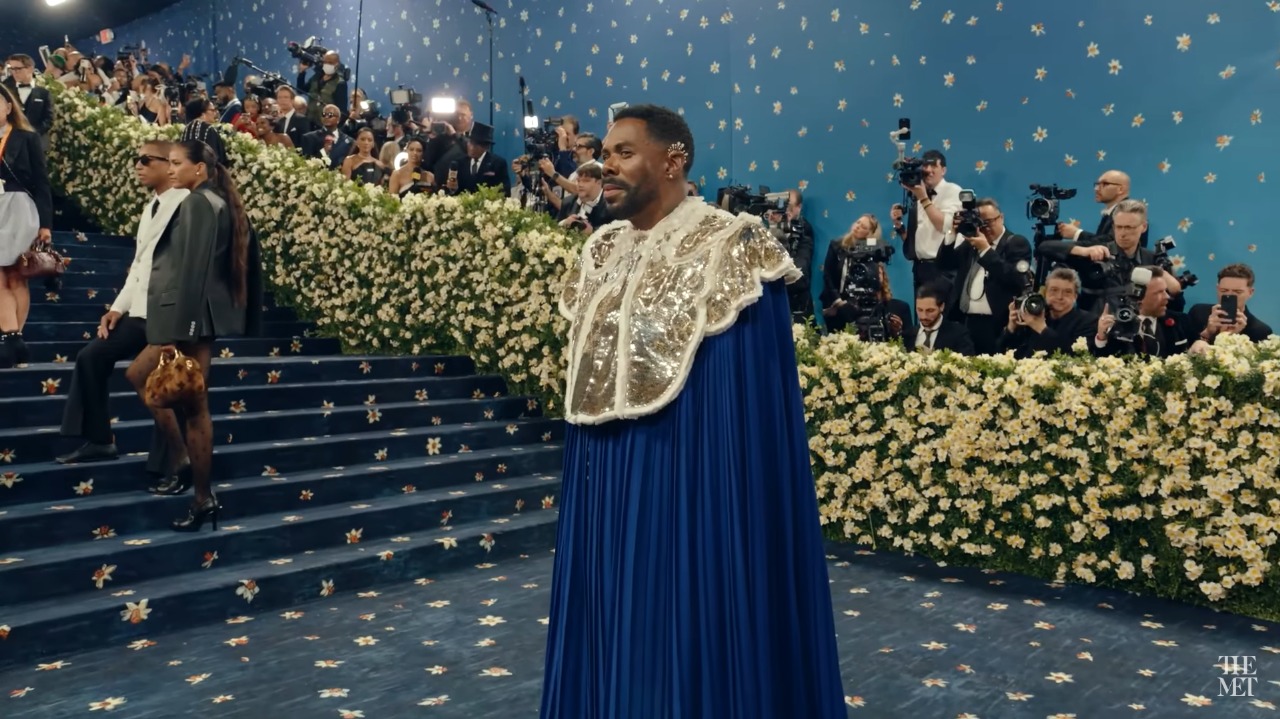
    Oscar-nominated actor and one of the co-chairs for the night, Colman Domingo, made a strong statement in a two-part Valentino look. He arrived on the carpet in a long, pleated royal blue cape with a statement gold sequined bolero. He soon removed the cape to reveal a black and white suit, a checkered blazer with a flower embellishment, gray pants, and a polka dot tie.

    Image Source: The Met / @YouTube

    One of the most talked-about entrances for the night was Rihanna’s, made special with the reveal of her third pregnancy in a custom Marc Jacobs corset dress-suit. The look comprised a black cropped woollen jacket, a grey bodysuit with a black pinstripe skirt and a hat designed by Marc Jacobs in collaboration with Stephen Jones.

    Shah Rukh Khan made his Met debut this year, being the first Indian male actor to attend the Gala.  He donned an all-black Sabyasachi suit, with a rhinestone-studded ‘K’ that stood out amongst his layered jewellery.  The finishing touch to the outfit was a cane crowned with a sculpted gold-studded Royal Bengal tiger’s head. Altogether, the actor’s look for the night paid homage to both Black Dandyism and his Indian roots.

    Also making his Met Gala debut from India was Diljit Dosanjh, whose regal look captured hearts from many. Diljit marked his Met Gala debut in a custom Prabal Gurung, incorporating his Punjabi roots in the Black Dandyism Tailored for You themeThe singer donned an ivory and gold sherwani, layered with a cape and a turban, along with a statement emerald necklace inspired by Maharaja Yadavindra Singh of Patiala. Diljit paid homage to his Punjab and his Sikh culture with an ornate kirpan (sword) in his hand and his cape detailed with a silhouette of the map of Punjab.

    Besides Rihanna, another baby bump was flaunted on the carpet as Kiara Advani made her Met debut this year. She came in a custom Gaurav Gupta, in a sculptural black gown adorned by an antique gold breastplate with ghungroos and crystals. The design symbolised a connection between mother and child, with Gupta describing it as “two hearts connected by an abstract umbilical cord.” Kiara Advani’s look was an homage to Andre Leon Talley, the late, legendary American fashion journalist and the first African-American creative director of Vogue.

    Zendaya made her return to the Met carpet in a custom Louis Vuitton suit designed by Pharrell Williams. Styled by Law Roach, her outfit was inspired by Bianca Jagger’s iconic wedding suit. The white monochromatic look was accessorised with a silver buttoned vest, a white floppy hat and Bulgari jewellery.

    One of the best-dressed attendees for this year’s Met Gala was singer-songwriter and actress Teyana Taylor. Designed by Ruth E. Carter,  the outfit was a near-accurate representation of the theme for this year. The burgundy red zoot suit look was layered beautifully with a dramatic cape. The outfit was accessorised with a matching durag, statement hat with a large ostrich feather and striking red leather gloves.

    Janelle Monáe arrived at the Met Gala in an outfit collaboration between Thom Browne and Oscar-winning costume designer Paul Tazewell. The custom-made outfit featured a stunning red, white and black trompe l’oeil dress and a monocle attached to a bowler hat. Her outfit also included a diamond brooch made out of 1800 Cristalino tequila.

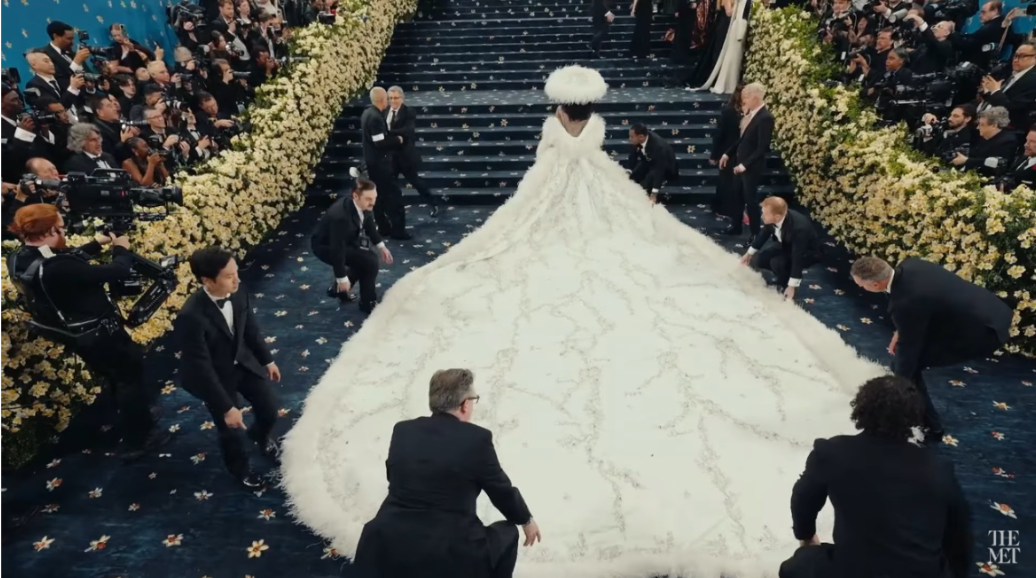
    Diana Ross made her long-awaited return to the Met Gala following a 22-year-long hiatus. She walked the carpet in a sweeping white gown featuring an 18-foot-long train embroidered with the names of her five children and eight grandchildren. This custom creation was a collaborative effort between the singer, her son Evan Ross, and Nigerian designer Ugo Mozie.

    Drawing on the rich history of Black fashion, attendees embraced the theme by donning well-tailored suits paired with bold accessories, each weaving their creative interpretations. As the gala concluded well into the early hours, the 2025 Met Gala once again proved its place as a cultural epicentre — not just of style, but of storytelling and resistance.

  • Pope Francis Dies at 88

    Pope Francis Dies at 88

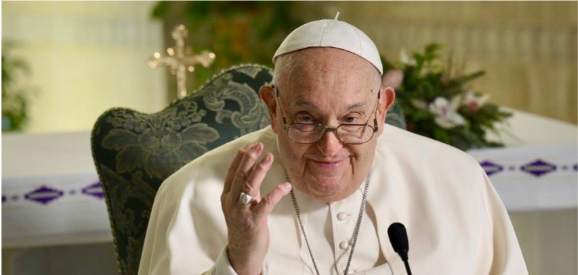
    Pope Francis, leader of the Catholic Church, passed away on April 21, 2025 at the age of 88, the Vatican announced today. The cause of his death was reported as a stroke followed by a Cardiac Arrest. This comes after he was hospitalised for a month due to double pneumonia and had recently returned to the Vatican to continue his recovery journey.

    He was born as Jorge Mario Bergoglio on 17th December 1939 in Flores, Buenos Aires. He had 4 siblings. After attending a technical secondary school, he graduated with a diploma as a chemical technician. Before finding his passion for religion, he worked several jobs, including as a Bouncer and Janitor.

    After the resignation of Pope Benedict XVI in 2013 due to old age, the Papal Conclave congregated to select their new leader. On March 13th 2013, Bergoglio was elected as the Pope. He took the papal name Francis, in honour of Saint Francis of Assisi. A pope of many firsts, Pope Francis achieved several milestones upon his election: the first Jesuit Pope, the first pope from the Americas, and the first ever from the southern hemisphere.

    Inclusivity in the church

    The Pope also set a milestone by showing openness to the LGBTQ+ community, unlike his predecessors. In a televised interview in 2013, when asked about priests who were homosexual, he replied: “If someone is gay and he searches for the Lord and has good will, who am I to judge?” In January 2023, he said that “Being Homosexual is not a crime” in an interview with AP. He also called out the laws that criminalise homosexuality “unjust”. In 2013, The Advocate, an American LGBTQ+ magazine, named him Person of the Year.

    Pope Francis’ deep affection for the poor was seen in multiple instances. On the first Holy Thursday after his election, he kissed and washed the feet of ten male and two female juvenile offenders imprisoned at Rome’s detention facility, telling them that this ritual signifies he was at their service. In this ritual, prisoners who followed Islam as their religion were also included by him, a landmark moment in the Vatican’s history.

    A voice for the Poor and victims

    Pope Francis chose this name because Saint Francis was extremely concerned with the welfare of the poor, and this was reflected multiple times during his papacy. Unlike popes from the past, Pope Francis had personal outreach with the homeless and poor. In a noble event, he turned a Vatican Plaza into a refuge for the homeless, whom he called “Nobles of the street”. He also practised a foot-washing ceremony of migrants and the poor to show he serves them.

    “I cannot greet people from inside a sardine can, even if it is made of glass”, said Pope Francis when asked about his outreach meetings. His holiness was also a passionate advocate for world peace. He called for a ceasefire between Israel and Palestine several times. According to Vatican News, it was reported that he would video call with the Holy Family Catholic Parish in Gaza every night since October 2024, offering prayers and solidarity to the residents, including Christians and Muslims. As a result of his acts of kindness, people called him “Champion of the Poor” and “Poor people’s Pope”.

    Pope on Climate Change

    Pope Francis left a deep impact on the issue of Climate Change. In his 12 years of papacy, he repeatedly raised the problem of human-caused global warming from burning fossil fuels. He encouraged citizens and world leaders to take action against the same.

    Pope Francis criticised developed countries like the US, which have contributed the most to planet warming pollution. He said poor nations have contributed the least to climate pollution. Francis inspired many Catholics to form climate groups, including The Global Catholic Climate Movement, which is now called the Laudato Si’ Movement. This movement aims to bring people together and fight the climate crisis while also protecting the environment and scrutinising eco-spirituality, sustainability, and social justice.

    Prime Minister of India, Narendra Modi and Pope Francis had their first-ever meeting during the PM’s visit to Italy in October 2021 for the G20 Summit. They discussed various issues, including Climate Change. Modi invited the Pope to visit India, which was politely accepted by Pope Francis. In their next meeting in 2024 at the G7 summit, PM Modi expressed his admiration for Pope Francis’ passion for the Environment and reiterated his invitation for a papal visit to India.

    Pope Francis did not just lead the Catholic Church, he changed what it stands for with compassion, humility and love. The world mourned as he passed away, with billions of Catholics and World leaders expressing their grief. His funeral was held on Saturday, 26th April, 2025, in Vatican City. Nearly 250,000 people attended his funeral. He remains as one of the only popes in over a century to be buried outside of the Vatican in the Basilica of Santa Maria Maggiore in Rome. While his views were widely praised, some traditional Catholics disagreed with his more progressive and liberal stance on social issues. Nonetheless, his legacy will always be remembered by the world.

  • Trump’s 2025 Tariffs vs. the Global Economic Fallout

    Trump’s 2025 Tariffs vs. the Global Economic Fallout

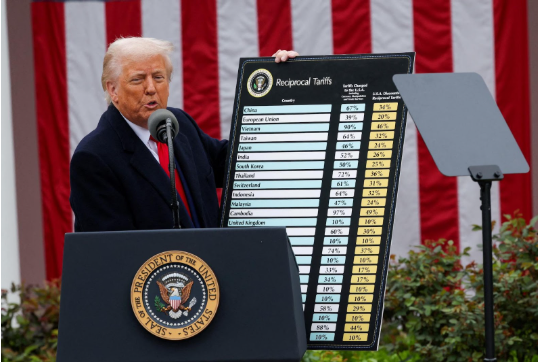
    American President Donald Trump’s anticipated return to the White House in 2025 came with a renewed “MAGA” (Make America Great Again) agenda, the first of which caused a worldwide domino effect on the trade sphere. At a major event in the White House Rose Garden on April 2, 2025, Trump’s oration enlightened America on excessively increased tariff rates moving forward, on imports from their major trading partners.

    The Organisation for Economic Co-operation and Development (OECD) has confirmed the average U.S. tariff rate to jump from 2.5% to the highest ever since 1938, 15.4%. China is faced with an effective tariff rate of 54% on certain goods, while India, the European Union, Japan, and South Korea all contend with tariffs between 20% and 34%. Even allies like Canada and Mexico, part of the USMCA agreement, have not been spared, slapped with 25% tariffs on most goods and 10% on energy products.

    Trump’s tariff policy stems from observing the U.S. trade deficit. His perspective of the current trade scenario is based on America suffering direct financial losses and not a complete structural macroeconomic metric. According to Trump, the more America imports, the more it bleeds. His solution? Tariffs, blunt,  and all-encompassing.

    Tariffs are Trump’s biggest tool to set the policy straight once and for all. It is expected to solve job losses, manufacturing decline, and foreign policy tensions once and for all. But should he believe that economic complexity can bend so easily to political tactics?

    The OECD has responded with stern warnings. In its revised global forecast, it lowered worldwide growth projections from 3.3% in 2024 to just 2.9% for 2025 and 2026. The U.S. itself is expected to slow from 2.8% to 1.6% in 2025, a sharp decline driven by declining investment and weakening consumer confidence. The OECD is clear: Trump’s tariffs are already disrupting trade, straining supply chains, and disincentivising corporate expansion.

    Tariffs are a strategic tool for the regulation and implementation of economic shielding, disguised as tax, that consumers are compelled to pay in the form of expensive pricing. This year’s tariffs were like a tidal wave crashing against sectors like Chinese electronics and Vietnamese textiles, to Indian pharmaceuticals and European automobiles. Businesses that depend on imports are now caught in a vicious cycle of absorbing higher input costs or passing them on to customers. For working-class Americans, the demographic Trump caters to, championing inflationary pressure has been the most direct blow as of yet.

    The new Trump-initiated “reciprocal tariffs” have caused a storm in nations like Cambodia (49%), Bangladesh (37%), Sri Lanka (44%), and Taiwan (32%) based on their trade barriers and utmost economic injustice. These countries have already been considered to be low-income economies that rely heavily on exports to the U.S., toppling them into instability as a whole. Thus, pushing them toward alternative trading blocs like BRICS or further into China’s sphere of influence.

    Allies of this policy see no wrong in it and have argued that the tariffs are necessary to counter decades of unfair trade, or in Trump’s words, “being ripped off,” and that restoring domestic manufacturing is the only way out. Economically, the increased tariff rates have caused a ripple effect across production ecosystems, increasing costs for everything from smartphones to semiconductors.

    The most alarming consequence of these tariffs is the probability of fracturing the global economy. The OECD warns that de-globalising production could reduce global GDP by up to 5%. Countries are already responding in kind, either with retaliatory tariffs or by strengthening trade agreements that exclude the U.S. Isolating America’s economy is trading risky waters during this troubled time of climate change, technological governance, and public health.

    These tariffs have alienated key allies in Europe and Asia, and penalised countries like India and Vietnam, which the U.S. was courting as strategic counterweights to China, the administration has unfortunately undercut its own foreign policy goals. It has become clear that economic power is a pillar of geopolitical influence, and weaponising trade risks eroding the very alliances that give the U.S. leverage in global affairs.

    Protecting America’s economic stature may offer temporary political gains, especially in key industrial swing states. But profound long-term costs will fester sooner or later in the economic, diplomatic, and social landscape. Tariff wars ending on civil terms have rarely shown up in history- declining innovation, loss of wealth, and regulation of painful methods of recovery will only be found at the end of this tunnel.

    President Trump, for now, should be reviewing his goals to ensure a more resilient and fair vision within this competitive American economy. The answer to successful trade policies and moulding America into a self-reliant nation lies not in walling off trade, but in investing in domestic capabilities: infrastructure, education, innovation, and green industries as the appropriate strategy that combines smart regulation, multilateral agreements, and long-term planning. It is essential for trade to reform, but not be completely wiped out of existence.

    The global economy is too interconnected, too interdependent, to retreat behind tariff walls. In choosing tariffs as his flagship policy once again since 2018, Trump may be betting on nationalism. But the world, and the economy, may not follow him this time.

  • Oscars 2025: Honouring the Year’s Finest in Cinema

    Oscars 2025: Honouring the Year’s Finest in Cinema

    The Dolby Theatre in Hollywood, Los Angeles, lit up on 2nd March 2025, as some of the best in American and global cinema gathered to celebrate the most powerful performances of the year at the 97th Academy Awards. This year, the prestigious annual ceremony was hosted by  Conan O’Brien, and the night’s lineup was compelling, bringing together a dynamic lineup of films spanning genres and cultures.

    Leading the night, Sean Baker’s comedy-drama Anora swept the Oscars, winning five out of the six nominations, for Best Picture, Best Actress for Mikey Madison, Best Director for Sean Baker, Best Original Screenplay and Best Film Editing. This series of wins places Sean Baker alongside Walt Disney for the most Oscars ever won in one night. In his acceptance speech, Baker emphasised the importance of preserving the theatrical experience, urging filmmakers to continue creating stories for the big screen.

    Emilia Pérez, directed by Jacques Audiard, made history as it garnered thirteen nominations, the most ever for a non-English language film. It won two awards, Best Supporting Actress for Zoe Saldaña and Best Original Song for the song ‘El Mal’.

    Jon M. Chu’s fan favourite musical Wicked, with a total of ten nominations, walked away with two wins – Best Production Design for Paul Tezwall, making him the first African American man to win this award, and Best Costume Design for Nathan Crowley and Lee Sandales.

    In the acting categories, Adrien Brody and Kieran Culkin delivered powerhouse performances, earning themselves the Best Actor and Best Supporting Actor awards for The Brutalist and A Real Pain, respectively. The Brutalist won again, with Daniel Blumberg winning Best Original Score and L. Crowley winning Best Cinematography.

    Conclave, directed by Edward Berger, earned the Best Writing on an Adapted Screenplay award for its gripping adaptation of Robert Harris’ mystery thriller novel.  Walter Salles’ I’m Still Here, a Portuguese film set in Brazil, took home the Best International Feature Film award.  Best Documentary Short Film was won by The Only Girl in the Orchestra, directed by Molly O’Brien, and the Best Short Film was I’m Not a Robot, directed by Victoria Warmerdam.

    In the Animation category,  the Best Animated Feature Film award went to Flow, a Latvian adventure film without dialogue directed by Gints Zilbalodis. Best Animated Short Film was taken home by In The Shadow of Cypress, directed by Shirin Sohani and Hossein Molayemi, which beautifully captures the evolving relationship between a father who struggles with PTSD and his daughter.

    Source: X/ @TheAcademy

    The documentary film No Other Land, the directorial debut of a four-Palestinian-Israeli collective of activists, Yuval Abraham, Hamdan Ballal, Basel Adra, and Rachel Szor, won the Best Documentary Feature Film award. The documentary, filmed between 2019 and 2023, depicts the destruction caused by war, resistance in the Palestinian West Bank and the growing friendship between Israeli journalist Yuval Abraham and the Palestinian activist Basel Adra.

    Dune: Part Two, directed by Denis Villeneuve, was nominated for five awards and won Best Sound and Best Achievement in Visual Effects. Also nominated for five awards was Coralie Fargeat’s body horror film, The Substance, which won the Oscar for Best Makeup and Hairstyling.

    As the curtains closed on the 97th Academy Awards, the night served as a testament that cinema goes beyond entertainment- it is a medium for bold and conscious storytelling and cultural commentary. This year’s ceremony shone the spotlight on the year’s films that highlighted the human experience and invited the global film community to reflect and yearn for more such stories.