Category: Global

  • Paramount’s hostile bid for WB Against Netflix

    Paramount’s hostile bid for WB Against Netflix

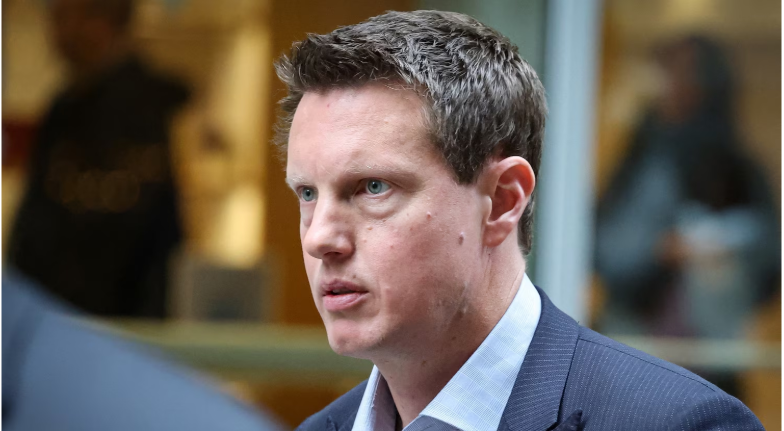
    In December 2025, the international media community was left reeling by a corporate showdown: Paramount Skydance made a hostile takeover bid for Warner Bros. Discovery (WBD mere days after Netflix struck a deal for key Warner assets.

    This hostile bid added even more to what promised to be one of the biggest media deals of the last decade. It was no less than a challenge to Netflix’s acquisition of the studios and streaming divisions of Warner Bros., which Paramount was also pursuing, as it essentially turned what could have been a negotiated acquisition into more of a high-stakes company showdown between the parties.

    Background: Netflix’s Agreement with Warner Bros.
    Earlier in December, Netflix reached an agreement with Warner Bros. Discovery for the acquisition of its production house, including Warner Bros. film production houses, as well as HBO/HBO Max and other intellectual properties such as Harry Potter, DC Comics, and Game of Thrones. This acquisition was approximately $82.7 billion.
    However, this acquisition excluded Warner’s cable and news divisions, including properties such as CNN, TNT, and TBS, which WBD intends to spin off into a new company as a result of its acquisition of Warner Bros. Discovery.

    Paramount’s Hostile Takeover Offer
    On 8 December 2025, Paramount Skydance, the result of the merger between Paramount Global and Skydance Media, initiated an unsolicited, hostile takeover bid for the entirety of Warner Bros. Discovery. This proposal consisted of $30 per share in cash, amounting to approximately $108.4 billion in enterprise value, exceeding Netflix’s cash bid for the purchase of WBD by more than $18 billion. This is characteristic of an unsolicited takeover bid, as it is submitted directly to the company’s shareholders, rather than being approved by the board of directors.

    It also involved support from key investors, including the Ellison family and RedBird Capital, as well as sovereign funds from the Middle East. Additionally, it involved significant debt financing commitments from Bank of America, Citigroup, and Apollo Global Management.
    Contrary to Netflix’s more complex plan, which involved separating its linear cable assets, as seen with Warner, Paramount took a more direct approach that was potentially more appealing to investors seeking clarity. This is also a reflection of Paramount’s long-term plan to ensure that it remains relevant in a market where mid-size production companies face challenges in keeping up with the likes of global streamers.

    Why Paramount’s Approach is ‘Hostile’
    A hostile takeover occurs when a bidder acquires control of a target company without the target’s management’s consent. In this respect, it is worth noting that the board of Warner Bros. Discovery expressed support for Netflix’s proposal. Paramount argued that the sales process was tilted in favour of Netflix, and as such, it recommended that the WBD board consider its better offer, which was an all-cash bid. The management of Paramount, led by David Ellison, appealed to investors to shift their loyalty.

    Industry and Political Implications
    This was not a purely financial battle- it was steeped in strategic as well as political undertones. Already, antitrust lawyers in the U.S. as well as other jurisdictions are scrutinising the Netflix takeover for potential antitrust issues, given its dominance of the streaming market. Paramount argued that its group could encounter less government regulation, which would put it in the same context as other media conglomerates. Politicians, such as former U.S. President Donald Trump, have weighed in on the implications of the Netflix-WBD merger for the media landscape, adding further uncertainty to the discussion.

    Reaction to the announcement in the markets 
    Financial markets reacted swiftly. Netflix shares momentarily fell following Paramount’s bid announcement, indicating that investors were not comfortable with the escalating price tag, as well as the complications entailed in negotiating with Warner Bros. Discovery. On the other hand, shares for Warner rose as the potential for a “bidding war” fueled hopes of reaping a better reward for stakeholders.

    Now the big question is straightforward: Will Paramount be able to convince Warner shareholders to support their bid, or will Netflix make a better offer to save its own deal? Currently, the Warner Bros. Discovery board is aligned with Netflix, making it challenging for Paramount to persuade shareholders without the board’s support.

    Impact on the Streaming Landscape
    Apart from the stock exchange, the battle for Warner Bros. Discovery could also revolutionise the streaming media space itself, where scale is quickly becoming the key to survival. Today, Netflix is far ahead of the competition with over 300 million subscribers globally. Amazon Prime Video is second, followed closely by Disney+ and Hulu. Currently, HBO Max and Discovery+, streaming offerings from Warner Bros. Discovery, rank fourth with a total of approximately 128 million subscribers, while Paramount+ ranks fifth with about 78 million subscribers, according to King.

    When the dust settles, the ultimate owners of Warner Bros. would not only get excellent production facilities, but more importantly, a considerable advantage in the battle for scale in the increasingly consolidating streaming landscape would fall into their laps. However, the possibility of further mergers has raised concerns about political and regulatory implications.

    Those who oppose the acquisition believe that Netflix merging with Warner Media would be too powerful for one group to wield. Massachusetts Senator Elizabeth Warren warned that Netflix’s acquisition of Warner Media could “create one giant media giant with control of almost half of the streaming market.” Netflix is likely to defend itself against these allegations by promoting a more expansive definition of the online streaming industry. As cited by The Guardian, Netflix is expected to argue that services like YouTube, with their massive followings despite differences in their respective business models, should be taken into account when calculating their shares of the respective markets.

    What Comes Next
    However, whether Paramount succeeded with its hostile takeover or was only forced to sweeten the Netflix offer, the situation amidst the streaming wars is revealing a truth that is about to shift into a phase where mergers are no longer optional but structural. The escalating cost of content, declining growth rates of subscribers, and continued governmental regulations are forcing firms into fewer, larger, and more powerful players.
    Whichever company ultimately emerges victorious in this round of bidding, the new owners of Warner Bros. Discovery are poised to play a pivotal role in shaping the future of legendary properties, high-end TV programming, and the global streaming landscape.

  • BMW’s Leadership Change Reflects Europe’s Growing Struggle in the Global EV Race

    BMW’s Leadership Change Reflects Europe’s Growing Struggle in the Global EV Race

    BMW is gearing up for an important shift in its leadership lineup amid one of the most disruptive transformations in the global auto industry over the past decades. Zipse, who has led BMW since 2019, announced that he will leave his post in May 2026. He will be replaced by Milan Nedeljković, the current head of production at the company, which means a change of leadership just as competitive pressure, regulatory scrutiny, and technological changes are at their peak in global markets.

    Strategic Caution in an Accelerating Market
    Zipse’s tenure was marked by turmoil and transition. He was the one who led BMW out of the COVID-19 pandemic, through supply chain disruptions, semiconductor shortages, and the global electric vehicle trend that was becoming stronger by the minute. Under his leadership, BMW maintained its profitability relatively strong compared to many competitors, primarily by continuing to rely on premium internal combustion and hybrid models, rather than diving headlong into full electrification at the expense of margins.

    However, that was the approach of a cautious player, which increasingly met with doubt as the market improved. Chinese car manufacturers, who include BYD, SAIC, and Geely, among others, quickly ramped up their output of electric vehicles, often at a lower price and with a more rapid innovation cycle, while expanding outside their domestic markets. Chinese EV makers have not only gained a firm foothold in their home market but have also started to invade the European market, thus posing a threat to the competitive position of established brands like BMW in terms of price, speed, and technology.

    Electrification, Regulation, and Defensive Industrial Strategy
    To maintain its competitive edge, BMW has already begun expanding its EV portfolio by investing in new platforms, battery technologies, and software capabilities, among other areas. The company is trying to stay competitive. Yet, this strategic change caused internal problems. Zipse was thought to be doubtful about the EV-committed strategy, preferring technological flexibility and a multi-powertrain approach. However, BMW was lobbying for emission targets to be delayed or softened through its lawyers, arguing that “overly rigid regulations could jeopardise industrial competitiveness and lead to job losses in the European auto industry.”

    Operational Execution as Competitive Leverage
    Milan Nedeljković’s hiring suggests a likely shift in focus, rather than a complete strategy overhaul. As the chief of production, Nedeljković has been part of the team that has modernised BMW’s production base, electrified the factories, and reduced operational costs. He is a person with an execution-oriented background, having led the massive scaling of EV production, cost management, and ensuring that BMW not only attains a similar-product tier to Chinese brands but also secures faster production, price control, and supply-chain reliability.

    The replacement of leadership has highlighted a broader reality that the European automotive industry must face. The difficulty of the situation is no longer just a matter of meeting the climate targets set or staying on the safe side of the regulations, but more of an issue of staying alive in such a competitive environment. The innovators’ cycles may be quicker, and thus the margins are more pressed than ever, not to mention that the competition is totally global. The Chinese carmakers are well-positioned, with very well-connected supply chains, significant government support, and battery technology that has been developed through years of practice. This prompts European companies to consider changes in their business models and areas for investment, such as this.

    A Turning Point for BMW and European Automakers
    BMW will be pivotal in a few years. The corporation will still have to juggle regulatory compliance, technological transformation, and shareholders’ expectations, all while defending its stake in the fiercely competitive super premium segment. Zipse’s exit has ushered in a new era, marked by rapid technological advancements, increased scalability, and manufacturing changes. The plan of execution is possibly in the next stage, while it raises the doubt that sufficient industrial capacity has already been realised.

    It remains to be seen whether this will be enough to deter the Chinese from conquering the electric car market. What is no longer in doubt is that BMW’s change of leadership is a signal to the industry that a power shift has occurred. The old tactics, though, can no longer match the electrification, the geopolitics, and the global competition that are reshaping the industry and, consequently, the company.

  • F1 2025: A Season of Shifts and What Awaits in 2026

    F1 2025: A Season of Shifts and What Awaits in 2026

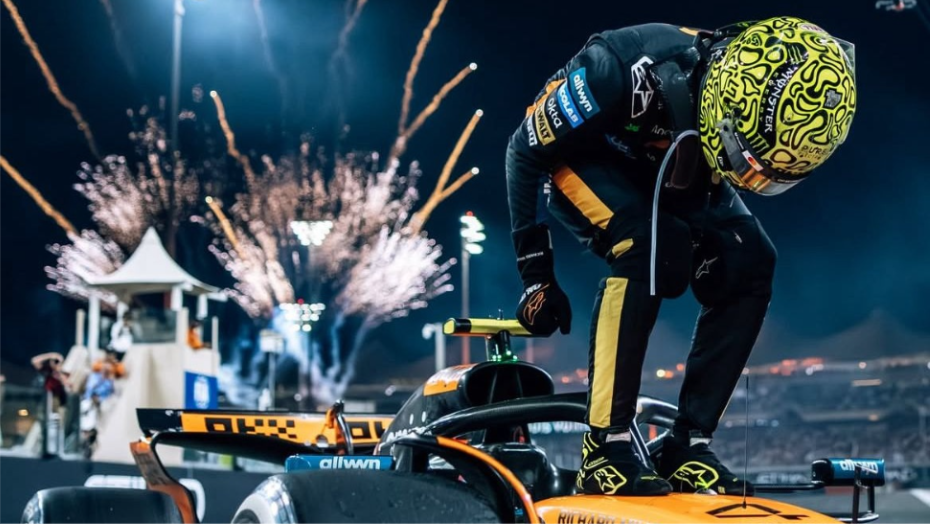
    The 2025 Formula 1 season has come to an end, with Lando Norris securing his first World Drivers’ Championship after a consistent and closely contested campaign. The McLaren driver finished the year with multiple wins and regular podium finishes, allowing him to edge out Max Verstappen in the final round, the Red Bull driver finishing only two points behind in second.

    The season was kickstarted with a celebration of Formula 1’s 75th anniversary, a live event hosted in London’s O2 Arena, where all 10 teams showcased their brand new liveries. For the sport itself, races were sold out months in advance, TV and viewership surged, while social media platforms were gaining popularity. The calendar remained one of the busiest on record, featuring 24 races and several sprint events distributed across various venues across the world.

    The season was dominated by McLaren, where, with an updated car, their mid-2020s rise, which began with incremental upgrades in 2023 and 2024, became a full-fledged championship contention this season. After a season-long battle marked by multiple wins, several shifts in the points lead, and close competition with teammate Oscar Piastri and Max Verstappen, Lando Norris emerged as the title champion. Despite setbacks including collisions, penalties, reliability issues, and a late disqualification in Las Vegas, Norris kept himself in contention through consistent podiums and key victories in Monaco, Austria, Britain, Mexico, and São Paulo. He regained the championship lead in the final phase of the season and ultimately sealed the title with a third-place finish in Abu Dhabi.

    While Norris emerged as the championship leader, Oscar Piastri’s results prompted debate among fans and analysts. Piastri led the standings for the majority of the season before facing a slump in the second half, going from a 34-point lead over Norris to being 25 points behind with two races remaining. Some argued that strategic misalignments and reliability issues hindered Piastri at key moments, leading to claims that McLaren had not fully balanced its support between the two drivers. His struggles also drew mixed opinions on McLaren’s highly adaptable 2025 car playing a decisive role in the championship.

    Max Verstappen mounted a comeback in the final phase after being 104 points behind after the Dutch Grand Prix. A strong run of results across the closing rounds reduced the gap significantly, and he reached the Abu Dhabi season finale just two points behind the championship leader. Verstappen ultimately finished the season as runner-up after falling short in the final race.

    Another notable event was Lewis Hamilton’s first year with Ferrari.  Finishing sixth this year,  inconsistencies in tyre management and pace prevented better performances. Hamilton finished with zero podiums (albeit one sprint win in China), becoming the first new Ferrari driver in 44 years to do so. Nevertheless, Ferrari viewed the season as a foundational step toward stronger performance under the upcoming regulation changes.

    The new regulation rules, set to take effect in the 2026 season, are aimed at making the cars more agile, safer and sustainable while maintaining their competitiveness. The cars will be lighter and smaller (a 30 kg weight reduction), with a redesigned hybrid power unit that increases the role of battery power and incorporates advanced sustainable fuels. Active aerodynamics, including movable front and rear wings, are being introduced to promote closer racing and reduce reliance on the current DRS system.

    In addition to these changes, there will also be a restructure of the teams and also an addition of an 11th team, Cadillac, with veterans Valtteri Bottas and Sergio Perez joining the F1 grid again. Audi will fully take over Sauber, while Arvind Lindblad will join Racing Bulls with Liam Lawson, in place Isack Hadjar who in turn replaces the outgoing Yuki Tsunoda to become teammates with Max Verstappen.

    Overall, the 2025 season delivered a new world champion, highlighted continued growth in Formula 1’s global reach, and marked the closing chapter of the current regulatory era. With teams now shifting focus toward 2026, the coming year is expected to redefine competitive order once again into the next phase of the sport.

  • Netflix announces acquisition of Warner Bros. Discovery

    Netflix announces acquisition of Warner Bros. Discovery

    On December 5, 2025, Netflix announced its acquisition of Warner Bros. Discovery’s studio and streaming businesses. Netflix emerged as the winner in a fierce bidding war that included industry heavyweights such as Paramount, Skydance, led by David Ellison, and Comcast. The previous owners of Warner Bros., i.e, Discovery, are set to sell the media conglomerate for 82.7 billion USD. This is reportedly one of the most significant media acquisitions in history. The entire transaction is expected to close by the end of 2026. Until the deal is through, HBO Max will remain a separate streaming service for now. Still, Netflix plans to inevitably integrate HBO’s content into its own platform, providing subscribers with a significant boost in variety and quality.

    Warner Bros was founded by brothers Harry, Albert, Sam, and Jack Warner in 1923. The studio rose to prominence during Hollywood’s Golden Age with early innovations in sound, most notably The Jazz Singer (1927), the first feature-length film with synchronised dialogue. Classics such as Casablanca, A Star Is Born, and Rebel Without a Cause were produced by Warner Bros. By the mid-20th century, the studio had entered the television market through Warner Bros. Television, creating hits like Maverick and 77 Sunset Strip. This grew into the world’s most influential TV divisions, responsible for modern global hits like Friends and numerous DC-based animated shows.

    The acquisition gives Netflix ownership of Warner Bros’ extensive film and television libraries, widely regarded as the world’s biggest catalogues in entertainment. Warner Bros has produced multiple iconic films and franchises, including the Detective Comics Universe, Looney Tunes, Harry Potter, The Matrix series, Barbie, and several Hollywood classics. Its intellectual property portfolio features legendary characters such as Batman, Superman, Bugs Bunny, Scooby-Doo, and Flash, almost all of which have become global cultural symbols.

    In television, Netflix will gain control of Warner Bros. Television’s library of highly successful series, including Friends, The Big Bang Theory, The Vampire Diaries, Gossip Girl, The West Wing, etc. Many of these franchises gained strong TRP on Netflix through past licensing agreements, and full ownership may lead to new spin-offs, reboots, and franchise expansions.

    A significant part of the deal involves the acquisition of HBO (Home Box Office), which has long been regarded as the leading producer of premium television. HBO’s catalogue includes popular and critically acclaimed shows such as Game of Thrones, Barry, Euphoria, The Last of Us, The Sopranos, and Succession. The integration of HBO’s programming with Netflix’s global distribution model can significantly alter the dynamics within the streaming industry. This transaction also transfers ownership of CNN, one of the world’s largest and most widely recognised news networks. Netflix has not specified how it plans to incorporate a real-time global news operation into its platform. Still, there are speculations that Netflix will utilise CNN to produce documentaries, real-time event coverage, and live news.

    The Deal also includes animated powerhouses Cartoon Network and Adult Swim. Under these popular shows, such as The Grim Adventures of Billy and Mandy, Courage the Cowardly Dog, and Adult animated shows like Rick and Morty, Futurama, and BoJack Horseman, will now be owned by Netflix.

    The deal received mixed reactions from fans and critics worldwide. Fans on social media expressed their sorrow seeing a media giant like Warner Bros bought by Netflix, as it meant shorter theatrical releases and more streaming. Many pointed out the press from Warner Bros won’t have authenticity and now will be more “Woke”. Critics have expressed concerns about the monopolisation of media, whereas a few said it would give other streaming platforms, such as Disney+ and Prime Video, a tough time. Only time shall tell how the future of Warner Bros looks.

  • From New York to Oval Office: Zohran Mamdani’s Mandate Meets Trump’s America

    From New York to Oval Office: Zohran Mamdani’s Mandate Meets Trump’s America

    On November 4, 2025, 34-year-old Zohran Mamdani clinched the New York City Mayoral race, securing a decisive victory in one of the most closely watched contests of the year. Running on the vision centred on affordability, public transport reforms, and workers’ rights, Mamdani won by a clear margin, defeating incumbent Mayor Eric Adams, Independent Candidate Andrew Cuomo, and Republican Candidate Curtis Sliwa.

    His win was driven by strong support from young voters, renters, immigrant communities, and first-time voters. Mamdani’s win marked a turning point in the city’s political landscape. His victory was historic not only because he is the first Muslim and first South Asian to hold the office, but also because his campaign centred on a bold, unapologetically progressive, socialist economic agenda.

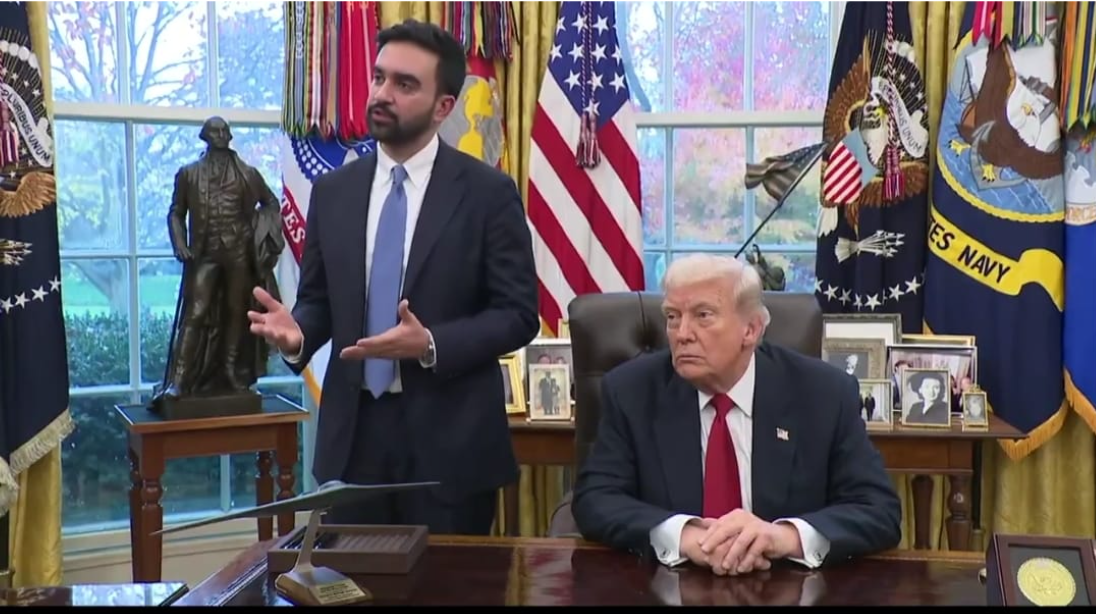
    Only days after taking over the office, President Donald Trump announced on his Truth Social Platform that the two would meet at the White House. In the post, Trump referred to Mamdani as the “Communist Mayor of New York City, and said the meeting would take place in the Oval Office on Friday, November 21st.

    After Mamdani’s victory, it was clear that there was a rise in a new form of governance that prioritises social welfare, affordability, and community-focused investment. However, the meeting with Trump brought an unexpected twist. On paper, the two politicians stand at opposite ends of the ideological spectrum. Mamdani is known for his democratic-socialist leanings, vocal support for tenants’ rights, and city-first social spending vision. Trump, meanwhile, has built his platform around conservative populism, stricter immigration policies, and a law-and-order approach to city governance. Their interaction stood out precisely because of this contrast, critics say.

    The meeting with Trump, rather than overshadowing the shift of a new political wave, only sharpened its contrast. It placed the newly elected mayor’s ambitions against the broader backdrop of national politics, dominated by republicans and their conservative narratives.

    Press conference followed by their meeting. “We spoke about rent, we spoke about groceries, we spoke about utilities. We spoke about the different ways in which people are being pushed out. And I appreciated the time with the president. I appreciated the conversation. I look forward to working together to deliver that affordability for New Yorkers,” Mamdani said. Trump, in agreement with Mamdani, said, “We had some interesting conversation, and some of his ideas are really the same ideas that I have. But a big thing is the cost. You know, the new word is ‘affordability.’ Another word is just ‘groceries.’ It’s sort of an old-fashioned word, but it’s very accurate. And they’re coming down,” he said.

    At the press conference, both Trump and Mamdani were met with difficult questions by the journalists. Mamdani was asked about his earlier  “Fascist” remark about Trump. Before Mamdani could respond, Trump answered the question himself, saying,  “That’s OK, you can just say yes, OK? It’s easier. It’s easier than explaining it, I don’t mind.” The exchange was widely circulated on social media.

    As Mamdani takes over the office, it will be interesting to see his ambitious promises put into action while navigating the pressure from both supporters and critics. His early decisions will show whether he can maintain the popularity of his historic win and deliver concrete change for the communities that propelled his rise. At the same time, the political drama surrounding his meeting with Trump indicates that New York may become a defining battleground for competing visions of America’s political future, one rooted in inclusion and socialism, and the other in traditional conservative frameworks.

  • OpenAI’s $38 Billion AWS Deal and What It Means for the Future of AI Infrastructure

    OpenAI’s $38 Billion AWS Deal and What It Means for the Future of AI Infrastructure

    The multi-year partnership signals a shift toward multi-cloud strategies and highlights how infrastructure will shape the next phase of AI development.

    OpenAI has concluded a historic $38 billion cloud infrastructure deal with Amazon Web Services (AWS), making it one of the largest cloud/AI deals ever made in terms of commercial value. It gives OpenAI access to massive computing power across AWS’s global network, including advanced GPU clusters, specialised UltraServer infrastructure, and hardware built specifically for training and running large-scale AI systems. It became a pivotal point in OpenAI’s game plan, which had previously relied on Microsoft Azure as its primary cloud service provider.

    Why Reinventing Infrastructure Matters Now

    The transition to AWS emphasises the ever-increasing demand for computational power in the development of AI models. Currently, modern AI systems consist of billions or even trillions of parameters and have high computational requirements for both training and inference. The cloud infrastructure’s reliance on a single provider becomes even more difficult as the demand continues to grow. OpenAI is positioned as a multi-cloud company that can benefit from greater flexibility, geographic redundancy, and the rapid scaling of capacity to meet its changing needs.

    Amazon has scored a huge competitive victory through the deal. Microsoft, Oracle and Google have been gaining power in the AI ecosystem over the past two years, primarily through their collaboration with model developers, their commitment to custom chips, and the establishment of research labs. OpenAI, one of the world’s most prominent AI research organisations, is partnering with Amazon to strengthen its cloud position. It announces AWS’s commitment to staying in the AI infrastructure market, amid rising competition. Reports claim that the deal will have significant financial and reputational worth for the companies in the long run.

    What This Says About the AI Compute Economy

    The magnitude of the transaction is indicative of a broader shift in the way the Manner AI infrastructure is being built and financed. The operational and scaling costs of cutting-edge AI systems have surged tremendously due to global GPU supply shortages, power-hungry data centres, and the increasing complexity of AI architectures. Cloud providers are not competing only on software or storage prices, but also on the availability of physical resources, such as land for new data centres, access to power grids, cooling systems, and long-term agreements for semiconductor supply.

    In other words, computing power is being recognised as a new strategic asset in the technology landscape. The organisations that can consistently provide and expand this capacity are the ones that are setting both the pace and direction of AI development. The OpenAI–AWS partnership is a sign that the future of large-scale AI will be, to a significant extent, dependent on logistics, infrastructure engineering, and hardware design, as well as on algorithmic innovations.

    Implications for the Industry

    While this partnership will accelerate innovation for AI, another related concern is that of the concentration of power. Currently, very few companies, namely Amazon, Microsoft, Google, and Oracle, have the global scale and infrastructure to support advanced AI systems. As research, businesses, and automation increasingly rely on these systems, control over the future of AI will become even more centralised in the hands of a few.

    Several research scientists and industry analysts have expressed the view that without access to computers similar to those afforded to large companies, smaller companies, academic institutions, and open-source projects will lag. This situation could impact policy discussions regarding AI accessibility, national computing strategies, and public-private technology partnerships, among others.

    From Single Partnership to Multi-Cloud Strategy

    The collaboration between OpenAI and AWS marks a significant milestone in the integration of AI and cloud technology. The gap between them is continuing to close rapidly, and this partnership shows how tightly interwoven the future of AI depends on solid cloud infrastructure. Instead of being separate industries, the cloud platform, along with its AI developers, will, for instance, form deep, long-term, capital-intensive relationships powered by compute scarcity and technical interdependence.

    As the need for high-performance computing continues to increase, similar large-scale partnerships will become a standard feature across the entire industry. The multi-cloud strategies or direct investments in infrastructure could be actions taken by governments, research labs, or major tech companies in the near future, ensuring they have access to the computing power they need. A deal like that, worth $38 billion, signals something huge happening in the industry: AI is entering a new phase. It’s not just about apt algorithms or large datasets; it’s about building the necessary infrastructure needed to support them. While compute isn’t the only factor shaping AI’s future, it’s becoming one of the most defining.

  • Sudan at the Brink: The RSF’s Takeover of El-Fasher and the Escalating Humanitarian Crisis

    Sudan at the Brink: The RSF’s Takeover of El-Fasher and the Escalating Humanitarian Crisis

    Sudan’s last army stronghold in Darfur falls to the RSF

    In the wee hours of October 26, the Rapid Support Forces (RSF), led by General Mohamed Hamdan Dagalo, better known as Hemedti, seized control of El-Fasher, the last remaining stronghold of the Sudanese Armed Forces (SAF) in North Darfur, Sudan. With this victory, the RSF has now gained complete control of the region, thus splitting Sudan into eastern and western halves.

    A humanitarian crisis is unfolding in Africa’s third-largest country. The RSF has been at war with the Sudanese Armed Forces for the past two-and-a-half years, causing an estimated 40,000 deaths and the displacement of 12 million people, the UN says.

    The Joint Forces, which are allied with the Sudanese military, have stated that the forces of RSF have “executed and killed” at least 2000 unarmed civilians in the city of El-Fasher on 26 and 27 October- most of these civilians were women, children, and the elderly.

    Yale University’s Humanitarian Research Lab (HRL) published a report on October 27, in which they released satellite images captured by the aeronautic company Airbus Defence, which show evidence of mass killings in the city of El-Fasher. The images have captured reddish stains on the ground and clusters of “objects” lying around RSF vehicles, which are believed to be human bodies.

    HRL has concluded that these killings were carried out door-to-door, specifically targeting on the basis of ethnicity. El-Fasher “appears to be in a systematic and intentional process of ethnic cleansing of indigenous non-Arab communities through forced displacement and summary execution,” the Yale researchers say in a report.

    When did the Sudanese Civil War start?

    In October 2021, a joint-military civilian government was established as a result of a coup that was staged to overthrow long-serving President Omar al-Bashir. This government was headed by Hemedti and Gen Abdel Fattah al-Burhan. However, growing tensions over the country’s evolving sociopolitical transition led to a breakdown in their alliance.

    By April 2023, these tensions erupted into overt conflict when clashes broke out between the SAF and RSF in Sudan’s capital, Khartoum, marking the beginning of Sudan’s currently ongoing civil war.

    The RSF was formed in 2013, and it originates from the notorious Janjaweed militia, which was accused of genocide and ethnic cleansing against Darfur’s non-Arab population.

    What exactly is happening in Sudan right now?

    In June of this year, the RSF captured the territory along Sudan’s borders with Libya and Egypt. Now that they have seized El-Fasher as well, this means that they have control over almost all of Darfur and its neighbour, Kordofan.

    Many videos released by RSF soldiers themselves are currently circulating on the internet. The videos – which have been authenticated by the SAF – show fighters shooting unarmed civilians at point-blank range.

    Earlier this week, satellite imagery confirmed that the RSF killed civilians who tried to flee the city near the earthen wall, which was constructed by the RSF to encircle and isolate the city, effectively besieging it.

    A woman recounted to Reuters how she and others were stopped at the earthen barrier where the men were separated from women.”They lined the men up, they said, ‘We want the soldiers,’ When none of the men raised their hands, an RSF fighter picked out some of them who were beaten and killed,” she said. “They shot them in front of us, they shot them in the street.”

    How is the world responding?

    Widespread reports of ‘ethnic cleansing’ conducted by the RSF have prompted the UK, which is the official penholder on Sudan, to call for an emergency session of the UN Security Council in New York on Thursday. Activists from all over the world are urging pressure on the United Arab Emirates, which is widely accused of providing military support to the RSF. The UAE denies this despite evidence presented in UN reports and international media investigations.

    “The situation is simply horrifying,” Martha Ama Akyaa Pobee, the assistant secretary general of the UN for Africa, said during the emergency session.

    Across Sudan, nearly 24 million people are suffering from acute hunger, with an estimated 600,000 on the brink of famine. The RSF and its allied forces have been accused of widespread sexual violence against women, including rape, gang rape, forced marriage, and sexual slavery, in addition to the mass killings of more than 17,000 people.

    The fall of El-Fasher marks a turning point, not only in Sudanese history but also in the context of a disturbing global humanitarian tragedy. Despite mounting international concern, global action has remained largely limited to statements and diplomacy. Without decisive intervention, analysts warn that Sudan could descend into a full-scale famine and ethnic cleansing crisis, leaving millions trapped between starvation and violence.

  • Victoria’s Secret Fashion Show 2025: A Runway of Reinvention and Representation

    Victoria’s Secret Fashion Show 2025: A Runway of Reinvention and Representation

    After a six-year-long hiatus and a comeback in 2024, the Victoria’s Secret Fashion Show made a lasting mark with this year’s show, which took place on 15 October 2025 in New York City. This year’s show promised the familiar mix of glamour, power, and entertainment, with a renewed focus on diversity and inclusivity.

    Last year’s show garnered widespread attention for Victoria’s Secret, as the show made its return after being cancelled in 2019. However, this year’s show brought an even bigger rebranding, and with it, more attention. This year, the brand focused on broadening its representation, improving the show’s diversity and expanding its global outreach. Victoria’s Secret’s legendary supermodels like Adriana Lima and Alessandra Ambrosio graced this year’s runway alongside fresh faces from sport, culture and fashion.

    What Stood Out This Year
    This year’s lineup featured a diverse range of talent across multiple generations and backgrounds of models, reflecting the brand’s broader definition of glamour. The entire show was divided into six segments, namely First Light, Bombshell, PINK Halftime, Hot Pursuit, Magic Hour, and Black Tie.

    The runway featured a striking mix of veteran Angels and fresh faces. Among the show’s familiar faces were Adriana Lima, Bella Hadid, Gigi Hadid, Candice Swanepoel and Alex Consani.

    Supermodel Jasmine Tookes made a powerful entrance, opening the show while visibly pregnant. Her look celebrated birth and transformation as she donned a shimmering gold netted one-piece, adorned with teardrop-shaped gems, paired with a dramatic clamshell-inspired cape topped with pearly bulbs. The concept depicted her as the clamshell and her baby as the pearl.

    WNBA player Angel Reese made history as the first professional athlete to walk the show. She had two bold looks – a white lingerie set richly adorned with pink roses and a sparkly pink T-shirt with cut-outs.

    Beyond the models, the show’s performances embodied the brand’s global goals. Performances by music icons such as Missy Elliott, Karol G, Madison Beer, and K-pop sensation TWICE added a diverse cultural element to the show. One of the show’s standout moments was a creative mashup of the iconic 1981 Bollywood track ‘Tere Mere Beech Mein’ with Britney Spears’ hit song, ‘Toxic’ that played at the start of a segment as models walked onto the runway. Interestingly, this mashup came full circle as the signature string riff of ‘Toxic’ was sampled from ‘Tere Mere Beech Mein.’

    One of the most-talked-about elements of the evening was the brand’s inclusivity in design and casting. The model roster featured a diverse range of body types, backgrounds, and ages, which the show has previously been criticised for avoiding. Models like Ashley Graham, Paloma Elsesser, Precious Lee and Devyn Garcia, who are recognised for their efforts in promoting body positivity and inclusivity in the fashion industry, garnered widespread praise from online audiences.

    This year’s show also made a striking impact with its diversified presence of LGBTQIA+ talent. The runway featured trans models like Alex Consani, as well as queer and ally representation, including Quenlin Blackwell, Madison Beer, and Stella Maxwell.

    From the visual aspect, the show’s production spared no expense. It featured futuristic stage design, holographic projections, and couture wings made from sustainable materials. Themes of self-expression, resilience, and female solidarity replaced the pre-hiatus fantasy concepts of angelic perfection epitomised by sizo-zero bodies, flawless symmetry and hyper-feminine glamour.

    The Victoria’s Secret Fashion Show 2025 marked a defining moment in the brand’s ongoing reinvention. With a striking blend of cultural references, reimagined fresh designs, and symbolic storytelling, this year’s show positioned Victoria’s Secret not just as a lingerie brand but as a platform embracing change and inclusivity.

  • Rock’s ‘Spaceman’; Ace Frehley, Dies at 74

    Rock’s ‘Spaceman’; Ace Frehley, Dies at 74

    Ace Frehley, the famous guitarist and co-founder of Kiss, whose space-age persona, thunderous riffs, and electric performances helped define 1970s rock theatre, passed away on Thursday, 16th October 2025, in Morristown, New Jersey. He was 74. His family told sources the cause of his death was complications from a fall this year.

    Born Paul Daniel Frehley on 27th April, 1951, in The Bronx, New York, he was the youngest child among his three siblings. His father, Carl Daniel ‘Friebely’ Frehley, was an electrical engineer and used to play organ at the church, and his mother, Esther Anna, used to play the piano. Frehley grew up surrounded by music, but was inclined towards the electric guitar, which he received as a Christmas gift in 1964. He taught himself how to play the instrument; he often said that playing “saved [his] life.”

    Making of the ‘Spaceman’

    Frehley worked as a roadie for Jimi Hendrix when he was 18. After that, he began performing in local bands like King Kong, The Outrage, and Cathedral, until he saw an ad in 1972 for a new music band seeking a lead guitarist. The famous story of his audition, of Frehley showing up wearing mismatched sneakers, one red, one orange, immediately impressed the band; within months, Kiss was formed.

    Frehley was Kiss’s lead guitarist; he designed the group’s lightning-bolt logo and developed the “spaceman” persona, inspired by his lifelong fascination with science fiction. He painted silver stars around his eyes and, on stage, made his guitar smoke, spark, and sometimes shoot rockets. Frehley’s playing powered many of Kiss’s popular songs, including I Was Made for Loving You, Cold Gin, Shock Me, and Love Theme. His electrifying solo on Shock Me was written after he was briefly electrocuted onstage in 1976; it became one of rock’s most famous guitar riffs.

    In 1978, Frehley released his self-titled solo album, which went platinum and produced the Top 20 single New York Groove. A star was later named after him in 1981, a fitting tribute for the band’s “Spaceman”. He parted ways with Kiss in 1982 over creative disputes and personal struggles, but returned to music with Frehley’s Comet, a new band consisting of five members. Their debut album featured the rock hit “Into the Night.” Frehley’s Comet disbanded shortly after their 1989 record, Trouble Walking. He reunited with Kiss in 1996. Frehley performed with the group at the 2002 Winter Olympics before departing again.

    He resumed his solo career that included albums such as Anomaly (2009), Space Invader (2014), and 10,000 Volts, the most recent one, released in 2024. He was preparing to release Origins Vol. 3 at the time of his death. Frehley was inducted into the Rock & Roll Hall of Fame in 2014. Frehley continued recording and touring as a solo artist until a fall in his studio in September 2025 forced him to cancel his remaining shows.

    Though described as an “unschooled musician”, Frehley’s influence extended across generations of guitarists. He performed with artists including Slash, Rob Zombie, and Tommy Lee; he even appeared in the hit sitcom Family Guy. His trailblazing guitar playing skills secured him a spot among Guitar World’s 100 greatest musicians.

    Frehley is survived by his daughter, Monique, and his former wife, Jeanette. Kiss co-founders Gene Simmons and Paul Stanley said in a joint statement, “We are devastated by the passing of Ace Frehley; he was an essential and irreplaceable rock soldier during some of the most foundational chapters of the band’s history. He is and always will be part of Kiss’s legacy.” Fans across the world flooded social media with tributes. Some fans said: The Spaceman has simply returned to the cosmos.

  • Atmospheric CO₂ Surges to Record High: A Major Shift in the Planet’s Climate System

    Atmospheric CO₂ Surges to Record High: A Major Shift in the Planet’s Climate System

    In a sobering reminder of the climate crisis, global carbon dioxide (CO₂) emissions and atmospheric levels have reached all-time highs, indicating a dangerous path ahead. Two recent reports from the World Meteorological Organization (WMO) and the International Energy Agency (IEA) present a grim picture: despite significant advances in renewable energy, our planet is still releasing more fossil carbon than ever before.

    According to the WMO, atmospheric CO₂ levels increased by about 3.5 parts per million (ppm) between 2023 and 2024. This is the largest one-year rise since systematic measurements started in 1957. As a result, the global mean CO₂ concentration reached around 423.9 ppm in 2024, roughly 152% of pre-industrial levels. Meanwhile, the IEA estimates that energy-related CO₂ emissions reached a new high of about 37.8 gigatonnes (Gt) in 2024.

    So, why is this happening, and why is it concerning? There are three driving factors for this: an increasing dependence on fossil fuels, rising demand for energy sources and weakening natural carbon sinks.

    Despite significant growth in solar, wind, and other low-carbon technologies, fossil fuels still make up most of the global energy mix. The IEA reports that in 2024, emissions from fuel combustion increased by about 1 %. Meanwhile, emissions from industrial processes fell slightly, by about 2.3 %. Specifically, natural gas emissions increased by 2.5 % and coal emissions increased by 0.9 %. These figures show a complicated picture: although clean energy is expanding quickly, it mainly works alongside fossil-fueled sources instead of replacing them.

    The IEA calculates that about 80 % of the growth in emissions in 2024 is attributed to an increase in temperature-driven electricity demand. In India and China, record heat-waves caused dramatic spikes in power consumption, such as through air-conditioning and industrial use, prompting utilities to increase coal and gas-fired plants to cater to the demand. The WMO points out that the time was also when the 2023/24 El Niño episode took place, which pushed back the growth of vegetation and enhanced fire activity, thereby limiting the Earth’s capacity to take up CO₂.

    Arguably, the most dangerous indicator is the falling effectiveness of natural carbon sinks. WMO estimates that half of all CO₂ emitted by humans is typically taken up by land and oceans, but their uptake has failed in recent years. The chain reaction is worrying: warmer temperatures lead to drier soil and stressed forests, which leads to more wildfires and reduced absorption. This entire chain emits more CO₂ in the atmosphere, creating additional warming. Research indicates that the land-sink collapsed substantially in 2023.

    To reverse this alarming rise in emissions, the world needs to act decisively on multiple fronts. First, there must be significant cuts in the use of fossil fuels, especially coal and gas, for industry and energy production. New all-time highs for global yearly emissions show that we are not yet turning the corner, even though progress is being made. Grid/storage infrastructure, renewable energy, and other clean technologies must expand quickly to meet and replace existing demand. The heat-driven spike in demand emphasises how important energy efficiency is to reducing global warming. Energy efficiency systems need to be brought out, especially in buildings, transportation, and heating and cooling systems. Forests, peatlands, and mangroves are examples of natural carbon sinks that must be preserved and restored because their current capacity appears to be limited.

    The recent record in CO₂ emissions is not a temporary issue. While the shift to clean energy is happening, it is not fast enough to end our reliance on fossil fuels. Without a significant increase in efforts to reduce demand and improve natural carbon sinks, the warming we have already caused may result in climate changes that exceed our worst fears.