In the dazzling world of global luxury fashion, titans such as Louis Vuitton and Prada have turned to Indian culture for inspiration. India, with its unique and rich heritage and craftsmanship, has effortlessly made its mark on the fashion industry. Beyond mere commerce, India’s exquisite textiles, handcrafted jewellery, and intricate embroideries have long attracted designers, leading the country’s diverse fashion to reach international heights, often reimagined through a contemporary lens.
For example, the recent rave on TikTok about the Indian ‘Jhola’ bags being sold at a whopping budget of Rs. 4100, an item commonly acquired at less than Rs. 100 in India has left minds boggled. The item features Hindi texts and is designated as a ‘chic’ item for enthusiasts of Indian culture. It seems almost unbelievable!
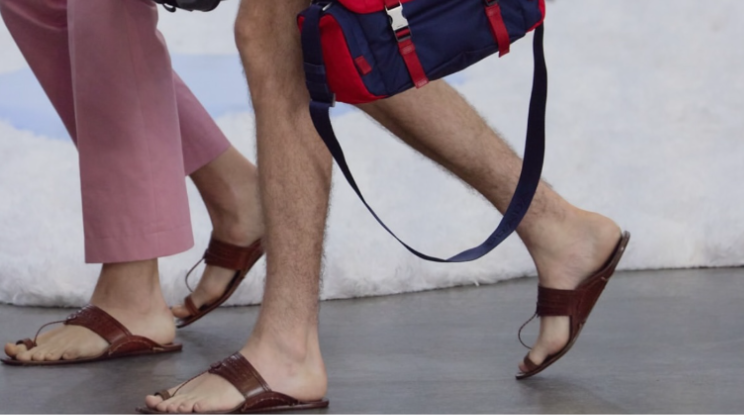
Furthermore, the Prada-Milan Fashion Week, a global platform for couture novelty, found itself in a controversy between worldwide fashion and cultural heritage and appropriation. Although the conflict started as harmless, the uproar of the Prada shoes, from the indictments of design theft to the vehement demands for cultural attribution, completely caught the fashion house off guard. These handcrafted leather slippers, commonly called Kolhapuris, boast a 900-year history rooted in the states of Maharashtra and Karnataka (India), and were upgraded using high-class leather and metallic bases, proving how simple, authentic Indian crafts can be elevated to a global trend level. Although Prada stated, “We acknowledge the sandals are inspired by traditional Indian handcrafted footwear, with a centuries-old heritage,” the situation ignited a wave of widespread controversy.
As photos from the runway started to circulate online, outrage in India escalated. Criticising Prada for describing the footwear blandly as “leather flat sandals “ without giving any proper recognition of its origins, and accusing Prada of cultural appropriation. Business tycoon Harsh Goenka reflected the public outcry by stating, “ Indian artisans lose, while global brands cash in on our culture .” With prices reaching $800 abroad, while in India they are sold for as little as Rs. 1000, making the global markup all the more jarring. In response to the growing backlash and controversy, Prada’s head of Corporate Social Responsibility, Lorenzo Bertelli, responded by acknowledging the sandals’ Indian inspiration and expressed willingness to open a dialogue with local artisans for a more meaningful and respectful exchange.
Interestingly, some believe that this controversy can have an unexpected upside. It has also transpired that the same could yield magnificent results. It is an undeniable element that the sale of sandals in India has shown an immense hike lately. By the perception of the regional designers, such exposure could increase interest in the everlasting styles, particularly among younger clientele.
“Until now, it hadn’t been considered part of the ‘cool’ or aspirational footwear space in India’s luxury market… I truly believe in the ripple effect of what Prada has done,” expressed Shirin Mann, the founder of Needle Dust, popularly known for its coeval view on classical Indian embroidery slip-ons. Supporting her claim, Google Trends has also shown a noticeable spike in searches for Kolhapuri sandals since the show, while local retailers have reported increased curiosity, especially among younger shoppers.
Alternatively, Louis Vuitton’s menswear collection, under the direction of Pharrell Williams, offered an enthralling example of such a controversy. Williams’ spring-summer 2026 collection vibrantly showcased India’s uplevelling artistry. The collection features a collaboration with studio Mumbai, altering the fashion runway into a life-sized ‘Snakes & Ladders’. The show included signature Indian colours, accompanied by Bhangra songs. It also showcased an Autorickshaw handbag, a common mode of transport that is a pivotal element of India’s vibrant street life. Adding to the authenticity, the show featured one of the most iconic Indian composers, A.R. Rahman, who co-composed the Punjabi track “Yaara Punjabi.” The track’s cultural depth elevated the entire experience, turning the runway immersive and rooted in Indian identity.
India’s influence on Western fashion is in no way a new trend. It has influenced the Western world for centuries. From Yves Saint Laurent’s iconic perfume “Opium” subtly echoing Mughal Motifs and rich silks to Dior’s theatrical collections highly resembling Indian grandeur, the list never ends. As the lines between humble Indian handicrafts and contemporary designs continue to blur, one fact becomes significantly clear: India’s eclectic and deeply rooted culture continues to cast an undeniable influence on the outside world, powerfully shaping the very trajectory of upcoming fashion trends.
Leave a Reply