Author: Swarnim Sethi

  • Assam’s Worst Flooding in Decades Leaves Nearly 100 Dead

    Assam’s Worst Flooding in Decades Leaves Nearly 100 Dead

    Six weeks into the monsoon season, Assam is living through what officials are calling its worst flooding in more than sixty years. According to the Assam State Disaster Management Authority (ASDMA), by Wednesday, the death toll since mid-July had climbed to 95, with over 1.6 lakh people across 14 districts still caught in the aftermath. Just days earlier, on 3 August, the toll stood at 87, with two more fatalities reported and over 1.28 lakh people across seven districts still affected by the deluge, a sign of how fast the numbers have kept moving even as floodwaters recede in some pockets.

    It began around 10 July, when days of nonstop rain over Nagaland and upper Assam sent the Brahmaputra’s tributaries surging well past their banks. Chief Minister Himanta Biswa Sarma said the region received roughly 500 percent more rainfall than normal, driven by sustained heavy rain rather than a single cloudburst.

    None of this is new territory for the state. Close to 40 percent of Assam sits on land the National Flood Commission has long flagged as flood-prone. The Brahmaputra tumbles down from the Himalayas, picks up more than 50 tributaries along the way, and drops silt as it crosses Assam’s flatlands slowly narrowing its own capacity to hold water. Researchers have flagged the same culprits for years: upstream deforestation, aging embankments, and monsoons growing heavier as the climate shifts. Earlier, ASDMA figures from late July put the toll at 68, with more than 10 lakh people affected at that stage, a scale of displacement that’s only grown since.

    This year, the defenses simply couldn’t hold. At least seven major embankments gave way (five near Brahmajan in Biswanath district and two at Mangaldoi in Darrang) and a steel bridge in Charaideo came down, along with a footbridge in Udalguri. The flood emergency has also reached beyond the usual rural hotspots: urban flooding has persisted in parts of Kamrup Metropolitan district, with the Padumbari and Tetelia-Boragaon Service Lane areas still waterlogged, and Guwahati neighbourhoods including Lachit Nagar, Zoo Road, Rukminigaon, Hatigaon, and Jorabat were also hit. The Dhansiri river at Numaligarh has stayed above the danger mark for weeks now, and ASDMA has repeatedly warned residents living nearby to stay clear of the riverbank.

    Sivasagar has been among the worst-hit districts. Tens of thousands there have been affected, and roughly 8,500 livestock are reported to have been swept away by a gutting loss in a district that runs largely on farming and animal husbandry. At one point in late July, ASDMA put the toll even higher statewide: official figures showed more than 11,000 animals washed away and 17,000 head of livestock affected across the flood zone. Nearly 17,000 hectares of cropland remain submerged statewide, and the flood emergency has covered 437 villages across 21 revenue circles in eight districts at its widest point.

    For a lot of families, the weight of what has happened is only now settling in. On 19 July, in Seleng Sumoni Pathar village in Jorhat district, 18-year-old Saline Patro watched the Jhanji river, a tributary that floods her village nearly every year, but never like this, a rise with alarming speed. She got her parents and younger brother to higher ground in time. But when she went back for their belongings, the house was already gone. She lost everything, she said, right down to the glass they used to drink water from.

    Over in Sivasagar district, a mother and her seven-year-old son climbed a mango tree and waited out the night as water swallowed their neighborhood whole. Rekhamoni Gogoi later told local reporters she refused to give up hope even as darkness closed in around them. They were pulled to safety the next morning, one of countless similar stories now coming out of upper Assam, where rescue crews in boats have spent weeks hauling people off rooftops, out of trees, and off whatever scraps of dry ground they could find.

    The response effort has scaled up fast. As of late July, more than 16,500 displaced people were sheltering in 71 relief camps, while another 72,000 were being assisted through 30 relief distribution centres. Those numbers have since shifted as camps opened and closed with the water levels. 

    The severity of the crisis also drew national attention. Union Home Minister Amit Shah called Chief Minister Sarma to take stock of the flood situation. The central government has released an advance of over ₹2,117 crore from the State Disaster Response Fund to Assam and six other flood-hit states, and Sarma says the focus is now shifting from rescue toward rebuilding, including talks with insurers over homes, vehicles, and livestock lost to the water.

    Even so, it isn’t over. The India Meteorological Department has issued fresh heavy-rain warnings for neighboring Arunachal Pradesh and Meghalaya, raising the odds of more flooding along Assam’s border rivers in the days ahead.

    For people like Saline Patro, the road back looks long. Her parents, both daily wage workers, spent years saving up for the home that vanished in a single afternoon. She says, honestly, she has no idea when or how they’ll manage to build another one.

  • Russia Turns to AI for Breakthroughs in Oncology

    Russia Turns to AI for Breakthroughs in Oncology

    Once defined by its military aerospace strength, Russia is now channelling its scientific expertise into healthcare with artificial intelligence (AI) driving breakthroughs in diagnostics, drug discovery and personalised cancer treatment. By harnessing artificial intelligence, the country is making significant advancements in diagnostics, drug discovery, and personalised cancer treatment, positioning itself as a rising force in healthcare innovation.

    The global AI in medicine market is currently valued at $22 billion, with Russia’s share already at 12 billion rubles. Analysts predict explosive growth, forecasting the global market to reach $130-160 billion and the Russian market to hit 78 billion rubles by 2030. The explosive growth is an example of the successful embedding of the rapid integration of AI and medicine

    A prime example of successful implementation comes from Russian ophthalmology. The Krasnov Research Institute of Eye Diseases is using AI to diagnose, monitor, and treat retinal diseases, a crucial innovation for an ageing population. Similarly, developing personalised vaccines for colorectal cancer is seen as a significant achievement in the medical field. Imagine an ophthalmologist in Moscow not just depending upon his own trained eye but adding an AI that can deduce the patient’s retina with superhuman precision. AI, when used as a significant tool in diagnosis, can do wonders once blended with the trained expert’s eyes.

    Russia has identified AI as a crucial area for Strategic Development. Institutes such as Skovo Institute of Science and Technology are working on developing AI in drug discovery and medical image analysis. AI is commonly used to analyse X-rays, CT scans, and MRIs. In Oncology, Russian researchers are developing personalised vaccines for colorectal cancer. AI models analyse tumour genetics, identify unique cancer antigens, nd design vaccines tailored to each immune system. This makes the treatment more individualised rather than following a generic treatment process with a one-size-fits-all approach.

    However, the implementation of AI in healthcare comes with risks, as mistakes can threaten the lives of patients. AI models can sometimes distort data or fail to understand context. Mitigating these risks requires rigorous testing and significant investment.

    The following 3-5 years are seen as decisive. For Russia to succeed, companies must develop a careful strategy that includes managing investor expectations, ensuring high-quality data to train AI models, and creating testing platforms to get feedback from doctors. Those who can bring clinically validated solutions to market first will set a new standard for medical care in Russia and beyond. However, no matter how real the potential is, the proof and science will only be considered after successful large-scale clinical trials. The world is looking for better solutions and medicines. The use of AI by superpowers in the medical field, rather than warfare, is definitely an effort that is being globally applauded.

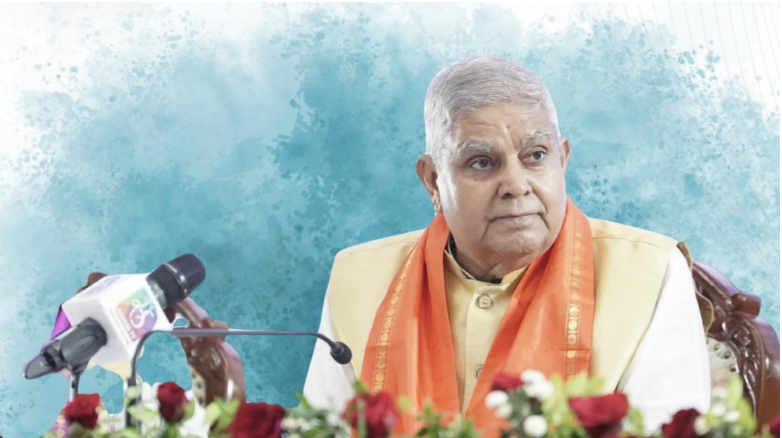
  • Vice-President Jagdeep Dhankhar Resigns Suddenly, Cites Health Reasons

    Vice-President Jagdeep Dhankhar Resigns Suddenly, Cites Health Reasons

    Vice-President of India Jagdeep Dhankhar resigned from his post on Monday, saying he was following medical advice and needed to focus on his health. The resignation came as a big surprise to many, as he still had two years left in his term.

    In his resignation letter to President Droupadi Murmu, Mr. Dhankhar said, “To prioritise health care and abide by medical advice, I hereby resign as the Vice-President of India, effective immediately.” The letter was shared on his official X (formerly Twitter) account.

    Mr. Dhankhar, 74, had a heart-related issue in March but had recovered and was attending official events regularly. In fact, he had taken part in Parliament earlier the same day and chaired a meeting of the Business Advisory Committee in the Rajya Sabha. He was also scheduled to visit Jaipur the next day for an event.

    His sudden resignation raised many questions and speculations. While the official reason is health-related, some political leaders believe there could be other reasons behind the move.

    Congress MP Jairam Ramesh said the resignation was “shocking and unexpected.” He mentioned that he had spoken to Mr. Dhankhar just a few hours before the news broke, and the Vice-President gave no hint about stepping down. “He was supposed to make some big announcements related to the judiciary tomorrow,” Mr. Ramesh added.

    Sources as per The Hindu say Mr. Dhankhar was also expected to speak in the Rajya Sabha on impeachment motions against two High Court judges. These were sensitive matters that could have made headlines.

    According to senior leaders in the ruling National Democratic Alliance (NDA), the government is now preparing a list of possible replacements. The next Vice-President will likely be from the Bharatiya Janata Party (BJP) and someone close to Prime Minister Narendra Modi. PM Modi is expected to return from his overseas visit by July 26.

    There have also been reports of tensions between Mr. Dhankhar and the government in recent months. His strong public comments about the judiciary did not go down well with some government leaders. In December 2024, the Opposition had even moved an impeachment motion against him, something that had never happened before for a Vice-President. Although the motion was dismissed, Mr. Dhankhar was reportedly upset that no top government minister publicly defended him.

    Mr. Dhankhar is known for speaking his mind. He began his career as a lawyer and entered politics in 1989, winning a Lok Sabha seat from Jhunjhunu, Rajasthan. He joined the BJP in 2003 and was made Governor of West Bengal in 2019, where he had regular disagreements with Chief Minister Mamata Banerjee. In 2022, he was elected as the 14th Vice-President of India.

    As Vice-President, he often spoke on issues like judicial reform, farmers’ rights, and Parliament’s powers. Some admired his courage, while others felt he crossed the line expected from someone in a high constitutional post.

    So far, the BJP has not issued a formal statement. PM Modi posted a brief message online, but it was far less warm than the praise he had given Dhankhar earlier. Meanwhile, several Opposition leaders have spoken about Mr. Dhankhar with respect and concern.

  • The Indian Imprint: Craft, Culture, and Controversy on the Runway

    The Indian Imprint: Craft, Culture, and Controversy on the Runway

    In the dazzling world of global luxury fashion, titans such as Louis Vuitton and Prada have turned to Indian culture for inspiration. India, with its unique and rich heritage and craftsmanship, has effortlessly made its mark on the fashion industry. Beyond mere commerce, India’s exquisite textiles, handcrafted jewellery, and intricate embroideries have long attracted designers, leading the country’s diverse fashion to reach international heights, often reimagined through a contemporary lens.

    For example, the recent rave on TikTok about the Indian ‘Jhola’ bags being sold at a whopping budget of Rs. 4100, an item commonly acquired at less than Rs. 100 in India has left minds boggled. The item features Hindi texts and is designated as a ‘chic’ item for enthusiasts of Indian culture. It seems almost unbelievable!

    Furthermore, the Prada-Milan Fashion Week, a global platform for couture novelty, found itself in a controversy between worldwide fashion and cultural heritage and appropriation. Although the conflict started as harmless, the uproar of the Prada shoes, from the indictments of design theft to the vehement demands for cultural attribution, completely caught the fashion house off guard. These handcrafted leather slippers, commonly called Kolhapuris, boast a 900-year history rooted in the states of Maharashtra and Karnataka (India), and were upgraded using high-class leather and metallic bases, proving how simple, authentic Indian crafts can be elevated to a global trend level. Although Prada stated, “We acknowledge the sandals are inspired by traditional Indian handcrafted footwear, with a centuries-old heritage,” the situation ignited a wave of widespread controversy.

    As photos from the runway started to circulate online, outrage in India escalated. Criticising Prada for describing the footwear blandly as “leather flat sandals “ without giving any proper recognition of its origins, and accusing Prada of cultural appropriation. Business tycoon Harsh Goenka reflected the public outcry by stating, “ Indian artisans lose, while global brands cash in on our culture .” With prices reaching $800 abroad, while in India they are sold for as little as Rs. 1000, making the global markup all the more jarring. In response to the growing backlash and controversy, Prada’s head of Corporate Social Responsibility, Lorenzo Bertelli, responded by acknowledging the sandals’ Indian inspiration and expressed willingness to open a dialogue with local artisans for a more meaningful and respectful exchange.

    Interestingly, some believe that this controversy can have an unexpected upside. It has also transpired that the same could yield magnificent results. It is an undeniable element that the sale of sandals in India has shown an immense hike lately. By the perception of the regional designers, such exposure could increase interest in the everlasting styles, particularly among younger clientele.

    “Until now, it hadn’t been considered part of the ‘cool’ or aspirational footwear space in India’s luxury market… I truly believe in the ripple effect of what Prada has done,” expressed Shirin Mann, the founder of Needle Dust, popularly known for its coeval view on classical Indian embroidery slip-ons. Supporting her claim, Google Trends has also shown a noticeable spike in searches for Kolhapuri sandals since the show, while local retailers have reported increased curiosity, especially among younger shoppers.

    Alternatively, Louis Vuitton’s menswear collection, under the direction of Pharrell Williams, offered an enthralling example of such a controversy. Williams’ spring-summer 2026 collection vibrantly showcased India’s uplevelling artistry. The collection features a collaboration with studio Mumbai, altering the fashion runway into a life-sized ‘Snakes & Ladders’. The show included signature Indian colours, accompanied by Bhangra songs. It also showcased an Autorickshaw handbag, a common mode of transport that is a pivotal element of India’s vibrant street life. Adding to the authenticity, the show featured one of the most iconic Indian composers, A.R. Rahman, who co-composed the Punjabi track “Yaara Punjabi.” The track’s cultural depth elevated the entire experience, turning the runway immersive and rooted in Indian identity.

    India’s influence on Western fashion is in no way a new trend. It has influenced the Western world for centuries. From Yves Saint Laurent’s iconic perfume “Opium” subtly echoing Mughal Motifs and rich silks to Dior’s theatrical collections highly resembling Indian grandeur, the list never ends. As the lines between humble Indian handicrafts and contemporary designs continue to blur, one fact becomes significantly clear: India’s eclectic and deeply rooted culture continues to cast an undeniable influence on the outside world, powerfully shaping the very trajectory of upcoming fashion trends.

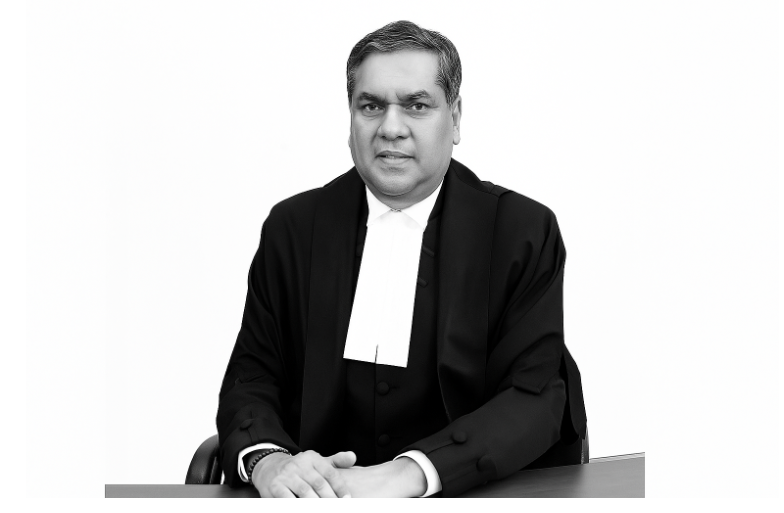
  • Justice Sanjiv Khanna’s Tenure: The Voice That Spoke for Many Citizens of This Country

    Justice Sanjiv Khanna’s Tenure: The Voice That Spoke for Many Citizens of This Country

    After a career dedicated to serving justice and upholding the Constitution, Justice Khanna now transitions to a well-deserved retirement. He retires on 13 May, marking the end of a six-month tenure defined by clarity and conviction.

    Justice Sanjiv Khanna, the 51st Chief Justice of India, is a well-established and renowned judge of the Honourable Supreme Court, marking his presence and opinions in a number of notable judgments on different aspects, such as VVPAT verification, Electronic Bond Scheme, and even upholding the abrogation of Article 370.

    Justice Sanjiv Khanna had earlier served as the Honourable Supreme Court Judge for the period commencing from 11 November 2024 to 13 May 2025, preceded by Justice D.Y. Chandrachud. He graduated from St. Stephen’s College, Delhi and thereafter pursued his Bachelor of Laws from the Faculty of Law, Delhi University. Following this, he was enrolled as an Advocate in the Bar Council of Delhi in 1983, serving as a Standing Counsel (Civil) for the National Capital Territory of Delhi and the Income Tax Department.

    The legacy of the Khanna family can be seen in the career of Justice Sanjiv Khanna, whose father, Dev Raj Khanna, served as a Justice at the Delhi High Court, and his uncle, Justice Hans Raj Khanna, was a Supreme Court Judge renowned for his landmark judgment in the ADM Jabalpur v. Shivkant Shukla case on right to life and personal liberty.

    During the term of six months serving as the Chief Justice of India, he made a notable presence in various landmark judgements, which not only brought a change in the country but at the same time kept the basic structure of the constitution intact, keeping the sentiments of the citizens of the country intact.

    One of the key rulings, which was widely discussed during the last phase of Justice Sanjiv Khanna’s tenure, was the petitions filed against the Waqf Amendment Act, 2025, which was led by a special three-judge bench where he played an important role in the Waqf Amendment Act controversy. During the proceedings, the Centre assured the court that no existing Waqf properties will be denotified, and no new and fresh appointments will be made to the Waqf Board or Central Waqf Council until further hearings. The case is still pending on substantive issues, which are to be dealt with by his successor, Justice B.R. Gavai.

    As a Supreme Court Judge and serving as Chief Justice of India, Justice Sanjiv Khanna was an integral part of the landmark judgements in the history of India in the case of challenging the constitutionality of Electoral Bond Scheme as well as the abrogation of Article 370 – which revoked the special status of Jammu and Kashmir and reorganised it into Union Territory of India. He also marked his influential presence by dismissing the petition filed with regard to the 1976 Amendment in the Preamble of the Constitution of India, where the terms’ secular’ and ‘socialist’ republic were added to describe India.

    Justice Sanjiv Khanna, from the date of holding a strong position at his office and for the country as well, has made some smart administrative moves in keeping the hearings at the Supreme Court more effective. His smart moves included procedural equality by ending oral mentions of early listing of cases at the Supreme Court, and focused on well-drafted petitions

    To sum up, Justice Sanjiv Khanna’s tenure as the 51st Chief Justice of India in a period of six months had his involvement in numerous cases, which not only included short cases but sensitive religious matters, including secularism and transparency in the judicial and quasi-judicial system.