Blog

  • Ozzy Osbourne, Prince of Darkness, dies at 76

    Ozzy Osbourne, Prince of Darkness, dies at 76

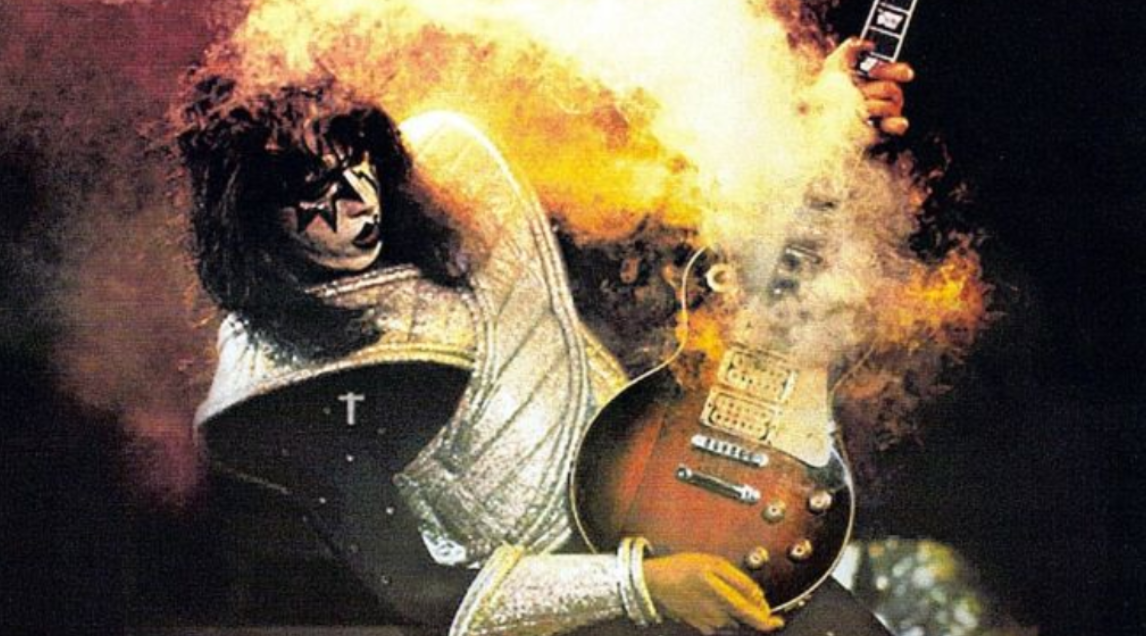
    Ozzy Osbourne, the heavy metal pioneer, whose chaotic stage presence, occult imagery, and the infamous bat-biting incident made him one of the most iconic figures in the history of rock music,  passed away on 22nd July 2025; he was 76.

    Known as the “Prince of Darkness”, Osbourne spent decades crafting his horror persona. As the lead vocalist of Black Sabbath and later a solo artist, he helped define the visual and thematic vocabulary of heavy metal. While critics questioned his choices and religious groups denounced and associated him with Satanism, Osbourne embraced his infamy with self-aware flair. His legacy lies not only in the music he made but in the boundary-pushing dark persona, which altered rock music forever.

    Born in a Graveyard, Adopted by Sin

    Born John Michael Osbourne on 3 December 1948, in Birmingham, England, Osbourne did not have an easy and lavish life. He grew up in a modest household alongside five siblings. Osbourne struggled with dyslexia in school, forcing him to drop out at 15. After dropping out, he had to cycle through a series of menial and low-paying jobs; he even served jail time for petty theft. Inspired by the Beatles, his passion for music set him on a radically different path.

    In 1968, he co-founded Black Sabbath. The 60s, known for its peace and love-optimism, was about to change thanks to its dark riffs and apocalyptic lyrics. Black Sabbath released their debut album, “Black Sabbath,” in 1970; the first song opened with church bells, and the eerie music set the tone. Osbourne’s ghostly, almost chant-like vocals became a defining feature of the band’s sound.

    Rock musicians like to play with danger, and Osbourne made it a central theme. Onstage, he seemed possessed, his eyes rolling back as he sang about ghoulish topics like war and mental torment. Offstage, Osbourne had a mysterious persona; he wore black capes and crosses, and spoke cryptically about the dark subjects he sang about.

    The dark image became legendary in 1982 during a solo concert in Des Moines, Iowa. A fan threw a bat on the stage- Osbourne assumed it was a rubber bat, and he bit into it only to discover it was alive. This moment sparked outrage, horror, and fascination across the world.

    Osbourne was removed from Black Sabbath in 1979 due to substance abuse issues, which paved the way for his solo career. With help from his manager and second wife, Sharon Osbourne, he released “Blizzard of Ozz”. He built a solo legacy rooted in the same horror and theatrical darkness that had made him famous initially, but with a clear focus and independence. Alongside his music, Osbourne’s off-stage behaviour became the stuff of tabloid fascination. He was infamous for outrageous acts like urinating on a historic monument in the Alamo while wearing his wife’s dress and snorting a line of ants during a tour. After facing accusations of him being a satanist and the Antichrist from right-wing Christian groups, he replied, “I’m not the Antichrist, I’m just a rock and roll singer with a dramatic flair”.

    His life took a turn in 2002 with The Osbournes, an MTV reality show that exposed a new side of the rock legend. Despite the previous perception of him being a terrifying icon in the 70s and 80s, Osbourne appeared as a fumbling, caring father navigating his daily life with confusion and gentleness. The show became a cultural phenomenon, and millions of viewers tuned in to watch it every week.

    Despite recurring health struggles, including Parkinson’s diagnosis, surgeries, and a well-documented history of addiction to alcohol and drugs, Osbourne continued to record and perform well into his seventies. He collaborated with artists like Post Malone and Elton John to make new music. He was inducted into the Rock and Roll Hall of Fame with Black Sabbath in 2006 and received numerous awards, including the Grammy Lifetime Achievement Award in 2019. Even though he had differences with Black Sabbath, he reunited with them multiple times. Just a few days before his demise, he performed a final show with them on 5 July 2025.

    Fans around the world mourned the death of Prince of Darkness, and said that his last performance was the “perfect farewell for their Prince.” “There will never be another Ozzy,” said guitarist Tony Iommi, his longtime bandmate in Black Sabbath, “he was the voice of metal and the heart of the band.” Elton John wrote, “Ozzy made madness into magic. We’ve lost a legend”.

    Osbourne is survived by his wife, Sharon, and his children, Aimee, Kelly, and Jack.

  • Vice-President Jagdeep Dhankhar Resigns Suddenly, Cites Health Reasons

    Vice-President Jagdeep Dhankhar Resigns Suddenly, Cites Health Reasons

    Vice-President of India Jagdeep Dhankhar resigned from his post on Monday, saying he was following medical advice and needed to focus on his health. The resignation came as a big surprise to many, as he still had two years left in his term.

    In his resignation letter to President Droupadi Murmu, Mr. Dhankhar said, “To prioritise health care and abide by medical advice, I hereby resign as the Vice-President of India, effective immediately.” The letter was shared on his official X (formerly Twitter) account.

    Mr. Dhankhar, 74, had a heart-related issue in March but had recovered and was attending official events regularly. In fact, he had taken part in Parliament earlier the same day and chaired a meeting of the Business Advisory Committee in the Rajya Sabha. He was also scheduled to visit Jaipur the next day for an event.

    His sudden resignation raised many questions and speculations. While the official reason is health-related, some political leaders believe there could be other reasons behind the move.

    Congress MP Jairam Ramesh said the resignation was “shocking and unexpected.” He mentioned that he had spoken to Mr. Dhankhar just a few hours before the news broke, and the Vice-President gave no hint about stepping down. “He was supposed to make some big announcements related to the judiciary tomorrow,” Mr. Ramesh added.

    Sources as per The Hindu say Mr. Dhankhar was also expected to speak in the Rajya Sabha on impeachment motions against two High Court judges. These were sensitive matters that could have made headlines.

    According to senior leaders in the ruling National Democratic Alliance (NDA), the government is now preparing a list of possible replacements. The next Vice-President will likely be from the Bharatiya Janata Party (BJP) and someone close to Prime Minister Narendra Modi. PM Modi is expected to return from his overseas visit by July 26.

    There have also been reports of tensions between Mr. Dhankhar and the government in recent months. His strong public comments about the judiciary did not go down well with some government leaders. In December 2024, the Opposition had even moved an impeachment motion against him, something that had never happened before for a Vice-President. Although the motion was dismissed, Mr. Dhankhar was reportedly upset that no top government minister publicly defended him.

    Mr. Dhankhar is known for speaking his mind. He began his career as a lawyer and entered politics in 1989, winning a Lok Sabha seat from Jhunjhunu, Rajasthan. He joined the BJP in 2003 and was made Governor of West Bengal in 2019, where he had regular disagreements with Chief Minister Mamata Banerjee. In 2022, he was elected as the 14th Vice-President of India.

    As Vice-President, he often spoke on issues like judicial reform, farmers’ rights, and Parliament’s powers. Some admired his courage, while others felt he crossed the line expected from someone in a high constitutional post.

    So far, the BJP has not issued a formal statement. PM Modi posted a brief message online, but it was far less warm than the praise he had given Dhankhar earlier. Meanwhile, several Opposition leaders have spoken about Mr. Dhankhar with respect and concern.

  • Centre Defends Revised SO₂ Emission Norms for Coal Plants as Cost‑Effective and Climate‑Coherent

    Centre Defends Revised SO₂ Emission Norms for Coal Plants as Cost‑Effective and Climate‑Coherent

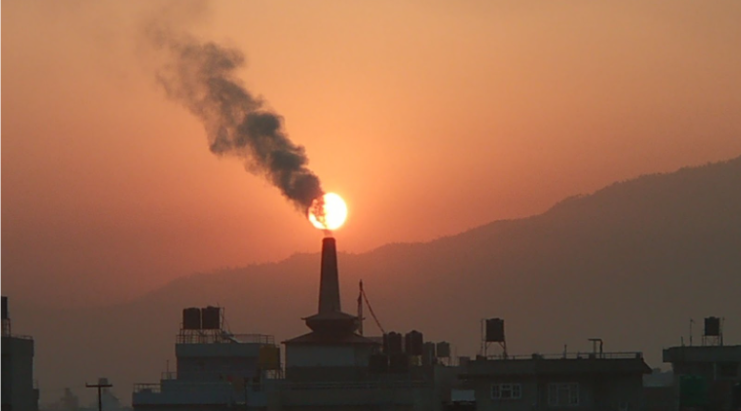
    India, already one of the world’s top sulphur dioxide (SO₂) emitters, has now moved to exempt nearly 80% of its coal-fired power plants from installing key pollution control systems – sparking widespread concern among environmentalists and public health experts. On 17 July 2025, India’s Ministry of Environment, Forest and Climate Change (MoEFCC) has staunchly defended its decision to relax sulphur dioxide (SO₂) emission norms on installing flue gas desulfurisation (FDG) systems for coal and lignite-based thermal power plants, describing the move as ‘cost-effective’ and ‘scientifically justified’. The new revised framework has now exempted approximately 78% of thermal plants from installing FGD systems, with exceptions.

    Background & Challenges Faced 

    In 2015, the MoEFCC introduced new emission norms for coal- and lignite-based thermal power plants to curb air pollution. A key requirement was the installation of FGD units, which are a pollution control technology that removes sulphur dioxide from gases of the power plant, leading to a reduction in harmful emissions into the atmosphere. This move was part of India’s broader effort to reduce ambient air pollution and align with global environmental standards.

    However, for the communities living near the thermal plants, these policies were essential for their survival. Residents near Chhattisgarh’s Korba region, home to one of India’s densest coal power belts, who are already battling chronic coughs, fear that this rollback would choke them further.

    All thermal plants were given two years to install these; however, by 2024, only 8% of 180 thermal power plants had installed FGDs. Multiple extensions were granted due to technical, financial, and logistical hurdles, including high costs, limited vendors, and supply chain issues.

    While studies show sulphur dioxide contributes only 1–5% to overall PM₂.₅ levels, studies caution that even at the lower end of this range, the impact on human health is significant. India sees around 19.5% of daily deaths and 1.67 million annual deaths – a figure that makes the health implications of rolling back SO₂ norms impossible to ignore.

    What has changed?

    Under the new framework, thermal power plants are now classified into three categories based on how close they are to populated places and their pollution load. Category A plants are those situated within 10 km of cities in the National Capital Region or in areas with severe pollution. They are still required to install FGD systems by December 2027. The second category, Category B, located between 10 and 25 km from populated areas, will be assessed on a case-by-case basis. Meanwhile, Category C plants—located more than 25 km from major habitations—have been exempted altogether from the FGD mandate. This includes the 78% of thermal plants mentioned before.

    Government’s Justification

    The MoEFCC said that they have noted no visible difference between the SO₂ emissions between those plants that have the FGD system and those that don’t. According to the ministry, studies show that SO₂ contributes only 1% to 5% to ambient PM2.5 levels, implying that nationwide installation may not be the most effective strategy to reduce air pollution.

    The Ministry also stated that the expenses to install these systems would not match their benefits, which are marginal. The installation could also lead to an increase in electricity tariffs by 50 to 70 paise per unit. The current cut of the systems could, in fact, reduce electricity costs by 25 to 30 paise per unit.

    Criticism and Public Health Concerns

    SO₂ is a colourless, extremely toxic gas and a leading cause of several respiratory illnesses and acid rain. As mentioned, India is one of the largest emitters of SO₂ and diluting regulations puts vulnerable communities at risk. Some research suggests that fully implementing FGD could save thousands of lives each year.

    Critics argue that rolling back these measures not only endangers public health but also undermines India’s global environmental standing. This policy shift, they warn, could complicate India’s long-term climate strategy—particularly its ambition to reach net-zero emissions by 2070. With coal still dominating the energy mix, continued reliance on outdated emission controls may slow the transition toward cleaner alternatives and jeopardise commitments under the Paris Climate Agreement.

    What Lies Ahead

    While the government claims that the revision is both climate-friendly and cost-effective, this debate highlights a significant challenge: finding the right balance between developmental needs and environmental responsibility. With coal still being a major player in India’s energy landscape, we’re left wondering what the long-term effects of this decision will be on public health and our climate goals.

  • Debut Winners Galore: A review of Wimbledon 2025

    Debut Winners Galore: A review of Wimbledon 2025

    Sinner Redemption

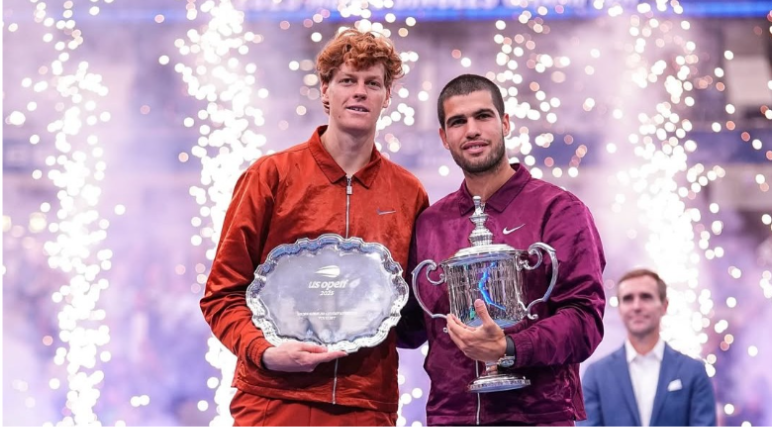
    A month after their five-and-a-half-hour long explosive final at the French Open, Carlos Alcaraz and Jannik Sinner once again squared up, this time at Centre Court, to duel for the Wimbledon trophy. Alcaraz was gunning for his third consecutive Wimbledon title, while Sinner aimed to avenge his French Open loss to the Spaniard. Sinner had defeated last year’s finalist and seven-time winner Novak Djokovic in the semi-finals, while Alcaraz had the better of American Taylor Fritz en route to the final.

    While Alcaraz started strongly and won the first set, Sinner found another gear and won the following three sets with ease, winning the match with a scoreline of 4-6, 6-4, 6-4, 6-4. This was Sinner’s first win over Alcaraz since the China Open in 2023, the Spaniard being a constant thorn in the Italian No. 1’s side. With this win, Sinner extended his lead at the top of the ATP rankings with 12,000 points, while Alcaraz lost ground and dropped to 8,600 points, albeit still in second place. Sinner also became the first Italian player to win Wimbledon in singles.

    Swiatek Domination

    As is tradition on grass, the WTA was filled with drama and unexpected losses from the top seeds. Reigning champion Barbora Krejcikova went out in the third round to Emma Navarro, and by the time the quarterfinalists were decided, a first-time winner was guaranteed. After the dust settled, it was former World No. 1 Iga Swiatek and American Amanda Anisimova who made the final. Swiatek defeated Swiss Belinda Bencic in the semi-final, while Anisimova upset current No. 1 Aryna Sabalenka in a tight three-setter to make her first Grand Slam final. This was the third time in three Majors that an American player defeated Sabalenka.

    Critics favoured Swiatek for being a five-time Major winner and boasting an unbeaten Slam final record, but still gave Anisimova a chance due to her excellent performance against Sabalenka. However, in a surprising turn of events, Swiatek swept the rug off under the American, winning the match with a scoreline of 6-0, 6-0, with Anisimova failing to win a single game and only winning 24 points throughout the match. It was only the second time in the Open Era that a women’s final ended with this scoreline, with German great Steffi Graf defeating Natasha Zvereva similarly in the 1988 French Open final. Swiatek consoled a tearful Anisimova at the net before celebrating the win with her team.

    With this match, Swiatek overcame her trophy slump since the 2024 French Open and jumped back into the top three in the rankings. Despite the devastating loss, Anisimova moved five places up to seventh in the rankings on account of reaching the final.

    Doubles

    The British duo of Julian Cash and Lloyd Glasspool emerged victorious at their home slam, defeating Rinky Hijikata and David Pel in the Men’s Doubles final with a score of 6-2, 7-6(7-3). This was the first time in the Open Era that a British pairing clinched the Wimbledon trophy, as well as being the first Major win for both Cash and Glasspool.

    Veronica Kudermetova and Elise Mertens won the Women’s Doubles after triumphing over Hsieh Su-Wei and Jelena Ostapenko with a score of 3-6, 6-2, 6-4, with Kudermetova winning her first Major title while Mertens won her fifth. In the Mixed Doubles, Sam Verbeek and Katerina Siniakova won a tight final against Joe Salisbury and Luisa Stefani, winning by 7-6(7-3), 7-6(7-3). Verbeek won his first Major title with this win, while Siniakova, the world No. 1 in doubles, clinched her eleventh.

    Image Source: Image credit: Iga Swiatek on Instagram

  • Investing in Indulgence: All About ChysCapital’s Theobroma Stake Buy Out

    Investing in Indulgence: All About ChysCapital’s Theobroma Stake Buy Out

    Theobroma, a high-end bakery brand renowned for its signature brownies, pastries, and quickly expanding nationwide presence, has drawn a significant investment from ChrysCapital, which has purchased a 90% stake in the business. The deal is estimated at a valuation of ₹2,410 crore, as reported by the Economic Times. It marks a significant milestone in Theobroma’s evolution from a family-run enterprise to a professionally scaled food services business.

    The deal involves acquiring shares from both the company’s promoters and current investor ICICI Venture, which owns around 42% of the stake in the company. It is reported that the proprietors will retain 10% of the stake in the company.

    From Colaba Café to a 1000-Crore Brand 

    Theobroma was founded in 2004 by two sisters, Kainaz Messman Harchandrai and Tina Messman Wykes. It grew from a small kitchen café to a 225-store pan-India chain, serving pastries, puffs, cakes, croissants and sandwiches.

    In her 2020 memoir, “The Theobroma Story: Baking a Dream,” Kainaz Messman described how she had to reconsider her career after suffering a back injury while working as a pastry chef at the Oberoi Hotels. Inspired by their mother’s home-based baking business, she teamed up with her sister Tina and received training at Le Cordon Bleu.

    During Dussehra in 2004, the two opened their first café on Colaba Causeway with their father’s seed money of Rs 1.5 crore. At first, it was thought to be a minor improvement over their kitchen at home, but it would quickly grow into something much larger.

    A friend of theirs proposed the name “Theobroma,” which means “food of the gods,” and it immediately came to be known as the decadent treats at an affordable price and an elevated dessert experience.

    Theobroma’s delicious tarts, rich cakes, and gooey brownies were an overnight hit in India’s growing café and bakery scene in the early days. With its European-style pastries at affordable prices, the brand won the heart of a young aspirational consumer segment. Its emphasis on quality and consistency helped create a loyal and growing customer base, reports say.

    More About the Stake Buy-out 

    According to the ET (Economic Times) report in March, ChrysCapital initiated discussions to acquire Theobroma at a rate lower than the initial Rs 3,000 crore valuation the founding family and the shareholders held out for. The talks that were put on hold for some six weeks following poor financial performance were recently restarted. No takeover announcement has been issued yet.

    Other prospective buyers like Bain Capital, Carlyle, and Switz Group of the Khorakiwala family that runs the Monginis bakery chain also expressed initial interest in Theobroma. ChrysCapital’s investment in Theobroma is a part of the company’s plan to build a solid quick-service restaurant (QSR) portfolio. The fund is also committed to buying high-growth food chains such as The Belgian Waffle Co., and the recent deal reflects growing investor interest in scalable, consumer-facing companies in India.

    Theobroma is expected to post Rs 525-550 crore revenue and Rs 80-100 crore EBITDA in FY25. It had posted Rs 400 crore revenue and Rs 60 crore EBITDA in FY24.

    The company had earlier considered going public, but unstable market conditions stalled its plans for an IPO.

    What’s Next for Theobroma?

    With the support of ChrysCapital, Theobroma will consolidate its position in Tier 1 and Tier 2 cities and explore opportunities such as e-commerce, licensing of products, and packaged foods. With the increasing demand for premium yet affordable food brands in India, Theobroma is poised to dominate the space.

    The most amazing part of this story isn’t the moneymaking transaction – it’s sister’s love, business built on chocolate, hard work, and determination. It is now a case study on how Indian food startups can grow without losing their soul.

    The investment gives Theobroma the strategic capital and expertise it needs to propel its growth, expand new markets, and potentially strengthen its supply chain and backend operations. ChrysCapital, as an experienced investor in consumer-facing businesses, offers Theobroma Capital as well as operating experience, which is vital since Theobroma transitioned from a family business to a professionally scaled business.

    The Messman family is reportedly still engaged in key roles to keep the values and identity of the brand.

    Image Source: Theobroma Official Website

  • After Nearly a Century, HUL Gets Its First Female Chief

    After Nearly a Century, HUL Gets Its First Female Chief

    For the first time in its 92-year history, Hindustan Unilever Limited (HUL) will be led by a woman. Priya Nair has been appointed as the new CEO and Managing Director of HUL, and will be taking over from Rohit Jawa on August 1st, 2025.

    Priya Nair isn’t new to HUL. She has worked for the company for almost 30 years, starting in sales and marketing and steadily climbing the ladder, proving herself every step of the way. She is currently the President of the beauty and wellbeing sector at Unilever, where she led iconic campaigns for brands like Dove, Rin and Comfort. She is also known for creating stories that connect with people, especially women and families, and her in-depth understanding of the Indian market made her one of the most respected marketers in the industry.

    But this move is more than just a change in the job title. It highlights the slow pace of change in the Indian boardrooms. HUL, a household name with products in nearly every Indian home, had never had a female CEO for almost a century, and Nair’s appointment is a clear sign that leadership is finally becoming more inclusive.

    She brings to the table not just experience, but also empathy. Her leadership style is expected to focus on people, sustainability, and innovation. As consumer habits change, especially post-pandemic, HUL will need fresh ideas to stay relevant. Her track record shows she understands this shift. She led campaigns that didn’t just sell soap or shampoo; they told stories that made people feel seen and heard.

    Her promotion also sends a message to young women across the country – the top seat is within reach. Even in industries where men have always held power, things are changing. It’s a reminder that talent, vision, and consistency can break barriers,  even those built over nine decades.

    HUL is India’s biggest fast-moving consumer goods (FMCG) company. It sells everything from tea and detergent to skincare and health products. With over 50 brands in its portfolio and a presence in every part of the country, leading HUL is no small task. But Nair is seen as someone ready for the challenge.

  • Elon Musk Launches America Party: Fiscal Conservatism, Electric Cars, Revenge

    Elon Musk Launches America Party: Fiscal Conservatism, Electric Cars, Revenge

    Billionaire Elon Musk, on Saturday, announced the launch of a new ‘centrist’ political party, the ‘America Party,’ which looks like both a political gamble and an escalation to his very public feud with US President Donald Trump. In a series of posts on his platform X, Musk has positioned the new party as a direct challenge to America’s historic two-party system.

    “By a factor of 2 to 1, you want a new political party, and you shall have it!” Musk posted, citing a poll he ran on X. He added, “When it comes to bankrupting our country with waste and graft, we live in a one-party system, not a democracy. Today, the America Party is formed to give you back your freedom.”

    However, there is no evidence as of now of Musk formally registering the party with the Federal Election Commission (FEC). Musk, who was born in South Africa and is ineligible to run for president, has not named a leader for the party yet.

    The announcement comes against the backdrop of a dramatic public split with Trump, whom Musk had previously supported with over $275 million in campaign donations. Musk has even served in Trump’s administration as the head of the so-called Department of Government Efficiency (Doge), where he oversaw aggressive cuts to federal programs.

    Their falling out began after Musk publicly criticised Trump’s massive tax and spending bill, which the latter refers to as ‘one big beautiful bill’, which was signed into law last week and is expected to add over $3 trillion to the national deficit. Musk, a prominent leader in the EV industry, has very publicly made his opinions known on the bill, which omitted subsidies for electric vehicles, a key interest for Tesla.

    Trump has since then publicly dismissed Musk’s new party as ‘ridiculous’, calling Musk a “TRAIN WRECK” that has gone “off the rails.” Trump has also threatened to revisit federal contracts with Musk’s companies, including SpaceX and Starlink, both of which rely heavily on government deals. He further hinted at potential moves to strip Musk of subsidies or even reconsider his immigration status, despite Musk having been a US citizen since 2002.

    Unbothered by the president’s remarks, Musk suggested that the America Party could start by focusing on a handful of highly contested House and Senate races in the 2026 midterms. He argued that winning just a few seats could give the party leverage in a closely divided Congress.

    Meanwhile, a Reuters report has pointed to a slide of nearly 8% in Tesla’s shares on Monday, following Musk’s announcement. The company is now tasked with selling more than one million vehicles in the second half of the year to avoid a year-on-year decline in sales. If the stock slide continues, Tesla will lose over $80 billion in market value. Can Tesla afford this political venture, given how Trump’s initial threats to cut off subsidies to Musk’s businesses led to a $150 billion wipeout in Tesla’s market cap in a single trading session?

    Despite Musk’s confidence, US political history has shown little success for third parties. So far, the America Party looks more like a personal vendetta than a serious political movement. There are no declared candidates and no clear policies beyond Musk’s usual focus on cutting government spending. No known lawmakers have shown any interest in defecting to his fledgling party.

    In reality, there’s little evidence of a strong voter bloc eager to rally behind Musk. His millions of followers on X and strong financial resources don’t necessarily translate into political power. Without a coalition of committed candidates and grassroots supporters, the America Party risks becoming just another news headline, fizzling out entirely once Musk’s attention shifts elsewhere.

  • HYBE CEO Steps Down Amid BTS Comeback and India Expansion

    HYBE CEO Steps Down Amid BTS Comeback and India Expansion

    Scooter Braun Steps Down: HYBE’s Bold New Era Begins

    In a surprising move, Scooter Braun has stepped down as CEO of HYBE America. Braun, known for managing global stars like Justin Bieber and Ariana Grande, had joined HYBE in 2021 when the South Korean entertainment giant acquired his company Ithaca Holdings for around $1 billion. For years, he played a key role in helping HYBE expand into the American market, leading big-name signings and industry takeovers, including the $300 million acquisition of Quality Control Music. However, as of 1 July 2025, his leadership era has officially ended.

    The timing feels far from random. HYBE insists this transition was planned since the 2021 deal. Braun isn’t completely stepping down though; he will continue as a board member and strategic advisor to HYBE founder Bang Si-hyuk. Isaac Lee, previously heading HYBE’s Latin American operations, has stepped in as the new CEO of HYBE America.

    Braun’s exit has been met with mixed reactions. While his industry connections helped HYBE grow globally, he’s also been a controversial figure, especially after his public feud with Taylor Swift over the ownership of her early music. Many BTS fans, who had long been uneasy about Braun’s influence on HYBE, saw his exit as a “cleansing moment.” In fact, Braun stepping down just hours after BTS reunited online has sparked speculation that this was a calculated reset.

    BTS Is Back: The Comeback Fans Were Dying For

    On the same day, Braun stepped aside, and BTS came together for a surprise livestream on Weverse. All seven members appeared together on screen for the first time in nearly two years, sending ARMYs worldwide into meltdown. The band is officially back from their military service, and they’re already planning their comeback album and tour.

    During the livestream, BTS confirmed that they’ll start working on new music in July 2025 and aim to release a full album by spring 2026. This would be their first full-length group album since “Proof” in 2022. Even more exciting is a world tour planned for the same year. With their military duties now complete, all seven members- Jin, RM, SUGA, j-hope, Jimin, V, and Jungkook- are finally coming back together.

    This comeback means more than just new songs- it marks the return of the most powerful K-pop band of all time. And BTS isn’t just a band; they’re a cultural force. They’ve spoken at the United Nations, topped global charts, and built an army of fans stretching across continents. Their return instantly shifts the entire music industry. It also gives HYBE a significant advantage as it prepares for its next phase of global expansion.

    HYBE Heads to India: A New Chapter Begins 

    HYBE is officially entering India. With its massive population, youthful demographic, and growing love for Korean entertainment, India is a dream market for any entertainment company. HYBE recognised this potential and announced plans to open a full-fledged Indian subsidiary in the second half of 2025.

    The new office is expected to launch around September or October and will likely be based in Mumbai. Preparations have already begun, with research teams surveying the local music market. The company sees India as a core market for developing new artists and bringing K-pop closer to South Asian fans.

    Instead of pushing Korean acts globally, they want to build locally relevant entertainment hubs in major regions like the U.S., Japan, Latin America, and India. It’s not just about bringing BTS and SEVENTEEN to new countries, but about creating Indian stars through the same system that made K-pop what it is today.

    What This Means for Fans 

    For Indian fans, this is a huge deal. HYB’s presence in India allows concerts, exclusive events, official auditions, and local artist development. There’s already a buzz around HYBE’s ‘Cine-Fest’, which will screen BTS and other K-pop concert films in Indian theatres from 10 July to 13 July 2025. This could be regarded as the company testing the waters before launching larger fan engagement events.

    And, of course, all eyes are on whether BTS will finally have concerts in India in 2026. The idea doesn’t seem far-fetched anymore. During his solo promotions, j-hope hinted that India might be added to future tour maps, especially once HYBE formally sets up its office in the country. For millions of Indian ARMYs, that’s a dream come true.

  • Diogo Jota, Portugal and Liverpool Footballer, dies in road accident

    Diogo Jota, Portugal and Liverpool Footballer, dies in road accident

    Diogo Jota, Portuguese footballer for Liverpool FC, died in a road accident on 3rd July, 2025, at the age of 28. His younger brother Andre Silva, travelling with him, was also killed in the accident.

    Just 11 days after his wedding, Jota was returning to England for pre-season. Having recently undergone lung surgery, he was advised to avoid air travel, so he planned to go from Spain to England via ferry. On their way to the port, while trying to overtake another car they suffered a tyre blowout, veering off the road before fatally catching fire. The crash occurred at around 00:30 CEST.

    Tributes poured in worldwide after the deaths were officially confirmed. Many of Jota’s Liverpool and Portugal teammates expressed shock over the news, reminiscing about their shared memories and recent success for club and country. Arne Slot, Liverpool head coach, remarked, “For us as a club, the sense of shock is absolute. Diogo was not just our player. He was a loved one to all of us.” Liverpool announced that they would pay his family the remaining amount of his contract, which ran until 2027. In their reunion performance on 4th July, British band Oasis paid tribute to Jota, with his picture appearing on screen when they performed ‘Live Forever’.

    Born on 4th December 1996 in Porto, Portugal, Jota started his professional football journey with Paços de Ferreira in 2013, becoming the youngest player to score for the club in the Primeira Liga. After playing for various teams like FC Porto and Wolverhampton Wanderers, he was signed by Liverpool FC in 2020. At Liverpool, he helped the team win the cup double in 2022, clinching both the FA Cup and the EFL Cup, as well as winning the league in the 2024-25 season. He was also part of the squad that reached the UEFA Champions League Final in 2022, losing out to Real Madrid 1-0. For Portugal, Jota made his international debut in 2019, contributing to them winning the UEFA Nations League twice, in 2019 and 2025. The 2025 win over Spain was his final match as a football player. He also made appearances for Portugal at the 2021 and 2024 European Championships. Overall, he earned 49 caps for Portugal.

    He is survived by his wife Rute Cardoso, their three children and the millions of fans whose hearts he touched.

  • The Indian Imprint: Craft, Culture, and Controversy on the Runway

    The Indian Imprint: Craft, Culture, and Controversy on the Runway

    In the dazzling world of global luxury fashion, titans such as Louis Vuitton and Prada have turned to Indian culture for inspiration. India, with its unique and rich heritage and craftsmanship, has effortlessly made its mark on the fashion industry. Beyond mere commerce, India’s exquisite textiles, handcrafted jewellery, and intricate embroideries have long attracted designers, leading the country’s diverse fashion to reach international heights, often reimagined through a contemporary lens.

    For example, the recent rave on TikTok about the Indian ‘Jhola’ bags being sold at a whopping budget of Rs. 4100, an item commonly acquired at less than Rs. 100 in India has left minds boggled. The item features Hindi texts and is designated as a ‘chic’ item for enthusiasts of Indian culture. It seems almost unbelievable!

    Furthermore, the Prada-Milan Fashion Week, a global platform for couture novelty, found itself in a controversy between worldwide fashion and cultural heritage and appropriation. Although the conflict started as harmless, the uproar of the Prada shoes, from the indictments of design theft to the vehement demands for cultural attribution, completely caught the fashion house off guard. These handcrafted leather slippers, commonly called Kolhapuris, boast a 900-year history rooted in the states of Maharashtra and Karnataka (India), and were upgraded using high-class leather and metallic bases, proving how simple, authentic Indian crafts can be elevated to a global trend level. Although Prada stated, “We acknowledge the sandals are inspired by traditional Indian handcrafted footwear, with a centuries-old heritage,” the situation ignited a wave of widespread controversy.

    As photos from the runway started to circulate online, outrage in India escalated. Criticising Prada for describing the footwear blandly as “leather flat sandals “ without giving any proper recognition of its origins, and accusing Prada of cultural appropriation. Business tycoon Harsh Goenka reflected the public outcry by stating, “ Indian artisans lose, while global brands cash in on our culture .” With prices reaching $800 abroad, while in India they are sold for as little as Rs. 1000, making the global markup all the more jarring. In response to the growing backlash and controversy, Prada’s head of Corporate Social Responsibility, Lorenzo Bertelli, responded by acknowledging the sandals’ Indian inspiration and expressed willingness to open a dialogue with local artisans for a more meaningful and respectful exchange.

    Interestingly, some believe that this controversy can have an unexpected upside. It has also transpired that the same could yield magnificent results. It is an undeniable element that the sale of sandals in India has shown an immense hike lately. By the perception of the regional designers, such exposure could increase interest in the everlasting styles, particularly among younger clientele.

    “Until now, it hadn’t been considered part of the ‘cool’ or aspirational footwear space in India’s luxury market… I truly believe in the ripple effect of what Prada has done,” expressed Shirin Mann, the founder of Needle Dust, popularly known for its coeval view on classical Indian embroidery slip-ons. Supporting her claim, Google Trends has also shown a noticeable spike in searches for Kolhapuri sandals since the show, while local retailers have reported increased curiosity, especially among younger shoppers.

    Alternatively, Louis Vuitton’s menswear collection, under the direction of Pharrell Williams, offered an enthralling example of such a controversy. Williams’ spring-summer 2026 collection vibrantly showcased India’s uplevelling artistry. The collection features a collaboration with studio Mumbai, altering the fashion runway into a life-sized ‘Snakes & Ladders’. The show included signature Indian colours, accompanied by Bhangra songs. It also showcased an Autorickshaw handbag, a common mode of transport that is a pivotal element of India’s vibrant street life. Adding to the authenticity, the show featured one of the most iconic Indian composers, A.R. Rahman, who co-composed the Punjabi track “Yaara Punjabi.” The track’s cultural depth elevated the entire experience, turning the runway immersive and rooted in Indian identity.

    India’s influence on Western fashion is in no way a new trend. It has influenced the Western world for centuries. From Yves Saint Laurent’s iconic perfume “Opium” subtly echoing Mughal Motifs and rich silks to Dior’s theatrical collections highly resembling Indian grandeur, the list never ends. As the lines between humble Indian handicrafts and contemporary designs continue to blur, one fact becomes significantly clear: India’s eclectic and deeply rooted culture continues to cast an undeniable influence on the outside world, powerfully shaping the very trajectory of upcoming fashion trends.