Blog

  • Diljit Dosanjh’s Emmy Nomination for Chamkila: A Victory Beyond Borders

    Diljit Dosanjh’s Emmy Nomination for Chamkila: A Victory Beyond Borders

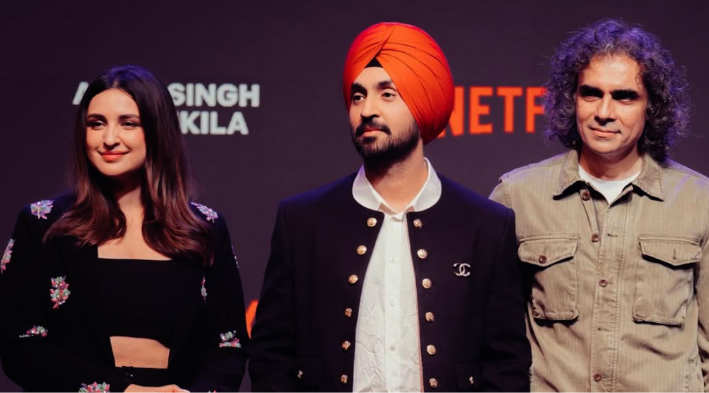
    The trajectory of the Indian entertainment industry witnessed a revolution when the International Academy of Television Arts & Sciences released its 2025 Emmy nominations. Punjabi popstar-actor Diljit Dosanjh receiving a nomination for Best Performance is an achievement that will go down in history. His portrayal of the controversial folk artist Amar Singh Chamkila in the Netflix-released biopic of the same name, directed by Imtiaz Ali, has not only won the hearts of everyone back home but has also caught global attention.
    Even more astonishing is that the movie itself, Amar Singh Chamkila, has been shortlisted in the Best TV Movie/Mini-Series category, putting India on two seats of glory in one of the globe’s most eminent television award galas.

    A Role Steeped in Legacy
    Amar Singh Chamkila, knighted as the “Elvis of Punjab,” was known for all the negative eyes on him and his music, making him a personality who sang about “improper topics” right from poverty within rural boundaries to physical intimacy. His cult-like following was nothing short of a wildfire that spread within the duration of one verse. His talent met an abrupt end at the peak of his career when he and his wife were murdered in 1988.

    To play such a character is commendable in itself. Dosanjh, in any case, already an international Punjabi music legend, took on the role with forceful realism. Chamkila’s unruly stage persona not only told the tale of a rockstar who was too ahead of his time, but also extended to vulnerable heights of lyricism. Dosanjh’s acting impacted every kind of audience, no matter how familiar they were with Chamkila’s music from before. This film’s international chokehold on us proves how finely tuned the acting on screen was.

    The Imtiaz Ali Touch
    Most credit for the film’s impact is due to director Imtiaz Ali, who has long been renowned for his forays into love, longing, and human paradoxes. Ali shifted from urban romances to Chamkila, with a tale anchored in Punjab’s earth. He approached Chamkila not merely as a people’s hero but as a symbol of the power of art to question the powerful and inspire people to think.

    Ali’s script becomes a harmonious celebration once Dosanjh’s acting and Parineeti Chopra’s layered portrayal of Amarjot come into view- it is a marriage that has depth of one of the highest artistic values. It is no surprise that international juries found Chamkila to be a compelling contender for the Emmy stage.

    The Weight of the Nomination
    Dosanjh is now among global stars like David Mitchell (Ludwig) and Oriol Pla (Yo, Adicto). Regardless of whether he wins, the nomination signifies that Indian actors are no longer limited to national recognition. They are among an increasing list of performers vying on the same level in global fields.

    Diljit Dosanjh’s ever-growing persona in front of a global audience is also responsible for his recognition within Emmy territories. He has broken the ice with the world by collaborating with A List artists, performing on almost every stage, and notably became the first Indian Punjabi artist to perform at Coachella. His path to bridging cultures has earned him another notch on his belt and created another groundbreaking addition to his resume.

    Why This Matters for Indian Entertainment
    It would be obvious to present this nomination as a victory for Diljit Dosanjh, but its repercussions are far-reaching.

    First, it points to the growing worldwide importance placed on Indian narratives outside Bollywood caricatures. Chamkila is hardly a neat city romance or mythical epic: it is the cruelly raw biopic of a Punjabi folk singer whose music once saw censorship and who was also violently taken away in his prime. That such a film should have gone its way is testimony to global audiences’ desire to have stories rooted in local authenticity.

    Second, it highlights how streaming platforms like Netflix have transformed the reach of Indian cinema. Without digital platforms, a story like Chamkila may have remained confined to domestic circuits. Today, it is accessible to audiences from New York to Nairobi, enabling it to enter conversations around global awards.

    Lastly, it encourages Indian creatives- actors, writers, directors- to look beyond borders. If Diljit can use a local folk figure and create an Emmy-award-winning performance out of it, then others, too, can aspire to narrate regional stories with universal appeal.

    The Symbolism of Chamkila’s Resurrection
    And there is a kind of poetry in Chamkila himself being brought back to life on such an international platform. Once considered crude by elites and killed for it, Chamkila’s art has now been justified by one of the world’s most significant cultural awards. His journey- shot in cold blood at the age of 27 and then remembered with finality at the Emmys after many years- makes the undying power of art more lucid against the tides of time, censorship, and plunder.

    The 53rd International Emmy Awards will take place in New York on 24 November 2025, it is undoubtedly a harbinger for a time when Indian actors and tales will find themselves gaining acceptance in areas once held by Western narratives. For Dosanjh, this is another milestone in a career that effortlessly balances music and film. For Indian popular culture, it is a testament to the fact that authenticity pays, and the world is, at last, eager to hear stories spoken in Punjabi, Bengali, Tamil, or any of the multiple Indian languages – so long as they are spoken in honesty and in craft. During Chamkila’s lifetime, his voice was very frequently overpowered by controversy. In 2025, due to Diljit Dosanjh and Imtiaz Ali, it resonates more than ever before, this time on the world stage.

  • High Seas Treaty to Come Into Effect After Crossing the Ratification Threshold

    High Seas Treaty to Come Into Effect After Crossing the Ratification Threshold

    On 19 September 2025, in a landmark development for ocean governance, the UN High Seas Treaty (BBNJ Agreement), secured the minimum 60 ratifications required for it to officially come into force by January 2026. With this achievement, the treaty is now on track to become legally binding, marking a major step forward in international environmental governance. Morocco became the 60th country to deposit its ratification instrument, triggering the 120-day countdown to the treaty’s entry into force. On the same day, Sierra Leone also deposited its ratification, becoming the 61st party to the agreement.

    Formal negotiations over the treaty began in 2018 and the draft was finalised in 2023. Previous discussions spanned across 20 years, driven by concerns over the unchecked exploitation of marine resources and the absence of a unified legal framework. The progress was slow due to differing national priorities over issues like resource sharing, fishing rights, and industrial activities in international waters.

    What this treaty aims to do
    The treaty was designed to tackle some of the most pressing threats to ocean health. One of these includes the creation of marine protected areas (MPAs), which are large stretches of international water designated to act as conservation zones. Human activities are strictly controlled, limiting activities such as fishing and breeding. Environmental Impact Assessments (EIAs) will also be made mandatory. Any major activity proposed in the high seas, such as deep-sea mining or industrial fishing expansion, will need to undergo detailed assessments, and parties must also keep under surveillance the impacts of any activities in areas beyond natural jurisdiction which they authorised or engage in.

    The treaty also addresses the growing importance of marine genetic resources, which are products from marine organisms carrying hereditary information, such as genes, and have the potential to be used in medicine, food, cosmetics, etc. The resources can cause issues with sustainability and equal accessibility of resources. The agreement also prioritises capacity development and technology transfer. Developing nations do not have the financing and technology to engage fully in high seas management. The agreement thus contains commitments to offer training, capital, and access to new technologies, allowing all nations to contribute actively to the monitoring, conservation, and sustainable management of the seas.

    All of these measures aim to support the global “30×30” target, which is the commitment to conserve at least 30 percent of the world’s land and sea by 2030. Since the high seas make up nearly half of the planet’s surface, the treaty is considered essential for achieving this target and reversing the fast decline of global biodiversity.

    Global Reactions
    Many advocates have pointed out that this treaty is one of the strongest demonstrations of collective will to take action against climate change since the Paris Climate Agreement. For small island nations and coastal states, which are among the most vulnerable to the impacts of ocean degradation, the treaty is seen as a lifeline for both biodiversity and livelihoods.

    However, there exists the challenge of ensuring the treaty is applied effectively across all regions, particularly in waters where industrial fishing and resource extraction are lucrative.

    Looking Ahead
    While the treaty’s entry into force is a breakthrough, its success will depend heavily on implementation. Countries that have ratified it will need to translate commitments into national laws, strengthen monitoring of their fleets, and coordinate with existing regional and sectoral bodies. Financing, transparency, and enforcement will be constant challenges.

    Another crucial test will be participation. Some major maritime powers have not yet ratified the treaty, raising concerns about the consistency of enforcement across the high seas. Nonetheless, the agreement creates momentum and pressure for broader adoption in the years ahead.

  • H-1B Overhaul: White House Announces $100,000 Fee for New Applicants

    H-1B Overhaul: White House Announces $100,000 Fee for New Applicants

    On September 19, 2025, the White House announced in Washington, D.C. that all new H-1B visa applications will now carry a $100,000 fee – a move introduced through a presidential proclamation by President Donald Trump. This change, set to take effect on September 21, applies only to new petitions and has already sparked legal challenges, industry backlash, and urgent warnings from major tech firms.

    The new $100,000 fee will be charged on petitions received after September 21, 2025. Important to note, it will not get charged on:
    • Petitions filed prior to that date
    • Current H-1B visa holders
    • Extensions or renewals in valid H-1B status

    Authorising bodies such as USCIS, CBP, and the State Department acted hastily to make sure that the change would become effective prospectively only. Nevertheless, questions abound regarding specifics such as when and how the fee will become due upon filing, upon issuance of visas or upon arrival in the U.S.

    The Ripple Effect: How the $100K Fee Will Reshape Work and Innovation
    For large technology firms, $100,000 per new recruit is anything but small change. These fees would quickly mount up for companies that employ many H‑1B visa workers, much less so, including the other fee costs, as well as compliance expenditures. Startups, which live on thin margins, face an even tougher choice: employ offshore at a higher cost, or don’t hire.

    Proponents of the change believe the H‑1B system has been misused to crush wages as well as treat American workers unfairly. By introducing this high fee, the government hopes to prevent over-reliance on offshore labour and incentivise firms to focus on domestic hiring. Critics, on the other hand, view it as a political move rather than a pragmatic fix.
    America long drew some of the brightest minds on the planet. That pipeline is now critically disrupted. If firms hold back on sponsorship, high-skilled workers will instead look to Canada, Europe, or even Asia, where the cost of immigration is cheaper.

    The urgency of the change was underscored when major tech giants, including Amazon, Google, and Microsoft, urged their employees abroad to return to the U.S. quickly before restrictions tightened. The move reflects widespread concern over the possibility of more restrictive measures at ports of entry.
    On the legal front, California has already announced plans to sue, arguing that such sweeping measures fall within Congress’s authority, not the executive’s. Should the courts agree, the proclamation could be overturned or narrowed, though any resolution is likely months away.
    Another fundamental aspect is the “national interest exemption.” Some employees or industrial inputs deemed indispensable, like healthcare, national defence, or industries suffering shortages, could receive exceptions, although eligibility rules are not defined yet.

    Reactions Across the Board: Industry, States, and Advocacy Groups Speak Out
    The introduction of the $100,000 H‑1B fee evoked immediate and vehement reactions from all stakeholders. The technology sector, highly reliant on international talent, was apprehensive. Major corporations like Amazon, Google, and Microsoft cautioned that they would have to rethink hiring plans and reassess operations. Some will already ponder covering the cost for essential recruits, and others will reduce H‑1B sponsorship or even offshore projects in order to sidestep the cost.

    State governments, and particularly California, reacted to the fee directly as a threat to their economies. With Silicon Valley located in it and possessing a large concentration of high‑tech industries, California policymakers argued that the policy would strangle innovation and harm the competitiveness of the state. The state already signalled it would litigate the policy in court legally and made the question partly one not only of economics but also of constitutionality.

    Advocacy groups for immigrants reacted with concern, cautioning that it would deter highly skilled workers from coming at all. They contended that American leadership in technology, research, and healthcare relies upon luring international talent, and such a hefty fee would adversely affect them. Several advocacy groups also mentioned the larger human cost, referencing personal and professional dislocation it would create among employees who would move to the U.S., and U.S. lawmakers offered contradictory responses. A number of Republican and Democratic senators professed concern about protecting American jobs, while others urged America to stay ahead in scientific and technological competitiveness. Both lawmakers and corporations have already urged congressional examination of the proclamation, and some have encouraged corporations to reveal more about how they will change.

    In reality, the answer is one of shared recognition: this is not about changing immigration policy; it’s a decision whose consequences are profound for the American economy.

    Navigating the Unknown: Key Issues in the New H-1B Era
    The dust is far from settled on the $100,000 H‑1B fee, and countless questions are unanswered. One of the most immediate concerns is how it will work: will it be collected at the time of filing the petition, upon approval of the visa, or upon entering the United States?

    Another big unknown is how sweeping exemptions will be, although the proclamation allows for “national interest” exceptions, it is not at all clear what industries or professions will qualify. Will doctors, scientists, or teachers qualify for exemptions?

    Another unknown is how long the rule will last; although initially set to last for 12 months, extensions are likely and could prolong its impact. Finally, global ripple effects are unknown. India and China, nations that supply many H‑1B skilled workers, will likely alter migration plans, and American corporations will consider opening international branches to avoid hurdles altogether. These unanswered questions ensure that the coming months will loom large in determining what will become of the H‑1B program.

    A Balancing Act Between Protection and Progress
    There is public pressure to protect American workers, prevent wage suppression, and regulate H‑1B program abuses. On the other hand, America values maintaining its global innovation edge by attracting top talent from abroad.

    Experts warn that drastically reducing H‑1B employment could harm economic growth, especially in high-tech sectors facing shortages, and disrupt innovation pipelines affecting long-term competitiveness. Ironically, some companies might offshore more jobs, reducing opportunities for American workers and undermining the goal of protecting domestic employment.

    The coming months will reveal if this move manages to zero in on American workers or if it incidentally resculpts the global talent pool against America’s interests. If the charge remains as advertised, then we could witness a reduction in foreign-skilled recruitment, with corporations making strategic shifts to reduce expenses, possibly by offshifting operations or R&D. The breadth and use of exemptions will also have a determining influence on which industries will continue to avail themselves of global talent. There will also be legal suits, state resistance, and private sector lobbying that introduces additional variables to create something of an evolutionary tale. At bottom, H‑1B controversies aren’t about immigration policy itself; they’re about America’s future as an engine of innovation, about America’s role in the global economy, about how America balances defending domestic workers with keeping open doors to international excellence. Decisions will help chart that future for generations to come.

  • The Future of the Red Soles: Jaden Smith Joins Louboutin as Creative Director

    The Future of the Red Soles: Jaden Smith Joins Louboutin as Creative Director

    On September 17, 2025, Maison Christian Louboutin announced Jaden Smith as the first-ever Men’s Creative Director, marking a historic moment for the luxury brand known for its landmark red-lacquered soles. In addition to overseeing 4-yearly collections of men’s shoes, leather goods, and accessories, the position also involves handling general creative responsibilities like campaigns, immersive events, and brand experiences. Before making his debut with the Men’s Fall/Winter 2026 collection at Paris Men’s Fashion Week, Smith will move to Paris to take on the role and his first preview capsule is scheduled for January 2026.

    Why Louboutin Put His Faith in Jaden Smith

    Smith was the sole choice for the position, according to Christian Louboutin, because of his “rich and multidimensional” world, inspiring style, cultural sensibility, curiosity, and openness.

    According to Louboutin, he was searching for someone with “a unique perspective and cultural curiosity.” He added, “His world is rich and multidimensional, and he is able to move between music, fashion, and art in a way that feels natural.”

    The decision also has a statistical backing, as Louboutin confirmed that the men’s department, responsible for approximately 24% of the brand’s revenues, has been underperforming lately. “The men’s collection is important to us, but it needs a new voice. Jaden brings a younger energy and cultural flair that can help it thrive,” he said.

    Smith expressed excitement about the role in a conversation with Women’s Wear Daily- “This is a dream. I’ve always looked up to Christian, and to now be able to create under this house, with this history, is an honour. I want to push boundaries, but also respect the craftsmanship that makes Louboutin what it is.”

    Besides his fame as an actor and musician, Smith has a long relationship with fashion, as reflected in his unique personal style, partnerships with footwear companies like New Balance, and his own brand, MSFTSRep Infinity.

    Analysts like Business of Fashion and Forbes have commented that this move is part of a larger trend wherein legacy luxury fashion houses are gradually bringing in new voices, either to stay culturally relevant or as part of future succession planning. According to Louboutin himself, this appointment is more about acting on an existing presence that impressed him than it is about filling a void.

    The Backlash: “Nepotism or Necessary Disruption?”

    Numerous critiques have focused on the idea that it is Smith’s celebrity status and family name, rather than any background in design and fashion, that have earned him the position. Smith’s lack of formal fashion education or training has been brought up by numerous critics questioning his relevance for such a role. Numerous internet users are concerned about his ability to maintain the high standards of a luxury home with a rich history due to his lack of craftsmanship experience. Concerns have also been raised that the move may be motivated more by appearance than by merit.

    Fashion analysts have commented that this is a branding strategy aimed at mending the decline in menswear sales by leveraging Gen Z culture and celebrity involvement. While some argue it is a sensible business approach, others find that the move prioritises the appearance and face of the brand over craftsmanship, design and heritage.

    Fans Caught Between Excitement and Doubt

    The news sparked a variety of responses online. Supporters hailed Smith as a daring and unexpected selection who could inject youthful vigour into the brand. Conversely, critics questioned whether bringing him on board was an act of nepotism, especially considering that countless trained designers work their whole careers for such opportunities. Others highlighted his lack of a formal design education or technical training as a possible liability. Neutral commentators expressed intrigue yet withheld passing judgment until Smith’s first collection is presented in early 2026.

    Déjà vu in the Fashion World

    Jaden Smith’s appointment is not the first instance of a celebrity being an unconventional choice for such a high role in luxury fashion. In 2023, Pharrell Williams was named creative director of menswear at Louis Vuitton. His tenure has demonstrated how celebrity influence can diversify a legacy brand to connect with youth culture, despite initial scepticism regarding his relevance for the role.

    Prior to Pharrell’s appointment at Louis Vuitton, Virgil Abloh served as the Artistic Director for the brand’s menswear line. Despite initial backlash, Abloh went on to reimagine luxury fashion through his fusion of streetwear sensibility and high-end luxury fashion. In the early 2000s, the Olsen twins and Victoria Beckham also used their celebrity status to launch fashion brands that have since become renowned names in fashion. These patterns suggest that while fame can open doors in the fashion industry, sustained credibility depends on consistent quality and a clearly defined creative vision.

    While celebrities have a foot in the door due to their fame and status, true success in fashion has less to do with fame and more to do with the distinctive creative vision they bring to the table. For Jaden Smith, the real test will be whether he can move beyond his celebrity status and prove his validity for the role through the work he delivers at Louboutin.

    What is in Store for Louboutin’s Future

    Pharrell’s work with Louis Vuitton is a prominent example of how luxury fashion is becoming more at ease with leaders from different artistic backgrounds. Many young creatives now define themselves by a combination of culture, activism, music, performance, and fashion.

    Smith’s appointment could usher in a powerful new era, striking a balance between his unique Gen-Z aesthetic sensibility and honouring Louboutin’s design heritage. The first test of this will be the preview capsule in January 2026, and the market reaction will speak volumes. Will consumers and competitors view this appointment as genuine and significant, and can Smith bring in fresh innovation to the brand, or will his role be purely symbolic? Could he become another such unexpected force that influences the direction of fashion?

  • Aryan Khan’s Directorial Debut, The Bads of Bollywood, Premieres on Netflix

    Aryan Khan’s Directorial Debut, The Bads of Bollywood, Premieres on Netflix

    Aryan Khan has finally made his touchdown in the Bollywood film industry with his first directorial and co-writing debut, The Bads of Bollywood. It is a seven-episode-long affair released on Netflix on 18 September, centred around a Bollywood hero named Aasman Singh, and his ascent from being an ambitious outsider, played by actor Lakshya Lalwani.

    A Satirical Exploration of Bollywood

    This series is a flavourful blend of drama and comedy that offers a hyper-realistic (or realistic) glimpse into the glamorous lives of the people within India’s most significant and longest-running industry, Bollywood. The show utilises the life of Aasman Singh, an overnight sensation hero struggling to maintain the validation he receives from the audience at par with his reality.

    Nepotism, rivalries, publicity stunts, and struggles of newcomers are no longer a thing of entertainment magazines anymore with this series. Although this barely scratches the surface of an exposé, the satire and deep irony mirror a portion of the industry from which our audience can only derive controversies.

    Cast and Guest Appearances

    Adorning the screen is an excellent performance by newcomers and veterans alike. Sahher Bambba, Bobby Deol, Mona Singh, Manoj Pahwa, Anya Singh, Raghav Juyal, Rajat Bedi, Gautami Kapoor, and Manish Chaudhari deliver soaring potential alongside Lalwani.

    But how could we forget the favourite cameos that have been made into edits that keep popping up on our Instagrams: Shah Rukh Khan, Aamir Khan, Salman Khan, Ranveer Singh, and Karan Johar show up with comic relief. These cameos have created an enormous buzz, adding to the show’s popularity and highlighting its self-referential nature.

    Production and Creative Approach

    Aryan Khan wrote and directed the series, which has been in development with Red Chillies Entertainment for over two years. Although rumours regarding Aryan’s career had been going on for some time, his opting to start as a director instead of an actor made headlines.

    Industry observers noticed that the show is a departure from traditional Bollywood storytelling. Unlike traditional aspirational romance or action, The Bads of Bollywood finds itself within the OTT domain of satirical content, following international trends more inclined towards biting, self-deprecating entertainment.

    Audience Response and Viewership

    The demands for the show were massive, with the trailer accumulating over 50 million views before release. The Bads of Bollywood has created ripples across social platforms with many applauding Aryan Khan for his confident directorial approach and his boldness to confront issues such as nepotism and politics in the industry.

    Early reactions, though, were divided. India Today and The Week picked out the show’s humour and unapologetic tone, but The Indian Express commented that some plotlines were based on stock tropes such as” the Hero’s Journey”, “Rags to Riches” and many more. Fans have picked up on the balance between glamour and critique of the show, although some feel that the satire sometimes overpowers character development.

    Placing Aryan Khan in the Industry

    The release has put Aryan Khan in the limelight, and an all-encompassing community of audience has underlined the importance of his professional decisions. Entering Bollywood as a writer-director, rather than as an actor, makes him different from most other star kids. His decision to enter the industry with satire has also been seen as a bid to carve out an independent voice.

    Critics point out that the show banks on Aryan’s insider status while maintaining distance through humour. There has been criticism from some viewers that there are self-referential moments, such as instances that appear to be recreations of  Aryan’s own experiences with media attention.

    Broader Implications for Bollywood Content

    The show also captures a shift in how Bollywood narratives are presented on the web. With the viewers starting to develop interests in web-based content, shows such as The Bads of Bollywood show how filmmakers try out new formats that aim to blend glamour with a pinch of criticism.

    Streaming services such as Netflix poured enormous amounts of investment into such storytelling, which shows how the audience could potentially engage with Aryan Khan’s debut. By mixing celebrity appearances, industrial observations, and satirical comedy, the show tries to draw mainstream attention and serious interest from the younger digital audience.

    Despite mixed reviews, The Bads of Bollywood thoroughly incorporates Aryan Khan in the new role of a creative force in entertainment. His debut work has positioned him along an emerging continuum of more experimental, self-referential narrative in Hindi entertainment. Whether or not the show manages to succeed may ultimately be irrelevant. Much of the initial discord has already been sown, with the arrival of a fresh voice in the ever-changing discourse of Bollywood.

  • Russia Turns to AI for Breakthroughs in Oncology

    Russia Turns to AI for Breakthroughs in Oncology

    Once defined by its military aerospace strength, Russia is now channelling its scientific expertise into healthcare with artificial intelligence (AI) driving breakthroughs in diagnostics, drug discovery and personalised cancer treatment. By harnessing artificial intelligence, the country is making significant advancements in diagnostics, drug discovery, and personalised cancer treatment, positioning itself as a rising force in healthcare innovation.

    The global AI in medicine market is currently valued at $22 billion, with Russia’s share already at 12 billion rubles. Analysts predict explosive growth, forecasting the global market to reach $130-160 billion and the Russian market to hit 78 billion rubles by 2030. The explosive growth is an example of the successful embedding of the rapid integration of AI and medicine

    A prime example of successful implementation comes from Russian ophthalmology. The Krasnov Research Institute of Eye Diseases is using AI to diagnose, monitor, and treat retinal diseases, a crucial innovation for an ageing population. Similarly, developing personalised vaccines for colorectal cancer is seen as a significant achievement in the medical field. Imagine an ophthalmologist in Moscow not just depending upon his own trained eye but adding an AI that can deduce the patient’s retina with superhuman precision. AI, when used as a significant tool in diagnosis, can do wonders once blended with the trained expert’s eyes.

    Russia has identified AI as a crucial area for Strategic Development. Institutes such as Skovo Institute of Science and Technology are working on developing AI in drug discovery and medical image analysis. AI is commonly used to analyse X-rays, CT scans, and MRIs. In Oncology, Russian researchers are developing personalised vaccines for colorectal cancer. AI models analyse tumour genetics, identify unique cancer antigens, nd design vaccines tailored to each immune system. This makes the treatment more individualised rather than following a generic treatment process with a one-size-fits-all approach.

    However, the implementation of AI in healthcare comes with risks, as mistakes can threaten the lives of patients. AI models can sometimes distort data or fail to understand context. Mitigating these risks requires rigorous testing and significant investment.

    The following 3-5 years are seen as decisive. For Russia to succeed, companies must develop a careful strategy that includes managing investor expectations, ensuring high-quality data to train AI models, and creating testing platforms to get feedback from doctors. Those who can bring clinically validated solutions to market first will set a new standard for medical care in Russia and beyond. However, no matter how real the potential is, the proof and science will only be considered after successful large-scale clinical trials. The world is looking for better solutions and medicines. The use of AI by superpowers in the medical field, rather than warfare, is definitely an effort that is being globally applauded.

  • R. Vaishali Clinches Grand Swiss Title; Secures Spot in 2026 Women’s Candidates

    R. Vaishali Clinches Grand Swiss Title; Secures Spot in 2026 Women’s Candidates

    Grandmaster R. Vaishali has officially qualified for the 2026 Women’s Candidates Tournament after winning the 2025 FIDE Women’s Grand Swiss in Samarkand, Uzbekistan. This marks her second consecutive Grand Swiss title and places her alongside fellow Indians Koneru Humpy and Divya Deshmukh as confirmed participants in the Candidates.

    Vaishali clinched the title with 8 points from 11 rounds, tying with Russia’s Kateryna Lagno at the top. The tie-break, determined by the average rating of opponents, went narrowly in her favour, confirming her as the champion. It was her second straight Grand Swiss victory, and with it came the coveted Candidates berth, an event that decides the challenger for the Women’s World Championship.

    For Vaishali, the past few months have been a journey of sharp contrasts. At the Chennai Grand Masters Challengers, she suffered a rare collapse, losing seven consecutive games and finishing last in the standings. The setback cost her rating points and, more importantly, dented her confidence to the point where she briefly considered stepping away from competition. Yet just weeks later, in Samarkand, she turned that disappointment into motivation, putting together a resilient run at the FIDE Women’s Grand Swiss that not only restored her momentum but also sealed her place in the 2026 Candidates.

    Her qualification also contributes to a broader landmark for Indian chess. For the first time, three Indian women will appear in the Candidates: Koneru Humpy, Divya Deshmukh, and now Vaishali. It is a testament to the country’s deepening bench strength in the women’s game, long carried by Humpy and Harika Dronavalli, but now increasingly defined by a younger generation.

    Vaishali credits her decision to press on to her family’s encouragement, particularly from her younger brother, fellow Grandmaster R. Praggnanandhaa. Their household has already become a symbol of India’s chess renaissance, and with this latest result, the narrative of the “sibling duo” reaches another milestone.

    The road to the Candidates will demand even greater preparation, but Vaishali’s victory in Samarkand already illustrates her resilience and ability to respond under pressure. From the lows of Chennai to the highs of Grand Swiss, her qualification is another sign of the growing presence of Indian women at the highest levels of world chess.

  • Protests in Nepal leave 19 dead, Government in Crisis

    Protests in Nepal leave 19 dead, Government in Crisis

    Nepal has been thrown into turmoil as mass protests are taking place all over the country, leaving at least 19 people dead and the political system in chaos. What began as anger against corruption and political saturation has exploded into one of the most serious crises the nation has faced in decades.

    Public frustration has been building since the early 1990s, when Nepal transitioned into democracy, ending monarchical rule. Citizens accuse the three big parties, the Nepal Congress, CPN-UML, and the CPN Maoist party, of mismanagement and corruption in the democracy. Young Nepalis have been frustrated for years at the lack of jobs; millions have gone to work in neighbouring countries like India, Malaysia and South Korea. Anger reached a breaking point after the government attempted to ban social media, sparking outrage among young people.

    The Government of Nepal, on September 4, issued a directive banning Facebook, Instagram, Reddit, X and 36 other social media apps, citing their failure to meet the deadline to comply with registration requirements to operate in Nepal. The  Nepalese government used this as a reason to ban the apps, which were used by citizens to expose the Children of Politicians, who used the apps to flaunt their lavish lifestyles. Dubbed as “Nepo Babies”, citizens targeted them for using corrupt money to live the life they are living. Protesters rallied behind creative symbols, including the popular anime One Piece pirate flag, which became a surprising emblem of resistance.

    The growing intensity of the protests has forced Prime Minister KP Oli to resign. Protestors entered the parliament after hearing the news of Oli’s resignation, waving their hands and shouting slogans as smoke rose from the building. They painted graffiti on the walls saying “We won”. Following the protests, Kathmandu airport was shut down and is set to resume soon.

    Former Prime Sher Bahadur Deuba, who has held office five times, and Foreign Minister Arzu Rana Deuba were directly targeted by demonstrators. Security forces responded with live fire and smoke bombs, resulting in 19 deaths. However, the army, perceived to be sympathetic to the monarchy and to the public in general, reportedly allowed protesters to attack political offices without much intervention. The CPN-Maoist leadership blamed Sher Bahadur Deuba for fueling the unrest.

    The crises have left the political system in disarray. The Rashtriya Swatantra Party (RSP), formed in the last general election out of public frustration, and the Rashtriya Prajatantra Party (RPP), staged mass resignations in parliament. Discussions about an interim government are in order, with two names coming forward: RSP leader Rabi Lamicchane, previously jailed in a cooperative scam, now freed from jail by protestors, and Kathmandu Mayor Balen Shah. Nepal now faces an uncertain future as it seeks stability amid political crises.

  • Conservative leader Charlie Kirk dies at 31

    Conservative leader Charlie Kirk dies at 31

    Charlie Kirk, a fiercely outspoken conservative activist and co-founder of Turning Point USA, died on 10 September 2025, at the age of 31. He was fatally shot during a speaking event at Utah Valley University, while addressing students as a part of his “American Comeback Tour.”

    Kirk was shot by a 22-year-old, Tyler Robinson. The FBI immediately released images of the suspect and CCTV footage of Robinson on the roof of a nearby building and started a manhunt. Authorities have also pointed out that there were anti-fascist messages on bullet casings in a rifle found near the scene, showcasing potential evidence of a political motive behind the assassination. Robinson was arrested on 12 September in St. George, Utah.

    Kirk’s death shocked the political world and drew swift reactions around the globe. Supporters remembered him as a strong advocate for conservative values and a mentor to students who felt isolated in predominantly liberal institutions. Millions of supporters flooded social media with tributes, while a few critics noted the irony of his death by gunfire, given his strong pro-gun rights stance. US President Donald Trump called him “a great, and even legendary, American” and announced Kirk would be posthumously awarded the Presidential Medal of Freedom.

    Born as Charles James Kirk in 1993 in Illinois, Kirk had a keen interest in politics as a teenager. In 2012, at 18, he co-founded Turning Point USA, an organisation promoting and spreading conservative values on college campuses and bringing young people together behind conservative causes. Over the years, the organisation expanded into dozens of campus chapters and became a central structure for youth outreach in the conservative movement. Kirk also promoted Trump during his 2024 campaign. His appearances on college campuses drew large student crowds, where he talked about free market, abortion, geopolitics, and faith-based values, often debating liberal college students on their stance on various matters.

    Kirk hosted The Charlie Kirk Show, a daily talk show and podcast that reached millions worldwide. He was a strong advocate for Israel, often highlighting the country as a key American ally and a symbol of democracy in the Middle East. He often defended the Second Amendment and voiced concerns about illegal immigration, while being outspoken in his opposition to abortion and considering himself a pro-life supporter. These positions made him a central figure in the broader debates about America’s political and cultural identity. Kirk consistently framed his arguments around the values of faith, family, and freedom on campus, on his podcast, or at national conferences.

    Outside the spotlight, Kirk was married to Erika Frantzve, a podcaster and entrepreneur. The couple welcomed a daughter in 2022 and a son in 2024. Two days after Charlie’s assassination, his wife vowed to continue his movement, including further campus tours, “It will be greater than ever”, Erika said in her first public remark, a video posted on Instagram. Kirk’s funeral will occur on Sunday, 21 September 2025, at State Farm Stadium in Glendale, Arizona.

  • A Historic Finish: India Clinch a Bronze at the CAFA Nations Cup

    A Historic Finish: India Clinch a Bronze at the CAFA Nations Cup

    India made an unforgettable debut at the Central Asian Football Association (CAFA) Nations Cup by placing third, following a close penalty shootout win over Oman. The result marked a historic podium finish for the Blue Tigers on their very first appearance in the tournament.

    An Asian (C)affair

    The tournament, held from 29 August to 8 September and co-hosted by Uzbekistan and Tajikistan, featured six core CAFA nations alongside guest teams including India and Oman. Established in 2015, CAFA is one of the five regional bodies under the Asian Football Confederation, and its flagship tournament is seen as a showcase for Central Asia’s footballing talent.

    India, initially entering as one of the lower-ranking teams, slowly crept its way up with commendable poise. India won over Tajikistan 2- 1 in their first match, and despite a 3-0 loss to Asian giants Iran, India had done enough to earn a spot in the knockout phase.

    The Big Game

    During the playoffs for the bronze with Oman, the Middle Eastern team went ahead after a shot from Jameel Al-Yahmadi in the 55th minute, before Udanta Singh Kumam scored a goal following a long throw-in in the 81st minute, making the score equal. A 1-1 draw, even after extra time, led to a penalty shootout. Lallianzuala Chhangte, Rahul Bheke, and Jithin MS converted their attempts, and goalkeeper Gurpreet Singh Sandhu’s save on the decisive penalty sealed the win for India, marking their first-ever triumph over Oman in nearly a dozen encounters.

    New Coach, New Team?

    At the heart of India’s success story was the influence of new head coach Khalid Jamil. Jamil is a former professional footballer who has represented India internationally and previously coached the Indian Super League (ISL) Club Jamshedpur FC. Now, as head coach for the Indian football team with the CAFA cup being his debut tournament, Jamil reshaped the team’s identity by tightening the defence, instilling tactical balance, and using long throws as offensive weapons. The equalising goal against Oman was executed through a long throw. Under his guidance, the team seems to be defensively sound and tactically aware than under previous coaches, a hallmark of Jamil’s style also seen at Jamshedpur.

    This podium finish is significant because it highlights India’s growing ability to compete beyond South Asia. Defeating Oman for the first time and winning a medal can boost the team’s morale and reputation. It also provides the squad with important momentum as they prepare for upcoming tournaments, including the AFC Asian Cup qualifiers in 2027.

    What’s Next?

    Going forward, consistency and sustaining momentum are what the team needs to focus on. With the proper guidance and determination, the team can compete with stronger nations and continue to grow on the international stage. The next big target will be the AFC Asian Cup 2027 qualifiers, where India faces Hong Kong, Singapore, and Bangladesh in the group stage. Alongside this, friendlies and youth-level tournaments will provide opportunities to test new talent and build depth. If the team can carry forward the confidence from their CAFA Nations Cup performance, they will be better prepared for these challenges and steadily strengthen their place in Asian football.