Blog

  • Diogo Jota, Portugal and Liverpool Footballer, dies in road accident

    Diogo Jota, Portugal and Liverpool Footballer, dies in road accident

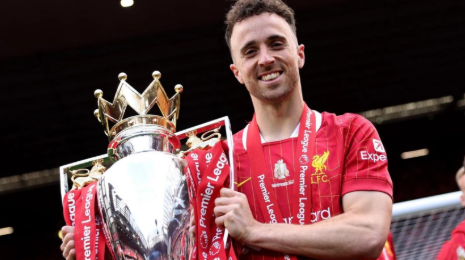
    Diogo Jota, Portuguese footballer for Liverpool FC, died in a road accident on 3rd July, 2025, at the age of 28. His younger brother Andre Silva, travelling with him, was also killed in the accident.

    Just 11 days after his wedding, Jota was returning to England for pre-season. Having recently undergone lung surgery, he was advised to avoid air travel, so he planned to go from Spain to England via ferry. On their way to the port, while trying to overtake another car they suffered a tyre blowout, veering off the road before fatally catching fire. The crash occurred at around 00:30 CEST.

    Tributes poured in worldwide after the deaths were officially confirmed. Many of Jota’s Liverpool and Portugal teammates expressed shock over the news, reminiscing about their shared memories and recent success for club and country. Arne Slot, Liverpool head coach, remarked, “For us as a club, the sense of shock is absolute. Diogo was not just our player. He was a loved one to all of us.” Liverpool announced that they would pay his family the remaining amount of his contract, which ran until 2027. In their reunion performance on 4th July, British band Oasis paid tribute to Jota, with his picture appearing on screen when they performed ‘Live Forever’.

    Born on 4th December 1996 in Porto, Portugal, Jota started his professional football journey with Paços de Ferreira in 2013, becoming the youngest player to score for the club in the Primeira Liga. After playing for various teams like FC Porto and Wolverhampton Wanderers, he was signed by Liverpool FC in 2020. At Liverpool, he helped the team win the cup double in 2022, clinching both the FA Cup and the EFL Cup, as well as winning the league in the 2024-25 season. He was also part of the squad that reached the UEFA Champions League Final in 2022, losing out to Real Madrid 1-0. For Portugal, Jota made his international debut in 2019, contributing to them winning the UEFA Nations League twice, in 2019 and 2025. The 2025 win over Spain was his final match as a football player. He also made appearances for Portugal at the 2021 and 2024 European Championships. Overall, he earned 49 caps for Portugal.

    He is survived by his wife Rute Cardoso, their three children and the millions of fans whose hearts he touched.

  • The Indian Imprint: Craft, Culture, and Controversy on the Runway

    The Indian Imprint: Craft, Culture, and Controversy on the Runway

    In the dazzling world of global luxury fashion, titans such as Louis Vuitton and Prada have turned to Indian culture for inspiration. India, with its unique and rich heritage and craftsmanship, has effortlessly made its mark on the fashion industry. Beyond mere commerce, India’s exquisite textiles, handcrafted jewellery, and intricate embroideries have long attracted designers, leading the country’s diverse fashion to reach international heights, often reimagined through a contemporary lens.

    For example, the recent rave on TikTok about the Indian ‘Jhola’ bags being sold at a whopping budget of Rs. 4100, an item commonly acquired at less than Rs. 100 in India has left minds boggled. The item features Hindi texts and is designated as a ‘chic’ item for enthusiasts of Indian culture. It seems almost unbelievable!

    Furthermore, the Prada-Milan Fashion Week, a global platform for couture novelty, found itself in a controversy between worldwide fashion and cultural heritage and appropriation. Although the conflict started as harmless, the uproar of the Prada shoes, from the indictments of design theft to the vehement demands for cultural attribution, completely caught the fashion house off guard. These handcrafted leather slippers, commonly called Kolhapuris, boast a 900-year history rooted in the states of Maharashtra and Karnataka (India), and were upgraded using high-class leather and metallic bases, proving how simple, authentic Indian crafts can be elevated to a global trend level. Although Prada stated, “We acknowledge the sandals are inspired by traditional Indian handcrafted footwear, with a centuries-old heritage,” the situation ignited a wave of widespread controversy.

    As photos from the runway started to circulate online, outrage in India escalated. Criticising Prada for describing the footwear blandly as “leather flat sandals “ without giving any proper recognition of its origins, and accusing Prada of cultural appropriation. Business tycoon Harsh Goenka reflected the public outcry by stating, “ Indian artisans lose, while global brands cash in on our culture .” With prices reaching $800 abroad, while in India they are sold for as little as Rs. 1000, making the global markup all the more jarring. In response to the growing backlash and controversy, Prada’s head of Corporate Social Responsibility, Lorenzo Bertelli, responded by acknowledging the sandals’ Indian inspiration and expressed willingness to open a dialogue with local artisans for a more meaningful and respectful exchange.

    Interestingly, some believe that this controversy can have an unexpected upside. It has also transpired that the same could yield magnificent results. It is an undeniable element that the sale of sandals in India has shown an immense hike lately. By the perception of the regional designers, such exposure could increase interest in the everlasting styles, particularly among younger clientele.

    “Until now, it hadn’t been considered part of the ‘cool’ or aspirational footwear space in India’s luxury market… I truly believe in the ripple effect of what Prada has done,” expressed Shirin Mann, the founder of Needle Dust, popularly known for its coeval view on classical Indian embroidery slip-ons. Supporting her claim, Google Trends has also shown a noticeable spike in searches for Kolhapuri sandals since the show, while local retailers have reported increased curiosity, especially among younger shoppers.

    Alternatively, Louis Vuitton’s menswear collection, under the direction of Pharrell Williams, offered an enthralling example of such a controversy. Williams’ spring-summer 2026 collection vibrantly showcased India’s uplevelling artistry. The collection features a collaboration with studio Mumbai, altering the fashion runway into a life-sized ‘Snakes & Ladders’. The show included signature Indian colours, accompanied by Bhangra songs. It also showcased an Autorickshaw handbag, a common mode of transport that is a pivotal element of India’s vibrant street life. Adding to the authenticity, the show featured one of the most iconic Indian composers, A.R. Rahman, who co-composed the Punjabi track “Yaara Punjabi.” The track’s cultural depth elevated the entire experience, turning the runway immersive and rooted in Indian identity.

    India’s influence on Western fashion is in no way a new trend. It has influenced the Western world for centuries. From Yves Saint Laurent’s iconic perfume “Opium” subtly echoing Mughal Motifs and rich silks to Dior’s theatrical collections highly resembling Indian grandeur, the list never ends. As the lines between humble Indian handicrafts and contemporary designs continue to blur, one fact becomes significantly clear: India’s eclectic and deeply rooted culture continues to cast an undeniable influence on the outside world, powerfully shaping the very trajectory of upcoming fashion trends.

  • A Costly Consensus: NATO’s 5% Defence Pledge and the Trump Effect

    A Costly Consensus: NATO’s 5% Defence Pledge and the Trump Effect

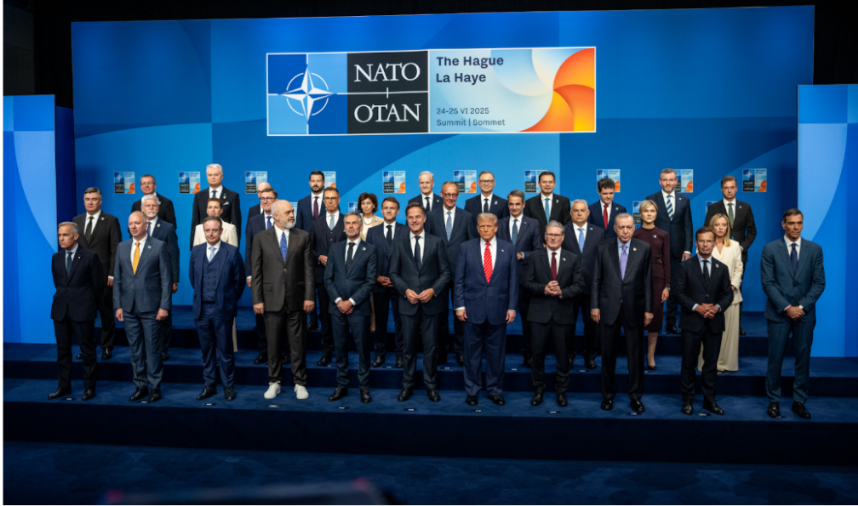
    In the 2025 North Atlantic Treaty Organisation (NATO) Summit held from 24 June to 26 June, a strong commitment was made by all the NATO countries. The member states have finally agreed to ramp up their defence spending goal to 5% of their gross domestic product (GDP) by 2035, a major jump from the previous target of 2% set in 2014.

    The US president has raised questions about NATO’s collective defence strategies for several months now, narrowly referring to Article 5 of NATO’s Alliance in his defense, which states, “An armed attack against one or more of the allies shall be considered an attack against them all. Trump has avoided explicitly endorsing the clause, claiming there are “multiple definitions of Article 5,” a move seen by many as an effort to avoid confrontation with Russia.

    In response, NATO has worked towards a compromise, agreeing to increase defence spending to keep the U.S. engaged in the alliance. The 32 countries have decided to dedicate 3.5% of their GDP to crucial military needs and 1.5% to other elements such as cybersecurity, infrastructure, etc.

    NATO has publicly stated that the alliance must work towards deterring Russia’s military force. “NATO needs a “quantum leap” in defence to deter threats to the alliance”, Rutte mentioned in a speech given in London, earlier this month. Thus, he urged member states to invest more funds towards defence.

    Trump went on Truth Social to share a message sent to him by NATO Secretary-General, Mark Rutte. In the message, Rutte acknowledged that Trump has driven NATO towards a very important global decision. He also added that Trump has “achieved something NO American president in decades could get done.”

    A New York Times report highlights that Trump has previously bashed NATO for not allocating adequate funds for defence, particularly in the face of threats like Russia. During his first term, Trump had threatened that the USA would exit the NATO alliance. Experts believe that Trump may be undermining NATO from within and that this dramatic agreement was primarily made to ensure that the USA remains an enthusiastic participant in NATO.

    Image Source: WhiteHouse/ @x.com 

    However, not all 32 countries were satisfied with this decision. Spain’s Prime Minister, Pedro Sanchez, had sent a letter to Mr. Rutte saying that Spain “cannot commit to a specific spending target in terms of GDP.” Sanchez insisted that Madrid would need only 2.1% percent of GDP to acquire and maintain all the personnel, equipment, and infrastructures requested by the alliance to confront these threats with their capabilities.

    As a result, every member state will not be forced to reach the 5% threshold; however, there are some standard military requirements that every country is required to meet. Trump vowed that he would make Spain pay for this “terrible” decision. “I like Spain … It’s a great place and they’re great people. But Spain is the only country out of all the countries that refuses to pay. And, you know, so they want a little bit of a free ride, but they’ll have to pay it back to us on trade because I’m not going to let that happen,” Trump said.

    This commitment was shaped as much by the strategic urgency felt by all 32 countries within the NATO alliance. As they rush to present a united front, a divide is forming within the coalition itself. As key participants like Spain are raising their voices against major players like the US.

  • Would Sitaare Zameen Par Shine on OTT? Reimagining a Theatrical Star in the Age of Streaming

    Would Sitaare Zameen Par Shine on OTT? Reimagining a Theatrical Star in the Age of Streaming

    We can all agree that the initial announcement of the Aamir Khan-led sequel to Taare Zameen Par- Sitaare Zameen Par- was met with a divided stance. While it still had the power to spark nostalgia, a doubt lingered: “What if it is not what it once had been?” Upon release, it was established that Sitaare Zameen Par still evoked the raw sense of reality, paralleling its prequel, which redefined how Indian audiences viewed childhood, learning disabilities, and empathy. Sitaare Zameen Par is not just a successor of its prequel, Taare Zameen Par, because it has reimagined the landscape of disabilities again from a whole new perspective altogether. This movie can be lightly described as a “feel-good, sports-centric” story about children with special needs, but it does promise a humorous tone while still carrying the emotional weight Khan’s brand of storytelling is known for.

    The arrival of Sitaare Zameen Par occurs in a new narrative space, a more nuanced media landscape where the lines between the TV in our living rooms and the big screen have been blurred. Digital spaces have competed with the cinematic universes to create a new level. And in such a present, we ask, Would Sitaare Zameen Par thrive as an OTT release- or does it demand the pause, the magnificence of storytelling, and the spectacle of a big screen?

    The Legacy Effect: Can Emotion Scale Digitally?

    Despite not being a direct sequel, Sitaare Zameen Par still packs the same kick. Expectations reach new heights as sensitivity and transformation, and a protagonist who moves the audience, rise as the real heroes of this cinematic journey.

    Although this emotional legacy is powerful, it could be a double-edged sword in the OTT space.

    An OTT platform is no better than these fast fashion trends that have us in a chokehold every week. Buzzing engagement derived from algorithmic strategies is the powers that push content that is simply summarized in thumbnails, keywords and 30-seconds of someone on a reel saying: “This movie in the theatres-” Here is where we know at the back of our minds that a film like Sitaare Zameen Par, which is likely to build slowly, focusing on character arcs and emotional payoffs, may not fit easily into the scroll-happy ecosystem.

    In the theatres, emotional storytelling still holds space. Families show up. Word-of-mouth builds over weekends. Conversations linger. If well-executed, a film like Sitaare Zameen Par can become an event in theatres. On OTT, however, it risks becoming one among hundreds of feel-good titles competing for the same attention span.

    Aamir Khan’s Star Power: Still Box Office Gold?

    Amir Khan’s magnanimous comeback to the big screen after his project Laal Singh Chaddha’s commercial failure is enough to draw audiences into theatres. This movie only gives in to the anticipation more. Khan’s track record includes era-defining blockbusters like PKDangal, and 3 Idiots– all films that blended social relevance with entertainment.

    But can Aamir’s brand of cinema still command the box office in a post-pandemic world?

    Streaming has changed consumption habits. Viewers now wait for digital releases instead of heading to theatres for anything outside the action or franchise space. Even major stars have opted for OTT debuts or simultaneous releases.

    However, Aamir’s storytelling has always relied on shared emotion, and that translates best in theatres. Sitaare Zameen Par delivers a mix of inspiration and sentiment, and a theatrical release is enough to restore the lost glamour of family cinema.

    Was Khan’s reluctance to release Sitare Zameen Par on OTT the driving force of its success?

    That said, the advantages of an OTT release aren’t negligible, especially for a niche topic.

    Amir Khan’s consistent decision to delay the OTT release of Sitare Zameen Par cannot be just regarded as a choice of distribution; it was a calculated risk that flourished into success. Digital premieres hold immense power when it comes to catching the attention of an algorithmic audience, and that is 90% of the movie fanatics. Khan insisted over and over again that a theatrical release would be appropriate for this movie, and in the process made us realise that we have not completely become a victim of the labyrinth that is the internet. This created scarcity, causing an uproar of amplified anticipation, drawing audiences back to theatres for the collective experience they had long missed. But it wasn’t that Sitare Zameen Par’s absence was the only driving force behind its box office success; this movie was an overloaded pack of heartfelt storytelling and strong performances, once again making us believe in Khan’s creative vision. His strategic stand against immediate digital access underscored the film’s emotional gravity, positioning it not just as entertainment, but as an event—something to be felt, not just streamed.

    A Theatrical Gamble Worth Taking?

    Finally, Sitaare Zameen Par is a movie that deserves the space it has created after its theatrical drop. It deserves the attention and cult following of its prequel. Centred around children who often don’t have a voice, told by an actor-director who consistently chooses meaningful storytelling over formulaic payoff, is a revolution mobilising with every new film.

    That’s something OTT still struggles to replicate: the multi-generational viewing experience that feels both communal and transformative.

    Sitaare Zameen Par is a reminder that soft cinema still matters in a market obsessed with spectacle. Standing much apart from the emotional rollercoaster of Taare Zameen Par, this sequel is a cheerful digression. A movie that carries a message as strong as this duology undoubtedly has the potential to become more of a force to be reckoned with on big screens than on smaller tablet ones.

    The theatres may be fewer. Audience tastes may be shifting. But some stories still deserve to be watched with your phone off, your heart open, and your seat grounded in a room full of strangers, feeling the same thing simultaneously.

    And if anyone can make that work in 2025, it’s Aamir Khan.

  • Big Heels to Fill: Looking Back 37 Years as Anna Wintour Steps Down as Editor-in-Chief of American Vogue

    Big Heels to Fill: Looking Back 37 Years as Anna Wintour Steps Down as Editor-in-Chief of American Vogue

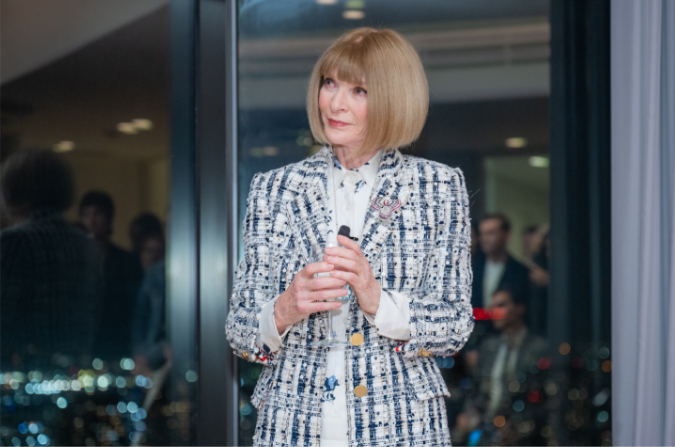
    Nearly 40 years and many a cultural revolution later, Dame Anna Wintour steps down as the Editor-in-Chief of American Vogue. Throughout her tenure, Wintour has been regarded as the most powerful woman in world fashion, with her signature bob and sunglasses becoming an iconic symbol of her influence in the fashion industry.

    While her reign at American Vogue began in 1988, Wintour had a long journey in the industry before becoming the Editor-in-Chief. Journalism runs in her family, as her father, Charles Wintour, was twice the Editor-in-Chief of the London-based Evening Standard. Anna’s career began in fashion journalism after she dropped out of college. By 1975, she was working as a junior fashion editor at Harper’s Bazaar in New York.

    In 1983, a conversation with Alex Liberman, the then editor of Condé Nast, got Wintour an open position at Vogue. After a bidding war that resulted in a doubled salary, she accepted the role, becoming Vogue’s first-ever Creative Director.

    As the creative director, Wintour reimagined the vision of American Vogue, breaking away from the traditionalist influence that Grace Mirabella, the Editor-in-Chief at the time, had brought to the magazine. She pushed the boundaries by bringing out more dramatic layouts and bold photography, which later earned her the position of Editor-in-Chief in 1988.

    However, before stepping into her role as the Editor-in-Chief at American Vogue, Wintour served as the Editor-in-Chief of British Vogue from 1985-1987, where she quickly earned the nickname ‘Nuclear Wintour’ for her bold and drastic editorial decisions. After her time at British Vogue, she moved back to New York to take over House & Garden – a Condé Nast shelter magazine which she famously renamed HG, filling its pages with high fashion and lifestyle features.

    Right from her first issue as Editor-in-Chief of American Vogue, the November 1988 issue, Anna Wintour made sweeping changes to the cover, which revolutionised the magazine. This cover featured 19-year-old Israeli model Michaela Bercu styling a $10,000 bejewelled Christian Lacroix top paired with a $50 pair of faded blue jeans in a candid outdoor setting. This cover, which featured Vogue’s first cover model styling jeans, was so radical to the magazine’s traditional style that the printer mistook it as the wrong image when he saw it for the first time.

    Wintour’s fresh remodel of the magazine birthed a new trend in the industry- the ‘high-low’ look, which, as the name suggests, comprises one high-end luxury item paired with a more understated, low-budget piece. From there on, her work has been pivotal in shaping the fashion magazine into a pop-culture powerhouse.

    Throughout her tenure, Wintour is known for having promoted the emergence of the supermodel era, giving names like Linda Evangelista, Cindy Crawford, and Naomi Campbell international recognition while also bringing emerging designers like Marc Jacobs and Alexander McQueen to the forefront. By featuring celebrities like Madonna, Oprah Winfrey, Michelle Obama, and soon stars like Kim Kardashian and actress Zendaya on the cover, Wintour also began the trend of celebrities becoming cover stars, which spiked magazine sales and reimagined Vogue’s identity.

    Her influence is not limited to the magazine and its widely known covers. As the lead chairperson, Wintour transformed the Met Gala from a museum fundraiser to one of the most anticipated nights in fashion, curating guest lists and themes with precision. Wintour has also received numerous accolades for her contributions to fashion and philanthropy, including the Order of the British Empire and the Presidential Medal of Freedom.

    While Dame Anna Wintour steps down as the Editor-in-Chief, she is not completely exiting the fashion scene. She will continue her roles as Global Editorial Director for Vogue and Chief Content Officer for Condé Nast.

    Still, her last days as Editor-in-Chief are not without controversy. Her decision to feature Lauren Sánchez Bezos, media personality and wife of Amazon founder Jeff Bezos, on what now appears to be her final Vogue cover has caused quite the stir online. The cover showed their high-profile wedding in Venice, with Lauren Sánchez Bezos wearing a custom Dolce & Gabbana wedding dress. Social media users are criticising Vogue for flaunting billionaires and are accusing the magazine of publishing paid covers, especially in the current political climate where there are growing conversations about wealth disparity and elitism.

    Now, the big question lies – who could fill the legendary heels left by Wintour? Online speculations are aplenty about possible candidates for the new job, but there is no official word on who will take over as Wintour’s successor. Whoever takes on the role of Editor-in-Chief of American Vogue will work under Wintour as she continues as Global Editorial Director for Vogue.

    Wintour has not been a mere leading force at Vogue – she has transformed it. As the industry absorbs this shift, one thing is clear: Anna Wintour is hardly leaving fashion. She’s simply changing its shape—again.

  • India’s Shukla Joins ISS in Historic First: Why the Mission Marks a Turning Point for India

    India’s Shukla Joins ISS in Historic First: Why the Mission Marks a Turning Point for India

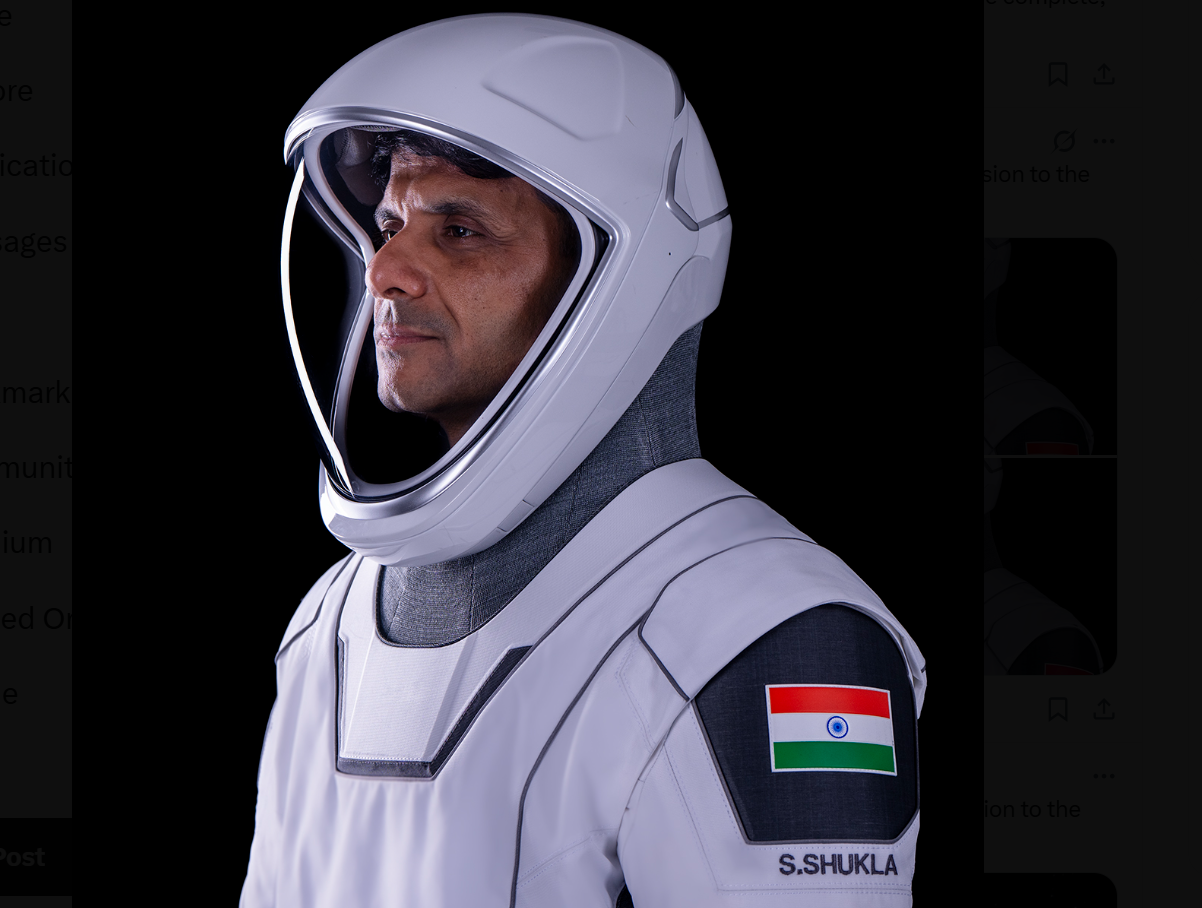
    On June 26 2025, the SpaceX Dragon capsule docked with the International Space Station (ISS), and Shubhanshu Shukla made history by becoming the first Indian to step into the orbiting laboratory and the second Indian national to reach space, since Rakesh Sharma in 1984.

    Ahead of his arrival, Shukla sent out a message in which he said, “The Tiranga (Tricolour) embossed on my shoulders tells me that I am with all of you…Together, let’s initiate India’s Human Space Programme. Jai Hind! Jai Bharat.”

    After multiple delays, the Axiom-4 (Ax-4) mission was finally launched on 25 June at 2:31 a.m. Eastern Time (12:01 p.m. IST). The mission consisted of a government-sponsored crew and was launched by Axiom Space in partnership with SpaceX and NASA. India has paid around $70 million to commercial space company Axiom for a seat in the space mission to the ISS.

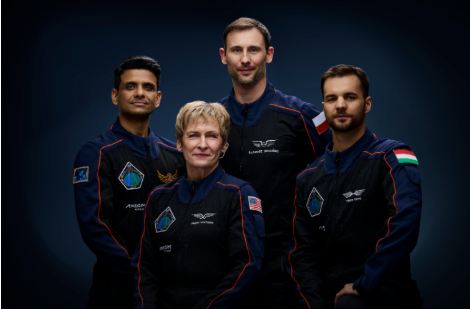
    Joining Shukla were American veteran astronaut Peggy Whitson, Polish engineer Sławosz Uznański-Wiśniewski and Hungarian researcher Tibor Kapu. This is the first time that astronauts from India, Poland and Hungary have travelled to the ISS.

    Shubhanshu Shukla / Source: X / SpaceX

    The two-week-long mission aims to conduct approximately 60 experiments on behalf of 31 countries, including the astronauts’ home countries as well as Saudi Arabia, Brazil, Nigeria and so on. The experiments range from studying the effects of microgravity on diabetes and muscle atrophy to microgravity farming of fenugreek and green gram, and exploring cyanobacteria for potential life-support systems.

    This mission marks a huge win for India, as it allows the country to contribute towards advanced research and innovation, further strengthening its position in the international space exploration arena.

    Shuhanshu Shukla’s participation marks a moment of renewed confidence in India’s space ambitions, as India plans to launch Gaganyaan in two years. This will be its first manned mission, making it the fourth country in the world to achieve this feat.

    Shukla was announced to be among the four astronauts selected to man the Gaganyaan mission by Prime Minister Narendra Modi on 27 February 2024 at ISRO’s Vikram Sarabhai Space Centre in Thiruvananthapuram. He began his journey towards space exploration in 2019 when he was selected as an astronaut by the Institute of Aerospace Medicine (IAM), which is a part of the Indian Air Force’s Human Spaceflight Programme. IAM and ISRO eventually shortlisted him for the final four.

    “This is not the beginning of my flight. This is the beginning of India’s human spaceflight efforts. I am with you all. You can be part of this journey, feel the energy, and share in this mission.”
    — Shubhanshu Shukla, ten minutes after launch, as the capsule entered orbit.

    Since 2022, India and the USA have actively worked towards building both economic and technological cooperation through a collaborative framework, namely, the Initiative on Critical and Emerging Technologies (iCET). Under iCET, the two countries have discussed the possibility of joint manned spaceflights. Shukla has further helped to prove that this possibility can be turned into reality soon.

    This mission also provides India with direct information and hands-on experience on modern, crewed spaceflights; this includes knowledge of docking operations, life-support systems and real-time mission operations aboard the ISS. Detailed insights into the functioning of the ISS will also help the development of the Bharatiya Antariksha Station (BAS), India’s planned indigenous space station, which is set to launch in the 2030s.

    Furthermore, as noted by the Republic, by collaborating with Polish and Hungarian astronauts aboard a US-operated spaceflight, Shubhanshu Shukla represents India as a bridging force between the Western Alliances and the Global South.

    Thus, this launch is not only a scientific breakthrough for Indian space exploration, but also a socio-political and economic opportunity for India to prove its standing in a competitive global space landscape. As Gaganyaan approaches and India is inching towards building its own space station, India’s space footprint is laying the groundwork with each mission.

  • Adani and Ambani join hands to “Redefine Auto-Fuel experience”

    Adani and Ambani join hands to “Redefine Auto-Fuel experience”

    In a surprise move, business rivals Gautam Adani and Mukesh Ambani have strategically tied up to collaborate in the energy sector. Mukesh Ambani-owned Reliance Industries venture Jio-bp and Adani Total Gas Ltd announced a mutual agreement on 25th June 2025.

    This deal is important as major private players like Torrent Power earlier and now Adani and Ambani are paving the way to enter and reshape India’s government-dominated fuel market. Jio-bp, the fuel venture of Reliance Industries, is already in partnership with the UK’s bp. ATGL, Adani Total Gas Ltd, is a joint gas venture between the Adani Group and Total Energies of France.

    In this agreement, select Jio-bp-owned fuel stations will install Adani Total Gas’ CNG (Compressed Natural Gas) stations in their outlets; similarly, select Adani Total Gas stations will install Jio-bp’s petrol and diesel dispensers in their outlets. According to a joint statement reported by PTI, the partnership will span both existing and upcoming outlets of both companies, and it aims to “redefine the auto-fuel retail experience for Indian customers”. There are a total of 1,972 petrol pumps operated by Jio-bp in India, whereas Adani Total Gas Limited has 650 CNG outlets in India. This agreement is also said to cover collaboration on compressed biogas, electric vehicle charging points and other low-carbon fuel solutions, the companies said.

    Last year in March, the two business conglomerates had signed a pact for their first-ever collaborative power project in Madhya Pradesh. Reliance Industries had bought a 26% stake in Adani’s power project in Madhya Pradesh.

    Suresh P. Manglani, Executive Director and CEO of Adani Total Gas Ltd, said in an official statement, “It is our shared vision to provide a complete range of high-quality fuels at our outlets. This partnership will enable us to leverage each other’s infrastructure, thus enhancing customer experience and offerings.” Chairman of Jio-bp, Sarthak Behuria, said, “We are united by a shared vision to offer our customers a superior selection of high-quality fuels. Jio-bp has always been committed to delivering an exceptional customer experience, and this partnership allows us to leverage each other’s strengths to further enhance the value we provide to India.”

    Gautam Adani and Mukesh Ambani, both hailing from the state of Gujarat, have always been viewed as rivals, ranging from being competitors for Asia’s richest person to competing in the expansion of business in different sectors. Observers have seen this move as strategic. It will be interesting to see how this deal works out in the future.

  • The World’s Largest Data Breach: 16 Billion Passwords Leaked

    The World’s Largest Data Breach: 16 Billion Passwords Leaked

    On June 18, 2025, the digital world was rocked by an unprecedented breach: over 16 billion login credentials were leaked online, drawn from at least 30 separate datasets. Cybersecurity researchers have confirmed this as the largest credential dump ever recorded.

    While rumours flew that major players like Apple, Facebook, and Google were hacked, Cybernews, the news outlet that looks into cybersecurity research, testing and data, quickly clarified there is no indication that this is true. As Cybernews expert Bob Diachenko noted, this “opens the doors to pretty much any online service imaginable,” not because the infrastructure was compromised, but because stolen credentials were tied to major platforms.

    Infostealer malware infiltrates devices—typically through phishing, malicious downloads, or pirated apps—and quietly harvests sensitive data, including stored passwords, session cookies, and tokens. This leak includes a large number of social media login credentials, VPNs, and other user accounts.

    This latest leak included everything from social media logins to VPN credentials and other sensitive account information. It doesn’t just affect a handful of people—millions around the world, especially in Asia, Africa, and Latin America, are at risk due to rapid digital growth alongside weaker cybersecurity infrastructure.

    However, there exist other perspectives. Hudson Rock, an Israeli cybersecurity company, said that its data showed approximately 50 credentials stolen for every computer. So, for it to add up to 16 billion, around 320 million devices would be needed. This number is highly unrealistic. The company also mentioned that the leak is not very dangerous, as a majority of the data leaked could be AI-generated or recycled.

    To counter the risks, experts across the security community advise taking immediate steps:

    1. Change passwords for any account you have reused elsewhere.
    2. Enable two-factor or multi-factor authentication or adopt passkeys.
    3. Use a trusted password manager to generate unique, strong passwords per account.
    4. Make sure to consistently monitor your accounts for unusual logins and enable security notifications.

    The credential leak serves as a stark reminder of the growing threat posed by infostealers and the importance of cybersecurity and digital hygiene. The sheer magnitude of the exposure necessitated prompt action from both users and institutions, even though the compromised credentials were not the result of a single breach. Now more than ever, it’s crucial to use strong passwords and watch out for signs of suspicious activity, like unfamiliar login attempts or account changes you didn’t make.

  • Ceasefire in Kashmir: An Operation in Suspension

    Ceasefire in Kashmir: An Operation in Suspension

    On May 20, 2025, India and Pakistan announced a renewed commitment to the 2021 ceasefire agreement along the Line of Control — their second such declaration in four years. Framed as a diplomatic gesture aimed at “stabilising the region,” the move arrived in the shadow of bloodshed. On the morning of 22 April 2025, a convoy of buses winding through the hills of Pahalgam was ambushed by armed militants. The vehicles were carrying Hindu pilgrims, many travelling from Gujarat and Maharashtra, toward the sacred Amarnath site. The attackers opened fire with military precision. By the time it ended, 27 people were dead, dozens wounded, and Kashmir’s already uneasy calm had cracked again.

    Among the survivors was nine-year-old Naksh from Surat, found clutching his brother’s bloodied shirt. Witnesses said the attackers separated passengers by religion before shooting. The brutality of the assault — its timing, its political undertones — raises deeper questions about the promises of peace in Kashmir and the realities on the ground, especially under the framework of what both India and Pakistan still describe as an active ceasefire.

    But what, exactly, is being held at bay?

    A History of Ceasefire, Interrupted

    Kashmir, a region claimed by both India and Pakistan since the Partition in 1947, has endured multiple wars, two full-scale insurgencies, and decades of militarisation. In 1949, the United Nations facilitated the first formal ceasefire between the two countries, freezing control along what came to be known as the Line of Control (LoC). That agreement was never meant to be permanent, and it wasn’t.

    After the 1999 Kargil War, ceasefire violations peaked in 2002, with over 5,000 reported incidents. In 2003, a renewed agreement between New Delhi and Islamabad was announced, and for a few years, it seemed to hold. The number of violations plummeted to fewer than 100 by 2005. Cross-border travel was reintroduced. Civil society groups began cautious dialogues. Kashmiris, many for the first time in years, began to believe in a kind of fragile normalcy.

    That changed over the next decade. Tensions escalated again following the 2016 killing of militant commander Burhan Wani and even more sharply after the revocation of Jammu and Kashmir’s special status under Article 370 in August 2019. The region saw lockdowns, communication blackouts, and mass detentions. Between 2019 and 2020 alone, India reported over 5,000 ceasefire violations along the LoC.

    Yet in February 2021, the two countries surprised many by issuing a joint statement: they would “observe all agreements on ceasefire along the LoC and all other sectors.” Diplomats hailed the announcement as a significant thaw. It was informal, not part of any treaty, but carried the weight of official intent. It was widely referred to in Indian media as “Operation Ceasefire.”

    Operation Ceasefire: A Pause Without a Framework

    Despite the name, Operation Ceasefire was not an operation in the military sense — it was a diplomatic reaffirmation. There were no new protocols, third-party monitors, or cross-border verification mechanisms. What existed instead was mutual fatigue and perhaps mutual interest: both countries faced economic pressures and, in Pakistan’s case, growing internal instability.

    For a time, violations along the LoC sharply declined. According to official data, ceasefire violations dropped by over 90 per cent in 2021 and 2022. For the border towns of Uri, Poonch, and Tangdhar, the lull meant children returned to school, weddings were held in daylight, and life resembled something closer to ordinary.

    But for many in Kashmir, especially those far from Delhi’s policy circles or Islamabad’s diplomatic corridors, the word “ceasefire” never meant protection. It meant pause – silence is not guaranteed but expected to break.

    After the Pahalgam attack, that silence shattered. Eighteen days following the assault, 83 new violations were recorded along the LoC. Shelling resumed. Drone activity spiked. Inhabitants of border villages began sleeping in basements again.

    “We never stopped packing our emergency bags,” said Rina Begum, a mother of three in Uri. “You can’t afford to believe in peace here. You just live in between the bombs.”

    The Civilian Cost of Fragile Promises

    In the highlands of north Kashmir, the idea of peace is rarely tied to ceasefires. The lines on the map may freeze and unfreeze with official declarations, but the lived reality is one of constant vigilance. Homes have backup escape plans. Schools run modified curriculums for when children cannot attend. Shops stay stocked with dry rations in case roads are sealed without warning.

    Nazakat Ahmad Ali Shah, a trekking guide who helped rescue several survivors during the April attack, described it plainly:

    “It’s not a ceasefire if we’re still burying people. It’s a ceasefire if we feel safe. And we don’t.”

    The international community often treats these surges of violence as isolated ruptures — regrettable but exceptional. But for Kashmiris, especially those along the LoC, these moments are neither new nor surprising. They are cyclical. A massacre, a speech, a reaffirmation. Then, another pause and another promise that cannot shield them from the next round.

    And in the middle of it all is Naksh — a boy who speaks less now, eats less, and flinches at thunder. When asked what peace means to him, he said:

    “Just quiet. But not the scary kind. The kind where no one is hiding.”

    A Ceasefire or a Countdown?

    Ceasefires, as currently structured, are not rooted in reconciliation or accountability. There is no truth-telling, no demilitarisation, no reparative justice. What exists instead is an agreement to hold fire temporarily — sometimes upheld, often broken — without addressing the deeper political fractures underneath.

    In Kashmir, the difference between silence and gunfire is rarely peace. It’s only space.

    And as long as ceasefires remain tactical rather than transformative, Kashmir will continue to experience what it knows too well: the noise of violence, followed by the quieter but no less terrifying wait for it to return.

    If this is what we call a ceasefire, what would actual peace look like?
  • Justice B.R. Gavai Appointed as the 52nd Chief Justice of India

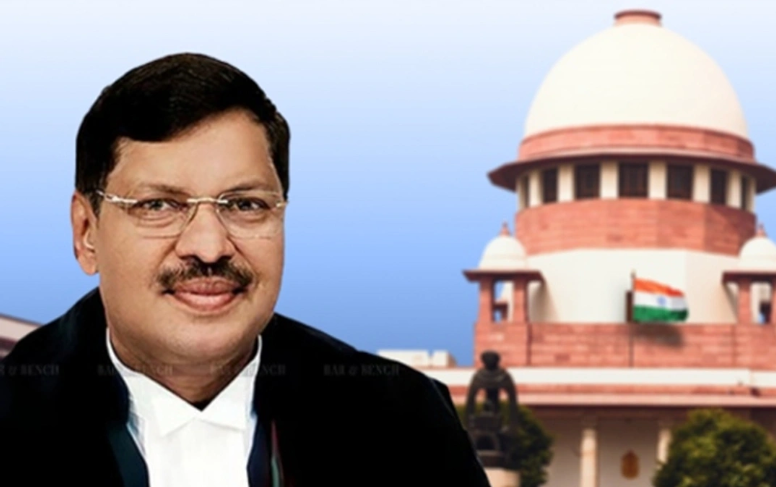
    Justice B.R. Gavai Appointed as the 52nd Chief Justice of India

    Justice Bhushan Ramkrishna Gavai was sworn in as the 52nd Chief Justice of India (CJI) on 14 May 2025, succeeding Justice Sanjiv Khanna. President Droupadi Murmu administered the oath of office at Rashtrapati Bhavan. Justice Gavai will serve as CJI until his retirement on 23 November 2025, with a tenure of a little over six months.

    His appointment was confirmed by the Ministry of Law and Justice on 29 April 2025, following a recommendation by Justice Sanjiv Khanna on 16 April. Vice-President Jagdeep Dhankhar, Prime Minister Narendra Modi, and other Union ministers were present at his oath-taking ceremony.

    Legal Career and Judicial Tenure

    Born on 24 November 1960 in Amravati, Maharashtra, Justice Gavai is the first Buddhist to be appointed as CJI and only the second judge from the Scheduled Caste community to hold the position, after former CJI K.G. Balakrishnan.

    Following in his father’s footsteps, the late R.S. Gavai, a well-known Ambedkarite leader and former Governor of Bihar, Sikkim, and Kerala, Justice Gavai enrolled as an advocate in 1985 and began his legal career under Barrister Raja S. Bhonsale, a former Advocate General and High Court judge.

    Justice Gavai practised independently at the Bombay High Court from 1987 to 1990. He specialised primarily in constitutional and administrative law and served as Standing Counsel for various municipal bodies and public institutions. He was later appointed Government Pleader and Public Prosecutor in 2000.

    Justice Gavai was elevated to the post of an Additional Judge of the Bombay High Court on 14 November 2003 and became a Permanent Judge on 12 November 2005. He served at the Mumbai, Nagpur, Aurangabad and Panaji Benches for over 16 years before being appointed to the Supreme Court on 24 May 2019.

    His elevation to the apex court was recommended by the Collegium led by then Chief Justice Ranjan Gogoi, which cited due representation, along with seniority and merit as the key reasons.

    Key Judgments and Contributions

    As a Supreme Court judge, Justice Gavai has been part of several key Constitution Benches and landmark judgements.

    He authored the majority opinion in the 2023 verdict that upheld the 2016 demonetisation scheme and was on the Bench that upheld the abrogation of Article 370. He also struck down the electoral bonds scheme and supported sub-classification within Scheduled Castes in both majority and concurring opinions.

    Justice Gavai has been part of several high-profile bail rulings as well, including granting bail to former Delhi Deputy CM Manish Sisodia and activist Teesta Setalvad. He also led the Bench that ordered the release of A.G. Perarivalan in the Rajiv Gandhi assassination case.

    In 2024, Justice Gavai wrote a concurring opinion in State of Punjab v Davinder Singh, advocating for the exclusion of the ‘creamy layer’ within Scheduled Castes. In another important 2024 ruling, he held that demolitions without due process violated the constitutional right to shelter, laying down procedural safeguards against arbitrary bulldozer actions. He was also on the Bench that convicted Advocate Prashant Bhushan for contempt and later stayed Rahul Gandhi’s criminal defamation conviction.

    Challenges Ahead for CJI Gavai

    Despite his short six-month tenure as Chief Justice, Justice Gavai is set to face several important challenges, with a backlog of over 82,000 cases pending before the Supreme Court as of January 2025, according to the Supreme Court Observer.

    More immediately, two High Court judges, Allahabad HC’s Justice Shekhar Yadav and former Delhi HC judge Yashwant Verma, are facing impeachment proceedings. At the same time, three apex court judges, Justices B.V. Nagarathna, Abhay Oka, and Sanjay Karol, are set to retire in the coming months. With two existing vacancies already, Justice Gavai’s Collegium will need to recommend at least five new appointments to maintain the court’s strength.

    He will also have to decide on several important issues, including pending cases related to the Places of Worship Act, the criminalisation of marital rape, and the validity of certain Waqf Act provisions. As master of the roster, how he allocates these matters and whether he ensures timely hearings will be closely watched.

    Justice Gavai, however, seems to be hitting the ground running. Shortly after taking charge, he addressed media personnel and shared a brief outline of his priorities for the months ahead.