
Category: Global

  • From New York to Oval Office: Zohran Mamdani’s Mandate Meets Trump’s America

    From New York to Oval Office: Zohran Mamdani’s Mandate Meets Trump’s America

    On November 4, 2025, 34-year-old Zohran Mamdani clinched the New York City Mayoral race, securing a decisive victory in one of the most closely watched contests of the year. Running on the vision centred on affordability, public transport reforms, and workers’ rights, Mamdani won by a clear margin, defeating incumbent Mayor Eric Adams, Independent Candidate Andrew Cuomo, and Republican Candidate Curtis Sliwa.

    His win was driven by strong support from young voters, renters, immigrant communities, and first-time voters. Mamdani’s win marked a turning point in the city’s political landscape. His victory was historic not only because he is the first Muslim and first South Asian to hold the office, but also because his campaign centred on a bold, unapologetically progressive, socialist economic agenda.

    Only days after taking over the office, President Donald Trump announced on his Truth Social Platform that the two would meet at the White House. In the post, Trump referred to Mamdani as the “Communist Mayor of New York City, and said the meeting would take place in the Oval Office on Friday, November 21st.

    After Mamdani’s victory, it was clear that there was a rise in a new form of governance that prioritises social welfare, affordability, and community-focused investment. However, the meeting with Trump brought an unexpected twist. On paper, the two politicians stand at opposite ends of the ideological spectrum. Mamdani is known for his democratic-socialist leanings, vocal support for tenants’ rights, and city-first social spending vision. Trump, meanwhile, has built his platform around conservative populism, stricter immigration policies, and a law-and-order approach to city governance. Their interaction stood out precisely because of this contrast, critics say.

    The meeting with Trump, rather than overshadowing the shift of a new political wave, only sharpened its contrast. It placed the newly elected mayor’s ambitions against the broader backdrop of national politics, dominated by republicans and their conservative narratives.

    Press conference followed by their meeting. “We spoke about rent, we spoke about groceries, we spoke about utilities. We spoke about the different ways in which people are being pushed out. And I appreciated the time with the president. I appreciated the conversation. I look forward to working together to deliver that affordability for New Yorkers,” Mamdani said. Trump, in agreement with Mamdani, said, “We had some interesting conversation, and some of his ideas are really the same ideas that I have. But a big thing is the cost. You know, the new word is ‘affordability.’ Another word is just ‘groceries.’ It’s sort of an old-fashioned word, but it’s very accurate. And they’re coming down,” he said.

    At the press conference, both Trump and Mamdani were met with difficult questions by the journalists. Mamdani was asked about his earlier  “Fascist” remark about Trump. Before Mamdani could respond, Trump answered the question himself, saying,  “That’s OK, you can just say yes, OK? It’s easier. It’s easier than explaining it, I don’t mind.” The exchange was widely circulated on social media.

    As Mamdani takes over the office, it will be interesting to see his ambitious promises put into action while navigating the pressure from both supporters and critics. His early decisions will show whether he can maintain the popularity of his historic win and deliver concrete change for the communities that propelled his rise. At the same time, the political drama surrounding his meeting with Trump indicates that New York may become a defining battleground for competing visions of America’s political future, one rooted in inclusion and socialism, and the other in traditional conservative frameworks.

  • OpenAI’s $38 Billion AWS Deal and What It Means for the Future of AI Infrastructure

    OpenAI’s $38 Billion AWS Deal and What It Means for the Future of AI Infrastructure

    The multi-year partnership signals a shift toward multi-cloud strategies and highlights how infrastructure will shape the next phase of AI development.

    OpenAI has concluded a historic $38 billion cloud infrastructure deal with Amazon Web Services (AWS), making it one of the largest cloud/AI deals ever made in terms of commercial value. It gives OpenAI access to massive computing power across AWS’s global network, including advanced GPU clusters, specialised UltraServer infrastructure, and hardware built specifically for training and running large-scale AI systems. It became a pivotal point in OpenAI’s game plan, which had previously relied on Microsoft Azure as its primary cloud service provider.

    Why Reinventing Infrastructure Matters Now

    The transition to AWS emphasises the ever-increasing demand for computational power in the development of AI models. Currently, modern AI systems consist of billions or even trillions of parameters and have high computational requirements for both training and inference. The cloud infrastructure’s reliance on a single provider becomes even more difficult as the demand continues to grow. OpenAI is positioned as a multi-cloud company that can benefit from greater flexibility, geographic redundancy, and the rapid scaling of capacity to meet its changing needs.

    Amazon has scored a huge competitive victory through the deal. Microsoft, Oracle and Google have been gaining power in the AI ecosystem over the past two years, primarily through their collaboration with model developers, their commitment to custom chips, and the establishment of research labs. OpenAI, one of the world’s most prominent AI research organisations, is partnering with Amazon to strengthen its cloud position. It announces AWS’s commitment to staying in the AI infrastructure market, amid rising competition. Reports claim that the deal will have significant financial and reputational worth for the companies in the long run.

    What This Says About the AI Compute Economy

    The magnitude of the transaction is indicative of a broader shift in the way the Manner AI infrastructure is being built and financed. The operational and scaling costs of cutting-edge AI systems have surged tremendously due to global GPU supply shortages, power-hungry data centres, and the increasing complexity of AI architectures. Cloud providers are not competing only on software or storage prices, but also on the availability of physical resources, such as land for new data centres, access to power grids, cooling systems, and long-term agreements for semiconductor supply.

    In other words, computing power is being recognised as a new strategic asset in the technology landscape. The organisations that can consistently provide and expand this capacity are the ones that are setting both the pace and direction of AI development. The OpenAI–AWS partnership is a sign that the future of large-scale AI will be, to a significant extent, dependent on logistics, infrastructure engineering, and hardware design, as well as on algorithmic innovations.

    Implications for the Industry

    While this partnership will accelerate innovation for AI, another related concern is that of the concentration of power. Currently, very few companies, namely Amazon, Microsoft, Google, and Oracle, have the global scale and infrastructure to support advanced AI systems. As research, businesses, and automation increasingly rely on these systems, control over the future of AI will become even more centralised in the hands of a few.

    Several research scientists and industry analysts have expressed the view that without access to computers similar to those afforded to large companies, smaller companies, academic institutions, and open-source projects will lag. This situation could impact policy discussions regarding AI accessibility, national computing strategies, and public-private technology partnerships, among others.

    From Single Partnership to Multi-Cloud Strategy

    The collaboration between OpenAI and AWS marks a significant milestone in the integration of AI and cloud technology. The gap between them is continuing to close rapidly, and this partnership shows how tightly interwoven the future of AI depends on solid cloud infrastructure. Instead of being separate industries, the cloud platform, along with its AI developers, will, for instance, form deep, long-term, capital-intensive relationships powered by compute scarcity and technical interdependence.

    As the need for high-performance computing continues to increase, similar large-scale partnerships will become a standard feature across the entire industry. The multi-cloud strategies or direct investments in infrastructure could be actions taken by governments, research labs, or major tech companies in the near future, ensuring they have access to the computing power they need. A deal like that, worth $38 billion, signals something huge happening in the industry: AI is entering a new phase. It’s not just about apt algorithms or large datasets; it’s about building the necessary infrastructure needed to support them. While compute isn’t the only factor shaping AI’s future, it’s becoming one of the most defining.

  • Sudan at the Brink: The RSF’s Takeover of El-Fasher and the Escalating Humanitarian Crisis

    Sudan at the Brink: The RSF’s Takeover of El-Fasher and the Escalating Humanitarian Crisis

    Sudan’s last army stronghold in Darfur falls to the RSF

    In the wee hours of October 26, the Rapid Support Forces (RSF), led by General Mohamed Hamdan Dagalo, better known as Hemedti, seized control of El-Fasher, the last remaining stronghold of the Sudanese Armed Forces (SAF) in North Darfur, Sudan. With this victory, the RSF has now gained complete control of the region, thus splitting Sudan into eastern and western halves.

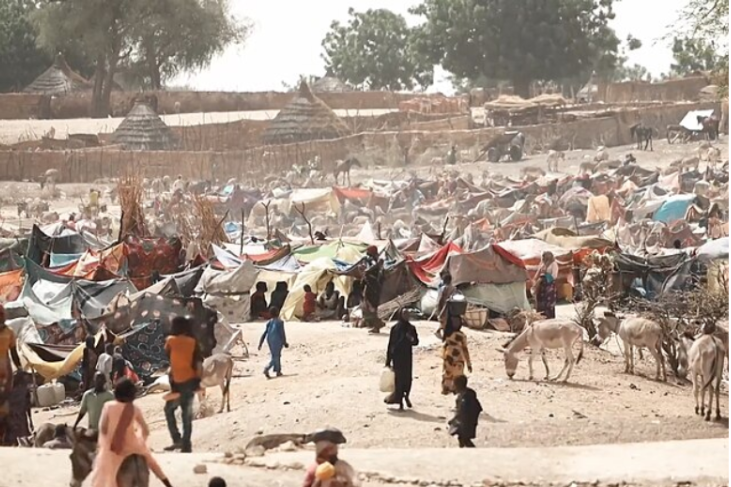
    A humanitarian crisis is unfolding in Africa’s third-largest country. The RSF has been at war with the Sudanese Armed Forces for the past two-and-a-half years, causing an estimated 40,000 deaths and the displacement of 12 million people, the UN says.

    The Joint Forces, which are allied with the Sudanese military, have stated that the forces of RSF have “executed and killed” at least 2000 unarmed civilians in the city of El-Fasher on 26 and 27 October- most of these civilians were women, children, and the elderly.

    Yale University’s Humanitarian Research Lab (HRL) published a report on October 27, in which they released satellite images captured by the aeronautic company Airbus Defence, which show evidence of mass killings in the city of El-Fasher. The images have captured reddish stains on the ground and clusters of “objects” lying around RSF vehicles, which are believed to be human bodies.

    HRL has concluded that these killings were carried out door-to-door, specifically targeting on the basis of ethnicity. El-Fasher “appears to be in a systematic and intentional process of ethnic cleansing of indigenous non-Arab communities through forced displacement and summary execution,” the Yale researchers say in a report.

    When did the Sudanese Civil War start?

    In October 2021, a joint-military civilian government was established as a result of a coup that was staged to overthrow long-serving President Omar al-Bashir. This government was headed by Hemedti and Gen Abdel Fattah al-Burhan. However, growing tensions over the country’s evolving sociopolitical transition led to a breakdown in their alliance.

    By April 2023, these tensions erupted into overt conflict when clashes broke out between the SAF and RSF in Sudan’s capital, Khartoum, marking the beginning of Sudan’s currently ongoing civil war.

    The RSF was formed in 2013, and it originates from the notorious Janjaweed militia, which was accused of genocide and ethnic cleansing against Darfur’s non-Arab population.

    What exactly is happening in Sudan right now?

    In June of this year, the RSF captured the territory along Sudan’s borders with Libya and Egypt. Now that they have seized El-Fasher as well, this means that they have control over almost all of Darfur and its neighbour, Kordofan.

    Many videos released by RSF soldiers themselves are currently circulating on the internet. The videos – which have been authenticated by the SAF – show fighters shooting unarmed civilians at point-blank range.

    Earlier this week, satellite imagery confirmed that the RSF killed civilians who tried to flee the city near the earthen wall, which was constructed by the RSF to encircle and isolate the city, effectively besieging it.

    A woman recounted to Reuters how she and others were stopped at the earthen barrier where the men were separated from women.”They lined the men up, they said, ‘We want the soldiers,’ When none of the men raised their hands, an RSF fighter picked out some of them who were beaten and killed,” she said. “They shot them in front of us, they shot them in the street.”

    How is the world responding?

    Widespread reports of ‘ethnic cleansing’ conducted by the RSF have prompted the UK, which is the official penholder on Sudan, to call for an emergency session of the UN Security Council in New York on Thursday. Activists from all over the world are urging pressure on the United Arab Emirates, which is widely accused of providing military support to the RSF. The UAE denies this despite evidence presented in UN reports and international media investigations.

    “The situation is simply horrifying,” Martha Ama Akyaa Pobee, the assistant secretary general of the UN for Africa, said during the emergency session.

    Across Sudan, nearly 24 million people are suffering from acute hunger, with an estimated 600,000 on the brink of famine. The RSF and its allied forces have been accused of widespread sexual violence against women, including rape, gang rape, forced marriage, and sexual slavery, in addition to the mass killings of more than 17,000 people.

    The fall of El-Fasher marks a turning point, not only in Sudanese history but also in the context of a disturbing global humanitarian tragedy. Despite mounting international concern, global action has remained largely limited to statements and diplomacy. Without decisive intervention, analysts warn that Sudan could descend into a full-scale famine and ethnic cleansing crisis, leaving millions trapped between starvation and violence.

  • Victoria’s Secret Fashion Show 2025: A Runway of Reinvention and Representation

    Victoria’s Secret Fashion Show 2025: A Runway of Reinvention and Representation

    After a six-year-long hiatus and a comeback in 2024, the Victoria’s Secret Fashion Show made a lasting mark with this year’s show, which took place on 15 October 2025 in New York City. This year’s show promised the familiar mix of glamour, power, and entertainment, with a renewed focus on diversity and inclusivity.

    Last year’s show garnered widespread attention for Victoria’s Secret, as the show made its return after being cancelled in 2019. However, this year’s show brought an even bigger rebranding, and with it, more attention. This year, the brand focused on broadening its representation, improving the show’s diversity and expanding its global outreach. Victoria’s Secret’s legendary supermodels like Adriana Lima and Alessandra Ambrosio graced this year’s runway alongside fresh faces from sport, culture and fashion.

    What Stood Out This Year
    This year’s lineup featured a diverse range of talent across multiple generations and backgrounds of models, reflecting the brand’s broader definition of glamour. The entire show was divided into six segments, namely First Light, Bombshell, PINK Halftime, Hot Pursuit, Magic Hour, and Black Tie.

    The runway featured a striking mix of veteran Angels and fresh faces. Among the show’s familiar faces were Adriana Lima, Bella Hadid, Gigi Hadid, Candice Swanepoel and Alex Consani.

    Supermodel Jasmine Tookes made a powerful entrance, opening the show while visibly pregnant. Her look celebrated birth and transformation as she donned a shimmering gold netted one-piece, adorned with teardrop-shaped gems, paired with a dramatic clamshell-inspired cape topped with pearly bulbs. The concept depicted her as the clamshell and her baby as the pearl.

    WNBA player Angel Reese made history as the first professional athlete to walk the show. She had two bold looks – a white lingerie set richly adorned with pink roses and a sparkly pink T-shirt with cut-outs.

    Beyond the models, the show’s performances embodied the brand’s global goals. Performances by music icons such as Missy Elliott, Karol G, Madison Beer, and K-pop sensation TWICE added a diverse cultural element to the show. One of the show’s standout moments was a creative mashup of the iconic 1981 Bollywood track ‘Tere Mere Beech Mein’ with Britney Spears’ hit song, ‘Toxic’ that played at the start of a segment as models walked onto the runway. Interestingly, this mashup came full circle as the signature string riff of ‘Toxic’ was sampled from ‘Tere Mere Beech Mein.’

    One of the most-talked-about elements of the evening was the brand’s inclusivity in design and casting. The model roster featured a diverse range of body types, backgrounds, and ages, which the show has previously been criticised for avoiding. Models like Ashley Graham, Paloma Elsesser, Precious Lee and Devyn Garcia, who are recognised for their efforts in promoting body positivity and inclusivity in the fashion industry, garnered widespread praise from online audiences.

    This year’s show also made a striking impact with its diversified presence of LGBTQIA+ talent. The runway featured trans models like Alex Consani, as well as queer and ally representation, including Quenlin Blackwell, Madison Beer, and Stella Maxwell.

    From the visual aspect, the show’s production spared no expense. It featured futuristic stage design, holographic projections, and couture wings made from sustainable materials. Themes of self-expression, resilience, and female solidarity replaced the pre-hiatus fantasy concepts of angelic perfection epitomised by sizo-zero bodies, flawless symmetry and hyper-feminine glamour.

    The Victoria’s Secret Fashion Show 2025 marked a defining moment in the brand’s ongoing reinvention. With a striking blend of cultural references, reimagined fresh designs, and symbolic storytelling, this year’s show positioned Victoria’s Secret not just as a lingerie brand but as a platform embracing change and inclusivity.

  • Rock’s ‘Spaceman’; Ace Frehley, Dies at 74

    Rock’s ‘Spaceman’; Ace Frehley, Dies at 74

    Ace Frehley, the famous guitarist and co-founder of Kiss, whose space-age persona, thunderous riffs, and electric performances helped define 1970s rock theatre, passed away on Thursday, 16th October 2025, in Morristown, New Jersey. He was 74. His family told sources the cause of his death was complications from a fall this year.

    Born Paul Daniel Frehley on 27th April, 1951, in The Bronx, New York, he was the youngest child among his three siblings. His father, Carl Daniel ‘Friebely’ Frehley, was an electrical engineer and used to play organ at the church, and his mother, Esther Anna, used to play the piano. Frehley grew up surrounded by music, but was inclined towards the electric guitar, which he received as a Christmas gift in 1964. He taught himself how to play the instrument; he often said that playing “saved [his] life.”

    Making of the ‘Spaceman’

    Frehley worked as a roadie for Jimi Hendrix when he was 18. After that, he began performing in local bands like King Kong, The Outrage, and Cathedral, until he saw an ad in 1972 for a new music band seeking a lead guitarist. The famous story of his audition, of Frehley showing up wearing mismatched sneakers, one red, one orange, immediately impressed the band; within months, Kiss was formed.

    Frehley was Kiss’s lead guitarist; he designed the group’s lightning-bolt logo and developed the “spaceman” persona, inspired by his lifelong fascination with science fiction. He painted silver stars around his eyes and, on stage, made his guitar smoke, spark, and sometimes shoot rockets. Frehley’s playing powered many of Kiss’s popular songs, including I Was Made for Loving You, Cold Gin, Shock Me, and Love Theme. His electrifying solo on Shock Me was written after he was briefly electrocuted onstage in 1976; it became one of rock’s most famous guitar riffs.

    In 1978, Frehley released his self-titled solo album, which went platinum and produced the Top 20 single New York Groove. A star was later named after him in 1981, a fitting tribute for the band’s “Spaceman”. He parted ways with Kiss in 1982 over creative disputes and personal struggles, but returned to music with Frehley’s Comet, a new band consisting of five members. Their debut album featured the rock hit “Into the Night.” Frehley’s Comet disbanded shortly after their 1989 record, Trouble Walking. He reunited with Kiss in 1996. Frehley performed with the group at the 2002 Winter Olympics before departing again.

    He resumed his solo career that included albums such as Anomaly (2009), Space Invader (2014), and 10,000 Volts, the most recent one, released in 2024. He was preparing to release Origins Vol. 3 at the time of his death. Frehley was inducted into the Rock & Roll Hall of Fame in 2014. Frehley continued recording and touring as a solo artist until a fall in his studio in September 2025 forced him to cancel his remaining shows.

    Though described as an “unschooled musician”, Frehley’s influence extended across generations of guitarists. He performed with artists including Slash, Rob Zombie, and Tommy Lee; he even appeared in the hit sitcom Family Guy. His trailblazing guitar playing skills secured him a spot among Guitar World’s 100 greatest musicians.

    Frehley is survived by his daughter, Monique, and his former wife, Jeanette. Kiss co-founders Gene Simmons and Paul Stanley said in a joint statement, “We are devastated by the passing of Ace Frehley; he was an essential and irreplaceable rock soldier during some of the most foundational chapters of the band’s history. He is and always will be part of Kiss’s legacy.” Fans across the world flooded social media with tributes. Some fans said: The Spaceman has simply returned to the cosmos.

  • Atmospheric CO₂ Surges to Record High: A Major Shift in the Planet’s Climate System

    Atmospheric CO₂ Surges to Record High: A Major Shift in the Planet’s Climate System

    In a sobering reminder of the climate crisis, global carbon dioxide (CO₂) emissions and atmospheric levels have reached all-time highs, indicating a dangerous path ahead. Two recent reports from the World Meteorological Organization (WMO) and the International Energy Agency (IEA) present a grim picture: despite significant advances in renewable energy, our planet is still releasing more fossil carbon than ever before.

    According to the WMO, atmospheric CO₂ levels increased by about 3.5 parts per million (ppm) between 2023 and 2024. This is the largest one-year rise since systematic measurements started in 1957. As a result, the global mean CO₂ concentration reached around 423.9 ppm in 2024, roughly 152% of pre-industrial levels. Meanwhile, the IEA estimates that energy-related CO₂ emissions reached a new high of about 37.8 gigatonnes (Gt) in 2024.

    So, why is this happening, and why is it concerning? There are three driving factors for this: an increasing dependence on fossil fuels, rising demand for energy sources and weakening natural carbon sinks.

    Despite significant growth in solar, wind, and other low-carbon technologies, fossil fuels still make up most of the global energy mix. The IEA reports that in 2024, emissions from fuel combustion increased by about 1 %. Meanwhile, emissions from industrial processes fell slightly, by about 2.3 %. Specifically, natural gas emissions increased by 2.5 % and coal emissions increased by 0.9 %. These figures show a complicated picture: although clean energy is expanding quickly, it mainly works alongside fossil-fueled sources instead of replacing them.

    The IEA calculates that about 80 % of the growth in emissions in 2024 is attributed to an increase in temperature-driven electricity demand. In India and China, record heat-waves caused dramatic spikes in power consumption, such as through air-conditioning and industrial use, prompting utilities to increase coal and gas-fired plants to cater to the demand. The WMO points out that the time was also when the 2023/24 El Niño episode took place, which pushed back the growth of vegetation and enhanced fire activity, thereby limiting the Earth’s capacity to take up CO₂.

    Arguably, the most dangerous indicator is the falling effectiveness of natural carbon sinks. WMO estimates that half of all CO₂ emitted by humans is typically taken up by land and oceans, but their uptake has failed in recent years. The chain reaction is worrying: warmer temperatures lead to drier soil and stressed forests, which leads to more wildfires and reduced absorption. This entire chain emits more CO₂ in the atmosphere, creating additional warming. Research indicates that the land-sink collapsed substantially in 2023.

    To reverse this alarming rise in emissions, the world needs to act decisively on multiple fronts. First, there must be significant cuts in the use of fossil fuels, especially coal and gas, for industry and energy production. New all-time highs for global yearly emissions show that we are not yet turning the corner, even though progress is being made. Grid/storage infrastructure, renewable energy, and other clean technologies must expand quickly to meet and replace existing demand. The heat-driven spike in demand emphasises how important energy efficiency is to reducing global warming. Energy efficiency systems need to be brought out, especially in buildings, transportation, and heating and cooling systems. Forests, peatlands, and mangroves are examples of natural carbon sinks that must be preserved and restored because their current capacity appears to be limited.

    The recent record in CO₂ emissions is not a temporary issue. While the shift to clean energy is happening, it is not fast enough to end our reliance on fossil fuels. Without a significant increase in efforts to reduce demand and improve natural carbon sinks, the warming we have already caused may result in climate changes that exceed our worst fears.

  • Diane Keaton, Oscar-Winning Star of Annie Hall and The Godfather, Dies at 79

    Diane Keaton, Oscar-Winning Star of Annie Hall and The Godfather, Dies at 79

    The iconic, Oscar-winning actress Diane Keaton’s demise is truly a great loss to global cinema. She was famously regarded for her extraordinary performances that combined humour, warmth, and quirky charm. She passed at 79 on October 11th at her residence in Los Angeles. According to family friends, Keaton experienced a temporary health decline over the past months.

    For over 50 years, Keaton portrayed some of the cinema’s classic American characters, realistic yet oddball, graceful yet clumsy, nervous yet fiercely honest, or any other combination. Her personality reflected quirky yet bright, peculiar yet familiar, and never strayed from her individuality.

    From Los Angeles Dreamer to Hollywood Legend 

    Born Diane Hall on January 5, 1946, in Los Angeles, Keaton was the oldest of four children. She was the daughter of Dorothy Deanne Keaton, a homemaker and photographer with a creative, burgeoning spirit that would later inspire her filmmaking and acting, and John Newton Ignatius Hall, a civil engineer and real estate broker. After high school, Keaton moved to New York to study acting at the Neighbourhood Playhouse, drawn to the feel of live theatre. Keaton made her Broadway debut in 1968 in the musical Hair, but it was her performance in Woody Allen’s stage play “Play It Again, Sam” that changed everything; it marked the start of a lengthy professional partnership and romance between Keaton and Allen.

    This partnership extended to the screen in films, including Sleeper (1973), Love and Death (1975), and Annie Hall (1977), which would ultimately be Keaton’s defining performance.

    The Birth of a Screen Legend

    Keaton’s transformational performance occurred earlier, in Francis Ford Coppola’s film The Godfather (1972) as Kay Adams, the moral centre to Michael Corleone’s ascent to violent power. Keaton provided emotional nuance to an otherwise brutal story, which became one of her artistic signatures.

    However, it was Annie Hall that vaulted her to instant stardom. The film was a bittersweet romantic comedy that Woody Allen wrote, produced, and directed, in which he starred, and that was about Keaton as much as it was about the movie characters. Keaton’s wardrobe of bowler hats, men’s vests, wide slacks, and ties was taken straight from her own closet, which made the look iconic.

    For this performance, Keaton won the Academy Award for Best Actress in 1978, and Pauline Kael of The New Yorker called Keaton “the most original screen presence of her generation.”

    Reinvention and Variety

    Throughout the following stretch of forty years, Keaton broke out of her generic shell and shifted to more comedic narratives alongside dramatic roles: the trifecta of Oscar nominations for Warren Beatty’s Reds (1981), Marvin’s Room (1996), and Something’s Gotta Give (2003) was a part of her new aesthetic.

    Her films were soon considered as an all-encompassing body of work: hits like Baby Boom (1987), Father of the Bride (1991), The First Wives Club (1996), The Family Stone (2005), and Book Club (2018) established her as the money-making element of both rom-coms and ensemble films.

    Keaton did not simply perform in front of the camera; she forged parallel careers in photography, interior design, and real estate. Her photography books and architectural restorations reflected a similar care with attention to detail and nostalgic representation behind the camera, similar to the emotional frame of her experience while performing on screen.

    A Life of Individuality

    Keaton never married and addressed that with her usual sense of humour. “I love the thought of marriage,” she told Parade. “But I’m much more suited for making movies than to be in long-term relationships.”

    She adopted two children: Dexter in 1996 and a son, Duke, in 2001, and described motherhood as her greatest role.

    Keaton’s personal life was interesting, but she lived in a way that allowed her to maintain her independence. Her personal life was often discussed in relation to her co-stars, including Woody Allen, Warren Beatty, and Al Pacino, but she ultimately preferred solitude in her later years. She was candid about her challenges with bulimia in her younger years and her long-standing battle with skin cancer, and spoke openly about both for awareness purposes.

    Tributes From All Across Hollywood

    The announcement of Keaton’s passing drew tributes from colleagues and admirers worldwide. Many personalities from the entertainment world honoured Keaton, including Coppola, Viola Davis, Robert De Niro, DiCaprio, Martin, Fonda, Kate Hudson, Demi Moore, Sarah Jessica Parker, and Reese Witherspoon. Allen wrote and published an article, remembering Keaton, via The Free Press; he referred to her, through his writing, as “unlike anyone the planet has had or is ever likely to see again.”

    Nancy Meyers, director of Baby Boom and Something’s Gotta Give, called Keaton “a force of authenticity.” “She taught generations of women that being yourself – truly yourself – is the most beautiful thing you can do,” Meyers stated.

    Francis Ford Coppola remembered her as “creativity personified,” while Keanu Reeves, her co-star in Something’s Gotta Give, called her “a generous artist and a uniquely special person.”

    Her First Wives Club co-stars Goldie Hawn and Bette Midler also shared their remembrances. “Diane was unafraid,” Hawn wrote on social media. “She took vulnerability and made it powerful, and in her awkwardness came the art form.”

    A Timeless Influence

    It would be an understatement to call Keaton solely an actress; the cultural impact cannot be ignored. Her Annie Hall wardrobe influenced women’s fashion for the 1970s, and her candid sense of humour and emotional intelligence redefined what it meant to be the female lead of a film.

    She won an Academy Award, two Golden Globes, and several lifetime achievement awards, but didn’t let her success go to her head. “I never thought I was glamorous,” she once told an interviewer in 2019, “I wanted to take the notion of glamour and be interesting.”

    Ultimately, Diane Keaton’s legacy cannot be divorced from the genuineness with which she approached her work. Whether she played a jittery lover, a frazzled mother, or any woman caught in a midlife moment of self-realisation, she would play the character with equal parts grace and resolve.

    Her memory will live on through her two sons, Dexter and Duke, as well as her works, which will always anchor contemporary film.

    Her very life, as funny, fearless, and, beyond belief, as it was, was a Diane Keaton production in every way.

  • McLaren Racing Crowned as the Constructors’ Champions of 2025

    McLaren Racing Crowned as the Constructors’ Champions of 2025

    In a remarkable show of its comeback, McLaren Racing has won the 2025 Formula 1 Constructors’ Championship. This is its second consecutive title and an important achievement that confirms the team’s return to the highest level of the sport.

    McLaren’s 2025 performance stood out for its consistency, speed, and teamwork. After the Singapore Grand Prix, the team had gathered a total of 650 points, which was double the amount of its closest competitor and enough to clinch the championship with six races to go, achieving 12 wins in 18 races and earning 28 podiums between the two drivers.

    McLaren’s 2025 machine, the MCL39, proved to be more than just an upgrade. Its aerodynamic efficiency, cooling systems, and suspension worked well on various circuits. By mid-season, the car often ranked as the fastest in many qualifying sessions and demonstrated race pace in different conditions. On the driver front, McLaren’s lineup of Lando Norris and Oscar Piastri became a strong duo. They delivered impressive finishes, secured wins, and frequently occupied the front row, contributing steadily to the constructors’ tally through both qualifying and race performance. Their consistent results allowed McLaren to build a lead that eventually became unassailable.

    Beyond the car and drivers, the McLaren team seemed unified at last. Every department, including design, factory, trackside engineering, and strategy, played a part. Their updates came at the right time, and their race strategies were flexible, minimising mistakes that could have cost them, and their decision-making under pressure improved.

    While this achievement is significant, McLaren knows that 2026 will bring major regulatory changes. The risk is that their current dominance may not carry over to the new rules. Managing the relationship between two top drivers is always tricky; when competition is tight, conflicts within the team become more likely. Keeping morale high, avoiding costly mistakes, and staying innovative will be crucial. Their focus shifts to the Driver’s Championship, with both Piastri and Norris the main contenders to take the crown, in what promises to be a close fight till the end of the season.

    In 2025, McLaren did more than just win. They overcame sceptics and moved past previous failures. They reestablished themselves not just as competitors but as leaders. The Constructors’ title is a reward for the drivers, engineers, and everyone in the pit lane and factory; this victory feels like a fresh start. Now, the question is whether they can build on this success to achieve even greater goals while adjusting to the upcoming changes in the sport.

  • Centre Court’s New Classic: A Tale of Fire and Ice

    Centre Court’s New Classic: A Tale of Fire and Ice

    Muhammad Ali versus Joe Frazier, Manchester United versus Liverpool, the Boston Celtics versus the Los Angeles Lakers, Lin Dan and Lee Chong Wei: Sport thrives on rivalries. Audiences become fans of an athlete’s skill, personality, and consistency, and through that connection find a greater thrill in the game itself. Rivalries bring these audiences together, turning their support into fuel for a sport’s growth. Throughout history, these contests have revolutionised sports, and tennis has been fortunate enough to host many.

    In men’s singles Tennis, multiple rivalries have defined eras, like Borg-McEnroe and Sampras-Agassi, but the most impactful of them all was between Roger Federer and Rafael Nadal. Federer was an elegant powerhouse famous for his effortless game and remarkable single-handed backhand, while Nadal was the “King of Clay”, owing to his high-spinning forehand and near-perfect record on clay. Along with Novak Djokovic, they ruled men’s tennis for nearly two decades. Yet, the Federer-Nadal pairing remained special, built on a foundation of mutual respect and genuine friendship. With Federer’s retirement in 2022 and Nadal’s farewell tour in 2024, the spot for the next big rivalry in tennis was open for contention, and two young stars have quickly taken over.

    First, meet Jannik Sinner. Born in San Candido, Italy, the 24-year-old rose to the top of the men’s standings, achieving the World Number One rank in 2024 after his first Grand Slam win at the Australian Open. Leaving his home at just fourteen to train full-time, he began his development under renowned coach Riccardo Piatti, a mentor to talents like Novak Djokovic and Richard Gasquet. Sinner announced his arrival on the ATP tour in 2019 by winning the Next Gen ATP Finals in Milan. The following year, at age 19, he became the youngest Italian in the Open Era to win an ATP title. Driven by early financial strains, he recently revealed that he had promised his parents he would quit tennis if he wasn’t in the top 200 by age 24. Today, with four Grand Slams and 21 ATP titles to his name, it is safe to say he has surpassed his own expectations.

    Next is Carlos Alcaraz, a 22-year-old Spaniard and the current World Number One. Characterised by his innate talent and aggressive playstyle, Alcaraz has a natural feel for the game. At fifteen, he began his journey under the guidance of fellow Spaniard and former world number one Juan Carlos Ferrero, turning pro a year later at sixteen. A true tennis prodigy, Alcaraz became the youngest male player in history to reach the No. 1 ranking at 19 years of age, following his first major win at the 2022 US Open. Since then, he has acquired five more majors along with 23 ATP titles, and with his young age, this is only the beginning.

    This year, Sinner and Alcaraz have duelled numerous times and their rivalry has electrified the sport. Their first meeting of the season was in the final of the Italian Open, Sinner’s first tournament after facing a three-month ban due to doping. At his home tournament, Sinner played a close match, but ultimately Alcaraz emerged victorious with a scoreline of 7-6(7-5), 6-1. But this was just a teaser for what was coming next.

    At the French Open, Sinner managed to set another final against Alcaraz, where the two made history by playing one of the most extraordinary matches of the decade. Alcaraz made a show-worthy comeback, saving three match points to beat Sinner 4-6, 6-7 (4), 6-4, 7-6 (3), 7-6 (10-2) in the longest French Open final ever at 5 hours and 30 minutes, winning his second consecutive Roland Garros title. Alcaraz also ended Sinner’s unbeaten record at Grand Slam finals, while he protected his own winning streak. The story continued at Wimbledon, the two meeting yet again in the final. Yet this time, Sinner turned the tables and handed Alcaraz, the two-time defending champion, his first loss at a major final 4-6, 6 4, 6-4, 6-4. It was Sinner’s second Slam of the year, winning the Australian Open earlier in January after defeating Alexander Zverev.

    The recent US Open was filled with the likes of Novak Djokovic, Ben Shelton, Taylor Fritz and Lorenzo Musetti providing much more competition, yet for the third consecutive time Sinner and Alcaraz faced off in a Major final. Alcaraz ended the Italian’s streak of 27 slam wins on hard courts to take the title, and in the process splitting the four grand slams between them for two straight years. Alcaraz also dethroned Sinner as the World Number One, ending his 65-week reign at the top.

    These matches are early signs of a brewing rivalry that has the potential to sustain itself for years to come. A year of 5 finals and counting, they have shown a remarkable hold over the ATP tour, nobody else being able to match them in Slams. While Sinner is the more calculated player, grinding down his opponents with immaculate defence and consistent baseline strokes, Alcaraz is extremely aggressive with a variable playstyle, incorporating drop shots and a great net presence into his arsenal. As Sinner himself alluded, Alcaraz brings the “firepower and hot shots,” while he provides the composure of a relentlessly solid player. What more could we ask for? Perhaps the dawn of the next Big rivalry in the sport.

  • High Seas Treaty to Come Into Effect After Crossing the Ratification Threshold

    High Seas Treaty to Come Into Effect After Crossing the Ratification Threshold

    On 19 September 2025, in a landmark development for ocean governance, the UN High Seas Treaty (BBNJ Agreement), secured the minimum 60 ratifications required for it to officially come into force by January 2026. With this achievement, the treaty is now on track to become legally binding, marking a major step forward in international environmental governance. Morocco became the 60th country to deposit its ratification instrument, triggering the 120-day countdown to the treaty’s entry into force. On the same day, Sierra Leone also deposited its ratification, becoming the 61st party to the agreement.

    Formal negotiations over the treaty began in 2018 and the draft was finalised in 2023. Previous discussions spanned across 20 years, driven by concerns over the unchecked exploitation of marine resources and the absence of a unified legal framework. The progress was slow due to differing national priorities over issues like resource sharing, fishing rights, and industrial activities in international waters.

    What this treaty aims to do
    The treaty was designed to tackle some of the most pressing threats to ocean health. One of these includes the creation of marine protected areas (MPAs), which are large stretches of international water designated to act as conservation zones. Human activities are strictly controlled, limiting activities such as fishing and breeding. Environmental Impact Assessments (EIAs) will also be made mandatory. Any major activity proposed in the high seas, such as deep-sea mining or industrial fishing expansion, will need to undergo detailed assessments, and parties must also keep under surveillance the impacts of any activities in areas beyond natural jurisdiction which they authorised or engage in.

    The treaty also addresses the growing importance of marine genetic resources, which are products from marine organisms carrying hereditary information, such as genes, and have the potential to be used in medicine, food, cosmetics, etc. The resources can cause issues with sustainability and equal accessibility of resources. The agreement also prioritises capacity development and technology transfer. Developing nations do not have the financing and technology to engage fully in high seas management. The agreement thus contains commitments to offer training, capital, and access to new technologies, allowing all nations to contribute actively to the monitoring, conservation, and sustainable management of the seas.

    All of these measures aim to support the global “30×30” target, which is the commitment to conserve at least 30 percent of the world’s land and sea by 2030. Since the high seas make up nearly half of the planet’s surface, the treaty is considered essential for achieving this target and reversing the fast decline of global biodiversity.

    Global Reactions
    Many advocates have pointed out that this treaty is one of the strongest demonstrations of collective will to take action against climate change since the Paris Climate Agreement. For small island nations and coastal states, which are among the most vulnerable to the impacts of ocean degradation, the treaty is seen as a lifeline for both biodiversity and livelihoods.

    However, there exists the challenge of ensuring the treaty is applied effectively across all regions, particularly in waters where industrial fishing and resource extraction are lucrative.

    Looking Ahead
    While the treaty’s entry into force is a breakthrough, its success will depend heavily on implementation. Countries that have ratified it will need to translate commitments into national laws, strengthen monitoring of their fleets, and coordinate with existing regional and sectoral bodies. Financing, transparency, and enforcement will be constant challenges.

    Another crucial test will be participation. Some major maritime powers have not yet ratified the treaty, raising concerns about the consistency of enforcement across the high seas. Nonetheless, the agreement creates momentum and pressure for broader adoption in the years ahead.