Sudan’s last army stronghold in Darfur falls to the RSF
In the wee hours of October 26, the Rapid Support Forces (RSF), led by General Mohamed Hamdan Dagalo, better known as Hemedti, seized control of El-Fasher, the last remaining stronghold of the Sudanese Armed Forces (SAF) in North Darfur, Sudan. With this victory, the RSF has now gained complete control of the region, thus splitting Sudan into eastern and western halves.
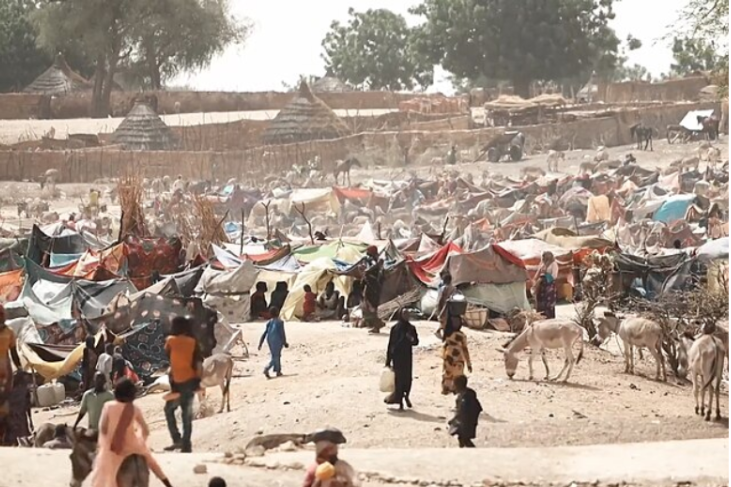
A humanitarian crisis is unfolding in Africa’s third-largest country. The RSF has been at war with the Sudanese Armed Forces for the past two-and-a-half years, causing an estimated 40,000 deaths and the displacement of 12 million people, the UN says.
The Joint Forces, which are allied with the Sudanese military, have stated that the forces of RSF have “executed and killed” at least 2000 unarmed civilians in the city of El-Fasher on 26 and 27 October- most of these civilians were women, children, and the elderly.
Yale University’s Humanitarian Research Lab (HRL) published a report on October 27, in which they released satellite images captured by the aeronautic company Airbus Defence, which show evidence of mass killings in the city of El-Fasher. The images have captured reddish stains on the ground and clusters of “objects” lying around RSF vehicles, which are believed to be human bodies.
HRL has concluded that these killings were carried out door-to-door, specifically targeting on the basis of ethnicity. El-Fasher “appears to be in a systematic and intentional process of ethnic cleansing of indigenous non-Arab communities through forced displacement and summary execution,” the Yale researchers say in a report.
When did the Sudanese Civil War start?
In October 2021, a joint-military civilian government was established as a result of a coup that was staged to overthrow long-serving President Omar al-Bashir. This government was headed by Hemedti and Gen Abdel Fattah al-Burhan. However, growing tensions over the country’s evolving sociopolitical transition led to a breakdown in their alliance.
By April 2023, these tensions erupted into overt conflict when clashes broke out between the SAF and RSF in Sudan’s capital, Khartoum, marking the beginning of Sudan’s currently ongoing civil war.
The RSF was formed in 2013, and it originates from the notorious Janjaweed militia, which was accused of genocide and ethnic cleansing against Darfur’s non-Arab population.
What exactly is happening in Sudan right now?
In June of this year, the RSF captured the territory along Sudan’s borders with Libya and Egypt. Now that they have seized El-Fasher as well, this means that they have control over almost all of Darfur and its neighbour, Kordofan.
Many videos released by RSF soldiers themselves are currently circulating on the internet. The videos – which have been authenticated by the SAF – show fighters shooting unarmed civilians at point-blank range.
Earlier this week, satellite imagery confirmed that the RSF killed civilians who tried to flee the city near the earthen wall, which was constructed by the RSF to encircle and isolate the city, effectively besieging it.
A woman recounted to Reuters how she and others were stopped at the earthen barrier where the men were separated from women.”They lined the men up, they said, ‘We want the soldiers,’ When none of the men raised their hands, an RSF fighter picked out some of them who were beaten and killed,” she said. “They shot them in front of us, they shot them in the street.”
How is the world responding?
Widespread reports of ‘ethnic cleansing’ conducted by the RSF have prompted the UK, which is the official penholder on Sudan, to call for an emergency session of the UN Security Council in New York on Thursday. Activists from all over the world are urging pressure on the United Arab Emirates, which is widely accused of providing military support to the RSF. The UAE denies this despite evidence presented in UN reports and international media investigations.
“The situation is simply horrifying,” Martha Ama Akyaa Pobee, the assistant secretary general of the UN for Africa, said during the emergency session.
Across Sudan, nearly 24 million people are suffering from acute hunger, with an estimated 600,000 on the brink of famine. The RSF and its allied forces have been accused of widespread sexual violence against women, including rape, gang rape, forced marriage, and sexual slavery, in addition to the mass killings of more than 17,000 people.
The fall of El-Fasher marks a turning point, not only in Sudanese history but also in the context of a disturbing global humanitarian tragedy. Despite mounting international concern, global action has remained largely limited to statements and diplomacy. Without decisive intervention, analysts warn that Sudan could descend into a full-scale famine and ethnic cleansing crisis, leaving millions trapped between starvation and violence.
Leave a Reply