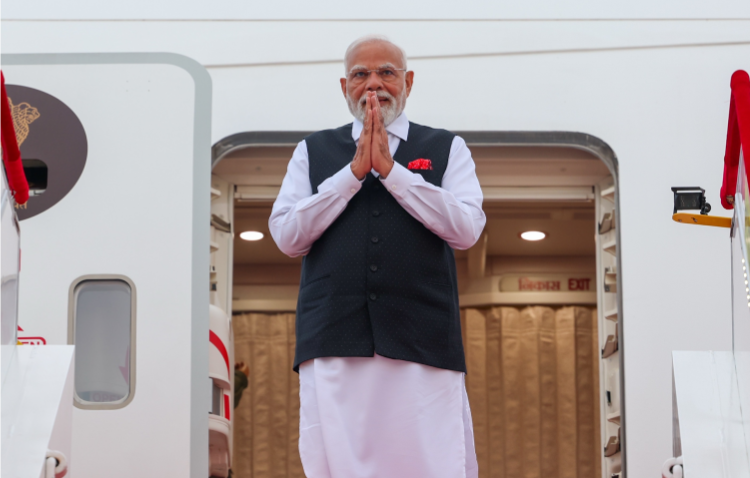
Prime Minister Narendra Modi met with President Xi Jinping on 31 August 2025, on the sidelines of the Summit of the leaders of the Shanghai Cooperation Organisation (SCO) in Tianjin. This event marked PM Modi’s first visit to China after 7 years and was a crucial diplomatic moment for India and China following years of tension.
At the SCO summit, the two leaders expressed commitment to a fair, reasonable, and mutually acceptable resolution of boundary-related concerns that have plagued India-China relations for almost half a decade. According to a statement by the commerce ministry released on Sunday, India emphasised on the fact that “export-related measures should not be weaponised or misused to create artificial scarcity, distort markets, or disrupt supply chains, and emphasised that their calibrated and transparent use is essential to maintain trust in international commerce”.
At the meeting, India also called for action towards ensuring greater market access and enhancing trade facilitation between the two countries. These concerns are relevant because as of late, India’s automobile and electronic industries have faced major disruptions due to China’s steep export restrictions on rare earth magnets and fertilisers. According to PTI, India’s trade deficit with China has widened to nearly $100 billion in 2024-25.
However, India and China recorded a positive bilateral outcome in August, when visiting Chinese Foreign Minister Wang Yi assured External Affairs Minister S Jaishankar that his country will resume the supply of fertilisers as well as rare earth minerals. However, China is yet to act upon this promise and Beijing has not yet given an official statement or made public commitments on restarting exports.
The Galwan Valley clash in June 2020, which had resulted in the deaths of over 20 Indian soldiers and an unspecified number on the Chinese side, had triggered a severe diplomatic fallout between the two countries. As a result of this dispute, India banned numerous Chinese apps, restricted Chinese investments, and suspended direct flights and visas. But, in August 2025, nearly 5 years after the fallout, an agreement was reached between the Special Representatives of both countries.
“The Kailash Mansarovar Yatra has been resumed. Direct flights between the two countries are also being resumed,” ANI quoted PM Modi on 31st August, 2025. The resumption of the Kailash Mansarovar Yatra is particularly notable, as it is a significant pilgrimage for Hindus, Buddhists, and Jains. The Yatra’s revival is expected to encourage cultural and religious exchanges between the two nations.
On the second day of the SCO summit, PM Modi shook hands and posed for pictures with Xi Jinping and Russian President Vladimir Putin. This gesture was seen as a powerful diplomatic message of strategic alignment, particularly in response to the US President’s actions and tariffs.
The most surprising image of camaraderie was the car journey that PM Modi and Russian President Putin had together on the second day of the summit, for their bilateral meeting. Putin, who is notorious for his unusual security protocols, is rarely seen spontaneously carpooling with unannounced guests. The two leaders celebrated India-Russia relations during their 50-minute-long bilateral meeting, with Modi saying that the two nations stuck together even under the most trying circumstances.
The overt act of bonhomie among all 3 countries during the SCO Summit has incited a response from US President Donald Trump on Truth Social, who posted, “Looks like we’ve lost India and Russia to deepest, darkest, China. May they have a long and prosperous future together!” Trump wrote in a social media post accompanying a photo of the three leaders together at Xi’s summit in China.
The trilateral showcase of solidarity has raised concerns about an emerging bloc. One of the worst hits by the US tariffs has been taken by New Delhi, facing an additional 25 per cent on India’s imports of crude oil coming from Moscow. The combined duties have pushed US tariffs on Indian products to 50 per cent. China, India and Russia are all original members of BRICS, an organisation which Trump claimed to be “anti-American.” Even Brazil (another BRICS nation) has been targeted by Trump, facing steep and restrictive tariffs.
Despite his strong words on Truth Social, Trump later sought to downplay tensions with India and called their ties ‘special,’ he said, “I’ll always be friends with (Narendra) Modi, he’s a great prime minister. He’s great. I’ll always be friends, but I just don’t like what he’s doing at this particular moment,” Trump told reporters in the Oval Office, according to PTI. Trump also expressed resentment and disappointment with New Delhi over its energy purchases from Moscow. “I’ve been very disappointed that India would be buying so much oil from Russia, and I’ve let them know with the 50 per cent tariff.”
The Tianjin SCO summit demonstrated a major shift in worldwide political dynamics. Major trade commitments are expected to play a crucial role in bolstering the economies of both India and China.
Prime Minister Modi has strategically established diplomatic connections with Xi Jinping and Vladimir Putin through a method that not only prioritises regional security and economic advantages but also relies on mutual discontent with US foreign policy leadership. The Galwan Valley conflict between India and China created tension, but their current joint initiatives demonstrate their purposeful work to restore mutual trust. The gradual aftermath of Modi’s subtle yet undermining response will determine how international diplomacy and geopolitics evolve during the upcoming years because they will establish new regional alliances and reshape worldwide diplomatic relations.
Leave a Reply