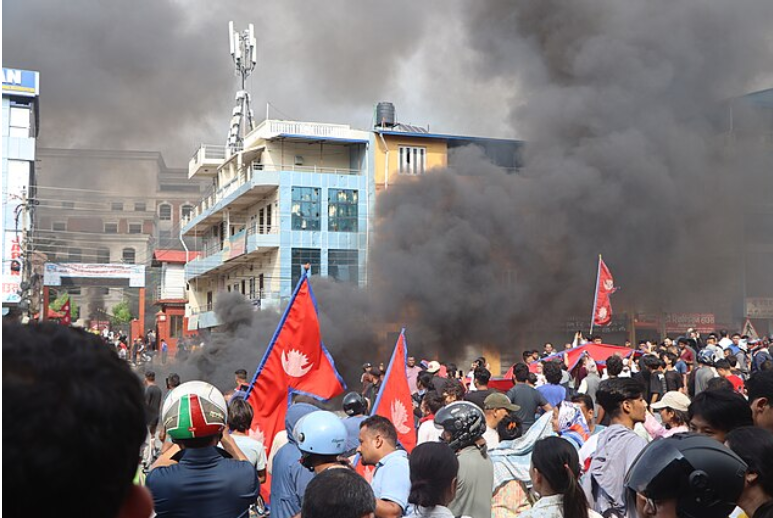
Nepal has been thrown into turmoil as mass protests are taking place all over the country, leaving at least 19 people dead and the political system in chaos. What began as anger against corruption and political saturation has exploded into one of the most serious crises the nation has faced in decades.
Public frustration has been building since the early 1990s, when Nepal transitioned into democracy, ending monarchical rule. Citizens accuse the three big parties, the Nepal Congress, CPN-UML, and the CPN Maoist party, of mismanagement and corruption in the democracy. Young Nepalis have been frustrated for years at the lack of jobs; millions have gone to work in neighbouring countries like India, Malaysia and South Korea. Anger reached a breaking point after the government attempted to ban social media, sparking outrage among young people.
The Government of Nepal, on September 4, issued a directive banning Facebook, Instagram, Reddit, X and 36 other social media apps, citing their failure to meet the deadline to comply with registration requirements to operate in Nepal. The Nepalese government used this as a reason to ban the apps, which were used by citizens to expose the Children of Politicians, who used the apps to flaunt their lavish lifestyles. Dubbed as “Nepo Babies”, citizens targeted them for using corrupt money to live the life they are living. Protesters rallied behind creative symbols, including the popular anime One Piece pirate flag, which became a surprising emblem of resistance.
The growing intensity of the protests has forced Prime Minister KP Oli to resign. Protestors entered the parliament after hearing the news of Oli’s resignation, waving their hands and shouting slogans as smoke rose from the building. They painted graffiti on the walls saying “We won”. Following the protests, Kathmandu airport was shut down and is set to resume soon.
Former Prime Sher Bahadur Deuba, who has held office five times, and Foreign Minister Arzu Rana Deuba were directly targeted by demonstrators. Security forces responded with live fire and smoke bombs, resulting in 19 deaths. However, the army, perceived to be sympathetic to the monarchy and to the public in general, reportedly allowed protesters to attack political offices without much intervention. The CPN-Maoist leadership blamed Sher Bahadur Deuba for fueling the unrest.
The crises have left the political system in disarray. The Rashtriya Swatantra Party (RSP), formed in the last general election out of public frustration, and the Rashtriya Prajatantra Party (RPP), staged mass resignations in parliament. Discussions about an interim government are in order, with two names coming forward: RSP leader Rabi Lamicchane, previously jailed in a cooperative scam, now freed from jail by protestors, and Kathmandu Mayor Balen Shah. Nepal now faces an uncertain future as it seeks stability amid political crises.
Leave a Reply