Category: Politics

  • A Costly Consensus: NATO’s 5% Defence Pledge and the Trump Effect

    A Costly Consensus: NATO’s 5% Defence Pledge and the Trump Effect

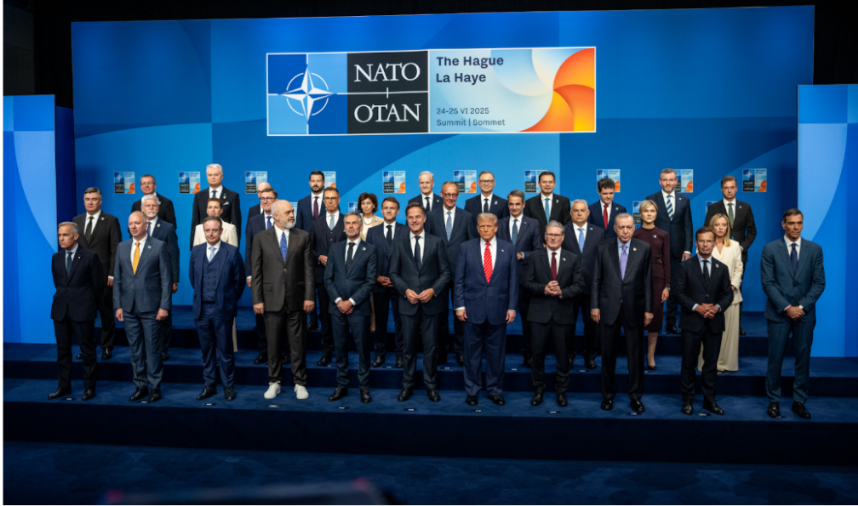
    In the 2025 North Atlantic Treaty Organisation (NATO) Summit held from 24 June to 26 June, a strong commitment was made by all the NATO countries. The member states have finally agreed to ramp up their defence spending goal to 5% of their gross domestic product (GDP) by 2035, a major jump from the previous target of 2% set in 2014.

    The US president has raised questions about NATO’s collective defence strategies for several months now, narrowly referring to Article 5 of NATO’s Alliance in his defense, which states, “An armed attack against one or more of the allies shall be considered an attack against them all. Trump has avoided explicitly endorsing the clause, claiming there are “multiple definitions of Article 5,” a move seen by many as an effort to avoid confrontation with Russia.

    In response, NATO has worked towards a compromise, agreeing to increase defence spending to keep the U.S. engaged in the alliance. The 32 countries have decided to dedicate 3.5% of their GDP to crucial military needs and 1.5% to other elements such as cybersecurity, infrastructure, etc.

    NATO has publicly stated that the alliance must work towards deterring Russia’s military force. “NATO needs a “quantum leap” in defence to deter threats to the alliance”, Rutte mentioned in a speech given in London, earlier this month. Thus, he urged member states to invest more funds towards defence.

    Trump went on Truth Social to share a message sent to him by NATO Secretary-General, Mark Rutte. In the message, Rutte acknowledged that Trump has driven NATO towards a very important global decision. He also added that Trump has “achieved something NO American president in decades could get done.”

    A New York Times report highlights that Trump has previously bashed NATO for not allocating adequate funds for defence, particularly in the face of threats like Russia. During his first term, Trump had threatened that the USA would exit the NATO alliance. Experts believe that Trump may be undermining NATO from within and that this dramatic agreement was primarily made to ensure that the USA remains an enthusiastic participant in NATO.

    Image Source: WhiteHouse/ @x.com 

    However, not all 32 countries were satisfied with this decision. Spain’s Prime Minister, Pedro Sanchez, had sent a letter to Mr. Rutte saying that Spain “cannot commit to a specific spending target in terms of GDP.” Sanchez insisted that Madrid would need only 2.1% percent of GDP to acquire and maintain all the personnel, equipment, and infrastructures requested by the alliance to confront these threats with their capabilities.

    As a result, every member state will not be forced to reach the 5% threshold; however, there are some standard military requirements that every country is required to meet. Trump vowed that he would make Spain pay for this “terrible” decision. “I like Spain … It’s a great place and they’re great people. But Spain is the only country out of all the countries that refuses to pay. And, you know, so they want a little bit of a free ride, but they’ll have to pay it back to us on trade because I’m not going to let that happen,” Trump said.

    This commitment was shaped as much by the strategic urgency felt by all 32 countries within the NATO alliance. As they rush to present a united front, a divide is forming within the coalition itself. As key participants like Spain are raising their voices against major players like the US.

  • Ceasefire in Kashmir: An Operation in Suspension

    Ceasefire in Kashmir: An Operation in Suspension

    On May 20, 2025, India and Pakistan announced a renewed commitment to the 2021 ceasefire agreement along the Line of Control — their second such declaration in four years. Framed as a diplomatic gesture aimed at “stabilising the region,” the move arrived in the shadow of bloodshed. On the morning of 22 April 2025, a convoy of buses winding through the hills of Pahalgam was ambushed by armed militants. The vehicles were carrying Hindu pilgrims, many travelling from Gujarat and Maharashtra, toward the sacred Amarnath site. The attackers opened fire with military precision. By the time it ended, 27 people were dead, dozens wounded, and Kashmir’s already uneasy calm had cracked again.

    Among the survivors was nine-year-old Naksh from Surat, found clutching his brother’s bloodied shirt. Witnesses said the attackers separated passengers by religion before shooting. The brutality of the assault — its timing, its political undertones — raises deeper questions about the promises of peace in Kashmir and the realities on the ground, especially under the framework of what both India and Pakistan still describe as an active ceasefire.

    But what, exactly, is being held at bay?

    A History of Ceasefire, Interrupted

    Kashmir, a region claimed by both India and Pakistan since the Partition in 1947, has endured multiple wars, two full-scale insurgencies, and decades of militarisation. In 1949, the United Nations facilitated the first formal ceasefire between the two countries, freezing control along what came to be known as the Line of Control (LoC). That agreement was never meant to be permanent, and it wasn’t.

    After the 1999 Kargil War, ceasefire violations peaked in 2002, with over 5,000 reported incidents. In 2003, a renewed agreement between New Delhi and Islamabad was announced, and for a few years, it seemed to hold. The number of violations plummeted to fewer than 100 by 2005. Cross-border travel was reintroduced. Civil society groups began cautious dialogues. Kashmiris, many for the first time in years, began to believe in a kind of fragile normalcy.

    That changed over the next decade. Tensions escalated again following the 2016 killing of militant commander Burhan Wani and even more sharply after the revocation of Jammu and Kashmir’s special status under Article 370 in August 2019. The region saw lockdowns, communication blackouts, and mass detentions. Between 2019 and 2020 alone, India reported over 5,000 ceasefire violations along the LoC.

    Yet in February 2021, the two countries surprised many by issuing a joint statement: they would “observe all agreements on ceasefire along the LoC and all other sectors.” Diplomats hailed the announcement as a significant thaw. It was informal, not part of any treaty, but carried the weight of official intent. It was widely referred to in Indian media as “Operation Ceasefire.”

    Operation Ceasefire: A Pause Without a Framework

    Despite the name, Operation Ceasefire was not an operation in the military sense — it was a diplomatic reaffirmation. There were no new protocols, third-party monitors, or cross-border verification mechanisms. What existed instead was mutual fatigue and perhaps mutual interest: both countries faced economic pressures and, in Pakistan’s case, growing internal instability.

    For a time, violations along the LoC sharply declined. According to official data, ceasefire violations dropped by over 90 per cent in 2021 and 2022. For the border towns of Uri, Poonch, and Tangdhar, the lull meant children returned to school, weddings were held in daylight, and life resembled something closer to ordinary.

    But for many in Kashmir, especially those far from Delhi’s policy circles or Islamabad’s diplomatic corridors, the word “ceasefire” never meant protection. It meant pause – silence is not guaranteed but expected to break.

    After the Pahalgam attack, that silence shattered. Eighteen days following the assault, 83 new violations were recorded along the LoC. Shelling resumed. Drone activity spiked. Inhabitants of border villages began sleeping in basements again.

    “We never stopped packing our emergency bags,” said Rina Begum, a mother of three in Uri. “You can’t afford to believe in peace here. You just live in between the bombs.”

    The Civilian Cost of Fragile Promises

    In the highlands of north Kashmir, the idea of peace is rarely tied to ceasefires. The lines on the map may freeze and unfreeze with official declarations, but the lived reality is one of constant vigilance. Homes have backup escape plans. Schools run modified curriculums for when children cannot attend. Shops stay stocked with dry rations in case roads are sealed without warning.

    Nazakat Ahmad Ali Shah, a trekking guide who helped rescue several survivors during the April attack, described it plainly:

    “It’s not a ceasefire if we’re still burying people. It’s a ceasefire if we feel safe. And we don’t.”

    The international community often treats these surges of violence as isolated ruptures — regrettable but exceptional. But for Kashmiris, especially those along the LoC, these moments are neither new nor surprising. They are cyclical. A massacre, a speech, a reaffirmation. Then, another pause and another promise that cannot shield them from the next round.

    And in the middle of it all is Naksh — a boy who speaks less now, eats less, and flinches at thunder. When asked what peace means to him, he said:

    “Just quiet. But not the scary kind. The kind where no one is hiding.”

    A Ceasefire or a Countdown?

    Ceasefires, as currently structured, are not rooted in reconciliation or accountability. There is no truth-telling, no demilitarisation, no reparative justice. What exists instead is an agreement to hold fire temporarily — sometimes upheld, often broken — without addressing the deeper political fractures underneath.

    In Kashmir, the difference between silence and gunfire is rarely peace. It’s only space.

    And as long as ceasefires remain tactical rather than transformative, Kashmir will continue to experience what it knows too well: the noise of violence, followed by the quieter but no less terrifying wait for it to return.

    If this is what we call a ceasefire, what would actual peace look like?

  • Justice B.R. Gavai Appointed as the 52nd Chief Justice of India

    Justice B.R. Gavai Appointed as the 52nd Chief Justice of India

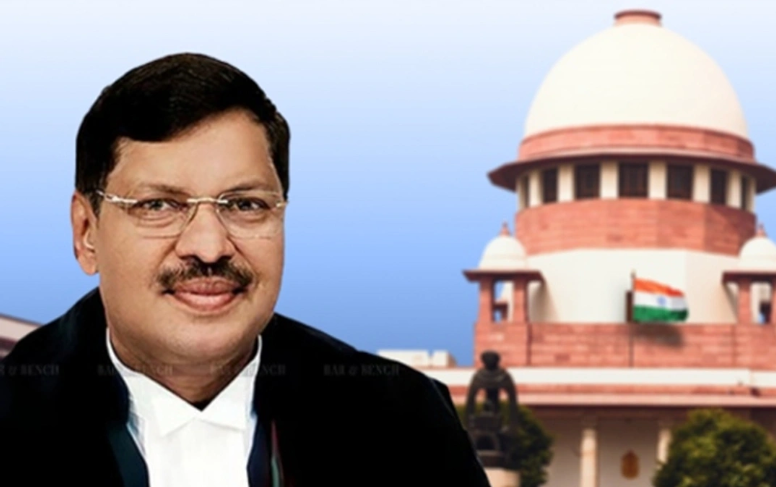
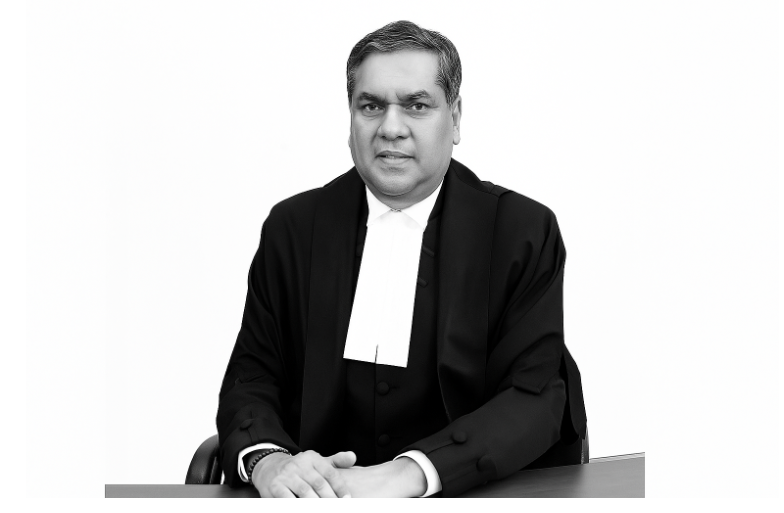
    Justice Bhushan Ramkrishna Gavai was sworn in as the 52nd Chief Justice of India (CJI) on 14 May 2025, succeeding Justice Sanjiv Khanna. President Droupadi Murmu administered the oath of office at Rashtrapati Bhavan. Justice Gavai will serve as CJI until his retirement on 23 November 2025, with a tenure of a little over six months.

    His appointment was confirmed by the Ministry of Law and Justice on 29 April 2025, following a recommendation by Justice Sanjiv Khanna on 16 April. Vice-President Jagdeep Dhankhar, Prime Minister Narendra Modi, and other Union ministers were present at his oath-taking ceremony.

    Legal Career and Judicial Tenure

    Born on 24 November 1960 in Amravati, Maharashtra, Justice Gavai is the first Buddhist to be appointed as CJI and only the second judge from the Scheduled Caste community to hold the position, after former CJI K.G. Balakrishnan.

    Following in his father’s footsteps, the late R.S. Gavai, a well-known Ambedkarite leader and former Governor of Bihar, Sikkim, and Kerala, Justice Gavai enrolled as an advocate in 1985 and began his legal career under Barrister Raja S. Bhonsale, a former Advocate General and High Court judge.

    Justice Gavai practised independently at the Bombay High Court from 1987 to 1990. He specialised primarily in constitutional and administrative law and served as Standing Counsel for various municipal bodies and public institutions. He was later appointed Government Pleader and Public Prosecutor in 2000.

    Justice Gavai was elevated to the post of an Additional Judge of the Bombay High Court on 14 November 2003 and became a Permanent Judge on 12 November 2005. He served at the Mumbai, Nagpur, Aurangabad and Panaji Benches for over 16 years before being appointed to the Supreme Court on 24 May 2019.

    His elevation to the apex court was recommended by the Collegium led by then Chief Justice Ranjan Gogoi, which cited due representation, along with seniority and merit as the key reasons.

    Key Judgments and Contributions

    As a Supreme Court judge, Justice Gavai has been part of several key Constitution Benches and landmark judgements.

    He authored the majority opinion in the 2023 verdict that upheld the 2016 demonetisation scheme and was on the Bench that upheld the abrogation of Article 370. He also struck down the electoral bonds scheme and supported sub-classification within Scheduled Castes in both majority and concurring opinions.

    Justice Gavai has been part of several high-profile bail rulings as well, including granting bail to former Delhi Deputy CM Manish Sisodia and activist Teesta Setalvad. He also led the Bench that ordered the release of A.G. Perarivalan in the Rajiv Gandhi assassination case.

    In 2024, Justice Gavai wrote a concurring opinion in State of Punjab v Davinder Singh, advocating for the exclusion of the ‘creamy layer’ within Scheduled Castes. In another important 2024 ruling, he held that demolitions without due process violated the constitutional right to shelter, laying down procedural safeguards against arbitrary bulldozer actions. He was also on the Bench that convicted Advocate Prashant Bhushan for contempt and later stayed Rahul Gandhi’s criminal defamation conviction.

    Challenges Ahead for CJI Gavai

    Despite his short six-month tenure as Chief Justice, Justice Gavai is set to face several important challenges, with a backlog of over 82,000 cases pending before the Supreme Court as of January 2025, according to the Supreme Court Observer.

    More immediately, two High Court judges, Allahabad HC’s Justice Shekhar Yadav and former Delhi HC judge Yashwant Verma, are facing impeachment proceedings. At the same time, three apex court judges, Justices B.V. Nagarathna, Abhay Oka, and Sanjay Karol, are set to retire in the coming months. With two existing vacancies already, Justice Gavai’s Collegium will need to recommend at least five new appointments to maintain the court’s strength.

    He will also have to decide on several important issues, including pending cases related to the Places of Worship Act, the criminalisation of marital rape, and the validity of certain Waqf Act provisions. As master of the roster, how he allocates these matters and whether he ensures timely hearings will be closely watched.

    Justice Gavai, however, seems to be hitting the ground running. Shortly after taking charge, he addressed media personnel and shared a brief outline of his priorities for the months ahead.

  • Justice Sanjiv Khanna’s Tenure: The Voice That Spoke for Many Citizens of This Country

    Justice Sanjiv Khanna’s Tenure: The Voice That Spoke for Many Citizens of This Country

    After a career dedicated to serving justice and upholding the Constitution, Justice Khanna now transitions to a well-deserved retirement. He retires on 13 May, marking the end of a six-month tenure defined by clarity and conviction.

    Justice Sanjiv Khanna, the 51st Chief Justice of India, is a well-established and renowned judge of the Honourable Supreme Court, marking his presence and opinions in a number of notable judgments on different aspects, such as VVPAT verification, Electronic Bond Scheme, and even upholding the abrogation of Article 370.

    Justice Sanjiv Khanna had earlier served as the Honourable Supreme Court Judge for the period commencing from 11 November 2024 to 13 May 2025, preceded by Justice D.Y. Chandrachud. He graduated from St. Stephen’s College, Delhi and thereafter pursued his Bachelor of Laws from the Faculty of Law, Delhi University. Following this, he was enrolled as an Advocate in the Bar Council of Delhi in 1983, serving as a Standing Counsel (Civil) for the National Capital Territory of Delhi and the Income Tax Department.

    The legacy of the Khanna family can be seen in the career of Justice Sanjiv Khanna, whose father, Dev Raj Khanna, served as a Justice at the Delhi High Court, and his uncle, Justice Hans Raj Khanna, was a Supreme Court Judge renowned for his landmark judgment in the ADM Jabalpur v. Shivkant Shukla case on right to life and personal liberty.

    During the term of six months serving as the Chief Justice of India, he made a notable presence in various landmark judgements, which not only brought a change in the country but at the same time kept the basic structure of the constitution intact, keeping the sentiments of the citizens of the country intact.

    One of the key rulings, which was widely discussed during the last phase of Justice Sanjiv Khanna’s tenure, was the petitions filed against the Waqf Amendment Act, 2025, which was led by a special three-judge bench where he played an important role in the Waqf Amendment Act controversy. During the proceedings, the Centre assured the court that no existing Waqf properties will be denotified, and no new and fresh appointments will be made to the Waqf Board or Central Waqf Council until further hearings. The case is still pending on substantive issues, which are to be dealt with by his successor, Justice B.R. Gavai.

    As a Supreme Court Judge and serving as Chief Justice of India, Justice Sanjiv Khanna was an integral part of the landmark judgements in the history of India in the case of challenging the constitutionality of Electoral Bond Scheme as well as the abrogation of Article 370 – which revoked the special status of Jammu and Kashmir and reorganised it into Union Territory of India. He also marked his influential presence by dismissing the petition filed with regard to the 1976 Amendment in the Preamble of the Constitution of India, where the terms’ secular’ and ‘socialist’ republic were added to describe India.

    Justice Sanjiv Khanna, from the date of holding a strong position at his office and for the country as well, has made some smart administrative moves in keeping the hearings at the Supreme Court more effective. His smart moves included procedural equality by ending oral mentions of early listing of cases at the Supreme Court, and focused on well-drafted petitions

    To sum up, Justice Sanjiv Khanna’s tenure as the 51st Chief Justice of India in a period of six months had his involvement in numerous cases, which not only included short cases but sensitive religious matters, including secularism and transparency in the judicial and quasi-judicial system.

  • Operation Sindoor – India’s Targeted Military Response to the Pahalgam Terror Attack

    Operation Sindoor – India’s Targeted Military Response to the Pahalgam Terror Attack

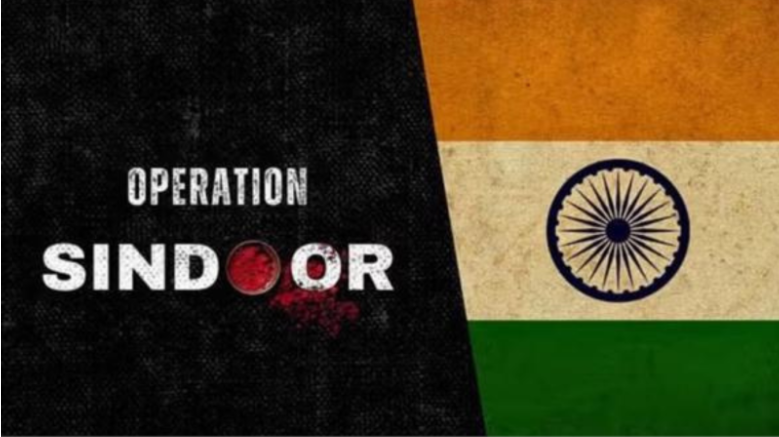
    In the wee hours of 7 May 2025, between 01:05 and 01:30 A.M., the Indian Armed Forces launched a targeted operation, called ‘Operation Sindoor’, targeting key terrorist infrastructure in Pakistan and Pakistan-occupied Jammu and Kashmir (PoJK). The operation came in response to the Pahalgam terror attack of 22 April, which claimed the lives of 25 innocent Indians and one Nepali national.

    In a highly coordinated tri-service attack, the Indian Air Force, Army, and Navy together carried out what officials described as the most expansive military operation since the 1971 Indo-Pakistan war. The strikes targeted nine key locations: Bahawalpur, Muridke, Rawalakot, Muzaffarabad, Kotli, Chakswari, Bhimber, Neelum Valley, Jhelum, and Chakwal, sites India claims were operating as hubs for anti-India terror activities.

    Operation Sindoor relied heavily on intelligence inputs, satellite and drone surveillance, and stand-off weaponry like SCALP (Storm Shadow) and HAMMER precision-guided munitions, fired from within Indian territory. Indian jets used radar blackouts and a deceptive NOTAM to execute the strike undetected. Suicide drones like the SkyStriker were also deployed, capable of delivering 10kg warheads to tactical targets. According to officials, these strikes were designed to minimise civilian casualties.

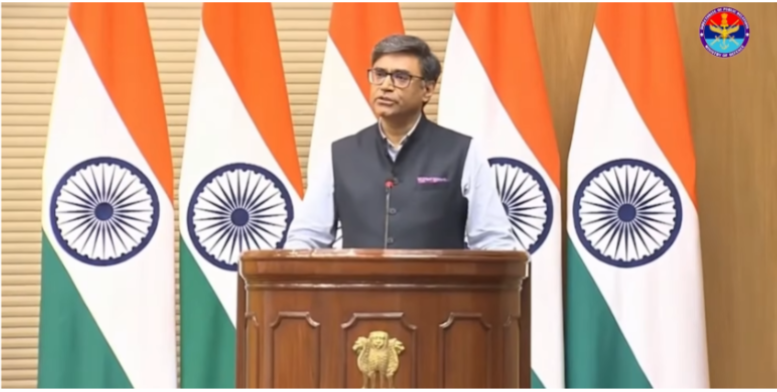
    The government said that the goal of the operation was to “pre-empt and deter cross-border terrorism” without escalating tensions. “Our actions have been focused, measured and non-escalatory in nature,” the Indian Foreign Secretary Vikram Misri reiterated in a press briefing.

    What Operation Sindoor Achieved

    Defence Minister Rajnath Singh stated that over 100 terrorists were killed in the strikes. Among those reportedly killed was Abdul Rauf Azhar, a Jaish-e-Mohammed (JeM) leader involved in the IC-814 hijacking and the 2002 Daniel Pearl killing. Other high-value targets included Yusuf Azhar, Abdul Malik Rauf, and Mudasir Ahmed, all connected to the IC-814 hijacking and the Pulwama terror attack of 2019.

    Air Marshal A.K. Bharti, Director General of Air Operations, confirmed, “The target systems given to the Air Force included the notorious training camps at Bahawalpur and Muridke. Through critical target system analysis, we used precision air-to-surface guided munitions to annihilate these camps while avoiding civilian harm.” He further added that the Rahim Yar Khan airbase in Pakistan’s Punjab province suffered major damage. “Its only runway has been declared non-operational for a week,” Bharti said.

    Escalation And Retaliation

    Pakistan subsequently carried out heavy shelling along the Line of Control, killing Indian civilians and soldiers, and injuring over 50. On the night of 7–8 May, Pakistan launched missile and drone attacks on Indian military installations across Jammu and Kashmir, Punjab, Rajasthan, and Gujarat. Key sites like Awantipura, Srinagar, Pathankot, Ludhiana, Nal, Bhuj and Adampur were among those targeted. However, India’s Integrated Counter-UAS Grid, S-400 Triumf systems, Barak-8 MRSAM, and indigenous Akash missiles successfully intercepted most of these threats.

    India retaliated on 8 May, hitting Pakistan’s air defence radars and systems in Rawalpindi, Lahore and Karachi. Wing Commander Vyomika Singh, during a briefing, said, “There has been extensive damage to crucial Pakistani airbases like Skardu, Sargodha, Jacobabad and Bholari. Also, loss of air defence weapons and radars made the defence of Pakistani airspace untenable.”

    Amid escalating exchanges, Pakistani drones attempted drone strikes into Jammu, Udhampur, and Pathankot, but were neutralised by Indian air defences. Air Marshal Bharti confirmed, “Commencing 8:00 P.M. on 8 May, Pakistani UAVs and drones targeted 12 IAF bases. All were successfully intercepted by our AD guns, Pechoras, SAMAR systems, and Garud snipers.” He noted India had also downed several Pakistani jets, potentially F-16s or J-10Cs, but refrained from specifying numbers. “We have the numbers and we are getting into technical details to establish it,” he said.

    The Indian Navy also played an equally important role. Within 96 hours of the Pahalgam attack, Vice Admiral Pramod, Director General of Naval Operations, confirmed that the Indian Navy deployed its carrier battle group, submarines, and surface ships in full combat readiness. This presence, he said, forced Pakistani naval units into a ‘defensive posture’.

    Air Marshal Bharti concluded in the final press briefing that “Operation Sindoor had destroyed terror camps, achieving its objectives with precision. Have we achieved our objectives of decimating the terrorist camps? The answer is a thumping yes, and the results are for the whole world to see.”

    Ceasefire Brokered

    On 10 May 2025, following days of heightened tension, India and Pakistan agreed to a “full and immediate ceasefire.” US President Donald Trump announced the breakthrough on Twitter, stating, “After a long night of talks mediated by the United States, I am pleased to announce that India and Pakistan have agreed to a FULL AND IMMEDIATE CEASEFIRE.”

    Though India did not address US involvement, Indian Foreign Secretary Vikram Misri confirmed the ceasefire, stating that Pakistan’s DGMO Major General Kashif Abdullah placed a direct call to India’s DGMO Lt. Gen. Rajiv Ghai at 15:35 IST during which both sides agreed to stop all firing across land, air, and sea from 5 P.M. IST onwards. Despite Pakistan violating the ceasefire, hours after it was brokered, the Indian Army gave an appropriate response, after which peace has been observed.

    Despite agreeing to the ceasefire, India refused to reinstate the Indus Waters Treaty, suspended after the Pahalgam attack. Pakistan responded by threatening to pull out of the Simla Agreement of 1972, and both countries expelled their diplomats.

  • Terrorist Attack at Pahalgam kills 26, several injured

    Terrorist Attack at Pahalgam kills 26, several injured

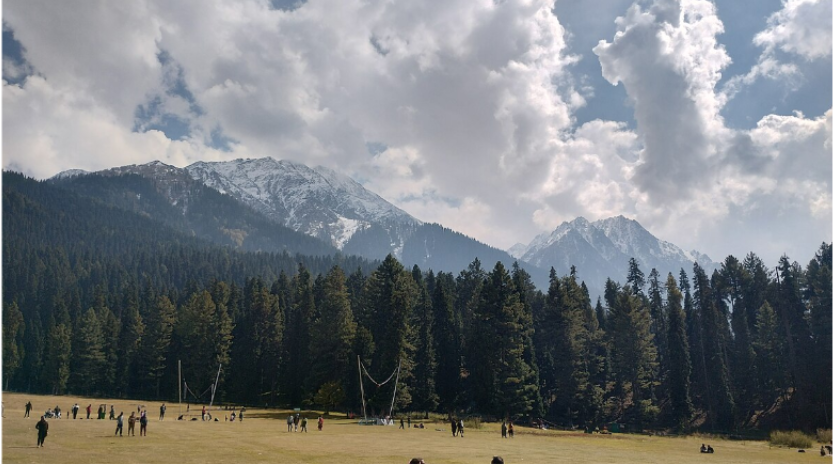
    On 22 April 2025, terrorists had gunned down 26 people at Baisaran Valley, a popular tourist destination near Pahalgam in Kashmir. The incident marks one of the deadliest terror attacks on civilians in recent years, sparking national outrage and increased security in the affected areas.

    The terrorists, some of whom were reportedly dressed in military uniforms, had approached from the surrounding forest around midday towards tourists gathered at the meadows of Baisaran, unaware of the horrifying events that would soon take place. According to eyewitnesses, the terrorists demanded that the tourists disclose their names and religions. They singled out non-muslim men and shot them, mostly at point-blank range, gruesomely in front of their families. Some were even asked to recite the Islamic declaration of faith, Kalma, to prove their religion.

    It was confirmed that 26 people, including 25 tourists and one pony ‘wallah’, who tried to save people, were killed in the attack. The attackers had escaped before the arrival of the security forces, and a search operation has been launched.

    “Those behind this heinous act will be brought to justice…they will not be spared!” Prime Minister Narendra Modi posted on X. In response to the attack, the PM had convened a meeting of the Cabinet Committee on Security (CSS) on 23 April, joined by key ministers and national security officials to discuss the security situation. Union Home Minister Amit Shah also arrived at Pahalgam and paid respects to the deceased.

    Furthermore, the Anantnag Police, which has jurisdiction over Pahalgam, issued a cash reward of 20 Lakhs for any information that would aid in the neutralisation of the absconded terrorists.

    As the investigation into the perpetrators continues, the nation grapples with fear and shock at how terrorists breached all security, destroyed lives and broke apart families in just one afternoon.

  • Satire vs The State: Is Freedom of Speech a Joke?

    Satire vs The State: Is Freedom of Speech a Joke?

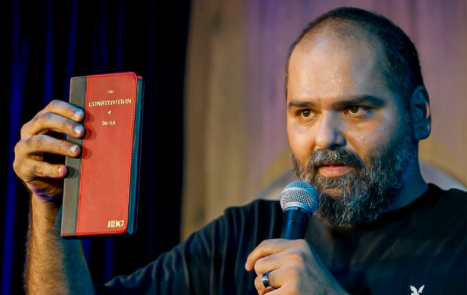
    Popular Indian stand-up comedian and podcaster Kunal Kamra, known for his bold political satire, became the centre of a controversy that awakened debates over the reality of freedom of speech in the country.

    Kamra rose to prominence in the mid-2010s through viral clips of his stand-up shows and his podcast Shut Up Ya Kunal. He came to be known for his quick wit and fearless political commentary, challenging the system. His unique style of fearless humour earned him a large fanbase and simultaneously brought him into clashes with influential figures across the country.

    The Trigger

    Kamra uploaded clips from his special, Naya Bharat, on his YouTube channel on 23 March, recorded at Mumbai’s Habitat Comedy Club. Kamra’s video of the special showed him singing a spoof of the song Dil to Pagal Hai, where he referenced an influential political figure from Mumbai’s Thane, described their physical appearance and mentioned their closeness with Chief Minister of Maharashtra Devendra Fadnavis.

    While he did not explicitly mention the name of this person, he referred to them as “gaddar” (traitor) for infamously changing their political alignment and for “hiding” in Guwahati.

    Shinde’s Retort

    Responding to Kamra’s satirical performance, Maharashtra Deputy Chief Minister Eknath Shinde labelled the act as a “supari” (contract) to malign him, hinting at it being a paid job. While acknowledging the importance of freedom of speech, Shinde emphasised the need for boundaries and decorum.

    He highlighted that Kamra’s history of commenting on influential figures, such as the Prime Minister, indicated he was “working for someone”

    Shinde reiterated that his work speaks for him now, emphasising his commitment to development over responding to allegations.

    The Immediate Backlash: Vandalism, Threats and Protests

    Hours after the videos of the special were uploaded, over 10 Shiv Sena workers ransacked and vandalised The Habitat comedy club and The UniContinental hotel, where the comedy club is located, which led to the club being temporarily shut down indefinitely, expressing concern over the safety of its staff.

    Further backlash included protests and burning pictures of the comedian as well as threats and accusations online towards Kamra. As of 29 March, three more FIRs had been lodged against Kamra, under Sections 353(1)(b), 353(2) (statements conducing to public mischief), and 356(2) (defamation) of the Bharatiya Nyaya Sanhita.

    Kamra and his family members’ personal contact information was leaked, resulting in them facing immense amounts of unknown calls of threat and hate.

    Shinde commented that while he does not condone such actions, he remarked that “action causes reaction.” A police complaint was lodged by Shiv Sena against Kamra, Shiv Sena (UBT) leaders Sanjay Raut and Aaditya Thackeray, and Congress leader Rahul Gandhi, calling this a “conspiracy to malign Shinde.”

    The Political Chatter in the Aftermath

    Commenting on the controversy, Maharashtra Chief Minister Devendra Fadnavis labelled Kamra an “urban naxal” and a “traitor.” (Counterview) In an event organised by The Indian Express, Fadnavis remarked, “They are not worth it, by reacting, you are only elevating their stature” (News18)

    At a press conference in Mumbai, Shiv Sena spokesperson Sanjay Nirupam alleged that Kamra’s satirical comedy was part of an “international conspiracy” to defame India, alleging that Kamra was being paid in crores of foreign funds from various countries and sources that he listed. He alleged that the comedian’s YouTube shows have tarnished the reputations of the Prime Minister of India, the Home Minister, the Supreme Court and the nation itself.

    Shiv Sena (UBT) MP Sanjay Raut, against whom an FIR has been lodged in this case, addressed journalists at a press conference demanding Central protection for Kamra. He stated that he had been in talks with the comedian to give his statement to the Mumbai police without worry.

    MP Sanjay Raut referred to the special security provided to actress and Himachal Pradesh MP Kangana Ranaut in 2020 and stated that similar security should be provided to Kamra by the government. “Whatever a poet or a satirist writes or says, the government should not take it so personally,” Raut said.

    Support for Kamra and Criticism of the Clapback

    Supporters online and human rights organisations like People’s Union for Civil Liberties (PUCL) criticised the party and the government’s response, highlighting that political satire is protected under the Constitution of India. PUCL condemned the demolition of The Habitat and the legal action taken against Kamra as violations of free speech. Artists At Risk Connection (ARC), an independent international organisation that works to defend artists and provide support for artists and cultural workers at risk worldwide, called for the charges against Kamra to be dropped.

    Kamra Stands Strong

    Kamra stood strong on his stance, refusing to apologise for his performance, stating his legal right to political satire. He voiced his support for The Habitat, openly expressing his criticism for the vandalism on the comedy club, noting that the venue should not be held responsible for his words. He stated his willingness to cooperate with the officials for any legal action to be taken.

    True to his nature, Kamra used his humour to clap back at the events that unfolding following the release of the video. Using his satire to comment on the more important failures in the system, he commented, “But will the law be fairly and equally deployed against those who have decided that vandalism is the appropriate response to being offended by a joke? And against the unelected members of the BMC, who have arrived today at Habitat, without prior notice, and tore the place down with hammers? Perhaps for my next venue, I will opt for Elphinstone bridge, or any other structure in Mumbai that’s in need of speedy demolition.”

    Addressing the media coverage of the controversy, Kamra reminded the public that India ranks 159 in World Press Freedom, and that he does not intend to apologise for his satire. He clearly stated that “What I said is exactly what Mr Ajit Pawar (1st deputy CM) said about Mr Eknath Shinde (2nd Deputy CM).” Finally, Kamra commented that he does not fear this “mob” and that he intends to face this matter head-on and without fear.

  • Tombs From the Past Haunt the Present

    Tombs From the Past Haunt the Present

    The release of Chhava Movie, produced by Dinesh Vijan and directed by Laxman Utekar, stirred up old emotions, especially among right-wing groups. These emotions soon turned into actions. On March 16, 2025, communal riots erupted in various parts of Nagpur over the tomb of Mughal Emperor Aurangzeb. Ironically, the tomb lies nearly 500 kilometres away from Nagpur in Khuldabad city of Chhatrapati Sambhajinagar District, formerly known as Aurangabad. This city was named after Aurangzeb. Despite the distance, the riots in Nagpur escalated into violent clashes, resulting in multiple injuries and communal unrest.

    Who was Aurangzeb?

    Born in Dahod, Gujarat, Aurangzeb was the Sixth Mughal emperor, who ruled most of the Indian Subcontinent from 1658 to 1707. His rule is celebrated by many historians for some of his administrative reforms, but criticised by others for his harsh policies and treatment of non-muslims via policies like the Jizya tax imposed on non-muslims.

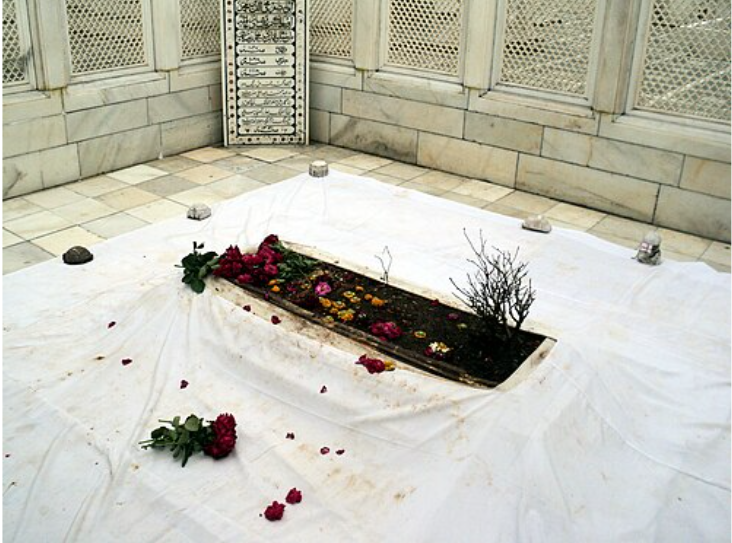
    For years, the tomb was a peaceful site of historical and religious significance. However, after the release of Chhava and with political tensions growing, the tomb came into the spotlight. The tomb of Aurangzeb rests in Khuldabad, a small city in the Sambhajinagar/Aurangabad District, which is on the way to one of the UNESCO World Heritage sites, i.e. Ellora Caves. It is an open-air structure considered modest for a ruler of his stature. He wanted his grave to be a simple one and believed that the open dome was the greatest cover he could have for his tomb.

    Protests and Demands

    Aurangzeb’s legacy remains controversial in Maharashtra, as Sambhaji was executed by Aurangzeb. The protests were headed by right-wing groups like the VHP and Bajrang Dal, who demanded the demolition and removal of the tomb. They argued that safeguarding the tomb of a ruler they viewed as cruel and oppressive sends the wrong message to future generations. Right-wing groups warned that if the tomb is not removed, Babri-like action will be taken.

    Critics argue that this narrative is part of a larger political project that seeks to reshape Indian identity by questioning Islamic heritage linked to the Mughal era. The renaming of Aurangabad to Chhatrapati Sambhajinagar is also cited as a symbol of this agenda.

    The Nagpur Violence

    On March 16, 2025, political organisations staged protests in Nagpur demanding the removal of the Tomb. During the demonstrations, rumours spread that a religious cloth was set on fire. Soon, the protests gained momentum and took a violent turn, triggering violent communal clashes between both sides around 8 to 8:30 pm, resulting in over 30 injuries, including police personnel. Nearly 60 rioters were taken into custody, and about 20 – 25 bikes, three cars and a JCB were set on fire after the clash in the Mahal area of the city.

    The following day, Nagpur Police Commissioner Dr Ravinder Singal said the situation in the city is currently peaceful. “…We have imposed Section 144, and everyone has been told not to step out unnecessarily or take the law into their hands. Do not believe rumours…” he said. All the shops and markets were shut down.

    Political Reactions

    Naturally, political remarks were quickly followed. “Chief Minister Devendra Fadnavis has appealed to citizens to fully cooperate with the administration”, was said in the statement issued by CMO Maharashtra. Fadnavis stated in the state assembly, “We will protect Aurangzeb’s grave but not allow his or the site’s glorification. Chhatrapati Shivaji Maharaj’s temple will be glorified, not Aurangzeb’s grave.”

    The opposition strongly condemned the riots, criticising Fadnavis. Shiv Sena (UBT) MP Sanjay Raut compared the newly elected Fadnavis government to Aurangzeb’s rule, claiming that farmers and unemployed youth were committing suicide. This created a huge debate between the political parties.

    ASI tightened the security around the tomb in Khuldabad to prevent any clashes. The Grishneshwar temple, located in Ellora village, saw a dip in footfall from several tourists and devotees as the temple is en route to Ellora.

    Conclusion: When History, Media and Politics Intertwine

    The incident in Nagpur is not just about Tomb, but it also reflects how intertwined history, politics, and media are in Modern India. A movie meant to provide history about King Sambhaji to a younger audience ended up triggering real-world violence. This shows that the media is not about entertainment anymore; it is an influence. Media can reignite old scars and shape public sentiment and the social world around us in a powerful way.

  • Saffron Syndicate: BJP defeats AAP in Delhi

    Saffron Syndicate: BJP defeats AAP in Delhi

    Rekha Gupta was named as the next Chief Minister of Delhi as the Bharatiya Janata Party (BJP) registered a landmark victory in the capital. Winning a massive 48 out of the 70 seats, the BJP returned to power in Delhi after 26 years.

    In a similar fashion to the previous elections, the seats were divided between the AAP and the BJP, with the Congress failing to win a single seat. However, the parity between the parties completely flipped over. The AAP had won a massive 62 of the 70 seats last time out, but only managed to win 22 seats. Reports say that they managed to retain their Muslim and Dalit-dominated areas, but ultimately fell short to the BJP.

    Major controversies in the run-up to the elections were factors which led to the BJP’s landslide victory. For example, outgoing CM Arvind Kejriwal was arrested in March 2024 for his participation in a money laundering case, after his government introduced a policy to bring in private firms and enterprise companies into the retail liquor sector. He resigned in September 2024, with Atishi Marlena sworn in. The BJP also criticised the official residence of Kejriwal, dubbing it as ‘sheesh mahal’ (palace of mirrors) and accusing Kejriwal of having a wealthy makeover of the house in excess of 50 crore rupees. While the AAP categorically denied these claims, it was against the ‘common man’ image Kejriwal had created for himself and contributed massively to the downfall of the AAP.

    Freebies became a major tool used by both parties to attract voters from lower socio-economic groups. While the BJP initially criticised AAP’s policy, they brought out a similar scheme, a tool that also led to their victory in the Maharashtra state assembly elections, where they and their allies won a whopping 235 of 288 seats.

    A major factor that helped the BJP was not directly related to Delhi. The new Union Budget for 2025 was released just days before the day of voting, with the new tax brackets removing income tax for people who earn less than 12 lakh rupees in a year. This massively boosted the party’s prospects within the middle class.

    60.54% of eligible voters participated in voting on the 5th of February, albeit down on the previous elections held here. Exit polls predicted a victory for the BJP. The Election Commission of India announced the results on the 8th of February, declaring BJP as the winner by a landslide, ending the AAP’s stronghold in the capital. Major highlights included Parvesh Verma, son of former Delhi CM Sahib Singh Verma, defeating Arvind Kejriwal in the New Delhi constituency.

    After a few days of deliberation and meetings between the BJP top brass, Rekha Gupta, who was elected from the Shalimar Bagh constituency, was named as the next Chief Minister of Delhi on 19 February.

  • Kolkata Court Delivers Final Verdict for RG Kar Rape-Murder Case

    Kolkata Court Delivers Final Verdict for RG Kar Rape-Murder Case

    In January 2025, Sanjay Roy, a civic volunteer with the Kolkata Police, was convicted and sentenced to life imprisonment for the rape and murder of a 31-year-old trainee doctor. The crime occurred in August 2024, when the victim was found dead in RG Kar Medical College and Hospital’s seminar hall. The incident sparked national outrage and widespread protests demanding better security for women in public institutions.

    Conviction and Sentencing

    On 18 January 2025, Kolkata’s Sealdah court found Roy guilty under multiple sections of the Bharatiya Nyaya Sanhita; he was convicted under BNS Section 64 (rape), Section 66 (rape causing death) and Section 103(1) (murder). The conviction was based on substantial forensic evidence, including DNA matches from hair and skin samples, CCTV footage, and Roy’s contradictory statements of being framed. The CBI charge sheet alleged that Roy attacked the sleeping doctor in the seminar hall while intoxicated. A post-mortem later confirmed the victim was strangled to death and sustained injuries consistent with a struggle.

    Despite the Central Bureau of Investigation (CBI) pushing to classify the crime as “rarest of the rare” and advocating for the death penalty, Judge Anirban Das sentenced Roy to life imprisonment until death, citing the need to rise above the “primitive instinct of an eye for an eye,” which the victim’s family disagrees with. The court also imposed a fine of ₹50,000 on the convict and directed the West Bengal government to provide ₹17 lakh as compensation to the victim’s family.

    Investigation and Legal Proceedings

    Initially handled by the Kolkata Police, the investigation was transferred to the CBI amid allegations of evidence tampering and mishandling by local politicians. The CBI’s investigation involved examining 128 witnesses, with 51 testifying during the trial. The specific actions of the hospital authorities and local police were also criticised, highlighting the need for accountability in such sensitive cases.

    The victim’s parents were present at the court proceedings and claimed that other perpetrators were not punished and, therefore, justice had not been fully served. When told the state was to pay ₹17 lakh compensation, the family retorted, “We don’t want compensation, we want justice,” and indicated they will challenge the case in higher courts if needed.

    The case also revived discussion about sexual violence laws. India’s 2013 overhaul of rape laws (after the 2012 Delhi case) was often cited by commentators, stressing the need for legal and social change. In Parliament, leaders reiterated the government’s intent to make punishments harsher and to improve police accountability (as Prime Minister Modi noted, the Supreme Court has rebuked police delays in FIR registration ). Victim advocates have urged better protection for women workers everywhere – not only in hospitals but all public workplaces – reflecting the sentiment “the nation cannot await another rape to take steps”.

    Public and Political Reaction

    The sentencing led to significant public and political reactions. Political figures, including members of the BJP and other opposition parties, criticised the verdict as a “travesty of justice” and called for a more thorough investigation into potential evidence tampering by local authorities. In response to the public outcry, the West Bengal government, led by Chief Minister Mamata Banerjee, filed an appeal in the Calcutta High Court seeking the death penalty for Roy, asserting that the crime warranted capital punishment. The “Aparajita Bill,” which amends the criminal law to inflict harsher punishments for rape, including requiring the death penalty when rape results in death, was even pushed by the state legislature in early September, and she campaigned to enact the law, emphasising that the offender deserved nothing less.

    Prime Minister Narendra Modi spoke in parliament about the case, calling crimes against women “unpardonable” and praising new laws (Bharatiya Nyaya Sanhita) for harsher punishments. He noted that the Supreme Court had criticised West Bengal for a 14-hour delay in registering the FIR, and assured victims that e-FIR provisions would prevent such delays. National medical associations like the Indian Medical Association (IMA) continued to press for reforms, calling for “airport-level” security measures in all hospitals and for doctors to be able to register police complaints remotely.

    The case sparked mass protests in mid-August 2024 when tens of thousands marched under slogans like “Hang the rapist, save women” and “Reclaim the Night”. Medical students and staff across India held a strike; emergency services continued, but routine procedures were halted on 17 August by IMA’s nationwide shutdown.

    Even after the recent trial and verdict, many junior doctors staged demonstrations outside the court. Immediately following the life-sentence verdict, doctors outside the courtroom protested that Roy could not have acted alone and demanded that all accomplices be caught.

    The case has drawn parallels to the 2012 Delhi Nirbhaya gang rape incident, highlighting ongoing concerns about women’s safety in India and prompting discussions on legal reforms in handling crimes against women. As India continues to confront the layered realities of gendered violence, this case remains a point of inflection. It demands that hospital corridors be made safe, that survivors’ voices be heard without delay, and that justice not be left to the whims of public outrage alone.