Category: Politics

  • Protests in Nepal leave 19 dead, Government in Crisis

    Protests in Nepal leave 19 dead, Government in Crisis

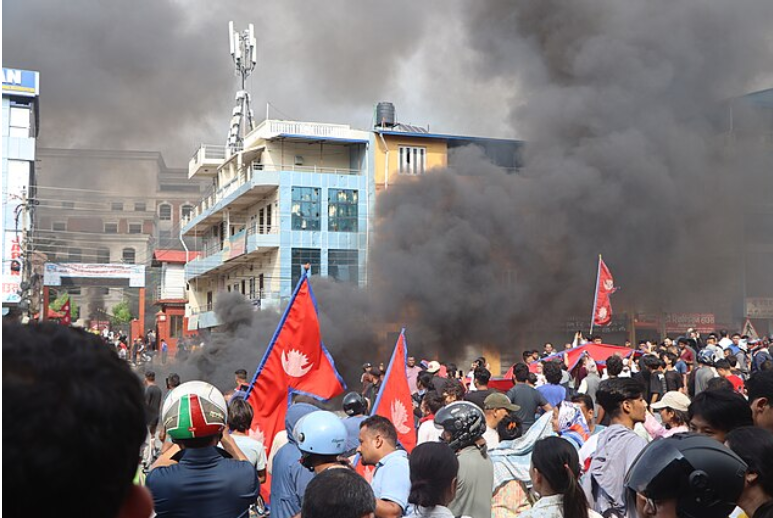
    Nepal has been thrown into turmoil as mass protests are taking place all over the country, leaving at least 19 people dead and the political system in chaos. What began as anger against corruption and political saturation has exploded into one of the most serious crises the nation has faced in decades.

    Public frustration has been building since the early 1990s, when Nepal transitioned into democracy, ending monarchical rule. Citizens accuse the three big parties, the Nepal Congress, CPN-UML, and the CPN Maoist party, of mismanagement and corruption in the democracy. Young Nepalis have been frustrated for years at the lack of jobs; millions have gone to work in neighbouring countries like India, Malaysia and South Korea. Anger reached a breaking point after the government attempted to ban social media, sparking outrage among young people.

    The Government of Nepal, on September 4, issued a directive banning Facebook, Instagram, Reddit, X and 36 other social media apps, citing their failure to meet the deadline to comply with registration requirements to operate in Nepal. The  Nepalese government used this as a reason to ban the apps, which were used by citizens to expose the Children of Politicians, who used the apps to flaunt their lavish lifestyles. Dubbed as “Nepo Babies”, citizens targeted them for using corrupt money to live the life they are living. Protesters rallied behind creative symbols, including the popular anime One Piece pirate flag, which became a surprising emblem of resistance.

    The growing intensity of the protests has forced Prime Minister KP Oli to resign. Protestors entered the parliament after hearing the news of Oli’s resignation, waving their hands and shouting slogans as smoke rose from the building. They painted graffiti on the walls saying “We won”. Following the protests, Kathmandu airport was shut down and is set to resume soon.

    Former Prime Sher Bahadur Deuba, who has held office five times, and Foreign Minister Arzu Rana Deuba were directly targeted by demonstrators. Security forces responded with live fire and smoke bombs, resulting in 19 deaths. However, the army, perceived to be sympathetic to the monarchy and to the public in general, reportedly allowed protesters to attack political offices without much intervention. The CPN-Maoist leadership blamed Sher Bahadur Deuba for fueling the unrest.

    The crises have left the political system in disarray. The Rashtriya Swatantra Party (RSP), formed in the last general election out of public frustration, and the Rashtriya Prajatantra Party (RPP), staged mass resignations in parliament. Discussions about an interim government are in order, with two names coming forward: RSP leader Rabi Lamicchane, previously jailed in a cooperative scam, now freed from jail by protestors, and Kathmandu Mayor Balen Shah. Nepal now faces an uncertain future as it seeks stability amid political crises.

  • Conservative leader Charlie Kirk dies at 31

    Conservative leader Charlie Kirk dies at 31

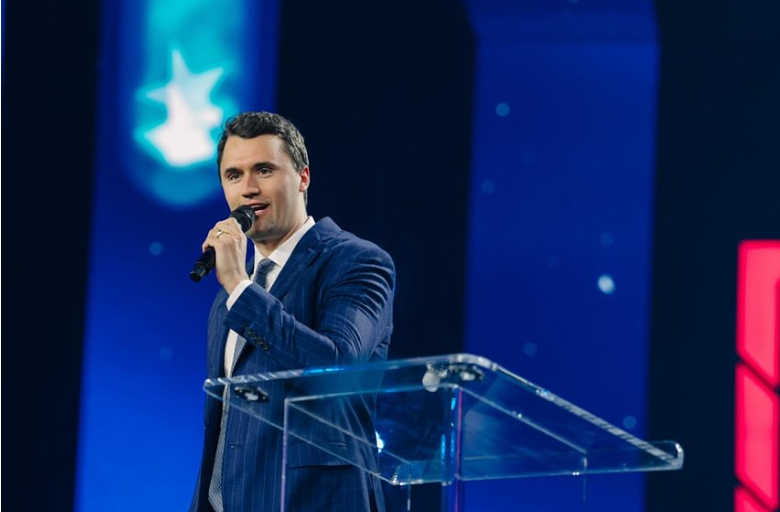
    Charlie Kirk, a fiercely outspoken conservative activist and co-founder of Turning Point USA, died on 10 September 2025, at the age of 31. He was fatally shot during a speaking event at Utah Valley University, while addressing students as a part of his “American Comeback Tour.”

    Kirk was shot by a 22-year-old, Tyler Robinson. The FBI immediately released images of the suspect and CCTV footage of Robinson on the roof of a nearby building and started a manhunt. Authorities have also pointed out that there were anti-fascist messages on bullet casings in a rifle found near the scene, showcasing potential evidence of a political motive behind the assassination. Robinson was arrested on 12 September in St. George, Utah.

    Kirk’s death shocked the political world and drew swift reactions around the globe. Supporters remembered him as a strong advocate for conservative values and a mentor to students who felt isolated in predominantly liberal institutions. Millions of supporters flooded social media with tributes, while a few critics noted the irony of his death by gunfire, given his strong pro-gun rights stance. US President Donald Trump called him “a great, and even legendary, American” and announced Kirk would be posthumously awarded the Presidential Medal of Freedom.

    Born as Charles James Kirk in 1993 in Illinois, Kirk had a keen interest in politics as a teenager. In 2012, at 18, he co-founded Turning Point USA, an organisation promoting and spreading conservative values on college campuses and bringing young people together behind conservative causes. Over the years, the organisation expanded into dozens of campus chapters and became a central structure for youth outreach in the conservative movement. Kirk also promoted Trump during his 2024 campaign. His appearances on college campuses drew large student crowds, where he talked about free market, abortion, geopolitics, and faith-based values, often debating liberal college students on their stance on various matters.

    Kirk hosted The Charlie Kirk Show, a daily talk show and podcast that reached millions worldwide. He was a strong advocate for Israel, often highlighting the country as a key American ally and a symbol of democracy in the Middle East. He often defended the Second Amendment and voiced concerns about illegal immigration, while being outspoken in his opposition to abortion and considering himself a pro-life supporter. These positions made him a central figure in the broader debates about America’s political and cultural identity. Kirk consistently framed his arguments around the values of faith, family, and freedom on campus, on his podcast, or at national conferences.

    Outside the spotlight, Kirk was married to Erika Frantzve, a podcaster and entrepreneur. The couple welcomed a daughter in 2022 and a son in 2024. Two days after Charlie’s assassination, his wife vowed to continue his movement, including further campus tours, “It will be greater than ever”, Erika said in her first public remark, a video posted on Instagram. Kirk’s funeral will occur on Sunday, 21 September 2025, at State Farm Stadium in Glendale, Arizona.

  • Rising Alliances: India Strengthens Bonds with China and Russia Amid Trade Tensions

    Rising Alliances: India Strengthens Bonds with China and Russia Amid Trade Tensions

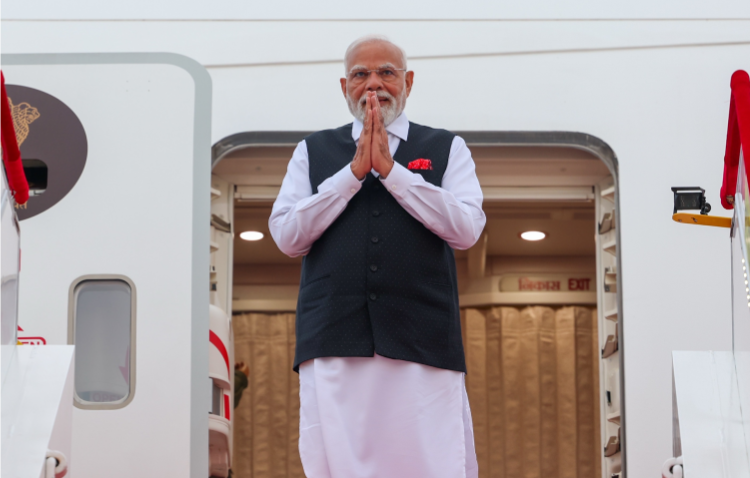
    Prime Minister Narendra Modi met with President Xi Jinping on 31 August 2025, on the sidelines of the Summit of the leaders of the Shanghai Cooperation Organisation (SCO) in Tianjin. This event marked PM Modi’s first visit to China after 7 years and was a crucial diplomatic moment for India and China following years of tension.

    At the SCO summit, the two leaders expressed commitment to a fair, reasonable, and mutually acceptable resolution of boundary-related concerns that have plagued India-China relations for almost half a decade. According to a statement by the commerce ministry released on Sunday, India emphasised on the fact that “export-related measures should not be weaponised or misused to create artificial scarcity, distort markets, or disrupt supply chains, and emphasised that their calibrated and transparent use is essential to maintain trust in international commerce”.

    At the meeting, India also called for action towards ensuring greater market access and enhancing trade facilitation between the two countries. These concerns are relevant because as of late, India’s automobile and electronic industries have faced major disruptions due to China’s steep export restrictions on rare earth magnets and fertilisers. According to PTI, India’s trade deficit with China has widened to nearly $100 billion in 2024-25.

    However, India and China recorded a positive bilateral outcome in August, when visiting Chinese Foreign Minister Wang Yi assured External Affairs Minister S Jaishankar that his country will resume the supply of fertilisers as well as rare earth minerals. However, China is yet to act upon this promise and Beijing has not yet given an official statement or made public commitments on restarting exports.

    The Galwan Valley clash in June 2020, which had resulted in the deaths of over 20 Indian soldiers and an unspecified number on the Chinese side, had triggered a severe diplomatic fallout between the two countries. As a result of this dispute, India banned numerous Chinese apps, restricted Chinese investments, and suspended direct flights and visas. But, in August 2025, nearly 5 years after the fallout, an agreement was reached between the Special Representatives of both countries.

    “The Kailash Mansarovar Yatra has been resumed. Direct flights between the two countries are also being resumed,” ANI quoted PM Modi on 31st August, 2025. The resumption of the Kailash Mansarovar Yatra is particularly notable, as it is a significant pilgrimage for Hindus, Buddhists, and Jains. The Yatra’s revival is expected to encourage cultural and religious exchanges between the two nations.

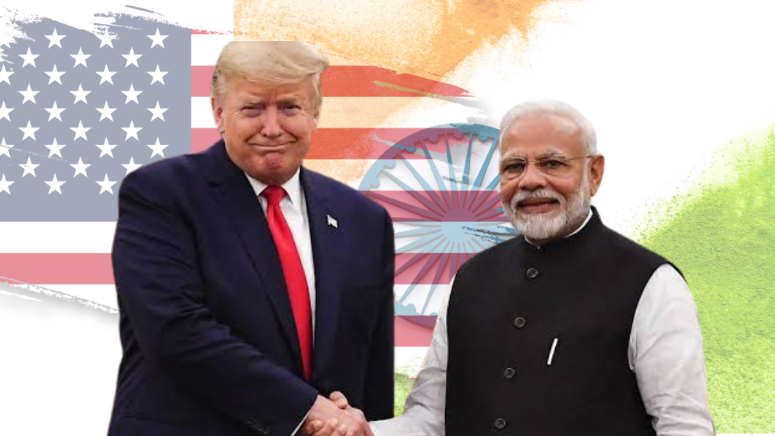
    On the second day of the SCO summit, PM Modi shook hands and posed for pictures with Xi Jinping and Russian President Vladimir Putin. This gesture was seen as a powerful diplomatic message of strategic alignment, particularly in response to the US President’s actions and tariffs.

    The most surprising image of camaraderie was the car journey that PM Modi and Russian President Putin had together on the second day of the summit, for their bilateral meeting. Putin, who is notorious for his unusual security protocols, is rarely seen spontaneously carpooling with unannounced guests. The two leaders celebrated India-Russia relations during their 50-minute-long bilateral meeting, with Modi saying that the two nations stuck together even under the most trying circumstances.

    The overt act of bonhomie among all 3 countries during the SCO Summit has incited a response from US President Donald Trump on Truth Social, who posted, “Looks like we’ve lost India and Russia to deepest, darkest, China. May they have a long and prosperous future together!” Trump wrote in a social media post accompanying a photo of the three leaders together at Xi’s summit in China.

    The trilateral showcase of solidarity has raised concerns about an emerging bloc. One of the worst hits by the US tariffs has been taken by New Delhi, facing an additional 25 per cent on India’s imports of crude oil coming from Moscow. The combined duties have pushed US tariffs on Indian products to 50 per cent. China, India and Russia are all original members of BRICS, an organisation which Trump claimed to be “anti-American.” Even Brazil (another BRICS nation) has been targeted by Trump, facing steep and restrictive tariffs.

    Despite his strong words on Truth Social, Trump later sought to downplay tensions with India and called their ties ‘special,’ he said, “I’ll always be friends with (Narendra) Modi, he’s a great prime minister. He’s great. I’ll always be friends, but I just don’t like what he’s doing at this particular moment,” Trump told reporters in the Oval Office, according to PTI. Trump also expressed resentment and disappointment with New Delhi over its energy purchases from Moscow. “I’ve been very disappointed that India would be buying so much oil from Russia, and I’ve let them know with the 50 per cent tariff.”

    The Tianjin SCO summit demonstrated a major shift in worldwide political dynamics. Major trade commitments are expected to play a crucial role in bolstering the economies of both India and China.

    Prime Minister Modi has strategically established diplomatic connections with Xi Jinping and Vladimir Putin through a method that not only prioritises regional security and economic advantages but also relies on mutual discontent with US foreign policy leadership. The Galwan Valley conflict between India and China created tension, but their current joint initiatives demonstrate their purposeful work to restore mutual trust. The gradual aftermath of Modi’s subtle yet undermining response will determine how international diplomacy and geopolitics evolve during the upcoming years because they will establish new regional alliances and reshape worldwide diplomatic relations.

  • Walter Lippmann: The Voice Who Taught America to Think About Itself

    Walter Lippmann: The Voice Who Taught America to Think About Itself

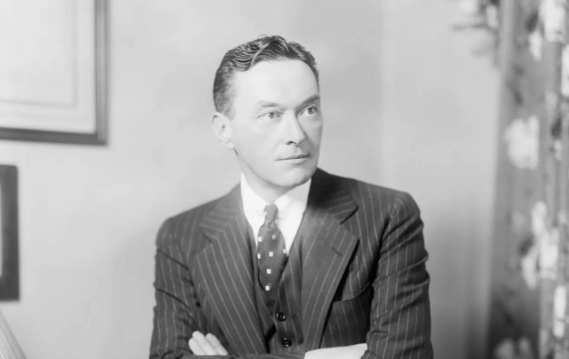
    Among the pantheon of American journalism, few figures hold as much weight as Walter Lippmann. For over half a century, he was the country’s leading interpreter of politics, war, and democracy: an intellectual go-between bridging the raw chaos of events and the public trying to make sense of them. He was not only a columnist, he was a thinker who grappled with questions that are still pressing today: How do we know what we know? What is the role of the press in presenting our vision of reality? And can democracy persist if its citizens are captives of illusion?

    Lippmann’s career spanned from the Progressive Era to the television era. Along the way, he invented modern political commentary, coined terms that have become the foundations of media theory, and commanded the attention of presidents as much as the readers of his daily column. To grasp Walter Lippmann is to learn the strained marriage of democracy and information in the 20th century, a marriage that remains under tension today.

    A New Yorker in the Making

    Born in 1889 to an affluent German-Jewish family in New York, Lippmann grew up musically gifted, well-travelled, and bookish. His passion for ideas led him to Harvard, where he studied philosophy under William James and George Santayana.

    Harvard was the turning point. Learning about pragmatism, which revolves around ideology being proved and tested in practice, took his perception of politics to great heights: his views on it were not dogmatic but instead an ever-evolving process. He graduated in 1910 as a man with starry eyes and a burning ambition to introduce firebrand ideas to a world that was standing at the door of revolution.

    The early 20th century brimmed with reform movements: investigative journalists exposed corruption boldly as progressives clamoured for reform, and politicians only added to it by grappling with America’s emerging global stronghold. Lippmann slid into this ferment easily. By 1913, Walter Lippmann, who was 24 at the time, co-founded The New Republic, a journal carrying opinions that quickly emerged as the voice of progressive intellectuals. His first central forum was employed to press the case for domestic reform and reflective engagement overseas.

    The Interpreter

    Lippmann’s voice drew a parallel between fiery crusaders like Upton Sinclair and caustic critics like H.L. Mencken as he treaded towards a calmer, analytical voice that remained relentlessly focused on clarity. His presence in journalism was less of a partisan and more of an interpreter, helping readers make sense of events too complex to grasp on their own.

    That instinct was expressed in his syndicated newspaper column, Today and Tomorrow, which debuted in 1931. It appeared for more than three decades in hundreds of newspapers all over the nation, reaching millions. Every important person within the nation gave close attention to Lippmann’s verdicts.

    His authority of trust came from his scholarship and his independence. Lippmann never had trouble changing his mind when the facts required it. His parallel opinions, whether it was about his support of Woodrow Wilson’s entry into the First World War, all while scrutinising the League of Nations, expressing his due respect to FDR, but criticising the anatomy of the New Deal, or even encouraging the Cold War containment at the same time, cautioning America against excess militarisation. His allegiance was not always to the party line but to his idea of truth.

    Public Opinion and the Shadows on the Wall

    Lippmann’s best and most lasting work did not come from his daily columns but from his books. In Public Opinion (1922), he provided a groundbreaking analysis of how people come to know the world. Underlying it was a simple yet radical notion: most of what we understand comes not through direct experience but through mediated images, news accounts, and stereotypes. He referred to this manufactured reality as the “pseudo-environment.” It is through this lens, not unmediated reality, that people form their judgments. The implication was unsettling. If citizens see the world only in terms of such shadows, democratic choice is tenuous. As Lippmann wrote, “the pictures inside people’s heads do not correspond with the world outside.”

    This was more than a philosophical comment but a political alert. Democracy, he maintained, could not rely on citizens’ understanding the complexities of contemporary policy. His answer was drastic: turn over interpretation to experts, specialists, and institutions. Elitism was the accusation of his critics, but Lippmann justified the position as realism. “The common interests,” he said, “very largely elude public opinion entirely, and can be managed only by a specialised class.”

    Struggling with Democracy

    This conflict between the ideals of democracy and the murky realities was a constant presence in Lippmann’s life. He trusted in self-government but suspected that common people were not always capable of making sound judgments. He prized the press but observed how it could deceive, and although he loved freedom, he was critical of propaganda’s corrosive influence- particularly after observing its growth under fascism.

    In World War II, Lippmann stood among the loudest voices saying that Americans had to resist Hitler, lest they themselves become postwar authoritarians. In the Cold War, he supported containment but warned that hysteria at home threatened democracy more than communism abroad. He opposed McCarthy with fact-based critiques, not fear.

    His opposition never ceased accusing him of being aloof or too detached from the fervours of democratic living. But his apologists recognised in him something unusual: a commentator who would speak what was hard, even unpopular, if he thought it was supported by reason.

    The Journalist as Philosopher

    In the mid-century period, the height of Lippmann’s persona was his transcendence into public philosophy. He earned two Pulitzer Prizes for commentary, was honoured with degrees from universities across the globe, and was accepted as the dean of American political commentary in general. But he lived with restraint, afraid of being lionised.

    Later in his life, he became increasingly suspicious of the ascendancy of television. He was concerned that the medium, which rested on image and spectacle, would further exacerbate the distortions he had predicted in Public Opinion. In later years, he feared television’s reliance on image would turn politics into theatre, a prophetic concern in today’s age of 24-hour news and social media.

    When Lippmann passed away in 1974, obituaries greeted him as a giant of journalism, a figure who had not only defined how Americans saw their world but also how they saw the act of seeing it at all.

    Lippmann’s Legacy in the Digital Age

    It is essential to revisit Walter Lippmann’s work today to observe the questions he posed that have been responsible for only sharpening the digital era we live in now. If his newspapers could construct pseudo-environments, what of today’s algorithmic feeds, where millions reside within self-supporting bubbles of disinformation?

    His “pictures in our heads” resonate in every argument over fake news, echo chambers, and disinformation campaigns. At such a time when we as a society struggle to cope with climate change, pandemics, and technological disruption problems, Lippmann’s contention comes right into relevance as he remarks that just as democracy is dependent on freedom, similarly, a news platform’s competence is equally dependent on producing sound bites that revolve around such issues of global importance.

    Naturally, his appeal for expert governance is still contentious. The populist protest of our era indicates that citizens often reject the notion of being governed by elites. Even so, his detractors acknowledge that he compelled democracy to face its blind spots. Naming the illusions we live by, he provided us with the means to resist them.

    The Final Word

    Walter Lippmann was a man of contradictions: a democrat wary of mass opinion, a journalist sceptical of the press, an optimist who often warned of failure. Yet within these tensions lay his genius. He educated the public not what to think, but how to think about thinking. His voice has since stilled, but his questions remain. In a world filled with shadows and images, we might need him today more than ever.

  • From Stridhan to Status Symbol: How Dowry Became a Cycle of Violence

    From Stridhan to Status Symbol: How Dowry Became a Cycle of Violence

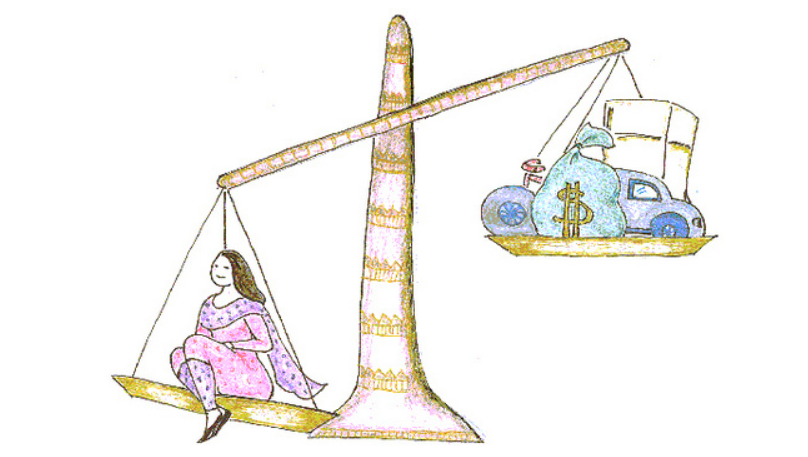
    On August 21, Nikki Bhati was allegedly set ablaze by her husband, Vipin Bhati. Her family stated that they gifted her in-laws a Scorpio, a motorcycle, and gold during the wedding in 2016. But there was no satiating the demand, and they were later presented with a fresh demand of Rs 36 lakh and a luxury car. The 26-year-old woman was found with severe burn injuries at her in-laws’ home on August 21 and later died en route to a Delhi hospital. Nikki’s death has sparked renewed outrage surrounding the concern of dowry deaths and the give-and-take of dowry altogether.

    Nikki Bhati’s death has prompted public outcry and renewed debate over India’s dowry-related violence. Reported dowry deaths, however, represent only the tip of the iceberg when it comes to the violence married women face within their households. According to the National Crime Records Bureau (NCRB), 35,493 brides died in India between 2017 and 2022, which averages to nearly 20 deaths a day over dowry demands. In this period, Uttar Pradesh recorded the highest number of dowry deaths, followed by Bihar and Jharkhand. Section 80 of Bharatiya Nyaya Sanhita (BNS) 2023 states that the term “dowry death” is applicable when a woman dies due to bodily injury or harm up to seven years after her marriage, and it is shown that she was subjected to cruelty and/or harassment by either her husband or his parents and/or extended family. A 2010 book named Human Development in India: Challenges for a Society in Transition, covers the findings of the 2004-05 round of the India Human Development Survey (IHDS), which shows that the average wedding spending for a bride’s family was 1.5 times more than the bridegroom’s family. Behind these numbers are real women whose lives are cut short by relentless demands. Recent cases across states reveal how dowry harassment continues to escalate into brutal violence and deaths.

    Sangeeta, a mother of two and a ten-year married woman, was discovered dead on June 14 in Aligarh, Uttar Pradesh, after allegedly being severely beaten and tortured with a hot iron on every part of her body, including her genitals. According to the woman’s family, she was often tormented by her husband and in-laws since they had not received the buffalo and bullet motorbike they had demanded as dowry. A young Chandigarh bride killed herself last July following what her family said was constant dowry harassment. Later that month, despite receiving a ₹70 lakh Volvo and 100 sovereigns of gold as dowry, another bride committed suicide within two months of marriage as a result of constant pressure relating to the dowry.

    These recent tragedies are not isolated incidents, but they stem from a longer history of dowry-linked violence in India. To understand why the practice persists so deeply, it is important to trace how dowry itself evolved. Dowry did not originate as a weapon of social violence; instead, it was known as ‘stridhan’ or a woman’s wealth, comprising jewellery, gold coins, and cattle, which was parted with by the bride’s family to accompany her in her married life, serving as a source of financial independence. By the medieval era, as caste hierarchies deepened, marriages became negotiations of status, dowries evolved into grand transactions, and the bride’s worth was calculated in terms of the wealth she was accompanied by. One of the earliest well-documented dowry killings occurred on 15 May 1979 in Model Town, North Delhi. Tarvinder Kaur, a Sikh bride, was attacked in her home by her mother-in-law, who doused her with kerosene, and her sister-in-law set her on fire.
    Today, the concept of dowry has evolved, and no longer fits the traditional framework of “give-and-take.” The bride’s family is expected to pay for the extravagant venues, luxurious food, stay, and whatnot. The honeymoon abroad and the luxury apartments “gifted” by the bride’s family all stem from the same social evil. Far from being abolished, the dowry system has been repackaged as status-driven consumption and reinforced by a consumerist mindset.

    The debate over dowry laws has sharpened with the ongoing Tellmy Jolly v. Union of India case, which includes a petition before the Supreme Court that questions whether parents who give dowry under coercion should be punished alongside those who demand it. Tellmy argues that, in punishing givers, the law criminalises the very people that it is supposed to shield. While the case highlights the criminalisation of victims, the Kerala government, in response to related proceedings, has recently informed the High Court that it has launched a dedicated portal for dowry complaints and is drafting a standard operating procedure for handling such cases. With the constantly rising dowry-related harassment cases rising every day in India, concerned citizens are bound to ask, “Will this portal be effective?”

    On one hand, a digital portal will make filing easier for victims (or their families), as they don’t need to go to police stations, which are often intimidating or dismissive. However, rural families may lack either digital access or literacy to access this portal. A digital approach to reporting issues such as dowry deaths and harassment can be effective, but only if it is paired with awareness campaigns, trained officers, and prompt action on complaints.

    While initiatives like Kerala’s dowry complaint web and the Tellmy Jolly petition demonstrate efforts to change the system, they also highlight the limitations of both digital and legal solutions. The continued prevalence of dowry-related violence serves as a reminder that the issue is much more complex than access to technology or the legal system, despite every new precaution that is put in place. Nikki Bhati’s case sits within a long continuum of dowry-linked violence that continues to surface across India, despite decades of legal prohibition. From the earliest recorded killings to recent tragedies, the pattern has remained disturbingly consistent, where demands escalate, families concede or resist, and women end up bearing the consequences. The persistence of such deaths shows how resistant the system is to reform. Dowry remains a deeply entrenched practice which has been consistently reshaped over time but never dismantled, leaving a legacy of inequality that continues to undermine marriage and justice alike.

  • Who owns the street? Rising rebellion against tourism in the streets of Europe

    Who owns the street? Rising rebellion against tourism in the streets of Europe

    Across Europe this summer, locals have taken to the streets with a clear message: mass tourism is pushing them out of their cities. Residents are retaliating against rising rents, overrun public spaces, and a lifestyle that’s being sold for profit.

    Anti-tourism protests have occurred all summer across various European countries, including Spain, the Netherlands, and Italy. Thousands of protesters have taken to the city’s streets over the past few months to protest against mass tourism in Spain, especially in San Sebastián, which has the nation’s highest housing costs. There, protesters chanted slogans, one being, “Sustainable tourism is a mythological animal.”

    In June, Genoa residents staged a symbolic “noisy stroll” protest, dragging suitcases through the city centre to highlight the disruptive impact of mass tourism.

    Most recently, thousands of people protested on the Spanish island of Mallorca, with organisers arguing that the current tourism model exploits workers while benefiting only a small elite. Similar demonstrations have also taken place on other popular Spanish resort islands, such as Minorca and Ibiza. These islands, with a population of just over one million, hosted more than 15 million international tourists in 2024.

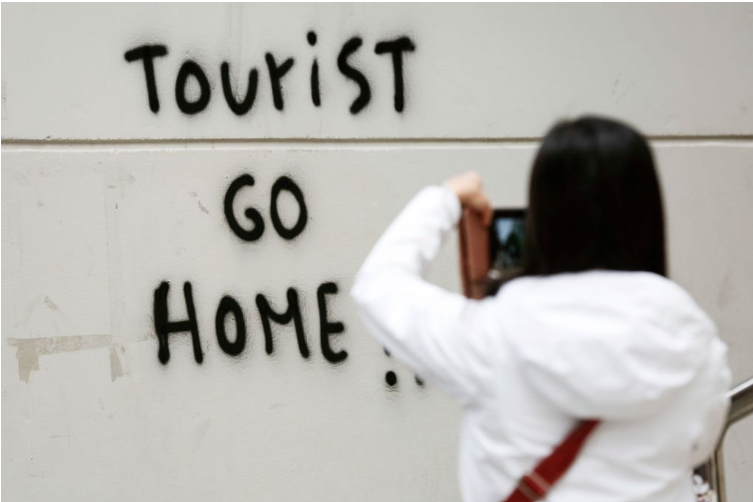
    On June 15, locals in Barcelona started spraying tourists with water and chanting, “tourists go back home.” Others also carried signs with slogans such as “Barcelona is not for sale” and “Tourism is stealing from us.”

    The ongoing demonstrations intend to shed light on the blatant “touristification” of European cities. The term refers to the emphasis and priority given to tourism rather than sustaining local life, amenities, and infrastructure. The protests aim to pressure governments to address the strain tourism has on rents and housing, and the collateral environmental damage caused. Many call for policy and urban planning that puts residents’ needs and livelihoods ahead of tourist demand. In cities like Venice, where fewer than 50,000 people live year-round, over 30 million tourists visit annually. As a result, much of the hospitality industry caters to the visitors rather than residents.

    A protester holds a sign reading “Tourism is killing Barcelona” during an anti-tourism demonstration in the city. / Photo: X / @UinHurricane

    Mass tourism has disrupted daily life across Europe, and one of the most pressing issues locals face is housing. Residential units have been scarce and are slowly being converted to tourist accommodations. This scarcity has also led to a significant hike in rent and housing prices. Reports conducted by Harvard International Review have indicated that there are now more tourist beds than residents in Venice. During protests in San Sebastián, a resort city on Spain’s northern coast, some residents stated that their leading cause of concern isn’t the act of tourism itself, but rather the “speculators and exploiters who use tourism as a facade to ultimately profit from the housing and overall lives of the residents.” Locals have also started advocating for more sustainable practices to protect natural resources, local infrastructure, and heritage sites. In 2023, a tourist was accused of damaging a statue in the city’s 16th-century Fountain of Neptune, located in the Piazza della Signoria. The same year, in another part of Italy, a group of tourists was accused of toppling a valuable statue at a villa.

    During the 2024 Olympics in Paris, a city with only 11.3 million residents, approximately 9.5 million individuals purchased tickets to attend the Games. In protest against the pollution of the Seine, which was expected to worsen with Olympic preparations, locals threatened to stage a mass defecation in the river, rallying under the hashtag #JeChieDansLaSeineLe23Juin (“I sh*t in the Seine on June 23”). The campaign, widely reported by outlets including CBS News and Forbes, was dubbed the “Paris Poop Protest” by Modern Diplomacy, which described how activists used a dedicated website and hashtag to coordinate their demonstration against both river pollution and government spending.

    Governments have gradually started responding to these persisting protests; cities like Barcelona have begun cracking down on illegal rentals and changing specific bus routes to protect elderly residents. Places like Santorini in Greece and Bruges in Belgium have started imposing taxes on their tourism and hospitality industries. Venetian officials recently declared the temporary entrance fee, implemented to control tourist crowds, a success. The new €5 (about $5.4) tourist charge, which began on April 25 and concluded on July 14, brought in more than €2.4 million (about $2.6 million).

    The summer of protest across Europe has made one thing clear: locals are no longer willing to stay silent as their cities transform into playgrounds for outsiders. While tourism remains a crucial economic engine, the cost of unchecked visitor influx, rising rents, environmental strain, and local life erosion has become too heavy to bear. As more residents push back, governments must reckon with a future in which tourism must be reimagined. Whether these measures can truly shift global travel culture remains to be seen.

  • From Allies to Adversaries? U.S. Slaps Highest Tariffs on India over Russia Energy Links

    From Allies to Adversaries? U.S. Slaps Highest Tariffs on India over Russia Energy Links

    On 6 August 2025, President Donald J. Trump signed an executive order that imposes an additional tariff of 25% on imports from India, effectively pushing the headline U.S. tariff on many Indian goods to 50% where the earlier reciprocal rate also applies.

    The implementation is not uniform, with the US administration signalling targeted applications. Some products appear to be exempted (for example, some smartphone and pharmaceutical shipments), but for labour-intensive categories where Indian exporters are concentrated- apparel, gems & jewellery, carpets and some food items- the tariff rate can become a threat very quickly, as buyers can likely shift suppliers.

    The order says the additional duty is being imposed because the U.S. government finds India is “directly or indirectly importing Russian Federation oil” and that the step is needed to address “an unusual and extraordinary threat” to U.S. national security. Unless India concedes in the next three weeks, the move will potentially hit its single largest export market, worth $87.3 billion annually.

    Indian Energy Security Meets America First

    Before the Ukraine war, Russian oil was barely 2% of India’s imports. However, by 2024, it had increased to 36%. In the first half of 2025, imports hit 1.75 million barrels daily. The rationale for India has been straightforward- cheap oil for a country of 1.4 billion is an economic necessity, not a geopolitical endorsement.

    Trump sees it differently. “India has always bought a vast majority of their military equipment from Russia, and is Russia’s largest buyer of energy,” he wrote on social media. “They can take their dead economies down together.” It’s the second tariff hike, which has been framed as retaliation for India’s ‘funding’ of Moscow’s war machine.

    New Delhi has pushed back hard, accusing Washington of hypocrisy. The Ministry of External Affairs has pointed out that the EU’s trade with Russia last year- 67.5 billion euros in goods and 17.2 billion euros in services, far exceeded India’s. And the U.S. continues to tolerate large Russian energy purchases by China and Turkey without resorting to similar penalties. “Our imports are based on market factors and energy security needs,” the ministry said, calling the tariffs “unfair, unjustified, and unreasonable.”

    Prime Minister Narendra Modi’s recent phone call with Russian President Vladimir Putin about an upcoming visit did nothing to dismiss Trump’s idea of India as a Moscow enabler.

    Trump’s Real Obsession- The Trade Deficit

    For all the moral high ground Trump’s taking on Russia, many economists believe the real reason is the U.S.’s goods trade deficit with India. In 2024, as per a Reuters report, the gap widened to $45.8 billion, up 5.1% year-on-year. India’s exports to the U.S., led by pharmaceuticals, textiles, gems, and machinery, hit $87.3 billion, while U.S. exports to India lagged at $41.5 billion. May 2025 alone saw $8.83 billion worth of Indian goods heading to America.

    Trump has long viewed this imbalance as proof of Indian protectionism. His “reciprocal trade” doctrine demands zero-deficit commerce- a fantasy in the real world, but one he has applied indiscriminately, from Canada (35% tariffs) to Mexico (25%) and even close allies like the UK and Australia. The Russia issue, analysts argue, is a convenient pretext for a tariff tactic that forces India to buy more American oil, defence hardware, and agricultural goods.

    If the tariffs stick, U.S. consumers will inevitably pay more for everything from T-shirts to generic medicines. However, for Trump, the possibility of a narrowed deficit balances the domestic inflation risk.

    Economy and Market- Two Peas in a Pod  

    Citigroup warns of a 0.6% to 0.8% GDP hit for India if the tariffs endure; Morgan Stanley agrees on the upper bound. A more optimistic PHDCCI report estimates the damage to be just 0.19% of GDP, affecting less than 2% of exports. Either way, the pain will be sector-specific. Labour-intensive industries like textiles, gems, and pharmaceuticals will feel the brunt first. Supply chains may shift to Bangladesh or Vietnam, recreating what had happened when U.S.-China tariffs shifted manufacturing flows. The Reserve Bank of India has already intervened to limit rupee weakness.

    However, if Trump expected the Indian markets to report a major fall, the response has been underwhelming. The BSE Sensex closed at 79,857.79 on 8 August, down just 0.95%, with the Nifty 50 matching the fall. The losses marked a sixth straight week in the red- the longest such streak in five years, but why is panicking unnecessary?

    Foreign institutional investors pulled ₹15,950 crore from Indian equities in early August, but domestic institutional investors more than offset this with ₹29,070 crore in buys, supported by record systematic investment plan inflows. Mid- and small-cap stocks slipped more than 1% each, but the consensus among market strategists is that as long as domestic liquidity holds, i.e.,  the Indian consumers keep buying, India can sustain the tariffs at least in the short term.

    India’s Retaliation-  Damage Control, Negotiation, and Diversification

    India’s options are limited, with negotiation remaining a priority. WTO legal routes are available but slow. India could initiate consultations or panels, challenging U.S. national-security claims under GATT norms, similar to Brazil’s approach, though such resolutions take time and do less to prevent immediate impacts.

    Domestic measures include GST relief, credit support, and insurance for exporters, accelerating diversification via new FTAs with the Middle East, Africa, and the EU. Competitiveness improvements in key sectors are planned, but these address medium-term needs rather than short-term losses like order cancellations. Retaliation is seen as counterproductive, as it would increase Indian costs, expand the deficit from the U.S. perspective, and risk escalation.

    Competitors like Bangladesh, Vietnam, and Turkey may gain from U.S. orders. Indian firms with markets in Europe, the Middle East, and Africa stand a better chance, but this may not fully offset job losses in regions like Punjab or in textiles.

    What Does The Future Look Like for U.S.-India Relations

    Relations between the U.S. and India, initially prospering by shared interests against China, are under pressure. Trump’s recent engagement with Pakistan through deals on cryptocurrency, mining, and oil, alongside his claim of negotiating a May ceasefire (denied by India), has raised eyebrows in India.

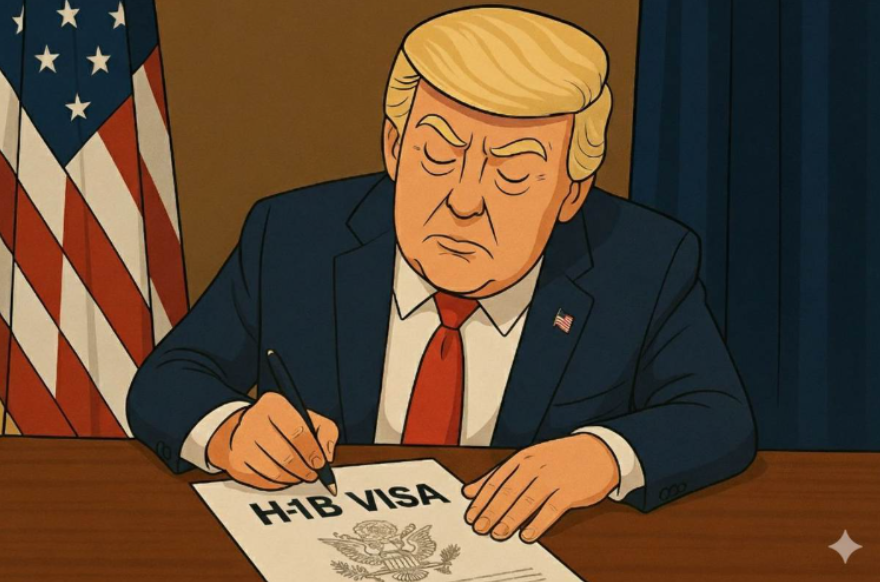
    For the first time in two decades, U.S. relations have become a domestic political issue in India. In the U.S., with Trump’s influence, issues like immigration, deportations, H-1B visas (72% held by Indians), offshoring, and technology sharing could turn India into a partisan topic.

    Mistrust over third-party relations- such as India’s ties to Russia and U.S. dealings with China and Pakistan was previously managed. Tariffs on Russian oil, however, change this narrative. Trump’s comments, including calling India a ‘dead economy,’ have just added fuel to the tariff fire.

    A negotiated settlement in the near future could restore confidence, secure U.S. export gains, and keep strategic ties intact. Failure could see supply chains rerouted, investments delayed, and both economies paying the price for this unwarranted trade war. As former Foreign Secretary Shyam Saran puts it, India must “endure short-term pain to safeguard long-term sovereignty.” However, political scientist Pratap Bhanu Mehta is blunter, warning that Modi risks’ humiliation’ if he cannot manage a dignified off-ramp.

  • R.G. Kar victim’s parents continue relentless quest for justice as India celebrated Rakshabandhan

    R.G. Kar victim’s parents continue relentless quest for justice as India celebrated Rakshabandhan

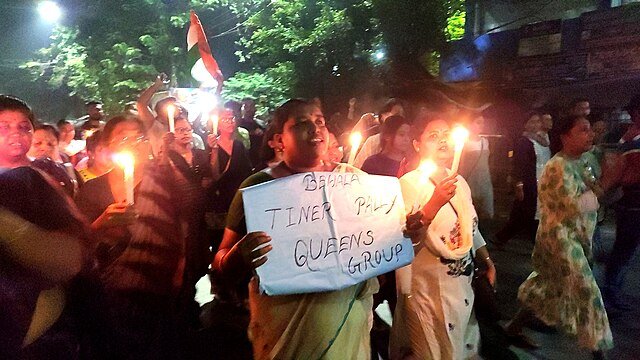
    A year has passed since a doctor was raped and murdered in R.G. Kar nursing home in West Bengal, Kolkata. As the whole country celebrated ‘Rakshabandhan’ on the very same day the incident happened a year ago, the victim’s parents are still visiting the State and Central Govt. turn by turn in search of justice.

    Just a year prior, the horrific incident shook the whole nation; people around the globe took to the streets, raising systemic issues on women’s safety in the city of Kolkata. Fast forward to 2025, the victim’s parents are not satisfied, alleging “incomplete investigation”. According to the law, one person cannot commit this heinous crime. A civic volunteer named Sanjay Roy was convicted by the Sealdah Court and sentenced to life imprisonment till death. The judge excused the Death penalty because it was not a “rarest-of-rare” case, sparking huge controversy. On Saturday, 9 August, the victim’s parents called for a protest march in memory of their daughter. They alleged that they were stopped and beaten by the police near Park Street when they were marching towards the Bengal Secretariat. According to the victim’s father, they were stopped despite having court permission for the rally. Following their meeting with the Union Home Minister Amit Shah and CBI Director Praveen Sood over the incompetence of the West Bengal Government in giving them justice.

    Even after the R.G. Kar case, the crimes against women didn’t decline. A TMC student leader in the Union room of South Calcutta Law College raped a college student. In Pune, a girl was raped in her own house by a man pretending to be a delivery agent.

    As brothers vowed to protect sisters on the very same day, in a difference of a year, the victim’s mother was quoted by PTI saying, “Why are they stopping us? We only want to reach the secretariat and seek justice for my daughter.”  Thousands of women are molested and cat-called every day in India, and out of the many or two cases take the shape of R.G. Kar or Nirbhaya. As Durga Puja approaches in Bengal with Pandals fighting to make a women-related theme, the question arises, “What’s the need of worshipping a female deity when rape victims’ parents are lathi-charged by police for seeking justice?”

  • Vice-President Jagdeep Dhankhar Resigns Suddenly, Cites Health Reasons

    Vice-President Jagdeep Dhankhar Resigns Suddenly, Cites Health Reasons

    Vice-President of India Jagdeep Dhankhar resigned from his post on Monday, saying he was following medical advice and needed to focus on his health. The resignation came as a big surprise to many, as he still had two years left in his term.

    In his resignation letter to President Droupadi Murmu, Mr. Dhankhar said, “To prioritise health care and abide by medical advice, I hereby resign as the Vice-President of India, effective immediately.” The letter was shared on his official X (formerly Twitter) account.

    Mr. Dhankhar, 74, had a heart-related issue in March but had recovered and was attending official events regularly. In fact, he had taken part in Parliament earlier the same day and chaired a meeting of the Business Advisory Committee in the Rajya Sabha. He was also scheduled to visit Jaipur the next day for an event.

    His sudden resignation raised many questions and speculations. While the official reason is health-related, some political leaders believe there could be other reasons behind the move.

    Congress MP Jairam Ramesh said the resignation was “shocking and unexpected.” He mentioned that he had spoken to Mr. Dhankhar just a few hours before the news broke, and the Vice-President gave no hint about stepping down. “He was supposed to make some big announcements related to the judiciary tomorrow,” Mr. Ramesh added.

    Sources as per The Hindu say Mr. Dhankhar was also expected to speak in the Rajya Sabha on impeachment motions against two High Court judges. These were sensitive matters that could have made headlines.

    According to senior leaders in the ruling National Democratic Alliance (NDA), the government is now preparing a list of possible replacements. The next Vice-President will likely be from the Bharatiya Janata Party (BJP) and someone close to Prime Minister Narendra Modi. PM Modi is expected to return from his overseas visit by July 26.

    There have also been reports of tensions between Mr. Dhankhar and the government in recent months. His strong public comments about the judiciary did not go down well with some government leaders. In December 2024, the Opposition had even moved an impeachment motion against him, something that had never happened before for a Vice-President. Although the motion was dismissed, Mr. Dhankhar was reportedly upset that no top government minister publicly defended him.

    Mr. Dhankhar is known for speaking his mind. He began his career as a lawyer and entered politics in 1989, winning a Lok Sabha seat from Jhunjhunu, Rajasthan. He joined the BJP in 2003 and was made Governor of West Bengal in 2019, where he had regular disagreements with Chief Minister Mamata Banerjee. In 2022, he was elected as the 14th Vice-President of India.

    As Vice-President, he often spoke on issues like judicial reform, farmers’ rights, and Parliament’s powers. Some admired his courage, while others felt he crossed the line expected from someone in a high constitutional post.

    So far, the BJP has not issued a formal statement. PM Modi posted a brief message online, but it was far less warm than the praise he had given Dhankhar earlier. Meanwhile, several Opposition leaders have spoken about Mr. Dhankhar with respect and concern.

  • Elon Musk Launches America Party: Fiscal Conservatism, Electric Cars, Revenge

    Elon Musk Launches America Party: Fiscal Conservatism, Electric Cars, Revenge

    Billionaire Elon Musk, on Saturday, announced the launch of a new ‘centrist’ political party, the ‘America Party,’ which looks like both a political gamble and an escalation to his very public feud with US President Donald Trump. In a series of posts on his platform X, Musk has positioned the new party as a direct challenge to America’s historic two-party system.

    “By a factor of 2 to 1, you want a new political party, and you shall have it!” Musk posted, citing a poll he ran on X. He added, “When it comes to bankrupting our country with waste and graft, we live in a one-party system, not a democracy. Today, the America Party is formed to give you back your freedom.”

    However, there is no evidence as of now of Musk formally registering the party with the Federal Election Commission (FEC). Musk, who was born in South Africa and is ineligible to run for president, has not named a leader for the party yet.

    The announcement comes against the backdrop of a dramatic public split with Trump, whom Musk had previously supported with over $275 million in campaign donations. Musk has even served in Trump’s administration as the head of the so-called Department of Government Efficiency (Doge), where he oversaw aggressive cuts to federal programs.

    Their falling out began after Musk publicly criticised Trump’s massive tax and spending bill, which the latter refers to as ‘one big beautiful bill’, which was signed into law last week and is expected to add over $3 trillion to the national deficit. Musk, a prominent leader in the EV industry, has very publicly made his opinions known on the bill, which omitted subsidies for electric vehicles, a key interest for Tesla.

    Trump has since then publicly dismissed Musk’s new party as ‘ridiculous’, calling Musk a “TRAIN WRECK” that has gone “off the rails.” Trump has also threatened to revisit federal contracts with Musk’s companies, including SpaceX and Starlink, both of which rely heavily on government deals. He further hinted at potential moves to strip Musk of subsidies or even reconsider his immigration status, despite Musk having been a US citizen since 2002.

    Unbothered by the president’s remarks, Musk suggested that the America Party could start by focusing on a handful of highly contested House and Senate races in the 2026 midterms. He argued that winning just a few seats could give the party leverage in a closely divided Congress.

    Meanwhile, a Reuters report has pointed to a slide of nearly 8% in Tesla’s shares on Monday, following Musk’s announcement. The company is now tasked with selling more than one million vehicles in the second half of the year to avoid a year-on-year decline in sales. If the stock slide continues, Tesla will lose over $80 billion in market value. Can Tesla afford this political venture, given how Trump’s initial threats to cut off subsidies to Musk’s businesses led to a $150 billion wipeout in Tesla’s market cap in a single trading session?

    Despite Musk’s confidence, US political history has shown little success for third parties. So far, the America Party looks more like a personal vendetta than a serious political movement. There are no declared candidates and no clear policies beyond Musk’s usual focus on cutting government spending. No known lawmakers have shown any interest in defecting to his fledgling party.

    In reality, there’s little evidence of a strong voter bloc eager to rally behind Musk. His millions of followers on X and strong financial resources don’t necessarily translate into political power. Without a coalition of committed candidates and grassroots supporters, the America Party risks becoming just another news headline, fizzling out entirely once Musk’s attention shifts elsewhere.