Category: India

  • Tombs From the Past Haunt the Present

    Tombs From the Past Haunt the Present

    The release of Chhava Movie, produced by Dinesh Vijan and directed by Laxman Utekar, stirred up old emotions, especially among right-wing groups. These emotions soon turned into actions. On March 16, 2025, communal riots erupted in various parts of Nagpur over the tomb of Mughal Emperor Aurangzeb. Ironically, the tomb lies nearly 500 kilometres away from Nagpur in Khuldabad city of Chhatrapati Sambhajinagar District, formerly known as Aurangabad. This city was named after Aurangzeb. Despite the distance, the riots in Nagpur escalated into violent clashes, resulting in multiple injuries and communal unrest.

    Who was Aurangzeb?

    Born in Dahod, Gujarat, Aurangzeb was the Sixth Mughal emperor, who ruled most of the Indian Subcontinent from 1658 to 1707. His rule is celebrated by many historians for some of his administrative reforms, but criticised by others for his harsh policies and treatment of non-muslims via policies like the Jizya tax imposed on non-muslims.

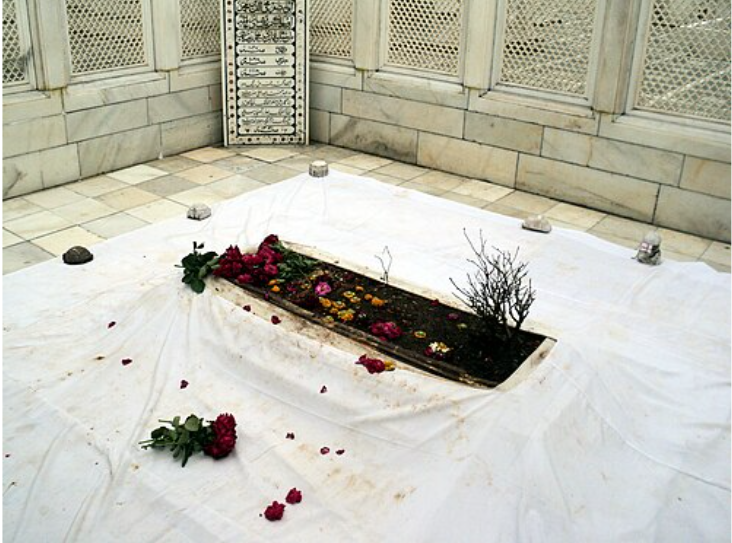
    For years, the tomb was a peaceful site of historical and religious significance. However, after the release of Chhava and with political tensions growing, the tomb came into the spotlight. The tomb of Aurangzeb rests in Khuldabad, a small city in the Sambhajinagar/Aurangabad District, which is on the way to one of the UNESCO World Heritage sites, i.e. Ellora Caves. It is an open-air structure considered modest for a ruler of his stature. He wanted his grave to be a simple one and believed that the open dome was the greatest cover he could have for his tomb.

    Protests and Demands

    Aurangzeb’s legacy remains controversial in Maharashtra, as Sambhaji was executed by Aurangzeb. The protests were headed by right-wing groups like the VHP and Bajrang Dal, who demanded the demolition and removal of the tomb. They argued that safeguarding the tomb of a ruler they viewed as cruel and oppressive sends the wrong message to future generations. Right-wing groups warned that if the tomb is not removed, Babri-like action will be taken.

    Critics argue that this narrative is part of a larger political project that seeks to reshape Indian identity by questioning Islamic heritage linked to the Mughal era. The renaming of Aurangabad to Chhatrapati Sambhajinagar is also cited as a symbol of this agenda.

    The Nagpur Violence

    On March 16, 2025, political organisations staged protests in Nagpur demanding the removal of the Tomb. During the demonstrations, rumours spread that a religious cloth was set on fire. Soon, the protests gained momentum and took a violent turn, triggering violent communal clashes between both sides around 8 to 8:30 pm, resulting in over 30 injuries, including police personnel. Nearly 60 rioters were taken into custody, and about 20 – 25 bikes, three cars and a JCB were set on fire after the clash in the Mahal area of the city.

    The following day, Nagpur Police Commissioner Dr Ravinder Singal said the situation in the city is currently peaceful. “…We have imposed Section 144, and everyone has been told not to step out unnecessarily or take the law into their hands. Do not believe rumours…” he said. All the shops and markets were shut down.

    Political Reactions

    Naturally, political remarks were quickly followed. “Chief Minister Devendra Fadnavis has appealed to citizens to fully cooperate with the administration”, was said in the statement issued by CMO Maharashtra. Fadnavis stated in the state assembly, “We will protect Aurangzeb’s grave but not allow his or the site’s glorification. Chhatrapati Shivaji Maharaj’s temple will be glorified, not Aurangzeb’s grave.”

    The opposition strongly condemned the riots, criticising Fadnavis. Shiv Sena (UBT) MP Sanjay Raut compared the newly elected Fadnavis government to Aurangzeb’s rule, claiming that farmers and unemployed youth were committing suicide. This created a huge debate between the political parties.

    ASI tightened the security around the tomb in Khuldabad to prevent any clashes. The Grishneshwar temple, located in Ellora village, saw a dip in footfall from several tourists and devotees as the temple is en route to Ellora.

    Conclusion: When History, Media and Politics Intertwine

    The incident in Nagpur is not just about Tomb, but it also reflects how intertwined history, politics, and media are in Modern India. A movie meant to provide history about King Sambhaji to a younger audience ended up triggering real-world violence. This shows that the media is not about entertainment anymore; it is an influence. Media can reignite old scars and shape public sentiment and the social world around us in a powerful way.

  • Beyond the Myth: The Living Power of the Maha Kumbh

    Beyond the Myth: The Living Power of the Maha Kumbh

    Life is filled with curves and circles, looping through birth, death, and rebirth. Each soul is affected by karma and longs for release, Moksha. In this journey for liberation, only once every 144 years comes a moment when the heavens align. This moment is the Maha Kumbh Mela, a spiritual phenomenon where millions gather to cleanse their sins, dissolve their egos, and connect with something far greater than themselves.

    At the heart of this divine convergence is Triveni Sangam in Prayagraj, the sacred convergence of the Ganga, Yamuna, and Saraswati. According to ancient scriptures, this Sangam is not just a sacred place where these rivers meet, but it is a doorway to spiritual awakening. A dip in these holy waters during the Maha Kumbh is said to wash away lifetimes of accumulated karma, breaking away from the very cycle of life and death.

    When the Sun, Moon and Jupiter align, it is believed the rivers become charged with Amrit, the divine nectar of immortality. There existed a time when the universe itself was in a state of instability. The Devas (gods) and Asuras (demons) joined forces to churn the cosmic ocean in pursuit of Amrit. As the pot of Amrit emerged, chaos unfolded. To protect it from falling into the wrong hands, Lord Vishnu, in the form of Mohini, whisked it away. In the celestial fight that followed, four drops of Amrit fell on Earth, Prayagraj, Haridwar, Ujjain, and Nashik. These four cities became sites of sacred convergence. And thus, the Kumbh Mela was born.

    “In the eternal churn of the cosmos, gods and demons wrestled not for gold or land, but for a drop of immortality.”

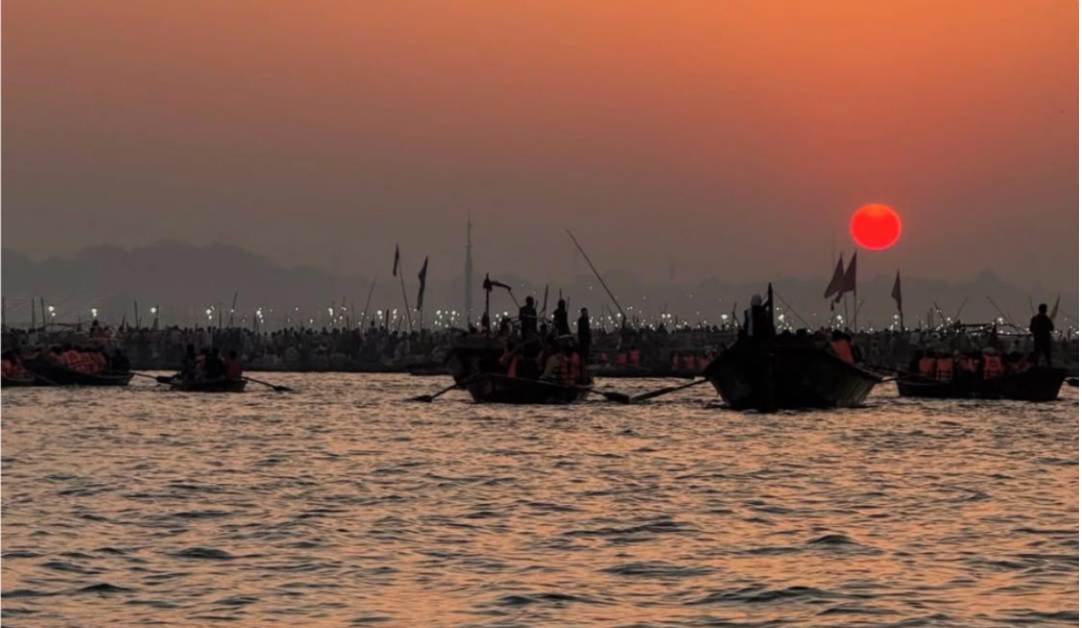
    But the Maha Kumbh is not just about myths. It is also a breathtaking display of humanity. Over 400 million people visited from all corners of the world, rich and poor, saints and sceptics, to participate in this unfathomably vast gathering. Temporary cities rise on the riverbanks, complete with roads, clinics, tents, and sanitation, all for a few sacred weeks. The air hums with chants, conch shells, and the scent of incense, forming a sensory experience unlike any other.

    Leading the way into the waters are the Naga Sadhus, warriors devoted to Lord Shiva. Covered in ash, with matted hair and tridents in hand, they march nude and unbothered, a living challenge to the materialistic world. For many pilgrims, witnessing the Nagas is as transformative as the dip itself.

    And then there is the spirit of seva, selfless service. Bhandaras, or community kitchens, are set up on every lane of the city. Here, everyone eats for free. Volunteers, often anonymous and unpaid, serve hot meals from sunrise to nightfall. There is no caste, no status, only humanity sharing a meal together. It is extraordinary kindness on a massive scale, showing that devotion does not just lie in prayer, but in action.

    The Maha Kumbh Mela might appear, at first glance, like overwhelming chaos – crowds of people surging into muddy rivers, noise echoing in every direction, giving one no space to breathe. Yet, for those who stand on the riverbank, it becomes something else entirely. It feels like everything has a purpose, as if there is a deeper meaning beneath the surface.

    When you step into those cold waters, you are not just taking a bath. You’re letting go of stress, guilt, regret, or even ego. You’re washing off layers of your past. And in that moment, as the river flows around you, you don’t just feel clean, you feel light, open, and somehow… free.

  • Saffron Syndicate: BJP defeats AAP in Delhi

    Saffron Syndicate: BJP defeats AAP in Delhi

    Rekha Gupta was named as the next Chief Minister of Delhi as the Bharatiya Janata Party (BJP) registered a landmark victory in the capital. Winning a massive 48 out of the 70 seats, the BJP returned to power in Delhi after 26 years.

    In a similar fashion to the previous elections, the seats were divided between the AAP and the BJP, with the Congress failing to win a single seat. However, the parity between the parties completely flipped over. The AAP had won a massive 62 of the 70 seats last time out, but only managed to win 22 seats. Reports say that they managed to retain their Muslim and Dalit-dominated areas, but ultimately fell short to the BJP.

    Major controversies in the run-up to the elections were factors which led to the BJP’s landslide victory. For example, outgoing CM Arvind Kejriwal was arrested in March 2024 for his participation in a money laundering case, after his government introduced a policy to bring in private firms and enterprise companies into the retail liquor sector. He resigned in September 2024, with Atishi Marlena sworn in. The BJP also criticised the official residence of Kejriwal, dubbing it as ‘sheesh mahal’ (palace of mirrors) and accusing Kejriwal of having a wealthy makeover of the house in excess of 50 crore rupees. While the AAP categorically denied these claims, it was against the ‘common man’ image Kejriwal had created for himself and contributed massively to the downfall of the AAP.

    Freebies became a major tool used by both parties to attract voters from lower socio-economic groups. While the BJP initially criticised AAP’s policy, they brought out a similar scheme, a tool that also led to their victory in the Maharashtra state assembly elections, where they and their allies won a whopping 235 of 288 seats.

    A major factor that helped the BJP was not directly related to Delhi. The new Union Budget for 2025 was released just days before the day of voting, with the new tax brackets removing income tax for people who earn less than 12 lakh rupees in a year. This massively boosted the party’s prospects within the middle class.

    60.54% of eligible voters participated in voting on the 5th of February, albeit down on the previous elections held here. Exit polls predicted a victory for the BJP. The Election Commission of India announced the results on the 8th of February, declaring BJP as the winner by a landslide, ending the AAP’s stronghold in the capital. Major highlights included Parvesh Verma, son of former Delhi CM Sahib Singh Verma, defeating Arvind Kejriwal in the New Delhi constituency.

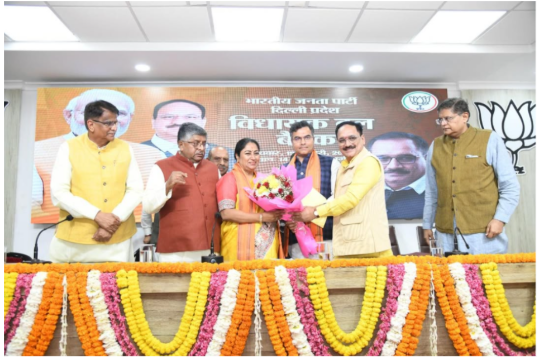
    After a few days of deliberation and meetings between the BJP top brass, Rekha Gupta, who was elected from the Shalimar Bagh constituency, was named as the next Chief Minister of Delhi on 19 February.

  • Kolkata Court Delivers Final Verdict for RG Kar Rape-Murder Case

    Kolkata Court Delivers Final Verdict for RG Kar Rape-Murder Case

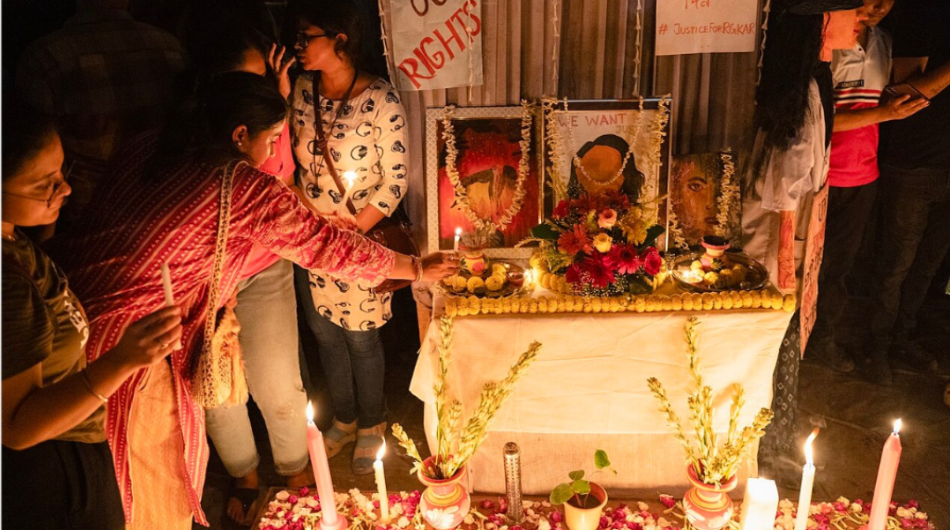
    In January 2025, Sanjay Roy, a civic volunteer with the Kolkata Police, was convicted and sentenced to life imprisonment for the rape and murder of a 31-year-old trainee doctor. The crime occurred in August 2024, when the victim was found dead in RG Kar Medical College and Hospital’s seminar hall. The incident sparked national outrage and widespread protests demanding better security for women in public institutions.

    Conviction and Sentencing

    On 18 January 2025, Kolkata’s Sealdah court found Roy guilty under multiple sections of the Bharatiya Nyaya Sanhita; he was convicted under BNS Section 64 (rape), Section 66 (rape causing death) and Section 103(1) (murder). The conviction was based on substantial forensic evidence, including DNA matches from hair and skin samples, CCTV footage, and Roy’s contradictory statements of being framed. The CBI charge sheet alleged that Roy attacked the sleeping doctor in the seminar hall while intoxicated. A post-mortem later confirmed the victim was strangled to death and sustained injuries consistent with a struggle.

    Despite the Central Bureau of Investigation (CBI) pushing to classify the crime as “rarest of the rare” and advocating for the death penalty, Judge Anirban Das sentenced Roy to life imprisonment until death, citing the need to rise above the “primitive instinct of an eye for an eye,” which the victim’s family disagrees with. The court also imposed a fine of ₹50,000 on the convict and directed the West Bengal government to provide ₹17 lakh as compensation to the victim’s family.

    Investigation and Legal Proceedings

    Initially handled by the Kolkata Police, the investigation was transferred to the CBI amid allegations of evidence tampering and mishandling by local politicians. The CBI’s investigation involved examining 128 witnesses, with 51 testifying during the trial. The specific actions of the hospital authorities and local police were also criticised, highlighting the need for accountability in such sensitive cases.

    The victim’s parents were present at the court proceedings and claimed that other perpetrators were not punished and, therefore, justice had not been fully served. When told the state was to pay ₹17 lakh compensation, the family retorted, “We don’t want compensation, we want justice,” and indicated they will challenge the case in higher courts if needed.

    The case also revived discussion about sexual violence laws. India’s 2013 overhaul of rape laws (after the 2012 Delhi case) was often cited by commentators, stressing the need for legal and social change. In Parliament, leaders reiterated the government’s intent to make punishments harsher and to improve police accountability (as Prime Minister Modi noted, the Supreme Court has rebuked police delays in FIR registration ). Victim advocates have urged better protection for women workers everywhere – not only in hospitals but all public workplaces – reflecting the sentiment “the nation cannot await another rape to take steps”.

    Public and Political Reaction

    The sentencing led to significant public and political reactions. Political figures, including members of the BJP and other opposition parties, criticised the verdict as a “travesty of justice” and called for a more thorough investigation into potential evidence tampering by local authorities. In response to the public outcry, the West Bengal government, led by Chief Minister Mamata Banerjee, filed an appeal in the Calcutta High Court seeking the death penalty for Roy, asserting that the crime warranted capital punishment. The “Aparajita Bill,” which amends the criminal law to inflict harsher punishments for rape, including requiring the death penalty when rape results in death, was even pushed by the state legislature in early September, and she campaigned to enact the law, emphasising that the offender deserved nothing less.

    Prime Minister Narendra Modi spoke in parliament about the case, calling crimes against women “unpardonable” and praising new laws (Bharatiya Nyaya Sanhita) for harsher punishments. He noted that the Supreme Court had criticised West Bengal for a 14-hour delay in registering the FIR, and assured victims that e-FIR provisions would prevent such delays. National medical associations like the Indian Medical Association (IMA) continued to press for reforms, calling for “airport-level” security measures in all hospitals and for doctors to be able to register police complaints remotely.

    The case sparked mass protests in mid-August 2024 when tens of thousands marched under slogans like “Hang the rapist, save women” and “Reclaim the Night”. Medical students and staff across India held a strike; emergency services continued, but routine procedures were halted on 17 August by IMA’s nationwide shutdown.

    Even after the recent trial and verdict, many junior doctors staged demonstrations outside the court. Immediately following the life-sentence verdict, doctors outside the courtroom protested that Roy could not have acted alone and demanded that all accomplices be caught.

    The case has drawn parallels to the 2012 Delhi Nirbhaya gang rape incident, highlighting ongoing concerns about women’s safety in India and prompting discussions on legal reforms in handling crimes against women. As India continues to confront the layered realities of gendered violence, this case remains a point of inflection. It demands that hospital corridors be made safe, that survivors’ voices be heard without delay, and that justice not be left to the whims of public outrage alone.