Category: India

  • Darjeeling’s Mandarin Oranges receive the GI tag

    Darjeeling’s Mandarin Oranges receive the GI tag

    After nearly 15 years of declining yields, pest infestations and soil-related setbacks, Darjeeling’s iconic mandarin oranges have received a much-needed lifeline. On 24 November 2025, the fruit was granted the Geographical Indication (GI) tag- a move that could potentially revive its cultivation and restore the economic confidence of farmers across the hill region. The recognition was granted by the Geographical Indications (GI) Registry, which operates under the Department for Promotion of Industry and Internal Trade (DPIIT), a part of the Ministry of Commerce and Industry (MoC&I). The GI proposal was initiated by Tulsi Saran Ghim, a former professor at Uttar Banga Krishi Viswavidyalaya (UBKV).iray in August 2022, but was shifted to the hands of Darjeeling Organic Producer Organisation (DOFPO) in August 2024; the applicant was shifted from UBKV to DOFPO so that legal ownership rested in the hands of local farmers.

    The Darjeeling mandarin orange, locally referred to as ‘suntala’, is renowned for its distinctive aroma and delectable sweetness. It is grown in the hills of Darjeeling and Kalimpong due to the favourable climate and soil composition. However, the cultivation of the fruit has recently faced challenges due to infections from the virus Citrus Tristeza and pests like aphids and fruit flies, which cause more harm. The GI recognition is hoped to aid the cultivation of the fruit by enabling farmers to receive better prices and garner a greater market value, opening up doors to not just national but also international markets.

    The Darjeeling Mandarin oranges are the 11th agricultural/horticultural GI from West Bengal and the latest hill product to garner legal recognition apart from the Darjeeling Tea and Dalle Khursani chilli. The oranges stand alongside globally recognised products like Champagne in France, Parmigiano Reggiano and Parma ham in Italy, Scotch whisky from Scotland, which are all GIs that have turned their origin stories into powerful brands. These examples illustrate what is at stake for Darjeeling’s oranges. If Bengal supports its GIs with strong economic and marketing strategies, the oranges can follow the same renowned path as Champagne or Darjeeling Tea, making them a brand of their own.

    A GI (Geographical Indicator) tag is a form of intellectual property that identifies products originating from a specific place and possesses qualities or a reputation essentially linked to that geographical region, thereby legally protecting the product and ensuring its quality. It prevents unauthorised use, assures authenticity and boosts the economic prosperity of the local producers. The GI tag is granted under the Geographical Indications of Goods (Registration and Protection) Act, 1999, in India. The recognition is valid for only 10 years, after which the registration must be renewed; failure to do so results in the lapse of registration, stripping the product of its GI status.

    GI tags allow producers to charge premium prices for their goods in domestic and international markets. The tag also grants authorised producers exclusive rights to produce the product, thereby preventing low-quality or counterfeit products from tarnishing the original product’s name – protecting the authenticity of the genuine product. GI tags also encourage traditional skills of the producers and region-specific methods, which might otherwise be lost due to mass-production alternatives. Regions with famous GI products attract curious tourists interested in local culture and goods. These products also draw visitors to lesser-known areas often overlooked by typical tours.

    India currently has more than 650 registered GI-tagged products, many of which, such as Darjeeling Tea, Basmati Rice, and Madhubani Paintings, are internationally recognised. These registrations include handicrafts, agricultural products, food items, manufactured goods and other natural products which aim to safeguard the regional specialities of India. The Darjeeling Tea was the first Indian product to receive a GI tag in 2004-05, becoming a reference point for later registrations. Currently, Uttar Pradesh has the most significant number of GI-tagged products in India, with 77 GIs as of 2025, surpassing Tamil Nadu (74 products) and Karnataka (46-48 products). It is a proud moment for the Darjeeling farmers as it will provide better opportunities to remunerate their hard work

  • Messi in India: Kolkata Visit Cut Short as Chaos Unfurls

    Messi in India: Kolkata Visit Cut Short as Chaos Unfurls

    Lionel Messi’s highly anticipated visit to Kolkata on December 13, 2025, as part of his “G.O.A.T India Tour” began with high expectations but ended in disorder and frustration for many fans at the Salt Lake Stadium.

    The Argentina football captain arrived in the city early in the morning alongside Inter Miami teammates Luis Suárez and Rodrigo De Paul to kick off the four-city tour covering Kolkata, Hyderabad, Mumbai and New Delhi. Before the main event at the stadium, Messi’s itinerary included the unveiling of a 70-foot statue in his honour, which he inaugurated remotely from his hotel. He also met with Bollywood actor Shah Rukh Khan and local officials at a separate engagement.

    Expectations were high as tens of thousands of ticket-holding spectators packed into Salt Lake Stadium, many having paid several thousand rupees for the opportunity to see the football icon in person. The event was meant to include a lap around the stadium by Messi, interactions with fans, a few penalty kicks and meet ups with former Indian cricket captain Sourav Ganguly, Shah Rukh Khan and West Bengal Chief Minister Mamata Banerjee all in the span of two hours.

    However, the scheduled programme was disrupted. As Messi entered the stadium, he was surrounded by a large group of VVIPs, officials and security personnel, creating a barrier that left many fans in the stands unable to see him clearly. Within minutes, Messi’s appearance was cut short, with him on the field for only about 20 minutes before being escorted away by security.

    In the aftermath, organisers faced sharp backlash from fans and authorities alike. Police detained the main organiser for questioning, and an investigation was launched into alleged mismanagement, including crowd control failures and misleading expectations around the event’s format. Discussions around ticket refunds were initiated as public pressure mounted. West Bengal Chief Minister Mamata Banerjee responded by issuing an apology to both Messi and the fans, expressing regret that the event did not proceed as intended. Hrishit Bhattacharya, a college student who attended the event said “We were supposed to have a once in a lifetime experience but the politicians and leaders in Bengal made sure that we are deprived of it. If not anything, we do expect a full refund from the concerned authorities.”

    The Kolkata event concluded amid administrative scrutiny and public criticism, with authorities reviewing the arrangements that led to the disruption. While Messi’s tour continued in other cities without disruption, what was intended to celebrate a global football icon instead raised questions around planning, crowd management, and accountability.

  • Sanchar Saathi and The Crisis of Digital Trust

    Sanchar Saathi and The Crisis of Digital Trust

    The Sanchar Saathi app controversy did not erupt because Indians are against cybersecurity or digital safety. It erupted because of something far more basic: a growing unease with the way India introduces digital policies – first imposed, then explained, and questioned only after backlash. Sanchar Saathi is an app developed by the government to help users report telecom fraud, track lost phones, and verify mobile connections; initially, it was framed as a citizen-centric cybersecurity tool. But when the government directed smartphone manufacturers to pre-install the app by default, it raised concerns about whether users would be able to remove it. Privacy advocates began sounding the alarm, opposition parties labelled it as surveillance-adjacent, and ordinary users wondered why such an app on safety would need to be mandatory in the first place. Days later, the government rolled back the directive, making the app voluntary.

    This rapid U-turn is telling, not because this app itself was uniquely problematic, but because it fits into a broader and familiar pattern in India’s digital governance: prioritising policy over privacy.

    When Intent Is Overshadowed by Execution
    Sanchar Saathi addresses a real and pressing problem through state-led digital intervention. There is no doubt that India is encountering cases of telecom fraud, including SIM card misuse and mobile phone snatching. Therefore, providing people with a tracking system for such cases is not only justified but also a necessity. Nevertheless, making the application mandatory ultimately undermined its original intent, as presented.
    The mandatory character, particularly in relation to a government application linked to telecommunication infrastructure, has raised numerous new concerns. There was no clear communication regarding the types of data that would be collected, the duration of data storage, or the person responsible for data usage monitoring. Such uncertainty in communication implied that even if there were justified reasons, it was still perceived as less protective than intrusive.

    A Familiar Pattern in India’s Digital History
    Sanchar Saathi is not an exception. India’s recent digital policy history is marked by instances where scale, speed, and technological ambition often precede safeguards around privacy, consent, and accountability, which are established only after popular resistance or judicial intervention. This reflects a broader governance philosophy in which digital infrastructure is viewed as a fundamentally neutral entity, for which trust will follow implementation rather than necessarily precede it. This pattern is not new and can be seen in earlier initiatives such as Aadhaar, where scale and implementation preceded legal clarity, complicating meaningful consent.

    The Pegasus spyware controversy further deepened this trust deficit. Allegations that sophisticated surveillance tools had been deployed against journalists, opposition leaders, and activists were met not with transparent inquiry but with evasive responses and procedural deflections. Besides the lack of positive affirmations, the government’s reluctance to engage openly keeps reinforcing a belief that the capacities for surveillance operate in a grey area that is not subject to public accountability. In the era of the internet, a lack of communication from the government sends a signal, which in this case is a suspicious and un-reassuring one.

    In this light, it was hard to expect that citizens would ever trust passively a telecom app that was mandatory and undeletable.

    Why Trust Is the Missing Layer
    Sanchar Saathi episode reveals not only a concern about privacy but also a lack of trust. Increasingly, citizens are becoming tech-savvy, and they recognise that data is the new oil. They are aware that telecom metadata – call records, device IDs, and usage patterns -are very private. Any measures that would affect users’ data would not only require strong guarantees and independent reviews but also make the users feel their voices matter.

    Strangely enough, in the wake of the government’s rollback, it seems that the government has identified this sentiment. However, reactive changes in the course of action cannot replace proactive consultations. Reversals do not create trust; instead, trust is nurtured through inclusion, clarity, and restraint.

    Rethinking Digital Governance
    India’s aspirations to become a digital superpower are evident. However, with the development of digital governance also comes the demand for democratic accountability. There should be no mandate for security instruments to receive acceptance; if an application has legitimate value to citizens, they will choose to use it, provided they understand how it functions and what information it collects.

    Sanchar Saathi could become a successful, voluntary, readily transparent, and clearly governed platform. However, the previous experience with the compulsory nature of Sanchar Saathi shows that the way a policy is enacted in Digital Democracy means just as much as why it is passed.

    The message is straightforward and immediate: India possesses both the requisite technology and the desire to implement policy. The gap that India faces and must focus on closing is establishing a Governance Culture that regards Privacy as a key principle rather than an afterthought. Without that change occurring, every Digital initiative will continue to encounter resistance from the public, regardless of intention.

  • New findings explain the Indus Valley collapse

    New findings explain the Indus Valley collapse

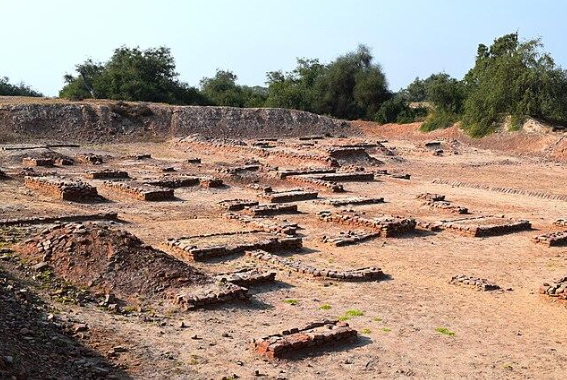
    Thousands of years ago, the Harappan Civilisation stood among the world’s first urban societies. Cities like Harappa, Mohenjo-Daro, Dholavira, and Lothal were equipped with well-laid-out streets, advanced water and drainage systems, and thriving business workplaces. Yet by the end of the third millennium BCE, most of this advanced civilisation had vanished, its cities abandoned. For decades, historians and archaeologists debated why. However, a major study now suggests a possible answer: prolonged droughts.

    Published in the journal “Communications Earth & Environment,” the research involved scientists from IIT Gandhinagar, the University of Arizona, and the University of Colorado Boulder, who combined climate simulations, lake-level records, and cave minerals to reconstruct how water availability changed across the Indus Valley between roughly 5,000 and 3,000 years ago.

    The team examined the paleoclimatic records for 17 major Harappan locations and used the Variable Infiltration Capacity (VIC) hydrological model to estimate river flow. In simple terms, they utilised ancient climate data and the VIC model to recreate the climate 4,000-5,000 years ago and examine how major rivers, including the Indus, exhibited changes or unusual drops in water discharge. The simulated climate data and calculations for river flow in the IVC indicated reduced streamflow, which was crucial for irrigation and domestic use.

    A Civilisation Built Around Water and the disappearance of water

    The Harappans lived in a region heavily shaped by rivers and the monsoon. Their farms depended on seasonal floods, and cities were built near water sources. This system worked beautifully for centuries. Decent rainfall meant a wealthy society. Rivers like the Indus and even the Saraswati were key sources of water for this civilisation.

    A new study suggests that approximately 4450 and 3400 years ago, the region experienced distinct, prolonged droughts, each lasting more than 85 years. They discovered that one of the key droughts had lasted for 113 years. During these periods, monsoon rainfall dropped sharply, causing rivers to shrink and water sources to become scarce.

    These droughts led to a decline in agricultural activities. Urban systems began to weaken, and the large drainage networks, public wells, and storage facilities became increasingly difficult to manage. Like any other civilisation, population pressure rose sharply.

    A Slow Transformation, not a Sudden Collapse

    One important point that the researchers emphasised is that the Harappan Civilisation did not disappear overnight. There is no major evidence of war, destruction, or invasion. As water became scarce, people began moving away from the big cities. Many shifted eastward, towards the Ganges Plain, which is one of the most fertile regions. Others settled in smaller villages that relied on simpler, rain-based farming rather than river- or flood-based farming. The famous baked-brick architecture of Harappan cities gave way to more modest settlements. The collapse was not sudden; it was a steady change in lifestyle from urban, planned cities to scattered rural villages.

    Why the new Findings Matter

    The breakthrough reveals the close interdependence of human societies on the environment. The Harappans were highly skilled builders and planners, but they were still dependent on rainfall. When the climate shifted over centuries, even their highly advanced systems could not adapt. The findings also clarify long-standing theories. For years, people have believed in various theories, such as invasions or sudden disasters, that could have led to the end of the civilisation. However, the evidence now suggests a slow, climate-driven decline. This study helps not only in understanding the past, but also in understanding the climate, resilience, and how societies today can find themselves in a similar position if we do not take action to protect the environment.

  • Veteran Actor Dharmendra Passes Away at 89; Bollywood Mourns the Loss of “He-Man”

    Veteran Actor Dharmendra Passes Away at 89; Bollywood Mourns the Loss of “He-Man”

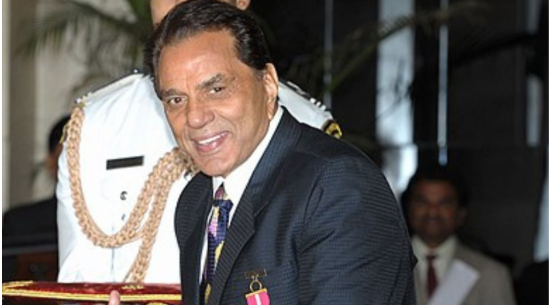
    Dharmendra, one of Indian cinema’s most iconic and beloved stars across generations, passed away on Monday, 24th November, at the age of 89. Over the course of six decades, the legendary actor, known to millions as Bollywood’s “He-Man”, starred in over 300 films and established himself as one of the most recognisable figures in Indian cinema.

    Born Dharmendra Kewal Krishan Deol on 8th December 1935, in Nasrali village, Punjab, Dharmendra grew up far from the world of cinema. He was born in a Punjabi Jat family, and his father, Kewal Krishan Singh Deol, was a school headmaster. In 1953, Dharmendra married Prakash Kaur at the age of 19. The two became parents to four children- Sunny, Vijeta, Ajeeta and Bobby.

    Dharmendra’s journey to Mumbai began after his victory in the Filmfare Talent Hunt contest in 1958. In 1960, he made his acting debut in the film Dil Bhi Tera Hum Bhi Tere, and within a few years, he had established himself as a leading actor in the industry. Throughout the 1960s and 1970s, he came to be known as a versatile performer who seamlessly transitioned between romance, action, and comedy. His handsome looks and natural charisma made him popular among audiences, while critics appreciated him for his flexibility as an actor.

    The actor delivered some of the most iconic roles in Hindi cinema history. His role as the lovable best friend, Veeru, in Sholay (1975) is one of Indian cinema’s most fondly remembered roles, which remains engraved in popular culture across the globe. His romantic roles in Anupama and Satyakarma, comedic role in Chupke Chupke, and his action hero role in Phool Aur Pathhar and Yaadon Ki Baaraat showcased his extraordinary adaptability as a versatile actor. Legendary directors like Hrishikesh Mukherjee and Ramesh Sippy saw him as a dependable box-office actor.

    At the beginning of his career, Dharmendra acted in seven films in 1964 alone. The years ahead would make him a superstar in Bollywood.  Between 1965 and 1974, Dharmendra starred in over 40 films, including iconic blockbusters such as Seeta Aur Geeta (1972), Loafer (1973), and Mera Gaon Mera Desh (1971). In 1997, he was awarded the Filmfare Lifetime Achievement Award, honouring his legacy across multiple decades.

    Dharmendra’s on-screen chemistry with Hema Malini became a fan favourite over the years, and in 1980, the two married and had two daughters, Esha and Ahana Deol.

    In 1983, Dharmendra established his own production company, Vijayata Films, which produced multiple award-winning films, including Betaab (2004), the debut film of his son Sunny Deol. In 2004, Dharmendra joined politics as a member of parliament from Bikaner, Rajasthan, representing the Bhartiya Janata Party (2004-2009). One of his most notable roles in recent years was his supporting character in the movie series Yamla Pagla Deewana, alongside his sons, Bobby and Sunny Deol. Recently, he starred in films such as Rocky Aur Rani Ki Prem Kahani (2023) and Teri Baato Mein Aisa Uljha Jiya (2024).

    Fans, fellow actors, filmmakers, and politicians across the nation mourned the loss of the beloved actor. His Sholay co-star and Bollywood legend, Amitabh Bachchan, tweeted “another valiant Giant has left us .. left the arena .. leaving behind a silence with an unbearable sound ..Dharam ji.. the epitome of greatness, ever linked not only for his renowned physical presence, but for the largeness of his heart, and its most endearing simplicity”. Prime Minister Narendra Modi also expressed his sorrow on X, “The passing of Dharmendra Ji marks the end of an era in Indian cinema. He was an iconic film personality, a phenomenal actor who brought charm and depth to every role he played. The manner in which he played diverse roles struck a chord with countless people. Dharmendra Ji was equally admired for his simplicity, humility and warmth. In this sad hour, my thoughts are with his family, friends and innumerable fans. Om Shanti,”

    Dharmendra is survived by Hema Malini, Prakash Kaur, and his children Sunny, Vijeta, Ajeeta, Bobby, Esha and Ahana.

  • Countries Debate Fossil-Fuel Future at COP30; India pushes for Fair Transition Plan

    Countries Debate Fossil-Fuel Future at COP30; India pushes for Fair Transition Plan

    Fossil Fuel Debate Dominates COP30

    The 2025 United Nations Climate Change Conference (COP30) took place in Belém, Brazil, from 10 to 21 November, bringing together delegates from nearly 200 countries. The summit shed light on the transition away from fossil fuels, climate finance, and strategies addressing these issues. The gathering set the stage for a round of negotiations closely observed by policymakers, scientific institutions, and environmental groups worldwide.

    A central point of debate at COP30 revolved around the future of fossil fuels. More than eighty countries pushed for an official, time-bound roadmap for the sustainable reduction of coal, gas, and oil use, which was unprecedented within the framework of the COP. The demand signalled a global shift toward directly confronting fossil fuel dependency and exploring alternatives, rather than relying on a broad mitigation aim.

    However, after days of intense discussions, the final UNFCCC text did not include any explicit language mandating fossil fuel phase-out. To prevent the negotiations from stalling, the Brazilian COP presidency introduced two voluntary roadmaps: one outlining a “just, orderly and equitable” energy transition, and the other centred on reversing global deforestation. Although these roadmaps lack legal enforcement, they are regarded as important political signals that shape the direction of future global climate governance.

    Climate Finance and Broader Action 

    Delegates also discussed the “Baku-to-Belém Climate Finance Roadmap,” which aims to scale global climate finance to approximately USD 1.3 trillion annually by 2035. The proposal covers funding for mitigation actions, adaptation programs, and support for loss and damage mechanisms in vulnerable regions.

    Developing nations raised concerns over the absence of specific commitments outlining how this financial burden would be shared. India and several other countries emphasised the need for predictable, concessional and equitable financial flows from developed economies, arguing that ambitious climate action cannot proceed without clear financing frameworks.

    Notable progress was made in the domain of climate adaptation. COP30 finalised a set of 59 global indicators designed to track how effectively nations are preparing for climate-related risks such as flooding, drought, sea-level rise, and ecological loss.

    Extreme heat and sustainable cooling technologies emerged as a major point of discussion. Delegates adopted the Belém Communiqué on extreme heat, which calls for coordinated action across public health, infrastructure, and the energy industry.  Technology continued to play a key role in climate solutions. The expansion of the 3DEN (Digital Demand-Driven Electricity Networks) initiative was announced, which aims to reach seven African countries and Brazil, building on the progress made in its introduction at COP26 in 2021.

    The programme aims to modernise electricity grids using smart digital tools, such as artificial intelligence and smart meters. This expansion is expected to enhance energy efficiency, facilitate the integration of renewable energy, and mitigate grid instability in smaller and developing  countries.

    Outside the negotiation halls, thousands of protesters gathered, led by Indigenous communities from the Amazon, raising concerns over rising deforestation, burning of fossil fuels and land rights. A symbolic “funeral for fossil fuels” was held during one of the marches, drawing significant international attention and heightening pressure on negotiators.

    India’s Stance in COP30

    India maintained a firm stand on equity and climate justice throughout the summit, emphasising that any global transition away from fossil fuels must reflect the principle of common but differentiated responsibilities.

    Indian representatives argued that developed nations, given their historical emissions and greater financial capacity, must take the lead in deep decarbonisation while extending financial and technological support to developing economies. India did not support the push for a prescriptive fossil fuel roadmap, stating such commitments could restrict the developmental needs of emerging economies. India also called for clearer and long-term financial assurances, as well as recognition of Global South priorities, within the final COP30 outcomes.

    Overall, COP30 concluded with nations taking steps to tackle climate change through key outcomes, including the adoption of 59 global adaptation indicators, the expansion of the 3DEN digital electricity networks, the Belém Communiqué on extreme heat and voluntary roadmaps for a just and equitable energy transition. Attention now turns to COP31 in Turkiye in 2026, where nations will continue discussions on global climate action.

  • Made Where? Why India Wants E-Commerce to Reveal Country of Origin

    Made Where? Why India Wants E-Commerce to Reveal Country of Origin

    If you are one of the people shopping online today, for example, for a phone charger, a water bottle, or your next set of bed sheets, you likely check reviews, price, brand, and delivery time. But sometime soon, another factor may become just as important: where the product is made. The government of India has now proposed making it mandatory for e-commerce platforms like Amazon, Flipkart, and Meesho to clearly mention the “Country of Origin” for every product available on their platforms as part of a new policy they are proposing. The intention behind this is to not only enable consumers to make a more informed choice but also to further support the vision of Atmanirbhar Bharat (a more self-reliant India). This could lead to a radical transformation in the Indian online shopping scenario, affecting the production, marketing, and pricing of products, besides changing the competitive landscape between local and imported goods.

    The closer the policy is to being put into practice, the more unavoidable becomes the question: Will this change really benefit Indian producers and environmentally friendly consumers, or will it just be another source of compliance and logistical complication on the already complicated digital marketplace?

    Reasons for the Proposal’s Importance

    India ranks high among e-commerce markets globally, with the fastest growth rates, and is expected to exceed $130 billion in market value in the coming years. The daily lives of consumers have changed significantly with the increasing number of people going online; hence, the importance of platforms has skyrocketed. Nevertheless, while retail products in physical stores are already openly labelled for their manufacturing location, the same cannot be said about online products. Many such listings lack origin information or are not clearly presented, leaving buyers uncertain about whether a product is Indian, Chinese, or from another source.

    The timing of this proposed rule seems intentional. The renewed focus on reliable local or regional supply, particularly for goods produced mainly in India, has returned due to the pandemic, accompanied by political tensions, rising protectionism, and digital nationalism. This aligns with government-driven initiatives like Make in India, PLI schemes, and the push for localisation in manufacturing. In other words, this policy is not just about marking products; it seeks to rethink value flow across the digital retail ecosystem.

    Would it Vitiate the Way Indians Make Purchases?

    Mandatory country-of-origin labels would increase transparency. Filters such as “Manufactured in India,” “Made in China,” or “Imported” would be added to the existing filters for price, delivery time, and brand. For some price-conscious customers, affordability will remain the primary driver of their decision. For others, though, the origin may influence purchases, especially for home goods, skincare, fashion, and electronics accessories.

    However, the real question is whether consumer sentiment will translate into actual action. A ₹499 imported phone case might still command more attention than a ₹799 Indian-made case. But a visible label could also create psychological weight: the sense that choosing Indian-built products helps keep local jobs, industries, and manufacturing ecosystems alive. This shift may take time, but over time, the presence of such information will make more conscious consumer behaviour normal, much the same way organic labels did for food or cruelty-free labels did for cosmetics.

    A Possible Boost for Indian Manufacturers

    This might be a revolutionary regulation for Indian manufacturers, particularly MSMEs and upcoming D2C brands. The fact that they have excellent origin filters and compulsory labelling means that their products would be different and, most importantly, have a space in the story.

    One possible outcome of this rule change may be more supply chain transparency, more investment in domestic manufacturing, and a more distinct Indian brand identity for products made in India. Heritage industries, such as handloom textiles, natural skincare, artisanal crafts, and Ayurveda, which are closely linked to cultural identity and craftsmanship, would benefit most, as their origins are deeply intertwined with cultural identity and traditional skills. However, for most Indian brands, origin is much more than just the technology used to describe it; it is a mark of authenticity, a connection to the past, and a matter of pride. By ensuring that consumers see such details at the time of sale, the rule sets up a scenario where the stories of the products represented are their online shopping experience footprint, that is, the consumers relate to the products through origin, which is not a technical detail buried in specs, but part of the consumers’ interaction with the products.

    But Implementation Will Not Be Easy

    No matter how promising the advantages might be, the new regulation nonetheless presents numerous operational challenges. Verifying the country of origin for millions of items, most of which undergo some form of change, modification, or relisting, is quite a gigantic task. The very definition of these complicated supply chains makes this issue even more unclear. If a smartphone is entirely manufactured in India but has Chinese chips and American software, how do you categorise it: Indian, foreign, or partially local? To address these issues, they would need to establish new verification systems, implement new rules for onboarding sellers, and conduct regular audits to ensure compliance. The sellers of commodity goods in large quantities may be subject to additional compliance requirements, which in turn would slow down the listing process and burden staff with more paperwork. When this is done on a large scale, it becomes a source of increased costs, additional responsibility, and possibly even disputes over enforcement.

    A Small Label with Long-Term Impact

    Will the country-of-origin labels change the way people shop online in India just like that? The answer is most likely no, but they will surely change the consumer, manufacturing, and digital commerce in India over the next decade. The proposal extends beyond mere rules and compliance, indicating a gradual yet significant shift—from a convenience- and cost-driven online shopping market to one shaped by identity, ethics, and national economic priorities. If done with care, this proposal will not only raise consumer awareness but also Indian innovation, quality, and supply chain development. At its core, this regulation aims not only to bring transparency to buyers but also to reshape the perception of value in India’s digital economy. Whether we are aware of it or not, the next time we put something in our online shopping cart, the question of its origin may be involved.

  • Inside Haryana’s Vote Chori Allegations: Democracy Under Question

    Inside Haryana’s Vote Chori Allegations: Democracy Under Question

    The forthcoming 2024 Haryana Assembly elections have gained national media attention following allegations of mass-scale discrepancies in the state’s electoral rolls, which were taken up publicly by Rahul Gandhi in November 2025. He claimed that nearly 25 lakh entries in the voter database could be duplicated, incorrect, or fraudulent, calling into question the integrity of the roll revision process.

    Claims of Duplicate and Erroneous Entries

    During a major press conference on 5th November in New Delhi, Rahul Gandhi claimed that as much as 12.5% of Haryana’s registered voters may be fake or duplicate. Continuing with what he termed “The H Files,” he cited an example involving a stock photograph of a Brazilian model which he said appeared on 22 different voter identity cards across different constituencies and under various Indian names like “Seema,” “Sweety,” and “Saraswati,” among others.

    According to his claims, some anomalies in the voter list included duplicate voters, invalid addresses, bulk-entered names, and non-existent house numbers. He indicated that in several cases, multiple registrations seemed to match the same photograph, which he said was evidence of a deliberate attempt at manipulation.

    Response from Authorities and Political Rebuttals

    The allegations immediately brought reactions from the electoral authorities and government-aligned political actors. The Election Commission of India (ECI) publicly denied the charges, asking why objections were not raised by polling agents during the roll revision process itself if such widespread anomalies did exist, and claiming that the allegations did not have any procedural grounds.

    The ruling Bharatiya Janata Party, or BJP, and leaders of the state government dubbed the allegations as political drama. The Chief Minister of Haryana dismissed the allegations and accused Rahul Gandhi of seeking headlines to mislead public discourse.

    Nevertheless a number of past and current opposition members have stated that the evidence shown was significant and warranted forensic examination.

    So far, the ECI has acknowledged receipt of complaints about roll-list irregularities but has not issued a comprehensive public report assessing the validity or scale of the alleged fraud.

    Ground-Level Fallout, Public Reactions, and Mobilisation

    The accusations have spilled out of the high levels of politics and into protests and public outcry. In Kaithal, marches of opposition supporters called for a full audit of the voter rolls and the restoration of voters they say were removed. In Jind, protests erupted with people chanting slogans against what protesters said was “vote theft.”

    The woman whose photograph was most repeatedly used –the Brazilian model Larissa Nery – finally spoke to the media as the controversy unfolded, referring to the misuse of her image as “madness” or “craziness.” She spoke about her disbelief and shock that an old photograph of herself had surfaced on voter-ID cards in a foreign country.

    The widespread dissemination of the photo and associated claims through social media, combined with calls for transparency and audits, has led to a wider national debate over voter-roll maintenance, data integrity, and the transparency of election administration.

    Administrative Context and Wider Ramifications

    The digitization of the voter registration and verification system in India began a decade ago. Switching to digital electoral rolls and their linkage or possible linkage with national identity databases was supposed to enhance accuracy and strengthen identity verification. Critics now argue that rapid revisions of the rolls, bulk updates, and lack of strict audits may have brought in new vulnerabilities.

    The controversy erupts during the Special Intensive Revision, SIR, of the electoral rolls in many states during 2025, a process opponents contend has increased the risks of voter deletion or manipulation.

    The scale of the allegations and the demographic scope-every constituency in Haryana-suggests that what was once characterised as mere isolated anomalies could now be perceived as systemic. There is a greater drive for transparency: civil society groups, opposition parties, and large sections of the public are demanding that the ECI publish booth-wise data, make available facilities for independent audits, and explain publicly the process of revision and verification of rolls.

    What Comes Next 

    As of late November 2025, no conclusive public audit or official conclusion has been provided. The absence of details from the ECI has heightened demands for transparency. Opposition figures caution that if the procedure is not transparent and auditable all future elections be it, in Haryana or elsewhere could be considered dubious. The dispute stays unsettled until official results are announced. Whether it leads to corrective action, legal challenges, or institutional reforms, its outcome is likely to shape public trust in India’s electoral process, not only in Haryana but across the country.

  • India Lifts 2025 ICC Women’s Cricket World Cup, Defeating South Africa

    India Lifts 2025 ICC Women’s Cricket World Cup, Defeating South Africa

    In a historic night at the Dr DY Patil Stadium in Navi Mumbai, the Indian women’s cricket team clinched their first-ever World Cup title, defeating the South African women’s cricket team by 52 runs in the final. The victory marked a historic achievement for the Indian team, which had previously reached the finals in 2005 and 2017 but fell short on both occasions.

    Match Summary 

    India won the toss and chose to bat, posting a total of 298 for 7 in 50 overs. Shafali Verma scored 87 runs off 78 balls, providing a strong foundation with a 91-run opening partnership with Smriti Mandhana, who contributed 44 runs. In the middle order, Deepti Sharma added 58 runs, stabilising the innings after a brief slump during the middle overs.

    For South Africa, Ayabonga Khaka was the most clinical bowler, taking three wickets for 57 runs, while Marizanne Kapp maintained tight control in the death overs.

    In the second innings, South Africa fell short of the target, getting dismissed for 246 runs in 45.3 overs. Skipper Laura Wolvaardt scored a century (110 runs off 127 balls), but the rest of the batting order struggled to maintain partnerships. Renuka Singh Thakur took three wickets for 40 runs, and Deepti Sharma picked up two wickets, completing a strong all-round performance.

    Shafali Verma was named Player of the Match for her contribution with both bat and ball, while Deepti Sharma was named the Player of the Tournament award for consistent performances throughout the World Cup.

    India’s Path to the Title

    The Indian Women’s Team had a strong run, leading their group in the league stage and winning six of their seven matches, including victories over Australia, England, and New Zealand.

    In the semi-final, India beat Australia by 17 runs at the Wankhede Stadium. Shafali Verma scored 74 runs, and Renuka Singh took four wickets, which were key to their success. The final win against South Africa marked India’s first world title in women’s cricket after many years of coming close.

    Team Composition

    The core group included Harmanpreet Kaur (captain), Smriti Mandhana (vice-captain), Shafali Verma, Deepti Sharma, Richa Ghosh (wicketkeeper), and Renuka Singh Thakur. The bowling attack combined pace and spin effectively, with Pooja Vastrakar, Rajeshwari Gayakwad, and Shreyanka Patil contributing at crucial stages. Pratika Rawal, one of the youngest members of the team and a batting all-rounder, played a pivotal stabilising role in the middle order, scoring 308 runs (the second highest run scorer) before an unfortunate injury during the match with Bangladesh, which ruled her out of the final.

    Harmanpreet Kaur, in her third World Cup as captain, provided tactical consistency and led the team to its most successful global campaign. The fielding unit, traditionally an area of concern, showed marked improvement through tighter positioning and reduced errors.

    Conclusion

    India’s 2025 ICC Women’s World Cup victory represents a significant moment in both sporting and institutional terms. Beyond the immediate celebrations, the challenge now lies in sustaining momentum through continued financial and infrastructural support. If maintained, the 2025 triumph may stand as the foundation of a new era for women’s cricket; one in which India is not only a participant but a defining power in the sport.

  • Indian Tennis Star, Grand Slam Winner Rohan Bopanna Announces Retirement

    Indian Tennis Star, Grand Slam Winner Rohan Bopanna Announces Retirement

    Veteran Indian tennis player Rohan Bopanna has announced his retirement from the sport, bringing an end to an illustrious 22-year-long career. At age 45, Bopanna formally revealed his decision on 1st November 2025 via a statement on social media.

    Over the years, he amassed 26 ATP tour‐level doubles titles, along with a landmark victory at the 2024 Australian Open alongside partner Matt Ebden, which helped him achieve the ranking of world No. 1 in men’s doubles, becoming the oldest player ever to do so. Starting his professional journey in 2003, he faced injuries and erratic performances before winning his first ATP title in 2008 at the Los Angeles Open while partnering with American player Eric Butorac. A big break followed in 2010 when he reached the US Open men’s doubles final with his Pakistani partner Aisam-ul-Haq Qureshi, which became known as the “IndoPak Express.” They were defeated by American legends Bob and Mike Bryan in straight sets: 6-7(5), 6-7(4). By 2013, Bopanna had become one of the top doubles players in the world, achieving a career-high doubles ranking of World No. 3.

    Seven years later, Bopanna won the 2017 French Open mixed doubles title with Gabriela Dabrowski, further establishing his status as a top doubles player. However, his most notable highlight was when he lifted the Australian Open in 2024, partnered with home hero Matthew Ebden, winning the men’s doubles title. In the finals, they defeated the Italian team of Simone Bolelli and Andrea Vavassori with a score of 7-6 (0), 7-5. At 43 years old, Bopanna became the oldest male player in the Open Era to win a Grand Slam men’s doubles title. This victory also brought him to the world No. 1 men’s doubles ranking, marking the first time in his career. For Bopanna, this was his first men’s doubles Grand Slam title, following his previous win in mixed doubles at the 2017 French Open.

    Throughout his career, Bopanna became an important mentor and supporter of Indian tennis. He helped younger players through his academy in Bengaluru, promoting doubles as a legitimate and strategic sport. His impact went beyond the court, encouraging professionalism and fitness among the next generation of Indian athletes.

    Bopanna’s journey from a hopeful young player in Coorg to a Grand Slam champion and a model of sportsmanship represents one of Indian sport’s most impressive stories. In the end, Rohan Bopanna leaves the game just as he played it: with grace, gratitude, and strong passion.