Category: India

  • Inside Haryana’s Vote Chori Allegations: Democracy Under Question

    Inside Haryana’s Vote Chori Allegations: Democracy Under Question

    The forthcoming 2024 Haryana Assembly elections have gained national media attention following allegations of mass-scale discrepancies in the state’s electoral rolls, which were taken up publicly by Rahul Gandhi in November 2025. He claimed that nearly 25 lakh entries in the voter database could be duplicated, incorrect, or fraudulent, calling into question the integrity of the roll revision process.

    Claims of Duplicate and Erroneous Entries

    During a major press conference on 5th November in New Delhi, Rahul Gandhi claimed that as much as 12.5% of Haryana’s registered voters may be fake or duplicate. Continuing with what he termed “The H Files,” he cited an example involving a stock photograph of a Brazilian model which he said appeared on 22 different voter identity cards across different constituencies and under various Indian names like “Seema,” “Sweety,” and “Saraswati,” among others.

    According to his claims, some anomalies in the voter list included duplicate voters, invalid addresses, bulk-entered names, and non-existent house numbers. He indicated that in several cases, multiple registrations seemed to match the same photograph, which he said was evidence of a deliberate attempt at manipulation.

    Response from Authorities and Political Rebuttals

    The allegations immediately brought reactions from the electoral authorities and government-aligned political actors. The Election Commission of India (ECI) publicly denied the charges, asking why objections were not raised by polling agents during the roll revision process itself if such widespread anomalies did exist, and claiming that the allegations did not have any procedural grounds.

    The ruling Bharatiya Janata Party, or BJP, and leaders of the state government dubbed the allegations as political drama. The Chief Minister of Haryana dismissed the allegations and accused Rahul Gandhi of seeking headlines to mislead public discourse.

    Nevertheless a number of past and current opposition members have stated that the evidence shown was significant and warranted forensic examination.

    So far, the ECI has acknowledged receipt of complaints about roll-list irregularities but has not issued a comprehensive public report assessing the validity or scale of the alleged fraud.

    Ground-Level Fallout, Public Reactions, and Mobilisation

    The accusations have spilled out of the high levels of politics and into protests and public outcry. In Kaithal, marches of opposition supporters called for a full audit of the voter rolls and the restoration of voters they say were removed. In Jind, protests erupted with people chanting slogans against what protesters said was “vote theft.”

    The woman whose photograph was most repeatedly used –the Brazilian model Larissa Nery – finally spoke to the media as the controversy unfolded, referring to the misuse of her image as “madness” or “craziness.” She spoke about her disbelief and shock that an old photograph of herself had surfaced on voter-ID cards in a foreign country.

    The widespread dissemination of the photo and associated claims through social media, combined with calls for transparency and audits, has led to a wider national debate over voter-roll maintenance, data integrity, and the transparency of election administration.

    Administrative Context and Wider Ramifications

    The digitization of the voter registration and verification system in India began a decade ago. Switching to digital electoral rolls and their linkage or possible linkage with national identity databases was supposed to enhance accuracy and strengthen identity verification. Critics now argue that rapid revisions of the rolls, bulk updates, and lack of strict audits may have brought in new vulnerabilities.

    The controversy erupts during the Special Intensive Revision, SIR, of the electoral rolls in many states during 2025, a process opponents contend has increased the risks of voter deletion or manipulation.

    The scale of the allegations and the demographic scope-every constituency in Haryana-suggests that what was once characterised as mere isolated anomalies could now be perceived as systemic. There is a greater drive for transparency: civil society groups, opposition parties, and large sections of the public are demanding that the ECI publish booth-wise data, make available facilities for independent audits, and explain publicly the process of revision and verification of rolls.

    What Comes Next 

    As of late November 2025, no conclusive public audit or official conclusion has been provided. The absence of details from the ECI has heightened demands for transparency. Opposition figures caution that if the procedure is not transparent and auditable all future elections be it, in Haryana or elsewhere could be considered dubious. The dispute stays unsettled until official results are announced. Whether it leads to corrective action, legal challenges, or institutional reforms, its outcome is likely to shape public trust in India’s electoral process, not only in Haryana but across the country.

  • India Lifts 2025 ICC Women’s Cricket World Cup, Defeating South Africa

    India Lifts 2025 ICC Women’s Cricket World Cup, Defeating South Africa

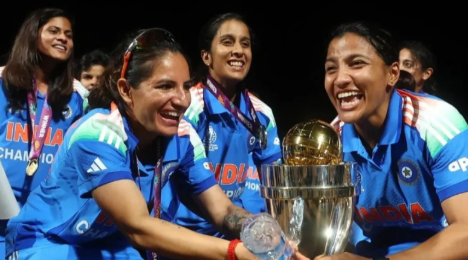
    In a historic night at the Dr DY Patil Stadium in Navi Mumbai, the Indian women’s cricket team clinched their first-ever World Cup title, defeating the South African women’s cricket team by 52 runs in the final. The victory marked a historic achievement for the Indian team, which had previously reached the finals in 2005 and 2017 but fell short on both occasions.

    Match Summary 

    India won the toss and chose to bat, posting a total of 298 for 7 in 50 overs. Shafali Verma scored 87 runs off 78 balls, providing a strong foundation with a 91-run opening partnership with Smriti Mandhana, who contributed 44 runs. In the middle order, Deepti Sharma added 58 runs, stabilising the innings after a brief slump during the middle overs.

    For South Africa, Ayabonga Khaka was the most clinical bowler, taking three wickets for 57 runs, while Marizanne Kapp maintained tight control in the death overs.

    In the second innings, South Africa fell short of the target, getting dismissed for 246 runs in 45.3 overs. Skipper Laura Wolvaardt scored a century (110 runs off 127 balls), but the rest of the batting order struggled to maintain partnerships. Renuka Singh Thakur took three wickets for 40 runs, and Deepti Sharma picked up two wickets, completing a strong all-round performance.

    Shafali Verma was named Player of the Match for her contribution with both bat and ball, while Deepti Sharma was named the Player of the Tournament award for consistent performances throughout the World Cup.

    India’s Path to the Title

    The Indian Women’s Team had a strong run, leading their group in the league stage and winning six of their seven matches, including victories over Australia, England, and New Zealand.

    In the semi-final, India beat Australia by 17 runs at the Wankhede Stadium. Shafali Verma scored 74 runs, and Renuka Singh took four wickets, which were key to their success. The final win against South Africa marked India’s first world title in women’s cricket after many years of coming close.

    Team Composition

    The core group included Harmanpreet Kaur (captain), Smriti Mandhana (vice-captain), Shafali Verma, Deepti Sharma, Richa Ghosh (wicketkeeper), and Renuka Singh Thakur. The bowling attack combined pace and spin effectively, with Pooja Vastrakar, Rajeshwari Gayakwad, and Shreyanka Patil contributing at crucial stages. Pratika Rawal, one of the youngest members of the team and a batting all-rounder, played a pivotal stabilising role in the middle order, scoring 308 runs (the second highest run scorer) before an unfortunate injury during the match with Bangladesh, which ruled her out of the final.

    Harmanpreet Kaur, in her third World Cup as captain, provided tactical consistency and led the team to its most successful global campaign. The fielding unit, traditionally an area of concern, showed marked improvement through tighter positioning and reduced errors.

    Conclusion

    India’s 2025 ICC Women’s World Cup victory represents a significant moment in both sporting and institutional terms. Beyond the immediate celebrations, the challenge now lies in sustaining momentum through continued financial and infrastructural support. If maintained, the 2025 triumph may stand as the foundation of a new era for women’s cricket; one in which India is not only a participant but a defining power in the sport.

  • Indian Tennis Star, Grand Slam Winner Rohan Bopanna Announces Retirement

    Indian Tennis Star, Grand Slam Winner Rohan Bopanna Announces Retirement

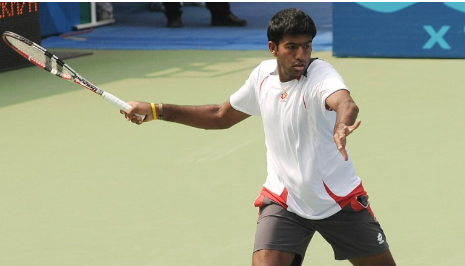
    Veteran Indian tennis player Rohan Bopanna has announced his retirement from the sport, bringing an end to an illustrious 22-year-long career. At age 45, Bopanna formally revealed his decision on 1st November 2025 via a statement on social media.

    Over the years, he amassed 26 ATP tour‐level doubles titles, along with a landmark victory at the 2024 Australian Open alongside partner Matt Ebden, which helped him achieve the ranking of world No. 1 in men’s doubles, becoming the oldest player ever to do so. Starting his professional journey in 2003, he faced injuries and erratic performances before winning his first ATP title in 2008 at the Los Angeles Open while partnering with American player Eric Butorac. A big break followed in 2010 when he reached the US Open men’s doubles final with his Pakistani partner Aisam-ul-Haq Qureshi, which became known as the “IndoPak Express.” They were defeated by American legends Bob and Mike Bryan in straight sets: 6-7(5), 6-7(4). By 2013, Bopanna had become one of the top doubles players in the world, achieving a career-high doubles ranking of World No. 3.

    Seven years later, Bopanna won the 2017 French Open mixed doubles title with Gabriela Dabrowski, further establishing his status as a top doubles player. However, his most notable highlight was when he lifted the Australian Open in 2024, partnered with home hero Matthew Ebden, winning the men’s doubles title. In the finals, they defeated the Italian team of Simone Bolelli and Andrea Vavassori with a score of 7-6 (0), 7-5. At 43 years old, Bopanna became the oldest male player in the Open Era to win a Grand Slam men’s doubles title. This victory also brought him to the world No. 1 men’s doubles ranking, marking the first time in his career. For Bopanna, this was his first men’s doubles Grand Slam title, following his previous win in mixed doubles at the 2017 French Open.

    Throughout his career, Bopanna became an important mentor and supporter of Indian tennis. He helped younger players through his academy in Bengaluru, promoting doubles as a legitimate and strategic sport. His impact went beyond the court, encouraging professionalism and fitness among the next generation of Indian athletes.

    Bopanna’s journey from a hopeful young player in Coorg to a Grand Slam champion and a model of sportsmanship represents one of Indian sport’s most impressive stories. In the end, Rohan Bopanna leaves the game just as he played it: with grace, gratitude, and strong passion.

  • Satish Shah: A Legendary Comic Actor and Beloved Cultural Icon Passes Away at the age of 74

    Satish Shah: A Legendary Comic Actor and Beloved Cultural Icon Passes Away at the age of 74

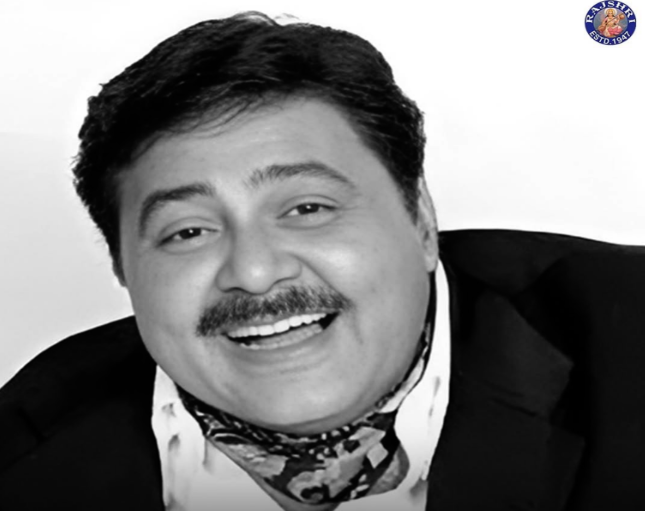
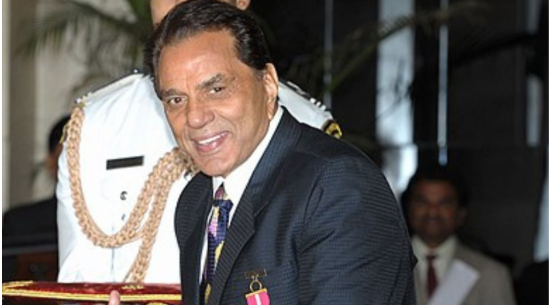
    The news of the passing away of renowned comedian Satish Shah at the age of 74 is a significant loss to the Indian film industry. He was a versatile man who honed the skill of moulding himself into unique character roles that never failed to become heartwarming tokens of our childhood, as well as a key presence during wholesome family evenings. It had been reported that he passed away on 25 October in Mumbai, due to a heart attack, as clarified by close associates. His legacy as a cultural icon in the Indian Film and Television industry will live on to touch the hearts of millions. His impeccable comedic timing and heartfelt performances will never fail to light up many more wholesome family evenings.

    Early Life and Education

    Satish Shah was born in 1951 and completed his schooling at St. Xavier’s College, Mumbai. He then went on to hone his theatrical talent at the prestigious Film and Television Institute of India (FTII). His passion for the performing arts was evident from childhood, catalysing his journey to become one of India’s most beloved comic actors. He dedicated his early life to refining his craft by performing in small stage plays and taking on minor film roles, laying the foundation for a phenomenal career.

    Breakthrough Television Success

    Satish Shah gained popularity in 1984 by appearing in the sitcom Yeh Jo Hai Zindagi. This remarkably trailblazing show portrayed the reality of a middle-class family with humour and relatable anecdotes. His performance as a lovable yet overwhelmed husband garnered national recognition and solidified his presence on the Indian television landscape. Shah’s life is no less than a 55-chapter odyssey as he brilliantly portrayed nearly 55 different characters for 55 episodes of DD-National’s classic show, Yeh Jo Hai Zindagi.

    Iconic Role in Sarabhai vs Sarabhai

    The defining chapter of his acting career was portraying the character of Indravan Sarabhai in the cult classic television show Sarabhai vs Sarabhai (2004-2006, revived 2017). His character as an eccentric, witty, and sometimes stereotypically patriarchal father won hearts with memorable catchphrases and nuances that became part of Indian pop culture. His comic chemistry with co-star Ratna Pathak Shah portrayed an endearing, layered family dynamic that resonated across generations.

    Significant Contributions To Films

    In addition to his tele-acclaim, Shah acted in more than 250 films, one of which was the Oscar-nominated Jaane Bhi Do Yaaro (1983), where he played the iconic role of the corrupt municipal commissioner in a satirical manner. His unforgettable performances in films like Kal Ho Naa Ho, Main Hoon Na, and Om Shanti Om, where he supported humour and love, enriched the stories with additional layers beyond the main narratives.

    Personal Life and Battles

    Shah was a humble and kind-hearted man who was deeply committed to his family life. His wife, Madhu Shah, is a designer who worked on the sets of films such as Hum Tere Ashiq Hain, Dhoondte Reh Jaaoge! and Saanch Ko Aanch Nahin. She tied the knot with Shah in 1972; however, the couple did not have children and lived a comfortable married life full of love and companionship. Madhu Shah is currently battling with Alzheimer’s disease, regarding which Satish Shah had often expressed his worries about leaving her alone in interviews.

    In his later life, Shah suffered from kidney failure, which required a transplant and eventual dialysis for a few years; it did not once stop him from working or inspiring people around him with his admirable strength and positive attitude.

    Legacy and Influence

    Satish Shah is remembered not only for his extraordinary skills and unforgettable characters but also for the warmth he spread among his colleagues through his personality. He took part in the governing council of FTII to guide future actors on their paths. Shah received various accolades, including the Indian Telly Awards and the ITA Award, for his comic brilliance.

    He was lovingly regarded as the “Baap of Comedy” by the industry and his fans, signalling his influence and stature. He had the ability to infuse humour with a deep understanding of human nature, which in turn made his work timeless and will be celebrated and remembered for centuries to come.

    The Memorial

    Satish Shah’s last rites were performed by his wife, Madhu Shah, and other close relatives and friends. Many famous members of the Indian Film Fraternity had come to pay their respects, reflecting the deep admiration and affection he earned over decades in the industry.
    The news of the passing away of renowned comedian Satish Shah at the age of 74 is a significant loss to the Indian film industry. He was a versatile man who honed the skill of moulding himself into unique character roles that never failed to become heartwarming tokens of our childhood, as well as a key presence during wholesome family evenings. It had been reported that he passed away on 25 October in Mumbai, due to a heart attack, as clarified by close associates. His legacy as a cultural icon in the Indian Film and Television industry will live on to touch the hearts of millions. His impeccable comedic timing and heartfelt performances will never fail to light up many more wholesome family evenings.

    Early Life and Education

    Satish Shah was born in 1951 and completed his schooling at St. Xavier’s College, Mumbai. He then went on to hone his theatrical talent at the prestigious Film and Television Institute of India (FTII). His passion for the performing arts was evident from childhood, catalysing his journey to become one of India’s most beloved comic actors. He dedicated his early life to refining his craft by performing in small stage plays and taking on minor film roles, laying the foundation for a phenomenal career.

    Breakthrough Television Success

    Satish Shah gained popularity in 1984 by appearing in the sitcom Yeh Jo Hai Zindagi. This remarkably trailblazing show portrayed the reality of a middle-class family with humour and relatable anecdotes. His performance as a lovable yet overwhelmed husband garnered national recognition and solidified his presence on the Indian television landscape. Shah’s life is no less than a 55-chapter odyssey as he brilliantly portrayed nearly 55 different characters for 55 episodes of DD-National’s classic show, Yeh Jo Hai Zindagi.

    Iconic Role in Sarabhai vs Sarabhai

    The defining chapter of his acting career was portraying the character of Indravan Sarabhai in the cult classic television show Sarabhai vs Sarabhai (2004-2006, revived 2017). His character as an eccentric, witty, and sometimes stereotypically patriarchal father won hearts with memorable catchphrases and nuances that became part of Indian pop culture. His comic chemistry with co-star Ratna Pathak Shah portrayed an endearing, layered family dynamic that resonated across generations.

    Significant Contributions To Films

    In addition to his tele-acclaim, Shah acted in more than 250 films, one of which was the Oscar-nominated Jaane Bhi Do Yaaro (1983), where he played the iconic role of the corrupt municipal commissioner in a satirical manner. His unforgettable performances in films like Kal Ho Naa Ho, Main Hoon Na, and Om Shanti Om, where he supported humour and love, enriched the stories with additional layers beyond the main narratives.

    Personal Life and Battles

    Shah was a humble and kind-hearted man who was deeply committed to his family life. His wife, Madhu Shah, is a designer who worked on the sets of films such as Hum Tere Ashiq Hain, Dhoondte Reh Jaaoge! and Saanch Ko Aanch Nahin. She tied the knot with Shah in 1972; however, the couple did not have children and lived a comfortable married life full of love and companionship. Madhu Shah is currently battling with Alzheimer’s disease, regarding which Satish Shah had often expressed his worries about leaving her alone in interviews.

    In his later life, Shah suffered from kidney failure, which required a transplant and eventual dialysis for a few years; it did not once stop him from working or inspiring people around him with his admirable strength and positive attitude.

    Legacy and Influence

    Satish Shah is remembered not only for his extraordinary skills and unforgettable characters but also for the warmth he spread among his colleagues through his personality. He took part in the governing council of FTII to guide future actors on their paths. Shah received various accolades, including the Indian Telly Awards and the ITA Award, for his comic brilliance.

    He was lovingly regarded as the “Baap of Comedy” by the industry and his fans, signalling his influence and stature. He had the ability to infuse humour with a deep understanding of human nature, which in turn made his work timeless and will be celebrated and remembered for centuries to come.

    The Memorial

    Satish Shah’s last rites were performed by his wife, Madhu Shah, and other close relatives and friends. Many famous members of the Indian Film Fraternity had come to pay their respects, reflecting the deep admiration and affection he earned over decades in the industry.

  • Piyush Pandey, the Voice of Indian Advertising, Dies at 70

    Piyush Pandey, the Voice of Indian Advertising, Dies at 70

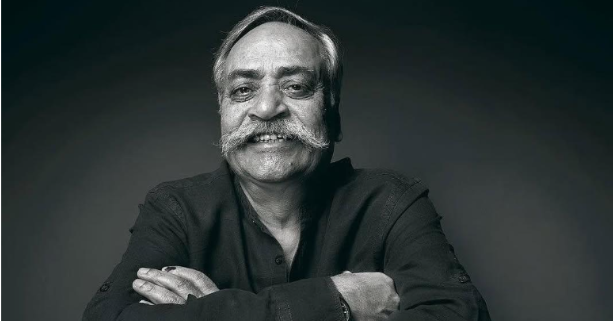
    Piyush Pandey, the advertising icon who redefined how India spoke through its brands, passed away on 24th October 2025, in Mumbai at the age of 70. According to reports, Pandey was suffering from a severe infection that led to his sudden death.

    In a striking coincidence, the man who created the nation’s famous Pulse Polio campaign, “Do Boond Zindagi Ke” featuring Amitabh Bachchan, passed away on World Polio Day, the very date India annually celebrates its triumph over the disease.

    Widely called the creative heartbeat of Indian advertising, Pandey’s work at Ogilvy India, where he worked as Executive Chairman and Global Chief Creative Officer, transformed the ad industry forever. His campaigns were rooted in local insights, humour, and humanity; they gave India some of its most enduring brand memories.

    An Album of Timeless Campaigns

    Pandey’s creative legacy can be told through the campaigns that became part of India’s vocabulary. From “Pappu Pass Ho Gaya,” “Fevicol ka Mazbooth Jod Hai, Tootega Nahi”, “Har Ghar Kuch Kehta Hai” and Cadbury Dairy Milk’s “Kuch Khaas Hai Ham Sabhi Mein”, Pandey’s ads celebrated India’s spirit and culture. He also designed the famous Vodafone Zoo-Zoo and Hutch puppy campaign.

    Pandey was also behind socially powerful work, including the Pulse Polio campaign, “Do Boond Zindagi Ke”, which helped drive mass vaccination awareness across the country in collaboration with the Government of India and UNICEF. He also designed the “Incredible India” campaign, which gave India a global identity.

    Pandey worked on the famous political campaign for Narendra Modi in the 2014 general election. The “Ab ki Baar Modi Sarkar” campaign contributed to the BJP’s landslide victory.

    A Pioneer with an Indian Heart

    Born in Jaipur in 1955, Pandey’s journey into advertising was unconventional. Pandey played many major Cricket Tournaments, including the prestigious Ranji, before working as a tea-taster in Kolkata. In 1982, he joined Ogilvy and Mather. His early work caught attention as his ads were deeply rooted in Indian culture and local lingo, which was not common at that time, as advertisers mimicked Western ads. He believed “Engagement is the key to communication”, and this was reflected in his ads, which were catchy and in sync with the rhythms of ordinary Indians.

    Over four decades, he transformed Ogilvy India into a powerhouse of creativity, mentoring countless young copywriters and art directors who went on to become industry leaders themselves.

    Pandey’s contribution to the advertising world was recognised with numerous awards, including multiple Cannes Lions, Effies, and the Padma Shri in 2016 for his contribution to literature and advertising. In 2000, The Economic Times named him “The Most Influential Person in Indian Advertising.”

    Beyond his campaigns, Pandey was known for his humility, humor, and strong flair for storytelling. His autobiography, “Pandeymonium: Piyush Pandey on Advertising”, captured his creative side and anecdotes from his life.

    Tributes poured in from across industries. Prime Minister Narendra Modi tweeted, “Shri Piyush Pandey Ji was admired for his creativity. He made a monumental contribution to the world of advertising and communications. I will fondly cherish our interactions over the years. Saddened by his passing away. My thoughts are with his family and admirers.” Industrialist Anand Mahindra and veteran actors like Amitabh Bachchan, who worked with him on the Polio campaign, and Shah Rukh Khan, also shared their condolences. His admirers flooded Twitter and other social media platforms with memories of the man whose words and ideas shaped India’s advertisements.

  • Maharashtra Government Imposes Size Limits on Fish to Safeguard Marine Life

    Maharashtra Government Imposes Size Limits on Fish to Safeguard Marine Life

    The Maharashtra government has implemented a series of stringent norms aimed at curbing the capture and sale of juvenile fish along the state’s coastline. Officials assert that it is crucial to protect marine biodiversity and ensure the long-term sustainability of the fishing industry.

    Minimum legal size (MLS) is a key tool in fisheries management, widely used in Europe and Australia, to protect fish from being caught before they have spawned. The MLS curbs are being enforced following increased catches of juvenile fish in recent years.

    The new regulations introduce minimum legal sizes (MLS) for 54 commercially important fish species. The decision was developed with inputs from the Central Marine Fisheries Research Institute (CMFRI), which prohibits the catching and marketing of fish below a specific length, to prevent depletion of breeding populations. Maharashtra has become the third state, after Kerala and Karnataka, to implement MLS regulations for fish.

    A stricter ban on juvenile fishing during the recent monsoon led to a sudden rise in the overall catch during the post-monsoon season, prompting this decision. State Minister of Fisheries and Ports Development, Nitesh Rane, chaired a review meeting on the MLS of fish and the ongoing conservation measures to curb juvenile fishing of the Indian silver Pomfret, which is also the state’s official fish. He emphasised the need for a large-scale awareness and compliance campaign to ensure the effective implementation of MLS norms, which are also vital for the sustainability of the species and the livelihood of the fishing community.

    According to the revised guidelines, the minimum catch size for species such as silver pomfret and Indian mackerel has been fixed at 13.5 cm and 14 cm, respectively, Bombay duck at 18 cm, and spotted seer fish at 37 cm. Several prawn species also fall under the new size restrictions. Officials said the decision was taken after studies revealed that the premature capture of young fish was severely affecting the spawning cycle and future catch volumes.

    A poster detailing the sizes of various fish types was released to raise awareness among fishermen, traders and coastal communities about conserving juvenile fish and adhering to MLS guidelines for long-term fisheries sustainability.

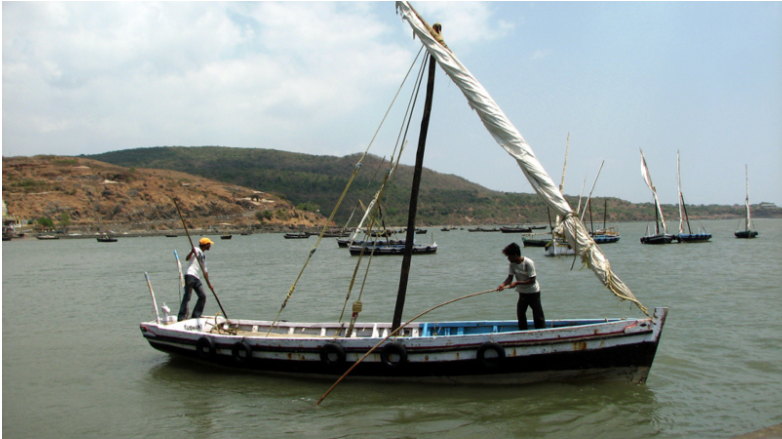
    The decision marks a crucial step in Maharashtra’s efforts to balance economic interests with ecological responsibility. By regulating the capture of juvenile fish, the government aims to protect natural breeding, maintain marine food chains, and ensure the livelihoods of people in coastal areas remain sustainable for future generations.

  • Diljit Dosanjh’s Emmy Nomination for Chamkila: A Victory Beyond Borders

    Diljit Dosanjh’s Emmy Nomination for Chamkila: A Victory Beyond Borders

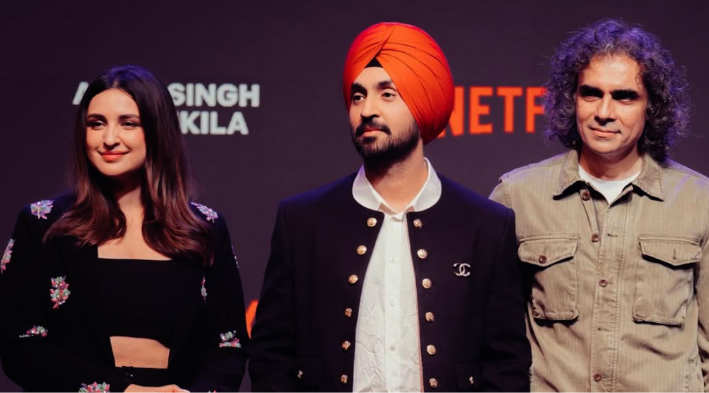
    The trajectory of the Indian entertainment industry witnessed a revolution when the International Academy of Television Arts & Sciences released its 2025 Emmy nominations. Punjabi popstar-actor Diljit Dosanjh receiving a nomination for Best Performance is an achievement that will go down in history. His portrayal of the controversial folk artist Amar Singh Chamkila in the Netflix-released biopic of the same name, directed by Imtiaz Ali, has not only won the hearts of everyone back home but has also caught global attention.
    Even more astonishing is that the movie itself, Amar Singh Chamkila, has been shortlisted in the Best TV Movie/Mini-Series category, putting India on two seats of glory in one of the globe’s most eminent television award galas.

    A Role Steeped in Legacy
    Amar Singh Chamkila, knighted as the “Elvis of Punjab,” was known for all the negative eyes on him and his music, making him a personality who sang about “improper topics” right from poverty within rural boundaries to physical intimacy. His cult-like following was nothing short of a wildfire that spread within the duration of one verse. His talent met an abrupt end at the peak of his career when he and his wife were murdered in 1988.

    To play such a character is commendable in itself. Dosanjh, in any case, already an international Punjabi music legend, took on the role with forceful realism. Chamkila’s unruly stage persona not only told the tale of a rockstar who was too ahead of his time, but also extended to vulnerable heights of lyricism. Dosanjh’s acting impacted every kind of audience, no matter how familiar they were with Chamkila’s music from before. This film’s international chokehold on us proves how finely tuned the acting on screen was.

    The Imtiaz Ali Touch
    Most credit for the film’s impact is due to director Imtiaz Ali, who has long been renowned for his forays into love, longing, and human paradoxes. Ali shifted from urban romances to Chamkila, with a tale anchored in Punjab’s earth. He approached Chamkila not merely as a people’s hero but as a symbol of the power of art to question the powerful and inspire people to think.

    Ali’s script becomes a harmonious celebration once Dosanjh’s acting and Parineeti Chopra’s layered portrayal of Amarjot come into view- it is a marriage that has depth of one of the highest artistic values. It is no surprise that international juries found Chamkila to be a compelling contender for the Emmy stage.

    The Weight of the Nomination
    Dosanjh is now among global stars like David Mitchell (Ludwig) and Oriol Pla (Yo, Adicto). Regardless of whether he wins, the nomination signifies that Indian actors are no longer limited to national recognition. They are among an increasing list of performers vying on the same level in global fields.

    Diljit Dosanjh’s ever-growing persona in front of a global audience is also responsible for his recognition within Emmy territories. He has broken the ice with the world by collaborating with A List artists, performing on almost every stage, and notably became the first Indian Punjabi artist to perform at Coachella. His path to bridging cultures has earned him another notch on his belt and created another groundbreaking addition to his resume.

    Why This Matters for Indian Entertainment
    It would be obvious to present this nomination as a victory for Diljit Dosanjh, but its repercussions are far-reaching.

    First, it points to the growing worldwide importance placed on Indian narratives outside Bollywood caricatures. Chamkila is hardly a neat city romance or mythical epic: it is the cruelly raw biopic of a Punjabi folk singer whose music once saw censorship and who was also violently taken away in his prime. That such a film should have gone its way is testimony to global audiences’ desire to have stories rooted in local authenticity.

    Second, it highlights how streaming platforms like Netflix have transformed the reach of Indian cinema. Without digital platforms, a story like Chamkila may have remained confined to domestic circuits. Today, it is accessible to audiences from New York to Nairobi, enabling it to enter conversations around global awards.

    Lastly, it encourages Indian creatives- actors, writers, directors- to look beyond borders. If Diljit can use a local folk figure and create an Emmy-award-winning performance out of it, then others, too, can aspire to narrate regional stories with universal appeal.

    The Symbolism of Chamkila’s Resurrection
    And there is a kind of poetry in Chamkila himself being brought back to life on such an international platform. Once considered crude by elites and killed for it, Chamkila’s art has now been justified by one of the world’s most significant cultural awards. His journey- shot in cold blood at the age of 27 and then remembered with finality at the Emmys after many years- makes the undying power of art more lucid against the tides of time, censorship, and plunder.

    The 53rd International Emmy Awards will take place in New York on 24 November 2025, it is undoubtedly a harbinger for a time when Indian actors and tales will find themselves gaining acceptance in areas once held by Western narratives. For Dosanjh, this is another milestone in a career that effortlessly balances music and film. For Indian popular culture, it is a testament to the fact that authenticity pays, and the world is, at last, eager to hear stories spoken in Punjabi, Bengali, Tamil, or any of the multiple Indian languages – so long as they are spoken in honesty and in craft. During Chamkila’s lifetime, his voice was very frequently overpowered by controversy. In 2025, due to Diljit Dosanjh and Imtiaz Ali, it resonates more than ever before, this time on the world stage.

  • Aryan Khan’s Directorial Debut, The Bads of Bollywood, Premieres on Netflix

    Aryan Khan’s Directorial Debut, The Bads of Bollywood, Premieres on Netflix

    Aryan Khan has finally made his touchdown in the Bollywood film industry with his first directorial and co-writing debut, The Bads of Bollywood. It is a seven-episode-long affair released on Netflix on 18 September, centred around a Bollywood hero named Aasman Singh, and his ascent from being an ambitious outsider, played by actor Lakshya Lalwani.

    A Satirical Exploration of Bollywood

    This series is a flavourful blend of drama and comedy that offers a hyper-realistic (or realistic) glimpse into the glamorous lives of the people within India’s most significant and longest-running industry, Bollywood. The show utilises the life of Aasman Singh, an overnight sensation hero struggling to maintain the validation he receives from the audience at par with his reality.

    Nepotism, rivalries, publicity stunts, and struggles of newcomers are no longer a thing of entertainment magazines anymore with this series. Although this barely scratches the surface of an exposé, the satire and deep irony mirror a portion of the industry from which our audience can only derive controversies.

    Cast and Guest Appearances

    Adorning the screen is an excellent performance by newcomers and veterans alike. Sahher Bambba, Bobby Deol, Mona Singh, Manoj Pahwa, Anya Singh, Raghav Juyal, Rajat Bedi, Gautami Kapoor, and Manish Chaudhari deliver soaring potential alongside Lalwani.

    But how could we forget the favourite cameos that have been made into edits that keep popping up on our Instagrams: Shah Rukh Khan, Aamir Khan, Salman Khan, Ranveer Singh, and Karan Johar show up with comic relief. These cameos have created an enormous buzz, adding to the show’s popularity and highlighting its self-referential nature.

    Production and Creative Approach

    Aryan Khan wrote and directed the series, which has been in development with Red Chillies Entertainment for over two years. Although rumours regarding Aryan’s career had been going on for some time, his opting to start as a director instead of an actor made headlines.

    Industry observers noticed that the show is a departure from traditional Bollywood storytelling. Unlike traditional aspirational romance or action, The Bads of Bollywood finds itself within the OTT domain of satirical content, following international trends more inclined towards biting, self-deprecating entertainment.

    Audience Response and Viewership

    The demands for the show were massive, with the trailer accumulating over 50 million views before release. The Bads of Bollywood has created ripples across social platforms with many applauding Aryan Khan for his confident directorial approach and his boldness to confront issues such as nepotism and politics in the industry.

    Early reactions, though, were divided. India Today and The Week picked out the show’s humour and unapologetic tone, but The Indian Express commented that some plotlines were based on stock tropes such as” the Hero’s Journey”, “Rags to Riches” and many more. Fans have picked up on the balance between glamour and critique of the show, although some feel that the satire sometimes overpowers character development.

    Placing Aryan Khan in the Industry

    The release has put Aryan Khan in the limelight, and an all-encompassing community of audience has underlined the importance of his professional decisions. Entering Bollywood as a writer-director, rather than as an actor, makes him different from most other star kids. His decision to enter the industry with satire has also been seen as a bid to carve out an independent voice.

    Critics point out that the show banks on Aryan’s insider status while maintaining distance through humour. There has been criticism from some viewers that there are self-referential moments, such as instances that appear to be recreations of  Aryan’s own experiences with media attention.

    Broader Implications for Bollywood Content

    The show also captures a shift in how Bollywood narratives are presented on the web. With the viewers starting to develop interests in web-based content, shows such as The Bads of Bollywood show how filmmakers try out new formats that aim to blend glamour with a pinch of criticism.

    Streaming services such as Netflix poured enormous amounts of investment into such storytelling, which shows how the audience could potentially engage with Aryan Khan’s debut. By mixing celebrity appearances, industrial observations, and satirical comedy, the show tries to draw mainstream attention and serious interest from the younger digital audience.

    Despite mixed reviews, The Bads of Bollywood thoroughly incorporates Aryan Khan in the new role of a creative force in entertainment. His debut work has positioned him along an emerging continuum of more experimental, self-referential narrative in Hindi entertainment. Whether or not the show manages to succeed may ultimately be irrelevant. Much of the initial discord has already been sown, with the arrival of a fresh voice in the ever-changing discourse of Bollywood.

  • R. Vaishali Clinches Grand Swiss Title; Secures Spot in 2026 Women’s Candidates

    R. Vaishali Clinches Grand Swiss Title; Secures Spot in 2026 Women’s Candidates

    Grandmaster R. Vaishali has officially qualified for the 2026 Women’s Candidates Tournament after winning the 2025 FIDE Women’s Grand Swiss in Samarkand, Uzbekistan. This marks her second consecutive Grand Swiss title and places her alongside fellow Indians Koneru Humpy and Divya Deshmukh as confirmed participants in the Candidates.

    Vaishali clinched the title with 8 points from 11 rounds, tying with Russia’s Kateryna Lagno at the top. The tie-break, determined by the average rating of opponents, went narrowly in her favour, confirming her as the champion. It was her second straight Grand Swiss victory, and with it came the coveted Candidates berth, an event that decides the challenger for the Women’s World Championship.

    For Vaishali, the past few months have been a journey of sharp contrasts. At the Chennai Grand Masters Challengers, she suffered a rare collapse, losing seven consecutive games and finishing last in the standings. The setback cost her rating points and, more importantly, dented her confidence to the point where she briefly considered stepping away from competition. Yet just weeks later, in Samarkand, she turned that disappointment into motivation, putting together a resilient run at the FIDE Women’s Grand Swiss that not only restored her momentum but also sealed her place in the 2026 Candidates.

    Her qualification also contributes to a broader landmark for Indian chess. For the first time, three Indian women will appear in the Candidates: Koneru Humpy, Divya Deshmukh, and now Vaishali. It is a testament to the country’s deepening bench strength in the women’s game, long carried by Humpy and Harika Dronavalli, but now increasingly defined by a younger generation.

    Vaishali credits her decision to press on to her family’s encouragement, particularly from her younger brother, fellow Grandmaster R. Praggnanandhaa. Their household has already become a symbol of India’s chess renaissance, and with this latest result, the narrative of the “sibling duo” reaches another milestone.

    The road to the Candidates will demand even greater preparation, but Vaishali’s victory in Samarkand already illustrates her resilience and ability to respond under pressure. From the lows of Chennai to the highs of Grand Swiss, her qualification is another sign of the growing presence of Indian women at the highest levels of world chess.

  • A Historic Finish: India Clinch a Bronze at the CAFA Nations Cup

    A Historic Finish: India Clinch a Bronze at the CAFA Nations Cup

    India made an unforgettable debut at the Central Asian Football Association (CAFA) Nations Cup by placing third, following a close penalty shootout win over Oman. The result marked a historic podium finish for the Blue Tigers on their very first appearance in the tournament.

    An Asian (C)affair

    The tournament, held from 29 August to 8 September and co-hosted by Uzbekistan and Tajikistan, featured six core CAFA nations alongside guest teams including India and Oman. Established in 2015, CAFA is one of the five regional bodies under the Asian Football Confederation, and its flagship tournament is seen as a showcase for Central Asia’s footballing talent.

    India, initially entering as one of the lower-ranking teams, slowly crept its way up with commendable poise. India won over Tajikistan 2- 1 in their first match, and despite a 3-0 loss to Asian giants Iran, India had done enough to earn a spot in the knockout phase.

    The Big Game

    During the playoffs for the bronze with Oman, the Middle Eastern team went ahead after a shot from Jameel Al-Yahmadi in the 55th minute, before Udanta Singh Kumam scored a goal following a long throw-in in the 81st minute, making the score equal. A 1-1 draw, even after extra time, led to a penalty shootout. Lallianzuala Chhangte, Rahul Bheke, and Jithin MS converted their attempts, and goalkeeper Gurpreet Singh Sandhu’s save on the decisive penalty sealed the win for India, marking their first-ever triumph over Oman in nearly a dozen encounters.

    New Coach, New Team?

    At the heart of India’s success story was the influence of new head coach Khalid Jamil. Jamil is a former professional footballer who has represented India internationally and previously coached the Indian Super League (ISL) Club Jamshedpur FC. Now, as head coach for the Indian football team with the CAFA cup being his debut tournament, Jamil reshaped the team’s identity by tightening the defence, instilling tactical balance, and using long throws as offensive weapons. The equalising goal against Oman was executed through a long throw. Under his guidance, the team seems to be defensively sound and tactically aware than under previous coaches, a hallmark of Jamil’s style also seen at Jamshedpur.

    This podium finish is significant because it highlights India’s growing ability to compete beyond South Asia. Defeating Oman for the first time and winning a medal can boost the team’s morale and reputation. It also provides the squad with important momentum as they prepare for upcoming tournaments, including the AFC Asian Cup qualifiers in 2027.

    What’s Next?

    Going forward, consistency and sustaining momentum are what the team needs to focus on. With the proper guidance and determination, the team can compete with stronger nations and continue to grow on the international stage. The next big target will be the AFC Asian Cup 2027 qualifiers, where India faces Hong Kong, Singapore, and Bangladesh in the group stage. Alongside this, friendlies and youth-level tournaments will provide opportunities to test new talent and build depth. If the team can carry forward the confidence from their CAFA Nations Cup performance, they will be better prepared for these challenges and steadily strengthen their place in Asian football.