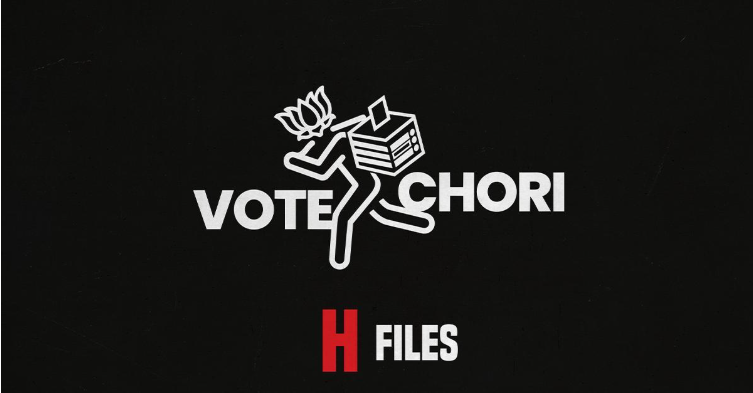
The forthcoming 2024 Haryana Assembly elections have gained national media attention following allegations of mass-scale discrepancies in the state’s electoral rolls, which were taken up publicly by Rahul Gandhi in November 2025. He claimed that nearly 25 lakh entries in the voter database could be duplicated, incorrect, or fraudulent, calling into question the integrity of the roll revision process.
Claims of Duplicate and Erroneous Entries
During a major press conference on 5th November in New Delhi, Rahul Gandhi claimed that as much as 12.5% of Haryana’s registered voters may be fake or duplicate. Continuing with what he termed “The H Files,” he cited an example involving a stock photograph of a Brazilian model which he said appeared on 22 different voter identity cards across different constituencies and under various Indian names like “Seema,” “Sweety,” and “Saraswati,” among others.
According to his claims, some anomalies in the voter list included duplicate voters, invalid addresses, bulk-entered names, and non-existent house numbers. He indicated that in several cases, multiple registrations seemed to match the same photograph, which he said was evidence of a deliberate attempt at manipulation.
Response from Authorities and Political Rebuttals
The allegations immediately brought reactions from the electoral authorities and government-aligned political actors. The Election Commission of India (ECI) publicly denied the charges, asking why objections were not raised by polling agents during the roll revision process itself if such widespread anomalies did exist, and claiming that the allegations did not have any procedural grounds.
The ruling Bharatiya Janata Party, or BJP, and leaders of the state government dubbed the allegations as political drama. The Chief Minister of Haryana dismissed the allegations and accused Rahul Gandhi of seeking headlines to mislead public discourse.
Nevertheless a number of past and current opposition members have stated that the evidence shown was significant and warranted forensic examination.
So far, the ECI has acknowledged receipt of complaints about roll-list irregularities but has not issued a comprehensive public report assessing the validity or scale of the alleged fraud.
Ground-Level Fallout, Public Reactions, and Mobilisation
The accusations have spilled out of the high levels of politics and into protests and public outcry. In Kaithal, marches of opposition supporters called for a full audit of the voter rolls and the restoration of voters they say were removed. In Jind, protests erupted with people chanting slogans against what protesters said was “vote theft.”
The woman whose photograph was most repeatedly used –the Brazilian model Larissa Nery – finally spoke to the media as the controversy unfolded, referring to the misuse of her image as “madness” or “craziness.” She spoke about her disbelief and shock that an old photograph of herself had surfaced on voter-ID cards in a foreign country.
The widespread dissemination of the photo and associated claims through social media, combined with calls for transparency and audits, has led to a wider national debate over voter-roll maintenance, data integrity, and the transparency of election administration.
Administrative Context and Wider Ramifications
The digitization of the voter registration and verification system in India began a decade ago. Switching to digital electoral rolls and their linkage or possible linkage with national identity databases was supposed to enhance accuracy and strengthen identity verification. Critics now argue that rapid revisions of the rolls, bulk updates, and lack of strict audits may have brought in new vulnerabilities.
The controversy erupts during the Special Intensive Revision, SIR, of the electoral rolls in many states during 2025, a process opponents contend has increased the risks of voter deletion or manipulation.
The scale of the allegations and the demographic scope-every constituency in Haryana-suggests that what was once characterised as mere isolated anomalies could now be perceived as systemic. There is a greater drive for transparency: civil society groups, opposition parties, and large sections of the public are demanding that the ECI publish booth-wise data, make available facilities for independent audits, and explain publicly the process of revision and verification of rolls.
What Comes Next
As of late November 2025, no conclusive public audit or official conclusion has been provided. The absence of details from the ECI has heightened demands for transparency. Opposition figures caution that if the procedure is not transparent and auditable all future elections be it, in Haryana or elsewhere could be considered dubious. The dispute stays unsettled until official results are announced. Whether it leads to corrective action, legal challenges, or institutional reforms, its outcome is likely to shape public trust in India’s electoral process, not only in Haryana but across the country.
Leave a Reply