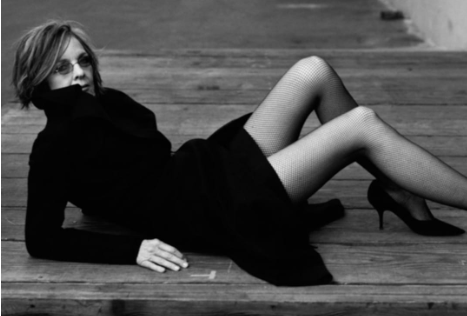
The iconic, Oscar-winning actress Diane Keaton’s demise is truly a great loss to global cinema. She was famously regarded for her extraordinary performances that combined humour, warmth, and quirky charm. She passed at 79 on October 11th at her residence in Los Angeles. According to family friends, Keaton experienced a temporary health decline over the past months.
For over 50 years, Keaton portrayed some of the cinema’s classic American characters, realistic yet oddball, graceful yet clumsy, nervous yet fiercely honest, or any other combination. Her personality reflected quirky yet bright, peculiar yet familiar, and never strayed from her individuality.
From Los Angeles Dreamer to Hollywood Legend
Born Diane Hall on January 5, 1946, in Los Angeles, Keaton was the oldest of four children. She was the daughter of Dorothy Deanne Keaton, a homemaker and photographer with a creative, burgeoning spirit that would later inspire her filmmaking and acting, and John Newton Ignatius Hall, a civil engineer and real estate broker. After high school, Keaton moved to New York to study acting at the Neighbourhood Playhouse, drawn to the feel of live theatre. Keaton made her Broadway debut in 1968 in the musical Hair, but it was her performance in Woody Allen’s stage play “Play It Again, Sam” that changed everything; it marked the start of a lengthy professional partnership and romance between Keaton and Allen.
This partnership extended to the screen in films, including Sleeper (1973), Love and Death (1975), and Annie Hall (1977), which would ultimately be Keaton’s defining performance.
The Birth of a Screen Legend
Keaton’s transformational performance occurred earlier, in Francis Ford Coppola’s film The Godfather (1972) as Kay Adams, the moral centre to Michael Corleone’s ascent to violent power. Keaton provided emotional nuance to an otherwise brutal story, which became one of her artistic signatures.
However, it was Annie Hall that vaulted her to instant stardom. The film was a bittersweet romantic comedy that Woody Allen wrote, produced, and directed, in which he starred, and that was about Keaton as much as it was about the movie characters. Keaton’s wardrobe of bowler hats, men’s vests, wide slacks, and ties was taken straight from her own closet, which made the look iconic.
For this performance, Keaton won the Academy Award for Best Actress in 1978, and Pauline Kael of The New Yorker called Keaton “the most original screen presence of her generation.”
Reinvention and Variety
Throughout the following stretch of forty years, Keaton broke out of her generic shell and shifted to more comedic narratives alongside dramatic roles: the trifecta of Oscar nominations for Warren Beatty’s Reds (1981), Marvin’s Room (1996), and Something’s Gotta Give (2003) was a part of her new aesthetic.
Her films were soon considered as an all-encompassing body of work: hits like Baby Boom (1987), Father of the Bride (1991), The First Wives Club (1996), The Family Stone (2005), and Book Club (2018) established her as the money-making element of both rom-coms and ensemble films.
Keaton did not simply perform in front of the camera; she forged parallel careers in photography, interior design, and real estate. Her photography books and architectural restorations reflected a similar care with attention to detail and nostalgic representation behind the camera, similar to the emotional frame of her experience while performing on screen.
A Life of Individuality
Keaton never married and addressed that with her usual sense of humour. “I love the thought of marriage,” she told Parade. “But I’m much more suited for making movies than to be in long-term relationships.”
She adopted two children: Dexter in 1996 and a son, Duke, in 2001, and described motherhood as her greatest role.
Keaton’s personal life was interesting, but she lived in a way that allowed her to maintain her independence. Her personal life was often discussed in relation to her co-stars, including Woody Allen, Warren Beatty, and Al Pacino, but she ultimately preferred solitude in her later years. She was candid about her challenges with bulimia in her younger years and her long-standing battle with skin cancer, and spoke openly about both for awareness purposes.
Tributes From All Across Hollywood
The announcement of Keaton’s passing drew tributes from colleagues and admirers worldwide. Many personalities from the entertainment world honoured Keaton, including Coppola, Viola Davis, Robert De Niro, DiCaprio, Martin, Fonda, Kate Hudson, Demi Moore, Sarah Jessica Parker, and Reese Witherspoon. Allen wrote and published an article, remembering Keaton, via The Free Press; he referred to her, through his writing, as “unlike anyone the planet has had or is ever likely to see again.”
Nancy Meyers, director of Baby Boom and Something’s Gotta Give, called Keaton “a force of authenticity.” “She taught generations of women that being yourself – truly yourself – is the most beautiful thing you can do,” Meyers stated.
Francis Ford Coppola remembered her as “creativity personified,” while Keanu Reeves, her co-star in Something’s Gotta Give, called her “a generous artist and a uniquely special person.”
Her First Wives Club co-stars Goldie Hawn and Bette Midler also shared their remembrances. “Diane was unafraid,” Hawn wrote on social media. “She took vulnerability and made it powerful, and in her awkwardness came the art form.”
A Timeless Influence
It would be an understatement to call Keaton solely an actress; the cultural impact cannot be ignored. Her Annie Hall wardrobe influenced women’s fashion for the 1970s, and her candid sense of humour and emotional intelligence redefined what it meant to be the female lead of a film.
She won an Academy Award, two Golden Globes, and several lifetime achievement awards, but didn’t let her success go to her head. “I never thought I was glamorous,” she once told an interviewer in 2019, “I wanted to take the notion of glamour and be interesting.”
Ultimately, Diane Keaton’s legacy cannot be divorced from the genuineness with which she approached her work. Whether she played a jittery lover, a frazzled mother, or any woman caught in a midlife moment of self-realisation, she would play the character with equal parts grace and resolve.
Her memory will live on through her two sons, Dexter and Duke, as well as her works, which will always anchor contemporary film.
Her very life, as funny, fearless, and, beyond belief, as it was, was a Diane Keaton production in every way.
Leave a Reply