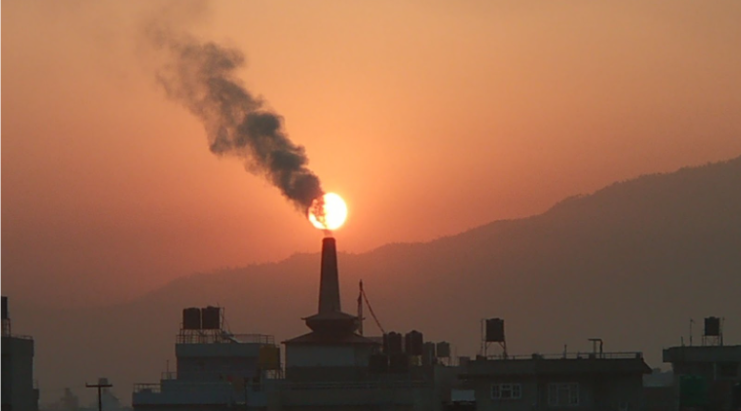
In a sobering reminder of the climate crisis, global carbon dioxide (CO₂) emissions and atmospheric levels have reached all-time highs, indicating a dangerous path ahead. Two recent reports from the World Meteorological Organization (WMO) and the International Energy Agency (IEA) present a grim picture: despite significant advances in renewable energy, our planet is still releasing more fossil carbon than ever before.
According to the WMO, atmospheric CO₂ levels increased by about 3.5 parts per million (ppm) between 2023 and 2024. This is the largest one-year rise since systematic measurements started in 1957. As a result, the global mean CO₂ concentration reached around 423.9 ppm in 2024, roughly 152% of pre-industrial levels. Meanwhile, the IEA estimates that energy-related CO₂ emissions reached a new high of about 37.8 gigatonnes (Gt) in 2024.
So, why is this happening, and why is it concerning? There are three driving factors for this: an increasing dependence on fossil fuels, rising demand for energy sources and weakening natural carbon sinks.
Despite significant growth in solar, wind, and other low-carbon technologies, fossil fuels still make up most of the global energy mix. The IEA reports that in 2024, emissions from fuel combustion increased by about 1 %. Meanwhile, emissions from industrial processes fell slightly, by about 2.3 %. Specifically, natural gas emissions increased by 2.5 % and coal emissions increased by 0.9 %. These figures show a complicated picture: although clean energy is expanding quickly, it mainly works alongside fossil-fueled sources instead of replacing them.
The IEA calculates that about 80 % of the growth in emissions in 2024 is attributed to an increase in temperature-driven electricity demand. In India and China, record heat-waves caused dramatic spikes in power consumption, such as through air-conditioning and industrial use, prompting utilities to increase coal and gas-fired plants to cater to the demand. The WMO points out that the time was also when the 2023/24 El Niño episode took place, which pushed back the growth of vegetation and enhanced fire activity, thereby limiting the Earth’s capacity to take up CO₂.
Arguably, the most dangerous indicator is the falling effectiveness of natural carbon sinks. WMO estimates that half of all CO₂ emitted by humans is typically taken up by land and oceans, but their uptake has failed in recent years. The chain reaction is worrying: warmer temperatures lead to drier soil and stressed forests, which leads to more wildfires and reduced absorption. This entire chain emits more CO₂ in the atmosphere, creating additional warming. Research indicates that the land-sink collapsed substantially in 2023.
To reverse this alarming rise in emissions, the world needs to act decisively on multiple fronts. First, there must be significant cuts in the use of fossil fuels, especially coal and gas, for industry and energy production. New all-time highs for global yearly emissions show that we are not yet turning the corner, even though progress is being made. Grid/storage infrastructure, renewable energy, and other clean technologies must expand quickly to meet and replace existing demand. The heat-driven spike in demand emphasises how important energy efficiency is to reducing global warming. Energy efficiency systems need to be brought out, especially in buildings, transportation, and heating and cooling systems. Forests, peatlands, and mangroves are examples of natural carbon sinks that must be preserved and restored because their current capacity appears to be limited.
The recent record in CO₂ emissions is not a temporary issue. While the shift to clean energy is happening, it is not fast enough to end our reliance on fossil fuels. Without a significant increase in efforts to reduce demand and improve natural carbon sinks, the warming we have already caused may result in climate changes that exceed our worst fears.
Leave a Reply