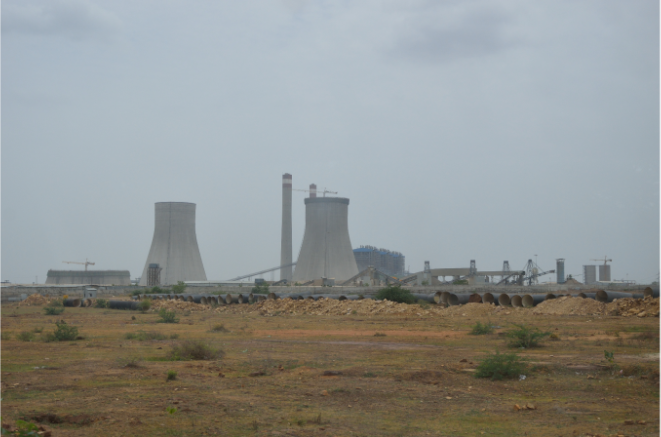
India, already one of the world’s top sulphur dioxide (SO₂) emitters, has now moved to exempt nearly 80% of its coal-fired power plants from installing key pollution control systems – sparking widespread concern among environmentalists and public health experts. On 17 July 2025, India’s Ministry of Environment, Forest and Climate Change (MoEFCC) has staunchly defended its decision to relax sulphur dioxide (SO₂) emission norms on installing flue gas desulfurisation (FDG) systems for coal and lignite-based thermal power plants, describing the move as ‘cost-effective’ and ‘scientifically justified’. The new revised framework has now exempted approximately 78% of thermal plants from installing FGD systems, with exceptions.
Background & Challenges Faced
In 2015, the MoEFCC introduced new emission norms for coal- and lignite-based thermal power plants to curb air pollution. A key requirement was the installation of FGD units, which are a pollution control technology that removes sulphur dioxide from gases of the power plant, leading to a reduction in harmful emissions into the atmosphere. This move was part of India’s broader effort to reduce ambient air pollution and align with global environmental standards.
However, for the communities living near the thermal plants, these policies were essential for their survival. Residents near Chhattisgarh’s Korba region, home to one of India’s densest coal power belts, who are already battling chronic coughs, fear that this rollback would choke them further.
All thermal plants were given two years to install these; however, by 2024, only 8% of 180 thermal power plants had installed FGDs. Multiple extensions were granted due to technical, financial, and logistical hurdles, including high costs, limited vendors, and supply chain issues.
While studies show sulphur dioxide contributes only 1–5% to overall PM₂.₅ levels, studies caution that even at the lower end of this range, the impact on human health is significant. India sees around 19.5% of daily deaths and 1.67 million annual deaths – a figure that makes the health implications of rolling back SO₂ norms impossible to ignore.
What has changed?
Under the new framework, thermal power plants are now classified into three categories based on how close they are to populated places and their pollution load. Category A plants are those situated within 10 km of cities in the National Capital Region or in areas with severe pollution. They are still required to install FGD systems by December 2027. The second category, Category B, located between 10 and 25 km from populated areas, will be assessed on a case-by-case basis. Meanwhile, Category C plants—located more than 25 km from major habitations—have been exempted altogether from the FGD mandate. This includes the 78% of thermal plants mentioned before.
Government’s Justification
The MoEFCC said that they have noted no visible difference between the SO₂ emissions between those plants that have the FGD system and those that don’t. According to the ministry, studies show that SO₂ contributes only 1% to 5% to ambient PM2.5 levels, implying that nationwide installation may not be the most effective strategy to reduce air pollution.
The Ministry also stated that the expenses to install these systems would not match their benefits, which are marginal. The installation could also lead to an increase in electricity tariffs by 50 to 70 paise per unit. The current cut of the systems could, in fact, reduce electricity costs by 25 to 30 paise per unit.
Criticism and Public Health Concerns
SO₂ is a colourless, extremely toxic gas and a leading cause of several respiratory illnesses and acid rain. As mentioned, India is one of the largest emitters of SO₂ and diluting regulations puts vulnerable communities at risk. Some research suggests that fully implementing FGD could save thousands of lives each year.
Critics argue that rolling back these measures not only endangers public health but also undermines India’s global environmental standing. This policy shift, they warn, could complicate India’s long-term climate strategy—particularly its ambition to reach net-zero emissions by 2070. With coal still dominating the energy mix, continued reliance on outdated emission controls may slow the transition toward cleaner alternatives and jeopardise commitments under the Paris Climate Agreement.
What Lies Ahead
While the government claims that the revision is both climate-friendly and cost-effective, this debate highlights a significant challenge: finding the right balance between developmental needs and environmental responsibility. With coal still being a major player in India’s energy landscape, we’re left wondering what the long-term effects of this decision will be on public health and our climate goals.
Leave a Reply