Blog

  • The People’s Pope: Leo XIV’s Path from Peru to the Papacy

    The People’s Pope: Leo XIV’s Path from Peru to the Papacy

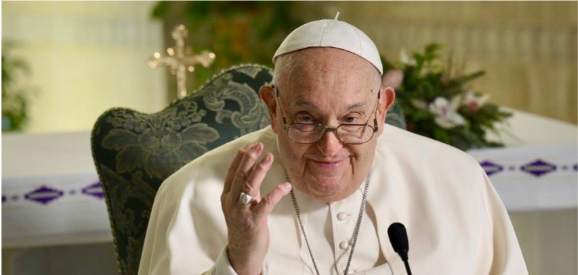
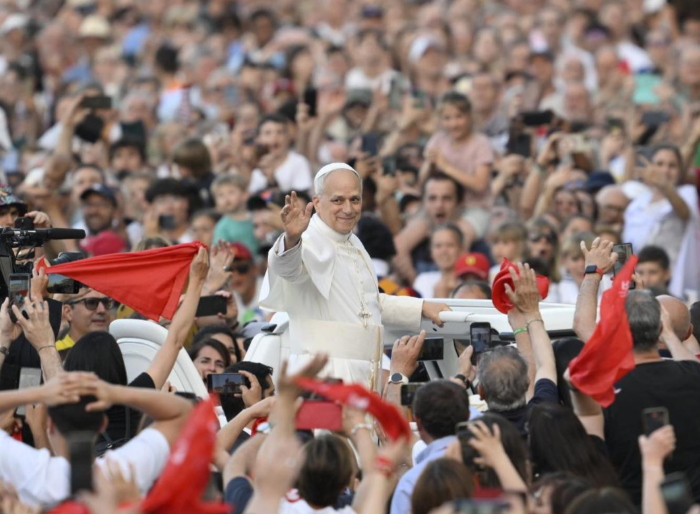
    At 6:07 P.M. Vatican time on 8 May 2025, the new Pope was officially announced. White smoke rose from the Sistine Chapel, followed by the ringing bells at St. Peter’s Basilica, signalling the announcement. Clad in a white cassock and red cape, the newly elected pope stepped onto the balcony, where thousands had gathered, waiting eagerly for the declaration of a new era in the papacy.

    Just 17 days after Pope Francis’ death, Robert Francis Prevost was introduced as Pope Leo XIV — the 267th pontiff, and the first U.S.-born man to hold the title. Born in Chicago in 1955 to parents of Spanish and Franco-Italian origin. “I was born in the United States… But my grandparents were all immigrants, French, Spanish… I was raised in a very Catholic family, both of my parents were very engaged in the parish,” he said to BBC News. Former Archbishop of Boston, Seán Patrick O’Malley wrote on his blog that the new pontiff “has chosen a name widely associated with the social justice legacy of Pope Leo XIII, who was pontiff at a time of epic upheaval in the world, the time of the industrial revolution, the beginning of Marxism, and widespread immigration”.

    Pope Leo XIV grew up in the suburbs of  Dolton, Ill., just outside Chicago, where he spent his early years as an altar boy before he was ordained in 1982. In 1985, Pope Leo moved to Peru, where he spent a decade as a local parish pastor and as a teacher at a seminary in Trujillo in northwestern Peru, helping the Peruvian people recover from the devastating aftermath of El Niño.

    In 2015, Pope Leo obtained Peruvian citizenship. He referred to the country as “mi segunda patria,” which translates to “my second homeland.”

    Pope Leo XIV blessing a baby/ Source: Instagram/ @pontifex

    “Peru is rejoicing at the election of Pope Leo XIV,” said Archbishop Gualtieri, in an interview with The Vatican News, in the same interview, he also recounted Cardinal Prevost’s compassionate leadership during the difficult times of the 2020 pandemic, describing how Pope Leo was a ray of light and hope for the Peruvian people, which is why they are fond of him even today. “He would arrive and he was very, very warm with the people, especially the people of the Sierra to whom he would offer his help. He would deliver food and other supplies to remote areas, sometimes carrying sacks of rice himself.” Reverend Elmer Uchofen recounted to the New York Times. Pope Leo has always been and will continue to be a strong and outspoken supporter of immigrants and indigenous communities.

    Meanwhile, amid rising crises such as increasing inequality, climate change, global migration, violence, and protracted wars, the role of the Pope is more crucial than ever. However, the Catholic Church is wrestling with its internal struggles and conflicting views.  In recent years, a gradual rift has emerged within the Catholic Church, specifically between the Progressives and Conservatives. The Conservatives wish to regress to older mechanisms in the Latin Mass, while the Progressives appeal for more inclusivity in pastoral care. Pope Leo XIV’s moderate approach, blending traditional values and progressive leadership, may successfully lead to the reconciliation of opposing views within the Catholic Church and enhance its mission. Pope Leo is also most likely to follow a synodal fashion to lead the Church. Synodality is an inclusive approach of leadership in the Catholic Church, which encourages priests to partake in the decision-making process, ensuring that the diverse voices of the Church are always taken into consideration. He considers collaborative approaches critical to establishing unity and ensuring effective pastoral care.

    Pope Leo XIV has thus been labelled as ‘The Missionary Pope’ with years of missionary and humanitarian service under his belt. Near the end of his first General Audience given from the balcony of St. Peter’s Basilica, Pope Leo XIV said, “The situation in the Gaza Strip is increasingly worrying and painful.” He also renewed his appeal for the entry of dignified humanitarian aid and an end to the hostilities, noting that the heartbreaking price was being paid by children, the elderly, and the sick. This public statement indicates that Pope Leo XIV intends to follow in the footsteps of Pope Francis, who frequently spoke out against violence and advocated for peace and compassion during times of conflict.

    Pope Leo XIV’s journey from the humble suburbs of Chicago through his missions in Trujillo to his first address given from the grand balcony of the Vatican reflects a pilgrimage that bridges different cultures, continents, and the evolving face of the Catholic Church. At a turning point for both the Roman Catholic Church and the world at large, Pope Leo’s life reflects a deep understanding of suffering, justice, and renewal; these qualities will guide his papacy in navigating the moral and spiritual challenges of the 21st-century church. As Pope Leo XIV enters a fragmented world and a divided Church, all eyes are on whether he can transform his missionary past into a legacy of reform and rebirth.
  • Justice Sanjiv Khanna’s Tenure: The Voice That Spoke for Many Citizens of This Country

    Justice Sanjiv Khanna’s Tenure: The Voice That Spoke for Many Citizens of This Country

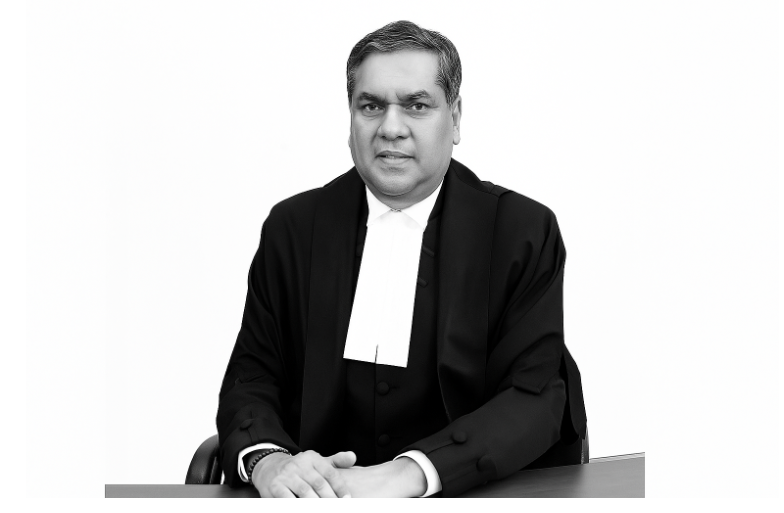
    After a career dedicated to serving justice and upholding the Constitution, Justice Khanna now transitions to a well-deserved retirement. He retires on 13 May, marking the end of a six-month tenure defined by clarity and conviction.

    Justice Sanjiv Khanna, the 51st Chief Justice of India, is a well-established and renowned judge of the Honourable Supreme Court, marking his presence and opinions in a number of notable judgments on different aspects, such as VVPAT verification, Electronic Bond Scheme, and even upholding the abrogation of Article 370.

    Justice Sanjiv Khanna had earlier served as the Honourable Supreme Court Judge for the period commencing from 11 November 2024 to 13 May 2025, preceded by Justice D.Y. Chandrachud. He graduated from St. Stephen’s College, Delhi and thereafter pursued his Bachelor of Laws from the Faculty of Law, Delhi University. Following this, he was enrolled as an Advocate in the Bar Council of Delhi in 1983, serving as a Standing Counsel (Civil) for the National Capital Territory of Delhi and the Income Tax Department.

    The legacy of the Khanna family can be seen in the career of Justice Sanjiv Khanna, whose father, Dev Raj Khanna, served as a Justice at the Delhi High Court, and his uncle, Justice Hans Raj Khanna, was a Supreme Court Judge renowned for his landmark judgment in the ADM Jabalpur v. Shivkant Shukla case on right to life and personal liberty.

    During the term of six months serving as the Chief Justice of India, he made a notable presence in various landmark judgements, which not only brought a change in the country but at the same time kept the basic structure of the constitution intact, keeping the sentiments of the citizens of the country intact.

    One of the key rulings, which was widely discussed during the last phase of Justice Sanjiv Khanna’s tenure, was the petitions filed against the Waqf Amendment Act, 2025, which was led by a special three-judge bench where he played an important role in the Waqf Amendment Act controversy. During the proceedings, the Centre assured the court that no existing Waqf properties will be denotified, and no new and fresh appointments will be made to the Waqf Board or Central Waqf Council until further hearings. The case is still pending on substantive issues, which are to be dealt with by his successor, Justice B.R. Gavai.

    As a Supreme Court Judge and serving as Chief Justice of India, Justice Sanjiv Khanna was an integral part of the landmark judgements in the history of India in the case of challenging the constitutionality of Electoral Bond Scheme as well as the abrogation of Article 370 – which revoked the special status of Jammu and Kashmir and reorganised it into Union Territory of India. He also marked his influential presence by dismissing the petition filed with regard to the 1976 Amendment in the Preamble of the Constitution of India, where the terms’ secular’ and ‘socialist’ republic were added to describe India.

    Justice Sanjiv Khanna, from the date of holding a strong position at his office and for the country as well, has made some smart administrative moves in keeping the hearings at the Supreme Court more effective. His smart moves included procedural equality by ending oral mentions of early listing of cases at the Supreme Court, and focused on well-drafted petitions

    To sum up, Justice Sanjiv Khanna’s tenure as the 51st Chief Justice of India in a period of six months had his involvement in numerous cases, which not only included short cases but sensitive religious matters, including secularism and transparency in the judicial and quasi-judicial system.

  • Operation Sindoor – India’s Targeted Military Response to the Pahalgam Terror Attack

    Operation Sindoor – India’s Targeted Military Response to the Pahalgam Terror Attack

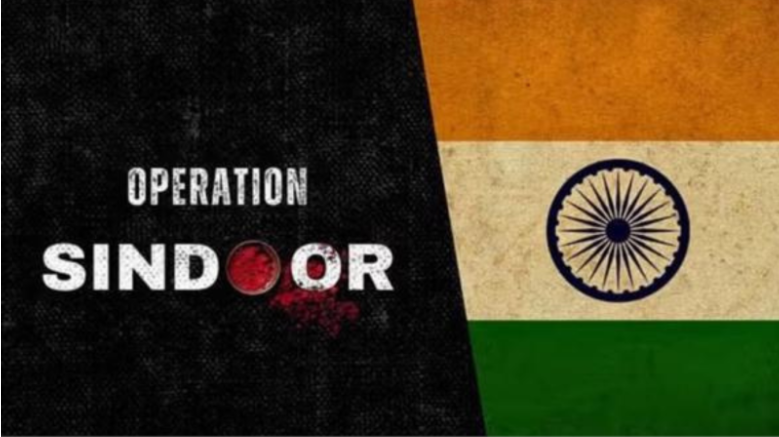
    In the wee hours of 7 May 2025, between 01:05 and 01:30 A.M., the Indian Armed Forces launched a targeted operation, called ‘Operation Sindoor’, targeting key terrorist infrastructure in Pakistan and Pakistan-occupied Jammu and Kashmir (PoJK). The operation came in response to the Pahalgam terror attack of 22 April, which claimed the lives of 25 innocent Indians and one Nepali national.

    In a highly coordinated tri-service attack, the Indian Air Force, Army, and Navy together carried out what officials described as the most expansive military operation since the 1971 Indo-Pakistan war. The strikes targeted nine key locations: Bahawalpur, Muridke, Rawalakot, Muzaffarabad, Kotli, Chakswari, Bhimber, Neelum Valley, Jhelum, and Chakwal, sites India claims were operating as hubs for anti-India terror activities.

    Operation Sindoor relied heavily on intelligence inputs, satellite and drone surveillance, and stand-off weaponry like SCALP (Storm Shadow) and HAMMER precision-guided munitions, fired from within Indian territory. Indian jets used radar blackouts and a deceptive NOTAM to execute the strike undetected. Suicide drones like the SkyStriker were also deployed, capable of delivering 10kg warheads to tactical targets. According to officials, these strikes were designed to minimise civilian casualties.

    The government said that the goal of the operation was to “pre-empt and deter cross-border terrorism” without escalating tensions. “Our actions have been focused, measured and non-escalatory in nature,” the Indian Foreign Secretary Vikram Misri reiterated in a press briefing.

    What Operation Sindoor Achieved

    Defence Minister Rajnath Singh stated that over 100 terrorists were killed in the strikes. Among those reportedly killed was Abdul Rauf Azhar, a Jaish-e-Mohammed (JeM) leader involved in the IC-814 hijacking and the 2002 Daniel Pearl killing. Other high-value targets included Yusuf Azhar, Abdul Malik Rauf, and Mudasir Ahmed, all connected to the IC-814 hijacking and the Pulwama terror attack of 2019.

    Air Marshal A.K. Bharti, Director General of Air Operations, confirmed, “The target systems given to the Air Force included the notorious training camps at Bahawalpur and Muridke. Through critical target system analysis, we used precision air-to-surface guided munitions to annihilate these camps while avoiding civilian harm.” He further added that the Rahim Yar Khan airbase in Pakistan’s Punjab province suffered major damage. “Its only runway has been declared non-operational for a week,” Bharti said.

    Escalation And Retaliation

    Pakistan subsequently carried out heavy shelling along the Line of Control, killing Indian civilians and soldiers, and injuring over 50. On the night of 7–8 May, Pakistan launched missile and drone attacks on Indian military installations across Jammu and Kashmir, Punjab, Rajasthan, and Gujarat. Key sites like Awantipura, Srinagar, Pathankot, Ludhiana, Nal, Bhuj and Adampur were among those targeted. However, India’s Integrated Counter-UAS Grid, S-400 Triumf systems, Barak-8 MRSAM, and indigenous Akash missiles successfully intercepted most of these threats.

    India retaliated on 8 May, hitting Pakistan’s air defence radars and systems in Rawalpindi, Lahore and Karachi. Wing Commander Vyomika Singh, during a briefing, said, “There has been extensive damage to crucial Pakistani airbases like Skardu, Sargodha, Jacobabad and Bholari. Also, loss of air defence weapons and radars made the defence of Pakistani airspace untenable.”

    Amid escalating exchanges, Pakistani drones attempted drone strikes into Jammu, Udhampur, and Pathankot, but were neutralised by Indian air defences. Air Marshal Bharti confirmed, “Commencing 8:00 P.M. on 8 May, Pakistani UAVs and drones targeted 12 IAF bases. All were successfully intercepted by our AD guns, Pechoras, SAMAR systems, and Garud snipers.” He noted India had also downed several Pakistani jets, potentially F-16s or J-10Cs, but refrained from specifying numbers. “We have the numbers and we are getting into technical details to establish it,” he said.

    The Indian Navy also played an equally important role. Within 96 hours of the Pahalgam attack, Vice Admiral Pramod, Director General of Naval Operations, confirmed that the Indian Navy deployed its carrier battle group, submarines, and surface ships in full combat readiness. This presence, he said, forced Pakistani naval units into a ‘defensive posture’.

    Air Marshal Bharti concluded in the final press briefing that “Operation Sindoor had destroyed terror camps, achieving its objectives with precision. Have we achieved our objectives of decimating the terrorist camps? The answer is a thumping yes, and the results are for the whole world to see.”

    Ceasefire Brokered

    On 10 May 2025, following days of heightened tension, India and Pakistan agreed to a “full and immediate ceasefire.” US President Donald Trump announced the breakthrough on Twitter, stating, “After a long night of talks mediated by the United States, I am pleased to announce that India and Pakistan have agreed to a FULL AND IMMEDIATE CEASEFIRE.”

    Though India did not address US involvement, Indian Foreign Secretary Vikram Misri confirmed the ceasefire, stating that Pakistan’s DGMO Major General Kashif Abdullah placed a direct call to India’s DGMO Lt. Gen. Rajiv Ghai at 15:35 IST during which both sides agreed to stop all firing across land, air, and sea from 5 P.M. IST onwards. Despite Pakistan violating the ceasefire, hours after it was brokered, the Indian Army gave an appropriate response, after which peace has been observed.

    Despite agreeing to the ceasefire, India refused to reinstate the Indus Waters Treaty, suspended after the Pahalgam attack. Pakistan responded by threatening to pull out of the Simla Agreement of 1972, and both countries expelled their diplomats.

  • Dandyism Redefined: The Cultural Fabric of the Met Gala 2025

    Dandyism Redefined: The Cultural Fabric of the Met Gala 2025

    5th May 2025, the first Monday of the month, saw fashion’s most iconic night- The Met Gala, at New York’s Metropolitan Museum of Art.

    The Theme

    The theme for this year’s gala was ‘Superfine: Tailoring Black Style’, inspired by Monica L. Miller’s book titled Slaves to Fashion: Black Dandyism and the Styling of Black Diasporic Identity. The book explores black dandyism and the use of fashion for self-expression and cultural resistance. Curated by Monica L. Miller, the chair of Africana Studies at Barnard College, and Andrew Bolton, the head of the Met’s Costume Institute, the dress code ‘Tailored for You’ encouraged attendees to tailor the theme to their creative interpretations, with the exhibit focusing on menswear.

    What is Black Dandyism?

    Emerging from the late-nineteenth to early-twentieth centuries after Emancipation, Black Dandyism is a cultural movement in which African Americans use fashion as a form of self-expression and a way to reclaim Black identity and the Black body. Tailored jackets, silk ties and fedoras are not merely stylish pieces of fashion; rather, they come from a powerful political movement in history that was paid homage to at the 2025 Met Gala.

    The Chairs for the Evening

    The evening began with the arrival of the lead chairperson and main organiser of the night, Anna Wintour, the Editor-in-Chief of American Vogue, and her co-chairs- Pharrell Williams, Colman Domingo, A$AP Rocky and Lewis Hamilton.

    Each year, the Met Gala’s carpet is custom-designed to complement the theme and colours of the night. This year’s carpet was woven by Extraweave, the parent company of Neytt Homes from Alappuzha, Kerala. Made from sisal fibre, imported from Madagascar, the carpet was midnight blue with white and yellow daffodils speckled on it. This was Extraweave’s third year crafting the Met Gala carpet, and this year’s carpet was crafted by 480 people over 90 days.

    Memorable Fashion Statements of the Night 

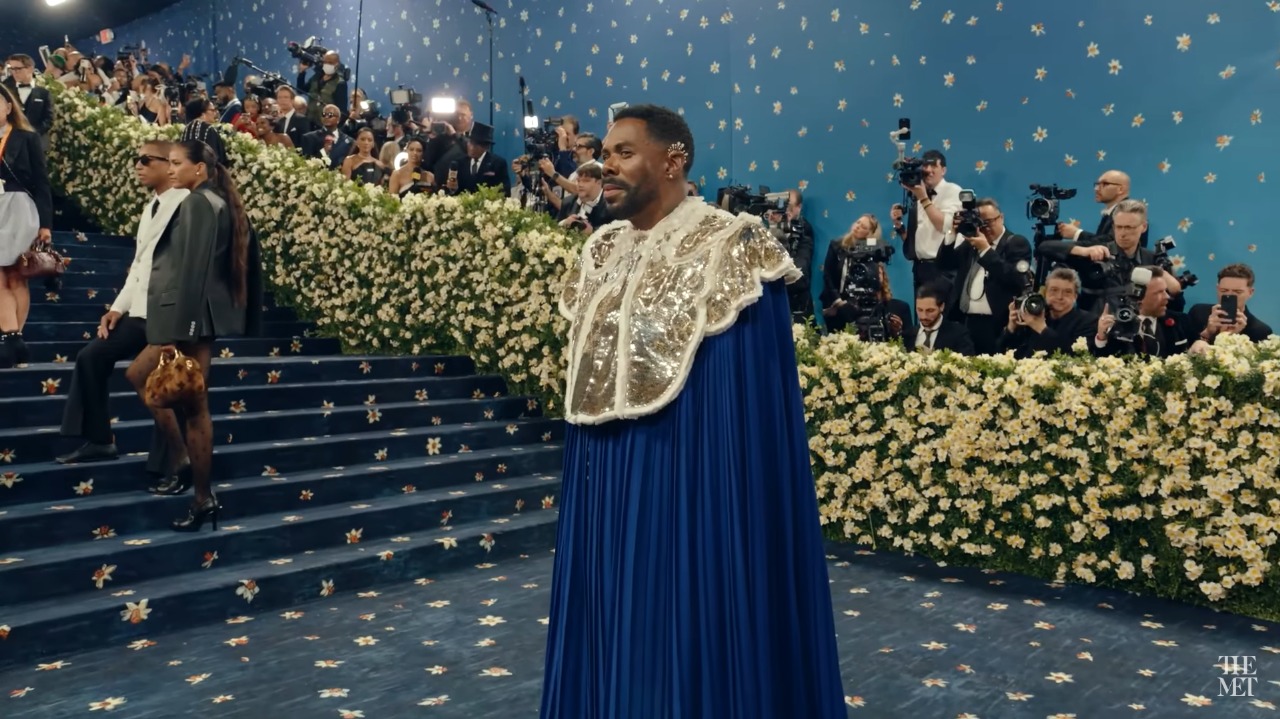
    Oscar-nominated actor and one of the co-chairs for the night, Colman Domingo, made a strong statement in a two-part Valentino look. He arrived on the carpet in a long, pleated royal blue cape with a statement gold sequined bolero. He soon removed the cape to reveal a black and white suit, a checkered blazer with a flower embellishment, gray pants, and a polka dot tie.

    Image Source: The Met / @YouTube

    One of the most talked-about entrances for the night was Rihanna’s, made special with the reveal of her third pregnancy in a custom Marc Jacobs corset dress-suit. The look comprised a black cropped woollen jacket, a grey bodysuit with a black pinstripe skirt and a hat designed by Marc Jacobs in collaboration with Stephen Jones.

    Shah Rukh Khan made his Met debut this year, being the first Indian male actor to attend the Gala.  He donned an all-black Sabyasachi suit, with a rhinestone-studded ‘K’ that stood out amongst his layered jewellery.  The finishing touch to the outfit was a cane crowned with a sculpted gold-studded Royal Bengal tiger’s head. Altogether, the actor’s look for the night paid homage to both Black Dandyism and his Indian roots.

    Also making his Met Gala debut from India was Diljit Dosanjh, whose regal look captured hearts from many. Diljit marked his Met Gala debut in a custom Prabal Gurung, incorporating his Punjabi roots in the Black Dandyism Tailored for You themeThe singer donned an ivory and gold sherwani, layered with a cape and a turban, along with a statement emerald necklace inspired by Maharaja Yadavindra Singh of Patiala. Diljit paid homage to his Punjab and his Sikh culture with an ornate kirpan (sword) in his hand and his cape detailed with a silhouette of the map of Punjab.

    Besides Rihanna, another baby bump was flaunted on the carpet as Kiara Advani made her Met debut this year. She came in a custom Gaurav Gupta, in a sculptural black gown adorned by an antique gold breastplate with ghungroos and crystals. The design symbolised a connection between mother and child, with Gupta describing it as “two hearts connected by an abstract umbilical cord.” Kiara Advani’s look was an homage to Andre Leon Talley, the late, legendary American fashion journalist and the first African-American creative director of Vogue.

    Zendaya made her return to the Met carpet in a custom Louis Vuitton suit designed by Pharrell Williams. Styled by Law Roach, her outfit was inspired by Bianca Jagger’s iconic wedding suit. The white monochromatic look was accessorised with a silver buttoned vest, a white floppy hat and Bulgari jewellery.

    One of the best-dressed attendees for this year’s Met Gala was singer-songwriter and actress Teyana Taylor. Designed by Ruth E. Carter,  the outfit was a near-accurate representation of the theme for this year. The burgundy red zoot suit look was layered beautifully with a dramatic cape. The outfit was accessorised with a matching durag, statement hat with a large ostrich feather and striking red leather gloves.

    Janelle Monáe arrived at the Met Gala in an outfit collaboration between Thom Browne and Oscar-winning costume designer Paul Tazewell. The custom-made outfit featured a stunning red, white and black trompe l’oeil dress and a monocle attached to a bowler hat. Her outfit also included a diamond brooch made out of 1800 Cristalino tequila.

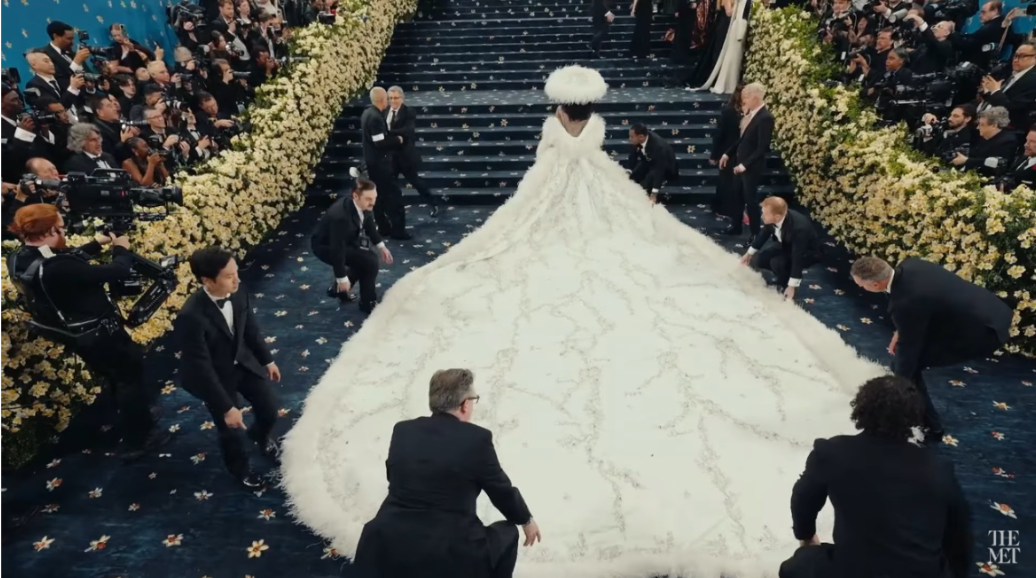
    Diana Ross made her long-awaited return to the Met Gala following a 22-year-long hiatus. She walked the carpet in a sweeping white gown featuring an 18-foot-long train embroidered with the names of her five children and eight grandchildren. This custom creation was a collaborative effort between the singer, her son Evan Ross, and Nigerian designer Ugo Mozie.

    Drawing on the rich history of Black fashion, attendees embraced the theme by donning well-tailored suits paired with bold accessories, each weaving their creative interpretations. As the gala concluded well into the early hours, the 2025 Met Gala once again proved its place as a cultural epicentre — not just of style, but of storytelling and resistance.

  • Pope Francis Dies at 88

    Pope Francis Dies at 88

    Pope Francis, leader of the Catholic Church, passed away on April 21, 2025 at the age of 88, the Vatican announced today. The cause of his death was reported as a stroke followed by a Cardiac Arrest. This comes after he was hospitalised for a month due to double pneumonia and had recently returned to the Vatican to continue his recovery journey.

    He was born as Jorge Mario Bergoglio on 17th December 1939 in Flores, Buenos Aires. He had 4 siblings. After attending a technical secondary school, he graduated with a diploma as a chemical technician. Before finding his passion for religion, he worked several jobs, including as a Bouncer and Janitor.

    After the resignation of Pope Benedict XVI in 2013 due to old age, the Papal Conclave congregated to select their new leader. On March 13th 2013, Bergoglio was elected as the Pope. He took the papal name Francis, in honour of Saint Francis of Assisi. A pope of many firsts, Pope Francis achieved several milestones upon his election: the first Jesuit Pope, the first pope from the Americas, and the first ever from the southern hemisphere.

    Inclusivity in the church

    The Pope also set a milestone by showing openness to the LGBTQ+ community, unlike his predecessors. In a televised interview in 2013, when asked about priests who were homosexual, he replied: “If someone is gay and he searches for the Lord and has good will, who am I to judge?” In January 2023, he said that “Being Homosexual is not a crime” in an interview with AP. He also called out the laws that criminalise homosexuality “unjust”. In 2013, The Advocate, an American LGBTQ+ magazine, named him Person of the Year.

    Pope Francis’ deep affection for the poor was seen in multiple instances. On the first Holy Thursday after his election, he kissed and washed the feet of ten male and two female juvenile offenders imprisoned at Rome’s detention facility, telling them that this ritual signifies he was at their service. In this ritual, prisoners who followed Islam as their religion were also included by him, a landmark moment in the Vatican’s history.

    A voice for the Poor and victims

    Pope Francis chose this name because Saint Francis was extremely concerned with the welfare of the poor, and this was reflected multiple times during his papacy. Unlike popes from the past, Pope Francis had personal outreach with the homeless and poor. In a noble event, he turned a Vatican Plaza into a refuge for the homeless, whom he called “Nobles of the street”. He also practised a foot-washing ceremony of migrants and the poor to show he serves them.

    “I cannot greet people from inside a sardine can, even if it is made of glass”, said Pope Francis when asked about his outreach meetings. His holiness was also a passionate advocate for world peace. He called for a ceasefire between Israel and Palestine several times. According to Vatican News, it was reported that he would video call with the Holy Family Catholic Parish in Gaza every night since October 2024, offering prayers and solidarity to the residents, including Christians and Muslims. As a result of his acts of kindness, people called him “Champion of the Poor” and “Poor people’s Pope”.

    Pope on Climate Change

    Pope Francis left a deep impact on the issue of Climate Change. In his 12 years of papacy, he repeatedly raised the problem of human-caused global warming from burning fossil fuels. He encouraged citizens and world leaders to take action against the same.

    Pope Francis criticised developed countries like the US, which have contributed the most to planet warming pollution. He said poor nations have contributed the least to climate pollution. Francis inspired many Catholics to form climate groups, including The Global Catholic Climate Movement, which is now called the Laudato Si’ Movement. This movement aims to bring people together and fight the climate crisis while also protecting the environment and scrutinising eco-spirituality, sustainability, and social justice.

    Prime Minister of India, Narendra Modi and Pope Francis had their first-ever meeting during the PM’s visit to Italy in October 2021 for the G20 Summit. They discussed various issues, including Climate Change. Modi invited the Pope to visit India, which was politely accepted by Pope Francis. In their next meeting in 2024 at the G7 summit, PM Modi expressed his admiration for Pope Francis’ passion for the Environment and reiterated his invitation for a papal visit to India.

    Pope Francis did not just lead the Catholic Church, he changed what it stands for with compassion, humility and love. The world mourned as he passed away, with billions of Catholics and World leaders expressing their grief. His funeral was held on Saturday, 26th April, 2025, in Vatican City. Nearly 250,000 people attended his funeral. He remains as one of the only popes in over a century to be buried outside of the Vatican in the Basilica of Santa Maria Maggiore in Rome. While his views were widely praised, some traditional Catholics disagreed with his more progressive and liberal stance on social issues. Nonetheless, his legacy will always be remembered by the world.

  • Terrorist Attack at Pahalgam kills 26, several injured

    Terrorist Attack at Pahalgam kills 26, several injured

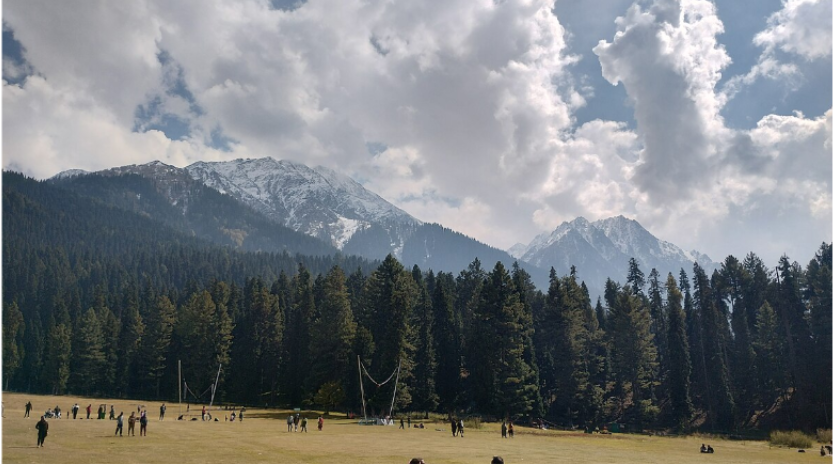
    On 22 April 2025, terrorists had gunned down 26 people at Baisaran Valley, a popular tourist destination near Pahalgam in Kashmir. The incident marks one of the deadliest terror attacks on civilians in recent years, sparking national outrage and increased security in the affected areas.

    The terrorists, some of whom were reportedly dressed in military uniforms, had approached from the surrounding forest around midday towards tourists gathered at the meadows of Baisaran, unaware of the horrifying events that would soon take place. According to eyewitnesses, the terrorists demanded that the tourists disclose their names and religions. They singled out non-muslim men and shot them, mostly at point-blank range, gruesomely in front of their families. Some were even asked to recite the Islamic declaration of faith, Kalma, to prove their religion.

    It was confirmed that 26 people, including 25 tourists and one pony ‘wallah’, who tried to save people, were killed in the attack. The attackers had escaped before the arrival of the security forces, and a search operation has been launched.

    “Those behind this heinous act will be brought to justice…they will not be spared!” Prime Minister Narendra Modi posted on X. In response to the attack, the PM had convened a meeting of the Cabinet Committee on Security (CSS) on 23 April, joined by key ministers and national security officials to discuss the security situation. Union Home Minister Amit Shah also arrived at Pahalgam and paid respects to the deceased.

    Furthermore, the Anantnag Police, which has jurisdiction over Pahalgam, issued a cash reward of 20 Lakhs for any information that would aid in the neutralisation of the absconded terrorists.

    As the investigation into the perpetrators continues, the nation grapples with fear and shock at how terrorists breached all security, destroyed lives and broke apart families in just one afternoon.

  • Trump’s 2025 Tariffs vs. the Global Economic Fallout

    Trump’s 2025 Tariffs vs. the Global Economic Fallout

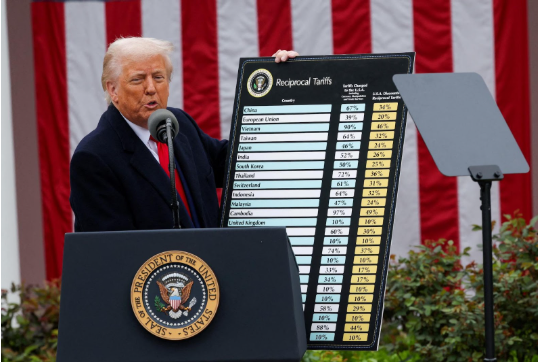
    American President Donald Trump’s anticipated return to the White House in 2025 came with a renewed “MAGA” (Make America Great Again) agenda, the first of which caused a worldwide domino effect on the trade sphere. At a major event in the White House Rose Garden on April 2, 2025, Trump’s oration enlightened America on excessively increased tariff rates moving forward, on imports from their major trading partners.

    The Organisation for Economic Co-operation and Development (OECD) has confirmed the average U.S. tariff rate to jump from 2.5% to the highest ever since 1938, 15.4%. China is faced with an effective tariff rate of 54% on certain goods, while India, the European Union, Japan, and South Korea all contend with tariffs between 20% and 34%. Even allies like Canada and Mexico, part of the USMCA agreement, have not been spared, slapped with 25% tariffs on most goods and 10% on energy products.

    Trump’s tariff policy stems from observing the U.S. trade deficit. His perspective of the current trade scenario is based on America suffering direct financial losses and not a complete structural macroeconomic metric. According to Trump, the more America imports, the more it bleeds. His solution? Tariffs, blunt,  and all-encompassing.

    Tariffs are Trump’s biggest tool to set the policy straight once and for all. It is expected to solve job losses, manufacturing decline, and foreign policy tensions once and for all. But should he believe that economic complexity can bend so easily to political tactics?

    The OECD has responded with stern warnings. In its revised global forecast, it lowered worldwide growth projections from 3.3% in 2024 to just 2.9% for 2025 and 2026. The U.S. itself is expected to slow from 2.8% to 1.6% in 2025, a sharp decline driven by declining investment and weakening consumer confidence. The OECD is clear: Trump’s tariffs are already disrupting trade, straining supply chains, and disincentivising corporate expansion.

    Tariffs are a strategic tool for the regulation and implementation of economic shielding, disguised as tax, that consumers are compelled to pay in the form of expensive pricing. This year’s tariffs were like a tidal wave crashing against sectors like Chinese electronics and Vietnamese textiles, to Indian pharmaceuticals and European automobiles. Businesses that depend on imports are now caught in a vicious cycle of absorbing higher input costs or passing them on to customers. For working-class Americans, the demographic Trump caters to, championing inflationary pressure has been the most direct blow as of yet.

    The new Trump-initiated “reciprocal tariffs” have caused a storm in nations like Cambodia (49%), Bangladesh (37%), Sri Lanka (44%), and Taiwan (32%) based on their trade barriers and utmost economic injustice. These countries have already been considered to be low-income economies that rely heavily on exports to the U.S., toppling them into instability as a whole. Thus, pushing them toward alternative trading blocs like BRICS or further into China’s sphere of influence.

    Allies of this policy see no wrong in it and have argued that the tariffs are necessary to counter decades of unfair trade, or in Trump’s words, “being ripped off,” and that restoring domestic manufacturing is the only way out. Economically, the increased tariff rates have caused a ripple effect across production ecosystems, increasing costs for everything from smartphones to semiconductors.

    The most alarming consequence of these tariffs is the probability of fracturing the global economy. The OECD warns that de-globalising production could reduce global GDP by up to 5%. Countries are already responding in kind, either with retaliatory tariffs or by strengthening trade agreements that exclude the U.S. Isolating America’s economy is trading risky waters during this troubled time of climate change, technological governance, and public health.

    These tariffs have alienated key allies in Europe and Asia, and penalised countries like India and Vietnam, which the U.S. was courting as strategic counterweights to China, the administration has unfortunately undercut its own foreign policy goals. It has become clear that economic power is a pillar of geopolitical influence, and weaponising trade risks eroding the very alliances that give the U.S. leverage in global affairs.

    Protecting America’s economic stature may offer temporary political gains, especially in key industrial swing states. But profound long-term costs will fester sooner or later in the economic, diplomatic, and social landscape. Tariff wars ending on civil terms have rarely shown up in history- declining innovation, loss of wealth, and regulation of painful methods of recovery will only be found at the end of this tunnel.

    President Trump, for now, should be reviewing his goals to ensure a more resilient and fair vision within this competitive American economy. The answer to successful trade policies and moulding America into a self-reliant nation lies not in walling off trade, but in investing in domestic capabilities: infrastructure, education, innovation, and green industries as the appropriate strategy that combines smart regulation, multilateral agreements, and long-term planning. It is essential for trade to reform, but not be completely wiped out of existence.

    The global economy is too interconnected, too interdependent, to retreat behind tariff walls. In choosing tariffs as his flagship policy once again since 2018, Trump may be betting on nationalism. But the world, and the economy, may not follow him this time.

  • Satire vs The State: Is Freedom of Speech a Joke?

    Satire vs The State: Is Freedom of Speech a Joke?

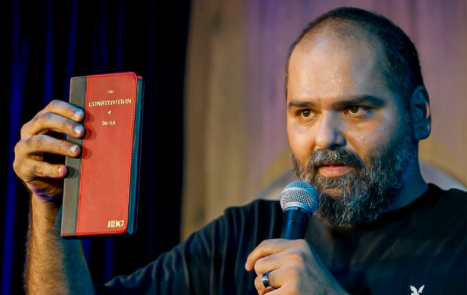
    Popular Indian stand-up comedian and podcaster Kunal Kamra, known for his bold political satire, became the centre of a controversy that awakened debates over the reality of freedom of speech in the country.

    Kamra rose to prominence in the mid-2010s through viral clips of his stand-up shows and his podcast Shut Up Ya Kunal. He came to be known for his quick wit and fearless political commentary, challenging the system. His unique style of fearless humour earned him a large fanbase and simultaneously brought him into clashes with influential figures across the country.

    The Trigger

    Kamra uploaded clips from his special, Naya Bharat, on his YouTube channel on 23 March, recorded at Mumbai’s Habitat Comedy Club. Kamra’s video of the special showed him singing a spoof of the song Dil to Pagal Hai, where he referenced an influential political figure from Mumbai’s Thane, described their physical appearance and mentioned their closeness with Chief Minister of Maharashtra Devendra Fadnavis.

    While he did not explicitly mention the name of this person, he referred to them as “gaddar” (traitor) for infamously changing their political alignment and for “hiding” in Guwahati.

    Shinde’s Retort

    Responding to Kamra’s satirical performance, Maharashtra Deputy Chief Minister Eknath Shinde labelled the act as a “supari” (contract) to malign him, hinting at it being a paid job. While acknowledging the importance of freedom of speech, Shinde emphasised the need for boundaries and decorum.

    He highlighted that Kamra’s history of commenting on influential figures, such as the Prime Minister, indicated he was “working for someone”

    Shinde reiterated that his work speaks for him now, emphasising his commitment to development over responding to allegations.

    The Immediate Backlash: Vandalism, Threats and Protests

    Hours after the videos of the special were uploaded, over 10 Shiv Sena workers ransacked and vandalised The Habitat comedy club and The UniContinental hotel, where the comedy club is located, which led to the club being temporarily shut down indefinitely, expressing concern over the safety of its staff.

    Further backlash included protests and burning pictures of the comedian as well as threats and accusations online towards Kamra. As of 29 March, three more FIRs had been lodged against Kamra, under Sections 353(1)(b), 353(2) (statements conducing to public mischief), and 356(2) (defamation) of the Bharatiya Nyaya Sanhita.

    Kamra and his family members’ personal contact information was leaked, resulting in them facing immense amounts of unknown calls of threat and hate.

    Shinde commented that while he does not condone such actions, he remarked that “action causes reaction.” A police complaint was lodged by Shiv Sena against Kamra, Shiv Sena (UBT) leaders Sanjay Raut and Aaditya Thackeray, and Congress leader Rahul Gandhi, calling this a “conspiracy to malign Shinde.”

    The Political Chatter in the Aftermath

    Commenting on the controversy, Maharashtra Chief Minister Devendra Fadnavis labelled Kamra an “urban naxal” and a “traitor.” (Counterview) In an event organised by The Indian Express, Fadnavis remarked, “They are not worth it, by reacting, you are only elevating their stature” (News18)

    At a press conference in Mumbai, Shiv Sena spokesperson Sanjay Nirupam alleged that Kamra’s satirical comedy was part of an “international conspiracy” to defame India, alleging that Kamra was being paid in crores of foreign funds from various countries and sources that he listed. He alleged that the comedian’s YouTube shows have tarnished the reputations of the Prime Minister of India, the Home Minister, the Supreme Court and the nation itself.

    Shiv Sena (UBT) MP Sanjay Raut, against whom an FIR has been lodged in this case, addressed journalists at a press conference demanding Central protection for Kamra. He stated that he had been in talks with the comedian to give his statement to the Mumbai police without worry.

    MP Sanjay Raut referred to the special security provided to actress and Himachal Pradesh MP Kangana Ranaut in 2020 and stated that similar security should be provided to Kamra by the government. “Whatever a poet or a satirist writes or says, the government should not take it so personally,” Raut said.

    Support for Kamra and Criticism of the Clapback

    Supporters online and human rights organisations like People’s Union for Civil Liberties (PUCL) criticised the party and the government’s response, highlighting that political satire is protected under the Constitution of India. PUCL condemned the demolition of The Habitat and the legal action taken against Kamra as violations of free speech. Artists At Risk Connection (ARC), an independent international organisation that works to defend artists and provide support for artists and cultural workers at risk worldwide, called for the charges against Kamra to be dropped.

    Kamra Stands Strong

    Kamra stood strong on his stance, refusing to apologise for his performance, stating his legal right to political satire. He voiced his support for The Habitat, openly expressing his criticism for the vandalism on the comedy club, noting that the venue should not be held responsible for his words. He stated his willingness to cooperate with the officials for any legal action to be taken.

    True to his nature, Kamra used his humour to clap back at the events that unfolding following the release of the video. Using his satire to comment on the more important failures in the system, he commented, “But will the law be fairly and equally deployed against those who have decided that vandalism is the appropriate response to being offended by a joke? And against the unelected members of the BMC, who have arrived today at Habitat, without prior notice, and tore the place down with hammers? Perhaps for my next venue, I will opt for Elphinstone bridge, or any other structure in Mumbai that’s in need of speedy demolition.”

    Addressing the media coverage of the controversy, Kamra reminded the public that India ranks 159 in World Press Freedom, and that he does not intend to apologise for his satire. He clearly stated that “What I said is exactly what Mr Ajit Pawar (1st deputy CM) said about Mr Eknath Shinde (2nd Deputy CM).” Finally, Kamra commented that he does not fear this “mob” and that he intends to face this matter head-on and without fear.

  • Tombs From the Past Haunt the Present

    Tombs From the Past Haunt the Present

    The release of Chhava Movie, produced by Dinesh Vijan and directed by Laxman Utekar, stirred up old emotions, especially among right-wing groups. These emotions soon turned into actions. On March 16, 2025, communal riots erupted in various parts of Nagpur over the tomb of Mughal Emperor Aurangzeb. Ironically, the tomb lies nearly 500 kilometres away from Nagpur in Khuldabad city of Chhatrapati Sambhajinagar District, formerly known as Aurangabad. This city was named after Aurangzeb. Despite the distance, the riots in Nagpur escalated into violent clashes, resulting in multiple injuries and communal unrest.

    Who was Aurangzeb?

    Born in Dahod, Gujarat, Aurangzeb was the Sixth Mughal emperor, who ruled most of the Indian Subcontinent from 1658 to 1707. His rule is celebrated by many historians for some of his administrative reforms, but criticised by others for his harsh policies and treatment of non-muslims via policies like the Jizya tax imposed on non-muslims.

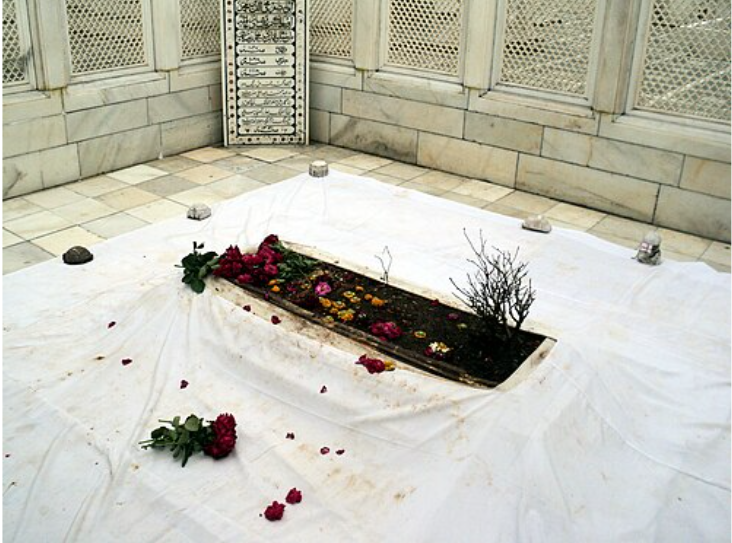
    For years, the tomb was a peaceful site of historical and religious significance. However, after the release of Chhava and with political tensions growing, the tomb came into the spotlight. The tomb of Aurangzeb rests in Khuldabad, a small city in the Sambhajinagar/Aurangabad District, which is on the way to one of the UNESCO World Heritage sites, i.e. Ellora Caves. It is an open-air structure considered modest for a ruler of his stature. He wanted his grave to be a simple one and believed that the open dome was the greatest cover he could have for his tomb.

    Protests and Demands

    Aurangzeb’s legacy remains controversial in Maharashtra, as Sambhaji was executed by Aurangzeb. The protests were headed by right-wing groups like the VHP and Bajrang Dal, who demanded the demolition and removal of the tomb. They argued that safeguarding the tomb of a ruler they viewed as cruel and oppressive sends the wrong message to future generations. Right-wing groups warned that if the tomb is not removed, Babri-like action will be taken.

    Critics argue that this narrative is part of a larger political project that seeks to reshape Indian identity by questioning Islamic heritage linked to the Mughal era. The renaming of Aurangabad to Chhatrapati Sambhajinagar is also cited as a symbol of this agenda.

    The Nagpur Violence

    On March 16, 2025, political organisations staged protests in Nagpur demanding the removal of the Tomb. During the demonstrations, rumours spread that a religious cloth was set on fire. Soon, the protests gained momentum and took a violent turn, triggering violent communal clashes between both sides around 8 to 8:30 pm, resulting in over 30 injuries, including police personnel. Nearly 60 rioters were taken into custody, and about 20 – 25 bikes, three cars and a JCB were set on fire after the clash in the Mahal area of the city.

    The following day, Nagpur Police Commissioner Dr Ravinder Singal said the situation in the city is currently peaceful. “…We have imposed Section 144, and everyone has been told not to step out unnecessarily or take the law into their hands. Do not believe rumours…” he said. All the shops and markets were shut down.

    Political Reactions

    Naturally, political remarks were quickly followed. “Chief Minister Devendra Fadnavis has appealed to citizens to fully cooperate with the administration”, was said in the statement issued by CMO Maharashtra. Fadnavis stated in the state assembly, “We will protect Aurangzeb’s grave but not allow his or the site’s glorification. Chhatrapati Shivaji Maharaj’s temple will be glorified, not Aurangzeb’s grave.”

    The opposition strongly condemned the riots, criticising Fadnavis. Shiv Sena (UBT) MP Sanjay Raut compared the newly elected Fadnavis government to Aurangzeb’s rule, claiming that farmers and unemployed youth were committing suicide. This created a huge debate between the political parties.

    ASI tightened the security around the tomb in Khuldabad to prevent any clashes. The Grishneshwar temple, located in Ellora village, saw a dip in footfall from several tourists and devotees as the temple is en route to Ellora.

    Conclusion: When History, Media and Politics Intertwine

    The incident in Nagpur is not just about Tomb, but it also reflects how intertwined history, politics, and media are in Modern India. A movie meant to provide history about King Sambhaji to a younger audience ended up triggering real-world violence. This shows that the media is not about entertainment anymore; it is an influence. Media can reignite old scars and shape public sentiment and the social world around us in a powerful way.

  • Oscars 2025: Honouring the Year’s Finest in Cinema

    Oscars 2025: Honouring the Year’s Finest in Cinema

    The Dolby Theatre in Hollywood, Los Angeles, lit up on 2nd March 2025, as some of the best in American and global cinema gathered to celebrate the most powerful performances of the year at the 97th Academy Awards. This year, the prestigious annual ceremony was hosted by  Conan O’Brien, and the night’s lineup was compelling, bringing together a dynamic lineup of films spanning genres and cultures.

    Leading the night, Sean Baker’s comedy-drama Anora swept the Oscars, winning five out of the six nominations, for Best Picture, Best Actress for Mikey Madison, Best Director for Sean Baker, Best Original Screenplay and Best Film Editing. This series of wins places Sean Baker alongside Walt Disney for the most Oscars ever won in one night. In his acceptance speech, Baker emphasised the importance of preserving the theatrical experience, urging filmmakers to continue creating stories for the big screen.

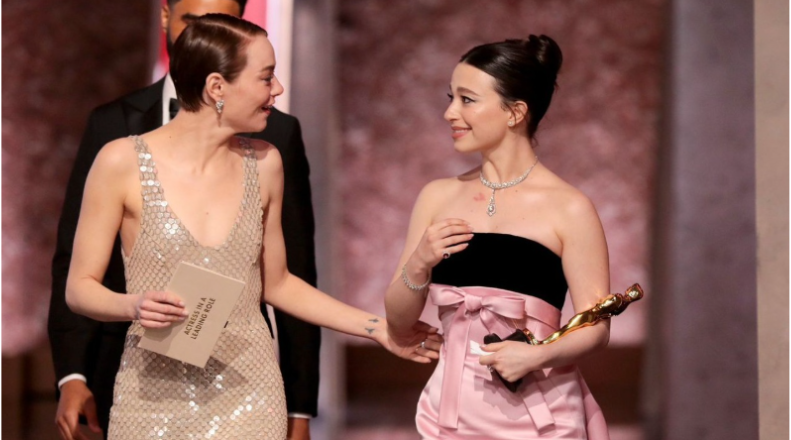
    Emilia Pérez, directed by Jacques Audiard, made history as it garnered thirteen nominations, the most ever for a non-English language film. It won two awards, Best Supporting Actress for Zoe Saldaña and Best Original Song for the song ‘El Mal’.

    Jon M. Chu’s fan favourite musical Wicked, with a total of ten nominations, walked away with two wins – Best Production Design for Paul Tezwall, making him the first African American man to win this award, and Best Costume Design for Nathan Crowley and Lee Sandales.

    In the acting categories, Adrien Brody and Kieran Culkin delivered powerhouse performances, earning themselves the Best Actor and Best Supporting Actor awards for The Brutalist and A Real Pain, respectively. The Brutalist won again, with Daniel Blumberg winning Best Original Score and L. Crowley winning Best Cinematography.

    Conclave, directed by Edward Berger, earned the Best Writing on an Adapted Screenplay award for its gripping adaptation of Robert Harris’ mystery thriller novel.  Walter Salles’ I’m Still Here, a Portuguese film set in Brazil, took home the Best International Feature Film award.  Best Documentary Short Film was won by The Only Girl in the Orchestra, directed by Molly O’Brien, and the Best Short Film was I’m Not a Robot, directed by Victoria Warmerdam.

    In the Animation category,  the Best Animated Feature Film award went to Flow, a Latvian adventure film without dialogue directed by Gints Zilbalodis. Best Animated Short Film was taken home by In The Shadow of Cypress, directed by Shirin Sohani and Hossein Molayemi, which beautifully captures the evolving relationship between a father who struggles with PTSD and his daughter.

    Source: X/ @TheAcademy

    The documentary film No Other Land, the directorial debut of a four-Palestinian-Israeli collective of activists, Yuval Abraham, Hamdan Ballal, Basel Adra, and Rachel Szor, won the Best Documentary Feature Film award. The documentary, filmed between 2019 and 2023, depicts the destruction caused by war, resistance in the Palestinian West Bank and the growing friendship between Israeli journalist Yuval Abraham and the Palestinian activist Basel Adra.

    Dune: Part Two, directed by Denis Villeneuve, was nominated for five awards and won Best Sound and Best Achievement in Visual Effects. Also nominated for five awards was Coralie Fargeat’s body horror film, The Substance, which won the Oscar for Best Makeup and Hairstyling.

    As the curtains closed on the 97th Academy Awards, the night served as a testament that cinema goes beyond entertainment- it is a medium for bold and conscious storytelling and cultural commentary. This year’s ceremony shone the spotlight on the year’s films that highlighted the human experience and invited the global film community to reflect and yearn for more such stories.