Category: Sports

  • Messi in India: Kolkata Visit Cut Short as Chaos Unfurls

    Messi in India: Kolkata Visit Cut Short as Chaos Unfurls

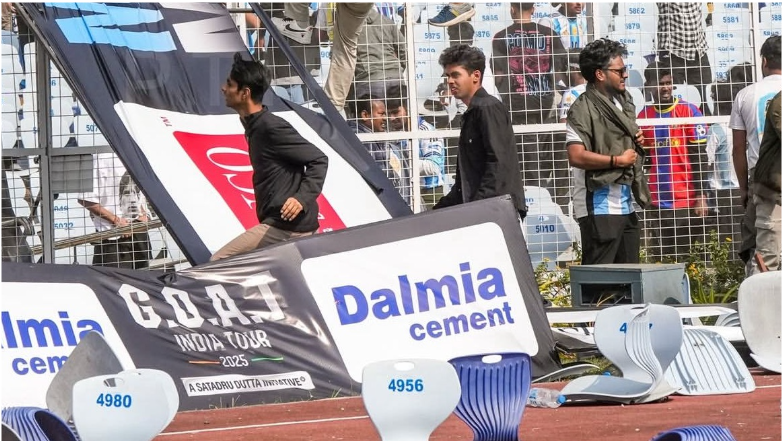
    Lionel Messi’s highly anticipated visit to Kolkata on December 13, 2025, as part of his “G.O.A.T India Tour” began with high expectations but ended in disorder and frustration for many fans at the Salt Lake Stadium.

    The Argentina football captain arrived in the city early in the morning alongside Inter Miami teammates Luis Suárez and Rodrigo De Paul to kick off the four-city tour covering Kolkata, Hyderabad, Mumbai and New Delhi. Before the main event at the stadium, Messi’s itinerary included the unveiling of a 70-foot statue in his honour, which he inaugurated remotely from his hotel. He also met with Bollywood actor Shah Rukh Khan and local officials at a separate engagement.

    Expectations were high as tens of thousands of ticket-holding spectators packed into Salt Lake Stadium, many having paid several thousand rupees for the opportunity to see the football icon in person. The event was meant to include a lap around the stadium by Messi, interactions with fans, a few penalty kicks and meet ups with former Indian cricket captain Sourav Ganguly, Shah Rukh Khan and West Bengal Chief Minister Mamata Banerjee all in the span of two hours.

    However, the scheduled programme was disrupted. As Messi entered the stadium, he was surrounded by a large group of VVIPs, officials and security personnel, creating a barrier that left many fans in the stands unable to see him clearly. Within minutes, Messi’s appearance was cut short, with him on the field for only about 20 minutes before being escorted away by security.

    In the aftermath, organisers faced sharp backlash from fans and authorities alike. Police detained the main organiser for questioning, and an investigation was launched into alleged mismanagement, including crowd control failures and misleading expectations around the event’s format. Discussions around ticket refunds were initiated as public pressure mounted. West Bengal Chief Minister Mamata Banerjee responded by issuing an apology to both Messi and the fans, expressing regret that the event did not proceed as intended. Hrishit Bhattacharya, a college student who attended the event said “We were supposed to have a once in a lifetime experience but the politicians and leaders in Bengal made sure that we are deprived of it. If not anything, we do expect a full refund from the concerned authorities.”

    The Kolkata event concluded amid administrative scrutiny and public criticism, with authorities reviewing the arrangements that led to the disruption. While Messi’s tour continued in other cities without disruption, what was intended to celebrate a global football icon instead raised questions around planning, crowd management, and accountability.

  • F1 2025: A Season of Shifts and What Awaits in 2026

    F1 2025: A Season of Shifts and What Awaits in 2026

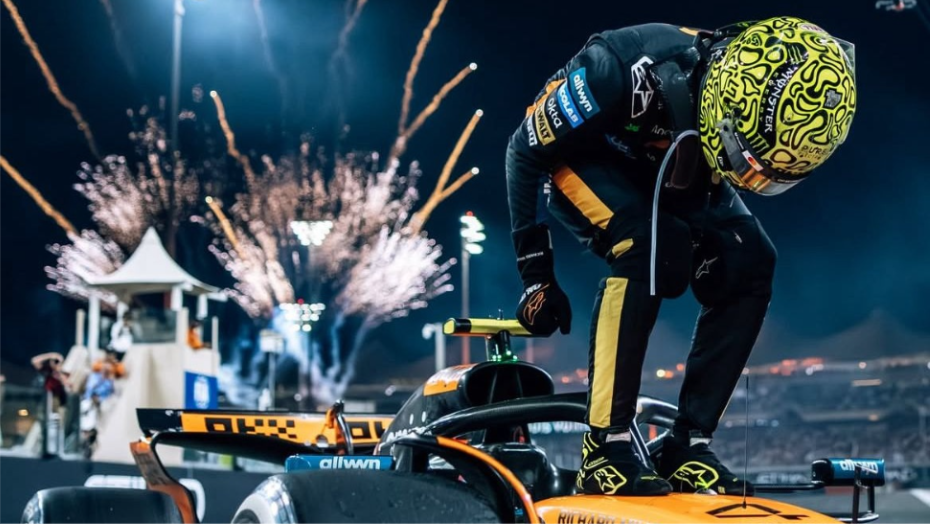
    The 2025 Formula 1 season has come to an end, with Lando Norris securing his first World Drivers’ Championship after a consistent and closely contested campaign. The McLaren driver finished the year with multiple wins and regular podium finishes, allowing him to edge out Max Verstappen in the final round, the Red Bull driver finishing only two points behind in second.

    The season was kickstarted with a celebration of Formula 1’s 75th anniversary, a live event hosted in London’s O2 Arena, where all 10 teams showcased their brand new liveries. For the sport itself, races were sold out months in advance, TV and viewership surged, while social media platforms were gaining popularity. The calendar remained one of the busiest on record, featuring 24 races and several sprint events distributed across various venues across the world.

    The season was dominated by McLaren, where, with an updated car, their mid-2020s rise, which began with incremental upgrades in 2023 and 2024, became a full-fledged championship contention this season. After a season-long battle marked by multiple wins, several shifts in the points lead, and close competition with teammate Oscar Piastri and Max Verstappen, Lando Norris emerged as the title champion. Despite setbacks including collisions, penalties, reliability issues, and a late disqualification in Las Vegas, Norris kept himself in contention through consistent podiums and key victories in Monaco, Austria, Britain, Mexico, and São Paulo. He regained the championship lead in the final phase of the season and ultimately sealed the title with a third-place finish in Abu Dhabi.

    While Norris emerged as the championship leader, Oscar Piastri’s results prompted debate among fans and analysts. Piastri led the standings for the majority of the season before facing a slump in the second half, going from a 34-point lead over Norris to being 25 points behind with two races remaining. Some argued that strategic misalignments and reliability issues hindered Piastri at key moments, leading to claims that McLaren had not fully balanced its support between the two drivers. His struggles also drew mixed opinions on McLaren’s highly adaptable 2025 car playing a decisive role in the championship.

    Max Verstappen mounted a comeback in the final phase after being 104 points behind after the Dutch Grand Prix. A strong run of results across the closing rounds reduced the gap significantly, and he reached the Abu Dhabi season finale just two points behind the championship leader. Verstappen ultimately finished the season as runner-up after falling short in the final race.

    Another notable event was Lewis Hamilton’s first year with Ferrari.  Finishing sixth this year,  inconsistencies in tyre management and pace prevented better performances. Hamilton finished with zero podiums (albeit one sprint win in China), becoming the first new Ferrari driver in 44 years to do so. Nevertheless, Ferrari viewed the season as a foundational step toward stronger performance under the upcoming regulation changes.

    The new regulation rules, set to take effect in the 2026 season, are aimed at making the cars more agile, safer and sustainable while maintaining their competitiveness. The cars will be lighter and smaller (a 30 kg weight reduction), with a redesigned hybrid power unit that increases the role of battery power and incorporates advanced sustainable fuels. Active aerodynamics, including movable front and rear wings, are being introduced to promote closer racing and reduce reliance on the current DRS system.

    In addition to these changes, there will also be a restructure of the teams and also an addition of an 11th team, Cadillac, with veterans Valtteri Bottas and Sergio Perez joining the F1 grid again. Audi will fully take over Sauber, while Arvind Lindblad will join Racing Bulls with Liam Lawson, in place Isack Hadjar who in turn replaces the outgoing Yuki Tsunoda to become teammates with Max Verstappen.

    Overall, the 2025 season delivered a new world champion, highlighted continued growth in Formula 1’s global reach, and marked the closing chapter of the current regulatory era. With teams now shifting focus toward 2026, the coming year is expected to redefine competitive order once again into the next phase of the sport.

  • India Lifts 2025 ICC Women’s Cricket World Cup, Defeating South Africa

    India Lifts 2025 ICC Women’s Cricket World Cup, Defeating South Africa

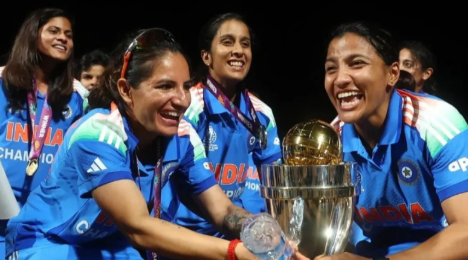
    In a historic night at the Dr DY Patil Stadium in Navi Mumbai, the Indian women’s cricket team clinched their first-ever World Cup title, defeating the South African women’s cricket team by 52 runs in the final. The victory marked a historic achievement for the Indian team, which had previously reached the finals in 2005 and 2017 but fell short on both occasions.

    Match Summary 

    India won the toss and chose to bat, posting a total of 298 for 7 in 50 overs. Shafali Verma scored 87 runs off 78 balls, providing a strong foundation with a 91-run opening partnership with Smriti Mandhana, who contributed 44 runs. In the middle order, Deepti Sharma added 58 runs, stabilising the innings after a brief slump during the middle overs.

    For South Africa, Ayabonga Khaka was the most clinical bowler, taking three wickets for 57 runs, while Marizanne Kapp maintained tight control in the death overs.

    In the second innings, South Africa fell short of the target, getting dismissed for 246 runs in 45.3 overs. Skipper Laura Wolvaardt scored a century (110 runs off 127 balls), but the rest of the batting order struggled to maintain partnerships. Renuka Singh Thakur took three wickets for 40 runs, and Deepti Sharma picked up two wickets, completing a strong all-round performance.

    Shafali Verma was named Player of the Match for her contribution with both bat and ball, while Deepti Sharma was named the Player of the Tournament award for consistent performances throughout the World Cup.

    India’s Path to the Title

    The Indian Women’s Team had a strong run, leading their group in the league stage and winning six of their seven matches, including victories over Australia, England, and New Zealand.

    In the semi-final, India beat Australia by 17 runs at the Wankhede Stadium. Shafali Verma scored 74 runs, and Renuka Singh took four wickets, which were key to their success. The final win against South Africa marked India’s first world title in women’s cricket after many years of coming close.

    Team Composition

    The core group included Harmanpreet Kaur (captain), Smriti Mandhana (vice-captain), Shafali Verma, Deepti Sharma, Richa Ghosh (wicketkeeper), and Renuka Singh Thakur. The bowling attack combined pace and spin effectively, with Pooja Vastrakar, Rajeshwari Gayakwad, and Shreyanka Patil contributing at crucial stages. Pratika Rawal, one of the youngest members of the team and a batting all-rounder, played a pivotal stabilising role in the middle order, scoring 308 runs (the second highest run scorer) before an unfortunate injury during the match with Bangladesh, which ruled her out of the final.

    Harmanpreet Kaur, in her third World Cup as captain, provided tactical consistency and led the team to its most successful global campaign. The fielding unit, traditionally an area of concern, showed marked improvement through tighter positioning and reduced errors.

    Conclusion

    India’s 2025 ICC Women’s World Cup victory represents a significant moment in both sporting and institutional terms. Beyond the immediate celebrations, the challenge now lies in sustaining momentum through continued financial and infrastructural support. If maintained, the 2025 triumph may stand as the foundation of a new era for women’s cricket; one in which India is not only a participant but a defining power in the sport.

  • Indian Tennis Star, Grand Slam Winner Rohan Bopanna Announces Retirement

    Indian Tennis Star, Grand Slam Winner Rohan Bopanna Announces Retirement

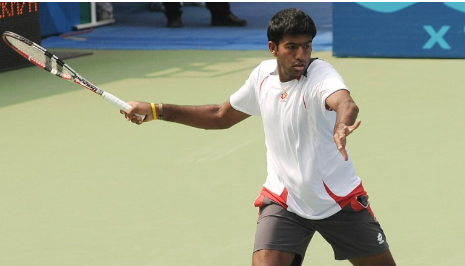
    Veteran Indian tennis player Rohan Bopanna has announced his retirement from the sport, bringing an end to an illustrious 22-year-long career. At age 45, Bopanna formally revealed his decision on 1st November 2025 via a statement on social media.

    Over the years, he amassed 26 ATP tour‐level doubles titles, along with a landmark victory at the 2024 Australian Open alongside partner Matt Ebden, which helped him achieve the ranking of world No. 1 in men’s doubles, becoming the oldest player ever to do so. Starting his professional journey in 2003, he faced injuries and erratic performances before winning his first ATP title in 2008 at the Los Angeles Open while partnering with American player Eric Butorac. A big break followed in 2010 when he reached the US Open men’s doubles final with his Pakistani partner Aisam-ul-Haq Qureshi, which became known as the “IndoPak Express.” They were defeated by American legends Bob and Mike Bryan in straight sets: 6-7(5), 6-7(4). By 2013, Bopanna had become one of the top doubles players in the world, achieving a career-high doubles ranking of World No. 3.

    Seven years later, Bopanna won the 2017 French Open mixed doubles title with Gabriela Dabrowski, further establishing his status as a top doubles player. However, his most notable highlight was when he lifted the Australian Open in 2024, partnered with home hero Matthew Ebden, winning the men’s doubles title. In the finals, they defeated the Italian team of Simone Bolelli and Andrea Vavassori with a score of 7-6 (0), 7-5. At 43 years old, Bopanna became the oldest male player in the Open Era to win a Grand Slam men’s doubles title. This victory also brought him to the world No. 1 men’s doubles ranking, marking the first time in his career. For Bopanna, this was his first men’s doubles Grand Slam title, following his previous win in mixed doubles at the 2017 French Open.

    Throughout his career, Bopanna became an important mentor and supporter of Indian tennis. He helped younger players through his academy in Bengaluru, promoting doubles as a legitimate and strategic sport. His impact went beyond the court, encouraging professionalism and fitness among the next generation of Indian athletes.

    Bopanna’s journey from a hopeful young player in Coorg to a Grand Slam champion and a model of sportsmanship represents one of Indian sport’s most impressive stories. In the end, Rohan Bopanna leaves the game just as he played it: with grace, gratitude, and strong passion.

  • McLaren Racing Crowned as the Constructors’ Champions of 2025

    McLaren Racing Crowned as the Constructors’ Champions of 2025

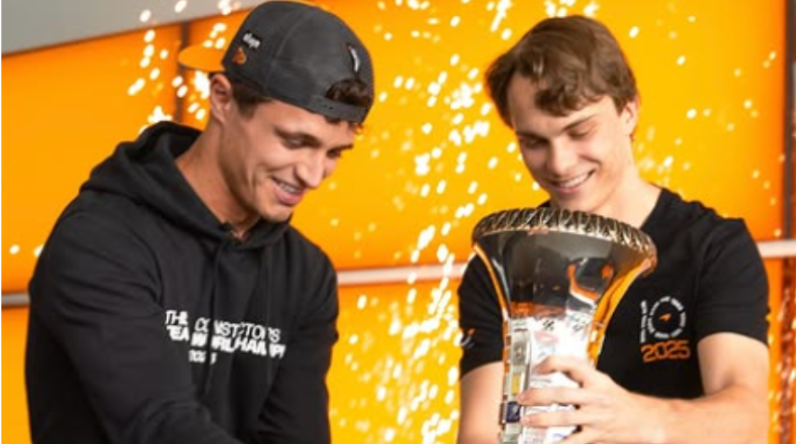
    In a remarkable show of its comeback, McLaren Racing has won the 2025 Formula 1 Constructors’ Championship. This is its second consecutive title and an important achievement that confirms the team’s return to the highest level of the sport.

    McLaren’s 2025 performance stood out for its consistency, speed, and teamwork. After the Singapore Grand Prix, the team had gathered a total of 650 points, which was double the amount of its closest competitor and enough to clinch the championship with six races to go, achieving 12 wins in 18 races and earning 28 podiums between the two drivers.

    McLaren’s 2025 machine, the MCL39, proved to be more than just an upgrade. Its aerodynamic efficiency, cooling systems, and suspension worked well on various circuits. By mid-season, the car often ranked as the fastest in many qualifying sessions and demonstrated race pace in different conditions. On the driver front, McLaren’s lineup of Lando Norris and Oscar Piastri became a strong duo. They delivered impressive finishes, secured wins, and frequently occupied the front row, contributing steadily to the constructors’ tally through both qualifying and race performance. Their consistent results allowed McLaren to build a lead that eventually became unassailable.

    Beyond the car and drivers, the McLaren team seemed unified at last. Every department, including design, factory, trackside engineering, and strategy, played a part. Their updates came at the right time, and their race strategies were flexible, minimising mistakes that could have cost them, and their decision-making under pressure improved.

    While this achievement is significant, McLaren knows that 2026 will bring major regulatory changes. The risk is that their current dominance may not carry over to the new rules. Managing the relationship between two top drivers is always tricky; when competition is tight, conflicts within the team become more likely. Keeping morale high, avoiding costly mistakes, and staying innovative will be crucial. Their focus shifts to the Driver’s Championship, with both Piastri and Norris the main contenders to take the crown, in what promises to be a close fight till the end of the season.

    In 2025, McLaren did more than just win. They overcame sceptics and moved past previous failures. They reestablished themselves not just as competitors but as leaders. The Constructors’ title is a reward for the drivers, engineers, and everyone in the pit lane and factory; this victory feels like a fresh start. Now, the question is whether they can build on this success to achieve even greater goals while adjusting to the upcoming changes in the sport.

  • Centre Court’s New Classic: A Tale of Fire and Ice

    Centre Court’s New Classic: A Tale of Fire and Ice

    Muhammad Ali versus Joe Frazier, Manchester United versus Liverpool, the Boston Celtics versus the Los Angeles Lakers, Lin Dan and Lee Chong Wei: Sport thrives on rivalries. Audiences become fans of an athlete’s skill, personality, and consistency, and through that connection find a greater thrill in the game itself. Rivalries bring these audiences together, turning their support into fuel for a sport’s growth. Throughout history, these contests have revolutionised sports, and tennis has been fortunate enough to host many.

    In men’s singles Tennis, multiple rivalries have defined eras, like Borg-McEnroe and Sampras-Agassi, but the most impactful of them all was between Roger Federer and Rafael Nadal. Federer was an elegant powerhouse famous for his effortless game and remarkable single-handed backhand, while Nadal was the “King of Clay”, owing to his high-spinning forehand and near-perfect record on clay. Along with Novak Djokovic, they ruled men’s tennis for nearly two decades. Yet, the Federer-Nadal pairing remained special, built on a foundation of mutual respect and genuine friendship. With Federer’s retirement in 2022 and Nadal’s farewell tour in 2024, the spot for the next big rivalry in tennis was open for contention, and two young stars have quickly taken over.

    First, meet Jannik Sinner. Born in San Candido, Italy, the 24-year-old rose to the top of the men’s standings, achieving the World Number One rank in 2024 after his first Grand Slam win at the Australian Open. Leaving his home at just fourteen to train full-time, he began his development under renowned coach Riccardo Piatti, a mentor to talents like Novak Djokovic and Richard Gasquet. Sinner announced his arrival on the ATP tour in 2019 by winning the Next Gen ATP Finals in Milan. The following year, at age 19, he became the youngest Italian in the Open Era to win an ATP title. Driven by early financial strains, he recently revealed that he had promised his parents he would quit tennis if he wasn’t in the top 200 by age 24. Today, with four Grand Slams and 21 ATP titles to his name, it is safe to say he has surpassed his own expectations.

    Next is Carlos Alcaraz, a 22-year-old Spaniard and the current World Number One. Characterised by his innate talent and aggressive playstyle, Alcaraz has a natural feel for the game. At fifteen, he began his journey under the guidance of fellow Spaniard and former world number one Juan Carlos Ferrero, turning pro a year later at sixteen. A true tennis prodigy, Alcaraz became the youngest male player in history to reach the No. 1 ranking at 19 years of age, following his first major win at the 2022 US Open. Since then, he has acquired five more majors along with 23 ATP titles, and with his young age, this is only the beginning.

    This year, Sinner and Alcaraz have duelled numerous times and their rivalry has electrified the sport. Their first meeting of the season was in the final of the Italian Open, Sinner’s first tournament after facing a three-month ban due to doping. At his home tournament, Sinner played a close match, but ultimately Alcaraz emerged victorious with a scoreline of 7-6(7-5), 6-1. But this was just a teaser for what was coming next.

    At the French Open, Sinner managed to set another final against Alcaraz, where the two made history by playing one of the most extraordinary matches of the decade. Alcaraz made a show-worthy comeback, saving three match points to beat Sinner 4-6, 6-7 (4), 6-4, 7-6 (3), 7-6 (10-2) in the longest French Open final ever at 5 hours and 30 minutes, winning his second consecutive Roland Garros title. Alcaraz also ended Sinner’s unbeaten record at Grand Slam finals, while he protected his own winning streak. The story continued at Wimbledon, the two meeting yet again in the final. Yet this time, Sinner turned the tables and handed Alcaraz, the two-time defending champion, his first loss at a major final 4-6, 6 4, 6-4, 6-4. It was Sinner’s second Slam of the year, winning the Australian Open earlier in January after defeating Alexander Zverev.

    The recent US Open was filled with the likes of Novak Djokovic, Ben Shelton, Taylor Fritz and Lorenzo Musetti providing much more competition, yet for the third consecutive time Sinner and Alcaraz faced off in a Major final. Alcaraz ended the Italian’s streak of 27 slam wins on hard courts to take the title, and in the process splitting the four grand slams between them for two straight years. Alcaraz also dethroned Sinner as the World Number One, ending his 65-week reign at the top.

    These matches are early signs of a brewing rivalry that has the potential to sustain itself for years to come. A year of 5 finals and counting, they have shown a remarkable hold over the ATP tour, nobody else being able to match them in Slams. While Sinner is the more calculated player, grinding down his opponents with immaculate defence and consistent baseline strokes, Alcaraz is extremely aggressive with a variable playstyle, incorporating drop shots and a great net presence into his arsenal. As Sinner himself alluded, Alcaraz brings the “firepower and hot shots,” while he provides the composure of a relentlessly solid player. What more could we ask for? Perhaps the dawn of the next Big rivalry in the sport.

  • R. Vaishali Clinches Grand Swiss Title; Secures Spot in 2026 Women’s Candidates

    R. Vaishali Clinches Grand Swiss Title; Secures Spot in 2026 Women’s Candidates

    Grandmaster R. Vaishali has officially qualified for the 2026 Women’s Candidates Tournament after winning the 2025 FIDE Women’s Grand Swiss in Samarkand, Uzbekistan. This marks her second consecutive Grand Swiss title and places her alongside fellow Indians Koneru Humpy and Divya Deshmukh as confirmed participants in the Candidates.

    Vaishali clinched the title with 8 points from 11 rounds, tying with Russia’s Kateryna Lagno at the top. The tie-break, determined by the average rating of opponents, went narrowly in her favour, confirming her as the champion. It was her second straight Grand Swiss victory, and with it came the coveted Candidates berth, an event that decides the challenger for the Women’s World Championship.

    For Vaishali, the past few months have been a journey of sharp contrasts. At the Chennai Grand Masters Challengers, she suffered a rare collapse, losing seven consecutive games and finishing last in the standings. The setback cost her rating points and, more importantly, dented her confidence to the point where she briefly considered stepping away from competition. Yet just weeks later, in Samarkand, she turned that disappointment into motivation, putting together a resilient run at the FIDE Women’s Grand Swiss that not only restored her momentum but also sealed her place in the 2026 Candidates.

    Her qualification also contributes to a broader landmark for Indian chess. For the first time, three Indian women will appear in the Candidates: Koneru Humpy, Divya Deshmukh, and now Vaishali. It is a testament to the country’s deepening bench strength in the women’s game, long carried by Humpy and Harika Dronavalli, but now increasingly defined by a younger generation.

    Vaishali credits her decision to press on to her family’s encouragement, particularly from her younger brother, fellow Grandmaster R. Praggnanandhaa. Their household has already become a symbol of India’s chess renaissance, and with this latest result, the narrative of the “sibling duo” reaches another milestone.

    The road to the Candidates will demand even greater preparation, but Vaishali’s victory in Samarkand already illustrates her resilience and ability to respond under pressure. From the lows of Chennai to the highs of Grand Swiss, her qualification is another sign of the growing presence of Indian women at the highest levels of world chess.

  • A Historic Finish: India Clinch a Bronze at the CAFA Nations Cup

    A Historic Finish: India Clinch a Bronze at the CAFA Nations Cup

    India made an unforgettable debut at the Central Asian Football Association (CAFA) Nations Cup by placing third, following a close penalty shootout win over Oman. The result marked a historic podium finish for the Blue Tigers on their very first appearance in the tournament.

    An Asian (C)affair

    The tournament, held from 29 August to 8 September and co-hosted by Uzbekistan and Tajikistan, featured six core CAFA nations alongside guest teams including India and Oman. Established in 2015, CAFA is one of the five regional bodies under the Asian Football Confederation, and its flagship tournament is seen as a showcase for Central Asia’s footballing talent.

    India, initially entering as one of the lower-ranking teams, slowly crept its way up with commendable poise. India won over Tajikistan 2- 1 in their first match, and despite a 3-0 loss to Asian giants Iran, India had done enough to earn a spot in the knockout phase.

    The Big Game

    During the playoffs for the bronze with Oman, the Middle Eastern team went ahead after a shot from Jameel Al-Yahmadi in the 55th minute, before Udanta Singh Kumam scored a goal following a long throw-in in the 81st minute, making the score equal. A 1-1 draw, even after extra time, led to a penalty shootout. Lallianzuala Chhangte, Rahul Bheke, and Jithin MS converted their attempts, and goalkeeper Gurpreet Singh Sandhu’s save on the decisive penalty sealed the win for India, marking their first-ever triumph over Oman in nearly a dozen encounters.

    New Coach, New Team?

    At the heart of India’s success story was the influence of new head coach Khalid Jamil. Jamil is a former professional footballer who has represented India internationally and previously coached the Indian Super League (ISL) Club Jamshedpur FC. Now, as head coach for the Indian football team with the CAFA cup being his debut tournament, Jamil reshaped the team’s identity by tightening the defence, instilling tactical balance, and using long throws as offensive weapons. The equalising goal against Oman was executed through a long throw. Under his guidance, the team seems to be defensively sound and tactically aware than under previous coaches, a hallmark of Jamil’s style also seen at Jamshedpur.

    This podium finish is significant because it highlights India’s growing ability to compete beyond South Asia. Defeating Oman for the first time and winning a medal can boost the team’s morale and reputation. It also provides the squad with important momentum as they prepare for upcoming tournaments, including the AFC Asian Cup qualifiers in 2027.

    What’s Next?

    Going forward, consistency and sustaining momentum are what the team needs to focus on. With the proper guidance and determination, the team can compete with stronger nations and continue to grow on the international stage. The next big target will be the AFC Asian Cup 2027 qualifiers, where India faces Hong Kong, Singapore, and Bangladesh in the group stage. Alongside this, friendlies and youth-level tournaments will provide opportunities to test new talent and build depth. If the team can carry forward the confidence from their CAFA Nations Cup performance, they will be better prepared for these challenges and steadily strengthen their place in Asian football.

  • Divya Deshmukh Creates History: Crowned Champion at 2025 FIDE Women’s World Cup

    Divya Deshmukh Creates History: Crowned Champion at 2025 FIDE Women’s World Cup

    19-year-old Divya Deshmukh from Nagpur made history by winning the final of the 2025 FIDE Women’s World Cup held in Batumi, Georgia. In a ‘passing of the torch’ moment, Divya defeated fellow Indian Koneru Humpy, who had become India’s first female Grandmaster in 2002. With this victory, Divya became the 88th Grandmaster from India and only the fourth Indian woman to earn this prestigious title. She secured victory with a 1.5-0.5 score in the tiebreakers.

    After two draws in the classic games, the match went to tiebreaks.  In the first game, Divya played with the white pieces and created several chances to win, but was unable to convert her advantage. Despite Humpy’s mistakes, the 19-year-old could not capitalise on the opportunities and the game ended in a draw. After the first tiebreaker, Divya told the official broadcaster of FIDE that the previous game did not go her way, and that she got into a “mess for no reason.”

    However, she bounced back in the second game, defeating 38-year-old Koneru Humpy, the reigning World Rapid Chess Champion and current World No. 5, to become the first Indian woman to win the World Cup. Both finalists have qualified for the upcoming 2026 FIDE Women’s Candidates Tournament, a crucial step towards competing for the World Chess Championship. Entering the tournament as the 15th seed, Divya outplayed several stronger, higher-ranked opponents on her way to the title, displaying exceptional tactical skill and determination.

    Divya’s mother, a doctor, stood by her side during her moment of glorious victory. Overcome with emotion, the two exchanged a heartfelt hug. “It’s hard for me to speak right now. It definitely means a lot, but of course, there’s a lot more to achieve,” said Divya. “I’m hoping this is just the start.” She stated that she believed her win was fate because, before the tournament, she had not even achieved a GM norm, let alone her victory in the FIDE Women’s World Cup.

    Divya Deshmukh celebrating her win with her mother.  Photo: X/@FIDE_chess

    A GM norm is earned by delivering a high-level performance in a FIDE-rated tournament; typically over nine games against strong, international opponents, including at least 3 Grandmasters. Divya’s rating also did not meet the required rating (a standard 2600) to be eligible for the coveted title. Yet, by winning this prestigious event, she bypassed all the usual FIDE requirements, thus emerging as the 44th female Grandmaster in the world. Prior to this, Divya has won several gold medals across major international events, including the World Youth Championship, Asian Championship, and World Junior Championships.

    Divya’s victory marks a historic milestone in Indian chess and has been widely celebrated, including by Prime Minister Narendra Modi, who tweeted: “It’s been a phenomenal day for Indian Chess! Divya Deshmukh has not only won the 2025 FIDE Women’s World Cup but also become a Grandmaster. Congratulations to her. Her accomplishment will motivate many people and contribute to chess becoming even more popular among the youth.” Nitin Gadkari, the Union Minister of Road Transport and Highways, also congratulated her, stating, “This is a moment of joy and pride not only for Nagpur and Maharashtra, but also for the entire country.” Divya will now set her sights on the upcoming Grand Swiss tournament in Uzbekistan this September.

  • Debut Winners Galore: A review of Wimbledon 2025

    Debut Winners Galore: A review of Wimbledon 2025

    Sinner Redemption

    A month after their five-and-a-half-hour long explosive final at the French Open, Carlos Alcaraz and Jannik Sinner once again squared up, this time at Centre Court, to duel for the Wimbledon trophy. Alcaraz was gunning for his third consecutive Wimbledon title, while Sinner aimed to avenge his French Open loss to the Spaniard. Sinner had defeated last year’s finalist and seven-time winner Novak Djokovic in the semi-finals, while Alcaraz had the better of American Taylor Fritz en route to the final.

    While Alcaraz started strongly and won the first set, Sinner found another gear and won the following three sets with ease, winning the match with a scoreline of 4-6, 6-4, 6-4, 6-4. This was Sinner’s first win over Alcaraz since the China Open in 2023, the Spaniard being a constant thorn in the Italian No. 1’s side. With this win, Sinner extended his lead at the top of the ATP rankings with 12,000 points, while Alcaraz lost ground and dropped to 8,600 points, albeit still in second place. Sinner also became the first Italian player to win Wimbledon in singles.

    Swiatek Domination

    As is tradition on grass, the WTA was filled with drama and unexpected losses from the top seeds. Reigning champion Barbora Krejcikova went out in the third round to Emma Navarro, and by the time the quarterfinalists were decided, a first-time winner was guaranteed. After the dust settled, it was former World No. 1 Iga Swiatek and American Amanda Anisimova who made the final. Swiatek defeated Swiss Belinda Bencic in the semi-final, while Anisimova upset current No. 1 Aryna Sabalenka in a tight three-setter to make her first Grand Slam final. This was the third time in three Majors that an American player defeated Sabalenka.

    Critics favoured Swiatek for being a five-time Major winner and boasting an unbeaten Slam final record, but still gave Anisimova a chance due to her excellent performance against Sabalenka. However, in a surprising turn of events, Swiatek swept the rug off under the American, winning the match with a scoreline of 6-0, 6-0, with Anisimova failing to win a single game and only winning 24 points throughout the match. It was only the second time in the Open Era that a women’s final ended with this scoreline, with German great Steffi Graf defeating Natasha Zvereva similarly in the 1988 French Open final. Swiatek consoled a tearful Anisimova at the net before celebrating the win with her team.

    With this match, Swiatek overcame her trophy slump since the 2024 French Open and jumped back into the top three in the rankings. Despite the devastating loss, Anisimova moved five places up to seventh in the rankings on account of reaching the final.

    Doubles

    The British duo of Julian Cash and Lloyd Glasspool emerged victorious at their home slam, defeating Rinky Hijikata and David Pel in the Men’s Doubles final with a score of 6-2, 7-6(7-3). This was the first time in the Open Era that a British pairing clinched the Wimbledon trophy, as well as being the first Major win for both Cash and Glasspool.

    Veronica Kudermetova and Elise Mertens won the Women’s Doubles after triumphing over Hsieh Su-Wei and Jelena Ostapenko with a score of 3-6, 6-2, 6-4, with Kudermetova winning her first Major title while Mertens won her fifth. In the Mixed Doubles, Sam Verbeek and Katerina Siniakova won a tight final against Joe Salisbury and Luisa Stefani, winning by 7-6(7-3), 7-6(7-3). Verbeek won his first Major title with this win, while Siniakova, the world No. 1 in doubles, clinched her eleventh.

    Image Source: Image credit: Iga Swiatek on Instagram