Category: Business

  • After Nearly a Century, HUL Gets Its First Female Chief

    After Nearly a Century, HUL Gets Its First Female Chief

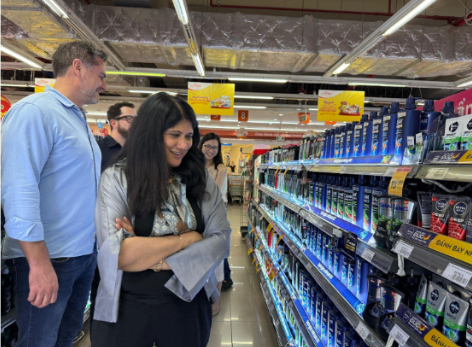
    For the first time in its 92-year history, Hindustan Unilever Limited (HUL) will be led by a woman. Priya Nair has been appointed as the new CEO and Managing Director of HUL, and will be taking over from Rohit Jawa on August 1st, 2025.

    Priya Nair isn’t new to HUL. She has worked for the company for almost 30 years, starting in sales and marketing and steadily climbing the ladder, proving herself every step of the way. She is currently the President of the beauty and wellbeing sector at Unilever, where she led iconic campaigns for brands like Dove, Rin and Comfort. She is also known for creating stories that connect with people, especially women and families, and her in-depth understanding of the Indian market made her one of the most respected marketers in the industry.

    But this move is more than just a change in the job title. It highlights the slow pace of change in the Indian boardrooms. HUL, a household name with products in nearly every Indian home, had never had a female CEO for almost a century, and Nair’s appointment is a clear sign that leadership is finally becoming more inclusive.

    She brings to the table not just experience, but also empathy. Her leadership style is expected to focus on people, sustainability, and innovation. As consumer habits change, especially post-pandemic, HUL will need fresh ideas to stay relevant. Her track record shows she understands this shift. She led campaigns that didn’t just sell soap or shampoo; they told stories that made people feel seen and heard.

    Her promotion also sends a message to young women across the country – the top seat is within reach. Even in industries where men have always held power, things are changing. It’s a reminder that talent, vision, and consistency can break barriers,  even those built over nine decades.

    HUL is India’s biggest fast-moving consumer goods (FMCG) company. It sells everything from tea and detergent to skincare and health products. With over 50 brands in its portfolio and a presence in every part of the country, leading HUL is no small task. But Nair is seen as someone ready for the challenge.

  • Adani and Ambani join hands to “Redefine Auto-Fuel experience”

    Adani and Ambani join hands to “Redefine Auto-Fuel experience”

    In a surprise move, business rivals Gautam Adani and Mukesh Ambani have strategically tied up to collaborate in the energy sector. Mukesh Ambani-owned Reliance Industries venture Jio-bp and Adani Total Gas Ltd announced a mutual agreement on 25th June 2025.

    This deal is important as major private players like Torrent Power earlier and now Adani and Ambani are paving the way to enter and reshape India’s government-dominated fuel market. Jio-bp, the fuel venture of Reliance Industries, is already in partnership with the UK’s bp. ATGL, Adani Total Gas Ltd, is a joint gas venture between the Adani Group and Total Energies of France.

    In this agreement, select Jio-bp-owned fuel stations will install Adani Total Gas’ CNG (Compressed Natural Gas) stations in their outlets; similarly, select Adani Total Gas stations will install Jio-bp’s petrol and diesel dispensers in their outlets. According to a joint statement reported by PTI, the partnership will span both existing and upcoming outlets of both companies, and it aims to “redefine the auto-fuel retail experience for Indian customers”. There are a total of 1,972 petrol pumps operated by Jio-bp in India, whereas Adani Total Gas Limited has 650 CNG outlets in India. This agreement is also said to cover collaboration on compressed biogas, electric vehicle charging points and other low-carbon fuel solutions, the companies said.

    Last year in March, the two business conglomerates had signed a pact for their first-ever collaborative power project in Madhya Pradesh. Reliance Industries had bought a 26% stake in Adani’s power project in Madhya Pradesh.

    Suresh P. Manglani, Executive Director and CEO of Adani Total Gas Ltd, said in an official statement, “It is our shared vision to provide a complete range of high-quality fuels at our outlets. This partnership will enable us to leverage each other’s infrastructure, thus enhancing customer experience and offerings.” Chairman of Jio-bp, Sarthak Behuria, said, “We are united by a shared vision to offer our customers a superior selection of high-quality fuels. Jio-bp has always been committed to delivering an exceptional customer experience, and this partnership allows us to leverage each other’s strengths to further enhance the value we provide to India.”

    Gautam Adani and Mukesh Ambani, both hailing from the state of Gujarat, have always been viewed as rivals, ranging from being competitors for Asia’s richest person to competing in the expansion of business in different sectors. Observers have seen this move as strategic. It will be interesting to see how this deal works out in the future.

  • Trump’s 2025 Tariffs vs. the Global Economic Fallout

    Trump’s 2025 Tariffs vs. the Global Economic Fallout

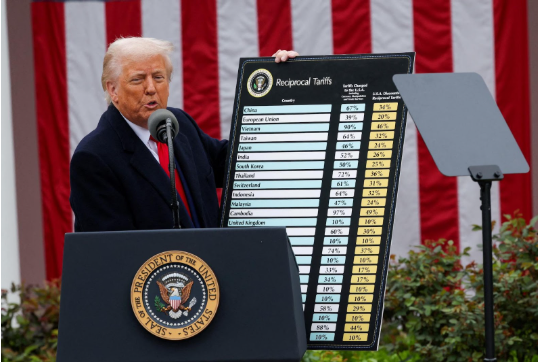
    American President Donald Trump’s anticipated return to the White House in 2025 came with a renewed “MAGA” (Make America Great Again) agenda, the first of which caused a worldwide domino effect on the trade sphere. At a major event in the White House Rose Garden on April 2, 2025, Trump’s oration enlightened America on excessively increased tariff rates moving forward, on imports from their major trading partners.

    The Organisation for Economic Co-operation and Development (OECD) has confirmed the average U.S. tariff rate to jump from 2.5% to the highest ever since 1938, 15.4%. China is faced with an effective tariff rate of 54% on certain goods, while India, the European Union, Japan, and South Korea all contend with tariffs between 20% and 34%. Even allies like Canada and Mexico, part of the USMCA agreement, have not been spared, slapped with 25% tariffs on most goods and 10% on energy products.

    Trump’s tariff policy stems from observing the U.S. trade deficit. His perspective of the current trade scenario is based on America suffering direct financial losses and not a complete structural macroeconomic metric. According to Trump, the more America imports, the more it bleeds. His solution? Tariffs, blunt,  and all-encompassing.

    Tariffs are Trump’s biggest tool to set the policy straight once and for all. It is expected to solve job losses, manufacturing decline, and foreign policy tensions once and for all. But should he believe that economic complexity can bend so easily to political tactics?

    The OECD has responded with stern warnings. In its revised global forecast, it lowered worldwide growth projections from 3.3% in 2024 to just 2.9% for 2025 and 2026. The U.S. itself is expected to slow from 2.8% to 1.6% in 2025, a sharp decline driven by declining investment and weakening consumer confidence. The OECD is clear: Trump’s tariffs are already disrupting trade, straining supply chains, and disincentivising corporate expansion.

    Tariffs are a strategic tool for the regulation and implementation of economic shielding, disguised as tax, that consumers are compelled to pay in the form of expensive pricing. This year’s tariffs were like a tidal wave crashing against sectors like Chinese electronics and Vietnamese textiles, to Indian pharmaceuticals and European automobiles. Businesses that depend on imports are now caught in a vicious cycle of absorbing higher input costs or passing them on to customers. For working-class Americans, the demographic Trump caters to, championing inflationary pressure has been the most direct blow as of yet.

    The new Trump-initiated “reciprocal tariffs” have caused a storm in nations like Cambodia (49%), Bangladesh (37%), Sri Lanka (44%), and Taiwan (32%) based on their trade barriers and utmost economic injustice. These countries have already been considered to be low-income economies that rely heavily on exports to the U.S., toppling them into instability as a whole. Thus, pushing them toward alternative trading blocs like BRICS or further into China’s sphere of influence.

    Allies of this policy see no wrong in it and have argued that the tariffs are necessary to counter decades of unfair trade, or in Trump’s words, “being ripped off,” and that restoring domestic manufacturing is the only way out. Economically, the increased tariff rates have caused a ripple effect across production ecosystems, increasing costs for everything from smartphones to semiconductors.

    The most alarming consequence of these tariffs is the probability of fracturing the global economy. The OECD warns that de-globalising production could reduce global GDP by up to 5%. Countries are already responding in kind, either with retaliatory tariffs or by strengthening trade agreements that exclude the U.S. Isolating America’s economy is trading risky waters during this troubled time of climate change, technological governance, and public health.

    These tariffs have alienated key allies in Europe and Asia, and penalised countries like India and Vietnam, which the U.S. was courting as strategic counterweights to China, the administration has unfortunately undercut its own foreign policy goals. It has become clear that economic power is a pillar of geopolitical influence, and weaponising trade risks eroding the very alliances that give the U.S. leverage in global affairs.

    Protecting America’s economic stature may offer temporary political gains, especially in key industrial swing states. But profound long-term costs will fester sooner or later in the economic, diplomatic, and social landscape. Tariff wars ending on civil terms have rarely shown up in history- declining innovation, loss of wealth, and regulation of painful methods of recovery will only be found at the end of this tunnel.

    President Trump, for now, should be reviewing his goals to ensure a more resilient and fair vision within this competitive American economy. The answer to successful trade policies and moulding America into a self-reliant nation lies not in walling off trade, but in investing in domestic capabilities: infrastructure, education, innovation, and green industries as the appropriate strategy that combines smart regulation, multilateral agreements, and long-term planning. It is essential for trade to reform, but not be completely wiped out of existence.

    The global economy is too interconnected, too interdependent, to retreat behind tariff walls. In choosing tariffs as his flagship policy once again since 2018, Trump may be betting on nationalism. But the world, and the economy, may not follow him this time.
  • Hindenburg Research Calls it Quits: The firm that shook financial empires leaves the arena

    Hindenburg Research Calls it Quits: The firm that shook financial empires leaves the arena

    As 2025 started with a flurry of events, it also marked the end of an era. Amid controversies, the US-based short-selling firm, Hindenburg Research, which attracted worldwide interest due to its short-selling strategies, and more importantly, the reports that led to the loss of billions of dollars for the India-based Adani group, announced its decision to cease operations on 16 January 2025. The company that had charged more than 100 individuals through their work has decided to mark an end to its run.

    Founded by Nathan Anderson in 2017, Hindenburg Research was an investment research firm that exposed corporate fraud and financial scams. The short-selling stock firm grew in prominence in India and made international news after it published a report alleging that the Adani Group was involved in financial malpractices. The 30,000-word report titled ‘Adani Group: How The World’s 3rd Richest Man Is Pulling The Largest Con In Corporate History’ released in January 2023, caused international waves as it exposed the company of being involved in numerous breach of ethics, such as financial irregularities, stock manipulation, improper tax havens and high levels of debt within the company.

    In a personal note, Nate Anderson shared that they had been planning to shut down since 2024 and that there was no specific reason behind the decision. Although he cited completing all his goals as one of the reasons that led to the decision to shut down, he also mentioned how it is time for him to move on. “I now view Hindenburg as a chapter in my life, not a central thing that defines me,” he stated in the note.

    Anderson, with minimal capital, no background in finance, and three lawsuits up his sleeve, did not have an easy road to success. He went into detail about how the journey has also been intense and, at times, all-encompassing. The founder considers his journey to building the firm “nothing less than a dream.”

    The Adani saga that the Hindenburg was involved in was nothing short of a spectacle that led to Gautam Adani losing the title of Asia’s richest man, which resulted in investigations for a long time. Although the company denied all allegations, it still caused a massive sellout, wiping almost $150 billion from its stock value. Hindenburg didn’t stop at this and went on to slam allegations against the SEBI group, accusing the SEBI chief of having links to offshore hedge funds, which are allegedly linked to the multi-billion-dollar Adani Group.

    While they shook financial empires in India after the report, Hindenburg gained global attention much earlier in 2020 after they were involved in a high-profile case where they accused Nikola, an electric truck maker owned by Trevor Milton, of misleading investors about the technology they used.

    While the company has decided to cease operations and is planning on exiting, they’re far away from leaving the spotlight. According to some documents filed in a court case in Ontario, Anderson has been under scrutiny for alleged connections to hedge funds in preparing reports that targeted companies. According to the Market Frauds Portal, there has been an alleged collaboration between Hindenburg and Hanson funds in preparing reports. Due to a lack of disclosure about such a collaboration, the US Securities and Exchange Commission (SEC) could charge them with securities fraud.

    As the short-selling firm exits the scene, its legacy will remain engraved in controversies.