Category: Art, Culture and Entertainment

  • Is ‘F1 – The Movie’ Hollywood’s Victorious Return to the World of Racing Movies?

    Is ‘F1 – The Movie’ Hollywood’s Victorious Return to the World of Racing Movies?

    ‘F1: The Movie’ follows Sonny Hayes (Brad Pitt), an ex-F1 driver who retired from the sport after a career-ending injury and now races in any series he can, in any car he can, chasing the need for speed. Hayes is brought back to Formula One at the request of Apex GP team owner, Ruben Cervantes (Javier Bardem), who used to be his teammate during his first stint in F1. Hayes is set to drive along with Apex GP’s rookie driver, Joshua Pearce (Damson Idris).

    From the get-go, it’s made very evident that Hayes is a one-man team and he only listens to one man: himself, and that he is not above putting himself or others in harm’s way if it gets him that win. We see this perception challenged over the course of the film as Hayes bonds with the Apex GP team, but despite his best efforts, the team struggles to stay afloat.

    The Good…
    The film does an incredible job of immersing you in the world of racing. During a scene in the third act of the film, Hayes describes the perfect moment of being in the car, one where he feels like he’s flying. You see this feeling play out during the last race of the season, and you truly understand exactly what he was talking about.

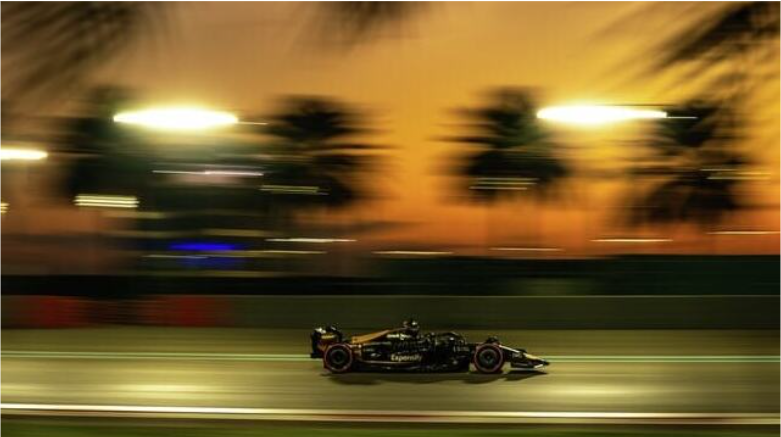
    Claudio Miranda, the Director of Photography for this film, took the work he and Joseph Kosinski did during Top Gun: Maverick and built on it further. Miranda and Kosinski have worked together multiple times, and Miranda describes their relationship as one where they love to overcome new challenges. With Top Gun: Maverick, that was fitting six cameras into the cockpit of a fighter jet, and with F1, their enemy was weight. To tackle this problem, they fit a Sony FX3 sensor (a very accessible camera) into a camera body, and Panavision built custom remote heads that could be rigged onto the cars, which give us the iconic whip pans during the racing sequences of this film.

    … the Bad…
    Fans of the sport did receive more than enough warnings from the internet and early reviews to leave the technical brain behind and just enjoy the film for what it is: entertainment. Unfortunately, there were quite a few moments when the suspension of disbelief was thrown entirely out the window. Whether it be as tiny as the F1 race calendar being jumbled around or as large as the Apex GP team dealing with car damage fairly often, as a team on the verge of bankruptcy and liquidation, these errors start to pile on. These details are supposed to act like easter eggs and hype up any fans of the sport watching, and it’s actually a great way to up the stakes if you think about it from a narrative point of view.

    Besides the little technical errors, it might not be the best representation of the current era of racing (the early 2010s to now). From a meta perspective, this film is neither fictional nor documentary in nature, with a fictional team made up of characters inserted into the real, current world of F1. Put in the context of racing films as a whole, Cars is an entirely fictional movie with fictional characters. Movies like Rush or Ford v Ferrari, other classics in the list of racing films, while exaggerating historical events for drama, are still built with a foundational truth to them. This film falls smack in the middle of those two. There’s no easy solution to this, of course. They couldn’t have created an entirely new grid filled with fictional characters and teams, and creating a narrative around a current driver would defeat the purpose of this film entirely.

    … and the Ugly.
    Unfortunately, getting racing wrong isn’t the worst thing this movie does, because its portrayal of women characters is lacking, to say the least. There are 4 female characters in the film – one in a minor role, two in side roles, and one in the main role.

    Kate McKenna is the technical director of Apex GP, but has her power almost constantly undermined by Hayes, who asks her to change the entire aerodynamics model of the car. The other two female characters of note are Jodie, a mechanic who’s a part of the pit crew, and Bernadette, Joshua’s mother. Bernadette still feels like a fleshed-out character, one whose point is to illustrate the sacrifices that the families of the drivers have to make. Jodie, however, suffers a fate similar to Kate’s. When we first meet her, she’s seen as a mumbling mess in front of a hot-headed Pearce, and not long after, we see how her mistake costs the team a valuable pitstop.

    Taking both Kate and Jodie’s characters together, it feels like this movie goes out of its way to undermine the role of women in the sport, a hot topic in the last couple of years as the sport has gained more popularity. But in 2025, it feels particularly hurtful because of all that women have accomplished in motorsports in the last year alone. From Laura Mueller becoming the first female race engineer for Esteban Ocon of the Moneygram Haas F1 team to F1 Academy gaining massive popularity in its first two seasons, women have come a long way to prove that they belong in motorsports.

    Simone Ashley was also announced to be in the film in July 2024, but by the time the film actually premiered less than a year later, her role was cut down significantly. She was set to play Joshua Pearce’s love interest, but the storyline was entirely cut out. When asked about this, Kosinski stated that this is what often happens in movies and that they “shoot a lot more than they can actually use,” while still praising Ashley. This is, however, a larger trend in the industry that people of colour, especially women of colour, have their roles in production severely cut down by the time the final product makes it to our screens.

    At the end of the day, F1 is a film built for blockbuster entertainment, and it does that very well. It comes at a lot of costs, especially to the history of the sport and how far it’s come. This isn’t even close to Pitt’s best performance in a sports film (see: Moneyball), and for a fair bit, it comes across as a distant legacy sequel to Tony Scott’s Days of Thunder (which came out on the same day in 1990 as the world premiere of this film). Should you still go and watch this film in theatres? Absolutely! And if you so wish, become a fan of the sport itself and immerse yourself in the very rich, often very funny, often quite scandalous world of Formula One.

  • Are Superhero Movies Still Landing?

    Are Superhero Movies Still Landing?

    The Marvel Cinematic Universe’s (MCU) long-awaited Phase 6 kicks off this month with Fantastic Four: First  Steps. Like most of Marvel’s recent movies, Fantastic Four: First Steps also features a star-studded cast, which includes Pedro Pascal, Vanessa Kirby, Joseph Quinn, and Ebon Moss-Bachrach. The film is directed by Matt Shakman, a Marvel veteran, who previously directed Marvel’s WandaVision in 2021. Based on pre-ticket sales, the movie is predicted to earn massively at the box office. Despite this initial hype with pre-ticket sales numbers, previous Marvel projects point to a disconnect between their ambitious output and audience engagement, begging the question: Are we still as excited for big Marvel projects as we used to be?

    Dwindling anticipation is not limited to recent projects, as it affected the entirety of Marvel’s last phase, Phase 5, which came to be the MCU’s least successful phase in terms of revenue generated. Superhero fatigue is real, there’s no denying it, but certain box office successes make a case for the genre being an indispensable part of cinema that generates substantial viewership without sacrificing the craft of filmmaking. Like Guardians of the Galaxy Vol. 3, which was a remarkable attempt at exploring one of the MCU’s wittiest characters, Rocket, while successfully developing a dynamic group of characters and their stories.

    A few key reasons explain this decline in enthusiasm, particularly the challenge of keeping up with so many interconnected stories, complicated further by the dual system of series and movies. While it was smart to diversify into shows to adapt to the new OTT environment, the decision also hampered the complex Marvel plotline experience because audiences cannot keep up anymore.  Central to MCU’s brand is the seamless connection of different plotlines over time, but ease of continuity in viewers’ minds is essential for this to work. However, now, there are too many shows to consume, with most getting left behind in the “continue watching” sections of our OTT accounts. The sheer anxiety of consuming the massive volume of content in the Cinematic Universe makes it difficult for audiences to appreciate it.

    Shows allow characters to develop over multiple seasons, so when we transition back to a three-hour movie, the character journeys seem substantially less impactful. Remember Eternals? They were a group of ten superheroes that the MCU introduced back in 2021 with the expectation that audiences would root for them for approximately two and a half hours, only to leave them abandoned.

    The problem with character-building is also evident in instances like Yelena Belova’s character, played by Florence Pugh, who is now leading the ‘New Avengers’ (Thunderbolts*). Unlike her sister, Black Widow, who audiences came to adore even before she had a standalone movie, Yelena’s character was tossed around in a series with Hawkeye and the Black Widow movie, and then suddenly handed the baton to be the next leader.

    Established actors and big names now leading Marvel stories highlight a growing misstep for the franchise. The appeal of earlier characters like Captain America and Thor stemmed mainly from the fact that the actors portraying them were relatively fresh faces, stepping into their roles with almost a clean slate. These allowed the audiences to define the actors by their MCU roles.

    Today, however, stars like Florence Pugh, known for her role in the Dune series; Kit Harington, famous as Jon Snow; David Harbour, a fan-favourite from Stranger Things; and Pedro Pascal, who has become a pop-culture icon and phenomenon, headline Marvel projects. Marvel even brought back Wolverine, played by Hugh Jackman, so that the new Deadpool movie could primarily be not a cinematic success, but a marketing one. Marvel, which was once known for launching actors with unforgettable roles, is now feeding off actors’ stardom to fill theatres. Whether this reliance will pay off remains unclear, as viewers continue to find it challenging to dissociate characters from the actors playing them.

    Marvel’s plotlines have been subject to criticism, particularly for their generic protagonist-turned-villain theme, milked repeatedly with characters like Scarlet Witch in Doctor Strange in the Multiverse of Madness, Hulk in Avengers: Age of Ultron, and Bucky Barnes in Captain  America: The Winter Soldier. In their defence, the infinite number of superhero movies released every year outside the MCU makes it increasingly difficult to stay original.

    In terms of originality, looking beyond the MCU helps put things in perspective, as a lot can still be done to keep the genre fresh. For instance, Everything Everywhere All at  Once was a unique take on the previously explored metaphor of mothers as superheroes. The animated movie series The Incredibles remains highly entertaining, even though a similar concept was previously explored in Fantastic Four. Moreover, classics like The Dark  Knight trilogy continue to be loved because the movies explore real-world themes using their heroes and villains as funnels to make arguments, and not the other way around. Watching the three Spider-Men reunite was undeniably entertaining, but do we really need Robert Downey Jr. to return as a supervillain?

    Inclusivity and diversity, as demonstrated by the success of Black Panther, have been positive additions to the Marvel universe. However, does representation need to be as overt as seen in Ms. Marvel? Taika Waititi’s Thor: Ragnarok executed comedy brilliantly, but should Deadpool & Wolverine have relied so heavily on humour that the movie felt more like a 2-hour-long stand-up routine? The Marvel Cinematic Universe continues to grow, and its budgets, audiences, and VFX capabilities grow with it. They just need to be more selective and certain about the stories they choose to tell. How they tackle this will determine if the next phase sticks the landing.

  • Ozzy Osbourne, Prince of Darkness, dies at 76

    Ozzy Osbourne, Prince of Darkness, dies at 76

    Ozzy Osbourne, the heavy metal pioneer, whose chaotic stage presence, occult imagery, and the infamous bat-biting incident made him one of the most iconic figures in the history of rock music,  passed away on 22nd July 2025; he was 76.

    Known as the “Prince of Darkness”, Osbourne spent decades crafting his horror persona. As the lead vocalist of Black Sabbath and later a solo artist, he helped define the visual and thematic vocabulary of heavy metal. While critics questioned his choices and religious groups denounced and associated him with Satanism, Osbourne embraced his infamy with self-aware flair. His legacy lies not only in the music he made but in the boundary-pushing dark persona, which altered rock music forever.

    Born in a Graveyard, Adopted by Sin

    Born John Michael Osbourne on 3 December 1948, in Birmingham, England, Osbourne did not have an easy and lavish life. He grew up in a modest household alongside five siblings. Osbourne struggled with dyslexia in school, forcing him to drop out at 15. After dropping out, he had to cycle through a series of menial and low-paying jobs; he even served jail time for petty theft. Inspired by the Beatles, his passion for music set him on a radically different path.

    In 1968, he co-founded Black Sabbath. The 60s, known for its peace and love-optimism, was about to change thanks to its dark riffs and apocalyptic lyrics. Black Sabbath released their debut album, “Black Sabbath,” in 1970; the first song opened with church bells, and the eerie music set the tone. Osbourne’s ghostly, almost chant-like vocals became a defining feature of the band’s sound.

    Rock musicians like to play with danger, and Osbourne made it a central theme. Onstage, he seemed possessed, his eyes rolling back as he sang about ghoulish topics like war and mental torment. Offstage, Osbourne had a mysterious persona; he wore black capes and crosses, and spoke cryptically about the dark subjects he sang about.

    The dark image became legendary in 1982 during a solo concert in Des Moines, Iowa. A fan threw a bat on the stage- Osbourne assumed it was a rubber bat, and he bit into it only to discover it was alive. This moment sparked outrage, horror, and fascination across the world.

    Osbourne was removed from Black Sabbath in 1979 due to substance abuse issues, which paved the way for his solo career. With help from his manager and second wife, Sharon Osbourne, he released “Blizzard of Ozz”. He built a solo legacy rooted in the same horror and theatrical darkness that had made him famous initially, but with a clear focus and independence. Alongside his music, Osbourne’s off-stage behaviour became the stuff of tabloid fascination. He was infamous for outrageous acts like urinating on a historic monument in the Alamo while wearing his wife’s dress and snorting a line of ants during a tour. After facing accusations of him being a satanist and the Antichrist from right-wing Christian groups, he replied, “I’m not the Antichrist, I’m just a rock and roll singer with a dramatic flair”.

    His life took a turn in 2002 with The Osbournes, an MTV reality show that exposed a new side of the rock legend. Despite the previous perception of him being a terrifying icon in the 70s and 80s, Osbourne appeared as a fumbling, caring father navigating his daily life with confusion and gentleness. The show became a cultural phenomenon, and millions of viewers tuned in to watch it every week.

    Despite recurring health struggles, including Parkinson’s diagnosis, surgeries, and a well-documented history of addiction to alcohol and drugs, Osbourne continued to record and perform well into his seventies. He collaborated with artists like Post Malone and Elton John to make new music. He was inducted into the Rock and Roll Hall of Fame with Black Sabbath in 2006 and received numerous awards, including the Grammy Lifetime Achievement Award in 2019. Even though he had differences with Black Sabbath, he reunited with them multiple times. Just a few days before his demise, he performed a final show with them on 5 July 2025.

    Fans around the world mourned the death of Prince of Darkness, and said that his last performance was the “perfect farewell for their Prince.” “There will never be another Ozzy,” said guitarist Tony Iommi, his longtime bandmate in Black Sabbath, “he was the voice of metal and the heart of the band.” Elton John wrote, “Ozzy made madness into magic. We’ve lost a legend”.

    Osbourne is survived by his wife, Sharon, and his children, Aimee, Kelly, and Jack.

  • HYBE CEO Steps Down Amid BTS Comeback and India Expansion

    HYBE CEO Steps Down Amid BTS Comeback and India Expansion

    Scooter Braun Steps Down: HYBE’s Bold New Era Begins

    In a surprising move, Scooter Braun has stepped down as CEO of HYBE America. Braun, known for managing global stars like Justin Bieber and Ariana Grande, had joined HYBE in 2021 when the South Korean entertainment giant acquired his company Ithaca Holdings for around $1 billion. For years, he played a key role in helping HYBE expand into the American market, leading big-name signings and industry takeovers, including the $300 million acquisition of Quality Control Music. However, as of 1 July 2025, his leadership era has officially ended.

    The timing feels far from random. HYBE insists this transition was planned since the 2021 deal. Braun isn’t completely stepping down though; he will continue as a board member and strategic advisor to HYBE founder Bang Si-hyuk. Isaac Lee, previously heading HYBE’s Latin American operations, has stepped in as the new CEO of HYBE America.

    Braun’s exit has been met with mixed reactions. While his industry connections helped HYBE grow globally, he’s also been a controversial figure, especially after his public feud with Taylor Swift over the ownership of her early music. Many BTS fans, who had long been uneasy about Braun’s influence on HYBE, saw his exit as a “cleansing moment.” In fact, Braun stepping down just hours after BTS reunited online has sparked speculation that this was a calculated reset.

    BTS Is Back: The Comeback Fans Were Dying For

    On the same day, Braun stepped aside, and BTS came together for a surprise livestream on Weverse. All seven members appeared together on screen for the first time in nearly two years, sending ARMYs worldwide into meltdown. The band is officially back from their military service, and they’re already planning their comeback album and tour.

    During the livestream, BTS confirmed that they’ll start working on new music in July 2025 and aim to release a full album by spring 2026. This would be their first full-length group album since “Proof” in 2022. Even more exciting is a world tour planned for the same year. With their military duties now complete, all seven members- Jin, RM, SUGA, j-hope, Jimin, V, and Jungkook- are finally coming back together.

    This comeback means more than just new songs- it marks the return of the most powerful K-pop band of all time. And BTS isn’t just a band; they’re a cultural force. They’ve spoken at the United Nations, topped global charts, and built an army of fans stretching across continents. Their return instantly shifts the entire music industry. It also gives HYBE a significant advantage as it prepares for its next phase of global expansion.

    HYBE Heads to India: A New Chapter Begins 

    HYBE is officially entering India. With its massive population, youthful demographic, and growing love for Korean entertainment, India is a dream market for any entertainment company. HYBE recognised this potential and announced plans to open a full-fledged Indian subsidiary in the second half of 2025.

    The new office is expected to launch around September or October and will likely be based in Mumbai. Preparations have already begun, with research teams surveying the local music market. The company sees India as a core market for developing new artists and bringing K-pop closer to South Asian fans.

    Instead of pushing Korean acts globally, they want to build locally relevant entertainment hubs in major regions like the U.S., Japan, Latin America, and India. It’s not just about bringing BTS and SEVENTEEN to new countries, but about creating Indian stars through the same system that made K-pop what it is today.

    What This Means for Fans 

    For Indian fans, this is a huge deal. HYB’s presence in India allows concerts, exclusive events, official auditions, and local artist development. There’s already a buzz around HYBE’s ‘Cine-Fest’, which will screen BTS and other K-pop concert films in Indian theatres from 10 July to 13 July 2025. This could be regarded as the company testing the waters before launching larger fan engagement events.

    And, of course, all eyes are on whether BTS will finally have concerts in India in 2026. The idea doesn’t seem far-fetched anymore. During his solo promotions, j-hope hinted that India might be added to future tour maps, especially once HYBE formally sets up its office in the country. For millions of Indian ARMYs, that’s a dream come true.

  • The Indian Imprint: Craft, Culture, and Controversy on the Runway

    The Indian Imprint: Craft, Culture, and Controversy on the Runway

    In the dazzling world of global luxury fashion, titans such as Louis Vuitton and Prada have turned to Indian culture for inspiration. India, with its unique and rich heritage and craftsmanship, has effortlessly made its mark on the fashion industry. Beyond mere commerce, India’s exquisite textiles, handcrafted jewellery, and intricate embroideries have long attracted designers, leading the country’s diverse fashion to reach international heights, often reimagined through a contemporary lens.

    For example, the recent rave on TikTok about the Indian ‘Jhola’ bags being sold at a whopping budget of Rs. 4100, an item commonly acquired at less than Rs. 100 in India has left minds boggled. The item features Hindi texts and is designated as a ‘chic’ item for enthusiasts of Indian culture. It seems almost unbelievable!

    Furthermore, the Prada-Milan Fashion Week, a global platform for couture novelty, found itself in a controversy between worldwide fashion and cultural heritage and appropriation. Although the conflict started as harmless, the uproar of the Prada shoes, from the indictments of design theft to the vehement demands for cultural attribution, completely caught the fashion house off guard. These handcrafted leather slippers, commonly called Kolhapuris, boast a 900-year history rooted in the states of Maharashtra and Karnataka (India), and were upgraded using high-class leather and metallic bases, proving how simple, authentic Indian crafts can be elevated to a global trend level. Although Prada stated, “We acknowledge the sandals are inspired by traditional Indian handcrafted footwear, with a centuries-old heritage,” the situation ignited a wave of widespread controversy.

    As photos from the runway started to circulate online, outrage in India escalated. Criticising Prada for describing the footwear blandly as “leather flat sandals “ without giving any proper recognition of its origins, and accusing Prada of cultural appropriation. Business tycoon Harsh Goenka reflected the public outcry by stating, “ Indian artisans lose, while global brands cash in on our culture .” With prices reaching $800 abroad, while in India they are sold for as little as Rs. 1000, making the global markup all the more jarring. In response to the growing backlash and controversy, Prada’s head of Corporate Social Responsibility, Lorenzo Bertelli, responded by acknowledging the sandals’ Indian inspiration and expressed willingness to open a dialogue with local artisans for a more meaningful and respectful exchange.

    Interestingly, some believe that this controversy can have an unexpected upside. It has also transpired that the same could yield magnificent results. It is an undeniable element that the sale of sandals in India has shown an immense hike lately. By the perception of the regional designers, such exposure could increase interest in the everlasting styles, particularly among younger clientele.

    “Until now, it hadn’t been considered part of the ‘cool’ or aspirational footwear space in India’s luxury market… I truly believe in the ripple effect of what Prada has done,” expressed Shirin Mann, the founder of Needle Dust, popularly known for its coeval view on classical Indian embroidery slip-ons. Supporting her claim, Google Trends has also shown a noticeable spike in searches for Kolhapuri sandals since the show, while local retailers have reported increased curiosity, especially among younger shoppers.

    Alternatively, Louis Vuitton’s menswear collection, under the direction of Pharrell Williams, offered an enthralling example of such a controversy. Williams’ spring-summer 2026 collection vibrantly showcased India’s uplevelling artistry. The collection features a collaboration with studio Mumbai, altering the fashion runway into a life-sized ‘Snakes & Ladders’. The show included signature Indian colours, accompanied by Bhangra songs. It also showcased an Autorickshaw handbag, a common mode of transport that is a pivotal element of India’s vibrant street life. Adding to the authenticity, the show featured one of the most iconic Indian composers, A.R. Rahman, who co-composed the Punjabi track “Yaara Punjabi.” The track’s cultural depth elevated the entire experience, turning the runway immersive and rooted in Indian identity.

    India’s influence on Western fashion is in no way a new trend. It has influenced the Western world for centuries. From Yves Saint Laurent’s iconic perfume “Opium” subtly echoing Mughal Motifs and rich silks to Dior’s theatrical collections highly resembling Indian grandeur, the list never ends. As the lines between humble Indian handicrafts and contemporary designs continue to blur, one fact becomes significantly clear: India’s eclectic and deeply rooted culture continues to cast an undeniable influence on the outside world, powerfully shaping the very trajectory of upcoming fashion trends.

  • Would Sitaare Zameen Par Shine on OTT? Reimagining a Theatrical Star in the Age of Streaming

    Would Sitaare Zameen Par Shine on OTT? Reimagining a Theatrical Star in the Age of Streaming

    We can all agree that the initial announcement of the Aamir Khan-led sequel to Taare Zameen Par- Sitaare Zameen Par- was met with a divided stance. While it still had the power to spark nostalgia, a doubt lingered: “What if it is not what it once had been?” Upon release, it was established that Sitaare Zameen Par still evoked the raw sense of reality, paralleling its prequel, which redefined how Indian audiences viewed childhood, learning disabilities, and empathy. Sitaare Zameen Par is not just a successor of its prequel, Taare Zameen Par, because it has reimagined the landscape of disabilities again from a whole new perspective altogether. This movie can be lightly described as a “feel-good, sports-centric” story about children with special needs, but it does promise a humorous tone while still carrying the emotional weight Khan’s brand of storytelling is known for.

    The arrival of Sitaare Zameen Par occurs in a new narrative space, a more nuanced media landscape where the lines between the TV in our living rooms and the big screen have been blurred. Digital spaces have competed with the cinematic universes to create a new level. And in such a present, we ask, Would Sitaare Zameen Par thrive as an OTT release- or does it demand the pause, the magnificence of storytelling, and the spectacle of a big screen?

    The Legacy Effect: Can Emotion Scale Digitally?

    Despite not being a direct sequel, Sitaare Zameen Par still packs the same kick. Expectations reach new heights as sensitivity and transformation, and a protagonist who moves the audience, rise as the real heroes of this cinematic journey.

    Although this emotional legacy is powerful, it could be a double-edged sword in the OTT space.

    An OTT platform is no better than these fast fashion trends that have us in a chokehold every week. Buzzing engagement derived from algorithmic strategies is the powers that push content that is simply summarized in thumbnails, keywords and 30-seconds of someone on a reel saying: “This movie in the theatres-” Here is where we know at the back of our minds that a film like Sitaare Zameen Par, which is likely to build slowly, focusing on character arcs and emotional payoffs, may not fit easily into the scroll-happy ecosystem.

    In the theatres, emotional storytelling still holds space. Families show up. Word-of-mouth builds over weekends. Conversations linger. If well-executed, a film like Sitaare Zameen Par can become an event in theatres. On OTT, however, it risks becoming one among hundreds of feel-good titles competing for the same attention span.

    Aamir Khan’s Star Power: Still Box Office Gold?

    Amir Khan’s magnanimous comeback to the big screen after his project Laal Singh Chaddha’s commercial failure is enough to draw audiences into theatres. This movie only gives in to the anticipation more. Khan’s track record includes era-defining blockbusters like PKDangal, and 3 Idiots– all films that blended social relevance with entertainment.

    But can Aamir’s brand of cinema still command the box office in a post-pandemic world?

    Streaming has changed consumption habits. Viewers now wait for digital releases instead of heading to theatres for anything outside the action or franchise space. Even major stars have opted for OTT debuts or simultaneous releases.

    However, Aamir’s storytelling has always relied on shared emotion, and that translates best in theatres. Sitaare Zameen Par delivers a mix of inspiration and sentiment, and a theatrical release is enough to restore the lost glamour of family cinema.

    Was Khan’s reluctance to release Sitare Zameen Par on OTT the driving force of its success?

    That said, the advantages of an OTT release aren’t negligible, especially for a niche topic.

    Amir Khan’s consistent decision to delay the OTT release of Sitare Zameen Par cannot be just regarded as a choice of distribution; it was a calculated risk that flourished into success. Digital premieres hold immense power when it comes to catching the attention of an algorithmic audience, and that is 90% of the movie fanatics. Khan insisted over and over again that a theatrical release would be appropriate for this movie, and in the process made us realise that we have not completely become a victim of the labyrinth that is the internet. This created scarcity, causing an uproar of amplified anticipation, drawing audiences back to theatres for the collective experience they had long missed. But it wasn’t that Sitare Zameen Par’s absence was the only driving force behind its box office success; this movie was an overloaded pack of heartfelt storytelling and strong performances, once again making us believe in Khan’s creative vision. His strategic stand against immediate digital access underscored the film’s emotional gravity, positioning it not just as entertainment, but as an event—something to be felt, not just streamed.

    A Theatrical Gamble Worth Taking?

    Finally, Sitaare Zameen Par is a movie that deserves the space it has created after its theatrical drop. It deserves the attention and cult following of its prequel. Centred around children who often don’t have a voice, told by an actor-director who consistently chooses meaningful storytelling over formulaic payoff, is a revolution mobilising with every new film.

    That’s something OTT still struggles to replicate: the multi-generational viewing experience that feels both communal and transformative.

    Sitaare Zameen Par is a reminder that soft cinema still matters in a market obsessed with spectacle. Standing much apart from the emotional rollercoaster of Taare Zameen Par, this sequel is a cheerful digression. A movie that carries a message as strong as this duology undoubtedly has the potential to become more of a force to be reckoned with on big screens than on smaller tablet ones.

    The theatres may be fewer. Audience tastes may be shifting. But some stories still deserve to be watched with your phone off, your heart open, and your seat grounded in a room full of strangers, feeling the same thing simultaneously.

    And if anyone can make that work in 2025, it’s Aamir Khan.

  • Big Heels to Fill: Looking Back 37 Years as Anna Wintour Steps Down as Editor-in-Chief of American Vogue

    Big Heels to Fill: Looking Back 37 Years as Anna Wintour Steps Down as Editor-in-Chief of American Vogue

    Nearly 40 years and many a cultural revolution later, Dame Anna Wintour steps down as the Editor-in-Chief of American Vogue. Throughout her tenure, Wintour has been regarded as the most powerful woman in world fashion, with her signature bob and sunglasses becoming an iconic symbol of her influence in the fashion industry.

    While her reign at American Vogue began in 1988, Wintour had a long journey in the industry before becoming the Editor-in-Chief. Journalism runs in her family, as her father, Charles Wintour, was twice the Editor-in-Chief of the London-based Evening Standard. Anna’s career began in fashion journalism after she dropped out of college. By 1975, she was working as a junior fashion editor at Harper’s Bazaar in New York.

    In 1983, a conversation with Alex Liberman, the then editor of Condé Nast, got Wintour an open position at Vogue. After a bidding war that resulted in a doubled salary, she accepted the role, becoming Vogue’s first-ever Creative Director.

    As the creative director, Wintour reimagined the vision of American Vogue, breaking away from the traditionalist influence that Grace Mirabella, the Editor-in-Chief at the time, had brought to the magazine. She pushed the boundaries by bringing out more dramatic layouts and bold photography, which later earned her the position of Editor-in-Chief in 1988.

    However, before stepping into her role as the Editor-in-Chief at American Vogue, Wintour served as the Editor-in-Chief of British Vogue from 1985-1987, where she quickly earned the nickname ‘Nuclear Wintour’ for her bold and drastic editorial decisions. After her time at British Vogue, she moved back to New York to take over House & Garden – a Condé Nast shelter magazine which she famously renamed HG, filling its pages with high fashion and lifestyle features.

    Right from her first issue as Editor-in-Chief of American Vogue, the November 1988 issue, Anna Wintour made sweeping changes to the cover, which revolutionised the magazine. This cover featured 19-year-old Israeli model Michaela Bercu styling a $10,000 bejewelled Christian Lacroix top paired with a $50 pair of faded blue jeans in a candid outdoor setting. This cover, which featured Vogue’s first cover model styling jeans, was so radical to the magazine’s traditional style that the printer mistook it as the wrong image when he saw it for the first time.

    Wintour’s fresh remodel of the magazine birthed a new trend in the industry- the ‘high-low’ look, which, as the name suggests, comprises one high-end luxury item paired with a more understated, low-budget piece. From there on, her work has been pivotal in shaping the fashion magazine into a pop-culture powerhouse.

    Throughout her tenure, Wintour is known for having promoted the emergence of the supermodel era, giving names like Linda Evangelista, Cindy Crawford, and Naomi Campbell international recognition while also bringing emerging designers like Marc Jacobs and Alexander McQueen to the forefront. By featuring celebrities like Madonna, Oprah Winfrey, Michelle Obama, and soon stars like Kim Kardashian and actress Zendaya on the cover, Wintour also began the trend of celebrities becoming cover stars, which spiked magazine sales and reimagined Vogue’s identity.

    Her influence is not limited to the magazine and its widely known covers. As the lead chairperson, Wintour transformed the Met Gala from a museum fundraiser to one of the most anticipated nights in fashion, curating guest lists and themes with precision. Wintour has also received numerous accolades for her contributions to fashion and philanthropy, including the Order of the British Empire and the Presidential Medal of Freedom.

    While Dame Anna Wintour steps down as the Editor-in-Chief, she is not completely exiting the fashion scene. She will continue her roles as Global Editorial Director for Vogue and Chief Content Officer for Condé Nast.

    Still, her last days as Editor-in-Chief are not without controversy. Her decision to feature Lauren Sánchez Bezos, media personality and wife of Amazon founder Jeff Bezos, on what now appears to be her final Vogue cover has caused quite the stir online. The cover showed their high-profile wedding in Venice, with Lauren Sánchez Bezos wearing a custom Dolce & Gabbana wedding dress. Social media users are criticising Vogue for flaunting billionaires and are accusing the magazine of publishing paid covers, especially in the current political climate where there are growing conversations about wealth disparity and elitism.

    Now, the big question lies – who could fill the legendary heels left by Wintour? Online speculations are aplenty about possible candidates for the new job, but there is no official word on who will take over as Wintour’s successor. Whoever takes on the role of Editor-in-Chief of American Vogue will work under Wintour as she continues as Global Editorial Director for Vogue.

    Wintour has not been a mere leading force at Vogue – she has transformed it. As the industry absorbs this shift, one thing is clear: Anna Wintour is hardly leaving fashion. She’s simply changing its shape—again.

  • The People’s Pope: Leo XIV’s Path from Peru to the Papacy

    The People’s Pope: Leo XIV’s Path from Peru to the Papacy

    At 6:07 P.M. Vatican time on 8 May 2025, the new Pope was officially announced. White smoke rose from the Sistine Chapel, followed by the ringing bells at St. Peter’s Basilica, signalling the announcement. Clad in a white cassock and red cape, the newly elected pope stepped onto the balcony, where thousands had gathered, waiting eagerly for the declaration of a new era in the papacy.

    Just 17 days after Pope Francis’ death, Robert Francis Prevost was introduced as Pope Leo XIV — the 267th pontiff, and the first U.S.-born man to hold the title. Born in Chicago in 1955 to parents of Spanish and Franco-Italian origin. “I was born in the United States… But my grandparents were all immigrants, French, Spanish… I was raised in a very Catholic family, both of my parents were very engaged in the parish,” he said to BBC News. Former Archbishop of Boston, Seán Patrick O’Malley wrote on his blog that the new pontiff “has chosen a name widely associated with the social justice legacy of Pope Leo XIII, who was pontiff at a time of epic upheaval in the world, the time of the industrial revolution, the beginning of Marxism, and widespread immigration”.

    Pope Leo XIV grew up in the suburbs of  Dolton, Ill., just outside Chicago, where he spent his early years as an altar boy before he was ordained in 1982. In 1985, Pope Leo moved to Peru, where he spent a decade as a local parish pastor and as a teacher at a seminary in Trujillo in northwestern Peru, helping the Peruvian people recover from the devastating aftermath of El Niño.

    In 2015, Pope Leo obtained Peruvian citizenship. He referred to the country as “mi segunda patria,” which translates to “my second homeland.”

    Pope Leo XIV blessing a baby/ Source: Instagram/ @pontifex

    “Peru is rejoicing at the election of Pope Leo XIV,” said Archbishop Gualtieri, in an interview with The Vatican News, in the same interview, he also recounted Cardinal Prevost’s compassionate leadership during the difficult times of the 2020 pandemic, describing how Pope Leo was a ray of light and hope for the Peruvian people, which is why they are fond of him even today. “He would arrive and he was very, very warm with the people, especially the people of the Sierra to whom he would offer his help. He would deliver food and other supplies to remote areas, sometimes carrying sacks of rice himself.” Reverend Elmer Uchofen recounted to the New York Times. Pope Leo has always been and will continue to be a strong and outspoken supporter of immigrants and indigenous communities.

    Meanwhile, amid rising crises such as increasing inequality, climate change, global migration, violence, and protracted wars, the role of the Pope is more crucial than ever. However, the Catholic Church is wrestling with its internal struggles and conflicting views.  In recent years, a gradual rift has emerged within the Catholic Church, specifically between the Progressives and Conservatives. The Conservatives wish to regress to older mechanisms in the Latin Mass, while the Progressives appeal for more inclusivity in pastoral care. Pope Leo XIV’s moderate approach, blending traditional values and progressive leadership, may successfully lead to the reconciliation of opposing views within the Catholic Church and enhance its mission. Pope Leo is also most likely to follow a synodal fashion to lead the Church. Synodality is an inclusive approach of leadership in the Catholic Church, which encourages priests to partake in the decision-making process, ensuring that the diverse voices of the Church are always taken into consideration. He considers collaborative approaches critical to establishing unity and ensuring effective pastoral care.

    Pope Leo XIV has thus been labelled as ‘The Missionary Pope’ with years of missionary and humanitarian service under his belt. Near the end of his first General Audience given from the balcony of St. Peter’s Basilica, Pope Leo XIV said, “The situation in the Gaza Strip is increasingly worrying and painful.” He also renewed his appeal for the entry of dignified humanitarian aid and an end to the hostilities, noting that the heartbreaking price was being paid by children, the elderly, and the sick. This public statement indicates that Pope Leo XIV intends to follow in the footsteps of Pope Francis, who frequently spoke out against violence and advocated for peace and compassion during times of conflict.

    Pope Leo XIV’s journey from the humble suburbs of Chicago through his missions in Trujillo to his first address given from the grand balcony of the Vatican reflects a pilgrimage that bridges different cultures, continents, and the evolving face of the Catholic Church. At a turning point for both the Roman Catholic Church and the world at large, Pope Leo’s life reflects a deep understanding of suffering, justice, and renewal; these qualities will guide his papacy in navigating the moral and spiritual challenges of the 21st-century church. As Pope Leo XIV enters a fragmented world and a divided Church, all eyes are on whether he can transform his missionary past into a legacy of reform and rebirth.

  • Dandyism Redefined: The Cultural Fabric of the Met Gala 2025

    Dandyism Redefined: The Cultural Fabric of the Met Gala 2025

    5th May 2025, the first Monday of the month, saw fashion’s most iconic night- The Met Gala, at New York’s Metropolitan Museum of Art.

    The Theme

    The theme for this year’s gala was ‘Superfine: Tailoring Black Style’, inspired by Monica L. Miller’s book titled Slaves to Fashion: Black Dandyism and the Styling of Black Diasporic Identity. The book explores black dandyism and the use of fashion for self-expression and cultural resistance. Curated by Monica L. Miller, the chair of Africana Studies at Barnard College, and Andrew Bolton, the head of the Met’s Costume Institute, the dress code ‘Tailored for You’ encouraged attendees to tailor the theme to their creative interpretations, with the exhibit focusing on menswear.

    What is Black Dandyism?

    Emerging from the late-nineteenth to early-twentieth centuries after Emancipation, Black Dandyism is a cultural movement in which African Americans use fashion as a form of self-expression and a way to reclaim Black identity and the Black body. Tailored jackets, silk ties and fedoras are not merely stylish pieces of fashion; rather, they come from a powerful political movement in history that was paid homage to at the 2025 Met Gala.

    The Chairs for the Evening

    The evening began with the arrival of the lead chairperson and main organiser of the night, Anna Wintour, the Editor-in-Chief of American Vogue, and her co-chairs- Pharrell Williams, Colman Domingo, A$AP Rocky and Lewis Hamilton.

    Each year, the Met Gala’s carpet is custom-designed to complement the theme and colours of the night. This year’s carpet was woven by Extraweave, the parent company of Neytt Homes from Alappuzha, Kerala. Made from sisal fibre, imported from Madagascar, the carpet was midnight blue with white and yellow daffodils speckled on it. This was Extraweave’s third year crafting the Met Gala carpet, and this year’s carpet was crafted by 480 people over 90 days.

    Memorable Fashion Statements of the Night 

    Oscar-nominated actor and one of the co-chairs for the night, Colman Domingo, made a strong statement in a two-part Valentino look. He arrived on the carpet in a long, pleated royal blue cape with a statement gold sequined bolero. He soon removed the cape to reveal a black and white suit, a checkered blazer with a flower embellishment, gray pants, and a polka dot tie.

    Image Source: The Met / @YouTube

    One of the most talked-about entrances for the night was Rihanna’s, made special with the reveal of her third pregnancy in a custom Marc Jacobs corset dress-suit. The look comprised a black cropped woollen jacket, a grey bodysuit with a black pinstripe skirt and a hat designed by Marc Jacobs in collaboration with Stephen Jones.

    Shah Rukh Khan made his Met debut this year, being the first Indian male actor to attend the Gala.  He donned an all-black Sabyasachi suit, with a rhinestone-studded ‘K’ that stood out amongst his layered jewellery.  The finishing touch to the outfit was a cane crowned with a sculpted gold-studded Royal Bengal tiger’s head. Altogether, the actor’s look for the night paid homage to both Black Dandyism and his Indian roots.

    Also making his Met Gala debut from India was Diljit Dosanjh, whose regal look captured hearts from many. Diljit marked his Met Gala debut in a custom Prabal Gurung, incorporating his Punjabi roots in the Black Dandyism Tailored for You themeThe singer donned an ivory and gold sherwani, layered with a cape and a turban, along with a statement emerald necklace inspired by Maharaja Yadavindra Singh of Patiala. Diljit paid homage to his Punjab and his Sikh culture with an ornate kirpan (sword) in his hand and his cape detailed with a silhouette of the map of Punjab.

    Besides Rihanna, another baby bump was flaunted on the carpet as Kiara Advani made her Met debut this year. She came in a custom Gaurav Gupta, in a sculptural black gown adorned by an antique gold breastplate with ghungroos and crystals. The design symbolised a connection between mother and child, with Gupta describing it as “two hearts connected by an abstract umbilical cord.” Kiara Advani’s look was an homage to Andre Leon Talley, the late, legendary American fashion journalist and the first African-American creative director of Vogue.

    Zendaya made her return to the Met carpet in a custom Louis Vuitton suit designed by Pharrell Williams. Styled by Law Roach, her outfit was inspired by Bianca Jagger’s iconic wedding suit. The white monochromatic look was accessorised with a silver buttoned vest, a white floppy hat and Bulgari jewellery.

    One of the best-dressed attendees for this year’s Met Gala was singer-songwriter and actress Teyana Taylor. Designed by Ruth E. Carter,  the outfit was a near-accurate representation of the theme for this year. The burgundy red zoot suit look was layered beautifully with a dramatic cape. The outfit was accessorised with a matching durag, statement hat with a large ostrich feather and striking red leather gloves.

    Janelle Monáe arrived at the Met Gala in an outfit collaboration between Thom Browne and Oscar-winning costume designer Paul Tazewell. The custom-made outfit featured a stunning red, white and black trompe l’oeil dress and a monocle attached to a bowler hat. Her outfit also included a diamond brooch made out of 1800 Cristalino tequila.

    Diana Ross made her long-awaited return to the Met Gala following a 22-year-long hiatus. She walked the carpet in a sweeping white gown featuring an 18-foot-long train embroidered with the names of her five children and eight grandchildren. This custom creation was a collaborative effort between the singer, her son Evan Ross, and Nigerian designer Ugo Mozie.

    Drawing on the rich history of Black fashion, attendees embraced the theme by donning well-tailored suits paired with bold accessories, each weaving their creative interpretations. As the gala concluded well into the early hours, the 2025 Met Gala once again proved its place as a cultural epicentre — not just of style, but of storytelling and resistance.

  • Pope Francis Dies at 88

    Pope Francis Dies at 88

    Pope Francis, leader of the Catholic Church, passed away on April 21, 2025 at the age of 88, the Vatican announced today. The cause of his death was reported as a stroke followed by a Cardiac Arrest. This comes after he was hospitalised for a month due to double pneumonia and had recently returned to the Vatican to continue his recovery journey.

    He was born as Jorge Mario Bergoglio on 17th December 1939 in Flores, Buenos Aires. He had 4 siblings. After attending a technical secondary school, he graduated with a diploma as a chemical technician. Before finding his passion for religion, he worked several jobs, including as a Bouncer and Janitor.

    After the resignation of Pope Benedict XVI in 2013 due to old age, the Papal Conclave congregated to select their new leader. On March 13th 2013, Bergoglio was elected as the Pope. He took the papal name Francis, in honour of Saint Francis of Assisi. A pope of many firsts, Pope Francis achieved several milestones upon his election: the first Jesuit Pope, the first pope from the Americas, and the first ever from the southern hemisphere.

    Inclusivity in the church

    The Pope also set a milestone by showing openness to the LGBTQ+ community, unlike his predecessors. In a televised interview in 2013, when asked about priests who were homosexual, he replied: “If someone is gay and he searches for the Lord and has good will, who am I to judge?” In January 2023, he said that “Being Homosexual is not a crime” in an interview with AP. He also called out the laws that criminalise homosexuality “unjust”. In 2013, The Advocate, an American LGBTQ+ magazine, named him Person of the Year.

    Pope Francis’ deep affection for the poor was seen in multiple instances. On the first Holy Thursday after his election, he kissed and washed the feet of ten male and two female juvenile offenders imprisoned at Rome’s detention facility, telling them that this ritual signifies he was at their service. In this ritual, prisoners who followed Islam as their religion were also included by him, a landmark moment in the Vatican’s history.

    A voice for the Poor and victims

    Pope Francis chose this name because Saint Francis was extremely concerned with the welfare of the poor, and this was reflected multiple times during his papacy. Unlike popes from the past, Pope Francis had personal outreach with the homeless and poor. In a noble event, he turned a Vatican Plaza into a refuge for the homeless, whom he called “Nobles of the street”. He also practised a foot-washing ceremony of migrants and the poor to show he serves them.

    “I cannot greet people from inside a sardine can, even if it is made of glass”, said Pope Francis when asked about his outreach meetings. His holiness was also a passionate advocate for world peace. He called for a ceasefire between Israel and Palestine several times. According to Vatican News, it was reported that he would video call with the Holy Family Catholic Parish in Gaza every night since October 2024, offering prayers and solidarity to the residents, including Christians and Muslims. As a result of his acts of kindness, people called him “Champion of the Poor” and “Poor people’s Pope”.

    Pope on Climate Change

    Pope Francis left a deep impact on the issue of Climate Change. In his 12 years of papacy, he repeatedly raised the problem of human-caused global warming from burning fossil fuels. He encouraged citizens and world leaders to take action against the same.

    Pope Francis criticised developed countries like the US, which have contributed the most to planet warming pollution. He said poor nations have contributed the least to climate pollution. Francis inspired many Catholics to form climate groups, including The Global Catholic Climate Movement, which is now called the Laudato Si’ Movement. This movement aims to bring people together and fight the climate crisis while also protecting the environment and scrutinising eco-spirituality, sustainability, and social justice.

    Prime Minister of India, Narendra Modi and Pope Francis had their first-ever meeting during the PM’s visit to Italy in October 2021 for the G20 Summit. They discussed various issues, including Climate Change. Modi invited the Pope to visit India, which was politely accepted by Pope Francis. In their next meeting in 2024 at the G7 summit, PM Modi expressed his admiration for Pope Francis’ passion for the Environment and reiterated his invitation for a papal visit to India.

    Pope Francis did not just lead the Catholic Church, he changed what it stands for with compassion, humility and love. The world mourned as he passed away, with billions of Catholics and World leaders expressing their grief. His funeral was held on Saturday, 26th April, 2025, in Vatican City. Nearly 250,000 people attended his funeral. He remains as one of the only popes in over a century to be buried outside of the Vatican in the Basilica of Santa Maria Maggiore in Rome. While his views were widely praised, some traditional Catholics disagreed with his more progressive and liberal stance on social issues. Nonetheless, his legacy will always be remembered by the world.