Category: Art, Culture and Entertainment

  • Piyush Pandey, the Voice of Indian Advertising, Dies at 70

    Piyush Pandey, the Voice of Indian Advertising, Dies at 70

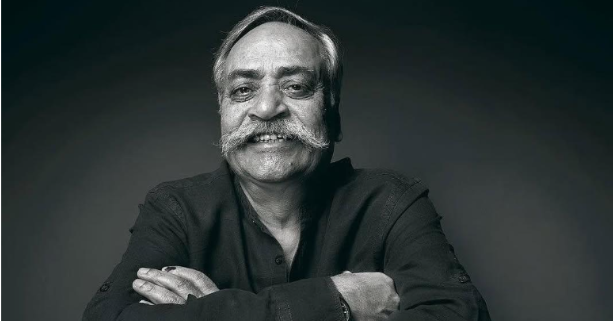
    Piyush Pandey, the advertising icon who redefined how India spoke through its brands, passed away on 24th October 2025, in Mumbai at the age of 70. According to reports, Pandey was suffering from a severe infection that led to his sudden death.

    In a striking coincidence, the man who created the nation’s famous Pulse Polio campaign, “Do Boond Zindagi Ke” featuring Amitabh Bachchan, passed away on World Polio Day, the very date India annually celebrates its triumph over the disease.

    Widely called the creative heartbeat of Indian advertising, Pandey’s work at Ogilvy India, where he worked as Executive Chairman and Global Chief Creative Officer, transformed the ad industry forever. His campaigns were rooted in local insights, humour, and humanity; they gave India some of its most enduring brand memories.

    An Album of Timeless Campaigns

    Pandey’s creative legacy can be told through the campaigns that became part of India’s vocabulary. From “Pappu Pass Ho Gaya,” “Fevicol ka Mazbooth Jod Hai, Tootega Nahi”, “Har Ghar Kuch Kehta Hai” and Cadbury Dairy Milk’s “Kuch Khaas Hai Ham Sabhi Mein”, Pandey’s ads celebrated India’s spirit and culture. He also designed the famous Vodafone Zoo-Zoo and Hutch puppy campaign.

    Pandey was also behind socially powerful work, including the Pulse Polio campaign, “Do Boond Zindagi Ke”, which helped drive mass vaccination awareness across the country in collaboration with the Government of India and UNICEF. He also designed the “Incredible India” campaign, which gave India a global identity.

    Pandey worked on the famous political campaign for Narendra Modi in the 2014 general election. The “Ab ki Baar Modi Sarkar” campaign contributed to the BJP’s landslide victory.

    A Pioneer with an Indian Heart

    Born in Jaipur in 1955, Pandey’s journey into advertising was unconventional. Pandey played many major Cricket Tournaments, including the prestigious Ranji, before working as a tea-taster in Kolkata. In 1982, he joined Ogilvy and Mather. His early work caught attention as his ads were deeply rooted in Indian culture and local lingo, which was not common at that time, as advertisers mimicked Western ads. He believed “Engagement is the key to communication”, and this was reflected in his ads, which were catchy and in sync with the rhythms of ordinary Indians.

    Over four decades, he transformed Ogilvy India into a powerhouse of creativity, mentoring countless young copywriters and art directors who went on to become industry leaders themselves.

    Pandey’s contribution to the advertising world was recognised with numerous awards, including multiple Cannes Lions, Effies, and the Padma Shri in 2016 for his contribution to literature and advertising. In 2000, The Economic Times named him “The Most Influential Person in Indian Advertising.”

    Beyond his campaigns, Pandey was known for his humility, humor, and strong flair for storytelling. His autobiography, “Pandeymonium: Piyush Pandey on Advertising”, captured his creative side and anecdotes from his life.

    Tributes poured in from across industries. Prime Minister Narendra Modi tweeted, “Shri Piyush Pandey Ji was admired for his creativity. He made a monumental contribution to the world of advertising and communications. I will fondly cherish our interactions over the years. Saddened by his passing away. My thoughts are with his family and admirers.” Industrialist Anand Mahindra and veteran actors like Amitabh Bachchan, who worked with him on the Polio campaign, and Shah Rukh Khan, also shared their condolences. His admirers flooded Twitter and other social media platforms with memories of the man whose words and ideas shaped India’s advertisements.

  • Victoria’s Secret Fashion Show 2025: A Runway of Reinvention and Representation

    Victoria’s Secret Fashion Show 2025: A Runway of Reinvention and Representation

    After a six-year-long hiatus and a comeback in 2024, the Victoria’s Secret Fashion Show made a lasting mark with this year’s show, which took place on 15 October 2025 in New York City. This year’s show promised the familiar mix of glamour, power, and entertainment, with a renewed focus on diversity and inclusivity.

    Last year’s show garnered widespread attention for Victoria’s Secret, as the show made its return after being cancelled in 2019. However, this year’s show brought an even bigger rebranding, and with it, more attention. This year, the brand focused on broadening its representation, improving the show’s diversity and expanding its global outreach. Victoria’s Secret’s legendary supermodels like Adriana Lima and Alessandra Ambrosio graced this year’s runway alongside fresh faces from sport, culture and fashion.

    What Stood Out This Year
    This year’s lineup featured a diverse range of talent across multiple generations and backgrounds of models, reflecting the brand’s broader definition of glamour. The entire show was divided into six segments, namely First Light, Bombshell, PINK Halftime, Hot Pursuit, Magic Hour, and Black Tie.

    The runway featured a striking mix of veteran Angels and fresh faces. Among the show’s familiar faces were Adriana Lima, Bella Hadid, Gigi Hadid, Candice Swanepoel and Alex Consani.

    Supermodel Jasmine Tookes made a powerful entrance, opening the show while visibly pregnant. Her look celebrated birth and transformation as she donned a shimmering gold netted one-piece, adorned with teardrop-shaped gems, paired with a dramatic clamshell-inspired cape topped with pearly bulbs. The concept depicted her as the clamshell and her baby as the pearl.

    WNBA player Angel Reese made history as the first professional athlete to walk the show. She had two bold looks – a white lingerie set richly adorned with pink roses and a sparkly pink T-shirt with cut-outs.

    Beyond the models, the show’s performances embodied the brand’s global goals. Performances by music icons such as Missy Elliott, Karol G, Madison Beer, and K-pop sensation TWICE added a diverse cultural element to the show. One of the show’s standout moments was a creative mashup of the iconic 1981 Bollywood track ‘Tere Mere Beech Mein’ with Britney Spears’ hit song, ‘Toxic’ that played at the start of a segment as models walked onto the runway. Interestingly, this mashup came full circle as the signature string riff of ‘Toxic’ was sampled from ‘Tere Mere Beech Mein.’

    One of the most-talked-about elements of the evening was the brand’s inclusivity in design and casting. The model roster featured a diverse range of body types, backgrounds, and ages, which the show has previously been criticised for avoiding. Models like Ashley Graham, Paloma Elsesser, Precious Lee and Devyn Garcia, who are recognised for their efforts in promoting body positivity and inclusivity in the fashion industry, garnered widespread praise from online audiences.

    This year’s show also made a striking impact with its diversified presence of LGBTQIA+ talent. The runway featured trans models like Alex Consani, as well as queer and ally representation, including Quenlin Blackwell, Madison Beer, and Stella Maxwell.

    From the visual aspect, the show’s production spared no expense. It featured futuristic stage design, holographic projections, and couture wings made from sustainable materials. Themes of self-expression, resilience, and female solidarity replaced the pre-hiatus fantasy concepts of angelic perfection epitomised by sizo-zero bodies, flawless symmetry and hyper-feminine glamour.

    The Victoria’s Secret Fashion Show 2025 marked a defining moment in the brand’s ongoing reinvention. With a striking blend of cultural references, reimagined fresh designs, and symbolic storytelling, this year’s show positioned Victoria’s Secret not just as a lingerie brand but as a platform embracing change and inclusivity.

  • Rock’s ‘Spaceman’; Ace Frehley, Dies at 74

    Rock’s ‘Spaceman’; Ace Frehley, Dies at 74

    Ace Frehley, the famous guitarist and co-founder of Kiss, whose space-age persona, thunderous riffs, and electric performances helped define 1970s rock theatre, passed away on Thursday, 16th October 2025, in Morristown, New Jersey. He was 74. His family told sources the cause of his death was complications from a fall this year.

    Born Paul Daniel Frehley on 27th April, 1951, in The Bronx, New York, he was the youngest child among his three siblings. His father, Carl Daniel ‘Friebely’ Frehley, was an electrical engineer and used to play organ at the church, and his mother, Esther Anna, used to play the piano. Frehley grew up surrounded by music, but was inclined towards the electric guitar, which he received as a Christmas gift in 1964. He taught himself how to play the instrument; he often said that playing “saved [his] life.”

    Making of the ‘Spaceman’

    Frehley worked as a roadie for Jimi Hendrix when he was 18. After that, he began performing in local bands like King Kong, The Outrage, and Cathedral, until he saw an ad in 1972 for a new music band seeking a lead guitarist. The famous story of his audition, of Frehley showing up wearing mismatched sneakers, one red, one orange, immediately impressed the band; within months, Kiss was formed.

    Frehley was Kiss’s lead guitarist; he designed the group’s lightning-bolt logo and developed the “spaceman” persona, inspired by his lifelong fascination with science fiction. He painted silver stars around his eyes and, on stage, made his guitar smoke, spark, and sometimes shoot rockets. Frehley’s playing powered many of Kiss’s popular songs, including I Was Made for Loving You, Cold Gin, Shock Me, and Love Theme. His electrifying solo on Shock Me was written after he was briefly electrocuted onstage in 1976; it became one of rock’s most famous guitar riffs.

    In 1978, Frehley released his self-titled solo album, which went platinum and produced the Top 20 single New York Groove. A star was later named after him in 1981, a fitting tribute for the band’s “Spaceman”. He parted ways with Kiss in 1982 over creative disputes and personal struggles, but returned to music with Frehley’s Comet, a new band consisting of five members. Their debut album featured the rock hit “Into the Night.” Frehley’s Comet disbanded shortly after their 1989 record, Trouble Walking. He reunited with Kiss in 1996. Frehley performed with the group at the 2002 Winter Olympics before departing again.

    He resumed his solo career that included albums such as Anomaly (2009), Space Invader (2014), and 10,000 Volts, the most recent one, released in 2024. He was preparing to release Origins Vol. 3 at the time of his death. Frehley was inducted into the Rock & Roll Hall of Fame in 2014. Frehley continued recording and touring as a solo artist until a fall in his studio in September 2025 forced him to cancel his remaining shows.

    Though described as an “unschooled musician”, Frehley’s influence extended across generations of guitarists. He performed with artists including Slash, Rob Zombie, and Tommy Lee; he even appeared in the hit sitcom Family Guy. His trailblazing guitar playing skills secured him a spot among Guitar World’s 100 greatest musicians.

    Frehley is survived by his daughter, Monique, and his former wife, Jeanette. Kiss co-founders Gene Simmons and Paul Stanley said in a joint statement, “We are devastated by the passing of Ace Frehley; he was an essential and irreplaceable rock soldier during some of the most foundational chapters of the band’s history. He is and always will be part of Kiss’s legacy.” Fans across the world flooded social media with tributes. Some fans said: The Spaceman has simply returned to the cosmos.

  • Diane Keaton, Oscar-Winning Star of Annie Hall and The Godfather, Dies at 79

    Diane Keaton, Oscar-Winning Star of Annie Hall and The Godfather, Dies at 79

    The iconic, Oscar-winning actress Diane Keaton’s demise is truly a great loss to global cinema. She was famously regarded for her extraordinary performances that combined humour, warmth, and quirky charm. She passed at 79 on October 11th at her residence in Los Angeles. According to family friends, Keaton experienced a temporary health decline over the past months.

    For over 50 years, Keaton portrayed some of the cinema’s classic American characters, realistic yet oddball, graceful yet clumsy, nervous yet fiercely honest, or any other combination. Her personality reflected quirky yet bright, peculiar yet familiar, and never strayed from her individuality.

    From Los Angeles Dreamer to Hollywood Legend 

    Born Diane Hall on January 5, 1946, in Los Angeles, Keaton was the oldest of four children. She was the daughter of Dorothy Deanne Keaton, a homemaker and photographer with a creative, burgeoning spirit that would later inspire her filmmaking and acting, and John Newton Ignatius Hall, a civil engineer and real estate broker. After high school, Keaton moved to New York to study acting at the Neighbourhood Playhouse, drawn to the feel of live theatre. Keaton made her Broadway debut in 1968 in the musical Hair, but it was her performance in Woody Allen’s stage play “Play It Again, Sam” that changed everything; it marked the start of a lengthy professional partnership and romance between Keaton and Allen.

    This partnership extended to the screen in films, including Sleeper (1973), Love and Death (1975), and Annie Hall (1977), which would ultimately be Keaton’s defining performance.

    The Birth of a Screen Legend

    Keaton’s transformational performance occurred earlier, in Francis Ford Coppola’s film The Godfather (1972) as Kay Adams, the moral centre to Michael Corleone’s ascent to violent power. Keaton provided emotional nuance to an otherwise brutal story, which became one of her artistic signatures.

    However, it was Annie Hall that vaulted her to instant stardom. The film was a bittersweet romantic comedy that Woody Allen wrote, produced, and directed, in which he starred, and that was about Keaton as much as it was about the movie characters. Keaton’s wardrobe of bowler hats, men’s vests, wide slacks, and ties was taken straight from her own closet, which made the look iconic.

    For this performance, Keaton won the Academy Award for Best Actress in 1978, and Pauline Kael of The New Yorker called Keaton “the most original screen presence of her generation.”

    Reinvention and Variety

    Throughout the following stretch of forty years, Keaton broke out of her generic shell and shifted to more comedic narratives alongside dramatic roles: the trifecta of Oscar nominations for Warren Beatty’s Reds (1981), Marvin’s Room (1996), and Something’s Gotta Give (2003) was a part of her new aesthetic.

    Her films were soon considered as an all-encompassing body of work: hits like Baby Boom (1987), Father of the Bride (1991), The First Wives Club (1996), The Family Stone (2005), and Book Club (2018) established her as the money-making element of both rom-coms and ensemble films.

    Keaton did not simply perform in front of the camera; she forged parallel careers in photography, interior design, and real estate. Her photography books and architectural restorations reflected a similar care with attention to detail and nostalgic representation behind the camera, similar to the emotional frame of her experience while performing on screen.

    A Life of Individuality

    Keaton never married and addressed that with her usual sense of humour. “I love the thought of marriage,” she told Parade. “But I’m much more suited for making movies than to be in long-term relationships.”

    She adopted two children: Dexter in 1996 and a son, Duke, in 2001, and described motherhood as her greatest role.

    Keaton’s personal life was interesting, but she lived in a way that allowed her to maintain her independence. Her personal life was often discussed in relation to her co-stars, including Woody Allen, Warren Beatty, and Al Pacino, but she ultimately preferred solitude in her later years. She was candid about her challenges with bulimia in her younger years and her long-standing battle with skin cancer, and spoke openly about both for awareness purposes.

    Tributes From All Across Hollywood

    The announcement of Keaton’s passing drew tributes from colleagues and admirers worldwide. Many personalities from the entertainment world honoured Keaton, including Coppola, Viola Davis, Robert De Niro, DiCaprio, Martin, Fonda, Kate Hudson, Demi Moore, Sarah Jessica Parker, and Reese Witherspoon. Allen wrote and published an article, remembering Keaton, via The Free Press; he referred to her, through his writing, as “unlike anyone the planet has had or is ever likely to see again.”

    Nancy Meyers, director of Baby Boom and Something’s Gotta Give, called Keaton “a force of authenticity.” “She taught generations of women that being yourself – truly yourself – is the most beautiful thing you can do,” Meyers stated.

    Francis Ford Coppola remembered her as “creativity personified,” while Keanu Reeves, her co-star in Something’s Gotta Give, called her “a generous artist and a uniquely special person.”

    Her First Wives Club co-stars Goldie Hawn and Bette Midler also shared their remembrances. “Diane was unafraid,” Hawn wrote on social media. “She took vulnerability and made it powerful, and in her awkwardness came the art form.”

    A Timeless Influence

    It would be an understatement to call Keaton solely an actress; the cultural impact cannot be ignored. Her Annie Hall wardrobe influenced women’s fashion for the 1970s, and her candid sense of humour and emotional intelligence redefined what it meant to be the female lead of a film.

    She won an Academy Award, two Golden Globes, and several lifetime achievement awards, but didn’t let her success go to her head. “I never thought I was glamorous,” she once told an interviewer in 2019, “I wanted to take the notion of glamour and be interesting.”

    Ultimately, Diane Keaton’s legacy cannot be divorced from the genuineness with which she approached her work. Whether she played a jittery lover, a frazzled mother, or any woman caught in a midlife moment of self-realisation, she would play the character with equal parts grace and resolve.

    Her memory will live on through her two sons, Dexter and Duke, as well as her works, which will always anchor contemporary film.

    Her very life, as funny, fearless, and, beyond belief, as it was, was a Diane Keaton production in every way.

  • Diljit Dosanjh’s Emmy Nomination for Chamkila: A Victory Beyond Borders

    Diljit Dosanjh’s Emmy Nomination for Chamkila: A Victory Beyond Borders

    The trajectory of the Indian entertainment industry witnessed a revolution when the International Academy of Television Arts & Sciences released its 2025 Emmy nominations. Punjabi popstar-actor Diljit Dosanjh receiving a nomination for Best Performance is an achievement that will go down in history. His portrayal of the controversial folk artist Amar Singh Chamkila in the Netflix-released biopic of the same name, directed by Imtiaz Ali, has not only won the hearts of everyone back home but has also caught global attention.
    Even more astonishing is that the movie itself, Amar Singh Chamkila, has been shortlisted in the Best TV Movie/Mini-Series category, putting India on two seats of glory in one of the globe’s most eminent television award galas.

    A Role Steeped in Legacy
    Amar Singh Chamkila, knighted as the “Elvis of Punjab,” was known for all the negative eyes on him and his music, making him a personality who sang about “improper topics” right from poverty within rural boundaries to physical intimacy. His cult-like following was nothing short of a wildfire that spread within the duration of one verse. His talent met an abrupt end at the peak of his career when he and his wife were murdered in 1988.

    To play such a character is commendable in itself. Dosanjh, in any case, already an international Punjabi music legend, took on the role with forceful realism. Chamkila’s unruly stage persona not only told the tale of a rockstar who was too ahead of his time, but also extended to vulnerable heights of lyricism. Dosanjh’s acting impacted every kind of audience, no matter how familiar they were with Chamkila’s music from before. This film’s international chokehold on us proves how finely tuned the acting on screen was.

    The Imtiaz Ali Touch
    Most credit for the film’s impact is due to director Imtiaz Ali, who has long been renowned for his forays into love, longing, and human paradoxes. Ali shifted from urban romances to Chamkila, with a tale anchored in Punjab’s earth. He approached Chamkila not merely as a people’s hero but as a symbol of the power of art to question the powerful and inspire people to think.

    Ali’s script becomes a harmonious celebration once Dosanjh’s acting and Parineeti Chopra’s layered portrayal of Amarjot come into view- it is a marriage that has depth of one of the highest artistic values. It is no surprise that international juries found Chamkila to be a compelling contender for the Emmy stage.

    The Weight of the Nomination
    Dosanjh is now among global stars like David Mitchell (Ludwig) and Oriol Pla (Yo, Adicto). Regardless of whether he wins, the nomination signifies that Indian actors are no longer limited to national recognition. They are among an increasing list of performers vying on the same level in global fields.

    Diljit Dosanjh’s ever-growing persona in front of a global audience is also responsible for his recognition within Emmy territories. He has broken the ice with the world by collaborating with A List artists, performing on almost every stage, and notably became the first Indian Punjabi artist to perform at Coachella. His path to bridging cultures has earned him another notch on his belt and created another groundbreaking addition to his resume.

    Why This Matters for Indian Entertainment
    It would be obvious to present this nomination as a victory for Diljit Dosanjh, but its repercussions are far-reaching.

    First, it points to the growing worldwide importance placed on Indian narratives outside Bollywood caricatures. Chamkila is hardly a neat city romance or mythical epic: it is the cruelly raw biopic of a Punjabi folk singer whose music once saw censorship and who was also violently taken away in his prime. That such a film should have gone its way is testimony to global audiences’ desire to have stories rooted in local authenticity.

    Second, it highlights how streaming platforms like Netflix have transformed the reach of Indian cinema. Without digital platforms, a story like Chamkila may have remained confined to domestic circuits. Today, it is accessible to audiences from New York to Nairobi, enabling it to enter conversations around global awards.

    Lastly, it encourages Indian creatives- actors, writers, directors- to look beyond borders. If Diljit can use a local folk figure and create an Emmy-award-winning performance out of it, then others, too, can aspire to narrate regional stories with universal appeal.

    The Symbolism of Chamkila’s Resurrection
    And there is a kind of poetry in Chamkila himself being brought back to life on such an international platform. Once considered crude by elites and killed for it, Chamkila’s art has now been justified by one of the world’s most significant cultural awards. His journey- shot in cold blood at the age of 27 and then remembered with finality at the Emmys after many years- makes the undying power of art more lucid against the tides of time, censorship, and plunder.

    The 53rd International Emmy Awards will take place in New York on 24 November 2025, it is undoubtedly a harbinger for a time when Indian actors and tales will find themselves gaining acceptance in areas once held by Western narratives. For Dosanjh, this is another milestone in a career that effortlessly balances music and film. For Indian popular culture, it is a testament to the fact that authenticity pays, and the world is, at last, eager to hear stories spoken in Punjabi, Bengali, Tamil, or any of the multiple Indian languages – so long as they are spoken in honesty and in craft. During Chamkila’s lifetime, his voice was very frequently overpowered by controversy. In 2025, due to Diljit Dosanjh and Imtiaz Ali, it resonates more than ever before, this time on the world stage.

  • The Future of the Red Soles: Jaden Smith Joins Louboutin as Creative Director

    The Future of the Red Soles: Jaden Smith Joins Louboutin as Creative Director

    On September 17, 2025, Maison Christian Louboutin announced Jaden Smith as the first-ever Men’s Creative Director, marking a historic moment for the luxury brand known for its landmark red-lacquered soles. In addition to overseeing 4-yearly collections of men’s shoes, leather goods, and accessories, the position also involves handling general creative responsibilities like campaigns, immersive events, and brand experiences. Before making his debut with the Men’s Fall/Winter 2026 collection at Paris Men’s Fashion Week, Smith will move to Paris to take on the role and his first preview capsule is scheduled for January 2026.

    Why Louboutin Put His Faith in Jaden Smith

    Smith was the sole choice for the position, according to Christian Louboutin, because of his “rich and multidimensional” world, inspiring style, cultural sensibility, curiosity, and openness.

    According to Louboutin, he was searching for someone with “a unique perspective and cultural curiosity.” He added, “His world is rich and multidimensional, and he is able to move between music, fashion, and art in a way that feels natural.”

    The decision also has a statistical backing, as Louboutin confirmed that the men’s department, responsible for approximately 24% of the brand’s revenues, has been underperforming lately. “The men’s collection is important to us, but it needs a new voice. Jaden brings a younger energy and cultural flair that can help it thrive,” he said.

    Smith expressed excitement about the role in a conversation with Women’s Wear Daily- “This is a dream. I’ve always looked up to Christian, and to now be able to create under this house, with this history, is an honour. I want to push boundaries, but also respect the craftsmanship that makes Louboutin what it is.”

    Besides his fame as an actor and musician, Smith has a long relationship with fashion, as reflected in his unique personal style, partnerships with footwear companies like New Balance, and his own brand, MSFTSRep Infinity.

    Analysts like Business of Fashion and Forbes have commented that this move is part of a larger trend wherein legacy luxury fashion houses are gradually bringing in new voices, either to stay culturally relevant or as part of future succession planning. According to Louboutin himself, this appointment is more about acting on an existing presence that impressed him than it is about filling a void.

    The Backlash: “Nepotism or Necessary Disruption?”

    Numerous critiques have focused on the idea that it is Smith’s celebrity status and family name, rather than any background in design and fashion, that have earned him the position. Smith’s lack of formal fashion education or training has been brought up by numerous critics questioning his relevance for such a role. Numerous internet users are concerned about his ability to maintain the high standards of a luxury home with a rich history due to his lack of craftsmanship experience. Concerns have also been raised that the move may be motivated more by appearance than by merit.

    Fashion analysts have commented that this is a branding strategy aimed at mending the decline in menswear sales by leveraging Gen Z culture and celebrity involvement. While some argue it is a sensible business approach, others find that the move prioritises the appearance and face of the brand over craftsmanship, design and heritage.

    Fans Caught Between Excitement and Doubt

    The news sparked a variety of responses online. Supporters hailed Smith as a daring and unexpected selection who could inject youthful vigour into the brand. Conversely, critics questioned whether bringing him on board was an act of nepotism, especially considering that countless trained designers work their whole careers for such opportunities. Others highlighted his lack of a formal design education or technical training as a possible liability. Neutral commentators expressed intrigue yet withheld passing judgment until Smith’s first collection is presented in early 2026.

    Déjà vu in the Fashion World

    Jaden Smith’s appointment is not the first instance of a celebrity being an unconventional choice for such a high role in luxury fashion. In 2023, Pharrell Williams was named creative director of menswear at Louis Vuitton. His tenure has demonstrated how celebrity influence can diversify a legacy brand to connect with youth culture, despite initial scepticism regarding his relevance for the role.

    Prior to Pharrell’s appointment at Louis Vuitton, Virgil Abloh served as the Artistic Director for the brand’s menswear line. Despite initial backlash, Abloh went on to reimagine luxury fashion through his fusion of streetwear sensibility and high-end luxury fashion. In the early 2000s, the Olsen twins and Victoria Beckham also used their celebrity status to launch fashion brands that have since become renowned names in fashion. These patterns suggest that while fame can open doors in the fashion industry, sustained credibility depends on consistent quality and a clearly defined creative vision.

    While celebrities have a foot in the door due to their fame and status, true success in fashion has less to do with fame and more to do with the distinctive creative vision they bring to the table. For Jaden Smith, the real test will be whether he can move beyond his celebrity status and prove his validity for the role through the work he delivers at Louboutin.

    What is in Store for Louboutin’s Future

    Pharrell’s work with Louis Vuitton is a prominent example of how luxury fashion is becoming more at ease with leaders from different artistic backgrounds. Many young creatives now define themselves by a combination of culture, activism, music, performance, and fashion.

    Smith’s appointment could usher in a powerful new era, striking a balance between his unique Gen-Z aesthetic sensibility and honouring Louboutin’s design heritage. The first test of this will be the preview capsule in January 2026, and the market reaction will speak volumes. Will consumers and competitors view this appointment as genuine and significant, and can Smith bring in fresh innovation to the brand, or will his role be purely symbolic? Could he become another such unexpected force that influences the direction of fashion?

  • Aryan Khan’s Directorial Debut, The Bads of Bollywood, Premieres on Netflix

    Aryan Khan’s Directorial Debut, The Bads of Bollywood, Premieres on Netflix

    Aryan Khan has finally made his touchdown in the Bollywood film industry with his first directorial and co-writing debut, The Bads of Bollywood. It is a seven-episode-long affair released on Netflix on 18 September, centred around a Bollywood hero named Aasman Singh, and his ascent from being an ambitious outsider, played by actor Lakshya Lalwani.

    A Satirical Exploration of Bollywood

    This series is a flavourful blend of drama and comedy that offers a hyper-realistic (or realistic) glimpse into the glamorous lives of the people within India’s most significant and longest-running industry, Bollywood. The show utilises the life of Aasman Singh, an overnight sensation hero struggling to maintain the validation he receives from the audience at par with his reality.

    Nepotism, rivalries, publicity stunts, and struggles of newcomers are no longer a thing of entertainment magazines anymore with this series. Although this barely scratches the surface of an exposé, the satire and deep irony mirror a portion of the industry from which our audience can only derive controversies.

    Cast and Guest Appearances

    Adorning the screen is an excellent performance by newcomers and veterans alike. Sahher Bambba, Bobby Deol, Mona Singh, Manoj Pahwa, Anya Singh, Raghav Juyal, Rajat Bedi, Gautami Kapoor, and Manish Chaudhari deliver soaring potential alongside Lalwani.

    But how could we forget the favourite cameos that have been made into edits that keep popping up on our Instagrams: Shah Rukh Khan, Aamir Khan, Salman Khan, Ranveer Singh, and Karan Johar show up with comic relief. These cameos have created an enormous buzz, adding to the show’s popularity and highlighting its self-referential nature.

    Production and Creative Approach

    Aryan Khan wrote and directed the series, which has been in development with Red Chillies Entertainment for over two years. Although rumours regarding Aryan’s career had been going on for some time, his opting to start as a director instead of an actor made headlines.

    Industry observers noticed that the show is a departure from traditional Bollywood storytelling. Unlike traditional aspirational romance or action, The Bads of Bollywood finds itself within the OTT domain of satirical content, following international trends more inclined towards biting, self-deprecating entertainment.

    Audience Response and Viewership

    The demands for the show were massive, with the trailer accumulating over 50 million views before release. The Bads of Bollywood has created ripples across social platforms with many applauding Aryan Khan for his confident directorial approach and his boldness to confront issues such as nepotism and politics in the industry.

    Early reactions, though, were divided. India Today and The Week picked out the show’s humour and unapologetic tone, but The Indian Express commented that some plotlines were based on stock tropes such as” the Hero’s Journey”, “Rags to Riches” and many more. Fans have picked up on the balance between glamour and critique of the show, although some feel that the satire sometimes overpowers character development.

    Placing Aryan Khan in the Industry

    The release has put Aryan Khan in the limelight, and an all-encompassing community of audience has underlined the importance of his professional decisions. Entering Bollywood as a writer-director, rather than as an actor, makes him different from most other star kids. His decision to enter the industry with satire has also been seen as a bid to carve out an independent voice.

    Critics point out that the show banks on Aryan’s insider status while maintaining distance through humour. There has been criticism from some viewers that there are self-referential moments, such as instances that appear to be recreations of  Aryan’s own experiences with media attention.

    Broader Implications for Bollywood Content

    The show also captures a shift in how Bollywood narratives are presented on the web. With the viewers starting to develop interests in web-based content, shows such as The Bads of Bollywood show how filmmakers try out new formats that aim to blend glamour with a pinch of criticism.

    Streaming services such as Netflix poured enormous amounts of investment into such storytelling, which shows how the audience could potentially engage with Aryan Khan’s debut. By mixing celebrity appearances, industrial observations, and satirical comedy, the show tries to draw mainstream attention and serious interest from the younger digital audience.

    Despite mixed reviews, The Bads of Bollywood thoroughly incorporates Aryan Khan in the new role of a creative force in entertainment. His debut work has positioned him along an emerging continuum of more experimental, self-referential narrative in Hindi entertainment. Whether or not the show manages to succeed may ultimately be irrelevant. Much of the initial discord has already been sown, with the arrival of a fresh voice in the ever-changing discourse of Bollywood.

  • The Legacy of Giorgio Armani

    The Legacy of Giorgio Armani

    Giorgio Armani, the visionary Italian designer, has passed away at 91. Over the course of five decades, Armani built a legacy in both Italian and global fashion to create a unique and everlasting style from the red carpet to the big screen.

    Born in Piacenza, Giorgio Armani’s initial career plan was not fashion. He enrolled in medical college at the University of Milan after being inspired by A.J. Cronin’s The Citadel. However, after almost 3 years, he dropped out and enlisted in the army, where he served for two years in the Military Hospital of Verona. After his time in the military, he worked as a window dresser at La Rinascente, a high-end department store in Milan, curating his taste for fashion. After gaining skills in marketing and sales, he realised he could start freelancing and designing, catapulting his fashion career to new heights.

    In 1966, Armani met Sergio Galeotti, an Italian architect and a business partner of his in the coming years. Together, they ounded Giorgio Armani S.p.A. in 1975. Legend has it that Armani’s Volkswagen Beetle sale contributed to the initial capital. They would go on to work together for another 20 years, until Galeotti’s death in 1985. The brand initially started off as a menswear brand- its debut collection was presented in Milan in 1975, featuring ready-to-wear pieces for the Spring and Summer 1976, along with some womenswear pieces. This collection featured a twist to the everyday formal look, showing blazers and pants in a more light and loose-fitted manner.

    The Armani brand quickly expanded to include accessories, fragrances, and home decor, eventually turning into a high-end global lifestyle empire, spanning Giorgio Armani Privé, Emporio Armani, Armani Exchange, and Armani/Casa. Always aware of the changing lifestyles of his clients, Armani entered the hospitality industry with Armani Hotels in Dubai and Milan in 2010 and 2011, respectively. He also built a strong presence in sports by sponsoring various sporting teams like the Italian national football team and a partnership with Scuderia Ferrari F1, both in 2020 and 2021. His restaurants, cafés, and bars around the world further showcased his idea of fashion as a complete experience, built of elegance and design.

    Beyond this, Armani’s artistry reached Hollywood, where he revolutionised costume design with sleek, power-driven wardrobes for films such as American Gigolo and The Untouchables. For The Untouchables, Armani has mentioned that the styling for it was different from what he usually likes to style, as the movie is set in 1930s Chicago. The 3-piece suits and fedoras sell the vintage vibe well, very reminiscent but not fully accurate to the 1920s and 30s style the film was trying to portray. Armani also dressed countless stars off-screen, Cate Blanchett being one of them. In 2007, she stunned in a silver Armani Privé gown for the 79th Oscars, and in 2014, she wore a black lace Armani Privé dress with sheer detailing for the Golden Globes, both being some of the best looks of the night. At the 2023 Venice Film Festival, Cate Blanchett wore a sculptural black-and-white Armani Privé gown, embodying Armani’s vision to merge simplicity with sophistication. The look had fluid elegance: a sleek, strapless black bodice cascading into a dramatic train.

    An iconic moment in his fashion career was his photoshoot with Grace Jones, a Jamaican model and singer, for her studio album Nightclubbing. Photographed by Jean-Paul Goude and styled by Armani, Grace Jones looks chiselled, with her hair and cigarette aligning perfectly with her body and background.

    Armani also became the first designer to ban underweight models after the death of Ana Carolina Reston, following her death from anorexia nervosa. Armani was also the first fashion brand to close its Milan Fashion Week runway in 2020 as a public health concern after seeing the rising COVID-19 cases. The show was instead held in a theatre at the brand’s headquarters in Milan with no audience. In March 2020, the brand converted all its Italian production plants to produce single-use overalls for the protection of its workers.

    The legacy of Giorgio Armani leaves a mark on both Italian and global fashion. By softening the lines of traditional menswear, he reinvented the suit, replacing rigid structures with relaxed tailoring that defined the era of effortless sophistication. Armani not only changed how the world dressed but also created a new language of modern Italian design. He also brought similar innovation to casual wear, elevating jeans into staples of high style while staying committed to timeless elegance over fleeting trends. He was a true statement in his time.

  • Walter Lippmann: The Voice Who Taught America to Think About Itself

    Walter Lippmann: The Voice Who Taught America to Think About Itself

    Among the pantheon of American journalism, few figures hold as much weight as Walter Lippmann. For over half a century, he was the country’s leading interpreter of politics, war, and democracy: an intellectual go-between bridging the raw chaos of events and the public trying to make sense of them. He was not only a columnist, he was a thinker who grappled with questions that are still pressing today: How do we know what we know? What is the role of the press in presenting our vision of reality? And can democracy persist if its citizens are captives of illusion?

    Lippmann’s career spanned from the Progressive Era to the television era. Along the way, he invented modern political commentary, coined terms that have become the foundations of media theory, and commanded the attention of presidents as much as the readers of his daily column. To grasp Walter Lippmann is to learn the strained marriage of democracy and information in the 20th century, a marriage that remains under tension today.

    A New Yorker in the Making

    Born in 1889 to an affluent German-Jewish family in New York, Lippmann grew up musically gifted, well-travelled, and bookish. His passion for ideas led him to Harvard, where he studied philosophy under William James and George Santayana.

    Harvard was the turning point. Learning about pragmatism, which revolves around ideology being proved and tested in practice, took his perception of politics to great heights: his views on it were not dogmatic but instead an ever-evolving process. He graduated in 1910 as a man with starry eyes and a burning ambition to introduce firebrand ideas to a world that was standing at the door of revolution.

    The early 20th century brimmed with reform movements: investigative journalists exposed corruption boldly as progressives clamoured for reform, and politicians only added to it by grappling with America’s emerging global stronghold. Lippmann slid into this ferment easily. By 1913, Walter Lippmann, who was 24 at the time, co-founded The New Republic, a journal carrying opinions that quickly emerged as the voice of progressive intellectuals. His first central forum was employed to press the case for domestic reform and reflective engagement overseas.

    The Interpreter

    Lippmann’s voice drew a parallel between fiery crusaders like Upton Sinclair and caustic critics like H.L. Mencken as he treaded towards a calmer, analytical voice that remained relentlessly focused on clarity. His presence in journalism was less of a partisan and more of an interpreter, helping readers make sense of events too complex to grasp on their own.

    That instinct was expressed in his syndicated newspaper column, Today and Tomorrow, which debuted in 1931. It appeared for more than three decades in hundreds of newspapers all over the nation, reaching millions. Every important person within the nation gave close attention to Lippmann’s verdicts.

    His authority of trust came from his scholarship and his independence. Lippmann never had trouble changing his mind when the facts required it. His parallel opinions, whether it was about his support of Woodrow Wilson’s entry into the First World War, all while scrutinising the League of Nations, expressing his due respect to FDR, but criticising the anatomy of the New Deal, or even encouraging the Cold War containment at the same time, cautioning America against excess militarisation. His allegiance was not always to the party line but to his idea of truth.

    Public Opinion and the Shadows on the Wall

    Lippmann’s best and most lasting work did not come from his daily columns but from his books. In Public Opinion (1922), he provided a groundbreaking analysis of how people come to know the world. Underlying it was a simple yet radical notion: most of what we understand comes not through direct experience but through mediated images, news accounts, and stereotypes. He referred to this manufactured reality as the “pseudo-environment.” It is through this lens, not unmediated reality, that people form their judgments. The implication was unsettling. If citizens see the world only in terms of such shadows, democratic choice is tenuous. As Lippmann wrote, “the pictures inside people’s heads do not correspond with the world outside.”

    This was more than a philosophical comment but a political alert. Democracy, he maintained, could not rely on citizens’ understanding the complexities of contemporary policy. His answer was drastic: turn over interpretation to experts, specialists, and institutions. Elitism was the accusation of his critics, but Lippmann justified the position as realism. “The common interests,” he said, “very largely elude public opinion entirely, and can be managed only by a specialised class.”

    Struggling with Democracy

    This conflict between the ideals of democracy and the murky realities was a constant presence in Lippmann’s life. He trusted in self-government but suspected that common people were not always capable of making sound judgments. He prized the press but observed how it could deceive, and although he loved freedom, he was critical of propaganda’s corrosive influence- particularly after observing its growth under fascism.

    In World War II, Lippmann stood among the loudest voices saying that Americans had to resist Hitler, lest they themselves become postwar authoritarians. In the Cold War, he supported containment but warned that hysteria at home threatened democracy more than communism abroad. He opposed McCarthy with fact-based critiques, not fear.

    His opposition never ceased accusing him of being aloof or too detached from the fervours of democratic living. But his apologists recognised in him something unusual: a commentator who would speak what was hard, even unpopular, if he thought it was supported by reason.

    The Journalist as Philosopher

    In the mid-century period, the height of Lippmann’s persona was his transcendence into public philosophy. He earned two Pulitzer Prizes for commentary, was honoured with degrees from universities across the globe, and was accepted as the dean of American political commentary in general. But he lived with restraint, afraid of being lionised.

    Later in his life, he became increasingly suspicious of the ascendancy of television. He was concerned that the medium, which rested on image and spectacle, would further exacerbate the distortions he had predicted in Public Opinion. In later years, he feared television’s reliance on image would turn politics into theatre, a prophetic concern in today’s age of 24-hour news and social media.

    When Lippmann passed away in 1974, obituaries greeted him as a giant of journalism, a figure who had not only defined how Americans saw their world but also how they saw the act of seeing it at all.

    Lippmann’s Legacy in the Digital Age

    It is essential to revisit Walter Lippmann’s work today to observe the questions he posed that have been responsible for only sharpening the digital era we live in now. If his newspapers could construct pseudo-environments, what of today’s algorithmic feeds, where millions reside within self-supporting bubbles of disinformation?

    His “pictures in our heads” resonate in every argument over fake news, echo chambers, and disinformation campaigns. At such a time when we as a society struggle to cope with climate change, pandemics, and technological disruption problems, Lippmann’s contention comes right into relevance as he remarks that just as democracy is dependent on freedom, similarly, a news platform’s competence is equally dependent on producing sound bites that revolve around such issues of global importance.

    Naturally, his appeal for expert governance is still contentious. The populist protest of our era indicates that citizens often reject the notion of being governed by elites. Even so, his detractors acknowledge that he compelled democracy to face its blind spots. Naming the illusions we live by, he provided us with the means to resist them.

    The Final Word

    Walter Lippmann was a man of contradictions: a democrat wary of mass opinion, a journalist sceptical of the press, an optimist who often warned of failure. Yet within these tensions lay his genius. He educated the public not what to think, but how to think about thinking. His voice has since stilled, but his questions remain. In a world filled with shadows and images, we might need him today more than ever.

  • A Night of Firsts and Films with Heart: Highlights from the 71st National Film Awards

    A Night of Firsts and Films with Heart: Highlights from the 71st National Film Awards

    The 71st National Film Awards, announced on August 1, 2025, brought a wave of emotion, celebration, and overdue recognition across the Indian film industry. The ceremony, which honours the best of Indian cinema, stood out for its diverse selection of winners, ranging from regional gems to box-office blockbusters and deeply personal performances.

    As the sector navigates new obstacles, such as shifting audience preferences and digital disruption, this year’s National Awards confirmed that Indian cinema is not only surviving but also growing, daring, and flourishing.

    Historical win for Shah Rukh Khan 

    With more than 30 years in the industry, Shah Rukh Khan won his very first National Award for his commanding double role in Atlee’s ‘Jawan’. His performance as both a moral crusader and his army-man father was a crowd-pleaser and critical hit, underlining socio-political issues under the action-oriented image.

    In a tearful Instagram video, SRK thanked the jury, his team, and fans for Jawan’s win, saying, “I’m genuinely humbled”. With a visibly obvious injury, he went on to say affectionately, “Sending you half a hug, the other half will come soon.” The fraternity welcomed him to the winner’s circle- Kajol, Farah Khan, A.R. Rahman, and Anil Kapoor all sent him their congratulations.

    Rani Mukherji’s Fierce Comeback 

    Veteran actress Rani Mukerji won Best Actress for Mrs. Chatterjee vs Norway, where she played a Bengali mother who fights a foreign government to gain custody of her children. Based on real-life events, her performance was raw, intense, and emotionally crushing.
    “This is validation for my 30-year journey,” she said in a statement. Her cousin Kajol congratulated her alongside SRK, making it a proud moment for the Mukerji family.

    Vikrant Massey: From Underdog to National Icon

    The Best Actor award was won jointly by Vikrant Massey, who gave a soulful performance in 12th Fail, playing Manoj Kumar Sharma, a real UPSC aspirant with a humble background. The film, directed by Vidhu Vinod Chopra, brought to the screen the grit, vulnerability, and unassuming heroism of students fighting all odds to reach their destination.

    “Getting this honour alongside Shah Rukh sir is a dream,” Massey said. “I dedicate this to every student and underdog who felt unseen.”

    12th Fail Wins Best Film

    The most poignant of the wins at the 71st National Film Awards was, perhaps, Vidhu Vinod Chopra’s 12th Fail, taking home the highest honours for Best Feature Film- a victory for filmmaking that celebrates perseverance over privilege.

    Inspired by the tale of Manoj Kumar Sharma, a boy from a Chambal village who overcomes the daunting challenges to become a successful IPS officer, 12th Fail is a gritty and realistic portrayal of ambition overcoming adversity. Staying true to Anurag Pathak’s bestseller of the same name, the film avoids glorifying adversity, but instead presents it with a sense of weight and mounting sympathy, and offers a very human story of determination and hope.

    Director Vidhu Vinod Chopra, whose body of films includes Munna Bhai MBBS and 3 Idiots, called this project “the most important film” of his life. Chopra said, during his acceptance speech, “This film is not just Manoj’s story, it’s the story of every young Indian who’s been told that where they come from defines how far they can go. This award belongs to them.”

    12th Fail did not bank on melodrama. Rather, it used close-up storytelling, mundane settings, and real performances to craft a movie that was intensely personal and very national. It struck a chord with people of all ages and backgrounds.

    Popular Cinema Still Matters 

    Rocky Aur Rani Ki Prem Kahaani, a lively family drama directed by Karan Johar, won the Best Popular Film Providing Wholesome Entertainment award. This category frequently connects the gap between critical acclaim and widespread appeal. The victory confirmed that, when done well, high-budget Bollywood films continue to have a strong cultural impact.

    The film was a contemporary retelling of the classic Bollywood family saga and marked Johar’s return to directing after seven years. Rocky Aur Rani followed the unusual romance between a loud, expressive Punjabi man (Ranveer Singh) and an intelligent, independent Bengali journalist (Alia Bhatt) with flamboyant sets, humorous dialogue, and a progressive social message. Generations of people were won over by their chemistry, comedic timing, and emotional depth.
    Besides its Best Popular Film win, the film also took home the Best Choreography prize for Vaibhavi Merchant’s vivacious and stunningly filmed Garba song, “Dhindora Baje Re.” The song, which was widely praised for fusing traditional dance with modern storytelling, became a festival favourite.

    Powerful Performances in Supporting Roles 

    Regional cinema stole the limelight at the 71st National Film Awards, as outstanding performances finally found the national recognition they deserved. In the Best Supporting Actor award, the honour was shared by M. Bhaskar for Parking (Tamil) and Vijayaraghavan for Pookalam (Malayalam). Bhaskar’s performance as a common middle-class man embroiled in an increasingly hot war for a parking space; his performance, replete with pride, frustration, and an urgent need to assert dignity in a world where the common is overlooked, was phenomenal. Vijayaraghavan, a seasoned Malayalam actor, brought quiet weight to his performance in Pookalam, playing a centenarian grappling with hidden secrets and family pressures. Both actors brought nuanced performances of men whose flaws and vulnerabilities made them human.

    In Best Supporting Actress, the focus was on two equally riveting performances. Urvashi, known for her range in South Indian films, took home the award for Ullozhukku (Malayalam), where she tapped into the emotional pain of a woman grappling with generational conflict and unspoken sorrow in a Kerala family torn apart by flooding. Her acting was a masterclass in restraint and emotional subtlety. Janki Bodiwala, making her debut in the Gujarati film Vash, infused the national scene with new energy by acting as a young girl caught up in a supernatural thriller. Her acting was earthy and unputdownable, walking the line between innocence and fear in a performance that stayed with viewers.

    Regional Cinema Triumphs

    The accolades also showcased the depth of regional storytelling in India:

    1. The Best Hindi Film was Kathal: A Jackfruit Mystery – a scathing satirical take on police bureaucracy, starring Sanya Malhotra as a young inspector looking for missing jackfruits in a politician’s garden.
    2. Best Tamil Film: Parking – an engrossing drama of urban frustration and class conflict, featuring Harish Kalyan and M. Bhaskar as bitter neighbours.
    3. Best Marathi Film: Shyamchi Aai – a moving narrative of Sane Guruji’s life, documenting the relationship between a boy and his selfless mother.
    4. Best Gujarati Film: Vash – a horror thriller film featuring Hiten Kumar and Janki Bodiwala, where a family is haunted by supernatural forces.
    5. Best Malayalam Film: Ullozhukku – a sentimental family drama starring Urvashi, shot against the Kerala flood backdrop, where past secrets are exposed.
    6. Best Bengali Film: Deep Fridge – a critically engaging film on isolation and emotional loneliness in the era of the internet.
    7. Best Assamese Film: Rongatapu 1982 – a historical representation of ethnic strife in Assam, during a politically volatile time.
    8. Best Telugu Film: Bhagavanth Kesari – an action mass blockbuster film featuring Nandamuri Balakrishna, with mass appeal and a social message.

    Special Mentions and Technical Awards

    Vicky Kaushal’s commanding performance as Field Marshal Sam Manekshaw in Sam Bahadur earned the Best Film on National Integration, as well as Make-up and Costume Design honours. Calling it “a proud day for all of us at RSVP Films,” Kaushal was thrilled.

    Kerala Story also made waves, with Prasanthanu Mohapatra taking home Best Cinematography and Sudipto Sen taking home the Best Direction.

    Animal took home a Special Mention for re-recording mixer M.R. Rajakrishnan, along with the Best Sound Design and Best Background Score by Harshavardhan Rameshwar. Hanu-Man, meanwhile, took home Best AVGC Film for redefining the Indian superhero narrative.

    Conclusion 

    The 71st National Film Awards served as a window into the changing landscape of Indian cinema, not merely a list of winners. From the flamboyant celebration of Rocky Aur Rani Kii Prem Kahaani to the grassroots realism of 12th Fail, this year’s honours demonstrated a unique harmony between substance and spectacle.

    A powerful message is conveyed by the popularity of movies in a variety of languages, genres, and platforms: compelling narratives, no matter how big or small, will always find a following. The awards honoured not only cinematic brilliance but also the fearlessness to convey meaningful tales in an increasingly changing cultural terrain, honouring performances that were steeped in emotional depth, inner insight, and mass appeal.