Author: Tannishtha Chatterjee

  • Cockroaches in Politics: The Good, The Bad and The Ugly

    Cockroaches in Politics: The Good, The Bad and The Ugly

    Recently, a new party has become the topic of many conversations. The Cockroach Janta Party (CJP), is a youth-centered party that was born as a satirical movement, quickly gaining momentum and virality. Though it’s more of a protest collective than a registered official party, it seems that the youth is using this space to voice their concerns about the undemocratic practices that are plaguing India right now. 

    The CJP emerged in May 2026 after a remark by Chief Justice Surya Kant sparked a lot of controversy. He allegedly had compared the unemployed youth who turn to journalism and activism with cockroaches saying, “There are youngsters like cockroaches, who don’t get any employment or have any place in the profession. Some of them become media, some of them become social media, RTI activists and other activists and they start attacking everyone.” Later on, he clarified that his statement was targeted towards those who get bogus, fake degrees and was blown out of proportion. But the comments had already begun to make its rounds over X and other social media sites. As a response to this, Abhijeet Dipke, a 24 year old Indian student in Boston posted a tweet announcing the nascency of a political platform “for all the cockroaches”, with an enrolment Google Form. The popularity of this platform was unseen with 46,000 people signing up in a few hours and 100,100 people, a website and a party anthem emerging within 28 hours. In less than three days, the party had gained nearly 3 million followers across all social media platforms. The reason for this huge surge in their popularity was the criteria required to be part of the party: being unemployed, lazy, chronically online, and able to rant professionally. The youth of India identified with these traits and related to them, and may even have planted the sapling of hope for change amid the current scenario of unemployment, limited opportunities, and constant bureaucratic failures.

    The party labelled itself as “apolitical” and “spontaneous” but political experts have found deep political connections fabricating the CJP network and thus started the suspicion of apparent opposition backing of the party. Abhijeet previously was a part of AAP’s communication team and spokesperson Saurav Das’s opinions have resurfaced online where he backed Umar Khalid and opposed Article 370 and the Ayodhya – Ram Mandir verdict. CJP also garnered celebrity endorsements with Anurag Kashyao and Sonam Wangchuk supporting the party. Some speculate that the movement might be orchestrated by opposition while some might argue that CJP has a varied base. 

    CJP’s manifesto, named the “The Swarm Manifesto” lists five non-negotiable demands from the government regarding judicial reforms, youth representation, media and democratic accountability and electoral rectifications. The party seeks to address issues that get lost or ignored by mainstream media and politics. Dipke has stated that he would not engage with “Godi media” and even passed comments like “Why is the government so scared of cockroaches?” after CJP’s website and certain social media accounts were blocked on national security grounds. 

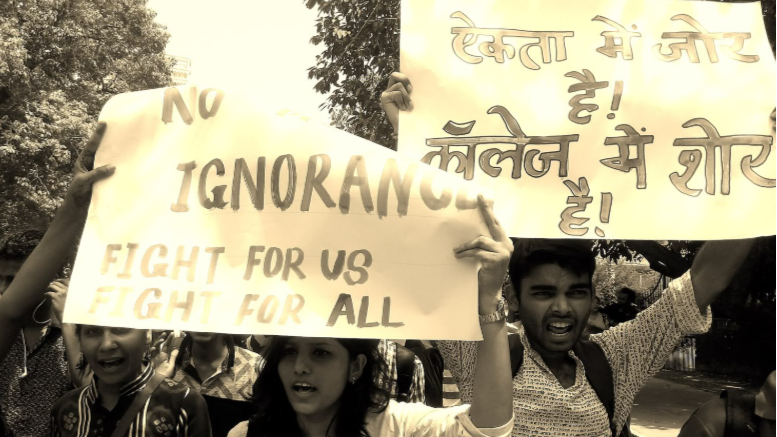
    Recently, CJP has evolved from AI generated content and online memes to physical protests across the nation. The protestors in Delhi, Hyderabad, Bengaluru and Pune all demanded the resignation of Education Minister, Dharmendra Pradhan and warned against an indefinite sit-in if their stipulations were not attended. Due to the gravitas of their demands and protests, critics have started to consider CJP more than just a Gen-Z trend or viral bandwagon with actual concerns being vociferated by the party. 

    The hopes raised by the party are the silent dreams and aspirations that get clouded by identity and power politics and seldom find any outlet. Countless count upon the party to get a flicker of the light at the end of the tunnel and hopefully the party can render these expectations successfully.

    Image Credits: Wikimedia Commons

  • Identity Issues in India: Transgender Rights at Risk

    Identity Issues in India: Transgender Rights at Risk

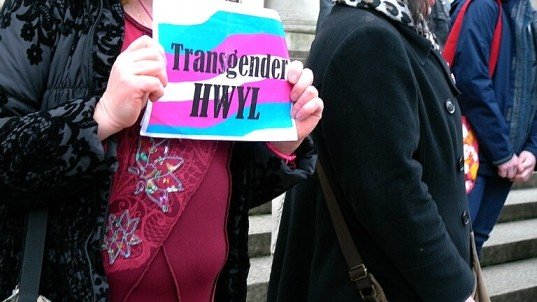
    After the passing of the Transgender Persons (Protection of Rights) Amendment Bill, 2026 on 24 March by Lok Sabha and consequently on 25 March by Rajya Sabha, many have expressed their annoyance and frustration. The bill that follows the edicts of exclusion more than inclusion under the guise of welfare and protection has been sent for the President’s assent to become law.

    The bill amends the 2019 Transgender Persons Act, which allowed for a considerable amount of freedom on the matters of identity and dignity. The 2019 law was based on the landmark National Legal Services Authority (NALSA) judgement passed by the Supreme Court in 2014. It recognised the right to identify one’s gender as a fundamental right. Individuals could identify as transgenders, legally, without the interference of any medical or bureaucratic board. 

    According to the amendments in the new bill, the right to self-identify gender has been removed and self-identification carries no legal sanctity. The law involves a verification system that requires medical and official inspection. The District Magistrate can issue a Certificate of Identity only after reviewing a recommendation from a designated medical board, headed by a Chief Medical Officer or Deputy Chief Medical Officer. Many argue that this gives undue control to the state over personal identity. The amendment restricts the definition of ‘transgender’ and who qualifies as one under the law. The focus has been shifted to protect specific socio-cultural groups like the Hijras, the Kinnars, the Aravanis and the Jogtas and cater to certain biological conditions. It excludes broader categories and identities and self-perceived gender. There also exists ambiguity about the legality of the previously issued transgender certificates which were based on self-identification which might cause chaos and disruption administratively. 

    The law is considered controversial as it reverses the progress made since 2014 in terms of identity and autonomy and aims to “gatekeep” the right to self-identify. Critics, including activists like Laxmi Narayan Tripathi and Grace Banu say the law violates the right to dignity, privacy and bodily autonomy and differs from Supreme Court rulings and constitutional principles. Two members of the National Council of Transgender Persons (NCTP), Kalki Subramanium and Rituparna Neog, even resigned from their posts consequently after the passing of the bill. The government and its supporters argue that the amendment provides a precise legal definition, preventing misuse of benefits for transgenders persons and improving implementation of welfare schemes. 

    The law is already affecting people, those who had recently secured legal recognition of their gender now face uncertainty. Families and healthcare workers are also concerned about the access to gender-affirming care and documentation. The near future probably holds legal challenges in courts, protests and activism related to the law and debate over balancing regulation with human rights. 

    As the bill remains unpassed as a law yet, the breach of right to self-identification and autonomy seems concerning to say the least. The amendment marks a turning point in India’s transgender rights framework. Though opinions seem divided, the compassion for the people subjected to the law must not diminish. Everyone regardless of their identities and orientation are entitled to live a life of dignity based on their terms and idea of self.

  • Iran War Day 27: Trump’s Hormuz Ultimatum, Tehran Strikes, and Surging Oil Chaos

    Iran War Day 27: Trump’s Hormuz Ultimatum, Tehran Strikes, and Surging Oil Chaos

    What began as a sudden but calculated strike on February 28, 2026, quickly spiralled into a conflict that has reshaped regional stability in the Middle East overnight. The offence, carried out by the USA and Israel on Iran, was dubbed as “Operation Epic Fury”; they targeted militarily active zones, air defence sites and the supreme leader, Ali Khamenei, who was reported to be killed in the action, causing a massive uproar. Iran was caught off guard with nearly 900 airstrikes by the USA and Israel in 12 hours, resulting in massive destruction and the beginning of the war.
    Now, on the 24th day since its initiation, both sides still face intense air strikes and missile activities with the risk of attacks on nuclear sites in Israel and Iran. Iran has blockaded the Strait of Hormuz – a strategic route connecting the Persian Gulf and Gulf of Oman carrying 20-21% of the global oil and LNG shipment – causing a shortage of supply all over the world. Consequently, US President Donald Trump has issued a 48-hour ultimatum to Iran demanding that they reopen the Strait of Hormuz, failing which the USA will launch attacks on its power plants.
    Meanwhile, Israel has initiated fresh attacks on Tehran following Iran’s attacks on Southern Israeli towns such as Arad and Dimona. The Islamic Revolutionary Guard Corps (IRGC) claimed its dominance over Israeli skies with reports of high casualty numbers, though these have not been confirmed by Israel yet. Iran has also stated that the USA and Israel attacked the Natanz nuclear site. While the incident was reported to the International Atomic Energy Agency (IAEA), no abnormal radiation leaks have been detected.
    Globally, there has been a massive disruption of energy flow, prompting negotiations amongst Gulf Countries and the rest of the world. Crude oil prices shot up this week to nearly $91 per barrel, the biggest one-week price jump since 1983. Several of the largest oil producers in the Gulf, like Saudi Arabia, the UAE, Iraq, and Kuwait, have halted shipments of about 140 million barrels of crude oil. Additionally, Qatar has declared a force majeure on its LNG supply as a result of the attacks on its facilities. The humanitarian consequences are also devastating, with over 2,000 lives lost and thousands of people displaced from Lebanon and Israel. Trade disruptions between nations and widespread travel halts have further compounded the crisis.
    People around the world are hoping the conflict resolves soon, as the repercussions of the war are not just economic but also political and environmental. If left to escalate, the situation may shift from a mere regional dispute to a larger confrontation – reshaping alliances and threatening economies. The war has brought about serious regional instability when the world already had its focus on the crisis between Palestine and Israel, making the Middle East a very disturbed area and rendering it unfit for civilised deliberations.
  • Darjeeling’s Mandarin Oranges receive the GI tag

    Darjeeling’s Mandarin Oranges receive the GI tag

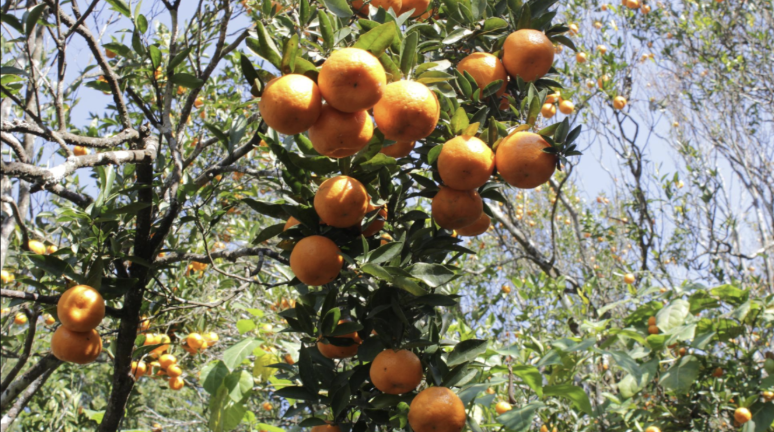
    After nearly 15 years of declining yields, pest infestations and soil-related setbacks, Darjeeling’s iconic mandarin oranges have received a much-needed lifeline. On 24 November 2025, the fruit was granted the Geographical Indication (GI) tag- a move that could potentially revive its cultivation and restore the economic confidence of farmers across the hill region. The recognition was granted by the Geographical Indications (GI) Registry, which operates under the Department for Promotion of Industry and Internal Trade (DPIIT), a part of the Ministry of Commerce and Industry (MoC&I). The GI proposal was initiated by Tulsi Saran Ghim, a former professor at Uttar Banga Krishi Viswavidyalaya (UBKV).iray in August 2022, but was shifted to the hands of Darjeeling Organic Producer Organisation (DOFPO) in August 2024; the applicant was shifted from UBKV to DOFPO so that legal ownership rested in the hands of local farmers.

    The Darjeeling mandarin orange, locally referred to as ‘suntala’, is renowned for its distinctive aroma and delectable sweetness. It is grown in the hills of Darjeeling and Kalimpong due to the favourable climate and soil composition. However, the cultivation of the fruit has recently faced challenges due to infections from the virus Citrus Tristeza and pests like aphids and fruit flies, which cause more harm. The GI recognition is hoped to aid the cultivation of the fruit by enabling farmers to receive better prices and garner a greater market value, opening up doors to not just national but also international markets.

    The Darjeeling Mandarin oranges are the 11th agricultural/horticultural GI from West Bengal and the latest hill product to garner legal recognition apart from the Darjeeling Tea and Dalle Khursani chilli. The oranges stand alongside globally recognised products like Champagne in France, Parmigiano Reggiano and Parma ham in Italy, Scotch whisky from Scotland, which are all GIs that have turned their origin stories into powerful brands. These examples illustrate what is at stake for Darjeeling’s oranges. If Bengal supports its GIs with strong economic and marketing strategies, the oranges can follow the same renowned path as Champagne or Darjeeling Tea, making them a brand of their own.

    A GI (Geographical Indicator) tag is a form of intellectual property that identifies products originating from a specific place and possesses qualities or a reputation essentially linked to that geographical region, thereby legally protecting the product and ensuring its quality. It prevents unauthorised use, assures authenticity and boosts the economic prosperity of the local producers. The GI tag is granted under the Geographical Indications of Goods (Registration and Protection) Act, 1999, in India. The recognition is valid for only 10 years, after which the registration must be renewed; failure to do so results in the lapse of registration, stripping the product of its GI status.

    GI tags allow producers to charge premium prices for their goods in domestic and international markets. The tag also grants authorised producers exclusive rights to produce the product, thereby preventing low-quality or counterfeit products from tarnishing the original product’s name – protecting the authenticity of the genuine product. GI tags also encourage traditional skills of the producers and region-specific methods, which might otherwise be lost due to mass-production alternatives. Regions with famous GI products attract curious tourists interested in local culture and goods. These products also draw visitors to lesser-known areas often overlooked by typical tours.

    India currently has more than 650 registered GI-tagged products, many of which, such as Darjeeling Tea, Basmati Rice, and Madhubani Paintings, are internationally recognised. These registrations include handicrafts, agricultural products, food items, manufactured goods and other natural products which aim to safeguard the regional specialities of India. The Darjeeling Tea was the first Indian product to receive a GI tag in 2004-05, becoming a reference point for later registrations. Currently, Uttar Pradesh has the most significant number of GI-tagged products in India, with 77 GIs as of 2025, surpassing Tamil Nadu (74 products) and Karnataka (46-48 products). It is a proud moment for the Darjeeling farmers as it will provide better opportunities to remunerate their hard work