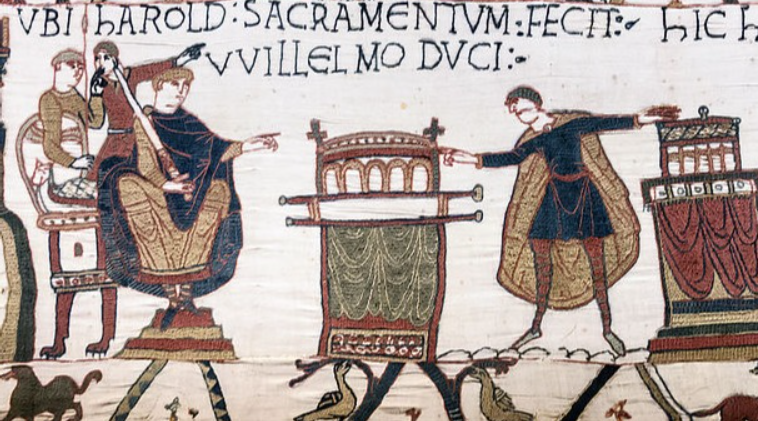
English has become the lingua franca of the world. It enjoys a status like no other language, but if we delve into its history, we’ll find a time when the status of English plummeted.
As a Germanic language, English shares a common ancestry with languages like German and Dutch. Yet, it consists of a large number of loanwords (words borrowed from a foreign language) from various languages like French and Spanish, which are called “Romance languages” (languages descended from Vulgar Latin). For instance, the word “cry” was derived from French.
Around a thousand years ago, the language spoken in England was Old English, which would be utterly incomprehensible to us today. Take the epic poem Beowulf, for example. This renowned work of Old English literature, likely written before the 11th century, recounts the heroic adventures of its namesake, Beowulf. The opening lines, “Hwæt! We Gardena in geardagum, þeodcyninga, þrym gefrunon, hu ða æþelingas ellen fremedon,” seem almost alien to modern English speakers. Yet, this language evolved over centuries into the English we speak today.
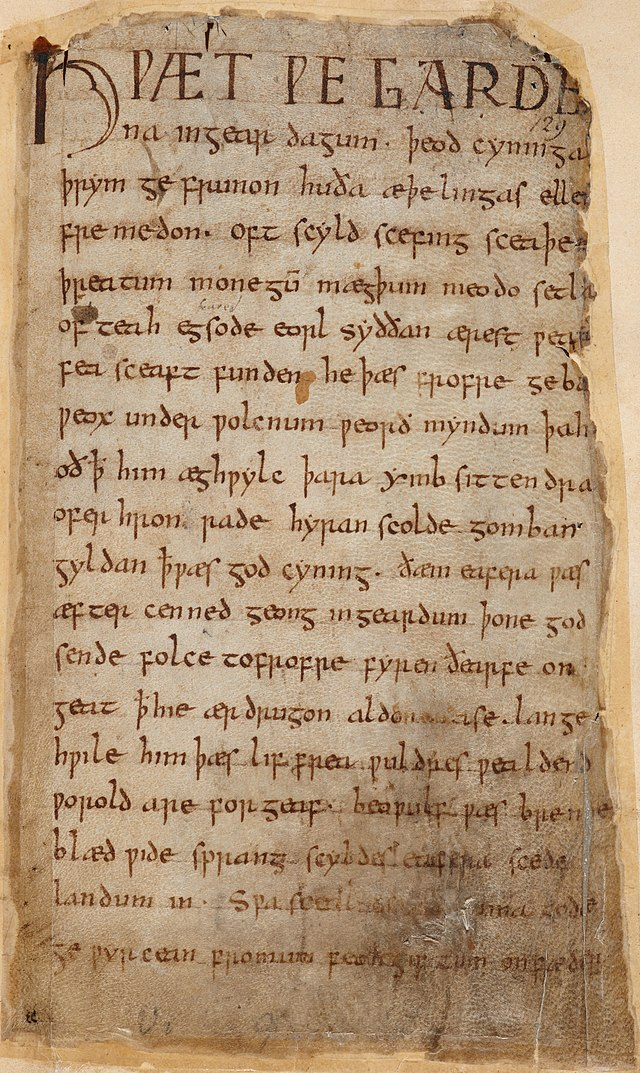
Beowulf manuscript from the British Library / Source: Wikiemedia Commons
This brings us to the Norman Conquest, which resulted in the assimilation of French words into English. Nearly a millennium ago, the Vikings settled in northwest France and established the Duchy of Normandy under a treaty with the King of France. These settlers, known as Normans, adopted French culture and began speaking French in a distinctive dialect called “Norman French”.
English took a dramatic turn when William, a descendant of these Viking settlers, became the Duke of Normandy. After the death of the King of England in AD1066, Edward the Confessor, William claimed that he was named the heir to the English throne by Edward, his distant cousin. However, Harold, Earl of Wessex, assumed the throne instead. As a result, William launched a bold invasion of England and defeated Harold at the famous Battle of Hastings, which completely altered the fate of English. The reign of William brought significant political, economic and social change to England.
Years after the beginning of his rule, he commissioned the Doomsday Book, a country-wide census to record the details of all land in his kingdom. This was written in Latin, and the meanings of many rights and laws were changed. Additionally, words and concepts that were new to England were used. However, the book was never translated into English, so any explanation of the changed meanings of the rights and laws was almost inaccessible to the English speakers of England.
William established Anglo-French as the language of public state business and the court, along with Latin. Law codes written in Old English were altered by adding French phrases, paving the way for French in English legal practice. William brought the French aristocracy to England, which created a French-speaking upper class. They could not affect the general speech but could influence the elite class, as the literacy rates in England were low at that time. Eventually, English became the language of the commoners as the nobles switched to French. Nonetheless, French was the official language, so French loanwords found their way into English. For example, the word ‘throne” was derived from the French word “trône”.
Nearly 200 years later, French gained more momentum in England. French became attractive to the general public as it was the primary language of the aristocracy, leading to more French words and expressions being included in the English lexicon. Moreover, new words were coined from combinations of French and English words. Similarly, words were formed by adding French affixes and roots to Old English words. For instance, the combination of the English verb “hinder” and the French suffix “-ance” created the noun “hindrance”. In the evolution of English, the Norman Conquest resulted in the beginning of a new era of English – Middle English, that lasted until around AD1500, and it was around this period that English started gaining prestige.