Author: Rehet Walia

  • The Threat of El Niño 2026

    The Threat of El Niño 2026

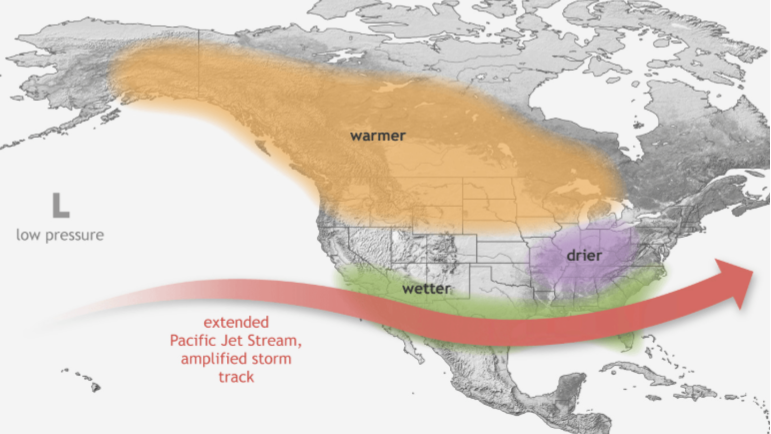
    A potentially historic “Super” El Niño is currently developing in the Pacific Ocean. The latest World Meteorological Organisation update suggests a high probability of El Niño conditions emerging between June and August 2026. According to the forecasts, this event could be very similar to the 1876–78 El Niño in terms of intensity, the strongest on record, which led to severe droughts and widespread famines across several affected regions.

    What is El Niño?

    El Niño is a natural phenomenon that affects the climate by increasing the temperature of the surface layer of the tropical Pacific Ocean along the equator. 

    This phenomenon occurs every 2 to 7 years, and causes a disruption of weather patterns globally. Despite having varying levels of intensity from year to year, El Niño has a widespread climate effect as it is commonly associated with warmer-than-average temperatures across the globe. Southeast Asian countries often suffer from decreased rainfall and droughts, whereas North and South American regions tend to have heavy rainfall that causes floods and landslides. 


    What Happens When a Natural Cycle Meets a Warming Planet

    Australia and Indonesia have drier climates that affect the availability of water resources and agriculture. In recent years, researchers have become increasingly concerned about the direct link of El Niño to the rapid change in climate. Though a natural phenomenon, human-induced climate change may have an inordinate impact on El Niño. For instance, if an El Niño event occurs during a period of already high global temperatures, it can further contribute to record-breaking heat, as experienced in 2026. 

    Climatologists point out that this rapidly growing phenomenon is causing unprecedented warming of the planet and putting the year among the hottest years ever recorded, while 2027 may see even higher temperatures.

    “El Niño conditions will pour fuel on the fire of a warming world.  Impacts will hit even harder, travel even farther, and cross borders with devastating speed.  The only effective response is climate action equal to the crisis – ending the addiction to fossil fuels, accelerating the shift to renewables, protecting the most vulnerable, and delivering early warning systems for all.”  warns UN Secretary-General António Guterres in his WMO press release.  


    To conclude, the emergence of El Niño serves as an alarming indicator that climate-related catastrophes are no longer distant possibilities. The scale of its impact on weather conditions highlights the urgent need for stronger mitigation measures and preparedness for the future. Ignoring these signals could leave communities increasingly exposed to possible climate extremes, making them more vulnerable to such future events.

  • Met Gala 2026: Interpreting ‘Costume Art’ Through Fashion

    Met Gala 2026: Interpreting ‘Costume Art’ Through Fashion

    If fashion is art, then the 2026 Met Gala was its boldest gallery yet.

    On the first Monday of May, The Metropolitan Museum of Art held the year’s most anticipated night of fashion. As guests arrived, the 2026 Met Gala carpet showcased a multitude of celebrities in expressive outfits, all true to the evening’s theme. Each year, the Met Gala theme is designed to align with the museum’s spring exhibition; in 2026, this was ‘Costume Art.’ The red carpet dress code, ‘Fashion is Art,’ emphasised portraying one’s body as a canvas for sculptural and conceptual art through fashion choices.

    The theme ‘Costume Art’ was set to explore the relationship between the body and garments. The exhibition highlights the theme by analysing dressed bodies through art-driven reinterpretations. This particular theme celebrates over 5000 years of art history. The guests were encouraged to present themselves as wearable art with a theme so diverse that it leaves a lot of room for imagination. Several outfits were seen that were directly inspired by famous artworks, sculptures, and paintings.

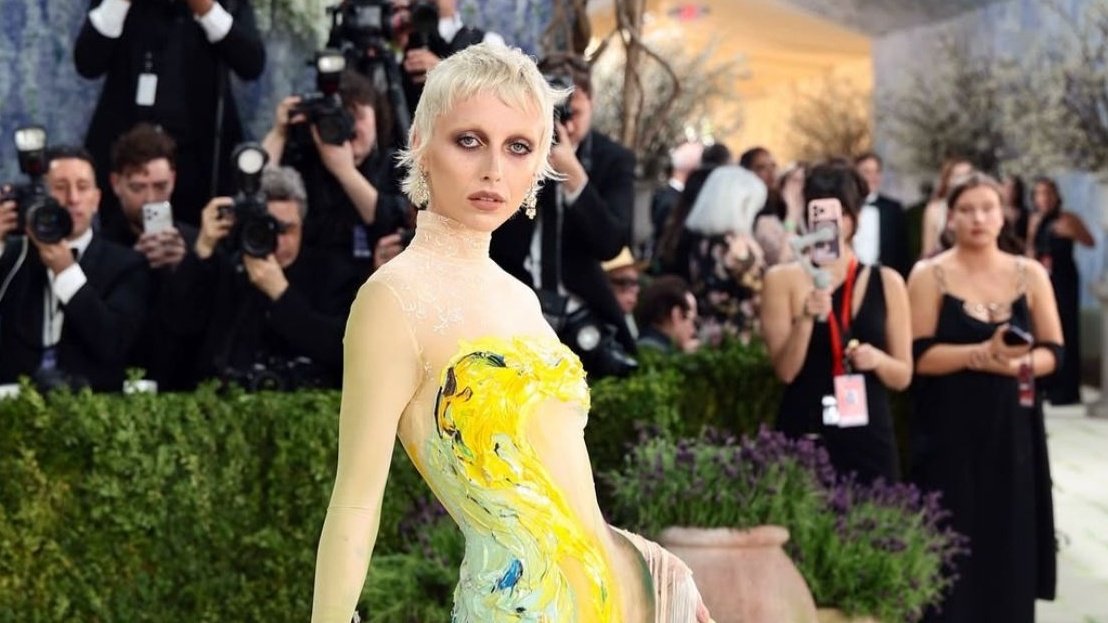
    The evening’s highlights began with Emma Chamberlain, Vogue’s red-carpet correspondent, unveiling the first impactful look. Emma appeared in a custom hand-painted Mugler gown, created in collaboration with artist Anna Deller-Yee.

    The gown incorporated visible influence from painters Vincent van Gogh and Edvard Munch with intricate brush strokes and a raw blend of art.

    This incredibly captivating look was followed by Anna Wintour, the lead chair of the night and her co-chairs, Nicole Kidman and Venus Williams. Beyoncé, who is also a part of the chair, arrived later in the evening in a magnificent Olivier Rousting gown portraying a silver skeleton look, with her daughter, Blue Ivy. Although only 14 years old, Blue Ivy’s debut was just as spectacular and also rule-defying, considering individuals below the age of 18 are forbidden to attend the Gala.

    Some of the most talked-about looks of the night included that of supermodel and television host, Heidi Klum. Heidi arrived at the carpet in a complete head-to-toe transformation into a living sculpture. Her look referenced the famed 1847 sculpture, ‘The Veiled Vestal’ by Raffaelle Monti. She achieved this look with the help of prosthetic makeup designer Mike Marino, who had also previously worked with Klum.

    Another memorable look of the night was that of singer-songwriter SZA. She had adorned herself in a beautiful marigold-yellow corset gown with an embroidered layered skirt. Her colour theme included radiant combinations of yellow, golden and hints of rose. Her stylist, Emily Adams Bode Aujla, revealed that the two worked with a vintage dealer who sourced over a hundred yards of fabric in various materials to work with. The Grammy winner’s look included a floral headpiece and butterfly wings that appeared when she lifted her arms. The look was rooted in the craftsmanship of Viennese artists that aligned with SZA’s love for nature.

    Amongst the numerous debuts this year, Hudson Williams’ look stood out the most. The actor arrived in a baby blue Balenciaga cropped blazer, adorned with ornate black tassels. The show stopper, however, was his bold makeup look featuring metallic blue and red eyeshadow and his spiked hairstyle. The makeup look was inspired by the 2010 film ‘Black Swan’.

    Sabrina Carpenter arrived at the Met Gala steps dressed in Dior and channelling old Hollywood with her look. The singer was wrapped up in actual film strips of the 1954 Oscar-nominated film ‘Sabrina’ featuring Audrey Hepburn. Following this look, Sabrina changed into a 2018 Versace piece for her performance. As she treated the guests with her iconic hits ‘Espresso’ and ‘House Tour’, she captivated the audience with the silkscreen prints of pop culture icons like Marilyn Monroe on her dress.

    Karan Johar made his debut dressed in a custom look by collaborator and friend Manish Malhotra. He arrived in a structured jacket and a dramatic hand-painted cape that took over 5600 hours to make. The paintings were a homage to the legendary Indian painter, Raja Ravi Varma. Pieces like Kadambari, Hamsa Damayanti, Krishna Shishtai and many more were painted by over 80 artists in the span of three months.

    Also deriving her looks from historical Indian references was Isha Ambani. She wore a custom-made Gaurav Gupta sari adorned with two hundred old mine-cut diamonds, collected over time as Nita Ambani’s private collection, that were sewn across the bodice. To complete this look, Isha carried an actual sculpture of a mango made by renowned artist Subodh Gupta. Her look was said to be inspired by India’s rich textile heritage for this piece.

    A notable element about this year’s gala was the number of young debuts. Influencers, young actors, and global pop culture figures are given the exclusive opportunity to present themselves on the biggest fashion stage in the world. Sombr, Alyssa Liu, Tate McRae, Odessa A’zion, Connor Storie, Jisoo, Lauren Wasser, Marcello Hernandez and many others marked their debut as emerging rising talents.

    As the evening concluded, it ultimately showcased that fashion continues to evolve beyond trends. It is a culmination of craftsmanship, self-expression and unapologetic extravagance. This year’s theme, ‘Costume Art,’ pushed the attendees to experiment with their knowledge of fashion while celebrating artists who deserve to be remembered in history. With striking debuts and creative interpretations of the theme, the biggest night in the landscape of contemporary fashion came to an end.

  • India Without Spring: A Season Disappears

    India Without Spring: A Season Disappears

    Spring, in essence, is a transition. It is a narrow window between the retreating winter and the advancing summer. The season has always been a gentle bridge between the two extremes of nature, offering enough time to nature and to human life to adjust and thrive in the climate of India. However, unseasonably high temperatures have arrived early across India this year, shrinking the window and making the transition more abrupt. The India Meteorological Department (IMD) has reported that the shortening of winter and absolute disappearance of the spring season is a consequence of the vigorous climate change across India. The energy imbalance has increased significantly over the past years since its observation began in 1960, specifically over the past two decades, and has been recorded to peak in 2025. Spring has been a season of equilibrium in India, between the cold of winter and the heat of summer. 

    The World Meteorological Organisation reports that the Earth’s climate is more out of balance now than any other time in observed history with rising temperatures and extreme weather events. 

    The Indian Meteorological Department has also issued a warning for possible above-normal heatwaves in India throughout March and May. Experts also warn that such weather conditions may turn into a norm if immediate measures to adapt to such changes are not implemented, which may further lead to an ecological disbalance in India. 

    According to climate data, over the past year, there has been a mean land surface temperature of 0.28 degrees above average over the 1991-2020 period. Land Surface Temperature is a measure of how hot or cold the Earth would feel to touch. It measures the temperature of the air near the surface of the Earth. The increase in this temperature over the past decades has heavy implications on the planet. Although the change may appear minimal, it is significant at a global scale as it marks the increase in the temperature of the total heat stored in the atmosphere and oceans. Therefore, a 0.28 degree rise in the mean land surface temperature is not negligible. It is the biggest contributor to the rise in sea levels, melting of ice and more frequent extreme weather conditions.  

    Analysts suggest that if this trend continues, India may completely be void of the spring season. 

    On March 11, Delhi recorded its hottest day of the year with the temperature peaking at 36.8 degree celsius  which is the highest it has been in early March since 2011. These searing temperatures are not just confined to Delhi. Cities like Mumbai, Ahmedabad and Vidarbha region of Maharashtra have also shown a significant rise, where temperatures rose several degrees above the seasonal average.

    The fading of spring has its implications on the livelihood of  many as it plays a crucial role in the agricultural sector. Most crops rely on the gradual rise in temperatures to mature under proper conditions. The loss of spring heavily impacts the traditional practices linked to planting and harvesting crops. An absent spring can lead to reduced yields and affect the food security, produce and farmer incomes. In areas where the economy relies on agriculture to drive it, a failed spring season will have a trickle-down effect on the economy, thereby creating instability in the economy and an increase in the price of rations. There can be little argument against the reality that the spring season, with all of its connotations of rebirth and viability from an agricultural standpoint, is in peril. 

    This season, which has been so predictable in past years and has been able to provide for nature and man, is now most likely unforeseeable, and the land, the farmer, and the tradition are struggling to cope with this instability. A substantial factor for the unusual warmth is the sharp decline in winter precipitation across India. February alone has registered an 81% deficit, receiving a mere 4.2 mm compared to the usual 22.7 mm. The rainfalls in winters not only take away the respite that provides a balancing effect to extreme heat but also result in a chain effect that includes a rapid increase in temperature, water management problems, and the premature onset of summer heat. India is in a state of transition in terms of traditional changes in seasons and is now in a critical state. The minimum intensity has resulted in marginal rainfall and snowfall, accelerating temperature rise in India. 

    Scientific explanations apart, the loss of spring has an important effect on India due to the cultural and symbolic significance that the spring season enjoys. The spring season is commonly accepted by different cultures to be a symbol of rejuvenation, growth, and new beginnings; it is the season that marks the revival of life. The festivals of Holi and Vasant Panchami, which occur during the month of March, have an embedded association with the cultural essence of India and the arrival of the spring season. This is not limited to weather phenomena; it is about festivals, it is about agriculture, it is about the fauna that is so synchronized with the seasons that occur in India. The loss of spring, therefore, is not only about environmental loss; it is about cultural loss, it is about the loss of time within which India celebrates life. 

    The shortening of spring in India has disrupted not just nature but also the cultural fabric of society in the country. The festivals associated with the arrival of spring and the seasons, the agricultural patterns and cycles of nature associated with the arrival of spring, and even the cultural fabric of society in India are all adversely affected by the shortening of spring in India. The impact of the shortening of spring in India is also visible in the fact that the agricultural cycles and the weather patterns in India are adversely affected by the shortening of spring in the country. The waning of spring is an indication of more than just a change in the season; it illustrates the fragility of natural equilibrium. The rhythm of life that depends on the beauty of landscapes is likewise impacted by this slow erosion. As spring becomes less noticeable, it serves as a reminder to cherish its fleeting existence and acknowledge the minute environmental shifts that are reshaping our world.