Author: Nayana Ittiyamparampath

  • The Legacy of Giorgio Armani

    The Legacy of Giorgio Armani

    Giorgio Armani, the visionary Italian designer, has passed away at 91. Over the course of five decades, Armani built a legacy in both Italian and global fashion to create a unique and everlasting style from the red carpet to the big screen.

    Born in Piacenza, Giorgio Armani’s initial career plan was not fashion. He enrolled in medical college at the University of Milan after being inspired by A.J. Cronin’s The Citadel. However, after almost 3 years, he dropped out and enlisted in the army, where he served for two years in the Military Hospital of Verona. After his time in the military, he worked as a window dresser at La Rinascente, a high-end department store in Milan, curating his taste for fashion. After gaining skills in marketing and sales, he realised he could start freelancing and designing, catapulting his fashion career to new heights.

    In 1966, Armani met Sergio Galeotti, an Italian architect and a business partner of his in the coming years. Together, they ounded Giorgio Armani S.p.A. in 1975. Legend has it that Armani’s Volkswagen Beetle sale contributed to the initial capital. They would go on to work together for another 20 years, until Galeotti’s death in 1985. The brand initially started off as a menswear brand- its debut collection was presented in Milan in 1975, featuring ready-to-wear pieces for the Spring and Summer 1976, along with some womenswear pieces. This collection featured a twist to the everyday formal look, showing blazers and pants in a more light and loose-fitted manner.

    The Armani brand quickly expanded to include accessories, fragrances, and home decor, eventually turning into a high-end global lifestyle empire, spanning Giorgio Armani Privé, Emporio Armani, Armani Exchange, and Armani/Casa. Always aware of the changing lifestyles of his clients, Armani entered the hospitality industry with Armani Hotels in Dubai and Milan in 2010 and 2011, respectively. He also built a strong presence in sports by sponsoring various sporting teams like the Italian national football team and a partnership with Scuderia Ferrari F1, both in 2020 and 2021. His restaurants, cafés, and bars around the world further showcased his idea of fashion as a complete experience, built of elegance and design.

    Beyond this, Armani’s artistry reached Hollywood, where he revolutionised costume design with sleek, power-driven wardrobes for films such as American Gigolo and The Untouchables. For The Untouchables, Armani has mentioned that the styling for it was different from what he usually likes to style, as the movie is set in 1930s Chicago. The 3-piece suits and fedoras sell the vintage vibe well, very reminiscent but not fully accurate to the 1920s and 30s style the film was trying to portray. Armani also dressed countless stars off-screen, Cate Blanchett being one of them. In 2007, she stunned in a silver Armani Privé gown for the 79th Oscars, and in 2014, she wore a black lace Armani Privé dress with sheer detailing for the Golden Globes, both being some of the best looks of the night. At the 2023 Venice Film Festival, Cate Blanchett wore a sculptural black-and-white Armani Privé gown, embodying Armani’s vision to merge simplicity with sophistication. The look had fluid elegance: a sleek, strapless black bodice cascading into a dramatic train.

    An iconic moment in his fashion career was his photoshoot with Grace Jones, a Jamaican model and singer, for her studio album Nightclubbing. Photographed by Jean-Paul Goude and styled by Armani, Grace Jones looks chiselled, with her hair and cigarette aligning perfectly with her body and background.

    Armani also became the first designer to ban underweight models after the death of Ana Carolina Reston, following her death from anorexia nervosa. Armani was also the first fashion brand to close its Milan Fashion Week runway in 2020 as a public health concern after seeing the rising COVID-19 cases. The show was instead held in a theatre at the brand’s headquarters in Milan with no audience. In March 2020, the brand converted all its Italian production plants to produce single-use overalls for the protection of its workers.

    The legacy of Giorgio Armani leaves a mark on both Italian and global fashion. By softening the lines of traditional menswear, he reinvented the suit, replacing rigid structures with relaxed tailoring that defined the era of effortless sophistication. Armani not only changed how the world dressed but also created a new language of modern Italian design. He also brought similar innovation to casual wear, elevating jeans into staples of high style while staying committed to timeless elegance over fleeting trends. He was a true statement in his time.

  • ChatGPT Amid Controversies: Technical Failures and Safety Concerns

    ChatGPT Amid Controversies: Technical Failures and Safety Concerns

    Within a week after OpenAI unveiled its latest ChatGPT model, GPT-5, with grand promises, the company found itself in damage control mode. On 7 August 2025, in less than 24 hours after the launch, people found out that the new “PhD-level expert” did not live up to its expectations, with social media platforms such as X flooded with mixed reactions, from excitement to scepticism. Despite the concerns, the users increased to 700 million in anticipation of the release of the new model.

    Technical Improvements and Shortcomings

    GPT-5 brings several improvements to the table. It excels in enterprise, and has noticeable improvement in reasoning, accuracy and liability. The new update has also installed better language support, with enhanced multilingual performance for a global market. Coding is of much higher quality, and generating front-end user interfaces with little prompting, the model also exhibits advances in personality and steerability.

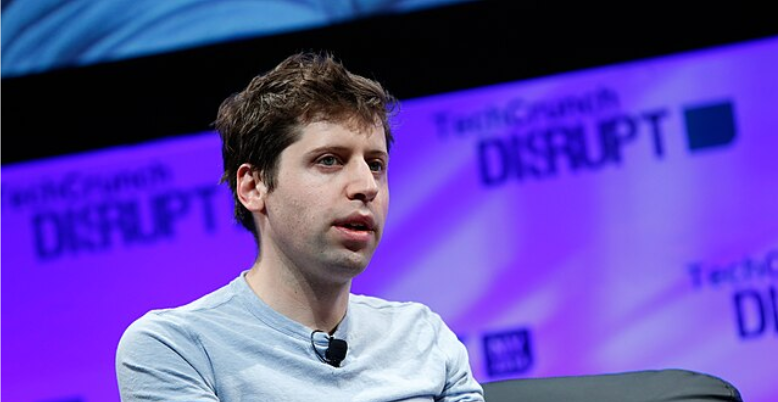
    However, this does not mean it is without its concerns. The most immediate criticism that followed the release was OpenAI CEO Sam Altman’s claims of a PhD-level intelligence system and how this failed. The new system cannot label maps without spelling errors, raising questions about the gap between OpenAI’s promotional rhetoric and actual performance. Users reported a “colder tone, reduced creativity, slower responses, and workflow disruptions” compared to previous versions. Many longtime subscribers felt the new model lacked the warmth and creative capabilities they had grown accustomed to, describing the experience as a downgrade rather than an improvement.

    Safety Concerns

    OpenAI made notable strides in safety with GPT-5. A new safety training program dubbed “safe completions” was launched by the corporation. It educates the model to provide the most helpful response while adhering to safety protocols. Instead of focusing on a refusal boundary based on user input, safe-completion focuses safety training on the output safety of a model. These improvements came at a crucial time

    A day before GPT-5’s release, the Centre for Countering Digital Hate’s (CCDH) new research showed that 53% of ChatGPT responses to teen queries contained harmful content, including detailed instructions on concealing eating disorders and composing suicide letters. Teens would spend more than three hours on ChatGPT and would vividly give instructions on how to get drunk and high.

    Another issue is that a lot of people are turning to AI chatbots for friendship and engaging in para-social relationships with them, creating unhealthy emotional attachments. Altman has publicly addressed this issue, saying that he and his team are trying to reduce the emotional overreliance on AI as it could become potentially dangerous.

    Industry Implications

    While GPT-5 did show clear technical improvements over earlier models, the significant gap between high expectations and actual user experience has affected OpenAI’s credibility. It has also raised concerns about responsible AI marketing. The company’s choice to bring back older models indicates that they understand user preferences and the need for better transitions. However, it may take time to fully regain user trust.

    Looking Ahead 

    As companies compete to showcase their AI advancements, the pressure to hype their abilities while failing to deliver practical results leads to a disengaging cycle, ultimately eroding public trust. For OpenAI, the path forward will require not just technical improvements but a fundamental reassessment of how the company communicates about its products. As the AI landscape continues to evolve rapidly, the GPT-5 launch serves as a cautionary reminder about the risks and safety concerns of AI and putting marketing promises ahead of user needs.

  • Centre Defends Revised SO₂ Emission Norms for Coal Plants as Cost‑Effective and Climate‑Coherent

    Centre Defends Revised SO₂ Emission Norms for Coal Plants as Cost‑Effective and Climate‑Coherent

    India, already one of the world’s top sulphur dioxide (SO₂) emitters, has now moved to exempt nearly 80% of its coal-fired power plants from installing key pollution control systems – sparking widespread concern among environmentalists and public health experts. On 17 July 2025, India’s Ministry of Environment, Forest and Climate Change (MoEFCC) has staunchly defended its decision to relax sulphur dioxide (SO₂) emission norms on installing flue gas desulfurisation (FDG) systems for coal and lignite-based thermal power plants, describing the move as ‘cost-effective’ and ‘scientifically justified’. The new revised framework has now exempted approximately 78% of thermal plants from installing FGD systems, with exceptions.

    Background & Challenges Faced 

    In 2015, the MoEFCC introduced new emission norms for coal- and lignite-based thermal power plants to curb air pollution. A key requirement was the installation of FGD units, which are a pollution control technology that removes sulphur dioxide from gases of the power plant, leading to a reduction in harmful emissions into the atmosphere. This move was part of India’s broader effort to reduce ambient air pollution and align with global environmental standards.

    However, for the communities living near the thermal plants, these policies were essential for their survival. Residents near Chhattisgarh’s Korba region, home to one of India’s densest coal power belts, who are already battling chronic coughs, fear that this rollback would choke them further.

    All thermal plants were given two years to install these; however, by 2024, only 8% of 180 thermal power plants had installed FGDs. Multiple extensions were granted due to technical, financial, and logistical hurdles, including high costs, limited vendors, and supply chain issues.

    While studies show sulphur dioxide contributes only 1–5% to overall PM₂.₅ levels, studies caution that even at the lower end of this range, the impact on human health is significant. India sees around 19.5% of daily deaths and 1.67 million annual deaths – a figure that makes the health implications of rolling back SO₂ norms impossible to ignore.

    What has changed?

    Under the new framework, thermal power plants are now classified into three categories based on how close they are to populated places and their pollution load. Category A plants are those situated within 10 km of cities in the National Capital Region or in areas with severe pollution. They are still required to install FGD systems by December 2027. The second category, Category B, located between 10 and 25 km from populated areas, will be assessed on a case-by-case basis. Meanwhile, Category C plants—located more than 25 km from major habitations—have been exempted altogether from the FGD mandate. This includes the 78% of thermal plants mentioned before.

    Government’s Justification

    The MoEFCC said that they have noted no visible difference between the SO₂ emissions between those plants that have the FGD system and those that don’t. According to the ministry, studies show that SO₂ contributes only 1% to 5% to ambient PM2.5 levels, implying that nationwide installation may not be the most effective strategy to reduce air pollution.

    The Ministry also stated that the expenses to install these systems would not match their benefits, which are marginal. The installation could also lead to an increase in electricity tariffs by 50 to 70 paise per unit. The current cut of the systems could, in fact, reduce electricity costs by 25 to 30 paise per unit.

    Criticism and Public Health Concerns

    SO₂ is a colourless, extremely toxic gas and a leading cause of several respiratory illnesses and acid rain. As mentioned, India is one of the largest emitters of SO₂ and diluting regulations puts vulnerable communities at risk. Some research suggests that fully implementing FGD could save thousands of lives each year.

    Critics argue that rolling back these measures not only endangers public health but also undermines India’s global environmental standing. This policy shift, they warn, could complicate India’s long-term climate strategy—particularly its ambition to reach net-zero emissions by 2070. With coal still dominating the energy mix, continued reliance on outdated emission controls may slow the transition toward cleaner alternatives and jeopardise commitments under the Paris Climate Agreement.

    What Lies Ahead

    While the government claims that the revision is both climate-friendly and cost-effective, this debate highlights a significant challenge: finding the right balance between developmental needs and environmental responsibility. With coal still being a major player in India’s energy landscape, we’re left wondering what the long-term effects of this decision will be on public health and our climate goals.

  • Big Heels to Fill: Looking Back 37 Years as Anna Wintour Steps Down as Editor-in-Chief of American Vogue

    Big Heels to Fill: Looking Back 37 Years as Anna Wintour Steps Down as Editor-in-Chief of American Vogue

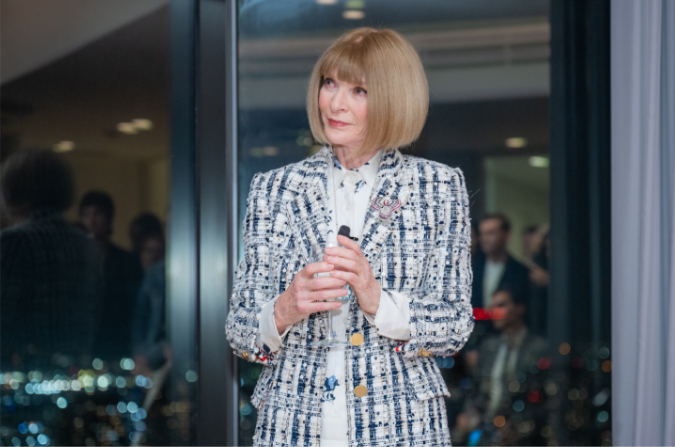
    Nearly 40 years and many a cultural revolution later, Dame Anna Wintour steps down as the Editor-in-Chief of American Vogue. Throughout her tenure, Wintour has been regarded as the most powerful woman in world fashion, with her signature bob and sunglasses becoming an iconic symbol of her influence in the fashion industry.

    While her reign at American Vogue began in 1988, Wintour had a long journey in the industry before becoming the Editor-in-Chief. Journalism runs in her family, as her father, Charles Wintour, was twice the Editor-in-Chief of the London-based Evening Standard. Anna’s career began in fashion journalism after she dropped out of college. By 1975, she was working as a junior fashion editor at Harper’s Bazaar in New York.

    In 1983, a conversation with Alex Liberman, the then editor of Condé Nast, got Wintour an open position at Vogue. After a bidding war that resulted in a doubled salary, she accepted the role, becoming Vogue’s first-ever Creative Director.

    As the creative director, Wintour reimagined the vision of American Vogue, breaking away from the traditionalist influence that Grace Mirabella, the Editor-in-Chief at the time, had brought to the magazine. She pushed the boundaries by bringing out more dramatic layouts and bold photography, which later earned her the position of Editor-in-Chief in 1988.

    However, before stepping into her role as the Editor-in-Chief at American Vogue, Wintour served as the Editor-in-Chief of British Vogue from 1985-1987, where she quickly earned the nickname ‘Nuclear Wintour’ for her bold and drastic editorial decisions. After her time at British Vogue, she moved back to New York to take over House & Garden – a Condé Nast shelter magazine which she famously renamed HG, filling its pages with high fashion and lifestyle features.

    Right from her first issue as Editor-in-Chief of American Vogue, the November 1988 issue, Anna Wintour made sweeping changes to the cover, which revolutionised the magazine. This cover featured 19-year-old Israeli model Michaela Bercu styling a $10,000 bejewelled Christian Lacroix top paired with a $50 pair of faded blue jeans in a candid outdoor setting. This cover, which featured Vogue’s first cover model styling jeans, was so radical to the magazine’s traditional style that the printer mistook it as the wrong image when he saw it for the first time.

    Wintour’s fresh remodel of the magazine birthed a new trend in the industry- the ‘high-low’ look, which, as the name suggests, comprises one high-end luxury item paired with a more understated, low-budget piece. From there on, her work has been pivotal in shaping the fashion magazine into a pop-culture powerhouse.

    Throughout her tenure, Wintour is known for having promoted the emergence of the supermodel era, giving names like Linda Evangelista, Cindy Crawford, and Naomi Campbell international recognition while also bringing emerging designers like Marc Jacobs and Alexander McQueen to the forefront. By featuring celebrities like Madonna, Oprah Winfrey, Michelle Obama, and soon stars like Kim Kardashian and actress Zendaya on the cover, Wintour also began the trend of celebrities becoming cover stars, which spiked magazine sales and reimagined Vogue’s identity.

    Her influence is not limited to the magazine and its widely known covers. As the lead chairperson, Wintour transformed the Met Gala from a museum fundraiser to one of the most anticipated nights in fashion, curating guest lists and themes with precision. Wintour has also received numerous accolades for her contributions to fashion and philanthropy, including the Order of the British Empire and the Presidential Medal of Freedom.

    While Dame Anna Wintour steps down as the Editor-in-Chief, she is not completely exiting the fashion scene. She will continue her roles as Global Editorial Director for Vogue and Chief Content Officer for Condé Nast.

    Still, her last days as Editor-in-Chief are not without controversy. Her decision to feature Lauren Sánchez Bezos, media personality and wife of Amazon founder Jeff Bezos, on what now appears to be her final Vogue cover has caused quite the stir online. The cover showed their high-profile wedding in Venice, with Lauren Sánchez Bezos wearing a custom Dolce & Gabbana wedding dress. Social media users are criticising Vogue for flaunting billionaires and are accusing the magazine of publishing paid covers, especially in the current political climate where there are growing conversations about wealth disparity and elitism.

    Now, the big question lies – who could fill the legendary heels left by Wintour? Online speculations are aplenty about possible candidates for the new job, but there is no official word on who will take over as Wintour’s successor. Whoever takes on the role of Editor-in-Chief of American Vogue will work under Wintour as she continues as Global Editorial Director for Vogue.

    Wintour has not been a mere leading force at Vogue – she has transformed it. As the industry absorbs this shift, one thing is clear: Anna Wintour is hardly leaving fashion. She’s simply changing its shape—again.

  • The World’s Largest Data Breach: 16 Billion Passwords Leaked

    The World’s Largest Data Breach: 16 Billion Passwords Leaked

    On June 18, 2025, the digital world was rocked by an unprecedented breach: over 16 billion login credentials were leaked online, drawn from at least 30 separate datasets. Cybersecurity researchers have confirmed this as the largest credential dump ever recorded.

    While rumours flew that major players like Apple, Facebook, and Google were hacked, Cybernews, the news outlet that looks into cybersecurity research, testing and data, quickly clarified there is no indication that this is true. As Cybernews expert Bob Diachenko noted, this “opens the doors to pretty much any online service imaginable,” not because the infrastructure was compromised, but because stolen credentials were tied to major platforms.

    Infostealer malware infiltrates devices—typically through phishing, malicious downloads, or pirated apps—and quietly harvests sensitive data, including stored passwords, session cookies, and tokens. This leak includes a large number of social media login credentials, VPNs, and other user accounts.

    This latest leak included everything from social media logins to VPN credentials and other sensitive account information. It doesn’t just affect a handful of people—millions around the world, especially in Asia, Africa, and Latin America, are at risk due to rapid digital growth alongside weaker cybersecurity infrastructure.

    However, there exist other perspectives. Hudson Rock, an Israeli cybersecurity company, said that its data showed approximately 50 credentials stolen for every computer. So, for it to add up to 16 billion, around 320 million devices would be needed. This number is highly unrealistic. The company also mentioned that the leak is not very dangerous, as a majority of the data leaked could be AI-generated or recycled.

    To counter the risks, experts across the security community advise taking immediate steps:

    1. Change passwords for any account you have reused elsewhere.
    2. Enable two-factor or multi-factor authentication or adopt passkeys.
    3. Use a trusted password manager to generate unique, strong passwords per account.
    4. Make sure to consistently monitor your accounts for unusual logins and enable security notifications.

    The credential leak serves as a stark reminder of the growing threat posed by infostealers and the importance of cybersecurity and digital hygiene. The sheer magnitude of the exposure necessitated prompt action from both users and institutions, even though the compromised credentials were not the result of a single breach. Now more than ever, it’s crucial to use strong passwords and watch out for signs of suspicious activity, like unfamiliar login attempts or account changes you didn’t make.

  • Dandyism Redefined: The Cultural Fabric of the Met Gala 2025

    Dandyism Redefined: The Cultural Fabric of the Met Gala 2025

    5th May 2025, the first Monday of the month, saw fashion’s most iconic night- The Met Gala, at New York’s Metropolitan Museum of Art.

    The Theme

    The theme for this year’s gala was ‘Superfine: Tailoring Black Style’, inspired by Monica L. Miller’s book titled Slaves to Fashion: Black Dandyism and the Styling of Black Diasporic Identity. The book explores black dandyism and the use of fashion for self-expression and cultural resistance. Curated by Monica L. Miller, the chair of Africana Studies at Barnard College, and Andrew Bolton, the head of the Met’s Costume Institute, the dress code ‘Tailored for You’ encouraged attendees to tailor the theme to their creative interpretations, with the exhibit focusing on menswear.

    What is Black Dandyism?

    Emerging from the late-nineteenth to early-twentieth centuries after Emancipation, Black Dandyism is a cultural movement in which African Americans use fashion as a form of self-expression and a way to reclaim Black identity and the Black body. Tailored jackets, silk ties and fedoras are not merely stylish pieces of fashion; rather, they come from a powerful political movement in history that was paid homage to at the 2025 Met Gala.

    The Chairs for the Evening

    The evening began with the arrival of the lead chairperson and main organiser of the night, Anna Wintour, the Editor-in-Chief of American Vogue, and her co-chairs- Pharrell Williams, Colman Domingo, A$AP Rocky and Lewis Hamilton.

    Each year, the Met Gala’s carpet is custom-designed to complement the theme and colours of the night. This year’s carpet was woven by Extraweave, the parent company of Neytt Homes from Alappuzha, Kerala. Made from sisal fibre, imported from Madagascar, the carpet was midnight blue with white and yellow daffodils speckled on it. This was Extraweave’s third year crafting the Met Gala carpet, and this year’s carpet was crafted by 480 people over 90 days.

    Memorable Fashion Statements of the Night 

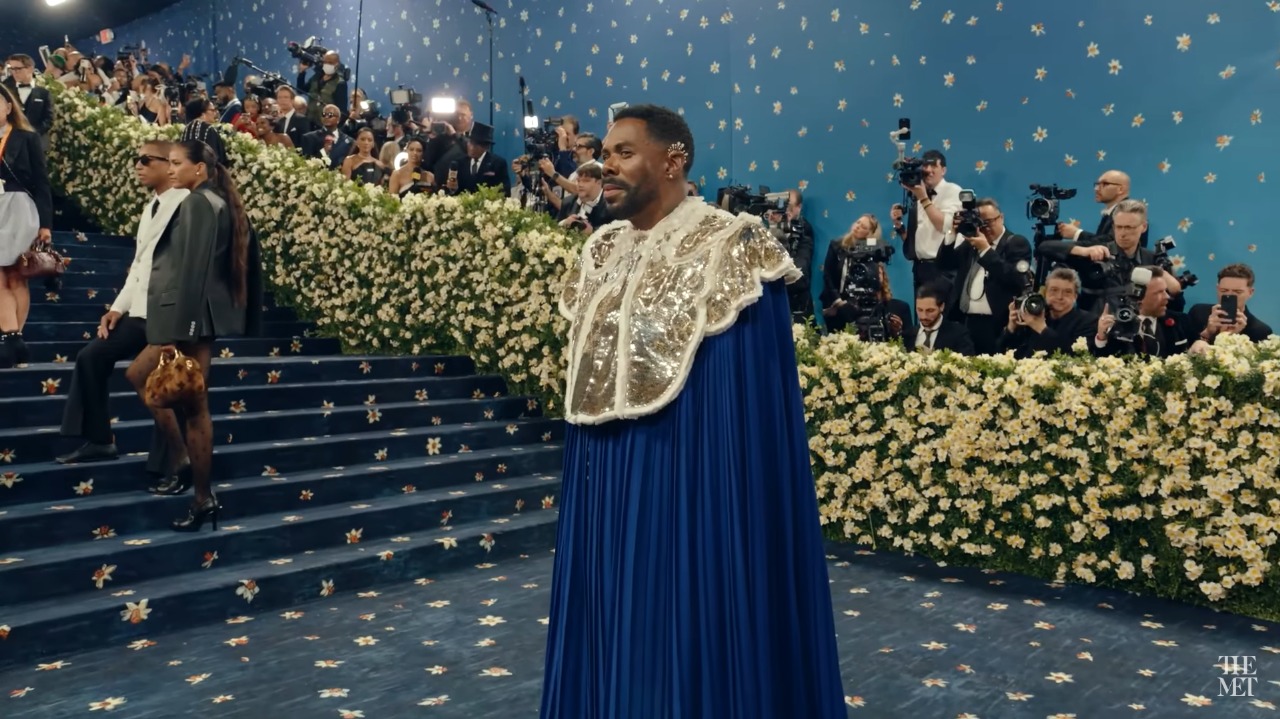
    Oscar-nominated actor and one of the co-chairs for the night, Colman Domingo, made a strong statement in a two-part Valentino look. He arrived on the carpet in a long, pleated royal blue cape with a statement gold sequined bolero. He soon removed the cape to reveal a black and white suit, a checkered blazer with a flower embellishment, gray pants, and a polka dot tie.

    Image Source: The Met / @YouTube

    One of the most talked-about entrances for the night was Rihanna’s, made special with the reveal of her third pregnancy in a custom Marc Jacobs corset dress-suit. The look comprised a black cropped woollen jacket, a grey bodysuit with a black pinstripe skirt and a hat designed by Marc Jacobs in collaboration with Stephen Jones.

    Shah Rukh Khan made his Met debut this year, being the first Indian male actor to attend the Gala.  He donned an all-black Sabyasachi suit, with a rhinestone-studded ‘K’ that stood out amongst his layered jewellery.  The finishing touch to the outfit was a cane crowned with a sculpted gold-studded Royal Bengal tiger’s head. Altogether, the actor’s look for the night paid homage to both Black Dandyism and his Indian roots.

    Also making his Met Gala debut from India was Diljit Dosanjh, whose regal look captured hearts from many. Diljit marked his Met Gala debut in a custom Prabal Gurung, incorporating his Punjabi roots in the Black Dandyism Tailored for You themeThe singer donned an ivory and gold sherwani, layered with a cape and a turban, along with a statement emerald necklace inspired by Maharaja Yadavindra Singh of Patiala. Diljit paid homage to his Punjab and his Sikh culture with an ornate kirpan (sword) in his hand and his cape detailed with a silhouette of the map of Punjab.

    Besides Rihanna, another baby bump was flaunted on the carpet as Kiara Advani made her Met debut this year. She came in a custom Gaurav Gupta, in a sculptural black gown adorned by an antique gold breastplate with ghungroos and crystals. The design symbolised a connection between mother and child, with Gupta describing it as “two hearts connected by an abstract umbilical cord.” Kiara Advani’s look was an homage to Andre Leon Talley, the late, legendary American fashion journalist and the first African-American creative director of Vogue.

    Zendaya made her return to the Met carpet in a custom Louis Vuitton suit designed by Pharrell Williams. Styled by Law Roach, her outfit was inspired by Bianca Jagger’s iconic wedding suit. The white monochromatic look was accessorised with a silver buttoned vest, a white floppy hat and Bulgari jewellery.

    One of the best-dressed attendees for this year’s Met Gala was singer-songwriter and actress Teyana Taylor. Designed by Ruth E. Carter,  the outfit was a near-accurate representation of the theme for this year. The burgundy red zoot suit look was layered beautifully with a dramatic cape. The outfit was accessorised with a matching durag, statement hat with a large ostrich feather and striking red leather gloves.

    Janelle Monáe arrived at the Met Gala in an outfit collaboration between Thom Browne and Oscar-winning costume designer Paul Tazewell. The custom-made outfit featured a stunning red, white and black trompe l’oeil dress and a monocle attached to a bowler hat. Her outfit also included a diamond brooch made out of 1800 Cristalino tequila.

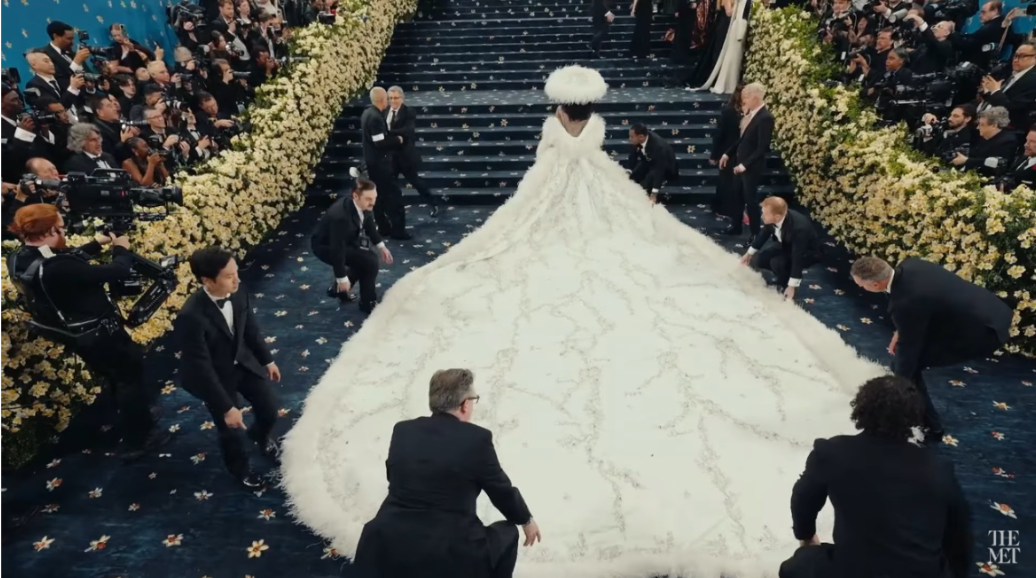
    Diana Ross made her long-awaited return to the Met Gala following a 22-year-long hiatus. She walked the carpet in a sweeping white gown featuring an 18-foot-long train embroidered with the names of her five children and eight grandchildren. This custom creation was a collaborative effort between the singer, her son Evan Ross, and Nigerian designer Ugo Mozie.

    Drawing on the rich history of Black fashion, attendees embraced the theme by donning well-tailored suits paired with bold accessories, each weaving their creative interpretations. As the gala concluded well into the early hours, the 2025 Met Gala once again proved its place as a cultural epicentre — not just of style, but of storytelling and resistance.

  • Oscars 2025: Honouring the Year’s Finest in Cinema

    Oscars 2025: Honouring the Year’s Finest in Cinema

    The Dolby Theatre in Hollywood, Los Angeles, lit up on 2nd March 2025, as some of the best in American and global cinema gathered to celebrate the most powerful performances of the year at the 97th Academy Awards. This year, the prestigious annual ceremony was hosted by  Conan O’Brien, and the night’s lineup was compelling, bringing together a dynamic lineup of films spanning genres and cultures.

    Leading the night, Sean Baker’s comedy-drama Anora swept the Oscars, winning five out of the six nominations, for Best Picture, Best Actress for Mikey Madison, Best Director for Sean Baker, Best Original Screenplay and Best Film Editing. This series of wins places Sean Baker alongside Walt Disney for the most Oscars ever won in one night. In his acceptance speech, Baker emphasised the importance of preserving the theatrical experience, urging filmmakers to continue creating stories for the big screen.

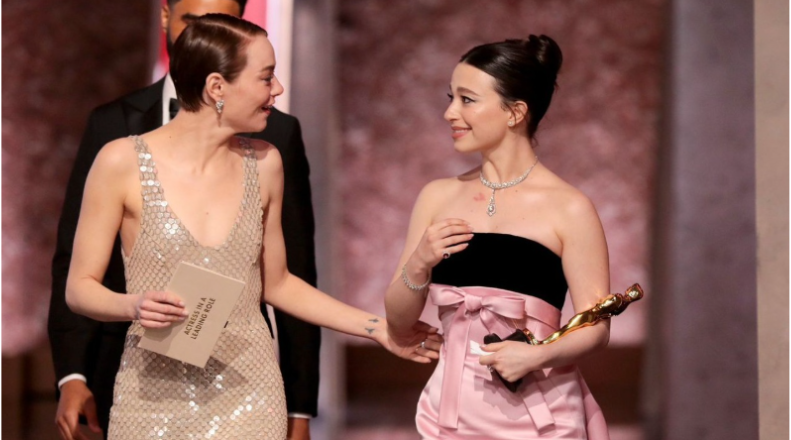
    Emilia Pérez, directed by Jacques Audiard, made history as it garnered thirteen nominations, the most ever for a non-English language film. It won two awards, Best Supporting Actress for Zoe Saldaña and Best Original Song for the song ‘El Mal’.

    Jon M. Chu’s fan favourite musical Wicked, with a total of ten nominations, walked away with two wins – Best Production Design for Paul Tezwall, making him the first African American man to win this award, and Best Costume Design for Nathan Crowley and Lee Sandales.

    In the acting categories, Adrien Brody and Kieran Culkin delivered powerhouse performances, earning themselves the Best Actor and Best Supporting Actor awards for The Brutalist and A Real Pain, respectively. The Brutalist won again, with Daniel Blumberg winning Best Original Score and L. Crowley winning Best Cinematography.

    Conclave, directed by Edward Berger, earned the Best Writing on an Adapted Screenplay award for its gripping adaptation of Robert Harris’ mystery thriller novel.  Walter Salles’ I’m Still Here, a Portuguese film set in Brazil, took home the Best International Feature Film award.  Best Documentary Short Film was won by The Only Girl in the Orchestra, directed by Molly O’Brien, and the Best Short Film was I’m Not a Robot, directed by Victoria Warmerdam.

    In the Animation category,  the Best Animated Feature Film award went to Flow, a Latvian adventure film without dialogue directed by Gints Zilbalodis. Best Animated Short Film was taken home by In The Shadow of Cypress, directed by Shirin Sohani and Hossein Molayemi, which beautifully captures the evolving relationship between a father who struggles with PTSD and his daughter.

    Source: X/ @TheAcademy

    The documentary film No Other Land, the directorial debut of a four-Palestinian-Israeli collective of activists, Yuval Abraham, Hamdan Ballal, Basel Adra, and Rachel Szor, won the Best Documentary Feature Film award. The documentary, filmed between 2019 and 2023, depicts the destruction caused by war, resistance in the Palestinian West Bank and the growing friendship between Israeli journalist Yuval Abraham and the Palestinian activist Basel Adra.

    Dune: Part Two, directed by Denis Villeneuve, was nominated for five awards and won Best Sound and Best Achievement in Visual Effects. Also nominated for five awards was Coralie Fargeat’s body horror film, The Substance, which won the Oscar for Best Makeup and Hairstyling.

    As the curtains closed on the 97th Academy Awards, the night served as a testament that cinema goes beyond entertainment- it is a medium for bold and conscious storytelling and cultural commentary. This year’s ceremony shone the spotlight on the year’s films that highlighted the human experience and invited the global film community to reflect and yearn for more such stories.

  • The Future of AI: What to Expect in 2025

    The Future of AI: What to Expect in 2025

    The rapid evolution of AI is no joke. It has quickly gone from a futuristic concept to a tool we now use in our everyday lives. As we step into 2025, the increasing technological developments show an expansion of AI adoption in spheres across various industries. So, doctors diagnosing rare diseases in seconds or, perhaps, having robotic tutors may no longer be a dream but an everyday occurrence.

    Hybrid Working Environments & AI Agents
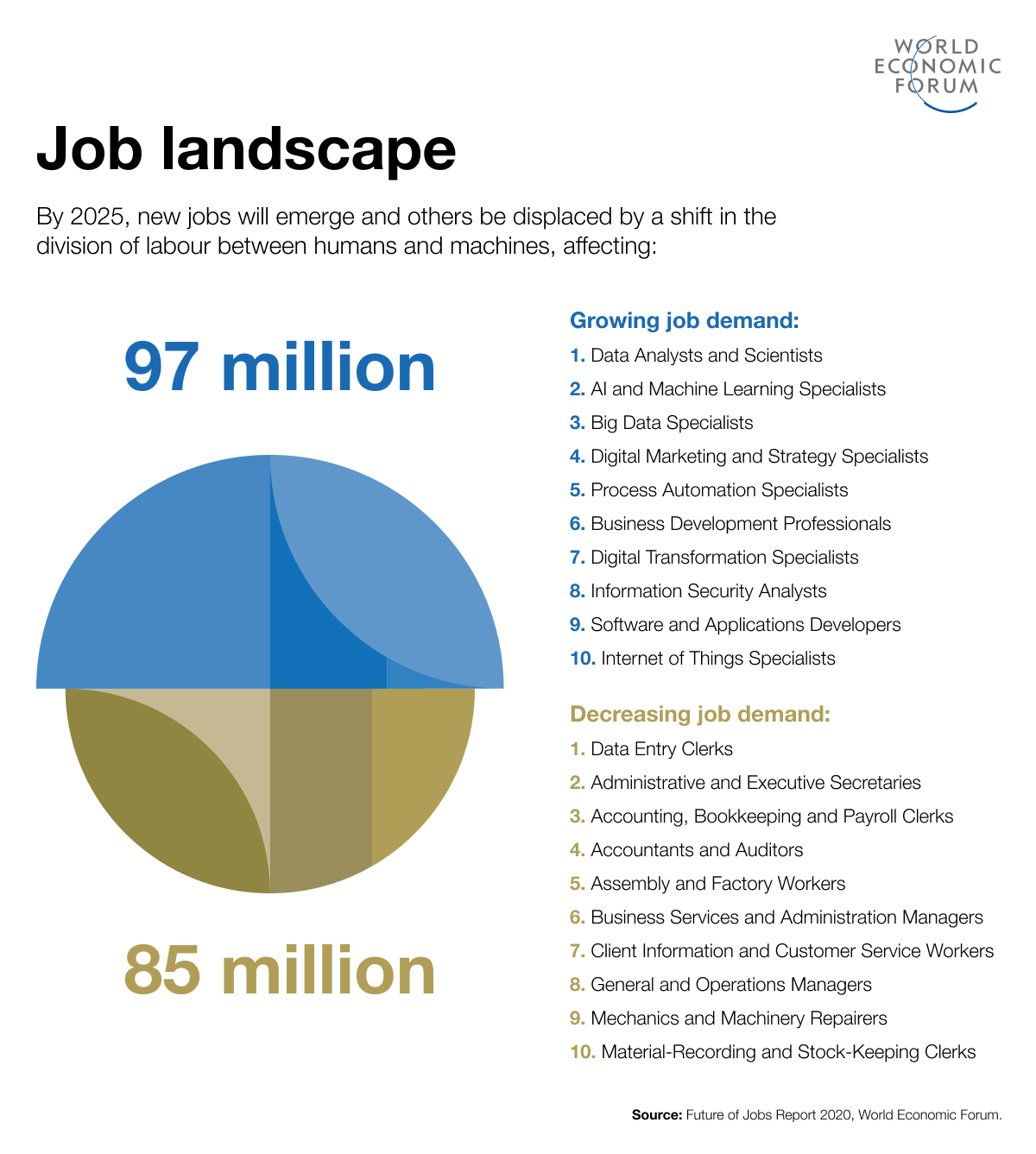
    Oftentimes, we hear talk of a decline in employment rates because of AI takeover. This year, one of the most anticipated outcomes is that there will be a hybrid working environment with increased employment of AI. According to Goldman Sachs’ CEO Marco Argenti, companies can hire AI, train them like one of their employees, and even lay them off when better tools have been developed. A World Economic Forum (WEF) report said that around 85 million jobs will be displaced by AI, but 97 million new jobs will emerge in data science, AI development, etc.

    Graph indicating the job landscape in 2025 due to AI

    Source: World Economic Forum

    AI agents have been a hot topic for quite a while. In 2024, AI Agents were integrated into the workplace, becoming more independent and autonomous. The CEO of Nvidia has declared 2025 to be the year of AI agents. AI agents will become more flexible, efficient, and productive, aiming for more personalisation and user satisfaction. While doing tasks, they will no longer be bound to just knowledge but will function with reasoning (breaking down complex questions into simple ones). John J. Hopfield and Geoffrey Hinton were awarded a Nobel Prize in Physics for similar works in this field. These agents will take the forefront in customer service, engaging in conversations with customers and giving them personalised support to resolve issues. They also come into use with marketers, as the agents can trace phone calls and chats with customers and analyse consumer data.

    AI and Cybersecurity
    Cybersecurity has an ongoing tussle, where AI can be used for cyber defence and attacks. Regarding defence, agents will continue to become an integral part of cybersecurity. Organisations can now use these agents to detect malicious attempts made over the internet using threat detection. AI will also ensure that cyber hygiene is strictly followed. The WEF says that around two-thirds of the companies aim to impact cybersecurity with AI. On the other hand, attackers use AI to create phishing schemes and hack software. Organisations must prioritise investing in strong cybersecurity frameworks powered by AI due to the increasing arms race.

    AI in Healthcare
    AI has revolutionised the healthcare industry by making things like patient scheduling more accessible. Patients will never have to worry about mishaps when scheduling appointments, as AI will do the work for them. Early detection of diseases like cancer and cardiovascular disease is also a pivotal discovery. Personalised treatment plans will also be generated by AI, which leads to rapid recovery. Through personalised medicine, AI can analyse genetic blueprints to craft tailored treatment plans, redefining patient care on an individual level. Researchers are saying virtual therapists will be available, and mental health support will become more accessible than ever before.

    Navigating the Challenges
    Ethical and regulatory concerns are paramount in AI. Many questions arise regarding privacy, bias in algorithms, discrimination, and accountability. As AI becomes increasingly integrated into our daily lives, these problems must be addressed. Companies have released codes of ethics to ensure AI is being developed safely and responsibly. This year, according to Michael Brent, Director of Responsible AI at Boston Consulting Group (BCG), AI governance will be closely monitored to ensure that the tools align with the regulations. Adhering to these rules can lower the risk of these issues and create a safer AI-based environment.

    The future of AI is not solely focused on machines and technology; it also represents a multitude of opportunities for us. AI is more than just a tool; it serves as an innovation partner. The trends we see demonstrate AI’s transformative impact across various fields, showcasing both its benefits and challenges. By embracing its potential and navigating it responsibly, AI can enhance and elevate human capabilities.

  • From Chic to Cosy: Redefining Style at New York Fashion Week

    From Chic to Cosy: Redefining Style at New York Fashion Week

    New York Fashion Week – the semi-annual event that kicks off the season of fashion. Over the years, we have seen spectacular arrays of outfits ranging from elegance to avant-garde. This year, however, has opened up a different door of fashion for us. Bringing in mixed reviews, New York Fashion Week 2025 (NYFW 25) held from 6-11 February in Manhattan brought about fresh perspectives and collections for this year’s Fall/Winter (FW) edition.

    Arising Trends 
    With this year’s runway, we can see that designers are seeking more of a comfort and cosy vibe, while perfectly tying it in with style and grace. This could be because of the current state of the world, where in times of crisis, people try to seek comfort. Dramatic draping and layering are a common theme. Statement skirts with oversized pillowy silhouettes and circles draping brought in that tone of comfort. Corduroy, lace, velvet and denim were some fabrics used often. Feathers and fringe added movement to gowns, giving a sense of ethereal fluidity, while structured leather pieces brought an edgy contrast. Sheer fabrics and lace were reimagined in fresh, contemporary ways, offering a balance between delicacy and modernity. Leather gloves and jackets were styled to perfection on models representing Coach, Khaite and Tory Burch.

    Hues of warm and rich colours like beige, red, dark green and browns will become more of a staple in people’s closets. Monochrome looks also made a major impact, particularly in all-white and all-black ensembles that exuded effortless elegance. Compared to last year, more smoky makeup and bangs were seen on models. Flowers are huge this season, with organic and 3D ones embellished on dresses.

    Accessories took centre stage this season, elevating all the looks to new heights. Oversized earrings, chunky chains, and dramatic headpieces were seen across multiple runways.

    Anticipated Runways
    Veronica Leoni debuted her first collection with Calvin Klein as the new creative director, who last had their runway on NYFW six years ago. Her approach to the collection was to blend minimalism with luxury. She mixed in different drapes, layers and volumes. Tory Burch brought in sportswear, calling it ‘twisted American sportswear.’ There was knitwear, crewneck sweaters and slashed cardigans. Michael Kors wanted to appeal to an older audience and brought in fashion from the 70s and 80s. Monochromatic looks in shades of deep purple and greys reminded people of evening looks. Kaithe and Brandon Maxwell brought back leather-styled looks, with leather jackets, gloves and maxi skirts. Thom Browne closed the curtains with notions of fantasy. Birds were repeated symbols, and he explained it by saying they were symbols of freedom.

    Mixed Opinions
    This season, the reception from the critics was pretty mixed. While some thought that certain shows lacked coherence or played it too safe, others applauded the designers for their bold decisions and dedication to defying fashion conventions. Vogue interviewed a few people, including designers, critics and publicists, to get a more comprehensive idea. The week’s exuberant spirit was commended by publicist Lucien Pagès, who suggested a lively and dynamic atmosphere. Given Paris’s historical sway on New York, critic Alexander Fury suggested that the city has to improve its fashion sector even more. The success of Thom Browne’s collection and the emergence of up-and-coming designers like Luar suggested that there was room for fresh perspectives in the fashion industry. In addition, several well-known designers came under fire for failing to advance sustainability initiatives in spite of the rising demand for environmentally friendly clothing.

    The designers of this season pushed the limits of conventional fashion while embracing drama and refinement. One thing is certain as another incredible fashion week comes to an end: the upcoming year will be characterised by elegance and daring.