Author: Keya Waghmare

  • Sudan at the Brink: The RSF’s Takeover of El-Fasher and the Escalating Humanitarian Crisis

    Sudan at the Brink: The RSF’s Takeover of El-Fasher and the Escalating Humanitarian Crisis

    Sudan’s last army stronghold in Darfur falls to the RSF

    In the wee hours of October 26, the Rapid Support Forces (RSF), led by General Mohamed Hamdan Dagalo, better known as Hemedti, seized control of El-Fasher, the last remaining stronghold of the Sudanese Armed Forces (SAF) in North Darfur, Sudan. With this victory, the RSF has now gained complete control of the region, thus splitting Sudan into eastern and western halves.

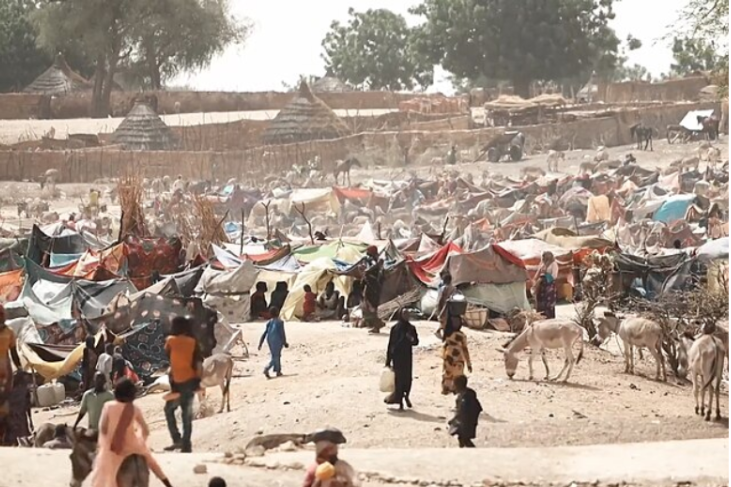
    A humanitarian crisis is unfolding in Africa’s third-largest country. The RSF has been at war with the Sudanese Armed Forces for the past two-and-a-half years, causing an estimated 40,000 deaths and the displacement of 12 million people, the UN says.

    The Joint Forces, which are allied with the Sudanese military, have stated that the forces of RSF have “executed and killed” at least 2000 unarmed civilians in the city of El-Fasher on 26 and 27 October- most of these civilians were women, children, and the elderly.

    Yale University’s Humanitarian Research Lab (HRL) published a report on October 27, in which they released satellite images captured by the aeronautic company Airbus Defence, which show evidence of mass killings in the city of El-Fasher. The images have captured reddish stains on the ground and clusters of “objects” lying around RSF vehicles, which are believed to be human bodies.

    HRL has concluded that these killings were carried out door-to-door, specifically targeting on the basis of ethnicity. El-Fasher “appears to be in a systematic and intentional process of ethnic cleansing of indigenous non-Arab communities through forced displacement and summary execution,” the Yale researchers say in a report.

    When did the Sudanese Civil War start?

    In October 2021, a joint-military civilian government was established as a result of a coup that was staged to overthrow long-serving President Omar al-Bashir. This government was headed by Hemedti and Gen Abdel Fattah al-Burhan. However, growing tensions over the country’s evolving sociopolitical transition led to a breakdown in their alliance.

    By April 2023, these tensions erupted into overt conflict when clashes broke out between the SAF and RSF in Sudan’s capital, Khartoum, marking the beginning of Sudan’s currently ongoing civil war.

    The RSF was formed in 2013, and it originates from the notorious Janjaweed militia, which was accused of genocide and ethnic cleansing against Darfur’s non-Arab population.

    What exactly is happening in Sudan right now?

    In June of this year, the RSF captured the territory along Sudan’s borders with Libya and Egypt. Now that they have seized El-Fasher as well, this means that they have control over almost all of Darfur and its neighbour, Kordofan.

    Many videos released by RSF soldiers themselves are currently circulating on the internet. The videos – which have been authenticated by the SAF – show fighters shooting unarmed civilians at point-blank range.

    Earlier this week, satellite imagery confirmed that the RSF killed civilians who tried to flee the city near the earthen wall, which was constructed by the RSF to encircle and isolate the city, effectively besieging it.

    A woman recounted to Reuters how she and others were stopped at the earthen barrier where the men were separated from women.”They lined the men up, they said, ‘We want the soldiers,’ When none of the men raised their hands, an RSF fighter picked out some of them who were beaten and killed,” she said. “They shot them in front of us, they shot them in the street.”

    How is the world responding?

    Widespread reports of ‘ethnic cleansing’ conducted by the RSF have prompted the UK, which is the official penholder on Sudan, to call for an emergency session of the UN Security Council in New York on Thursday. Activists from all over the world are urging pressure on the United Arab Emirates, which is widely accused of providing military support to the RSF. The UAE denies this despite evidence presented in UN reports and international media investigations.

    “The situation is simply horrifying,” Martha Ama Akyaa Pobee, the assistant secretary general of the UN for Africa, said during the emergency session.

    Across Sudan, nearly 24 million people are suffering from acute hunger, with an estimated 600,000 on the brink of famine. The RSF and its allied forces have been accused of widespread sexual violence against women, including rape, gang rape, forced marriage, and sexual slavery, in addition to the mass killings of more than 17,000 people.

    The fall of El-Fasher marks a turning point, not only in Sudanese history but also in the context of a disturbing global humanitarian tragedy. Despite mounting international concern, global action has remained largely limited to statements and diplomacy. Without decisive intervention, analysts warn that Sudan could descend into a full-scale famine and ethnic cleansing crisis, leaving millions trapped between starvation and violence.
  • Rising Alliances: India Strengthens Bonds with China and Russia Amid Trade Tensions

    Rising Alliances: India Strengthens Bonds with China and Russia Amid Trade Tensions

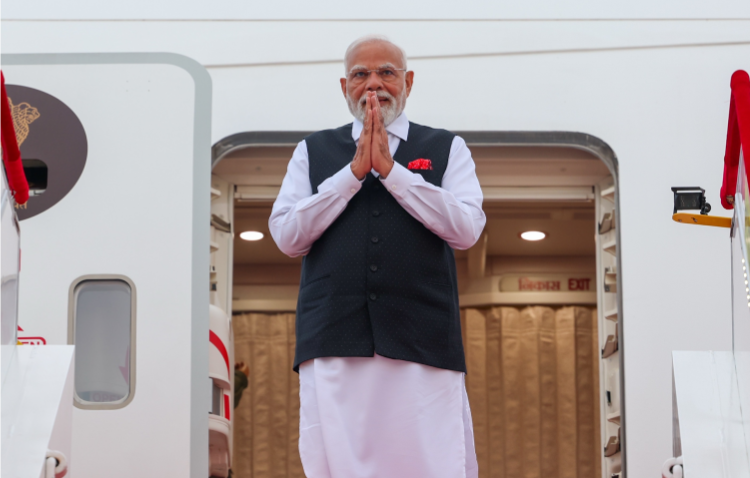
    Prime Minister Narendra Modi met with President Xi Jinping on 31 August 2025, on the sidelines of the Summit of the leaders of the Shanghai Cooperation Organisation (SCO) in Tianjin. This event marked PM Modi’s first visit to China after 7 years and was a crucial diplomatic moment for India and China following years of tension.

    At the SCO summit, the two leaders expressed commitment to a fair, reasonable, and mutually acceptable resolution of boundary-related concerns that have plagued India-China relations for almost half a decade. According to a statement by the commerce ministry released on Sunday, India emphasised on the fact that “export-related measures should not be weaponised or misused to create artificial scarcity, distort markets, or disrupt supply chains, and emphasised that their calibrated and transparent use is essential to maintain trust in international commerce”.

    At the meeting, India also called for action towards ensuring greater market access and enhancing trade facilitation between the two countries. These concerns are relevant because as of late, India’s automobile and electronic industries have faced major disruptions due to China’s steep export restrictions on rare earth magnets and fertilisers. According to PTI, India’s trade deficit with China has widened to nearly $100 billion in 2024-25.

    However, India and China recorded a positive bilateral outcome in August, when visiting Chinese Foreign Minister Wang Yi assured External Affairs Minister S Jaishankar that his country will resume the supply of fertilisers as well as rare earth minerals. However, China is yet to act upon this promise and Beijing has not yet given an official statement or made public commitments on restarting exports.

    The Galwan Valley clash in June 2020, which had resulted in the deaths of over 20 Indian soldiers and an unspecified number on the Chinese side, had triggered a severe diplomatic fallout between the two countries. As a result of this dispute, India banned numerous Chinese apps, restricted Chinese investments, and suspended direct flights and visas. But, in August 2025, nearly 5 years after the fallout, an agreement was reached between the Special Representatives of both countries.

    “The Kailash Mansarovar Yatra has been resumed. Direct flights between the two countries are also being resumed,” ANI quoted PM Modi on 31st August, 2025. The resumption of the Kailash Mansarovar Yatra is particularly notable, as it is a significant pilgrimage for Hindus, Buddhists, and Jains. The Yatra’s revival is expected to encourage cultural and religious exchanges between the two nations.

    On the second day of the SCO summit, PM Modi shook hands and posed for pictures with Xi Jinping and Russian President Vladimir Putin. This gesture was seen as a powerful diplomatic message of strategic alignment, particularly in response to the US President’s actions and tariffs.

    The most surprising image of camaraderie was the car journey that PM Modi and Russian President Putin had together on the second day of the summit, for their bilateral meeting. Putin, who is notorious for his unusual security protocols, is rarely seen spontaneously carpooling with unannounced guests. The two leaders celebrated India-Russia relations during their 50-minute-long bilateral meeting, with Modi saying that the two nations stuck together even under the most trying circumstances.

    The overt act of bonhomie among all 3 countries during the SCO Summit has incited a response from US President Donald Trump on Truth Social, who posted, “Looks like we’ve lost India and Russia to deepest, darkest, China. May they have a long and prosperous future together!” Trump wrote in a social media post accompanying a photo of the three leaders together at Xi’s summit in China.

    The trilateral showcase of solidarity has raised concerns about an emerging bloc. One of the worst hits by the US tariffs has been taken by New Delhi, facing an additional 25 per cent on India’s imports of crude oil coming from Moscow. The combined duties have pushed US tariffs on Indian products to 50 per cent. China, India and Russia are all original members of BRICS, an organisation which Trump claimed to be “anti-American.” Even Brazil (another BRICS nation) has been targeted by Trump, facing steep and restrictive tariffs.

    Despite his strong words on Truth Social, Trump later sought to downplay tensions with India and called their ties ‘special,’ he said, “I’ll always be friends with (Narendra) Modi, he’s a great prime minister. He’s great. I’ll always be friends, but I just don’t like what he’s doing at this particular moment,” Trump told reporters in the Oval Office, according to PTI. Trump also expressed resentment and disappointment with New Delhi over its energy purchases from Moscow. “I’ve been very disappointed that India would be buying so much oil from Russia, and I’ve let them know with the 50 per cent tariff.”

    The Tianjin SCO summit demonstrated a major shift in worldwide political dynamics. Major trade commitments are expected to play a crucial role in bolstering the economies of both India and China.

    Prime Minister Modi has strategically established diplomatic connections with Xi Jinping and Vladimir Putin through a method that not only prioritises regional security and economic advantages but also relies on mutual discontent with US foreign policy leadership. The Galwan Valley conflict between India and China created tension, but their current joint initiatives demonstrate their purposeful work to restore mutual trust. The gradual aftermath of Modi’s subtle yet undermining response will determine how international diplomacy and geopolitics evolve during the upcoming years because they will establish new regional alliances and reshape worldwide diplomatic relations.

  • From Stridhan to Status Symbol: How Dowry Became a Cycle of Violence

    From Stridhan to Status Symbol: How Dowry Became a Cycle of Violence

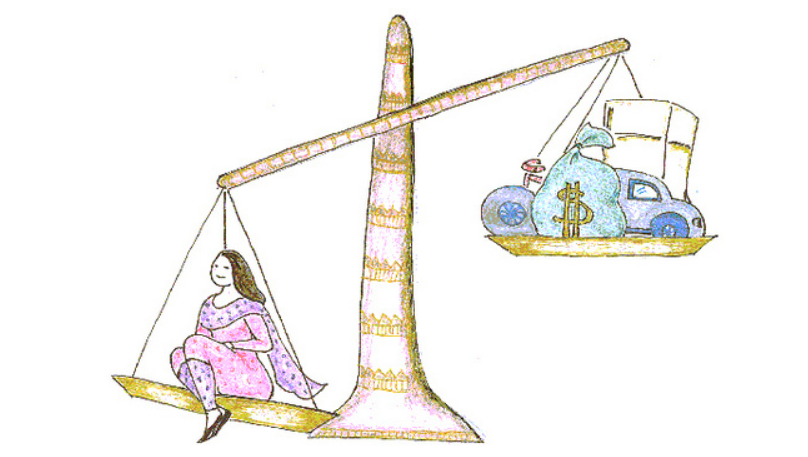
    On August 21, Nikki Bhati was allegedly set ablaze by her husband, Vipin Bhati. Her family stated that they gifted her in-laws a Scorpio, a motorcycle, and gold during the wedding in 2016. But there was no satiating the demand, and they were later presented with a fresh demand of Rs 36 lakh and a luxury car. The 26-year-old woman was found with severe burn injuries at her in-laws’ home on August 21 and later died en route to a Delhi hospital. Nikki’s death has sparked renewed outrage surrounding the concern of dowry deaths and the give-and-take of dowry altogether.

    Nikki Bhati’s death has prompted public outcry and renewed debate over India’s dowry-related violence. Reported dowry deaths, however, represent only the tip of the iceberg when it comes to the violence married women face within their households. According to the National Crime Records Bureau (NCRB), 35,493 brides died in India between 2017 and 2022, which averages to nearly 20 deaths a day over dowry demands. In this period, Uttar Pradesh recorded the highest number of dowry deaths, followed by Bihar and Jharkhand. Section 80 of Bharatiya Nyaya Sanhita (BNS) 2023 states that the term “dowry death” is applicable when a woman dies due to bodily injury or harm up to seven years after her marriage, and it is shown that she was subjected to cruelty and/or harassment by either her husband or his parents and/or extended family. A 2010 book named Human Development in India: Challenges for a Society in Transition, covers the findings of the 2004-05 round of the India Human Development Survey (IHDS), which shows that the average wedding spending for a bride’s family was 1.5 times more than the bridegroom’s family. Behind these numbers are real women whose lives are cut short by relentless demands. Recent cases across states reveal how dowry harassment continues to escalate into brutal violence and deaths.

    Sangeeta, a mother of two and a ten-year married woman, was discovered dead on June 14 in Aligarh, Uttar Pradesh, after allegedly being severely beaten and tortured with a hot iron on every part of her body, including her genitals. According to the woman’s family, she was often tormented by her husband and in-laws since they had not received the buffalo and bullet motorbike they had demanded as dowry. A young Chandigarh bride killed herself last July following what her family said was constant dowry harassment. Later that month, despite receiving a ₹70 lakh Volvo and 100 sovereigns of gold as dowry, another bride committed suicide within two months of marriage as a result of constant pressure relating to the dowry.

    These recent tragedies are not isolated incidents, but they stem from a longer history of dowry-linked violence in India. To understand why the practice persists so deeply, it is important to trace how dowry itself evolved. Dowry did not originate as a weapon of social violence; instead, it was known as ‘stridhan’ or a woman’s wealth, comprising jewellery, gold coins, and cattle, which was parted with by the bride’s family to accompany her in her married life, serving as a source of financial independence. By the medieval era, as caste hierarchies deepened, marriages became negotiations of status, dowries evolved into grand transactions, and the bride’s worth was calculated in terms of the wealth she was accompanied by. One of the earliest well-documented dowry killings occurred on 15 May 1979 in Model Town, North Delhi. Tarvinder Kaur, a Sikh bride, was attacked in her home by her mother-in-law, who doused her with kerosene, and her sister-in-law set her on fire.
    Today, the concept of dowry has evolved, and no longer fits the traditional framework of “give-and-take.” The bride’s family is expected to pay for the extravagant venues, luxurious food, stay, and whatnot. The honeymoon abroad and the luxury apartments “gifted” by the bride’s family all stem from the same social evil. Far from being abolished, the dowry system has been repackaged as status-driven consumption and reinforced by a consumerist mindset.

    The debate over dowry laws has sharpened with the ongoing Tellmy Jolly v. Union of India case, which includes a petition before the Supreme Court that questions whether parents who give dowry under coercion should be punished alongside those who demand it. Tellmy argues that, in punishing givers, the law criminalises the very people that it is supposed to shield. While the case highlights the criminalisation of victims, the Kerala government, in response to related proceedings, has recently informed the High Court that it has launched a dedicated portal for dowry complaints and is drafting a standard operating procedure for handling such cases. With the constantly rising dowry-related harassment cases rising every day in India, concerned citizens are bound to ask, “Will this portal be effective?”

    On one hand, a digital portal will make filing easier for victims (or their families), as they don’t need to go to police stations, which are often intimidating or dismissive. However, rural families may lack either digital access or literacy to access this portal. A digital approach to reporting issues such as dowry deaths and harassment can be effective, but only if it is paired with awareness campaigns, trained officers, and prompt action on complaints.

    While initiatives like Kerala’s dowry complaint web and the Tellmy Jolly petition demonstrate efforts to change the system, they also highlight the limitations of both digital and legal solutions. The continued prevalence of dowry-related violence serves as a reminder that the issue is much more complex than access to technology or the legal system, despite every new precaution that is put in place. Nikki Bhati’s case sits within a long continuum of dowry-linked violence that continues to surface across India, despite decades of legal prohibition. From the earliest recorded killings to recent tragedies, the pattern has remained disturbingly consistent, where demands escalate, families concede or resist, and women end up bearing the consequences. The persistence of such deaths shows how resistant the system is to reform. Dowry remains a deeply entrenched practice which has been consistently reshaped over time but never dismantled, leaving a legacy of inequality that continues to undermine marriage and justice alike.

  • Who owns the street? Rising rebellion against tourism in the streets of Europe

    Who owns the street? Rising rebellion against tourism in the streets of Europe

    Across Europe this summer, locals have taken to the streets with a clear message: mass tourism is pushing them out of their cities. Residents are retaliating against rising rents, overrun public spaces, and a lifestyle that’s being sold for profit.

    Anti-tourism protests have occurred all summer across various European countries, including Spain, the Netherlands, and Italy. Thousands of protesters have taken to the city’s streets over the past few months to protest against mass tourism in Spain, especially in San Sebastián, which has the nation’s highest housing costs. There, protesters chanted slogans, one being, “Sustainable tourism is a mythological animal.”

    In June, Genoa residents staged a symbolic “noisy stroll” protest, dragging suitcases through the city centre to highlight the disruptive impact of mass tourism.

    Most recently, thousands of people protested on the Spanish island of Mallorca, with organisers arguing that the current tourism model exploits workers while benefiting only a small elite. Similar demonstrations have also taken place on other popular Spanish resort islands, such as Minorca and Ibiza. These islands, with a population of just over one million, hosted more than 15 million international tourists in 2024.

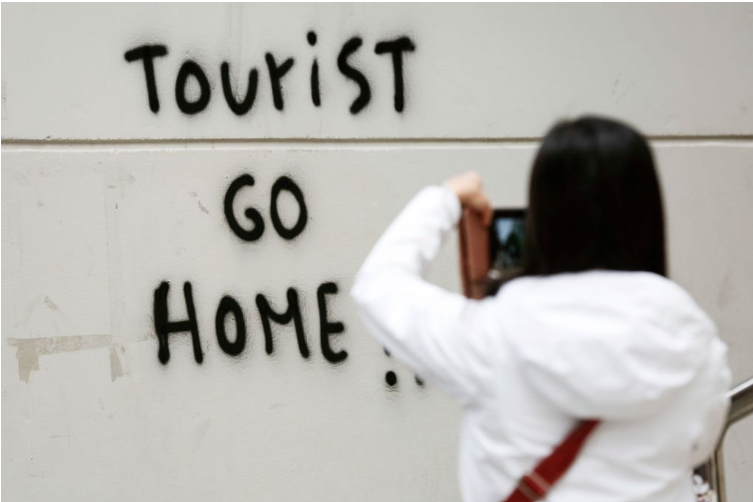
    On June 15, locals in Barcelona started spraying tourists with water and chanting, “tourists go back home.” Others also carried signs with slogans such as “Barcelona is not for sale” and “Tourism is stealing from us.”

    The ongoing demonstrations intend to shed light on the blatant “touristification” of European cities. The term refers to the emphasis and priority given to tourism rather than sustaining local life, amenities, and infrastructure. The protests aim to pressure governments to address the strain tourism has on rents and housing, and the collateral environmental damage caused. Many call for policy and urban planning that puts residents’ needs and livelihoods ahead of tourist demand. In cities like Venice, where fewer than 50,000 people live year-round, over 30 million tourists visit annually. As a result, much of the hospitality industry caters to the visitors rather than residents.

    A protester holds a sign reading “Tourism is killing Barcelona” during an anti-tourism demonstration in the city. / Photo: X / @UinHurricane

    Mass tourism has disrupted daily life across Europe, and one of the most pressing issues locals face is housing. Residential units have been scarce and are slowly being converted to tourist accommodations. This scarcity has also led to a significant hike in rent and housing prices. Reports conducted by Harvard International Review have indicated that there are now more tourist beds than residents in Venice. During protests in San Sebastián, a resort city on Spain’s northern coast, some residents stated that their leading cause of concern isn’t the act of tourism itself, but rather the “speculators and exploiters who use tourism as a facade to ultimately profit from the housing and overall lives of the residents.” Locals have also started advocating for more sustainable practices to protect natural resources, local infrastructure, and heritage sites. In 2023, a tourist was accused of damaging a statue in the city’s 16th-century Fountain of Neptune, located in the Piazza della Signoria. The same year, in another part of Italy, a group of tourists was accused of toppling a valuable statue at a villa.

    During the 2024 Olympics in Paris, a city with only 11.3 million residents, approximately 9.5 million individuals purchased tickets to attend the Games. In protest against the pollution of the Seine, which was expected to worsen with Olympic preparations, locals threatened to stage a mass defecation in the river, rallying under the hashtag #JeChieDansLaSeineLe23Juin (“I sh*t in the Seine on June 23”). The campaign, widely reported by outlets including CBS News and Forbes, was dubbed the “Paris Poop Protest” by Modern Diplomacy, which described how activists used a dedicated website and hashtag to coordinate their demonstration against both river pollution and government spending.

    Governments have gradually started responding to these persisting protests; cities like Barcelona have begun cracking down on illegal rentals and changing specific bus routes to protect elderly residents. Places like Santorini in Greece and Bruges in Belgium have started imposing taxes on their tourism and hospitality industries. Venetian officials recently declared the temporary entrance fee, implemented to control tourist crowds, a success. The new €5 (about $5.4) tourist charge, which began on April 25 and concluded on July 14, brought in more than €2.4 million (about $2.6 million).

    The summer of protest across Europe has made one thing clear: locals are no longer willing to stay silent as their cities transform into playgrounds for outsiders. While tourism remains a crucial economic engine, the cost of unchecked visitor influx, rising rents, environmental strain, and local life erosion has become too heavy to bear. As more residents push back, governments must reckon with a future in which tourism must be reimagined. Whether these measures can truly shift global travel culture remains to be seen.

  • India, US Unite in Space: NISAR Launch Marks Climate Tech Breakthrough

    India, US Unite in Space: NISAR Launch Marks Climate Tech Breakthrough

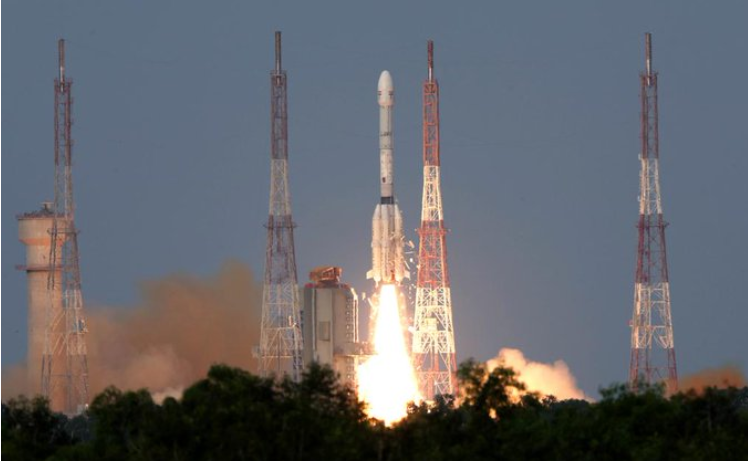
    On 30 July 2025, the NASA-ISRO Synthetic Aperture Radar (NISAR) satellite was successfully launched from the Satish Dhawan Space Centre at Sriharikota in Andhra Pradesh. This satellite is the first of its kind, designed to enhance global monitoring of climate change and natural disasters and boost overall environmental research. The Geosynchronous Satellite Launch Vehicle (GSLV)-F16 rocket carrying the earth observation satellite lifted off from the second launch pad of the space centre at 5.40 p.m. IST. Eighteen minutes later, it injected the satellite into a sun-synchronous orbit.

    The NISAR had been developed for over a decade and costs 1.5 billion dollars, making it one of the most expensive Earth-observing satellites to date. The NISAR programme is a landmark moment in global space diplomacy, facilitating the collaboration between NASA’s cutting-edge technology and India’s engineering expertise. Indian space industry representative Anil Prakash, Director General at SatCom Industry Association (SIA-India), hailed the NISAR mission and Indo-US space collaboration.

    “With a legacy of over 400 international satellite launches, ISRO has emerged not just as a collaborator, but as a co-architect of next-generation Earth science missions,” he said.

    NISAR marks the most advanced collaboration between NASA and ISRO, underscoring the growing trust and interdependence between the two global space powers. Furthermore, India’s emphasis on peaceful applications of its space technology for climate resilience, disaster prediction, agriculture, and water management reinforces its commitment to sustainable development over space militarisation.

    Image Source: X/ @isro

    NISAR is the first satellite to observe the Earth using a dual-frequency Synthetic Aperture Radar (SAR). This satellite will scan the entire globe twice every 12 days. This collaboration encapsulates NASA’s L-band and ISRO’s S-band radar systems — the L-band uses higher wavelength microwaves to cover vegetation, ice and sand, while the S-band captures crop fields and water bodies.

    “NISAR can detect even small changes on the Earth’s surface, such as ground deformation, ice sheet movement, and vegetation dynamics. Further applications include sea ice classification, ship detection, shoreline monitoring, storm characterisation, changes in soil moisture, mapping and monitoring of surface water resources, and disaster response,” ISRO has stated.

    By combining advanced radar imaging with climate and environmental monitoring, the mission demonstrates the power of international collaboration to drive practical and long-term solutions to global challenges, from climate change and natural disasters to resource management. This launch is not just a significant milestone in science but also a commitment to advancing space diplomacy through collaboration and impactful scientific progress.

  • Divya Deshmukh Creates History: Crowned Champion at 2025 FIDE Women’s World Cup

    Divya Deshmukh Creates History: Crowned Champion at 2025 FIDE Women’s World Cup

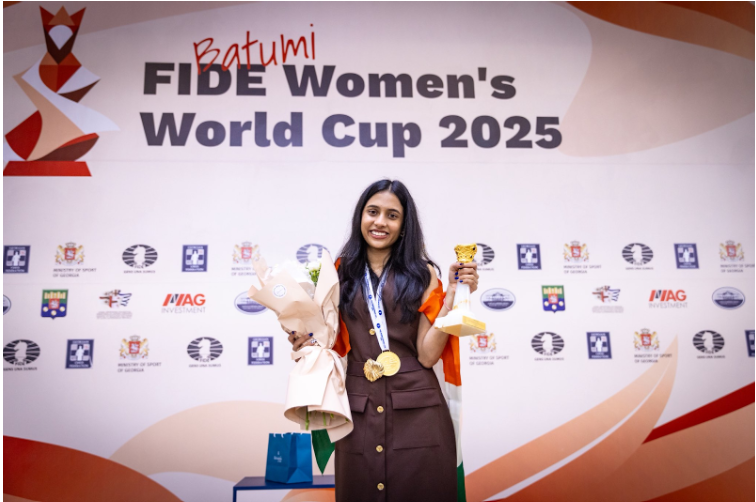
    19-year-old Divya Deshmukh from Nagpur made history by winning the final of the 2025 FIDE Women’s World Cup held in Batumi, Georgia. In a ‘passing of the torch’ moment, Divya defeated fellow Indian Koneru Humpy, who had become India’s first female Grandmaster in 2002. With this victory, Divya became the 88th Grandmaster from India and only the fourth Indian woman to earn this prestigious title. She secured victory with a 1.5-0.5 score in the tiebreakers.

    After two draws in the classic games, the match went to tiebreaks.  In the first game, Divya played with the white pieces and created several chances to win, but was unable to convert her advantage. Despite Humpy’s mistakes, the 19-year-old could not capitalise on the opportunities and the game ended in a draw. After the first tiebreaker, Divya told the official broadcaster of FIDE that the previous game did not go her way, and that she got into a “mess for no reason.”

    However, she bounced back in the second game, defeating 38-year-old Koneru Humpy, the reigning World Rapid Chess Champion and current World No. 5, to become the first Indian woman to win the World Cup. Both finalists have qualified for the upcoming 2026 FIDE Women’s Candidates Tournament, a crucial step towards competing for the World Chess Championship. Entering the tournament as the 15th seed, Divya outplayed several stronger, higher-ranked opponents on her way to the title, displaying exceptional tactical skill and determination.

    Divya’s mother, a doctor, stood by her side during her moment of glorious victory. Overcome with emotion, the two exchanged a heartfelt hug. “It’s hard for me to speak right now. It definitely means a lot, but of course, there’s a lot more to achieve,” said Divya. “I’m hoping this is just the start.” She stated that she believed her win was fate because, before the tournament, she had not even achieved a GM norm, let alone her victory in the FIDE Women’s World Cup.

    Divya Deshmukh celebrating her win with her mother.  Photo: X/@FIDE_chess

    A GM norm is earned by delivering a high-level performance in a FIDE-rated tournament; typically over nine games against strong, international opponents, including at least 3 Grandmasters. Divya’s rating also did not meet the required rating (a standard 2600) to be eligible for the coveted title. Yet, by winning this prestigious event, she bypassed all the usual FIDE requirements, thus emerging as the 44th female Grandmaster in the world. Prior to this, Divya has won several gold medals across major international events, including the World Youth Championship, Asian Championship, and World Junior Championships.

    Divya’s victory marks a historic milestone in Indian chess and has been widely celebrated, including by Prime Minister Narendra Modi, who tweeted: “It’s been a phenomenal day for Indian Chess! Divya Deshmukh has not only won the 2025 FIDE Women’s World Cup but also become a Grandmaster. Congratulations to her. Her accomplishment will motivate many people and contribute to chess becoming even more popular among the youth.” Nitin Gadkari, the Union Minister of Road Transport and Highways, also congratulated her, stating, “This is a moment of joy and pride not only for Nagpur and Maharashtra, but also for the entire country.” Divya will now set her sights on the upcoming Grand Swiss tournament in Uzbekistan this September.

  • A Costly Consensus: NATO’s 5% Defence Pledge and the Trump Effect

    A Costly Consensus: NATO’s 5% Defence Pledge and the Trump Effect

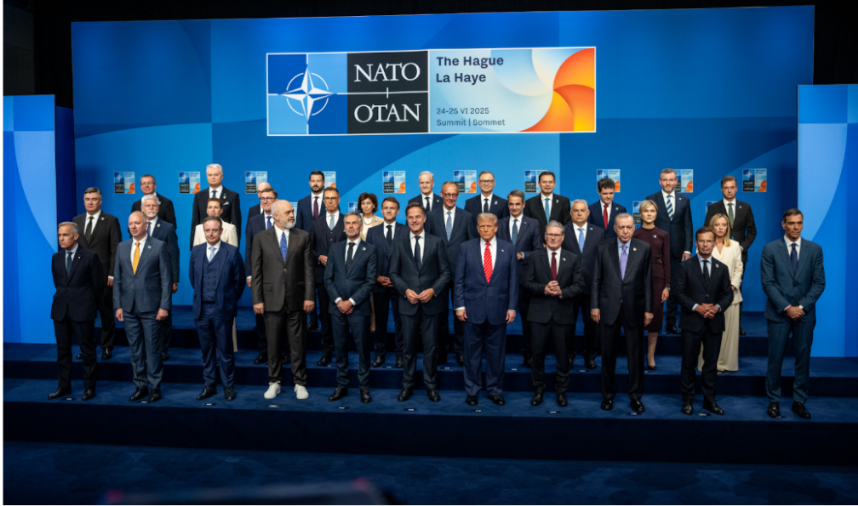
    In the 2025 North Atlantic Treaty Organisation (NATO) Summit held from 24 June to 26 June, a strong commitment was made by all the NATO countries. The member states have finally agreed to ramp up their defence spending goal to 5% of their gross domestic product (GDP) by 2035, a major jump from the previous target of 2% set in 2014.

    The US president has raised questions about NATO’s collective defence strategies for several months now, narrowly referring to Article 5 of NATO’s Alliance in his defense, which states, “An armed attack against one or more of the allies shall be considered an attack against them all. Trump has avoided explicitly endorsing the clause, claiming there are “multiple definitions of Article 5,” a move seen by many as an effort to avoid confrontation with Russia.

    In response, NATO has worked towards a compromise, agreeing to increase defence spending to keep the U.S. engaged in the alliance. The 32 countries have decided to dedicate 3.5% of their GDP to crucial military needs and 1.5% to other elements such as cybersecurity, infrastructure, etc.

    NATO has publicly stated that the alliance must work towards deterring Russia’s military force. “NATO needs a “quantum leap” in defence to deter threats to the alliance”, Rutte mentioned in a speech given in London, earlier this month. Thus, he urged member states to invest more funds towards defence.

    Trump went on Truth Social to share a message sent to him by NATO Secretary-General, Mark Rutte. In the message, Rutte acknowledged that Trump has driven NATO towards a very important global decision. He also added that Trump has “achieved something NO American president in decades could get done.”

    A New York Times report highlights that Trump has previously bashed NATO for not allocating adequate funds for defence, particularly in the face of threats like Russia. During his first term, Trump had threatened that the USA would exit the NATO alliance. Experts believe that Trump may be undermining NATO from within and that this dramatic agreement was primarily made to ensure that the USA remains an enthusiastic participant in NATO.

    Image Source: WhiteHouse/ @x.com 

    However, not all 32 countries were satisfied with this decision. Spain’s Prime Minister, Pedro Sanchez, had sent a letter to Mr. Rutte saying that Spain “cannot commit to a specific spending target in terms of GDP.” Sanchez insisted that Madrid would need only 2.1% percent of GDP to acquire and maintain all the personnel, equipment, and infrastructures requested by the alliance to confront these threats with their capabilities.

    As a result, every member state will not be forced to reach the 5% threshold; however, there are some standard military requirements that every country is required to meet. Trump vowed that he would make Spain pay for this “terrible” decision. “I like Spain … It’s a great place and they’re great people. But Spain is the only country out of all the countries that refuses to pay. And, you know, so they want a little bit of a free ride, but they’ll have to pay it back to us on trade because I’m not going to let that happen,” Trump said.

    This commitment was shaped as much by the strategic urgency felt by all 32 countries within the NATO alliance. As they rush to present a united front, a divide is forming within the coalition itself. As key participants like Spain are raising their voices against major players like the US.

  • India’s Shukla Joins ISS in Historic First: Why the Mission Marks a Turning Point for India

    India’s Shukla Joins ISS in Historic First: Why the Mission Marks a Turning Point for India

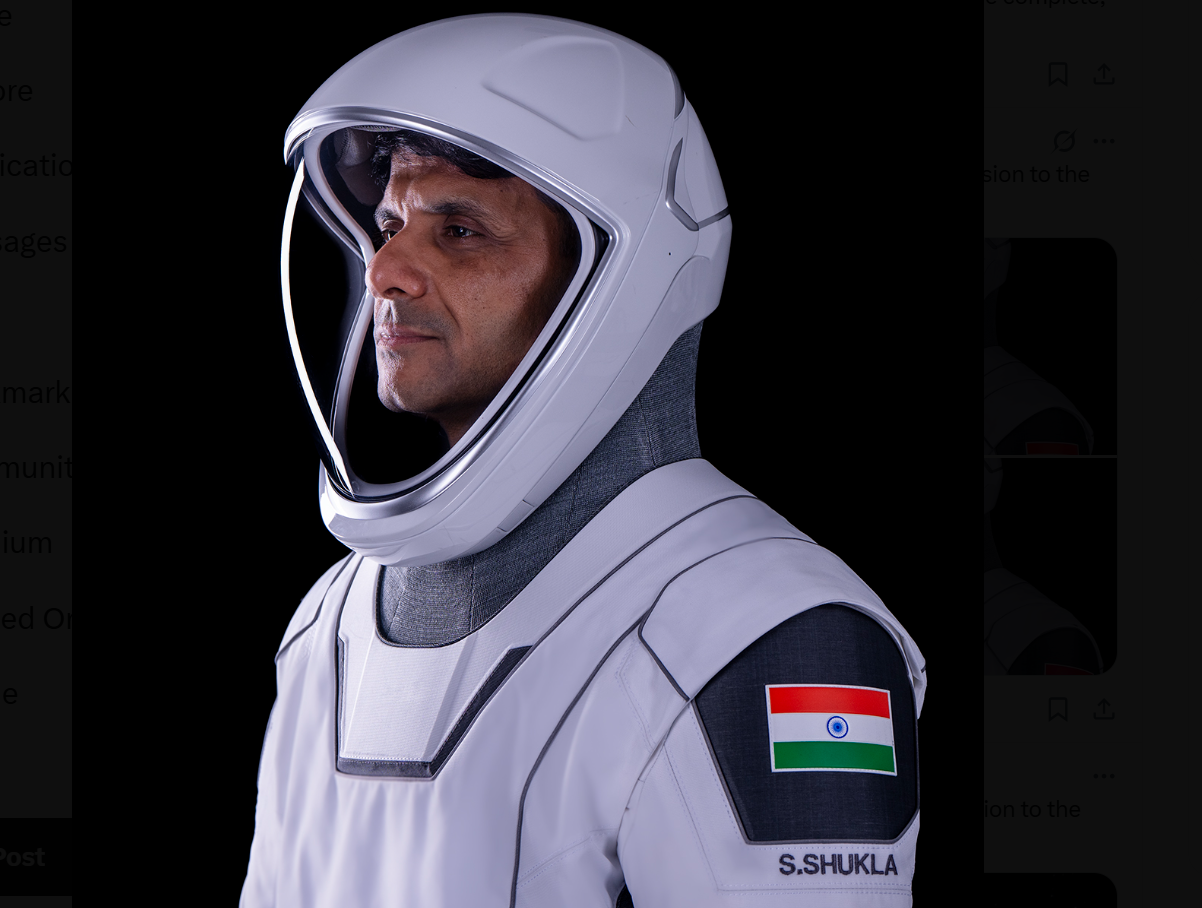
    On June 26 2025, the SpaceX Dragon capsule docked with the International Space Station (ISS), and Shubhanshu Shukla made history by becoming the first Indian to step into the orbiting laboratory and the second Indian national to reach space, since Rakesh Sharma in 1984.

    Ahead of his arrival, Shukla sent out a message in which he said, “The Tiranga (Tricolour) embossed on my shoulders tells me that I am with all of you…Together, let’s initiate India’s Human Space Programme. Jai Hind! Jai Bharat.”

    After multiple delays, the Axiom-4 (Ax-4) mission was finally launched on 25 June at 2:31 a.m. Eastern Time (12:01 p.m. IST). The mission consisted of a government-sponsored crew and was launched by Axiom Space in partnership with SpaceX and NASA. India has paid around $70 million to commercial space company Axiom for a seat in the space mission to the ISS.

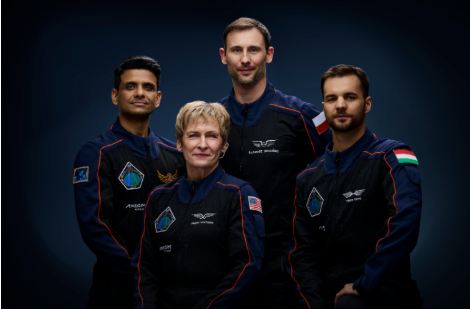
    Joining Shukla were American veteran astronaut Peggy Whitson, Polish engineer Sławosz Uznański-Wiśniewski and Hungarian researcher Tibor Kapu. This is the first time that astronauts from India, Poland and Hungary have travelled to the ISS.

    Shubhanshu Shukla / Source: X / SpaceX

    The two-week-long mission aims to conduct approximately 60 experiments on behalf of 31 countries, including the astronauts’ home countries as well as Saudi Arabia, Brazil, Nigeria and so on. The experiments range from studying the effects of microgravity on diabetes and muscle atrophy to microgravity farming of fenugreek and green gram, and exploring cyanobacteria for potential life-support systems.

    This mission marks a huge win for India, as it allows the country to contribute towards advanced research and innovation, further strengthening its position in the international space exploration arena.

    Shuhanshu Shukla’s participation marks a moment of renewed confidence in India’s space ambitions, as India plans to launch Gaganyaan in two years. This will be its first manned mission, making it the fourth country in the world to achieve this feat.

    Shukla was announced to be among the four astronauts selected to man the Gaganyaan mission by Prime Minister Narendra Modi on 27 February 2024 at ISRO’s Vikram Sarabhai Space Centre in Thiruvananthapuram. He began his journey towards space exploration in 2019 when he was selected as an astronaut by the Institute of Aerospace Medicine (IAM), which is a part of the Indian Air Force’s Human Spaceflight Programme. IAM and ISRO eventually shortlisted him for the final four.

    “This is not the beginning of my flight. This is the beginning of India’s human spaceflight efforts. I am with you all. You can be part of this journey, feel the energy, and share in this mission.”
    — Shubhanshu Shukla, ten minutes after launch, as the capsule entered orbit.

    Since 2022, India and the USA have actively worked towards building both economic and technological cooperation through a collaborative framework, namely, the Initiative on Critical and Emerging Technologies (iCET). Under iCET, the two countries have discussed the possibility of joint manned spaceflights. Shukla has further helped to prove that this possibility can be turned into reality soon.

    This mission also provides India with direct information and hands-on experience on modern, crewed spaceflights; this includes knowledge of docking operations, life-support systems and real-time mission operations aboard the ISS. Detailed insights into the functioning of the ISS will also help the development of the Bharatiya Antariksha Station (BAS), India’s planned indigenous space station, which is set to launch in the 2030s.

    Furthermore, as noted by the Republic, by collaborating with Polish and Hungarian astronauts aboard a US-operated spaceflight, Shubhanshu Shukla represents India as a bridging force between the Western Alliances and the Global South.

    Thus, this launch is not only a scientific breakthrough for Indian space exploration, but also a socio-political and economic opportunity for India to prove its standing in a competitive global space landscape. As Gaganyaan approaches and India is inching towards building its own space station, India’s space footprint is laying the groundwork with each mission.

  • The People’s Pope: Leo XIV’s Path from Peru to the Papacy

    The People’s Pope: Leo XIV’s Path from Peru to the Papacy

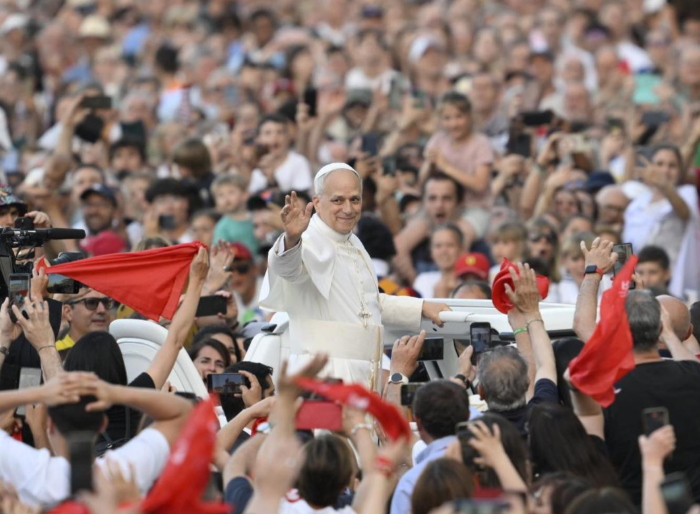
    At 6:07 P.M. Vatican time on 8 May 2025, the new Pope was officially announced. White smoke rose from the Sistine Chapel, followed by the ringing bells at St. Peter’s Basilica, signalling the announcement. Clad in a white cassock and red cape, the newly elected pope stepped onto the balcony, where thousands had gathered, waiting eagerly for the declaration of a new era in the papacy.

    Just 17 days after Pope Francis’ death, Robert Francis Prevost was introduced as Pope Leo XIV — the 267th pontiff, and the first U.S.-born man to hold the title. Born in Chicago in 1955 to parents of Spanish and Franco-Italian origin. “I was born in the United States… But my grandparents were all immigrants, French, Spanish… I was raised in a very Catholic family, both of my parents were very engaged in the parish,” he said to BBC News. Former Archbishop of Boston, Seán Patrick O’Malley wrote on his blog that the new pontiff “has chosen a name widely associated with the social justice legacy of Pope Leo XIII, who was pontiff at a time of epic upheaval in the world, the time of the industrial revolution, the beginning of Marxism, and widespread immigration”.

    Pope Leo XIV grew up in the suburbs of  Dolton, Ill., just outside Chicago, where he spent his early years as an altar boy before he was ordained in 1982. In 1985, Pope Leo moved to Peru, where he spent a decade as a local parish pastor and as a teacher at a seminary in Trujillo in northwestern Peru, helping the Peruvian people recover from the devastating aftermath of El Niño.

    In 2015, Pope Leo obtained Peruvian citizenship. He referred to the country as “mi segunda patria,” which translates to “my second homeland.”

    Pope Leo XIV blessing a baby/ Source: Instagram/ @pontifex

    “Peru is rejoicing at the election of Pope Leo XIV,” said Archbishop Gualtieri, in an interview with The Vatican News, in the same interview, he also recounted Cardinal Prevost’s compassionate leadership during the difficult times of the 2020 pandemic, describing how Pope Leo was a ray of light and hope for the Peruvian people, which is why they are fond of him even today. “He would arrive and he was very, very warm with the people, especially the people of the Sierra to whom he would offer his help. He would deliver food and other supplies to remote areas, sometimes carrying sacks of rice himself.” Reverend Elmer Uchofen recounted to the New York Times. Pope Leo has always been and will continue to be a strong and outspoken supporter of immigrants and indigenous communities.

    Meanwhile, amid rising crises such as increasing inequality, climate change, global migration, violence, and protracted wars, the role of the Pope is more crucial than ever. However, the Catholic Church is wrestling with its internal struggles and conflicting views.  In recent years, a gradual rift has emerged within the Catholic Church, specifically between the Progressives and Conservatives. The Conservatives wish to regress to older mechanisms in the Latin Mass, while the Progressives appeal for more inclusivity in pastoral care. Pope Leo XIV’s moderate approach, blending traditional values and progressive leadership, may successfully lead to the reconciliation of opposing views within the Catholic Church and enhance its mission. Pope Leo is also most likely to follow a synodal fashion to lead the Church. Synodality is an inclusive approach of leadership in the Catholic Church, which encourages priests to partake in the decision-making process, ensuring that the diverse voices of the Church are always taken into consideration. He considers collaborative approaches critical to establishing unity and ensuring effective pastoral care.

    Pope Leo XIV has thus been labelled as ‘The Missionary Pope’ with years of missionary and humanitarian service under his belt. Near the end of his first General Audience given from the balcony of St. Peter’s Basilica, Pope Leo XIV said, “The situation in the Gaza Strip is increasingly worrying and painful.” He also renewed his appeal for the entry of dignified humanitarian aid and an end to the hostilities, noting that the heartbreaking price was being paid by children, the elderly, and the sick. This public statement indicates that Pope Leo XIV intends to follow in the footsteps of Pope Francis, who frequently spoke out against violence and advocated for peace and compassion during times of conflict.

    Pope Leo XIV’s journey from the humble suburbs of Chicago through his missions in Trujillo to his first address given from the grand balcony of the Vatican reflects a pilgrimage that bridges different cultures, continents, and the evolving face of the Catholic Church. At a turning point for both the Roman Catholic Church and the world at large, Pope Leo’s life reflects a deep understanding of suffering, justice, and renewal; these qualities will guide his papacy in navigating the moral and spiritual challenges of the 21st-century church. As Pope Leo XIV enters a fragmented world and a divided Church, all eyes are on whether he can transform his missionary past into a legacy of reform and rebirth.