Author: Janak Joshi

  • Conservative leader Charlie Kirk dies at 31

    Conservative leader Charlie Kirk dies at 31

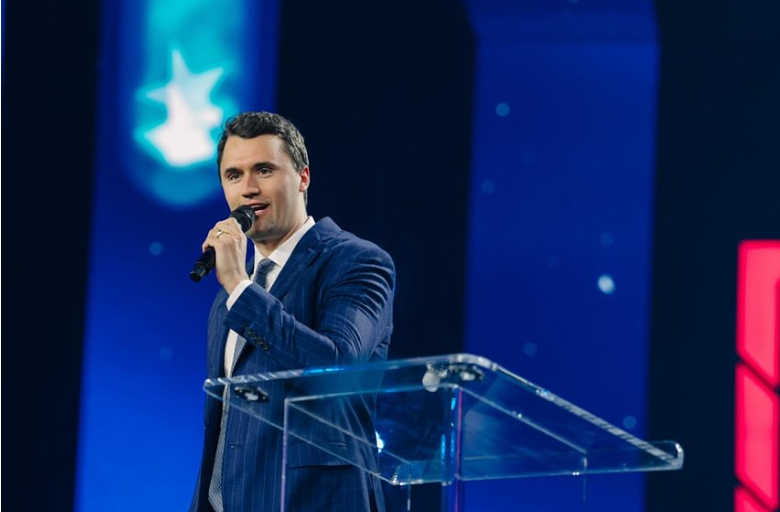
    Charlie Kirk, a fiercely outspoken conservative activist and co-founder of Turning Point USA, died on 10 September 2025, at the age of 31. He was fatally shot during a speaking event at Utah Valley University, while addressing students as a part of his “American Comeback Tour.”

    Kirk was shot by a 22-year-old, Tyler Robinson. The FBI immediately released images of the suspect and CCTV footage of Robinson on the roof of a nearby building and started a manhunt. Authorities have also pointed out that there were anti-fascist messages on bullet casings in a rifle found near the scene, showcasing potential evidence of a political motive behind the assassination. Robinson was arrested on 12 September in St. George, Utah.

    Kirk’s death shocked the political world and drew swift reactions around the globe. Supporters remembered him as a strong advocate for conservative values and a mentor to students who felt isolated in predominantly liberal institutions. Millions of supporters flooded social media with tributes, while a few critics noted the irony of his death by gunfire, given his strong pro-gun rights stance. US President Donald Trump called him “a great, and even legendary, American” and announced Kirk would be posthumously awarded the Presidential Medal of Freedom.

    Born as Charles James Kirk in 1993 in Illinois, Kirk had a keen interest in politics as a teenager. In 2012, at 18, he co-founded Turning Point USA, an organisation promoting and spreading conservative values on college campuses and bringing young people together behind conservative causes. Over the years, the organisation expanded into dozens of campus chapters and became a central structure for youth outreach in the conservative movement. Kirk also promoted Trump during his 2024 campaign. His appearances on college campuses drew large student crowds, where he talked about free market, abortion, geopolitics, and faith-based values, often debating liberal college students on their stance on various matters.

    Kirk hosted The Charlie Kirk Show, a daily talk show and podcast that reached millions worldwide. He was a strong advocate for Israel, often highlighting the country as a key American ally and a symbol of democracy in the Middle East. He often defended the Second Amendment and voiced concerns about illegal immigration, while being outspoken in his opposition to abortion and considering himself a pro-life supporter. These positions made him a central figure in the broader debates about America’s political and cultural identity. Kirk consistently framed his arguments around the values of faith, family, and freedom on campus, on his podcast, or at national conferences.

    Outside the spotlight, Kirk was married to Erika Frantzve, a podcaster and entrepreneur. The couple welcomed a daughter in 2022 and a son in 2024. Two days after Charlie’s assassination, his wife vowed to continue his movement, including further campus tours, “It will be greater than ever”, Erika said in her first public remark, a video posted on Instagram. Kirk’s funeral will occur on Sunday, 21 September 2025, at State Farm Stadium in Glendale, Arizona.

  • Ozzy Osbourne, Prince of Darkness, dies at 76

    Ozzy Osbourne, Prince of Darkness, dies at 76

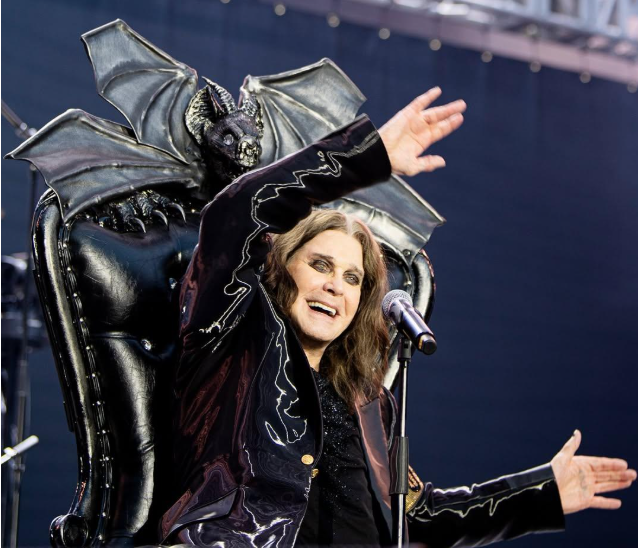
    Ozzy Osbourne, the heavy metal pioneer, whose chaotic stage presence, occult imagery, and the infamous bat-biting incident made him one of the most iconic figures in the history of rock music,  passed away on 22nd July 2025; he was 76.

    Known as the “Prince of Darkness”, Osbourne spent decades crafting his horror persona. As the lead vocalist of Black Sabbath and later a solo artist, he helped define the visual and thematic vocabulary of heavy metal. While critics questioned his choices and religious groups denounced and associated him with Satanism, Osbourne embraced his infamy with self-aware flair. His legacy lies not only in the music he made but in the boundary-pushing dark persona, which altered rock music forever.

    Born in a Graveyard, Adopted by Sin

    Born John Michael Osbourne on 3 December 1948, in Birmingham, England, Osbourne did not have an easy and lavish life. He grew up in a modest household alongside five siblings. Osbourne struggled with dyslexia in school, forcing him to drop out at 15. After dropping out, he had to cycle through a series of menial and low-paying jobs; he even served jail time for petty theft. Inspired by the Beatles, his passion for music set him on a radically different path.

    In 1968, he co-founded Black Sabbath. The 60s, known for its peace and love-optimism, was about to change thanks to its dark riffs and apocalyptic lyrics. Black Sabbath released their debut album, “Black Sabbath,” in 1970; the first song opened with church bells, and the eerie music set the tone. Osbourne’s ghostly, almost chant-like vocals became a defining feature of the band’s sound.

    Rock musicians like to play with danger, and Osbourne made it a central theme. Onstage, he seemed possessed, his eyes rolling back as he sang about ghoulish topics like war and mental torment. Offstage, Osbourne had a mysterious persona; he wore black capes and crosses, and spoke cryptically about the dark subjects he sang about.

    The dark image became legendary in 1982 during a solo concert in Des Moines, Iowa. A fan threw a bat on the stage- Osbourne assumed it was a rubber bat, and he bit into it only to discover it was alive. This moment sparked outrage, horror, and fascination across the world.

    Osbourne was removed from Black Sabbath in 1979 due to substance abuse issues, which paved the way for his solo career. With help from his manager and second wife, Sharon Osbourne, he released “Blizzard of Ozz”. He built a solo legacy rooted in the same horror and theatrical darkness that had made him famous initially, but with a clear focus and independence. Alongside his music, Osbourne’s off-stage behaviour became the stuff of tabloid fascination. He was infamous for outrageous acts like urinating on a historic monument in the Alamo while wearing his wife’s dress and snorting a line of ants during a tour. After facing accusations of him being a satanist and the Antichrist from right-wing Christian groups, he replied, “I’m not the Antichrist, I’m just a rock and roll singer with a dramatic flair”.

    His life took a turn in 2002 with The Osbournes, an MTV reality show that exposed a new side of the rock legend. Despite the previous perception of him being a terrifying icon in the 70s and 80s, Osbourne appeared as a fumbling, caring father navigating his daily life with confusion and gentleness. The show became a cultural phenomenon, and millions of viewers tuned in to watch it every week.

    Despite recurring health struggles, including Parkinson’s diagnosis, surgeries, and a well-documented history of addiction to alcohol and drugs, Osbourne continued to record and perform well into his seventies. He collaborated with artists like Post Malone and Elton John to make new music. He was inducted into the Rock and Roll Hall of Fame with Black Sabbath in 2006 and received numerous awards, including the Grammy Lifetime Achievement Award in 2019. Even though he had differences with Black Sabbath, he reunited with them multiple times. Just a few days before his demise, he performed a final show with them on 5 July 2025.

    Fans around the world mourned the death of Prince of Darkness, and said that his last performance was the “perfect farewell for their Prince.” “There will never be another Ozzy,” said guitarist Tony Iommi, his longtime bandmate in Black Sabbath, “he was the voice of metal and the heart of the band.” Elton John wrote, “Ozzy made madness into magic. We’ve lost a legend”.

    Osbourne is survived by his wife, Sharon, and his children, Aimee, Kelly, and Jack.

  • Adani and Ambani join hands to “Redefine Auto-Fuel experience”

    Adani and Ambani join hands to “Redefine Auto-Fuel experience”

    In a surprise move, business rivals Gautam Adani and Mukesh Ambani have strategically tied up to collaborate in the energy sector. Mukesh Ambani-owned Reliance Industries venture Jio-bp and Adani Total Gas Ltd announced a mutual agreement on 25th June 2025.

    This deal is important as major private players like Torrent Power earlier and now Adani and Ambani are paving the way to enter and reshape India’s government-dominated fuel market. Jio-bp, the fuel venture of Reliance Industries, is already in partnership with the UK’s bp. ATGL, Adani Total Gas Ltd, is a joint gas venture between the Adani Group and Total Energies of France.

    In this agreement, select Jio-bp-owned fuel stations will install Adani Total Gas’ CNG (Compressed Natural Gas) stations in their outlets; similarly, select Adani Total Gas stations will install Jio-bp’s petrol and diesel dispensers in their outlets. According to a joint statement reported by PTI, the partnership will span both existing and upcoming outlets of both companies, and it aims to “redefine the auto-fuel retail experience for Indian customers”. There are a total of 1,972 petrol pumps operated by Jio-bp in India, whereas Adani Total Gas Limited has 650 CNG outlets in India. This agreement is also said to cover collaboration on compressed biogas, electric vehicle charging points and other low-carbon fuel solutions, the companies said.

    Last year in March, the two business conglomerates had signed a pact for their first-ever collaborative power project in Madhya Pradesh. Reliance Industries had bought a 26% stake in Adani’s power project in Madhya Pradesh.

    Suresh P. Manglani, Executive Director and CEO of Adani Total Gas Ltd, said in an official statement, “It is our shared vision to provide a complete range of high-quality fuels at our outlets. This partnership will enable us to leverage each other’s infrastructure, thus enhancing customer experience and offerings.” Chairman of Jio-bp, Sarthak Behuria, said, “We are united by a shared vision to offer our customers a superior selection of high-quality fuels. Jio-bp has always been committed to delivering an exceptional customer experience, and this partnership allows us to leverage each other’s strengths to further enhance the value we provide to India.”

    Gautam Adani and Mukesh Ambani, both hailing from the state of Gujarat, have always been viewed as rivals, ranging from being competitors for Asia’s richest person to competing in the expansion of business in different sectors. Observers have seen this move as strategic. It will be interesting to see how this deal works out in the future.

  • Pope Francis Dies at 88

    Pope Francis Dies at 88

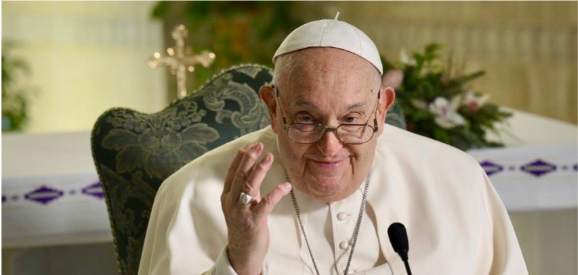
    Pope Francis, leader of the Catholic Church, passed away on April 21, 2025 at the age of 88, the Vatican announced today. The cause of his death was reported as a stroke followed by a Cardiac Arrest. This comes after he was hospitalised for a month due to double pneumonia and had recently returned to the Vatican to continue his recovery journey.

    He was born as Jorge Mario Bergoglio on 17th December 1939 in Flores, Buenos Aires. He had 4 siblings. After attending a technical secondary school, he graduated with a diploma as a chemical technician. Before finding his passion for religion, he worked several jobs, including as a Bouncer and Janitor.

    After the resignation of Pope Benedict XVI in 2013 due to old age, the Papal Conclave congregated to select their new leader. On March 13th 2013, Bergoglio was elected as the Pope. He took the papal name Francis, in honour of Saint Francis of Assisi. A pope of many firsts, Pope Francis achieved several milestones upon his election: the first Jesuit Pope, the first pope from the Americas, and the first ever from the southern hemisphere.

    Inclusivity in the church

    The Pope also set a milestone by showing openness to the LGBTQ+ community, unlike his predecessors. In a televised interview in 2013, when asked about priests who were homosexual, he replied: “If someone is gay and he searches for the Lord and has good will, who am I to judge?” In January 2023, he said that “Being Homosexual is not a crime” in an interview with AP. He also called out the laws that criminalise homosexuality “unjust”. In 2013, The Advocate, an American LGBTQ+ magazine, named him Person of the Year.

    Pope Francis’ deep affection for the poor was seen in multiple instances. On the first Holy Thursday after his election, he kissed and washed the feet of ten male and two female juvenile offenders imprisoned at Rome’s detention facility, telling them that this ritual signifies he was at their service. In this ritual, prisoners who followed Islam as their religion were also included by him, a landmark moment in the Vatican’s history.

    A voice for the Poor and victims

    Pope Francis chose this name because Saint Francis was extremely concerned with the welfare of the poor, and this was reflected multiple times during his papacy. Unlike popes from the past, Pope Francis had personal outreach with the homeless and poor. In a noble event, he turned a Vatican Plaza into a refuge for the homeless, whom he called “Nobles of the street”. He also practised a foot-washing ceremony of migrants and the poor to show he serves them.

    “I cannot greet people from inside a sardine can, even if it is made of glass”, said Pope Francis when asked about his outreach meetings. His holiness was also a passionate advocate for world peace. He called for a ceasefire between Israel and Palestine several times. According to Vatican News, it was reported that he would video call with the Holy Family Catholic Parish in Gaza every night since October 2024, offering prayers and solidarity to the residents, including Christians and Muslims. As a result of his acts of kindness, people called him “Champion of the Poor” and “Poor people’s Pope”.

    Pope on Climate Change

    Pope Francis left a deep impact on the issue of Climate Change. In his 12 years of papacy, he repeatedly raised the problem of human-caused global warming from burning fossil fuels. He encouraged citizens and world leaders to take action against the same.

    Pope Francis criticised developed countries like the US, which have contributed the most to planet warming pollution. He said poor nations have contributed the least to climate pollution. Francis inspired many Catholics to form climate groups, including The Global Catholic Climate Movement, which is now called the Laudato Si’ Movement. This movement aims to bring people together and fight the climate crisis while also protecting the environment and scrutinising eco-spirituality, sustainability, and social justice.

    Prime Minister of India, Narendra Modi and Pope Francis had their first-ever meeting during the PM’s visit to Italy in October 2021 for the G20 Summit. They discussed various issues, including Climate Change. Modi invited the Pope to visit India, which was politely accepted by Pope Francis. In their next meeting in 2024 at the G7 summit, PM Modi expressed his admiration for Pope Francis’ passion for the Environment and reiterated his invitation for a papal visit to India.

    Pope Francis did not just lead the Catholic Church, he changed what it stands for with compassion, humility and love. The world mourned as he passed away, with billions of Catholics and World leaders expressing their grief. His funeral was held on Saturday, 26th April, 2025, in Vatican City. Nearly 250,000 people attended his funeral. He remains as one of the only popes in over a century to be buried outside of the Vatican in the Basilica of Santa Maria Maggiore in Rome. While his views were widely praised, some traditional Catholics disagreed with his more progressive and liberal stance on social issues. Nonetheless, his legacy will always be remembered by the world.

  • Tombs From the Past Haunt the Present

    Tombs From the Past Haunt the Present

    The release of Chhava Movie, produced by Dinesh Vijan and directed by Laxman Utekar, stirred up old emotions, especially among right-wing groups. These emotions soon turned into actions. On March 16, 2025, communal riots erupted in various parts of Nagpur over the tomb of Mughal Emperor Aurangzeb. Ironically, the tomb lies nearly 500 kilometres away from Nagpur in Khuldabad city of Chhatrapati Sambhajinagar District, formerly known as Aurangabad. This city was named after Aurangzeb. Despite the distance, the riots in Nagpur escalated into violent clashes, resulting in multiple injuries and communal unrest.

    Who was Aurangzeb?

    Born in Dahod, Gujarat, Aurangzeb was the Sixth Mughal emperor, who ruled most of the Indian Subcontinent from 1658 to 1707. His rule is celebrated by many historians for some of his administrative reforms, but criticised by others for his harsh policies and treatment of non-muslims via policies like the Jizya tax imposed on non-muslims.

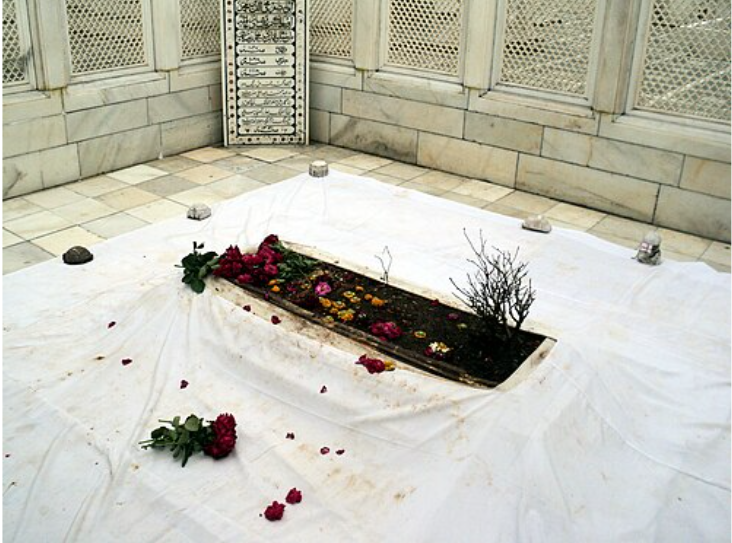
    For years, the tomb was a peaceful site of historical and religious significance. However, after the release of Chhava and with political tensions growing, the tomb came into the spotlight. The tomb of Aurangzeb rests in Khuldabad, a small city in the Sambhajinagar/Aurangabad District, which is on the way to one of the UNESCO World Heritage sites, i.e. Ellora Caves. It is an open-air structure considered modest for a ruler of his stature. He wanted his grave to be a simple one and believed that the open dome was the greatest cover he could have for his tomb.

    Protests and Demands

    Aurangzeb’s legacy remains controversial in Maharashtra, as Sambhaji was executed by Aurangzeb. The protests were headed by right-wing groups like the VHP and Bajrang Dal, who demanded the demolition and removal of the tomb. They argued that safeguarding the tomb of a ruler they viewed as cruel and oppressive sends the wrong message to future generations. Right-wing groups warned that if the tomb is not removed, Babri-like action will be taken.

    Critics argue that this narrative is part of a larger political project that seeks to reshape Indian identity by questioning Islamic heritage linked to the Mughal era. The renaming of Aurangabad to Chhatrapati Sambhajinagar is also cited as a symbol of this agenda.

    The Nagpur Violence

    On March 16, 2025, political organisations staged protests in Nagpur demanding the removal of the Tomb. During the demonstrations, rumours spread that a religious cloth was set on fire. Soon, the protests gained momentum and took a violent turn, triggering violent communal clashes between both sides around 8 to 8:30 pm, resulting in over 30 injuries, including police personnel. Nearly 60 rioters were taken into custody, and about 20 – 25 bikes, three cars and a JCB were set on fire after the clash in the Mahal area of the city.

    The following day, Nagpur Police Commissioner Dr Ravinder Singal said the situation in the city is currently peaceful. “…We have imposed Section 144, and everyone has been told not to step out unnecessarily or take the law into their hands. Do not believe rumours…” he said. All the shops and markets were shut down.

    Political Reactions

    Naturally, political remarks were quickly followed. “Chief Minister Devendra Fadnavis has appealed to citizens to fully cooperate with the administration”, was said in the statement issued by CMO Maharashtra. Fadnavis stated in the state assembly, “We will protect Aurangzeb’s grave but not allow his or the site’s glorification. Chhatrapati Shivaji Maharaj’s temple will be glorified, not Aurangzeb’s grave.”

    The opposition strongly condemned the riots, criticising Fadnavis. Shiv Sena (UBT) MP Sanjay Raut compared the newly elected Fadnavis government to Aurangzeb’s rule, claiming that farmers and unemployed youth were committing suicide. This created a huge debate between the political parties.

    ASI tightened the security around the tomb in Khuldabad to prevent any clashes. The Grishneshwar temple, located in Ellora village, saw a dip in footfall from several tourists and devotees as the temple is en route to Ellora.

    Conclusion: When History, Media and Politics Intertwine

    The incident in Nagpur is not just about Tomb, but it also reflects how intertwined history, politics, and media are in Modern India. A movie meant to provide history about King Sambhaji to a younger audience ended up triggering real-world violence. This shows that the media is not about entertainment anymore; it is an influence. Media can reignite old scars and shape public sentiment and the social world around us in a powerful way.