Author: Avani Kaushik

  • BMW’s Leadership Change Reflects Europe’s Growing Struggle in the Global EV Race

    BMW’s Leadership Change Reflects Europe’s Growing Struggle in the Global EV Race

    BMW is gearing up for an important shift in its leadership lineup amid one of the most disruptive transformations in the global auto industry over the past decades. Zipse, who has led BMW since 2019, announced that he will leave his post in May 2026. He will be replaced by Milan Nedeljković, the current head of production at the company, which means a change of leadership just as competitive pressure, regulatory scrutiny, and technological changes are at their peak in global markets.

    Strategic Caution in an Accelerating Market
    Zipse’s tenure was marked by turmoil and transition. He was the one who led BMW out of the COVID-19 pandemic, through supply chain disruptions, semiconductor shortages, and the global electric vehicle trend that was becoming stronger by the minute. Under his leadership, BMW maintained its profitability relatively strong compared to many competitors, primarily by continuing to rely on premium internal combustion and hybrid models, rather than diving headlong into full electrification at the expense of margins.

    However, that was the approach of a cautious player, which increasingly met with doubt as the market improved. Chinese car manufacturers, who include BYD, SAIC, and Geely, among others, quickly ramped up their output of electric vehicles, often at a lower price and with a more rapid innovation cycle, while expanding outside their domestic markets. Chinese EV makers have not only gained a firm foothold in their home market but have also started to invade the European market, thus posing a threat to the competitive position of established brands like BMW in terms of price, speed, and technology.

    Electrification, Regulation, and Defensive Industrial Strategy
    To maintain its competitive edge, BMW has already begun expanding its EV portfolio by investing in new platforms, battery technologies, and software capabilities, among other areas. The company is trying to stay competitive. Yet, this strategic change caused internal problems. Zipse was thought to be doubtful about the EV-committed strategy, preferring technological flexibility and a multi-powertrain approach. However, BMW was lobbying for emission targets to be delayed or softened through its lawyers, arguing that “overly rigid regulations could jeopardise industrial competitiveness and lead to job losses in the European auto industry.”

    Operational Execution as Competitive Leverage
    Milan Nedeljković’s hiring suggests a likely shift in focus, rather than a complete strategy overhaul. As the chief of production, Nedeljković has been part of the team that has modernised BMW’s production base, electrified the factories, and reduced operational costs. He is a person with an execution-oriented background, having led the massive scaling of EV production, cost management, and ensuring that BMW not only attains a similar-product tier to Chinese brands but also secures faster production, price control, and supply-chain reliability.

    The replacement of leadership has highlighted a broader reality that the European automotive industry must face. The difficulty of the situation is no longer just a matter of meeting the climate targets set or staying on the safe side of the regulations, but more of an issue of staying alive in such a competitive environment. The innovators’ cycles may be quicker, and thus the margins are more pressed than ever, not to mention that the competition is totally global. The Chinese carmakers are well-positioned, with very well-connected supply chains, significant government support, and battery technology that has been developed through years of practice. This prompts European companies to consider changes in their business models and areas for investment, such as this.

    A Turning Point for BMW and European Automakers
    BMW will be pivotal in a few years. The corporation will still have to juggle regulatory compliance, technological transformation, and shareholders’ expectations, all while defending its stake in the fiercely competitive super premium segment. Zipse’s exit has ushered in a new era, marked by rapid technological advancements, increased scalability, and manufacturing changes. The plan of execution is possibly in the next stage, while it raises the doubt that sufficient industrial capacity has already been realised.

    It remains to be seen whether this will be enough to deter the Chinese from conquering the electric car market. What is no longer in doubt is that BMW’s change of leadership is a signal to the industry that a power shift has occurred. The old tactics, though, can no longer match the electrification, the geopolitics, and the global competition that are reshaping the industry and, consequently, the company.


  • Sanchar Saathi and The Crisis of Digital Trust

    Sanchar Saathi and The Crisis of Digital Trust

    The Sanchar Saathi app controversy did not erupt because Indians are against cybersecurity or digital safety. It erupted because of something far more basic: a growing unease with the way India introduces digital policies – first imposed, then explained, and questioned only after backlash. Sanchar Saathi is an app developed by the government to help users report telecom fraud, track lost phones, and verify mobile connections; initially, it was framed as a citizen-centric cybersecurity tool. But when the government directed smartphone manufacturers to pre-install the app by default, it raised concerns about whether users would be able to remove it. Privacy advocates began sounding the alarm, opposition parties labelled it as surveillance-adjacent, and ordinary users wondered why such an app on safety would need to be mandatory in the first place. Days later, the government rolled back the directive, making the app voluntary.

    This rapid U-turn is telling, not because this app itself was uniquely problematic, but because it fits into a broader and familiar pattern in India’s digital governance: prioritising policy over privacy.

    When Intent Is Overshadowed by Execution
    Sanchar Saathi addresses a real and pressing problem through state-led digital intervention. There is no doubt that India is encountering cases of telecom fraud, including SIM card misuse and mobile phone snatching. Therefore, providing people with a tracking system for such cases is not only justified but also a necessity. Nevertheless, making the application mandatory ultimately undermined its original intent, as presented.
    The mandatory character, particularly in relation to a government application linked to telecommunication infrastructure, has raised numerous new concerns. There was no clear communication regarding the types of data that would be collected, the duration of data storage, or the person responsible for data usage monitoring. Such uncertainty in communication implied that even if there were justified reasons, it was still perceived as less protective than intrusive.

    A Familiar Pattern in India’s Digital History
    Sanchar Saathi is not an exception. India’s recent digital policy history is marked by instances where scale, speed, and technological ambition often precede safeguards around privacy, consent, and accountability, which are established only after popular resistance or judicial intervention. This reflects a broader governance philosophy in which digital infrastructure is viewed as a fundamentally neutral entity, for which trust will follow implementation rather than necessarily precede it. This pattern is not new and can be seen in earlier initiatives such as Aadhaar, where scale and implementation preceded legal clarity, complicating meaningful consent.

    The Pegasus spyware controversy further deepened this trust deficit. Allegations that sophisticated surveillance tools had been deployed against journalists, opposition leaders, and activists were met not with transparent inquiry but with evasive responses and procedural deflections. Besides the lack of positive affirmations, the government’s reluctance to engage openly keeps reinforcing a belief that the capacities for surveillance operate in a grey area that is not subject to public accountability. In the era of the internet, a lack of communication from the government sends a signal, which in this case is a suspicious and un-reassuring one.

    In this light, it was hard to expect that citizens would ever trust passively a telecom app that was mandatory and undeletable.

    Why Trust Is the Missing Layer
    Sanchar Saathi episode reveals not only a concern about privacy but also a lack of trust. Increasingly, citizens are becoming tech-savvy, and they recognise that data is the new oil. They are aware that telecom metadata – call records, device IDs, and usage patterns -are very private. Any measures that would affect users’ data would not only require strong guarantees and independent reviews but also make the users feel their voices matter.

    Strangely enough, in the wake of the government’s rollback, it seems that the government has identified this sentiment. However, reactive changes in the course of action cannot replace proactive consultations. Reversals do not create trust; instead, trust is nurtured through inclusion, clarity, and restraint.

    Rethinking Digital Governance
    India’s aspirations to become a digital superpower are evident. However, with the development of digital governance also comes the demand for democratic accountability. There should be no mandate for security instruments to receive acceptance; if an application has legitimate value to citizens, they will choose to use it, provided they understand how it functions and what information it collects.

    Sanchar Saathi could become a successful, voluntary, readily transparent, and clearly governed platform. However, the previous experience with the compulsory nature of Sanchar Saathi shows that the way a policy is enacted in Digital Democracy means just as much as why it is passed.

    The message is straightforward and immediate: India possesses both the requisite technology and the desire to implement policy. The gap that India faces and must focus on closing is establishing a Governance Culture that regards Privacy as a key principle rather than an afterthought. Without that change occurring, every Digital initiative will continue to encounter resistance from the public, regardless of intention.

  • Made Where? Why India Wants E-Commerce to Reveal Country of Origin

    Made Where? Why India Wants E-Commerce to Reveal Country of Origin

    If you are one of the people shopping online today, for example, for a phone charger, a water bottle, or your next set of bed sheets, you likely check reviews, price, brand, and delivery time. But sometime soon, another factor may become just as important: where the product is made. The government of India has now proposed making it mandatory for e-commerce platforms like Amazon, Flipkart, and Meesho to clearly mention the “Country of Origin” for every product available on their platforms as part of a new policy they are proposing. The intention behind this is to not only enable consumers to make a more informed choice but also to further support the vision of Atmanirbhar Bharat (a more self-reliant India). This could lead to a radical transformation in the Indian online shopping scenario, affecting the production, marketing, and pricing of products, besides changing the competitive landscape between local and imported goods.

    The closer the policy is to being put into practice, the more unavoidable becomes the question: Will this change really benefit Indian producers and environmentally friendly consumers, or will it just be another source of compliance and logistical complication on the already complicated digital marketplace?

    Reasons for the Proposal’s Importance

    India ranks high among e-commerce markets globally, with the fastest growth rates, and is expected to exceed $130 billion in market value in the coming years. The daily lives of consumers have changed significantly with the increasing number of people going online; hence, the importance of platforms has skyrocketed. Nevertheless, while retail products in physical stores are already openly labelled for their manufacturing location, the same cannot be said about online products. Many such listings lack origin information or are not clearly presented, leaving buyers uncertain about whether a product is Indian, Chinese, or from another source.

    The timing of this proposed rule seems intentional. The renewed focus on reliable local or regional supply, particularly for goods produced mainly in India, has returned due to the pandemic, accompanied by political tensions, rising protectionism, and digital nationalism. This aligns with government-driven initiatives like Make in India, PLI schemes, and the push for localisation in manufacturing. In other words, this policy is not just about marking products; it seeks to rethink value flow across the digital retail ecosystem.

    Would it Vitiate the Way Indians Make Purchases?

    Mandatory country-of-origin labels would increase transparency. Filters such as “Manufactured in India,” “Made in China,” or “Imported” would be added to the existing filters for price, delivery time, and brand. For some price-conscious customers, affordability will remain the primary driver of their decision. For others, though, the origin may influence purchases, especially for home goods, skincare, fashion, and electronics accessories.

    However, the real question is whether consumer sentiment will translate into actual action. A ₹499 imported phone case might still command more attention than a ₹799 Indian-made case. But a visible label could also create psychological weight: the sense that choosing Indian-built products helps keep local jobs, industries, and manufacturing ecosystems alive. This shift may take time, but over time, the presence of such information will make more conscious consumer behaviour normal, much the same way organic labels did for food or cruelty-free labels did for cosmetics.

    A Possible Boost for Indian Manufacturers

    This might be a revolutionary regulation for Indian manufacturers, particularly MSMEs and upcoming D2C brands. The fact that they have excellent origin filters and compulsory labelling means that their products would be different and, most importantly, have a space in the story.

    One possible outcome of this rule change may be more supply chain transparency, more investment in domestic manufacturing, and a more distinct Indian brand identity for products made in India. Heritage industries, such as handloom textiles, natural skincare, artisanal crafts, and Ayurveda, which are closely linked to cultural identity and craftsmanship, would benefit most, as their origins are deeply intertwined with cultural identity and traditional skills. However, for most Indian brands, origin is much more than just the technology used to describe it; it is a mark of authenticity, a connection to the past, and a matter of pride. By ensuring that consumers see such details at the time of sale, the rule sets up a scenario where the stories of the products represented are their online shopping experience footprint, that is, the consumers relate to the products through origin, which is not a technical detail buried in specs, but part of the consumers’ interaction with the products.

    But Implementation Will Not Be Easy

    No matter how promising the advantages might be, the new regulation nonetheless presents numerous operational challenges. Verifying the country of origin for millions of items, most of which undergo some form of change, modification, or relisting, is quite a gigantic task. The very definition of these complicated supply chains makes this issue even more unclear. If a smartphone is entirely manufactured in India but has Chinese chips and American software, how do you categorise it: Indian, foreign, or partially local? To address these issues, they would need to establish new verification systems, implement new rules for onboarding sellers, and conduct regular audits to ensure compliance. The sellers of commodity goods in large quantities may be subject to additional compliance requirements, which in turn would slow down the listing process and burden staff with more paperwork. When this is done on a large scale, it becomes a source of increased costs, additional responsibility, and possibly even disputes over enforcement.

    A Small Label with Long-Term Impact

    Will the country-of-origin labels change the way people shop online in India just like that? The answer is most likely no, but they will surely change the consumer, manufacturing, and digital commerce in India over the next decade. The proposal extends beyond mere rules and compliance, indicating a gradual yet significant shift—from a convenience- and cost-driven online shopping market to one shaped by identity, ethics, and national economic priorities. If done with care, this proposal will not only raise consumer awareness but also Indian innovation, quality, and supply chain development. At its core, this regulation aims not only to bring transparency to buyers but also to reshape the perception of value in India’s digital economy. Whether we are aware of it or not, the next time we put something in our online shopping cart, the question of its origin may be involved.

  • OpenAI’s $38 Billion AWS Deal and What It Means for the Future of AI Infrastructure

    OpenAI’s $38 Billion AWS Deal and What It Means for the Future of AI Infrastructure

    The multi-year partnership signals a shift toward multi-cloud strategies and highlights how infrastructure will shape the next phase of AI development.

    OpenAI has concluded a historic $38 billion cloud infrastructure deal with Amazon Web Services (AWS), making it one of the largest cloud/AI deals ever made in terms of commercial value. It gives OpenAI access to massive computing power across AWS’s global network, including advanced GPU clusters, specialised UltraServer infrastructure, and hardware built specifically for training and running large-scale AI systems. It became a pivotal point in OpenAI’s game plan, which had previously relied on Microsoft Azure as its primary cloud service provider.

    Why Reinventing Infrastructure Matters Now

    The transition to AWS emphasises the ever-increasing demand for computational power in the development of AI models. Currently, modern AI systems consist of billions or even trillions of parameters and have high computational requirements for both training and inference. The cloud infrastructure’s reliance on a single provider becomes even more difficult as the demand continues to grow. OpenAI is positioned as a multi-cloud company that can benefit from greater flexibility, geographic redundancy, and the rapid scaling of capacity to meet its changing needs.

    Amazon has scored a huge competitive victory through the deal. Microsoft, Oracle and Google have been gaining power in the AI ecosystem over the past two years, primarily through their collaboration with model developers, their commitment to custom chips, and the establishment of research labs. OpenAI, one of the world’s most prominent AI research organisations, is partnering with Amazon to strengthen its cloud position. It announces AWS’s commitment to staying in the AI infrastructure market, amid rising competition. Reports claim that the deal will have significant financial and reputational worth for the companies in the long run.

    What This Says About the AI Compute Economy

    The magnitude of the transaction is indicative of a broader shift in the way the Manner AI infrastructure is being built and financed. The operational and scaling costs of cutting-edge AI systems have surged tremendously due to global GPU supply shortages, power-hungry data centres, and the increasing complexity of AI architectures. Cloud providers are not competing only on software or storage prices, but also on the availability of physical resources, such as land for new data centres, access to power grids, cooling systems, and long-term agreements for semiconductor supply.

    In other words, computing power is being recognised as a new strategic asset in the technology landscape. The organisations that can consistently provide and expand this capacity are the ones that are setting both the pace and direction of AI development. The OpenAI–AWS partnership is a sign that the future of large-scale AI will be, to a significant extent, dependent on logistics, infrastructure engineering, and hardware design, as well as on algorithmic innovations.

    Implications for the Industry

    While this partnership will accelerate innovation for AI, another related concern is that of the concentration of power. Currently, very few companies, namely Amazon, Microsoft, Google, and Oracle, have the global scale and infrastructure to support advanced AI systems. As research, businesses, and automation increasingly rely on these systems, control over the future of AI will become even more centralised in the hands of a few.

    Several research scientists and industry analysts have expressed the view that without access to computers similar to those afforded to large companies, smaller companies, academic institutions, and open-source projects will lag. This situation could impact policy discussions regarding AI accessibility, national computing strategies, and public-private technology partnerships, among others.

    From Single Partnership to Multi-Cloud Strategy

    The collaboration between OpenAI and AWS marks a significant milestone in the integration of AI and cloud technology. The gap between them is continuing to close rapidly, and this partnership shows how tightly interwoven the future of AI depends on solid cloud infrastructure. Instead of being separate industries, the cloud platform, along with its AI developers, will, for instance, form deep, long-term, capital-intensive relationships powered by compute scarcity and technical interdependence.

    As the need for high-performance computing continues to increase, similar large-scale partnerships will become a standard feature across the entire industry. The multi-cloud strategies or direct investments in infrastructure could be actions taken by governments, research labs, or major tech companies in the near future, ensuring they have access to the computing power they need. A deal like that, worth $38 billion, signals something huge happening in the industry: AI is entering a new phase. It’s not just about apt algorithms or large datasets; it’s about building the necessary infrastructure needed to support them. While compute isn’t the only factor shaping AI’s future, it’s becoming one of the most defining.

  • Inside Haryana’s Vote Chori Allegations: Democracy Under Question

    Inside Haryana’s Vote Chori Allegations: Democracy Under Question

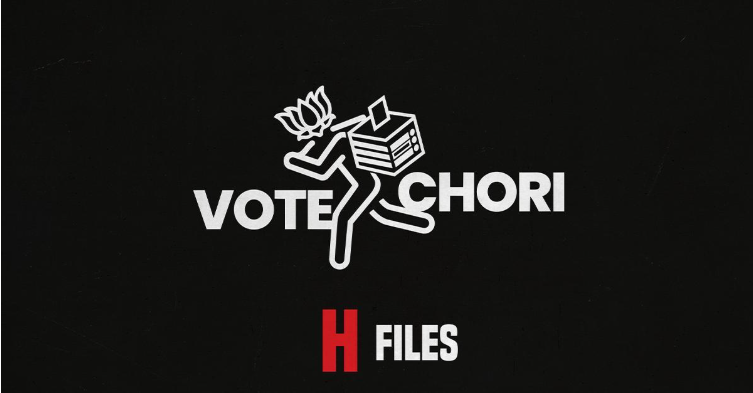
    The forthcoming 2024 Haryana Assembly elections have gained national media attention following allegations of mass-scale discrepancies in the state’s electoral rolls, which were taken up publicly by Rahul Gandhi in November 2025. He claimed that nearly 25 lakh entries in the voter database could be duplicated, incorrect, or fraudulent, calling into question the integrity of the roll revision process.

    Claims of Duplicate and Erroneous Entries

    During a major press conference on 5th November in New Delhi, Rahul Gandhi claimed that as much as 12.5% of Haryana’s registered voters may be fake or duplicate. Continuing with what he termed “The H Files,” he cited an example involving a stock photograph of a Brazilian model which he said appeared on 22 different voter identity cards across different constituencies and under various Indian names like “Seema,” “Sweety,” and “Saraswati,” among others.

    According to his claims, some anomalies in the voter list included duplicate voters, invalid addresses, bulk-entered names, and non-existent house numbers. He indicated that in several cases, multiple registrations seemed to match the same photograph, which he said was evidence of a deliberate attempt at manipulation.

    Response from Authorities and Political Rebuttals

    The allegations immediately brought reactions from the electoral authorities and government-aligned political actors. The Election Commission of India (ECI) publicly denied the charges, asking why objections were not raised by polling agents during the roll revision process itself if such widespread anomalies did exist, and claiming that the allegations did not have any procedural grounds.

    The ruling Bharatiya Janata Party, or BJP, and leaders of the state government dubbed the allegations as political drama. The Chief Minister of Haryana dismissed the allegations and accused Rahul Gandhi of seeking headlines to mislead public discourse.

    Nevertheless a number of past and current opposition members have stated that the evidence shown was significant and warranted forensic examination.

    So far, the ECI has acknowledged receipt of complaints about roll-list irregularities but has not issued a comprehensive public report assessing the validity or scale of the alleged fraud.

    Ground-Level Fallout, Public Reactions, and Mobilisation

    The accusations have spilled out of the high levels of politics and into protests and public outcry. In Kaithal, marches of opposition supporters called for a full audit of the voter rolls and the restoration of voters they say were removed. In Jind, protests erupted with people chanting slogans against what protesters said was “vote theft.”

    The woman whose photograph was most repeatedly used –the Brazilian model Larissa Nery – finally spoke to the media as the controversy unfolded, referring to the misuse of her image as “madness” or “craziness.” She spoke about her disbelief and shock that an old photograph of herself had surfaced on voter-ID cards in a foreign country.

    The widespread dissemination of the photo and associated claims through social media, combined with calls for transparency and audits, has led to a wider national debate over voter-roll maintenance, data integrity, and the transparency of election administration.

    Administrative Context and Wider Ramifications

    The digitization of the voter registration and verification system in India began a decade ago. Switching to digital electoral rolls and their linkage or possible linkage with national identity databases was supposed to enhance accuracy and strengthen identity verification. Critics now argue that rapid revisions of the rolls, bulk updates, and lack of strict audits may have brought in new vulnerabilities.

    The controversy erupts during the Special Intensive Revision, SIR, of the electoral rolls in many states during 2025, a process opponents contend has increased the risks of voter deletion or manipulation.

    The scale of the allegations and the demographic scope-every constituency in Haryana-suggests that what was once characterised as mere isolated anomalies could now be perceived as systemic. There is a greater drive for transparency: civil society groups, opposition parties, and large sections of the public are demanding that the ECI publish booth-wise data, make available facilities for independent audits, and explain publicly the process of revision and verification of rolls.

    What Comes Next 

    As of late November 2025, no conclusive public audit or official conclusion has been provided. The absence of details from the ECI has heightened demands for transparency. Opposition figures caution that if the procedure is not transparent and auditable all future elections be it, in Haryana or elsewhere could be considered dubious. The dispute stays unsettled until official results are announced. Whether it leads to corrective action, legal challenges, or institutional reforms, its outcome is likely to shape public trust in India’s electoral process, not only in Haryana but across the country.

  • H-1B Overhaul: White House Announces $100,000 Fee for New Applicants

    H-1B Overhaul: White House Announces $100,000 Fee for New Applicants

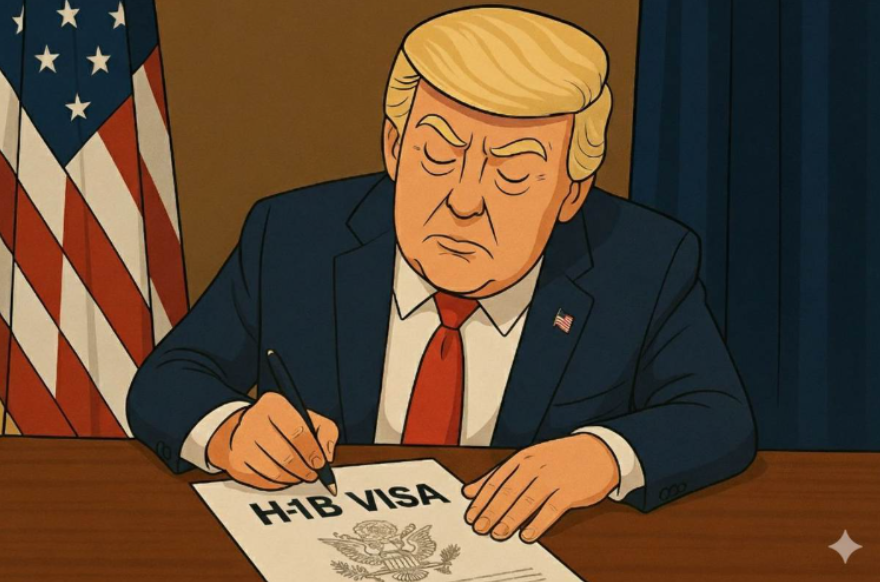
    On September 19, 2025, the White House announced in Washington, D.C. that all new H-1B visa applications will now carry a $100,000 fee – a move introduced through a presidential proclamation by President Donald Trump. This change, set to take effect on September 21, applies only to new petitions and has already sparked legal challenges, industry backlash, and urgent warnings from major tech firms.

    The new $100,000 fee will be charged on petitions received after September 21, 2025. Important to note, it will not get charged on:
    • Petitions filed prior to that date
    • Current H-1B visa holders
    • Extensions or renewals in valid H-1B status

    Authorising bodies such as USCIS, CBP, and the State Department acted hastily to make sure that the change would become effective prospectively only. Nevertheless, questions abound regarding specifics such as when and how the fee will become due upon filing, upon issuance of visas or upon arrival in the U.S.

    The Ripple Effect: How the $100K Fee Will Reshape Work and Innovation
    For large technology firms, $100,000 per new recruit is anything but small change. These fees would quickly mount up for companies that employ many H‑1B visa workers, much less so, including the other fee costs, as well as compliance expenditures. Startups, which live on thin margins, face an even tougher choice: employ offshore at a higher cost, or don’t hire.

    Proponents of the change believe the H‑1B system has been misused to crush wages as well as treat American workers unfairly. By introducing this high fee, the government hopes to prevent over-reliance on offshore labour and incentivise firms to focus on domestic hiring. Critics, on the other hand, view it as a political move rather than a pragmatic fix.
    America long drew some of the brightest minds on the planet. That pipeline is now critically disrupted. If firms hold back on sponsorship, high-skilled workers will instead look to Canada, Europe, or even Asia, where the cost of immigration is cheaper.

    The urgency of the change was underscored when major tech giants, including Amazon, Google, and Microsoft, urged their employees abroad to return to the U.S. quickly before restrictions tightened. The move reflects widespread concern over the possibility of more restrictive measures at ports of entry.
    On the legal front, California has already announced plans to sue, arguing that such sweeping measures fall within Congress’s authority, not the executive’s. Should the courts agree, the proclamation could be overturned or narrowed, though any resolution is likely months away.
    Another fundamental aspect is the “national interest exemption.” Some employees or industrial inputs deemed indispensable, like healthcare, national defence, or industries suffering shortages, could receive exceptions, although eligibility rules are not defined yet.

    Reactions Across the Board: Industry, States, and Advocacy Groups Speak Out
    The introduction of the $100,000 H‑1B fee evoked immediate and vehement reactions from all stakeholders. The technology sector, highly reliant on international talent, was apprehensive. Major corporations like Amazon, Google, and Microsoft cautioned that they would have to rethink hiring plans and reassess operations. Some will already ponder covering the cost for essential recruits, and others will reduce H‑1B sponsorship or even offshore projects in order to sidestep the cost.

    State governments, and particularly California, reacted to the fee directly as a threat to their economies. With Silicon Valley located in it and possessing a large concentration of high‑tech industries, California policymakers argued that the policy would strangle innovation and harm the competitiveness of the state. The state already signalled it would litigate the policy in court legally and made the question partly one not only of economics but also of constitutionality.

    Advocacy groups for immigrants reacted with concern, cautioning that it would deter highly skilled workers from coming at all. They contended that American leadership in technology, research, and healthcare relies upon luring international talent, and such a hefty fee would adversely affect them. Several advocacy groups also mentioned the larger human cost, referencing personal and professional dislocation it would create among employees who would move to the U.S., and U.S. lawmakers offered contradictory responses. A number of Republican and Democratic senators professed concern about protecting American jobs, while others urged America to stay ahead in scientific and technological competitiveness. Both lawmakers and corporations have already urged congressional examination of the proclamation, and some have encouraged corporations to reveal more about how they will change.

    In reality, the answer is one of shared recognition: this is not about changing immigration policy; it’s a decision whose consequences are profound for the American economy.

    Navigating the Unknown: Key Issues in the New H-1B Era
    The dust is far from settled on the $100,000 H‑1B fee, and countless questions are unanswered. One of the most immediate concerns is how it will work: will it be collected at the time of filing the petition, upon approval of the visa, or upon entering the United States?

    Another big unknown is how sweeping exemptions will be, although the proclamation allows for “national interest” exceptions, it is not at all clear what industries or professions will qualify. Will doctors, scientists, or teachers qualify for exemptions?

    Another unknown is how long the rule will last; although initially set to last for 12 months, extensions are likely and could prolong its impact. Finally, global ripple effects are unknown. India and China, nations that supply many H‑1B skilled workers, will likely alter migration plans, and American corporations will consider opening international branches to avoid hurdles altogether. These unanswered questions ensure that the coming months will loom large in determining what will become of the H‑1B program.

    A Balancing Act Between Protection and Progress
    There is public pressure to protect American workers, prevent wage suppression, and regulate H‑1B program abuses. On the other hand, America values maintaining its global innovation edge by attracting top talent from abroad.

    Experts warn that drastically reducing H‑1B employment could harm economic growth, especially in high-tech sectors facing shortages, and disrupt innovation pipelines affecting long-term competitiveness. Ironically, some companies might offshore more jobs, reducing opportunities for American workers and undermining the goal of protecting domestic employment.

    The coming months will reveal if this move manages to zero in on American workers or if it incidentally resculpts the global talent pool against America’s interests. If the charge remains as advertised, then we could witness a reduction in foreign-skilled recruitment, with corporations making strategic shifts to reduce expenses, possibly by offshifting operations or R&D. The breadth and use of exemptions will also have a determining influence on which industries will continue to avail themselves of global talent. There will also be legal suits, state resistance, and private sector lobbying that introduces additional variables to create something of an evolutionary tale. At bottom, H‑1B controversies aren’t about immigration policy itself; they’re about America’s future as an engine of innovation, about America’s role in the global economy, about how America balances defending domestic workers with keeping open doors to international excellence. Decisions will help chart that future for generations to come.

  • The Future of the Red Soles: Jaden Smith Joins Louboutin as Creative Director

    The Future of the Red Soles: Jaden Smith Joins Louboutin as Creative Director

    On September 17, 2025, Maison Christian Louboutin announced Jaden Smith as the first-ever Men’s Creative Director, marking a historic moment for the luxury brand known for its landmark red-lacquered soles. In addition to overseeing 4-yearly collections of men’s shoes, leather goods, and accessories, the position also involves handling general creative responsibilities like campaigns, immersive events, and brand experiences. Before making his debut with the Men’s Fall/Winter 2026 collection at Paris Men’s Fashion Week, Smith will move to Paris to take on the role and his first preview capsule is scheduled for January 2026.

    Why Louboutin Put His Faith in Jaden Smith

    Smith was the sole choice for the position, according to Christian Louboutin, because of his “rich and multidimensional” world, inspiring style, cultural sensibility, curiosity, and openness.

    According to Louboutin, he was searching for someone with “a unique perspective and cultural curiosity.” He added, “His world is rich and multidimensional, and he is able to move between music, fashion, and art in a way that feels natural.”

    The decision also has a statistical backing, as Louboutin confirmed that the men’s department, responsible for approximately 24% of the brand’s revenues, has been underperforming lately. “The men’s collection is important to us, but it needs a new voice. Jaden brings a younger energy and cultural flair that can help it thrive,” he said.

    Smith expressed excitement about the role in a conversation with Women’s Wear Daily- “This is a dream. I’ve always looked up to Christian, and to now be able to create under this house, with this history, is an honour. I want to push boundaries, but also respect the craftsmanship that makes Louboutin what it is.”

    Besides his fame as an actor and musician, Smith has a long relationship with fashion, as reflected in his unique personal style, partnerships with footwear companies like New Balance, and his own brand, MSFTSRep Infinity.

    Analysts like Business of Fashion and Forbes have commented that this move is part of a larger trend wherein legacy luxury fashion houses are gradually bringing in new voices, either to stay culturally relevant or as part of future succession planning. According to Louboutin himself, this appointment is more about acting on an existing presence that impressed him than it is about filling a void.

    The Backlash: “Nepotism or Necessary Disruption?”

    Numerous critiques have focused on the idea that it is Smith’s celebrity status and family name, rather than any background in design and fashion, that have earned him the position. Smith’s lack of formal fashion education or training has been brought up by numerous critics questioning his relevance for such a role. Numerous internet users are concerned about his ability to maintain the high standards of a luxury home with a rich history due to his lack of craftsmanship experience. Concerns have also been raised that the move may be motivated more by appearance than by merit.

    Fashion analysts have commented that this is a branding strategy aimed at mending the decline in menswear sales by leveraging Gen Z culture and celebrity involvement. While some argue it is a sensible business approach, others find that the move prioritises the appearance and face of the brand over craftsmanship, design and heritage.

    Fans Caught Between Excitement and Doubt

    The news sparked a variety of responses online. Supporters hailed Smith as a daring and unexpected selection who could inject youthful vigour into the brand. Conversely, critics questioned whether bringing him on board was an act of nepotism, especially considering that countless trained designers work their whole careers for such opportunities. Others highlighted his lack of a formal design education or technical training as a possible liability. Neutral commentators expressed intrigue yet withheld passing judgment until Smith’s first collection is presented in early 2026.

    Déjà vu in the Fashion World

    Jaden Smith’s appointment is not the first instance of a celebrity being an unconventional choice for such a high role in luxury fashion. In 2023, Pharrell Williams was named creative director of menswear at Louis Vuitton. His tenure has demonstrated how celebrity influence can diversify a legacy brand to connect with youth culture, despite initial scepticism regarding his relevance for the role.

    Prior to Pharrell’s appointment at Louis Vuitton, Virgil Abloh served as the Artistic Director for the brand’s menswear line. Despite initial backlash, Abloh went on to reimagine luxury fashion through his fusion of streetwear sensibility and high-end luxury fashion. In the early 2000s, the Olsen twins and Victoria Beckham also used their celebrity status to launch fashion brands that have since become renowned names in fashion. These patterns suggest that while fame can open doors in the fashion industry, sustained credibility depends on consistent quality and a clearly defined creative vision.

    While celebrities have a foot in the door due to their fame and status, true success in fashion has less to do with fame and more to do with the distinctive creative vision they bring to the table. For Jaden Smith, the real test will be whether he can move beyond his celebrity status and prove his validity for the role through the work he delivers at Louboutin.

    What is in Store for Louboutin’s Future

    Pharrell’s work with Louis Vuitton is a prominent example of how luxury fashion is becoming more at ease with leaders from different artistic backgrounds. Many young creatives now define themselves by a combination of culture, activism, music, performance, and fashion.

    Smith’s appointment could usher in a powerful new era, striking a balance between his unique Gen-Z aesthetic sensibility and honouring Louboutin’s design heritage. The first test of this will be the preview capsule in January 2026, and the market reaction will speak volumes. Will consumers and competitors view this appointment as genuine and significant, and can Smith bring in fresh innovation to the brand, or will his role be purely symbolic? Could he become another such unexpected force that influences the direction of fashion?

  • A Night of Firsts and Films with Heart: Highlights from the 71st National Film Awards

    A Night of Firsts and Films with Heart: Highlights from the 71st National Film Awards

    The 71st National Film Awards, announced on August 1, 2025, brought a wave of emotion, celebration, and overdue recognition across the Indian film industry. The ceremony, which honours the best of Indian cinema, stood out for its diverse selection of winners, ranging from regional gems to box-office blockbusters and deeply personal performances.

    As the sector navigates new obstacles, such as shifting audience preferences and digital disruption, this year’s National Awards confirmed that Indian cinema is not only surviving but also growing, daring, and flourishing.

    Historical win for Shah Rukh Khan 

    With more than 30 years in the industry, Shah Rukh Khan won his very first National Award for his commanding double role in Atlee’s ‘Jawan’. His performance as both a moral crusader and his army-man father was a crowd-pleaser and critical hit, underlining socio-political issues under the action-oriented image.

    In a tearful Instagram video, SRK thanked the jury, his team, and fans for Jawan’s win, saying, “I’m genuinely humbled”. With a visibly obvious injury, he went on to say affectionately, “Sending you half a hug, the other half will come soon.” The fraternity welcomed him to the winner’s circle- Kajol, Farah Khan, A.R. Rahman, and Anil Kapoor all sent him their congratulations.

    Rani Mukherji’s Fierce Comeback 

    Veteran actress Rani Mukerji won Best Actress for Mrs. Chatterjee vs Norway, where she played a Bengali mother who fights a foreign government to gain custody of her children. Based on real-life events, her performance was raw, intense, and emotionally crushing.
    “This is validation for my 30-year journey,” she said in a statement. Her cousin Kajol congratulated her alongside SRK, making it a proud moment for the Mukerji family.

    Vikrant Massey: From Underdog to National Icon

    The Best Actor award was won jointly by Vikrant Massey, who gave a soulful performance in 12th Fail, playing Manoj Kumar Sharma, a real UPSC aspirant with a humble background. The film, directed by Vidhu Vinod Chopra, brought to the screen the grit, vulnerability, and unassuming heroism of students fighting all odds to reach their destination.

    “Getting this honour alongside Shah Rukh sir is a dream,” Massey said. “I dedicate this to every student and underdog who felt unseen.”

    12th Fail Wins Best Film

    The most poignant of the wins at the 71st National Film Awards was, perhaps, Vidhu Vinod Chopra’s 12th Fail, taking home the highest honours for Best Feature Film- a victory for filmmaking that celebrates perseverance over privilege.

    Inspired by the tale of Manoj Kumar Sharma, a boy from a Chambal village who overcomes the daunting challenges to become a successful IPS officer, 12th Fail is a gritty and realistic portrayal of ambition overcoming adversity. Staying true to Anurag Pathak’s bestseller of the same name, the film avoids glorifying adversity, but instead presents it with a sense of weight and mounting sympathy, and offers a very human story of determination and hope.

    Director Vidhu Vinod Chopra, whose body of films includes Munna Bhai MBBS and 3 Idiots, called this project “the most important film” of his life. Chopra said, during his acceptance speech, “This film is not just Manoj’s story, it’s the story of every young Indian who’s been told that where they come from defines how far they can go. This award belongs to them.”

    12th Fail did not bank on melodrama. Rather, it used close-up storytelling, mundane settings, and real performances to craft a movie that was intensely personal and very national. It struck a chord with people of all ages and backgrounds.

    Popular Cinema Still Matters 

    Rocky Aur Rani Ki Prem Kahaani, a lively family drama directed by Karan Johar, won the Best Popular Film Providing Wholesome Entertainment award. This category frequently connects the gap between critical acclaim and widespread appeal. The victory confirmed that, when done well, high-budget Bollywood films continue to have a strong cultural impact.

    The film was a contemporary retelling of the classic Bollywood family saga and marked Johar’s return to directing after seven years. Rocky Aur Rani followed the unusual romance between a loud, expressive Punjabi man (Ranveer Singh) and an intelligent, independent Bengali journalist (Alia Bhatt) with flamboyant sets, humorous dialogue, and a progressive social message. Generations of people were won over by their chemistry, comedic timing, and emotional depth.
    Besides its Best Popular Film win, the film also took home the Best Choreography prize for Vaibhavi Merchant’s vivacious and stunningly filmed Garba song, “Dhindora Baje Re.” The song, which was widely praised for fusing traditional dance with modern storytelling, became a festival favourite.

    Powerful Performances in Supporting Roles 

    Regional cinema stole the limelight at the 71st National Film Awards, as outstanding performances finally found the national recognition they deserved. In the Best Supporting Actor award, the honour was shared by M. Bhaskar for Parking (Tamil) and Vijayaraghavan for Pookalam (Malayalam). Bhaskar’s performance as a common middle-class man embroiled in an increasingly hot war for a parking space; his performance, replete with pride, frustration, and an urgent need to assert dignity in a world where the common is overlooked, was phenomenal. Vijayaraghavan, a seasoned Malayalam actor, brought quiet weight to his performance in Pookalam, playing a centenarian grappling with hidden secrets and family pressures. Both actors brought nuanced performances of men whose flaws and vulnerabilities made them human.

    In Best Supporting Actress, the focus was on two equally riveting performances. Urvashi, known for her range in South Indian films, took home the award for Ullozhukku (Malayalam), where she tapped into the emotional pain of a woman grappling with generational conflict and unspoken sorrow in a Kerala family torn apart by flooding. Her acting was a masterclass in restraint and emotional subtlety. Janki Bodiwala, making her debut in the Gujarati film Vash, infused the national scene with new energy by acting as a young girl caught up in a supernatural thriller. Her acting was earthy and unputdownable, walking the line between innocence and fear in a performance that stayed with viewers.

    Regional Cinema Triumphs

    The accolades also showcased the depth of regional storytelling in India:

    1. The Best Hindi Film was Kathal: A Jackfruit Mystery – a scathing satirical take on police bureaucracy, starring Sanya Malhotra as a young inspector looking for missing jackfruits in a politician’s garden.
    2. Best Tamil Film: Parking – an engrossing drama of urban frustration and class conflict, featuring Harish Kalyan and M. Bhaskar as bitter neighbours.
    3. Best Marathi Film: Shyamchi Aai – a moving narrative of Sane Guruji’s life, documenting the relationship between a boy and his selfless mother.
    4. Best Gujarati Film: Vash – a horror thriller film featuring Hiten Kumar and Janki Bodiwala, where a family is haunted by supernatural forces.
    5. Best Malayalam Film: Ullozhukku – a sentimental family drama starring Urvashi, shot against the Kerala flood backdrop, where past secrets are exposed.
    6. Best Bengali Film: Deep Fridge – a critically engaging film on isolation and emotional loneliness in the era of the internet.
    7. Best Assamese Film: Rongatapu 1982 – a historical representation of ethnic strife in Assam, during a politically volatile time.
    8. Best Telugu Film: Bhagavanth Kesari – an action mass blockbuster film featuring Nandamuri Balakrishna, with mass appeal and a social message.

    Special Mentions and Technical Awards

    Vicky Kaushal’s commanding performance as Field Marshal Sam Manekshaw in Sam Bahadur earned the Best Film on National Integration, as well as Make-up and Costume Design honours. Calling it “a proud day for all of us at RSVP Films,” Kaushal was thrilled.

    Kerala Story also made waves, with Prasanthanu Mohapatra taking home Best Cinematography and Sudipto Sen taking home the Best Direction.

    Animal took home a Special Mention for re-recording mixer M.R. Rajakrishnan, along with the Best Sound Design and Best Background Score by Harshavardhan Rameshwar. Hanu-Man, meanwhile, took home Best AVGC Film for redefining the Indian superhero narrative.

    Conclusion 

    The 71st National Film Awards served as a window into the changing landscape of Indian cinema, not merely a list of winners. From the flamboyant celebration of Rocky Aur Rani Kii Prem Kahaani to the grassroots realism of 12th Fail, this year’s honours demonstrated a unique harmony between substance and spectacle.

    A powerful message is conveyed by the popularity of movies in a variety of languages, genres, and platforms: compelling narratives, no matter how big or small, will always find a following. The awards honoured not only cinematic brilliance but also the fearlessness to convey meaningful tales in an increasingly changing cultural terrain, honouring performances that were steeped in emotional depth, inner insight, and mass appeal.

  • Russia’s Kamchatka Hit by 8.8 Magnitude Earthquake; Pacific Nations on Tsunami Alert

    Russia’s Kamchatka Hit by 8.8 Magnitude Earthquake; Pacific Nations on Tsunami Alert

    The United States Geological Survey (USGS) stated that the quake was at 23:24 UTC (05:54 IST, 30 July), some 119 km southeast of Petropavlovsk-Kamchatsky, an urban municipality in Kamchatka Krai. The earthquake was of relatively shallow depth of 19 kilometres, which maximises its capability to cause surface effects.

    The quake struck near Petropavlovsk-Kamchatsky, close to a volatile underwater fault line where tectonic plates constantly battle for dominance — the Kuril-Kamchatka Trench, infamous for past megaquakes.

    The ground trembled. Sirens cried out. Millions rushed to the top. A strong 8.8-magnitude earthquake off the Kamchatka Peninsula in Russia late 29 July sent shockwaves across the Pacific Rim and prompted widespread tsunami warnings from Chile to Japan. The quake, which was one of the most powerful in more than ten years, triggered a worldwide series of evacuations, emergency responses, and a tense wait for impact.

    Epicentre and Geological Details 

    The United States Geological Survey (USGS) stated that the quake was at 23:24 UTC (05:54 IST, 30 July), some 119 km southeast of Petropavlovsk-Kamchatsky, an urban municipality in Kamchatka Krai. The earthquake was of relatively shallow depth of 19 kilometres, which maximises its capability to cause surface effects.

    The quake struck near Petropavlovsk-Kamchatsky, close to a volatile underwater fault line where tectonic plates constantly battle for dominance — the Kuril-Kamchatka Trench, infamous for past megaquakes.

    Tsunami Warnings and Evacuations

    In less than ten minutes, the Pacific Tsunami Warning Centre (PTWC) came online and sent out warnings for countries in the Pacific, including French Polynesia, Japan, Chile, Hawaii, California, Alaska, Ecuador, Peru, and Colombia. Among the coordinated responses were that  Japan evacuated almost 2 million people from coastal prefectures; one person died due to the evacuation efforts. In the coastal areas of Chile, the evacuation involved more than a million people due to “red alerts”.   Hawaii declared an emergency, closed ports, rerouted traffic, activated statewide sirens, and opened public shelters.

    Western U.S. states, ranging from California to British Columbia, issued tsunami advisories; Crescent City in Northern California issued a warning about potential wave amplification due to underwater topology, despite the fact that actual wave heights were recorded at just over 1 foot (~0.3 m).

    By 31 July, the majority of regions had reduced or revoked warnings; Chile remained on alert, New Zealand kept coastal areas off-limits, and other countries adopted cautious advisory stances.

    The United Nations Office for Disaster Risk Reduction (UNDRR) attributed the quick, synchronised response of the governments and the emergency services to “effective early warning systems and evacuation protocols.”

    Initial Impact and Damage Reports 

    Even though the earthquake was very powerful, no fatalities have yet been reported as of August 3. Russian officials in the Far East reported minor injuries, minor damage to buildings and power supply disruption in certain areas. Kamchatka Krai and portions of Sakhalin Oblast are yet to be physically inspected.

    Russian rescue forces were sent during the night, and the local authorities declared a state of heightened alert. However, the isolation of the epicentral region most likely limited casualties.

    Nuclear and Military Facility Concerns

    What rattled beneath the surface may have shaken more than just the earth. Some of Russia’s most classified military facilities, including naval bases thought to contain nuclear submarines, were dangerously close to the epicentre. As international intelligence services step up satellite surveillance in search of any indication of structural damage or compromised security, the Russian Defence Ministry’s silence has only stoked rumours. The earthquake has caused anxiety well beyond seismic circles in an area already shrouded in military secrecy.

    Global Seismic Significance

    The July 29 earthquake ranks as the world’s second most powerful earthquake after Japan’s 2011 Tōhoku earthquake, which had a magnitude of 9.1 and caused a devastating tsunami. It is currently the sixth most powerful earthquake to be registered by seismographs since the year 1900.
    Seismologists believe this movement is possibly part of a broader Pacific Ring of Fire tectonic process that will continue to have aftershocks for weeks.

    International seismic safety protocols are receiving more attention as a result of this incident. Budget cuts are a concern; experts stress maintaining and increasing funding for organisations like PTWC, which are essential to early warning effectiveness. There is growing support for regular simulation drills, public education campaigns, and better coordination among national meteorological, defence, and disaster management agencies, especially in areas vulnerable to megathrust earthquakes. Talks have started about extending reliable early-warning systems into under-monitored regions, particularly the Atlantic Ocean basin and Indian Ocean zones, beyond current networks.

    Although the Kamchatka earthquake did not cause significant damage relative to its strength, specialists highlight that it serves to highlight the ongoing seismic danger for countries along the Pacific. Authorities are reminding people who are in risk areas to be aware of safety protocols, especially since aftershocks and secondary risks can still materialise

  • Investing in Indulgence: All About ChysCapital’s Theobroma Stake Buy Out

    Investing in Indulgence: All About ChysCapital’s Theobroma Stake Buy Out

    Theobroma, a high-end bakery brand renowned for its signature brownies, pastries, and quickly expanding nationwide presence, has drawn a significant investment from ChrysCapital, which has purchased a 90% stake in the business. The deal is estimated at a valuation of ₹2,410 crore, as reported by the Economic Times. It marks a significant milestone in Theobroma’s evolution from a family-run enterprise to a professionally scaled food services business.

    The deal involves acquiring shares from both the company’s promoters and current investor ICICI Venture, which owns around 42% of the stake in the company. It is reported that the proprietors will retain 10% of the stake in the company.

    From Colaba Café to a 1000-Crore Brand 

    Theobroma was founded in 2004 by two sisters, Kainaz Messman Harchandrai and Tina Messman Wykes. It grew from a small kitchen café to a 225-store pan-India chain, serving pastries, puffs, cakes, croissants and sandwiches.

    In her 2020 memoir, “The Theobroma Story: Baking a Dream,” Kainaz Messman described how she had to reconsider her career after suffering a back injury while working as a pastry chef at the Oberoi Hotels. Inspired by their mother’s home-based baking business, she teamed up with her sister Tina and received training at Le Cordon Bleu.

    During Dussehra in 2004, the two opened their first café on Colaba Causeway with their father’s seed money of Rs 1.5 crore. At first, it was thought to be a minor improvement over their kitchen at home, but it would quickly grow into something much larger.

    A friend of theirs proposed the name “Theobroma,” which means “food of the gods,” and it immediately came to be known as the decadent treats at an affordable price and an elevated dessert experience.

    Theobroma’s delicious tarts, rich cakes, and gooey brownies were an overnight hit in India’s growing café and bakery scene in the early days. With its European-style pastries at affordable prices, the brand won the heart of a young aspirational consumer segment. Its emphasis on quality and consistency helped create a loyal and growing customer base, reports say.

    More About the Stake Buy-out 

    According to the ET (Economic Times) report in March, ChrysCapital initiated discussions to acquire Theobroma at a rate lower than the initial Rs 3,000 crore valuation the founding family and the shareholders held out for. The talks that were put on hold for some six weeks following poor financial performance were recently restarted. No takeover announcement has been issued yet.

    Other prospective buyers like Bain Capital, Carlyle, and Switz Group of the Khorakiwala family that runs the Monginis bakery chain also expressed initial interest in Theobroma. ChrysCapital’s investment in Theobroma is a part of the company’s plan to build a solid quick-service restaurant (QSR) portfolio. The fund is also committed to buying high-growth food chains such as The Belgian Waffle Co., and the recent deal reflects growing investor interest in scalable, consumer-facing companies in India.

    Theobroma is expected to post Rs 525-550 crore revenue and Rs 80-100 crore EBITDA in FY25. It had posted Rs 400 crore revenue and Rs 60 crore EBITDA in FY24.

    The company had earlier considered going public, but unstable market conditions stalled its plans for an IPO.

    What’s Next for Theobroma?

    With the support of ChrysCapital, Theobroma will consolidate its position in Tier 1 and Tier 2 cities and explore opportunities such as e-commerce, licensing of products, and packaged foods. With the increasing demand for premium yet affordable food brands in India, Theobroma is poised to dominate the space.

    The most amazing part of this story isn’t the moneymaking transaction – it’s sister’s love, business built on chocolate, hard work, and determination. It is now a case study on how Indian food startups can grow without losing their soul.

    The investment gives Theobroma the strategic capital and expertise it needs to propel its growth, expand new markets, and potentially strengthen its supply chain and backend operations. ChrysCapital, as an experienced investor in consumer-facing businesses, offers Theobroma Capital as well as operating experience, which is vital since Theobroma transitioned from a family business to a professionally scaled business.

    The Messman family is reportedly still engaged in key roles to keep the values and identity of the brand.

    Image Source: Theobroma Official Website