Author: Ahana Ghosh

  • Satish Shah: A Legendary Comic Actor and Beloved Cultural Icon Passes Away at the age of 74

    Satish Shah: A Legendary Comic Actor and Beloved Cultural Icon Passes Away at the age of 74

    The news of the passing away of renowned comedian Satish Shah at the age of 74 is a significant loss to the Indian film industry. He was a versatile man who honed the skill of moulding himself into unique character roles that never failed to become heartwarming tokens of our childhood, as well as a key presence during wholesome family evenings. It had been reported that he passed away on 25 October in Mumbai, due to a heart attack, as clarified by close associates. His legacy as a cultural icon in the Indian Film and Television industry will live on to touch the hearts of millions. His impeccable comedic timing and heartfelt performances will never fail to light up many more wholesome family evenings.

    Early Life and Education

    Satish Shah was born in 1951 and completed his schooling at St. Xavier’s College, Mumbai. He then went on to hone his theatrical talent at the prestigious Film and Television Institute of India (FTII). His passion for the performing arts was evident from childhood, catalysing his journey to become one of India’s most beloved comic actors. He dedicated his early life to refining his craft by performing in small stage plays and taking on minor film roles, laying the foundation for a phenomenal career.

    Breakthrough Television Success

    Satish Shah gained popularity in 1984 by appearing in the sitcom Yeh Jo Hai Zindagi. This remarkably trailblazing show portrayed the reality of a middle-class family with humour and relatable anecdotes. His performance as a lovable yet overwhelmed husband garnered national recognition and solidified his presence on the Indian television landscape. Shah’s life is no less than a 55-chapter odyssey as he brilliantly portrayed nearly 55 different characters for 55 episodes of DD-National’s classic show, Yeh Jo Hai Zindagi.

    Iconic Role in Sarabhai vs Sarabhai

    The defining chapter of his acting career was portraying the character of Indravan Sarabhai in the cult classic television show Sarabhai vs Sarabhai (2004-2006, revived 2017). His character as an eccentric, witty, and sometimes stereotypically patriarchal father won hearts with memorable catchphrases and nuances that became part of Indian pop culture. His comic chemistry with co-star Ratna Pathak Shah portrayed an endearing, layered family dynamic that resonated across generations.

    Significant Contributions To Films

    In addition to his tele-acclaim, Shah acted in more than 250 films, one of which was the Oscar-nominated Jaane Bhi Do Yaaro (1983), where he played the iconic role of the corrupt municipal commissioner in a satirical manner. His unforgettable performances in films like Kal Ho Naa Ho, Main Hoon Na, and Om Shanti Om, where he supported humour and love, enriched the stories with additional layers beyond the main narratives.

    Personal Life and Battles

    Shah was a humble and kind-hearted man who was deeply committed to his family life. His wife, Madhu Shah, is a designer who worked on the sets of films such as Hum Tere Ashiq Hain, Dhoondte Reh Jaaoge! and Saanch Ko Aanch Nahin. She tied the knot with Shah in 1972; however, the couple did not have children and lived a comfortable married life full of love and companionship. Madhu Shah is currently battling with Alzheimer’s disease, regarding which Satish Shah had often expressed his worries about leaving her alone in interviews.

    In his later life, Shah suffered from kidney failure, which required a transplant and eventual dialysis for a few years; it did not once stop him from working or inspiring people around him with his admirable strength and positive attitude.

    Legacy and Influence

    Satish Shah is remembered not only for his extraordinary skills and unforgettable characters but also for the warmth he spread among his colleagues through his personality. He took part in the governing council of FTII to guide future actors on their paths. Shah received various accolades, including the Indian Telly Awards and the ITA Award, for his comic brilliance.

    He was lovingly regarded as the “Baap of Comedy” by the industry and his fans, signalling his influence and stature. He had the ability to infuse humour with a deep understanding of human nature, which in turn made his work timeless and will be celebrated and remembered for centuries to come.

    The Memorial

    Satish Shah’s last rites were performed by his wife, Madhu Shah, and other close relatives and friends. Many famous members of the Indian Film Fraternity had come to pay their respects, reflecting the deep admiration and affection he earned over decades in the industry.

    The news of the passing away of renowned comedian Satish Shah at the age of 74 is a significant loss to the Indian film industry. He was a versatile man who honed the skill of moulding himself into unique character roles that never failed to become heartwarming tokens of our childhood, as well as a key presence during wholesome family evenings. It had been reported that he passed away on 25 October in Mumbai, due to a heart attack, as clarified by close associates. His legacy as a cultural icon in the Indian Film and Television industry will live on to touch the hearts of millions. His impeccable comedic timing and heartfelt performances will never fail to light up many more wholesome family evenings.

    Early Life and Education

    Satish Shah was born in 1951 and completed his schooling at St. Xavier’s College, Mumbai. He then went on to hone his theatrical talent at the prestigious Film and Television Institute of India (FTII). His passion for the performing arts was evident from childhood, catalysing his journey to become one of India’s most beloved comic actors. He dedicated his early life to refining his craft by performing in small stage plays and taking on minor film roles, laying the foundation for a phenomenal career.

    Breakthrough Television Success

    Satish Shah gained popularity in 1984 by appearing in the sitcom Yeh Jo Hai Zindagi. This remarkably trailblazing show portrayed the reality of a middle-class family with humour and relatable anecdotes. His performance as a lovable yet overwhelmed husband garnered national recognition and solidified his presence on the Indian television landscape. Shah’s life is no less than a 55-chapter odyssey as he brilliantly portrayed nearly 55 different characters for 55 episodes of DD-National’s classic show, Yeh Jo Hai Zindagi.

    Iconic Role in Sarabhai vs Sarabhai

    The defining chapter of his acting career was portraying the character of Indravan Sarabhai in the cult classic television show Sarabhai vs Sarabhai (2004-2006, revived 2017). His character as an eccentric, witty, and sometimes stereotypically patriarchal father won hearts with memorable catchphrases and nuances that became part of Indian pop culture. His comic chemistry with co-star Ratna Pathak Shah portrayed an endearing, layered family dynamic that resonated across generations.

    Significant Contributions To Films

    In addition to his tele-acclaim, Shah acted in more than 250 films, one of which was the Oscar-nominated Jaane Bhi Do Yaaro (1983), where he played the iconic role of the corrupt municipal commissioner in a satirical manner. His unforgettable performances in films like Kal Ho Naa Ho, Main Hoon Na, and Om Shanti Om, where he supported humour and love, enriched the stories with additional layers beyond the main narratives.

    Personal Life and Battles

    Shah was a humble and kind-hearted man who was deeply committed to his family life. His wife, Madhu Shah, is a designer who worked on the sets of films such as Hum Tere Ashiq Hain, Dhoondte Reh Jaaoge! and Saanch Ko Aanch Nahin. She tied the knot with Shah in 1972; however, the couple did not have children and lived a comfortable married life full of love and companionship. Madhu Shah is currently battling with Alzheimer’s disease, regarding which Satish Shah had often expressed his worries about leaving her alone in interviews.

    In his later life, Shah suffered from kidney failure, which required a transplant and eventual dialysis for a few years; it did not once stop him from working or inspiring people around him with his admirable strength and positive attitude.

    Legacy and Influence

    Satish Shah is remembered not only for his extraordinary skills and unforgettable characters but also for the warmth he spread among his colleagues through his personality. He took part in the governing council of FTII to guide future actors on their paths. Shah received various accolades, including the Indian Telly Awards and the ITA Award, for his comic brilliance.

    He was lovingly regarded as the “Baap of Comedy” by the industry and his fans, signalling his influence and stature. He had the ability to infuse humour with a deep understanding of human nature, which in turn made his work timeless and will be celebrated and remembered for centuries to come.

    The Memorial

    Satish Shah’s last rites were performed by his wife, Madhu Shah, and other close relatives and friends. Many famous members of the Indian Film Fraternity had come to pay their respects, reflecting the deep admiration and affection he earned over decades in the industry.
  • Diane Keaton, Oscar-Winning Star of Annie Hall and The Godfather, Dies at 79

    Diane Keaton, Oscar-Winning Star of Annie Hall and The Godfather, Dies at 79

    The iconic, Oscar-winning actress Diane Keaton’s demise is truly a great loss to global cinema. She was famously regarded for her extraordinary performances that combined humour, warmth, and quirky charm. She passed at 79 on October 11th at her residence in Los Angeles. According to family friends, Keaton experienced a temporary health decline over the past months.

    For over 50 years, Keaton portrayed some of the cinema’s classic American characters, realistic yet oddball, graceful yet clumsy, nervous yet fiercely honest, or any other combination. Her personality reflected quirky yet bright, peculiar yet familiar, and never strayed from her individuality.

    From Los Angeles Dreamer to Hollywood Legend 

    Born Diane Hall on January 5, 1946, in Los Angeles, Keaton was the oldest of four children. She was the daughter of Dorothy Deanne Keaton, a homemaker and photographer with a creative, burgeoning spirit that would later inspire her filmmaking and acting, and John Newton Ignatius Hall, a civil engineer and real estate broker. After high school, Keaton moved to New York to study acting at the Neighbourhood Playhouse, drawn to the feel of live theatre. Keaton made her Broadway debut in 1968 in the musical Hair, but it was her performance in Woody Allen’s stage play “Play It Again, Sam” that changed everything; it marked the start of a lengthy professional partnership and romance between Keaton and Allen.

    This partnership extended to the screen in films, including Sleeper (1973), Love and Death (1975), and Annie Hall (1977), which would ultimately be Keaton’s defining performance.

    The Birth of a Screen Legend

    Keaton’s transformational performance occurred earlier, in Francis Ford Coppola’s film The Godfather (1972) as Kay Adams, the moral centre to Michael Corleone’s ascent to violent power. Keaton provided emotional nuance to an otherwise brutal story, which became one of her artistic signatures.

    However, it was Annie Hall that vaulted her to instant stardom. The film was a bittersweet romantic comedy that Woody Allen wrote, produced, and directed, in which he starred, and that was about Keaton as much as it was about the movie characters. Keaton’s wardrobe of bowler hats, men’s vests, wide slacks, and ties was taken straight from her own closet, which made the look iconic.

    For this performance, Keaton won the Academy Award for Best Actress in 1978, and Pauline Kael of The New Yorker called Keaton “the most original screen presence of her generation.”

    Reinvention and Variety

    Throughout the following stretch of forty years, Keaton broke out of her generic shell and shifted to more comedic narratives alongside dramatic roles: the trifecta of Oscar nominations for Warren Beatty’s Reds (1981), Marvin’s Room (1996), and Something’s Gotta Give (2003) was a part of her new aesthetic.

    Her films were soon considered as an all-encompassing body of work: hits like Baby Boom (1987), Father of the Bride (1991), The First Wives Club (1996), The Family Stone (2005), and Book Club (2018) established her as the money-making element of both rom-coms and ensemble films.

    Keaton did not simply perform in front of the camera; she forged parallel careers in photography, interior design, and real estate. Her photography books and architectural restorations reflected a similar care with attention to detail and nostalgic representation behind the camera, similar to the emotional frame of her experience while performing on screen.

    A Life of Individuality

    Keaton never married and addressed that with her usual sense of humour. “I love the thought of marriage,” she told Parade. “But I’m much more suited for making movies than to be in long-term relationships.”

    She adopted two children: Dexter in 1996 and a son, Duke, in 2001, and described motherhood as her greatest role.

    Keaton’s personal life was interesting, but she lived in a way that allowed her to maintain her independence. Her personal life was often discussed in relation to her co-stars, including Woody Allen, Warren Beatty, and Al Pacino, but she ultimately preferred solitude in her later years. She was candid about her challenges with bulimia in her younger years and her long-standing battle with skin cancer, and spoke openly about both for awareness purposes.

    Tributes From All Across Hollywood

    The announcement of Keaton’s passing drew tributes from colleagues and admirers worldwide. Many personalities from the entertainment world honoured Keaton, including Coppola, Viola Davis, Robert De Niro, DiCaprio, Martin, Fonda, Kate Hudson, Demi Moore, Sarah Jessica Parker, and Reese Witherspoon. Allen wrote and published an article, remembering Keaton, via The Free Press; he referred to her, through his writing, as “unlike anyone the planet has had or is ever likely to see again.”

    Nancy Meyers, director of Baby Boom and Something’s Gotta Give, called Keaton “a force of authenticity.” “She taught generations of women that being yourself – truly yourself – is the most beautiful thing you can do,” Meyers stated.

    Francis Ford Coppola remembered her as “creativity personified,” while Keanu Reeves, her co-star in Something’s Gotta Give, called her “a generous artist and a uniquely special person.”

    Her First Wives Club co-stars Goldie Hawn and Bette Midler also shared their remembrances. “Diane was unafraid,” Hawn wrote on social media. “She took vulnerability and made it powerful, and in her awkwardness came the art form.”

    A Timeless Influence

    It would be an understatement to call Keaton solely an actress; the cultural impact cannot be ignored. Her Annie Hall wardrobe influenced women’s fashion for the 1970s, and her candid sense of humour and emotional intelligence redefined what it meant to be the female lead of a film.

    She won an Academy Award, two Golden Globes, and several lifetime achievement awards, but didn’t let her success go to her head. “I never thought I was glamorous,” she once told an interviewer in 2019, “I wanted to take the notion of glamour and be interesting.”

    Ultimately, Diane Keaton’s legacy cannot be divorced from the genuineness with which she approached her work. Whether she played a jittery lover, a frazzled mother, or any woman caught in a midlife moment of self-realisation, she would play the character with equal parts grace and resolve.

    Her memory will live on through her two sons, Dexter and Duke, as well as her works, which will always anchor contemporary film.

    Her very life, as funny, fearless, and, beyond belief, as it was, was a Diane Keaton production in every way.

  • Diljit Dosanjh’s Emmy Nomination for Chamkila: A Victory Beyond Borders

    Diljit Dosanjh’s Emmy Nomination for Chamkila: A Victory Beyond Borders

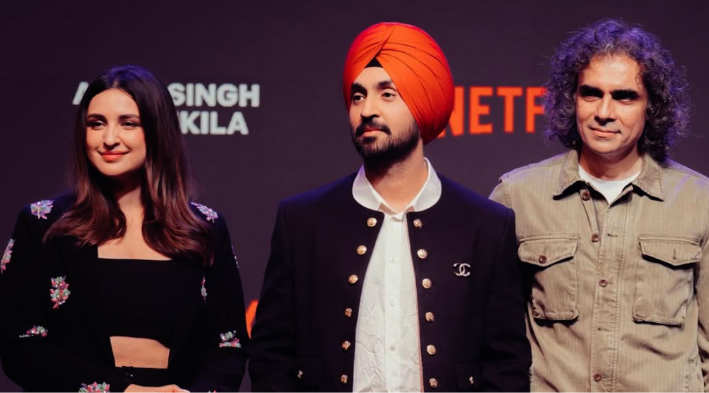
    The trajectory of the Indian entertainment industry witnessed a revolution when the International Academy of Television Arts & Sciences released its 2025 Emmy nominations. Punjabi popstar-actor Diljit Dosanjh receiving a nomination for Best Performance is an achievement that will go down in history. His portrayal of the controversial folk artist Amar Singh Chamkila in the Netflix-released biopic of the same name, directed by Imtiaz Ali, has not only won the hearts of everyone back home but has also caught global attention.
    Even more astonishing is that the movie itself, Amar Singh Chamkila, has been shortlisted in the Best TV Movie/Mini-Series category, putting India on two seats of glory in one of the globe’s most eminent television award galas.

    A Role Steeped in Legacy
    Amar Singh Chamkila, knighted as the “Elvis of Punjab,” was known for all the negative eyes on him and his music, making him a personality who sang about “improper topics” right from poverty within rural boundaries to physical intimacy. His cult-like following was nothing short of a wildfire that spread within the duration of one verse. His talent met an abrupt end at the peak of his career when he and his wife were murdered in 1988.

    To play such a character is commendable in itself. Dosanjh, in any case, already an international Punjabi music legend, took on the role with forceful realism. Chamkila’s unruly stage persona not only told the tale of a rockstar who was too ahead of his time, but also extended to vulnerable heights of lyricism. Dosanjh’s acting impacted every kind of audience, no matter how familiar they were with Chamkila’s music from before. This film’s international chokehold on us proves how finely tuned the acting on screen was.

    The Imtiaz Ali Touch
    Most credit for the film’s impact is due to director Imtiaz Ali, who has long been renowned for his forays into love, longing, and human paradoxes. Ali shifted from urban romances to Chamkila, with a tale anchored in Punjab’s earth. He approached Chamkila not merely as a people’s hero but as a symbol of the power of art to question the powerful and inspire people to think.

    Ali’s script becomes a harmonious celebration once Dosanjh’s acting and Parineeti Chopra’s layered portrayal of Amarjot come into view- it is a marriage that has depth of one of the highest artistic values. It is no surprise that international juries found Chamkila to be a compelling contender for the Emmy stage.

    The Weight of the Nomination
    Dosanjh is now among global stars like David Mitchell (Ludwig) and Oriol Pla (Yo, Adicto). Regardless of whether he wins, the nomination signifies that Indian actors are no longer limited to national recognition. They are among an increasing list of performers vying on the same level in global fields.

    Diljit Dosanjh’s ever-growing persona in front of a global audience is also responsible for his recognition within Emmy territories. He has broken the ice with the world by collaborating with A List artists, performing on almost every stage, and notably became the first Indian Punjabi artist to perform at Coachella. His path to bridging cultures has earned him another notch on his belt and created another groundbreaking addition to his resume.

    Why This Matters for Indian Entertainment
    It would be obvious to present this nomination as a victory for Diljit Dosanjh, but its repercussions are far-reaching.

    First, it points to the growing worldwide importance placed on Indian narratives outside Bollywood caricatures. Chamkila is hardly a neat city romance or mythical epic: it is the cruelly raw biopic of a Punjabi folk singer whose music once saw censorship and who was also violently taken away in his prime. That such a film should have gone its way is testimony to global audiences’ desire to have stories rooted in local authenticity.

    Second, it highlights how streaming platforms like Netflix have transformed the reach of Indian cinema. Without digital platforms, a story like Chamkila may have remained confined to domestic circuits. Today, it is accessible to audiences from New York to Nairobi, enabling it to enter conversations around global awards.

    Lastly, it encourages Indian creatives- actors, writers, directors- to look beyond borders. If Diljit can use a local folk figure and create an Emmy-award-winning performance out of it, then others, too, can aspire to narrate regional stories with universal appeal.

    The Symbolism of Chamkila’s Resurrection
    And there is a kind of poetry in Chamkila himself being brought back to life on such an international platform. Once considered crude by elites and killed for it, Chamkila’s art has now been justified by one of the world’s most significant cultural awards. His journey- shot in cold blood at the age of 27 and then remembered with finality at the Emmys after many years- makes the undying power of art more lucid against the tides of time, censorship, and plunder.

    The 53rd International Emmy Awards will take place in New York on 24 November 2025, it is undoubtedly a harbinger for a time when Indian actors and tales will find themselves gaining acceptance in areas once held by Western narratives. For Dosanjh, this is another milestone in a career that effortlessly balances music and film. For Indian popular culture, it is a testament to the fact that authenticity pays, and the world is, at last, eager to hear stories spoken in Punjabi, Bengali, Tamil, or any of the multiple Indian languages – so long as they are spoken in honesty and in craft. During Chamkila’s lifetime, his voice was very frequently overpowered by controversy. In 2025, due to Diljit Dosanjh and Imtiaz Ali, it resonates more than ever before, this time on the world stage.

  • Aryan Khan’s Directorial Debut, The Bads of Bollywood, Premieres on Netflix

    Aryan Khan’s Directorial Debut, The Bads of Bollywood, Premieres on Netflix

    Aryan Khan has finally made his touchdown in the Bollywood film industry with his first directorial and co-writing debut, The Bads of Bollywood. It is a seven-episode-long affair released on Netflix on 18 September, centred around a Bollywood hero named Aasman Singh, and his ascent from being an ambitious outsider, played by actor Lakshya Lalwani.

    A Satirical Exploration of Bollywood

    This series is a flavourful blend of drama and comedy that offers a hyper-realistic (or realistic) glimpse into the glamorous lives of the people within India’s most significant and longest-running industry, Bollywood. The show utilises the life of Aasman Singh, an overnight sensation hero struggling to maintain the validation he receives from the audience at par with his reality.

    Nepotism, rivalries, publicity stunts, and struggles of newcomers are no longer a thing of entertainment magazines anymore with this series. Although this barely scratches the surface of an exposé, the satire and deep irony mirror a portion of the industry from which our audience can only derive controversies.

    Cast and Guest Appearances

    Adorning the screen is an excellent performance by newcomers and veterans alike. Sahher Bambba, Bobby Deol, Mona Singh, Manoj Pahwa, Anya Singh, Raghav Juyal, Rajat Bedi, Gautami Kapoor, and Manish Chaudhari deliver soaring potential alongside Lalwani.

    But how could we forget the favourite cameos that have been made into edits that keep popping up on our Instagrams: Shah Rukh Khan, Aamir Khan, Salman Khan, Ranveer Singh, and Karan Johar show up with comic relief. These cameos have created an enormous buzz, adding to the show’s popularity and highlighting its self-referential nature.

    Production and Creative Approach

    Aryan Khan wrote and directed the series, which has been in development with Red Chillies Entertainment for over two years. Although rumours regarding Aryan’s career had been going on for some time, his opting to start as a director instead of an actor made headlines.

    Industry observers noticed that the show is a departure from traditional Bollywood storytelling. Unlike traditional aspirational romance or action, The Bads of Bollywood finds itself within the OTT domain of satirical content, following international trends more inclined towards biting, self-deprecating entertainment.

    Audience Response and Viewership

    The demands for the show were massive, with the trailer accumulating over 50 million views before release. The Bads of Bollywood has created ripples across social platforms with many applauding Aryan Khan for his confident directorial approach and his boldness to confront issues such as nepotism and politics in the industry.

    Early reactions, though, were divided. India Today and The Week picked out the show’s humour and unapologetic tone, but The Indian Express commented that some plotlines were based on stock tropes such as” the Hero’s Journey”, “Rags to Riches” and many more. Fans have picked up on the balance between glamour and critique of the show, although some feel that the satire sometimes overpowers character development.

    Placing Aryan Khan in the Industry

    The release has put Aryan Khan in the limelight, and an all-encompassing community of audience has underlined the importance of his professional decisions. Entering Bollywood as a writer-director, rather than as an actor, makes him different from most other star kids. His decision to enter the industry with satire has also been seen as a bid to carve out an independent voice.

    Critics point out that the show banks on Aryan’s insider status while maintaining distance through humour. There has been criticism from some viewers that there are self-referential moments, such as instances that appear to be recreations of  Aryan’s own experiences with media attention.

    Broader Implications for Bollywood Content

    The show also captures a shift in how Bollywood narratives are presented on the web. With the viewers starting to develop interests in web-based content, shows such as The Bads of Bollywood show how filmmakers try out new formats that aim to blend glamour with a pinch of criticism.

    Streaming services such as Netflix poured enormous amounts of investment into such storytelling, which shows how the audience could potentially engage with Aryan Khan’s debut. By mixing celebrity appearances, industrial observations, and satirical comedy, the show tries to draw mainstream attention and serious interest from the younger digital audience.

    Despite mixed reviews, The Bads of Bollywood thoroughly incorporates Aryan Khan in the new role of a creative force in entertainment. His debut work has positioned him along an emerging continuum of more experimental, self-referential narrative in Hindi entertainment. Whether or not the show manages to succeed may ultimately be irrelevant. Much of the initial discord has already been sown, with the arrival of a fresh voice in the ever-changing discourse of Bollywood.

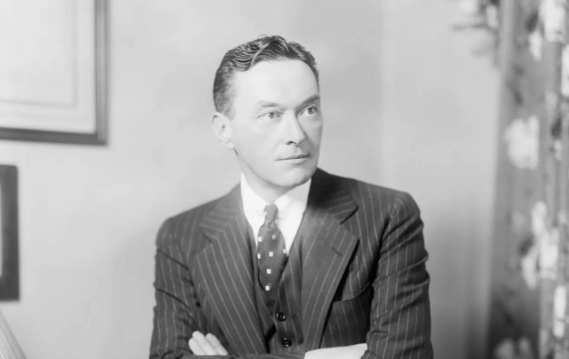
  • Walter Lippmann: The Voice Who Taught America to Think About Itself

    Walter Lippmann: The Voice Who Taught America to Think About Itself

    Among the pantheon of American journalism, few figures hold as much weight as Walter Lippmann. For over half a century, he was the country’s leading interpreter of politics, war, and democracy: an intellectual go-between bridging the raw chaos of events and the public trying to make sense of them. He was not only a columnist, he was a thinker who grappled with questions that are still pressing today: How do we know what we know? What is the role of the press in presenting our vision of reality? And can democracy persist if its citizens are captives of illusion?

    Lippmann’s career spanned from the Progressive Era to the television era. Along the way, he invented modern political commentary, coined terms that have become the foundations of media theory, and commanded the attention of presidents as much as the readers of his daily column. To grasp Walter Lippmann is to learn the strained marriage of democracy and information in the 20th century, a marriage that remains under tension today.

    A New Yorker in the Making

    Born in 1889 to an affluent German-Jewish family in New York, Lippmann grew up musically gifted, well-travelled, and bookish. His passion for ideas led him to Harvard, where he studied philosophy under William James and George Santayana.

    Harvard was the turning point. Learning about pragmatism, which revolves around ideology being proved and tested in practice, took his perception of politics to great heights: his views on it were not dogmatic but instead an ever-evolving process. He graduated in 1910 as a man with starry eyes and a burning ambition to introduce firebrand ideas to a world that was standing at the door of revolution.

    The early 20th century brimmed with reform movements: investigative journalists exposed corruption boldly as progressives clamoured for reform, and politicians only added to it by grappling with America’s emerging global stronghold. Lippmann slid into this ferment easily. By 1913, Walter Lippmann, who was 24 at the time, co-founded The New Republic, a journal carrying opinions that quickly emerged as the voice of progressive intellectuals. His first central forum was employed to press the case for domestic reform and reflective engagement overseas.

    The Interpreter

    Lippmann’s voice drew a parallel between fiery crusaders like Upton Sinclair and caustic critics like H.L. Mencken as he treaded towards a calmer, analytical voice that remained relentlessly focused on clarity. His presence in journalism was less of a partisan and more of an interpreter, helping readers make sense of events too complex to grasp on their own.

    That instinct was expressed in his syndicated newspaper column, Today and Tomorrow, which debuted in 1931. It appeared for more than three decades in hundreds of newspapers all over the nation, reaching millions. Every important person within the nation gave close attention to Lippmann’s verdicts.

    His authority of trust came from his scholarship and his independence. Lippmann never had trouble changing his mind when the facts required it. His parallel opinions, whether it was about his support of Woodrow Wilson’s entry into the First World War, all while scrutinising the League of Nations, expressing his due respect to FDR, but criticising the anatomy of the New Deal, or even encouraging the Cold War containment at the same time, cautioning America against excess militarisation. His allegiance was not always to the party line but to his idea of truth.

    Public Opinion and the Shadows on the Wall

    Lippmann’s best and most lasting work did not come from his daily columns but from his books. In Public Opinion (1922), he provided a groundbreaking analysis of how people come to know the world. Underlying it was a simple yet radical notion: most of what we understand comes not through direct experience but through mediated images, news accounts, and stereotypes. He referred to this manufactured reality as the “pseudo-environment.” It is through this lens, not unmediated reality, that people form their judgments. The implication was unsettling. If citizens see the world only in terms of such shadows, democratic choice is tenuous. As Lippmann wrote, “the pictures inside people’s heads do not correspond with the world outside.”

    This was more than a philosophical comment but a political alert. Democracy, he maintained, could not rely on citizens’ understanding the complexities of contemporary policy. His answer was drastic: turn over interpretation to experts, specialists, and institutions. Elitism was the accusation of his critics, but Lippmann justified the position as realism. “The common interests,” he said, “very largely elude public opinion entirely, and can be managed only by a specialised class.”

    Struggling with Democracy

    This conflict between the ideals of democracy and the murky realities was a constant presence in Lippmann’s life. He trusted in self-government but suspected that common people were not always capable of making sound judgments. He prized the press but observed how it could deceive, and although he loved freedom, he was critical of propaganda’s corrosive influence- particularly after observing its growth under fascism.

    In World War II, Lippmann stood among the loudest voices saying that Americans had to resist Hitler, lest they themselves become postwar authoritarians. In the Cold War, he supported containment but warned that hysteria at home threatened democracy more than communism abroad. He opposed McCarthy with fact-based critiques, not fear.

    His opposition never ceased accusing him of being aloof or too detached from the fervours of democratic living. But his apologists recognised in him something unusual: a commentator who would speak what was hard, even unpopular, if he thought it was supported by reason.

    The Journalist as Philosopher

    In the mid-century period, the height of Lippmann’s persona was his transcendence into public philosophy. He earned two Pulitzer Prizes for commentary, was honoured with degrees from universities across the globe, and was accepted as the dean of American political commentary in general. But he lived with restraint, afraid of being lionised.

    Later in his life, he became increasingly suspicious of the ascendancy of television. He was concerned that the medium, which rested on image and spectacle, would further exacerbate the distortions he had predicted in Public Opinion. In later years, he feared television’s reliance on image would turn politics into theatre, a prophetic concern in today’s age of 24-hour news and social media.

    When Lippmann passed away in 1974, obituaries greeted him as a giant of journalism, a figure who had not only defined how Americans saw their world but also how they saw the act of seeing it at all.

    Lippmann’s Legacy in the Digital Age

    It is essential to revisit Walter Lippmann’s work today to observe the questions he posed that have been responsible for only sharpening the digital era we live in now. If his newspapers could construct pseudo-environments, what of today’s algorithmic feeds, where millions reside within self-supporting bubbles of disinformation?

    His “pictures in our heads” resonate in every argument over fake news, echo chambers, and disinformation campaigns. At such a time when we as a society struggle to cope with climate change, pandemics, and technological disruption problems, Lippmann’s contention comes right into relevance as he remarks that just as democracy is dependent on freedom, similarly, a news platform’s competence is equally dependent on producing sound bites that revolve around such issues of global importance.

    Naturally, his appeal for expert governance is still contentious. The populist protest of our era indicates that citizens often reject the notion of being governed by elites. Even so, his detractors acknowledge that he compelled democracy to face its blind spots. Naming the illusions we live by, he provided us with the means to resist them.

    The Final Word

    Walter Lippmann was a man of contradictions: a democrat wary of mass opinion, a journalist sceptical of the press, an optimist who often warned of failure. Yet within these tensions lay his genius. He educated the public not what to think, but how to think about thinking. His voice has since stilled, but his questions remain. In a world filled with shadows and images, we might need him today more than ever.

  • TCS Layoffs: A Wake-Up Call for India’s IT Workforce

    TCS Layoffs: A Wake-Up Call for India’s IT Workforce

    India’s economy has a longstanding history intertwined with the IT Sector, which is its most resilient pillar. However, recent news in late July of 2025 has sent shivers down the spine of the national workforce and brought up questions that are fundamental in determining the future of white-collared job opportunities. Tata Consultancy Services (TCS) has wielded an axe on its number of employees, deducting almost 12,000 workers. That is nearly 2% of its global workforce of 613,000 as of June 2025. It is a historical downsizing strategy in the 50-year journey of TCS legacy; the air now stands heavy within the sector that was once unshakable.

    TCS has been globally recognised as India’s largest IT services exporter and a key employer of India’s skilled middle class. Reports of such heavy layoffs force debates and conflicting arguments related to the ever-evolving workspace, adorned by limits of cost optimisation, the ethical implications of automation, and global restructuring. Although the exact number has not been officially confirmed by TCS, internal sources have cited an affected group of mid-to-senior-level professionals with 8-15 years of experience: mainly those who were a significant part of India’s IT success story. The redaction is a collective reasoning of performance reviews, shifting global priorities, and a broader move toward AI and cloud automation. But the question persists: is dumbing the workforce down to just operational strategy the quick and easy solution to mobility? Or is it an intentional shift caused by a cultural and structural shift in the way Indian IT giants perceive talent, efficiency, and global competitiveness?

    So what has the CEO said? K. Krithivasan has mentioned the layoff as an offshoot of “skills mismatch” and not the preconceived notion of AI delivering 20% productivity gains. Certain roles have now outgrown their traditional operative measures and no longer fit into the strata of next-gen technological progress. TCS has also allegedly been an investor in upskilling over half a million employees in AI and emerging tech. However, it was admitted that deployment may not be feasible for all, leading to the necessity of downsizing.

    Such a move also has the complete potential of reflecting a broader range of oncoming pressures: global economic uncertainty, slowdown in North American client spend, and increasing demand from clients for cost-efficiency and innovation-driven delivery models. However, analysts have also estimated the cut to cause a reduction in the overall employee costs by approximately 4% and add up to nearly 12% to TCS’s net profit recorded in the fiscal year that ended in March 2025.

    TCS has also brought in make-or-break alterations within the workforce that force “bench resources”- those employees who have been inactive for a long while to find a project within 35 days to secure their position, similar to longer grace periods provided previously. Alongside this, the employees who have been laid off will be receiving a period of compensation, severance packages aligning with industry standards, extended insurance benefits, and outplacement support. TCS has publicly stated that steps have been taken to ensure unaffected service delivery to clients, as well as providing counselling and career transition assistance during this period.

    A wider portion of the worksphere reconstruction is the cost reduction initiative at TCS, which comprises a freeze on lateral hiring of experienced personnel, temporary global suspension of salary increases, and tightened performance management of employees with bench or non-billable roles. The actions have been justified publicly as critical measures to help TCS remain agile and competitive in a business landscape where deal cycles are getting shorter, automation is on the rise, clients are exerting cost pressures, and global competition is intensifying.

    The announcement has stirred up considerable debate in the tech space and among Indian labour organisations. Employee rights activists and trade unions have raised alarm over both the quantum of the layoff and the safety nets available to re-employment for older staff who might experience re-employment to be more difficult on account of age or skills that are out of date. Some government officials and representatives for labour have pressed for further regulatory supervision and proactive measures to safeguard workers’ welfare, especially in an industry that has historically been considered a bastion of secure middle-class jobs.

    For the broader IT sector as a whole, TCS’s decision is being seen as both a symptom of and an influence on sectoral distress. Most large Indian IT companies, such as Infosys, Wipro, and HCL Technologies, are also under pressure to reshape their workforces to keep up with fast-evolving digital client needs. The development of generative AI, cloud-based designs, and sophisticated cybersecurity is making some jobs obsolete while opening up demand for new, highly specialised technical skills.

    For TCS, the decision marks the reversal of decades of a relatively placid model of employment, one of mass hiring, long tenures, and step-by-step upskilling. The company’s move marks the beginning of a new phase where speed, quick acquisition of skills, and constant learning become the need of the hour – to survive, not just for business but also for IT professionals. The change underscores the two-edged sword of technological advancement: while it opens new opportunities, it also shatters traditional career streams and security for thousands.

    The TCS layoffs are a critical inflexion point – not just for the company but for the Indian IT industry. They are a wake-up call that highlights the imperative for companies and professionals alike to adopt new competencies, become resilient to technological change, and develop more agility in responding to market and technological change. As India’s IT titans navigate the turmoil of a digital age, the following year will challenge the resilience and adaptability of both people and organisations.

  • Would Sitaare Zameen Par Shine on OTT? Reimagining a Theatrical Star in the Age of Streaming

    Would Sitaare Zameen Par Shine on OTT? Reimagining a Theatrical Star in the Age of Streaming

    We can all agree that the initial announcement of the Aamir Khan-led sequel to Taare Zameen Par- Sitaare Zameen Par- was met with a divided stance. While it still had the power to spark nostalgia, a doubt lingered: “What if it is not what it once had been?” Upon release, it was established that Sitaare Zameen Par still evoked the raw sense of reality, paralleling its prequel, which redefined how Indian audiences viewed childhood, learning disabilities, and empathy. Sitaare Zameen Par is not just a successor of its prequel, Taare Zameen Par, because it has reimagined the landscape of disabilities again from a whole new perspective altogether. This movie can be lightly described as a “feel-good, sports-centric” story about children with special needs, but it does promise a humorous tone while still carrying the emotional weight Khan’s brand of storytelling is known for.

    The arrival of Sitaare Zameen Par occurs in a new narrative space, a more nuanced media landscape where the lines between the TV in our living rooms and the big screen have been blurred. Digital spaces have competed with the cinematic universes to create a new level. And in such a present, we ask, Would Sitaare Zameen Par thrive as an OTT release- or does it demand the pause, the magnificence of storytelling, and the spectacle of a big screen?

    The Legacy Effect: Can Emotion Scale Digitally?

    Despite not being a direct sequel, Sitaare Zameen Par still packs the same kick. Expectations reach new heights as sensitivity and transformation, and a protagonist who moves the audience, rise as the real heroes of this cinematic journey.

    Although this emotional legacy is powerful, it could be a double-edged sword in the OTT space.

    An OTT platform is no better than these fast fashion trends that have us in a chokehold every week. Buzzing engagement derived from algorithmic strategies is the powers that push content that is simply summarized in thumbnails, keywords and 30-seconds of someone on a reel saying: “This movie in the theatres-” Here is where we know at the back of our minds that a film like Sitaare Zameen Par, which is likely to build slowly, focusing on character arcs and emotional payoffs, may not fit easily into the scroll-happy ecosystem.

    In the theatres, emotional storytelling still holds space. Families show up. Word-of-mouth builds over weekends. Conversations linger. If well-executed, a film like Sitaare Zameen Par can become an event in theatres. On OTT, however, it risks becoming one among hundreds of feel-good titles competing for the same attention span.

    Aamir Khan’s Star Power: Still Box Office Gold?

    Amir Khan’s magnanimous comeback to the big screen after his project Laal Singh Chaddha’s commercial failure is enough to draw audiences into theatres. This movie only gives in to the anticipation more. Khan’s track record includes era-defining blockbusters like PKDangal, and 3 Idiots– all films that blended social relevance with entertainment.

    But can Aamir’s brand of cinema still command the box office in a post-pandemic world?

    Streaming has changed consumption habits. Viewers now wait for digital releases instead of heading to theatres for anything outside the action or franchise space. Even major stars have opted for OTT debuts or simultaneous releases.

    However, Aamir’s storytelling has always relied on shared emotion, and that translates best in theatres. Sitaare Zameen Par delivers a mix of inspiration and sentiment, and a theatrical release is enough to restore the lost glamour of family cinema.

    Was Khan’s reluctance to release Sitare Zameen Par on OTT the driving force of its success?

    That said, the advantages of an OTT release aren’t negligible, especially for a niche topic.

    Amir Khan’s consistent decision to delay the OTT release of Sitare Zameen Par cannot be just regarded as a choice of distribution; it was a calculated risk that flourished into success. Digital premieres hold immense power when it comes to catching the attention of an algorithmic audience, and that is 90% of the movie fanatics. Khan insisted over and over again that a theatrical release would be appropriate for this movie, and in the process made us realise that we have not completely become a victim of the labyrinth that is the internet. This created scarcity, causing an uproar of amplified anticipation, drawing audiences back to theatres for the collective experience they had long missed. But it wasn’t that Sitare Zameen Par’s absence was the only driving force behind its box office success; this movie was an overloaded pack of heartfelt storytelling and strong performances, once again making us believe in Khan’s creative vision. His strategic stand against immediate digital access underscored the film’s emotional gravity, positioning it not just as entertainment, but as an event—something to be felt, not just streamed.

    A Theatrical Gamble Worth Taking?

    Finally, Sitaare Zameen Par is a movie that deserves the space it has created after its theatrical drop. It deserves the attention and cult following of its prequel. Centred around children who often don’t have a voice, told by an actor-director who consistently chooses meaningful storytelling over formulaic payoff, is a revolution mobilising with every new film.

    That’s something OTT still struggles to replicate: the multi-generational viewing experience that feels both communal and transformative.

    Sitaare Zameen Par is a reminder that soft cinema still matters in a market obsessed with spectacle. Standing much apart from the emotional rollercoaster of Taare Zameen Par, this sequel is a cheerful digression. A movie that carries a message as strong as this duology undoubtedly has the potential to become more of a force to be reckoned with on big screens than on smaller tablet ones.

    The theatres may be fewer. Audience tastes may be shifting. But some stories still deserve to be watched with your phone off, your heart open, and your seat grounded in a room full of strangers, feeling the same thing simultaneously.

    And if anyone can make that work in 2025, it’s Aamir Khan.

  • Trump’s 2025 Tariffs vs. the Global Economic Fallout

    Trump’s 2025 Tariffs vs. the Global Economic Fallout

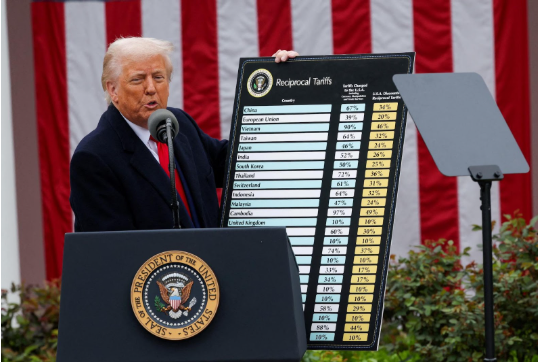
    American President Donald Trump’s anticipated return to the White House in 2025 came with a renewed “MAGA” (Make America Great Again) agenda, the first of which caused a worldwide domino effect on the trade sphere. At a major event in the White House Rose Garden on April 2, 2025, Trump’s oration enlightened America on excessively increased tariff rates moving forward, on imports from their major trading partners.

    The Organisation for Economic Co-operation and Development (OECD) has confirmed the average U.S. tariff rate to jump from 2.5% to the highest ever since 1938, 15.4%. China is faced with an effective tariff rate of 54% on certain goods, while India, the European Union, Japan, and South Korea all contend with tariffs between 20% and 34%. Even allies like Canada and Mexico, part of the USMCA agreement, have not been spared, slapped with 25% tariffs on most goods and 10% on energy products.

    Trump’s tariff policy stems from observing the U.S. trade deficit. His perspective of the current trade scenario is based on America suffering direct financial losses and not a complete structural macroeconomic metric. According to Trump, the more America imports, the more it bleeds. His solution? Tariffs, blunt,  and all-encompassing.

    Tariffs are Trump’s biggest tool to set the policy straight once and for all. It is expected to solve job losses, manufacturing decline, and foreign policy tensions once and for all. But should he believe that economic complexity can bend so easily to political tactics?

    The OECD has responded with stern warnings. In its revised global forecast, it lowered worldwide growth projections from 3.3% in 2024 to just 2.9% for 2025 and 2026. The U.S. itself is expected to slow from 2.8% to 1.6% in 2025, a sharp decline driven by declining investment and weakening consumer confidence. The OECD is clear: Trump’s tariffs are already disrupting trade, straining supply chains, and disincentivising corporate expansion.

    Tariffs are a strategic tool for the regulation and implementation of economic shielding, disguised as tax, that consumers are compelled to pay in the form of expensive pricing. This year’s tariffs were like a tidal wave crashing against sectors like Chinese electronics and Vietnamese textiles, to Indian pharmaceuticals and European automobiles. Businesses that depend on imports are now caught in a vicious cycle of absorbing higher input costs or passing them on to customers. For working-class Americans, the demographic Trump caters to, championing inflationary pressure has been the most direct blow as of yet.

    The new Trump-initiated “reciprocal tariffs” have caused a storm in nations like Cambodia (49%), Bangladesh (37%), Sri Lanka (44%), and Taiwan (32%) based on their trade barriers and utmost economic injustice. These countries have already been considered to be low-income economies that rely heavily on exports to the U.S., toppling them into instability as a whole. Thus, pushing them toward alternative trading blocs like BRICS or further into China’s sphere of influence.

    Allies of this policy see no wrong in it and have argued that the tariffs are necessary to counter decades of unfair trade, or in Trump’s words, “being ripped off,” and that restoring domestic manufacturing is the only way out. Economically, the increased tariff rates have caused a ripple effect across production ecosystems, increasing costs for everything from smartphones to semiconductors.

    The most alarming consequence of these tariffs is the probability of fracturing the global economy. The OECD warns that de-globalising production could reduce global GDP by up to 5%. Countries are already responding in kind, either with retaliatory tariffs or by strengthening trade agreements that exclude the U.S. Isolating America’s economy is trading risky waters during this troubled time of climate change, technological governance, and public health.

    These tariffs have alienated key allies in Europe and Asia, and penalised countries like India and Vietnam, which the U.S. was courting as strategic counterweights to China, the administration has unfortunately undercut its own foreign policy goals. It has become clear that economic power is a pillar of geopolitical influence, and weaponising trade risks eroding the very alliances that give the U.S. leverage in global affairs.

    Protecting America’s economic stature may offer temporary political gains, especially in key industrial swing states. But profound long-term costs will fester sooner or later in the economic, diplomatic, and social landscape. Tariff wars ending on civil terms have rarely shown up in history- declining innovation, loss of wealth, and regulation of painful methods of recovery will only be found at the end of this tunnel.

    President Trump, for now, should be reviewing his goals to ensure a more resilient and fair vision within this competitive American economy. The answer to successful trade policies and moulding America into a self-reliant nation lies not in walling off trade, but in investing in domestic capabilities: infrastructure, education, innovation, and green industries as the appropriate strategy that combines smart regulation, multilateral agreements, and long-term planning. It is essential for trade to reform, but not be completely wiped out of existence.

    The global economy is too interconnected, too interdependent, to retreat behind tariff walls. In choosing tariffs as his flagship policy once again since 2018, Trump may be betting on nationalism. But the world, and the economy, may not follow him this time.