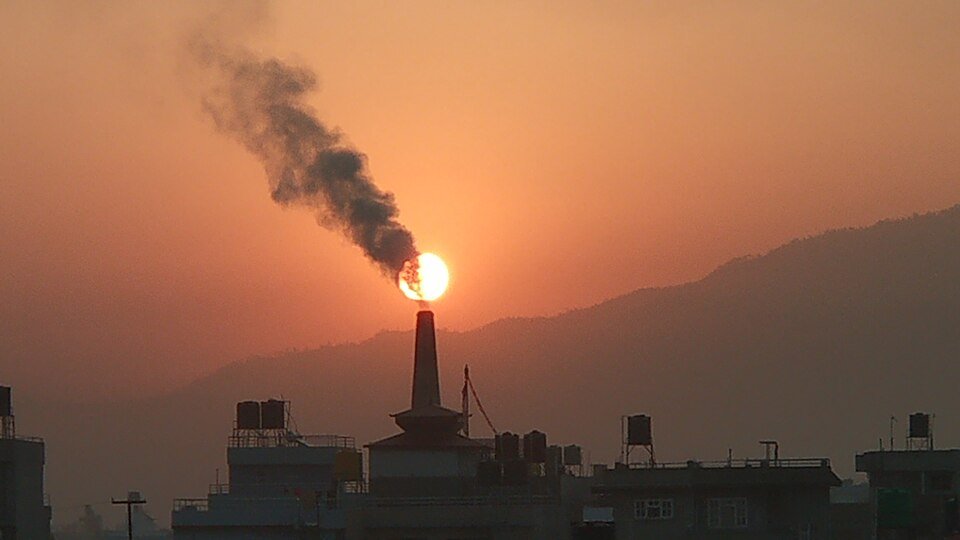
Byrnihat, a town lying on the border of Assam and Meghalaya, has ranked number 1 as world’s most polluted city, recording an annual average PM2.5 concentration of 128.2 μg/m³, according to a study which was conducted by a Swiss air quality monitoring company IQAir in collaboration with the Centre for Research on Energy and Clean Air (CREA). As we see India has been promoting ethanol blending programme as a key step towards reducing carbon emissions and dependence on imported crude oil, but the recent documentary on Byrnihat have sparked a debate over whether the environmental costs of producing green fuel have been adequately calculated or not.
The issue came into spotlight after a documentary by journalist Sarthak Goswami went viral on YouTube and clips made it to Instagram, which questioned whether the environmental impact of ethanol production has been overlooked ,but it didn’t make any strict claims , but it did challenge the claims made by Union Road Transport and Highways Minister Nitin Gadkari that ethanol blending significantly reduces India’s carbon footprint, arguing that emissions generated during production deserve greater scrutiny and it also questioned whether carbon footprints are just being replaced by water footprints.
By 28 June 2026, the Meghalaya Health Department stated that it had not received any formal complaint regarding the alleged health impacts of the ethanol unit in Byrnihat and later also stated by Mr. Gadkari in an interview with AjjTak. The government clarified that while the allegations circulating online would be examined if its supported by evidence, no official complaint had been filed at the time.
Fuel ethanol production in Byrnihat commenced on 1 September 2024. Coincidentally, 2024 was also the year in which Byrnihat emerged as one of the world’s most polluted urban areas in global air quality rankings. However, this timing alone does not establish a relationship between the two. Byrnihat has been an industrial hub since a long time, it is housing a number of cement hubs, distilleries, ferroalloy units in and around it, more recently in 2024 ethanol manufacturing facilities as well.
Residents interviewed in the documentary told Sarthak Goswami and the team that emissions from factories have left their homes coated in black dust, leading to them washing vegetables multiple times before consumption and also making it difficult to breathe. Several villagers also claimed that respiratory illnesses, skin conditions and even cancer cases have increased over recent years.
Importantly, the documentary itself acknowledged that there is currently no scientific evidence directly linking any individual illness or death to a specific factory or to ethanol production alone. However, government health data cited in the investigation indicates that reported respiratory disease cases in the area rose from 2,082 in 2022 to 3,681 in 2024, showing a 77% rise, highlighting a worsening public health situation consistent with growing industrial pollution.
The debate also extends beyond air pollution. Ethanol continues to offer an important climate advantage over petrol by producing lower lifecycle carbon emissions, making it a cleaner transport fuel from a greenhouse gas perspective. Yet environmental experts have also bought the point that water footprints should also be part of the discussion about ethanol,
According to Food Secretary Sanjeev Chopra, producing one litre of ricebased ethanol requires approximately 10,790 litres of water, raising concerns that while ethanol may reduce carbon footprints, it could simultaneously increase water footprints, particularly in a country like India where groundwater depletion is already a big crisis. According to the experts, Ethanol production also generates a high-strength wastewater known as vinasse, which requires proper treatment before disposal to prevent contamination of rivers and groundwater but minister Gadkari refuses to agree this wastewater problem in his recent interview.
The documentary by Sarthak Goswami further noted that although Meghalaya
Chief Minister Conrad Sangma and Assam Chief Minister Himanta Biswa
Sarma announced plans last year to establish a joint committee to tackle Byrnihat’s pollution crisis, little visible progress has followed. As India’s ethanol blending targets continue to expand, Byrnihat raises a broader policy question:
can India’s transition to cleaner fuels succeed if the environmental costs of production remain concentrated in industrial towns already struggling with severe pollution?
Photo: Janak Bhatta / Creative Commons Attribution-Share Alike 4.0
Leave a Reply